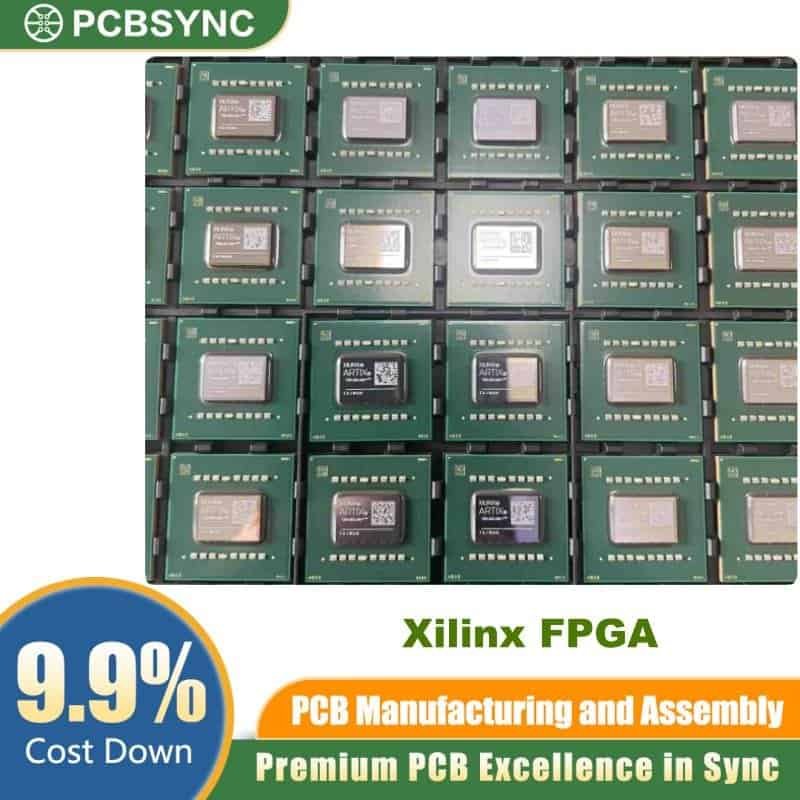
The XC7VX485T-3FFG1927E is a high-performance FPGA (Field Programmable Gate Array) from Xilinx’s Virtex-7 family. Designed for demanding applications such as high-speed data processing, communications, and signal processing, this FPGA offers unmatched flexibility, scalability, and computational power.
This device combines high logic density, advanced memory resources, and high-speed transceivers, making it ideal for engineers and developers working on cutting-edge projects.
Key Features of XC7VX485T-3FFG1927E
| Feature |
Specification |
| FPGA Family |
Virtex-7 |
| Logic Cells |
485,760 |
| Block RAM |
32.6 Mb |
| DSP Slices |
2,800 |
| Transceivers |
36 Gbps GTX x 80 |
| I/O Pins |
1,344 |
| Package |
FFG1927 |
| Speed Grade |
-3 |
| Operating Voltage |
1.0 V Core, 1.8 V I/O |
| Applications |
High-speed communication, signal processing, data acquisition, networking |
Advantages of Virtex-7 XC7VX485T FPGA
High Performance and Scalability
With 485,760 logic cells, the XC7VX485T FPGA is capable of implementing complex algorithms and designs that require significant computational resources. Its DSP slices and Block RAM allow for efficient parallel processing and high-speed data storage.
Advanced Connectivity
The device supports 36 Gbps high-speed transceivers, enabling seamless integration in high-performance networking and communication systems.
Flexible Development Platform
Developers benefit from Xilinx’s Vivado Design Suite, providing optimized IP cores, system integration tools, and simulation environments for faster product development.
Applications
- High-Speed Data Acquisition
- Signal and Image Processing
- Telecommunications and Networking
- Embedded System Acceleration
- Scientific Research and Simulation
Why Choose Xilinx FPGA
For engineers and designers looking to build high-performance electronic systems, Xilinx FPGA devices like the XC7VX485T-3FFG1927E offer:
- Scalable logic resources for complex computations
- High-speed I/O and transceivers for demanding networking applications
- Reliable and mature development ecosystem