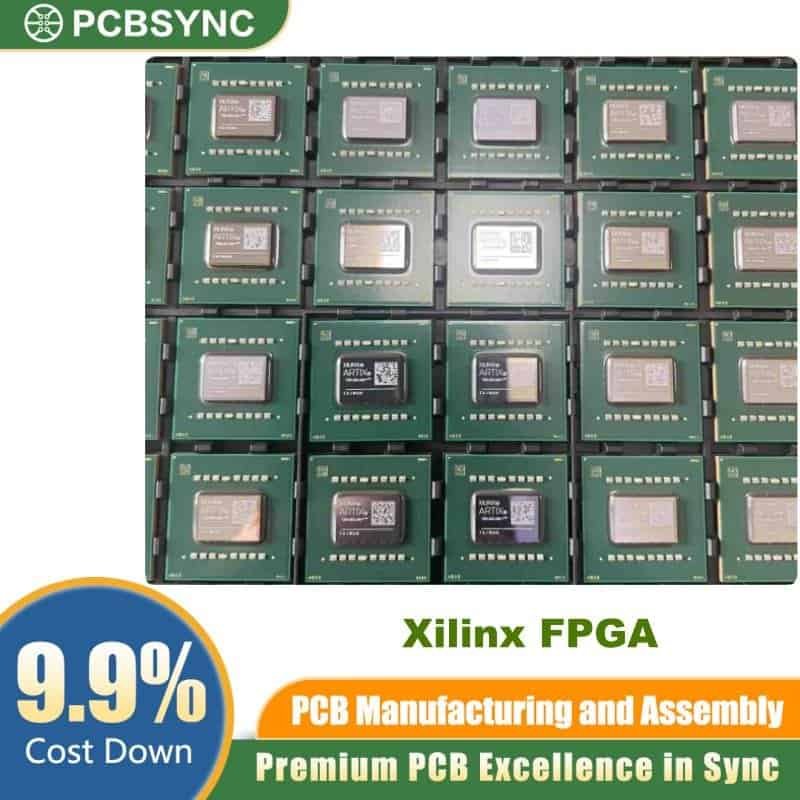
The Xilinx XC7VX415T-1FFG1158I is part of the Virtex-7 family, designed to deliver unmatched performance, scalability, and flexibility for demanding applications. Engineered for high-end computing, telecommunications, aerospace, and defense systems, this FPGA provides industry-leading speed and resource capacity, making it an ideal choice for complex designs.
This device integrates advanced features to optimize system performance while reducing development time. The XC7VX415T-1FFG1158I boasts high logic density, extensive memory resources, and robust DSP capabilities, ensuring high-throughput operations for data-intensive applications. Whether you are implementing high-speed serial connectivity, complex signal processing, or advanced machine learning models, this FPGA can handle demanding workloads with precision and reliability.
Key Features
- Ultra-high logic density for large designs
- High-speed serial connectivity with GTX transceivers
- Extensive on-chip memory for complex applications
- Advanced DSP slices for high-performance signal processing
- Low-power architecture to optimize energy consumption
The Virtex-7 architecture is built on Xilinx’s 28nm process technology, providing a balance between performance and power efficiency. It supports advanced design tools, including Vivado Design Suite, which accelerates development cycles and enhances productivity.
Technical Specifications
| Feature |
Specification |
| FPGA Family |
Virtex-7 |
| Device Name |
XC7VX415T-1FFG1158I |
| Logic Cells |
406,720 |
| DSP Slices |
2,800 |
| Block RAM |
52.9 Mb |
| I/O Pins |
1,158 |
| Transceivers |
36.75 Gbps GTX |
| Package Type |
FFG1158 |
| Speed Grade |
-1 |
| Operating Temperature |
Industrial (-40°C to 100°C) |
Applications
- High-performance computing (HPC)
- Data center acceleration
- 5G and wireless infrastructure
- Aerospace and defense systems
- Machine learning and AI processing
With its robust architecture and high-speed performance, the Xilinx XC7VX415T-1FFG1158I is engineered to meet the rigorous demands of modern electronic designs. It enables designers to implement highly complex algorithms while maintaining efficiency and reliability.