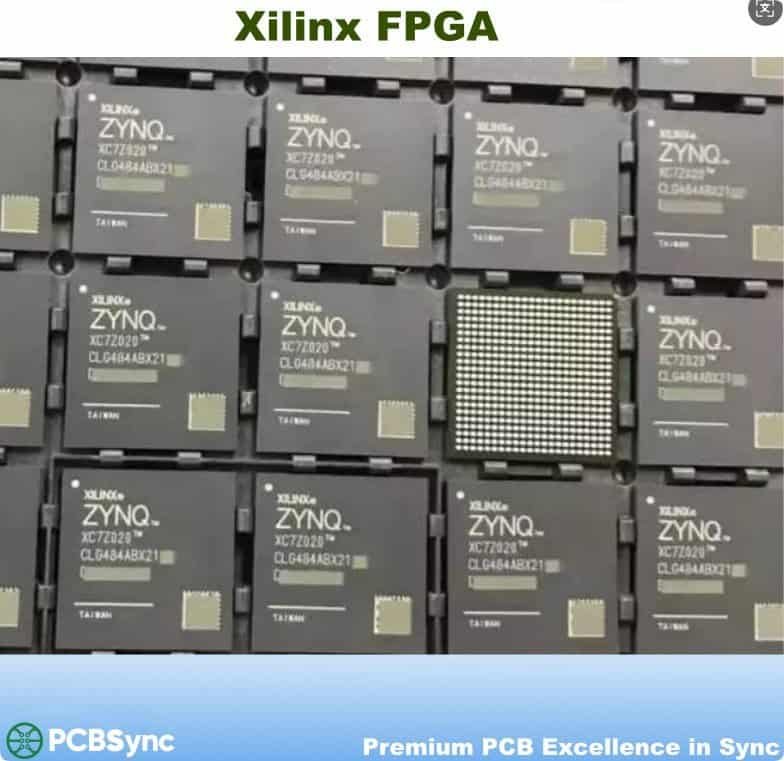
Overview of XCV50E-8PQG240C Field Programmable Gate Array
The XCV50E-8PQG240C is a powerful field-programmable gate array (FPGA) from Xilinx’s renowned Virtex-E family. This advanced programmable logic device delivers exceptional performance for demanding digital applications, combining high-speed processing capabilities with flexible configuration options. Designed with 0.18μm CMOS technology, this FPGA represents a significant advancement in programmable logic solutions for engineers and system designers.
As part of the Virtex-E series, the XCV50E-8PQG240C offers outstanding versatility for applications ranging from telecommunications to industrial automation. This Xilinx FPGA provides the perfect balance of logic capacity, I/O resources, and performance characteristics for complex digital system implementations.
Key Specifications and Technical Features
Core FPGA Specifications
| Specification |
Value |
| Manufacturer |
AMD/Xilinx |
| Part Number |
XCV50E-8PQG240C |
| Family |
Virtex-E |
| Logic Elements |
1,728 CLBs |
| System Gates |
50,000 |
| Operating Voltage |
1.8V Core |
| Package Type |
240-Pin PQFP |
| Speed Grade |
-8 (High Performance) |
| Temperature Range |
Commercial (0°C to +85°C) |
| Technology Node |
0.18μm CMOS |
Performance Characteristics
| Parameter |
Specification |
| Maximum Frequency |
Up to 250 MHz |
| User I/O Pins |
176 |
| Total Distributed RAM |
16 Kb |
| Block RAM |
32 Kb |
| Logic Cells |
Approximately 10,800 |
| Routing Matrix |
6-layer metal interconnect |
| Configuration Memory |
SRAM-based |
Advanced Architecture and Design Benefits
Programmable Logic Architecture
The XCV50E-8PQG240C features Xilinx’s advanced CLB (Configurable Logic Block) architecture, providing exceptional flexibility for implementing complex digital functions. Each CLB contains multiple logic cells that can be configured to perform various combinational and sequential logic operations, making this FPGA ideal for diverse application requirements.
High-Speed Interconnect Network
With its sophisticated 6-layer metal routing architecture, the XCV50E-8PQG240C ensures optimal signal integrity and minimal propagation delays. This advanced interconnect system enables efficient place-and-route operations, resulting in superior design performance and reduced development time.
Memory Resources
The device incorporates both distributed RAM and dedicated block RAM resources, offering designers multiple options for memory implementation. This dual-memory architecture allows for optimized system designs where different memory types can be strategically deployed based on specific application needs.
Package and Pinout Configuration
PQ240 Package Details
| Feature |
Description |
| Package Style |
Plastic Quad Flat Pack (PQFP) |
| Total Pins |
240 |
| Pin Pitch |
0.5mm |
| Body Dimensions |
32mm x 32mm |
| Package Height |
Standard low-profile design |
| Lead Count |
240 gull-wing leads |
| Mounting Type |
Surface Mount Technology (SMT) |
Pin Distribution
| Pin Type |
Quantity |
Purpose |
| User I/O |
176 |
Configurable input/output pins |
| Dedicated Input |
8 |
Clock and control signals |
| Power (VCCINT) |
Multiple |
1.8V core power supply |
| Power (VCCIO) |
Multiple |
I/O power supply (1.8V-3.3V) |
| Ground |
Multiple |
Ground connections |
| Configuration |
Several |
JTAG and configuration interface |
Application Areas and Use Cases
Telecommunications Systems
The XCV50E-8PQG240C excels in telecommunications applications requiring high-speed data processing and protocol implementation. Its robust I/O capabilities and high-performance logic make it suitable for:
- Digital signal processing (DSP) applications
- Protocol conversion and bridging
- Network packet processing
- Baseband processing systems
- Communication interface controllers
Industrial Automation
This FPGA provides reliable performance for industrial control systems where precision timing and real-time responsiveness are critical:
- Motion control systems
- Industrial networking protocols
- Machine vision processing
- Sensor data acquisition and processing
- Real-time control systems
Embedded Systems Development
The versatile architecture supports various embedded system applications:
- Custom peripheral controllers
- Hardware acceleration engines
- System-on-chip (SoC) prototyping
- Embedded signal processing
- Hardware/software co-design platforms
Data Acquisition Systems
With its extensive I/O resources and flexible timing capabilities:
- Multi-channel data acquisition
- High-speed sampling systems
- Instrumentation interfaces
- Test and measurement equipment
- Data logging systems
Speed Grade and Performance Analysis
Understanding the -8 Speed Grade
The “-8” speed grade designation indicates this is a high-performance variant within the XCV50E family. This speed grade offers:
- Faster Clock-to-Output Times: Reduced propagation delays through logic elements
- Higher Maximum Operating Frequencies: Support for demanding timing requirements
- Improved Setup and Hold Times: Better timing margins for reliable operation
- Enhanced Performance Headroom: Greater design flexibility for timing-critical applications
Performance Comparison
| Speed Grade |
Relative Performance |
Typical Applications |
| -4 |
Standard |
General-purpose designs |
| -6 |
Enhanced |
Moderate-speed applications |
| -8 |
High Performance |
Timing-critical, high-speed systems |
Power Consumption and Thermal Management
Operating Power Requirements
| Power Domain |
Voltage |
Typical Current |
Purpose |
| VCCINT |
1.8V |
Varies with utilization |
Core logic power |
| VCCIO |
1.8V – 3.3V |
Depends on I/O standard |
I/O buffer power |
| VCCO |
Multiple banks |
Bank-specific |
Output driver power |
Thermal Considerations
- Operating temperature range: 0°C to +85°C (Commercial grade)
- Recommended PCB thermal management practices
- Heat sink compatibility with PQFP package
- Junction temperature monitoring recommended for high-utilization designs
Configuration and Programming
Configuration Methods
The XCV50E-8PQG240C supports multiple configuration modes:
- JTAG Programming: Standard boundary-scan programming interface
- Master Serial Mode: Configuration from external serial PROM
- Slave Serial Mode: Configuration from external controller
- SelectMAP Mode: Parallel configuration for fast programming
Development Tools and Software Support
| Tool |
Purpose |
Compatibility |
| ISE Design Suite |
Legacy development environment |
Full support |
| Vivado Design Suite |
Modern development platform |
Limited (via ISE) |
| ChipScope Pro |
On-chip debugging and analysis |
Supported |
| Impact |
Configuration and programming |
Full support |
Quality and Reliability
Manufacturing Standards
- Manufactured using advanced 0.18μm CMOS process technology
- RoHS compliant versions available
- Moisture sensitivity level (MSL) rated for safe handling
- ESD protection on all user I/O pins
Reliability Features
- Built-in CRC error detection for configuration
- SRAM-based configuration with unlimited reconfiguration cycles
- Comprehensive device testing and quality assurance
- Industry-standard reliability specifications
Ordering Information and Packaging
Part Number Breakdown
XCV50E-8PQG240C decodes as follows:
- XCV: Xilinx Virtex family identifier
- 50E: 50,000 system gates, Enhanced (Virtex-E)
- -8: Speed grade (high performance)
- PQ: Package type (Plastic Quad)
- G: Lead-free (RoHS compliant)
- 240: Number of pins
- C: Commercial temperature range
Available Package Options
| Part Number |
Speed Grade |
Temperature |
Package |
Lead-Free |
| XCV50E-6PQ240C |
-6 |
Commercial |
PQFP |
Yes |
| XCV50E-7PQ240C |
-7 |
Commercial |
PQFP |
Yes |
| XCV50E-8PQG240C |
-8 |
Commercial |
PQFP |
Yes |
| XCV50E-8PQ240I |
-8 |
Industrial |
PQFP |
No |
Design Guidelines and Best Practices
PCB Layout Recommendations
- Power Supply Decoupling: Place multiple decoupling capacitors near power pins
- Ground Plane: Utilize continuous ground plane for optimal signal integrity
- Thermal Relief: Ensure adequate thermal vias and heat dissipation paths
- Signal Integrity: Maintain controlled impedance for high-speed signals
- Clock Distribution: Implement proper clock routing techniques
Clocking Strategy
- Utilize global clock resources for distribution of primary system clocks
- Implement clock domain crossing techniques for multi-clock designs
- Consider Digital Clock Managers (DCMs) for advanced clocking requirements
- Plan clock tree synthesis for optimal timing performance
Resource Utilization Tips
- Balance logic utilization across the device for optimal place-and-route
- Leverage block RAM resources for memory-intensive applications
- Implement pipeline stages for high-speed data paths
- Use timing constraints effectively to guide synthesis and implementation
Comparison with Similar FPGA Devices
Within Virtex-E Family
| Model |
System Gates |
Logic Cells |
I/O |
Block RAM |
| XCV50E |
50,000 |
~10,800 |
176 |
32 Kb |
| XCV100E |
100,000 |
~21,600 |
176 |
64 Kb |
| XCV200E |
200,000 |
~43,200 |
176 |
128 Kb |
| XCV300E |
300,000 |
~64,800 |
316 |
192 Kb |
Alternative Package Options
The XCV50E is available in multiple package configurations:
- CS144: 144-pin ChipScale package (smaller footprint)
- FG256: 256-pin Fine-pitch BGA (more I/O)
- PQ240: 240-pin PQFP (balanced solution)
Support and Resources
Technical Documentation
- Comprehensive datasheet with electrical specifications
- User guide detailing architecture and design methodologies
- Application notes for specific use cases
- Configuration guides and programming references
Development Resources
- Reference designs and example projects
- IP core libraries for common functions
- Online design forums and community support
- Technical support from AMD/Xilinx
Frequently Asked Questions
Q: What is the difference between XCV50E-8PQG240C and XCV50E-8PQ240C?
A: The “G” suffix indicates RoHS-compliant lead-free packaging. The XCV50E-8PQG240C uses lead-free solder balls, while XCV50E-8PQ240C uses standard tin-lead.
Q: Can I use this FPGA for video processing applications?
A: Yes, with 176 I/O pins and high-speed performance, this FPGA is suitable for moderate-resolution video processing applications, though larger devices may be preferred for high-definition video.
Q: What configuration memory size is required?
A: The XCV50E requires approximately 559,232 bits of configuration data, typically stored in a Xilinx XC18V01 or equivalent serial PROM.
Q: Is this device still in production?
A: While the Virtex-E family is a mature product line, availability varies. Check with authorized distributors for current stock and lead times.
Q: What I/O standards are supported?
A: The device supports multiple I/O standards including LVTTL, LVCMOS (1.8V, 2.5V, 3.3V), LVDS, SSTL, HSTL, and other industry-standard interfaces.
Why Choose XCV50E-8PQG240C?
The XCV50E-8PQG240C represents an excellent choice for engineers requiring:
- Proven Technology: Mature and well-documented FPGA platform
- Performance: High-speed operation with -8 speed grade
- Flexibility: 176 I/O pins and versatile logic resources
- Cost-Effectiveness: Balanced features for mid-range applications
- Reliability: Commercial temperature range with robust design
- Development Support: Extensive tools and resources available
Whether you’re designing telecommunications equipment, industrial control systems, or custom embedded solutions, the XCV50E-8PQG240C delivers the performance and flexibility needed for successful project implementation.
Conclusion
The XCV50E-8PQG240C Xilinx Virtex-E FPGA stands as a reliable, high-performance solution for a wide range of digital design applications. With its 50,000 system gates, 176 I/O pins, and advanced 0.18μm technology, this device offers the ideal combination of logic capacity, performance, and I/O resources for demanding embedded systems.
The -8 speed grade ensures optimal performance for timing-critical applications, while the 240-pin PQFP package provides a practical form factor for professional PCB designs. Whether you’re developing next-generation telecommunications equipment, sophisticated industrial controllers, or custom data acquisition systems, the XCV50E-8PQG240C provides the programmable logic foundation for innovation.
For engineers seeking a proven, well-supported FPGA platform with excellent performance characteristics, the XCV50E-8PQG240C remains a compelling choice in the programmable logic landscape.