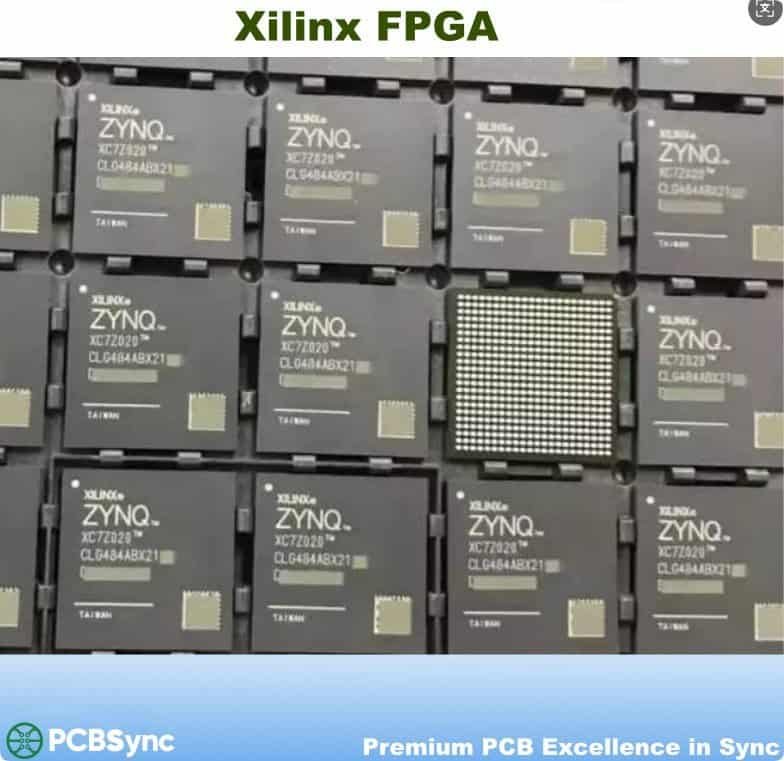
Overview of XCV50E-6PQG240C FPGA Technology
The XCV50E-6PQG240C represents AMD’s (formerly Xilinx) cutting-edge field-programmable gate array technology in the Virtex-E family. This industrial-grade FPGA delivers exceptional programmable logic capabilities with 50,000 system gates, making it an ideal solution for complex digital designs, telecommunications infrastructure, industrial automation, and embedded system applications. Engineered for reliability and performance, this Xilinx FPGA provides engineers with the flexibility to implement sophisticated hardware acceleration and custom logic solutions.
Key Technical Specifications
Core FPGA Architecture
| Specification |
Details |
| Product Family |
Virtex-E |
| Part Number |
XCV50E-6PQG240C |
| Logic Elements/Gates |
50,000 System Gates |
| Speed Grade |
-6 (High Performance) |
| Package Type |
240-Pin PQFP (Plastic Quad Flat Pack) |
| Operating Temperature |
Commercial (0°C to +85°C) |
| Supply Voltage |
Multiple voltage requirements for core and I/O |
Package and Mounting Details
| Feature |
Specification |
| Pin Count |
240 pins |
| Package Style |
PQFP (Plastic Quad Flat Pack) |
| Mounting Type |
Surface Mount Technology (SMT) |
| Pitch |
0.5mm pin pitch |
| Footprint |
Compact for high-density PCB designs |
XCV50E-6PQG240C Performance Features
Advanced Logic Capabilities
The XCV50E-6PQG240C FPGA incorporates Virtex-E architecture optimized for:
- High-density logic implementation with 50K system gates
- Flexible I/O resources supporting multiple voltage standards
- On-chip memory blocks for embedded RAM functionality
- Dedicated routing resources for high-performance signal paths
- Clock management circuits with digital clock managers (DCMs)
Speed Grade and Performance Metrics
The -6 speed grade designation indicates this FPGA variant offers:
- Superior propagation delays for time-critical applications
- Enhanced maximum operating frequencies
- Optimized for high-speed digital signal processing
- Reduced setup and hold times for sequential logic
Applications and Use Cases
Industrial and Commercial Applications
The XCV50E-6PQG240C excels in diverse application environments:
- Telecommunications Equipment
- Digital signal processing modules
- Protocol converters
- Network interface cards
- Base station controllers
- Industrial Automation Systems
- Programmable logic controllers (PLCs)
- Motion control interfaces
- Machine vision processing
- Real-time control systems
- Embedded Computing
- Custom processor implementations
- Hardware acceleration engines
- Peripheral controllers
- System-on-chip (SoC) prototypes
- Test and Measurement
- Data acquisition systems
- Signal generators
- Protocol analyzers
- Automated test equipment
Design Resources and Development Support
Development Tools Compatibility
| Tool Category |
Compatible Software |
| Design Entry |
Xilinx ISE Design Suite, Vivado (legacy support) |
| Simulation |
ModelSim, ISim, Active-HDL |
| Programming |
iMPACT, Xilinx Platform Cable USB |
| Languages |
VHDL, Verilog HDL, Schematic Entry |
Configuration and Programming
The XCV50E-6PQG240C supports multiple configuration modes:
- Master Serial Mode – FPGA controls configuration process
- Slave Serial Mode – External controller manages configuration
- JTAG Boundary Scan – Industry-standard programming interface
- SelectMAP Mode – Parallel configuration for fast boot times
Electrical Characteristics and Power Requirements
Operating Voltage Specifications
| Power Rail |
Typical Voltage |
Function |
| VCCINT |
1.8V |
Internal logic core voltage |
| VCCO |
1.5V to 3.3V |
I/O bank supply voltage |
| VCCAUX |
2.5V |
Auxiliary circuits supply |
Power Consumption Considerations
Power dissipation varies based on:
- Design complexity and resource utilization
- Operating frequency and switching activity
- I/O standards and drive strength selection
- Environmental temperature conditions
Package Dimensions and PCB Layout Guidelines
PQFP-240 Package Specifications
The 240-pin PQFP package offers:
- Compact footprint suitable for space-constrained designs
- Standardized land pattern for manufacturing consistency
- Corner pins for mechanical alignment during assembly
- Thermal characteristics adequate for commercial applications
PCB Design Recommendations
For optimal performance, engineers should consider:
- Multi-layer PCB construction with dedicated power planes
- Controlled impedance routing for high-speed signals
- Proper decoupling capacitor placement near power pins
- Thermal vias for enhanced heat dissipation
- Signal integrity analysis for critical nets
Quality and Reliability Standards
Manufacturing and Testing
The XCV50E-6PQG240C undergoes rigorous quality assurance:
- 100% functional testing of all devices
- Automated optical inspection (AOI)
- Burn-in testing for extended reliability
- Compliance with automotive and industrial standards
Environmental Compliance
| Standard |
Compliance Status |
| RoHS |
Compliant (Lead-free) |
| REACH |
Compliant |
| Moisture Sensitivity |
MSL 3 (Moisture Sensitivity Level) |
| ESD Protection |
Human Body Model (HBM) rated |
Comparison with Similar FPGA Devices
Virtex-E Family Positioning
| Model |
System Gates |
Package Options |
Speed Grades |
| XCV50E |
50,000 |
BG256, PQ240, FG256 |
-6, -7, -8 |
| XCV100E |
100,000 |
BG352, PQ240, FG456 |
-6, -7, -8 |
| XCV200E |
200,000 |
BG352, FG456, FG680 |
-6, -7, -8 |
| XCV300E |
300,000 |
BG432, FG456, FG676 |
-6, -7, -8 |
Procurement and Supply Chain Information
Availability and Lead Times
The XCV50E-6PQG240C is available through:
- Authorized distributors (DigiKey, Mouser, Arrow)
- Direct from AMD/Xilinx sales channels
- Certified component brokers
Package Marking and Identification
Device marking includes:
- Part number: XCV50E-6PQG240C
- Date code for traceability
- Country of origin
- Lot identification code
Technical Support and Documentation
Available Resources
Engineers implementing the XCV50E-6PQG240C can access:
- Datasheet – Complete electrical and timing specifications
- User Guide – Architecture overview and design guidelines
- Application Notes – Design best practices and examples
- PCB Layout Files – Reference footprints and symbols
- IBIS Models – Signal integrity simulation models
- BSDL Files – Boundary scan description for testing
Frequently Asked Questions
What is the difference between XCV50E-6PQG240C and XCV50E-6PQ240I?
The primary difference lies in the operating temperature range:
- XCV50E-6PQG240C operates from 0°C to +85°C (Commercial grade)
- XCV50E-6PQ240I operates from -40°C to +100°C (Industrial grade)
Can I migrate designs from XCV50E to newer FPGA families?
Yes, AMD/Xilinx provides migration paths to newer architectures including Spartan, Artix, and Kintex families, though design modifications may be required for optimal resource utilization.
What development boards support the XCV50E-6PQG240C?
Several third-party development boards and custom evaluation platforms support this FPGA variant, though availability may be limited due to the device’s legacy status.
Conclusion: Why Choose XCV50E-6PQG240C
The XCV50E-6PQG240C FPGA remains a reliable choice for engineers requiring proven programmable logic technology with:
- Established track record in production environments
- Comprehensive development tool support
- Cost-effective solution for moderate-complexity designs
- Wide availability through authorized distribution channels
For applications demanding higher gate counts or advanced features, consider exploring current-generation Xilinx FPGA families while leveraging the foundational design principles established with Virtex-E technology.