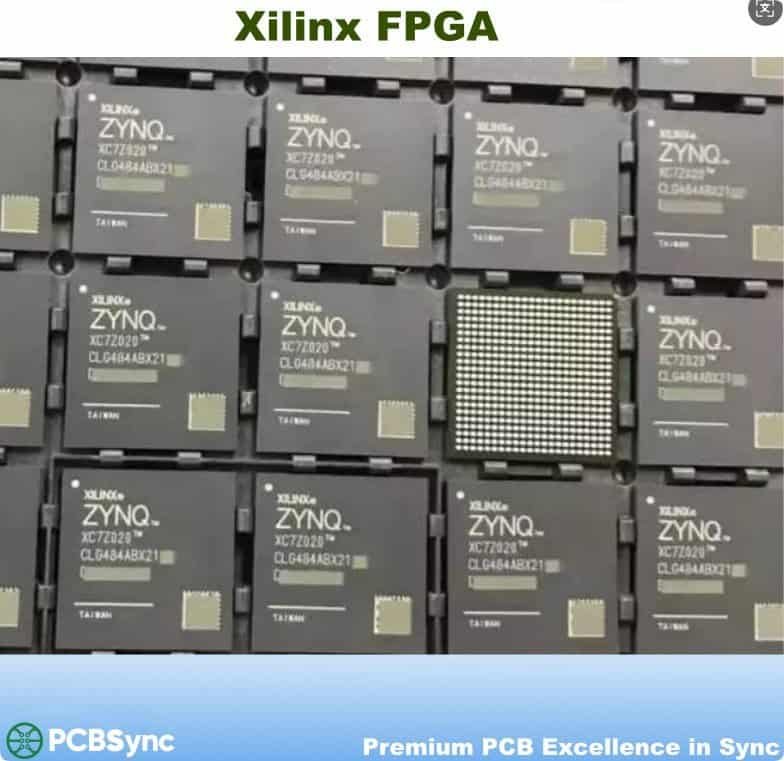
Overview of XCV50E-6FG256C FPGA Chip
The XCV50E-6FG256C is a professional-grade Field Programmable Gate Array (FPGA) from AMD’s Virtex-E family, designed to deliver exceptional performance for complex digital logic applications. This 256-pin FBGA package combines high-density programmable logic with advanced processing capabilities, making it an ideal solution for telecommunications, industrial control systems, and embedded computing applications.
Manufactured using advanced 0.18 μm CMOS process technology, the XCV50E-6FG256C offers engineers a powerful platform for implementing custom digital circuits with remarkable flexibility and speed. As part of the renowned Xilinx FPGA product line, this device represents a proven solution for mission-critical applications requiring reliable, high-performance programmable logic.
Key Technical Specifications and Features
Core Performance Parameters
| Specification |
Value |
| System Gates |
71,693 gates |
| Logic Cells |
1,728 cells |
| CLB Array Configuration |
16 x 24 |
| Maximum Clock Frequency |
357 MHz |
| Core Voltage |
1.8V |
| Process Technology |
0.18 μm CMOS |
| Package Type |
256-Pin FBGA (Fine Pitch Ball Grid Array) |
| I/O Pins |
176 user I/O |
| Speed Grade |
-6 (commercial temperature range) |
Advanced Memory Architecture
The XCV50E-6FG256C integrates sophisticated memory resources that enable efficient data storage and manipulation within your FPGA design.
| Memory Type |
Capacity |
Features |
| Distributed RAM |
Up to 1 Mb |
Flexible, distributed throughout CLBs |
| Block RAM |
832 Kb |
Dedicated memory blocks for high-density storage |
| Total RAM Resources |
Combined architecture |
Optimized for both small and large data structures |
Technical Architecture and Design Capabilities
Configurable Logic Blocks (CLBs)
The XCV50E-6FG256C features a comprehensive array of configurable logic blocks arranged in a 16 x 24 matrix. Each CLB contains multiple logic elements that can be programmed to implement any combinational or sequential logic function. This architecture provides designers with maximum flexibility when creating custom digital circuits.
High-Speed I/O Standards Support
One of the standout features of this Virtex-E FPGA is its extensive I/O compatibility. The device supports multiple industry-standard interfaces:
- LVDS (Low Voltage Differential Signaling) – for high-speed point-to-point data transmission
- BLVDS (Bus Low Voltage Differential Signaling) – for multi-point applications
- LVPECL (Low Voltage Positive Emitter Coupled Logic) – for clock distribution and high-speed serial interfaces
- LVCMOS/LVTTL – for general-purpose digital I/O
Clock Management with DLL Technology
The XCV50E-6FG256C incorporates eight fully digital Delay-Locked Loops (DLLs) that provide sophisticated clock management capabilities. These DLLs enable:
- Precise clock distribution with minimal skew
- Clock frequency multiplication and division
- Phase shifting for advanced timing control
- Clock domain crossing management
Primary Application Areas and Use Cases
Telecommunications and Networking Equipment
The XCV50E-6FG256C excels in telecommunications infrastructure, where it handles protocol conversion, signal processing, and data routing tasks. Its high-speed capabilities make it suitable for:
- Software-Defined Radio (SDR) systems
- Base station controllers
- Network protocol processors
- Digital signal processing applications
Industrial Control and Automation
Manufacturing and process control systems benefit from the FPGA’s ability to implement custom control algorithms and interface with diverse sensor types:
- Programmable Logic Controllers (PLCs)
- Motor control systems
- Factory automation equipment
- Real-time monitoring systems
Medical Imaging and Diagnostic Equipment
The processing power of the XCV50E-6FG256C supports demanding medical imaging applications:
- MRI and CT scan image processing
- Ultrasound signal processing
- Digital X-ray systems
- Real-time diagnostic equipment
Aerospace and Defense Applications
Military and aerospace systems require the reliability and performance that Virtex-E FPGAs provide:
- Navigation systems
- Satellite communication equipment
- Radar signal processing
- Secure communication systems
Programming and Development Tools
Compatible Development Software
Engineers can develop designs for the XCV50E-6FG256C using industry-standard tools:
| Tool Suite |
Features |
Best For |
| ISE Design Suite |
Legacy support, proven stability |
Virtex-E family designs |
| Vivado Design Suite |
Modern interface, advanced features |
Migration and new designs |
| Foundation Series |
Schematic-based entry |
Visual design preference |
| Alliance Series |
HDL-based workflow |
VHDL/Verilog developers |
Design Entry Methods
The XCV50E-6FG256C supports multiple design entry methodologies:
- HDL-Based Design: Use VHDL or Verilog hardware description languages for complex digital systems
- Schematic Entry: Visual circuit design for smaller projects or IP core integration
- IP Core Integration: Leverage pre-designed functional blocks to accelerate development
- Mixed-Mode Design: Combine HDL and schematic approaches for optimal results
Package and Pin Configuration Details
256-Pin FBGA Package Characteristics
| Package Feature |
Specification |
| Package Type |
Fine Pitch Ball Grid Array (FBGA) |
| Total Pins |
256 |
| User I/O Count |
176 pins |
| Ball Pitch |
1.0 mm nominal |
| Package Dimensions |
17 x 17 mm body size |
| Thermal Characteristics |
Enhanced heat dissipation |
Pin Function Categories
The 256 pins are allocated across several functional categories:
- Power Pins: Core voltage (VCCINT) and I/O voltage (VCCO) supplies
- Ground Pins: Multiple GND connections for proper power distribution
- Configuration Pins: JTAG, SelectMAP, or serial configuration interfaces
- User I/O Pins: 176 general-purpose or specialized I/O connections
- Dedicated Pins: Clock inputs, global routing resources
Performance Specifications and Operating Conditions
Speed Grade Analysis
The “-6” speed grade designation indicates this is a commercial-grade device optimized for standard operating conditions:
| Parameter |
Minimum |
Typical |
Maximum |
Units |
| Clock Frequency |
– |
– |
357 |
MHz |
| Propagation Delay |
– |
– |
Speed grade dependent |
ns |
| Setup Time |
Speed grade dependent |
– |
– |
ns |
| Hold Time |
Speed grade dependent |
– |
– |
ns |
Temperature and Voltage Requirements
| Operating Condition |
Specification |
| Core Voltage (VCCINT) |
1.8V ±5% |
| I/O Voltage (VCCO) |
1.5V to 3.3V (bank-dependent) |
| Commercial Temperature |
0°C to +85°C |
| Junction Temperature |
See datasheet for thermal calculations |
Comparison with Similar FPGA Models
Virtex-E Family Members
| Model |
System Gates |
Logic Cells |
Max Frequency |
Package Options |
| XCV50E |
71,693 |
1,728 |
357 MHz |
FG256, CS144, PQ240 |
| XCV100E |
143,387 |
3,456 |
357 MHz |
FG256, BG352, PQ240 |
| XCV200E |
286,773 |
6,912 |
357 MHz |
FG456, BG352, PQ240 |
| XCV300E |
430,160 |
10,368 |
357 MHz |
FG456, BG432, PQ240 |
Legacy System Support and Replacement Options
Maintaining Existing Designs
The XCV50E-6FG256C remains available for legacy system support, making it valuable for:
- Production line continuity for established products
- Repair and maintenance of deployed equipment
- System upgrades without complete redesign
- Cost-effective spare parts inventory
Migration Considerations
While the XCV50E-6FG256C is marked as not recommended for new designs, existing users should consider:
- Pin compatibility with newer devices in the same package
- Feature migration paths to current FPGA families
- Design tool support and longevity
- Supply chain availability through authorized distributors
Quality Assurance and Reliability Standards
Manufacturing Quality
AMD (formerly Xilinx) manufactures the XCV50E-6FG256C under stringent quality control processes:
- ISO 9001 certified manufacturing facilities
- Comprehensive electrical testing of every device
- Traceability through unique device identification
- RoHS compliance for environmental standards
Reliability Testing
Each device undergoes extensive reliability qualification:
- Temperature cycling tests
- High-temperature operating life testing
- Moisture sensitivity level classification
- Electrostatic discharge (ESD) protection verification
Procurement and Availability Information
Authorized Distribution Channels
The XCV50E-6FG256C is available through multiple authorized distributors including:
- DigiKey Electronics – full traceability and authenticity guaranteed
- Major electronic component distributors worldwide
- Direct AMD/Xilinx sales channels for volume orders
- Authorized franchise distributors with technical support
Ordering Information
| Order Code |
Description |
| XCV50E-6FG256C |
Commercial grade, -6 speed, 256-pin FBGA |
| XCV50E-7FG256C |
Commercial grade, -7 speed (faster), 256-pin FBGA |
| XCV50E-6FG256I |
Industrial grade, -6 speed, 256-pin FBGA |
Frequently Asked Questions About XCV50E-6FG256C
What is the difference between XCV50E-6FG256C and XCV50-6FG256C?
The “E” designation indicates Enhanced Virtex-E family, which operates at 1.8V core voltage compared to the standard Virtex 2.5V operation. The Virtex-E offers improved power efficiency and higher performance.
Can I use modern Vivado tools with this FPGA?
The XCV50E-6FG256C is best supported by ISE Design Suite (versions 14.7 and earlier). While Vivado targets newer architectures, ISE provides complete toolchain support for Virtex-E development.
What is the typical power consumption?
Power consumption varies based on design utilization, clock frequency, and I/O activity. Typical applications consume between 0.5W to 2W, with detailed calculations available through Xilinx XPower analysis tools.
Is this FPGA suitable for new product designs?
While technically capable, AMD has designated this as “not recommended for new designs.” Consider newer families like Artix-7 or Spartan-7 for new projects, which offer better performance, lower power, and modern tool support.
Conclusion: Why Choose XCV50E-6FG256C
The XCV50E-6FG256C represents a proven, reliable solution for applications requiring moderate logic capacity combined with high-performance operation. Its extensive I/O support, robust architecture, and proven track record make it particularly valuable for maintaining legacy systems and supporting long-lifecycle products in industrial, telecommunications, and aerospace applications.
For engineers working with existing Virtex-E designs, this FPGA continues to provide the performance and reliability needed to keep critical systems operational. The availability through authorized distributors ensures access to genuine components with full traceability and quality assurance.
Whether you’re maintaining deployed equipment, supporting legacy production lines, or completing designs already committed to the Virtex-E platform, the XCV50E-6FG256C delivers the programmable logic capabilities needed for demanding digital design applications.