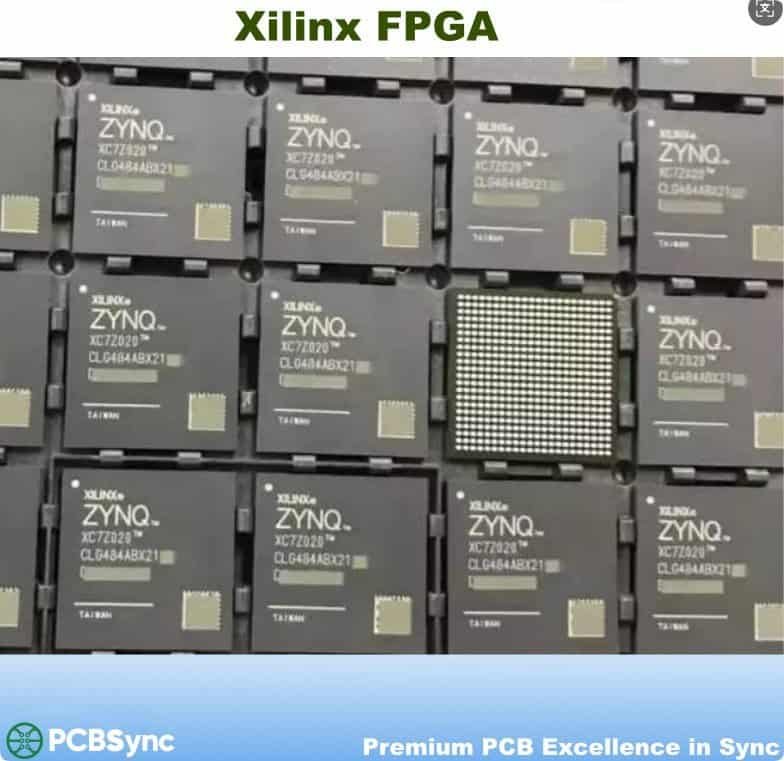
Overview of the XCV50E-6CSG144C FPGA
The XCV50E-6CSG144C is a powerful Field Programmable Gate Array (FPGA) from AMD’s (formerly Xilinx) renowned Virtex-E family, designed to deliver exceptional performance for complex digital logic applications. This high-density programmable logic device combines reliability, versatility, and advanced processing capabilities, making it an ideal choice for telecommunications, industrial automation, and embedded system designs.
As part of the legacy Virtex-E series, the XCV50E-6CSG144C continues to serve critical roles in maintaining and upgrading existing systems while offering robust performance for new design implementations. For comprehensive solutions in Xilinx FPGA technology, this device represents a proven platform with extensive industry adoption.
Key Technical Specifications
Core Architecture Features
| Specification |
Details |
| Product Family |
Virtex®-E |
| Manufacturer |
AMD (Xilinx) |
| Part Number |
XCV50E-6CSG144C |
| Logic Elements |
1,728 |
| LABs/CLBs |
384 Logic Array Blocks |
| CLB Array Configuration |
16 x 24 |
| Total System Gates |
71,693 |
| User I/O Pins |
94 |
Memory and Processing Capabilities
| Feature |
Specification |
| Total RAM Bits |
65,536 bits |
| Maximum Clock Frequency |
Up to 357 MHz |
| Process Technology |
0.18 µm CMOS |
| Core Voltage |
1.8V (1.71V – 1.89V) |
Package and Environmental Specifications
| Parameter |
Value |
| Package Type |
144-TFBGA, CSPBGA |
| Supplier Package |
144-LCSBGA (12×12) |
| Mounting Type |
Surface Mount |
| Operating Temperature |
0°C to 85°C (TJ) |
| Speed Grade |
-6 |
Advanced FPGA Capabilities and Performance
Logic Density and Flexibility
The XCV50E-6CSG144C delivers impressive logic density with its 1,728 logic elements organized in an efficient 16 x 24 CLB array structure. This architecture provides designers with substantial programmable resources for implementing complex state machines, arithmetic operations, and sophisticated control logic. The 384 configurable logic blocks enable highly parallel processing capabilities essential for demanding real-time applications.
High-Speed Processing Architecture
Operating at clock frequencies up to 357 MHz, this FPGA excels in time-critical applications requiring rapid data processing and minimal latency. The advanced 0.18 µm CMOS fabrication process ensures optimal power efficiency while maintaining high performance, making it suitable for both portable and fixed installations.
Memory Resources and Data Management
With 65,536 bits of embedded RAM, the XCV50E-6CSG144C provides substantial on-chip memory resources for buffering data, implementing lookup tables, and creating efficient state machines. This integrated memory eliminates the need for external memory components in many applications, reducing system complexity and improving overall reliability.
Primary Application Areas
Telecommunications Infrastructure
The XCV50E-6CSG144C serves as a cornerstone in telecommunications equipment, handling critical functions such as:
- Protocol conversion and adaptation
- Signal processing and filtering
- Data routing and switching
- Error correction and detection
- Network interface management
Industrial Automation Systems
In industrial environments, this FPGA provides:
- Real-time control system implementation
- Motor control and motion systems
- Sensor data acquisition and processing
- Machine vision processing
- PLC (Programmable Logic Controller) functionality
Embedded System Development
Design engineers leverage the XCV50E-6CSG144C for:
- Custom processor implementation
- Peripheral interface controllers
- Hardware acceleration units
- ASIC prototyping and emulation
- System-on-chip (SoC) development
Digital Signal Processing
The device excels in DSP applications including:
- Digital filtering operations
- Fast Fourier Transform (FFT) processing
- Image and video processing
- Audio signal manipulation
- Software-defined radio (SDR) systems
Technical Advantages and Design Benefits
I/O Standard Support
The XCV50E-6CSG144C supports multiple I/O standards, ensuring broad compatibility:
- LVDS (Low Voltage Differential Signaling)
- BLVDS (Bus LVDS)
- LVPECL (Low Voltage Positive ECL)
- LVCMOS (Low Voltage CMOS)
- LVTTL (Low Voltage TTL)
This versatility enables seamless interfacing with various peripheral devices, sensors, communication protocols, and legacy systems.
Dynamic Reconfiguration Capability
One of the standout features is support for partial reconfiguration, allowing portions of the FPGA logic to be modified while other sections continue operating. This capability is particularly valuable in:
- Adaptive communication systems
- Multi-mode operation scenarios
- Field-upgradeable systems
- Time-multiplexed resource sharing
Legacy System Compatibility
For organizations maintaining existing Virtex-E based systems, the XCV50E-6CSG144C offers:
- Pin-compatible replacement options
- Design portability from earlier Virtex-E variants
- Minimal redesign requirements
- Extended product lifecycle support
Programming and Development Workflow
Design Entry Methods
Developers can implement designs using multiple approaches:
- Hardware Description Languages: VHDL and Verilog for precise control
- Schematic Entry: Visual design capture for hierarchical structures
- High-Level Synthesis: C/C++ based design flows for algorithm implementation
Development Tool Support
The XCV50E-6CSG144C integrates with Xilinx development platforms including:
- ISE Design Suite: Complete design implementation environment
- Foundation Series: Entry-level design tools
- Alliance Series: Advanced development capabilities
- ChipScope Pro: Integrated logic analyzer for debugging
Design Implementation Process
| Stage |
Description |
| Design Entry |
Create HDL code or schematic diagrams |
| Simulation |
Verify functional behavior and timing |
| Synthesis |
Convert HDL to gate-level netlist |
| Implementation |
Place and route logic elements |
| Bitstream Generation |
Create programming file |
| Configuration |
Download to target device |
Packaging and Physical Characteristics
CSPBGA Package Benefits
The 144-pin Chip Scale Package Ball Grid Array (CSPBGA) offers several advantages:
- Compact Form Factor: 12mm x 12mm footprint conserves board space
- Enhanced Thermal Performance: Direct thermal path to PCB
- Improved Electrical Characteristics: Shorter interconnects reduce parasitic effects
- Higher Pin Density: More I/O capability in smaller area
- Better Signal Integrity: Reduced lead inductance
PCB Design Considerations
When designing with the XCV50E-6CSG144C:
- Standard SMT assembly processes compatible
- BGA-specific routing techniques required
- Controlled impedance traces for high-speed signals
- Adequate power distribution network essential
- Thermal management planning recommended
Power Supply and Thermal Management
Voltage Requirements
| Supply Rail |
Voltage Range |
Purpose |
| VCCINT |
1.71V – 1.89V |
Core logic supply |
| VCCO |
Variable |
I/O bank voltage |
Power Consumption Characteristics
Power consumption varies based on:
- Design complexity and utilization
- Operating frequency
- I/O activity and standards
- Temperature conditions
Thermal Design Guidelines
Effective thermal management ensures reliable operation:
- Junction temperature maintained within 0°C to 85°C range
- Heat sinking may be required for high-utilization designs
- Airflow considerations for enclosed systems
- Thermal simulation recommended during design phase
Comparison with Related Devices
Within the Virtex-E Family
| Model |
Logic Elements |
I/O Pins |
Package Options |
| XCV50E-6CSG144C |
1,728 |
94 |
144-CSPBGA |
| XCV50E-6FG256C |
1,728 |
176 |
256-FBGA |
| XCV50E-7CS144C |
1,728 |
94 |
144-CSPBGA |
| XCV50E-6PQ240C |
1,728 |
158 |
240-PQFP |
The “-6” speed grade indicates moderate performance optimization, balancing speed and power consumption for general-purpose applications.
Quality and Reliability Standards
Manufacturing Quality
AMD maintains rigorous quality control:
- ISO 9001 certified manufacturing processes
- Comprehensive electrical testing
- Burn-in testing for enhanced reliability
- Traceability throughout production
Reliability Metrics
The XCV50E-6CSG144C demonstrates excellent reliability:
- Low failure rates in field applications
- Extended operating life under specified conditions
- Proven performance in harsh environments
- Compliance with industry standards
Availability and Sourcing
Current Market Status
While classified as a mature product, the XCV50E-6CSG144C remains available through:
- Authorized distributors
- Specialty obsolescence management suppliers
- Secondary market sources
- Component brokers specializing in legacy parts
Procurement Considerations
When sourcing this device:
- Verify authenticity through authorized channels
- Request date codes and manufacturing information
- Consider purchasing quantities to support long-term needs
- Evaluate alternative sourcing strategies for critical applications
Support Resources and Documentation
Technical Documentation
Comprehensive resources available include:
- Product Datasheet: Detailed electrical and mechanical specifications
- User Guide: Architecture and features explanation
- Application Notes: Design guidelines and best practices
- Reference Designs: Example implementations
Online Communities and Forums
Developers can access support through:
- Xilinx community forums
- Technical support portals
- Third-party FPGA development communities
- Academic resources and tutorials
Migration and Upgrade Paths
Moving to Current Technology
Organizations considering migration from the XCV50E-6CSG144C can evaluate:
- 7 Series FPGAs: Modern architecture with higher performance
- UltraScale Family: Advanced process technology
- Zynq SoC: Integrated ARM processor with programmable logic
Migration Considerations
Key factors in upgrade planning:
- Design portability assessment
- Tool compatibility evaluation
- Performance requirement analysis
- Cost-benefit analysis
- Time-to-market considerations
Environmental and Compliance Information
RoHS Compliance
The XCV50E-6CSG144C meets environmental standards:
- RoHS compliant for restricted substances
- Lead-free package options available
- REACH regulation compliance
- Conflict minerals reporting
Safety and Certification
Relevant certifications and standards:
- UL recognition for component use
- CE marking compatibility
- Industry-specific certifications as applicable
Best Practices for Implementation
Design Optimization Tips
Maximize performance with these approaches:
- Clock Domain Management: Implement proper clock domain crossing techniques
- Resource Utilization: Balance logic distribution across CLBs
- I/O Planning: Strategic pin assignment for signal integrity
- Timing Closure: Iterative constraint refinement
- Power Optimization: Clock gating and resource sharing
Common Design Challenges
Be aware of potential issues:
- Timing constraint violations requiring design adjustment
- I/O standard conflicts needing careful planning
- Resource overutilization requiring architecture changes
- Configuration memory requirements for partial reconfiguration
Testing and Validation
Ensure design reliability through:
- Comprehensive functional simulation
- Timing analysis with worst-case conditions
- Hardware testing with boundary scan (JTAG)
- Production testing strategies
- Long-term reliability testing
Conclusion
The XCV50E-6CSG144C represents a mature, reliable FPGA solution for applications requiring proven performance and established design methodologies. Its combination of adequate logic resources, flexible I/O capabilities, and compact packaging makes it suitable for a wide range of industrial, telecommunications, and embedded applications.
Whether maintaining legacy systems or implementing new designs with established technology, this device offers the stability and performance characteristics required for mission-critical applications. The extensive documentation, community support, and availability of development tools ensure successful project implementation.
For organizations seeking dependable FPGA solutions with a track record of reliable field operation, the XCV50E-6CSG144C continues to serve as a solid choice, particularly in applications where design continuity and proven performance are paramount considerations.