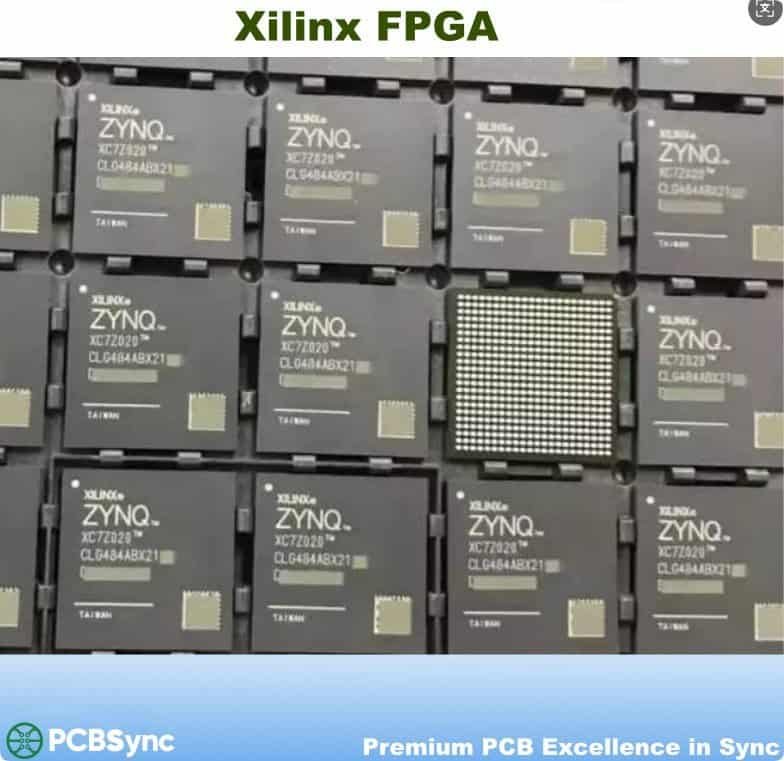
Overview of the XCV300E-8FG456C FPGA
The XCV300E-8FG456C is a professional-grade Field Programmable Gate Array (FPGA) from AMD’s renowned Virtex-E series, designed to deliver exceptional performance for demanding digital applications. This powerful Xilinx FPGA combines high-speed processing capabilities with flexible programming options, making it an ideal choice for engineers and system designers working on complex embedded systems, telecommunications, digital signal processing, and industrial automation projects.
As part of the legacy Virtex-E family, the XCV300E-8FG456C represents proven technology that continues to serve critical applications worldwide, offering reliability and performance in a compact 456-pin FBGA package.
Key Features and Specifications
Core Architecture Specifications
The XCV300E-8FG456C delivers robust computational capabilities through its advanced architecture:
| Specification |
Value |
Description |
| Logic Elements/Cells |
6,912 |
High-density logic for complex designs |
| Logic Blocks (LABs/CLBs) |
1,536 |
Configurable logic blocks for flexibility |
| Total Gates |
411,955 |
Comprehensive gate count for large-scale projects |
| RAM Bits |
131,072 (16 kB) |
Embedded memory for data processing |
| I/O Pins |
312 |
Extensive connectivity options |
| Maximum Frequency |
416 MHz |
High-speed clock operation |
Physical and Electrical Characteristics
| Parameter |
Specification |
| Package Type |
456-FBGA (Fine Ball Grid Array) |
| Package Dimensions |
23mm x 23mm |
| Total Pin Count |
456 pins |
| Mounting Type |
Surface Mount Technology (SMT) |
| Supply Voltage |
1.71V to 1.89V (typical 1.8V) |
| Operating Temperature |
0°C to +85°C (TJ) |
| Speed Grade |
-8 (commercial grade) |
Environmental and Compliance Information
| Category |
Status |
| RoHS Compliance |
Non-compliant (contains lead) |
| Product Status |
Obsolete (legacy support available) |
| Radiation Hardening |
No |
| Lead-Free |
No |
Technical Capabilities and Performance
High-Density Logic Resources
The XCV300E-8FG456C excels in applications requiring substantial logic resources. With nearly 7,000 logic elements organized into 1,536 configurable logic blocks, this FPGA provides engineers with the computational power needed for:
- Complex state machine implementations
- Parallel processing architectures
- Custom arithmetic logic units
- Protocol conversion and bridging
- Multi-channel data acquisition systems
Memory Architecture
The integrated 16 kB of distributed RAM (131,072 bits) enables efficient on-chip data storage and manipulation. This embedded memory supports:
- FIFO buffer implementations
- Look-up table (LUT) storage
- Small data caching
- Pipeline registers
- Temporary data storage for DSP operations
I/O Capabilities
With 312 available I/O pins, the XCV300E-8FG456C supports extensive connectivity requirements across multiple voltage standards, making it suitable for interfacing with various peripherals, sensors, and communication protocols.
Application Areas and Use Cases
Digital Signal Processing (DSP)
The XCV300E-8FG456C’s high-speed architecture and abundant logic resources make it well-suited for DSP applications including:
- FIR and IIR filter implementations
- FFT processing
- Image and video processing
- Audio codec development
- Real-time signal analysis
Telecommunications and Networking
This FPGA supports various telecom applications:
- Protocol converters
- Data packet processing
- Network switching logic
- Modulation/demodulation systems
- Base station signal processing
Embedded System Development
Engineers leverage the XCV300E-8FG456C for:
- Custom microcontroller enhancement
- Peripheral interface controllers
- Real-time control systems
- Motor control applications
- Industrial automation
Wireless Communication Systems
The device’s performance characteristics support:
- Baseband processing
- Channel coding/decoding
- Spread spectrum implementations
- Software-defined radio components
Design Considerations and Best Practices
Power Supply Requirements
The XCV300E-8FG456C operates within a narrow voltage range of 1.71V to 1.89V, with 1.8V being the nominal supply voltage. Designers should ensure:
- Clean, well-regulated power supply
- Adequate decoupling capacitors near power pins
- Proper power sequencing during startup
- Thermal management for sustained operation
Thermal Management
Operating across the commercial temperature range (0°C to +85°C junction temperature), proper thermal design is essential:
- Heat sink considerations for high-utilization designs
- Adequate PCB copper planes for heat dissipation
- Airflow planning in enclosed systems
- Thermal simulation for mission-critical applications
PCB Design Guidelines
The 456-FBGA package with 23mm x 23mm footprint requires careful PCB layout:
- High-density interconnect (HDI) PCB recommended
- Controlled impedance routing for high-speed signals
- Via-in-pad technology for space-constrained designs
- Proper ball grid array fanout strategy
Package Information
456-FBGA Package Details
The Fine Ball Grid Array (FBGA) package offers several advantages:
| Feature |
Benefit |
| Compact Footprint |
23mm x 23mm saves board space |
| High Pin Density |
456 connections in small area |
| Excellent Thermal Performance |
Direct heat transfer to PCB |
| Low Inductance |
Shorter signal paths improve performance |
| Surface Mount |
Compatible with automated assembly |
Comparison with Related Devices
XCV300E Family Variants
| Part Number |
Package |
Speed Grade |
Key Difference |
| XCV300E-6FG456C |
456-FBGA |
-6 |
Slower speed grade |
| XCV300E-7FG456C |
456-FBGA |
-7 |
Mid-range speed |
| XCV300E-8FG456C |
456-FBGA |
-8 |
Fastest commercial grade |
| XCV300E-8FG256C |
256-FBGA |
-8 |
Fewer I/O pins |
| XCV300E-8BG432C |
432-BGA |
-8 |
Different package type |
Product Status and Availability
Legacy Product Information
Important Notice: The XCV300E-8FG456C is currently classified as an obsolete product by AMD (formerly Xilinx). This status means:
- Limited Availability: Stock may be restricted to existing inventory
- Last Time Buy: Customers should plan for alternative solutions
- Legacy Support: Technical documentation remains available
- Replacement Options: Consider newer Spartan, Artix, or Kintex families
Sourcing Considerations
For engineers requiring the XCV300E-8FG456C:
- Verify Availability: Check with authorized distributors for current stock
- Plan Quantities: Order sufficient quantity for product lifecycle
- Qualification Testing: Test new lots if mixing manufacturing dates
- Migration Planning: Evaluate modern FPGA alternatives for new designs
Development Tools and Resources
Design Software
Development for the XCV300E-8FG456C requires:
- ISE Design Suite: Legacy Xilinx development environment
- Supported Versions: ISE 14.7 (final version with Virtex-E support)
- Simulation Tools: ModelSim, ISim for functional verification
- Programming: iMPACT for device configuration
Programming Options
The XCV300E-8FG456C supports multiple configuration methods:
- JTAG boundary scan programming
- Master serial mode
- Slave serial mode
- SelectMAP parallel configuration
- Embedded programming via microcontroller
Quality and Reliability
Industrial Standards
While obsolete, the XCV300E-8FG456C was manufactured to stringent quality standards:
- Automotive-grade quality processes
- Extensive production testing
- Reliability screening options
- Comprehensive electrical testing
Handling and Storage
Proper component handling ensures reliability:
- ESD-sensitive device – use proper grounding
- Store in moisture barrier bags with desiccant
- Follow IPC/JEDEC moisture sensitivity guidelines
- Observe baking procedures if package seal is compromised
Frequently Asked Questions
What applications is the XCV300E-8FG456C best suited for?
The XCV300E-8FG456C excels in digital signal processing, telecommunications equipment, embedded control systems, and wireless communication applications requiring high-speed processing with moderate logic density.
Is the XCV300E-8FG456C still available for purchase?
As an obsolete product, availability is limited to existing distributor inventory and surplus market sources. For new designs, consider modern alternatives from AMD’s current FPGA families.
What is the difference between speed grades -6, -7, and -8?
The speed grade indicates maximum operating frequency. The -8 grade (XCV300E-8FG456C) offers the highest performance with maximum clock speeds up to 416 MHz, while -6 and -7 are progressively slower.
Can I replace this FPGA with a newer model?
Migration to newer Spartan-6, Artix-7, or Kintex-7 families is possible but requires design modification, as pin assignments and architecture differ. Consult AMD’s migration guides for specific recommendations.
What development tools do I need?
Use Xilinx ISE Design Suite 14.7 (or earlier) for design entry, synthesis, implementation, and programming. The device is not supported in the newer Vivado Design Suite.
Conclusion
The XCV300E-8FG456C represents a proven FPGA solution from AMD’s Virtex-E family, offering substantial logic resources, high-speed performance, and flexible I/O capabilities in a compact surface-mount package. While currently obsolete, it continues to serve critical roles in legacy systems and applications where its specific characteristics are required.
Engineers working with this Xilinx FPGA benefit from extensive documentation, established design methodologies, and a wealth of existing reference designs. However, for new projects, careful consideration should be given to product availability and the potential advantages of migrating to AMD’s current-generation FPGA families, which offer improved performance, lower power consumption, and modern tool support.
Whether maintaining existing systems or completing legacy designs, the XCV300E-8FG456C remains a capable solution for applications demanding reliable, high-performance programmable logic.