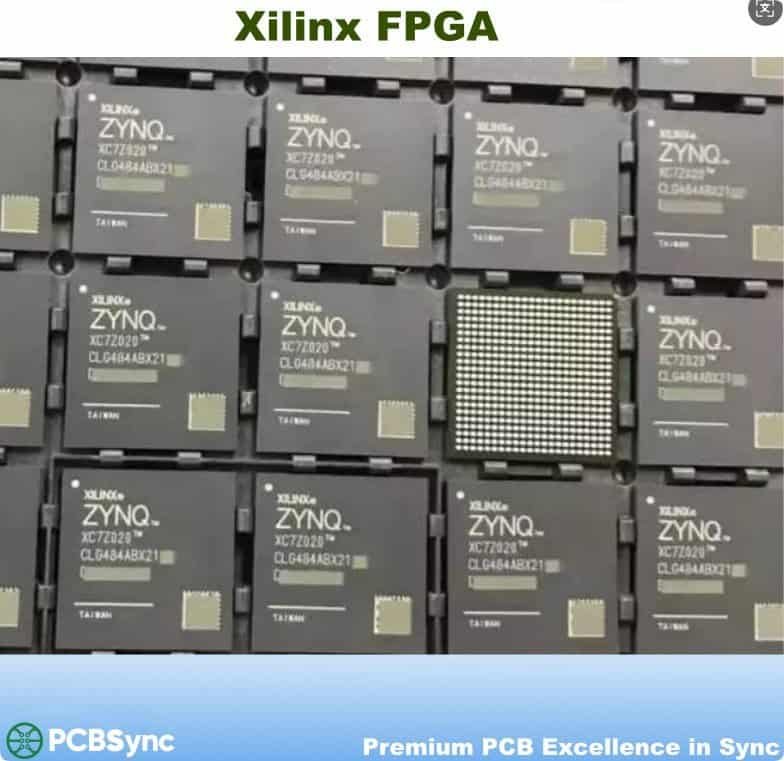
Overview of the XCV300E-6PQ240C Field Programmable Gate Array
The XCV300E-6PQ240C is a premium field-programmable gate array (FPGA) from AMD Xilinx’s Virtex-E family, engineered to deliver exceptional performance for complex digital system implementations. This advanced FPGA combines high-speed processing capabilities with flexible programmability, making it an ideal solution for engineers and designers working on demanding applications in telecommunications, embedded systems, and digital signal processing.
Originally manufactured by Xilinx (now part of AMD), this FPGA represents cutting-edge programmable logic technology utilizing 0.18μm CMOS process technology with six metal layers, offering a powerful alternative to traditional mask-programmed gate arrays.
Key Technical Specifications
| Parameter |
Specification |
| Part Number |
XCV300E-6PQ240C |
| Manufacturer |
AMD (formerly Xilinx Inc.) |
| Product Family |
Virtex-E 1.8V FPGAs |
| System Gates |
300,000 gates |
| Logic Cells |
6,912 configurable logic cells |
| Total RAM Bits |
131,072 bits |
| Number of CLBs |
1,536 Configurable Logic Blocks |
| I/O Pins |
158 user I/O |
| Package Type |
240-Pin BFQFP (Bump Fine-Pitch Quad Flat Pack) |
| Operating Voltage |
1.71V to 1.89V (1.8V nominal) |
| Speed Grade |
-6 (6ns pin-to-pin delay) |
| Maximum Frequency |
357 MHz |
| Process Technology |
0.18μm CMOS, 6-layer metal |
| Mounting Type |
Surface Mount |
| Operating Temperature |
Commercial or Industrial range |
| Package Dimensions |
240-HSPQFP EP (Heat Spreader Plastic Quad Flat Pack, Exposed Pad) |
Advanced Features and Architecture
High-Density Programmable Logic
The XCV300E-6PQ240C FPGA features 82,944K equivalent gates through its 6,912 logic cells, providing substantial resources for implementing sophisticated digital designs. Each configurable logic block (CLB) contains multiple lookup tables (LUTs), flip-flops, and multiplexers that can be programmed to perform complex Boolean functions.
Memory Resources
| Memory Type |
Capacity |
| Block RAM |
131,072 bits total |
| Distributed RAM |
Available in CLBs |
| Configuration Memory |
SRAM-based |
The integrated block RAM provides efficient on-chip memory storage for data buffers, FIFOs, and lookup tables, reducing the need for external memory components in many applications.
High-Speed Interconnect Architecture
The Virtex-E architecture employs a hierarchical routing structure with multiple interconnect levels:
- Local routing for intra-CLB connections
- General routing matrix for chip-wide connectivity
- Dedicated routing for high-fanout signals like clocks and resets
- Long-line routing for high-speed, cross-chip signal distribution
This advanced interconnect architecture ensures minimal signal delay and maximum routing efficiency, enabling the 357 MHz maximum operating frequency.
Clock Management
The XCV300E-6PQ240C includes sophisticated clock distribution networks:
- Multiple global clock buffers
- Digital Clock Managers (DCMs) for clock synthesis and deskewing
- Low-skew clock distribution trees
- Support for multiple independent clock domains
Performance Characteristics
Speed Grade Analysis
| Speed Grade |
Pin-to-Pin Delay |
Maximum Frequency |
Typical Applications |
| -6 |
6 ns |
357 MHz |
High-performance systems |
| -7 |
7 ns |
~400 MHz |
Ultra-high-speed designs |
| -4/-5 |
Slower |
Lower |
Cost-optimized solutions |
The -6 speed grade of this particular device offers an excellent balance between performance and power consumption, suitable for most commercial and industrial applications.
Power Consumption Profile
The 1.8V core voltage architecture provides:
- Lower power consumption compared to older 2.5V/3.3V FPGA families
- Reduced heat generation for improved system reliability
- Compatibility with modern low-voltage digital systems
- Enhanced battery life in portable applications
Package Details: 240-BFQFP
Package Features
| Attribute |
Details |
| Pin Count |
240 pins |
| Package Type |
BFQFP (Bump Fine-pitch Quad Flat Pack) |
| Pitch |
Fine-pitch for high-density PCB layouts |
| Exposed Pad |
Yes (for enhanced thermal dissipation) |
| Mounting |
Surface mount technology (SMT) |
| Lead-Free Status |
Contains lead (legacy product) |
| RoHS Compliance |
RoHS non-compliant (older generation) |
Thermal Considerations
The exposed pad on the package bottom facilitates efficient heat transfer to the PCB and heatsink, critical for maintaining optimal operating temperatures in high-performance applications.
Primary Application Areas
Digital Signal Processing (DSP)
The XCV300E-6PQ240C excels in DSP applications requiring:
- High-speed data processing
- Real-time filtering and transformation
- Adaptive algorithms
- Multi-channel processing
- Spectrum analysis
Embedded System Design
Ideal for embedded systems featuring:
- Custom processor implementations
- Hardware acceleration engines
- Protocol converters
- Interface bridging
- System-on-Chip (SoC) prototyping
Communications Infrastructure
Perfect for telecommunications equipment including:
- Data packet processing
- Protocol handling (Ethernet, USB, PCI)
- Wireless baseband processing
- Network switching and routing
- Error correction coding
Industrial Control Systems
Deployed in industrial automation for:
- Motor control algorithms
- Real-time monitoring systems
- Machine vision processing
- Sensor data acquisition
- Programmable logic controllers (PLCs)
Design and Development Ecosystem
Compatible Development Tools
| Tool Category |
Software |
| Design Entry |
Xilinx ISE Design Suite |
| Synthesis |
XST (Xilinx Synthesis Technology) |
| Simulation |
ModelSim, ISim |
| Place & Route |
Xilinx PAR |
| Programming |
iMPACT, ChipScope Pro |
| Languages |
VHDL, Verilog, SystemVerilog |
Configuration Options
The FPGA supports multiple configuration modes:
- Master Serial mode
- Slave Serial mode
- SelectMAP mode (parallel configuration)
- JTAG boundary scan mode
- Master/Slave Serial chaining for multi-FPGA systems
Competitive Advantages
Why Choose the XCV300E-6PQ240C?
- Proven Architecture: Mature Virtex-E platform with extensive design resources and application notes
- Optimal Resource Density: 300K gates provide substantial logic without excessive power consumption
- High Performance: 357 MHz operation suitable for most real-time applications
- Flexible I/O: 158 configurable I/O pins support various interface standards
- Cost-Effective: Competitive pricing for the performance level delivered
- Industry Standard: Wide acceptance in legacy and maintenance applications
Comparison with Alternative Devices
XCV300E-6PQ240C vs. Related Xilinx FPGAs
| Part Number |
System Gates |
Logic Cells |
I/O Pins |
Package |
Key Difference |
| XCV300E-6PQ240C |
300K |
6,912 |
158 |
240-BFQFP |
Baseline model |
| XCV300E-6FG456C |
300K |
6,912 |
312 |
456-FBGA |
More I/O pins |
| XCV300E-6BG352C |
300K |
6,912 |
260 |
352-BGA |
Larger BGA package |
| XCV300E-6FG256C |
300K |
6,912 |
176 |
256-FBGA |
Smaller footprint |
Programming and Configuration
Configuration Process
The SRAM-based configuration architecture requires:
- External configuration memory (PROM, Flash, or microcontroller)
- Power-up configuration on every system boot
- Bitstream loading via selected configuration mode
- Verification through readback capabilities
Bitstream Security
- Optional bitstream encryption
- Readback protection features
- IP protection mechanisms
- Design security options
Quality and Reliability
Manufacturing Standards
| Quality Metric |
Specification |
| Process Node |
0.18μm CMOS |
| Metal Layers |
6 layers |
| ESD Protection |
Built-in protection circuitry |
| MTBF |
High reliability for industrial use |
| Quality Grade |
Commercial/Industrial |
Environmental Compliance
Note: As a legacy product, the XCV300E-6PQ240C:
- Contains lead in solder balls/connections
- Is RoHS non-compliant
- May require exemptions for certain applications
- Suitable for industrial/legacy system maintenance
PCB Design Considerations
Layout Guidelines
When designing with the XCV300E-6PQ240C:
- Power plane integrity: Separate analog and digital power planes
- Decoupling capacitors: Place close to power pins (100nF + 10μF recommended)
- Signal routing: Use controlled impedance for high-speed signals
- Thermal management: Ensure adequate thermal vias under exposed pad
- Clock routing: Minimize skew and use differential pairs where appropriate
Power Supply Requirements
| Power Rail |
Voltage |
Purpose |
| VCCINT |
1.8V ±5% |
Core logic power |
| VCCIO |
1.8V to 3.3V |
I/O bank power (configurable) |
| GND |
0V |
Ground reference |
Purchasing and Availability
Current Product Status
Note: The XCV300E-6PQ240C is classified as an obsolete/not recommended for new designs product by AMD Xilinx. However, it remains available through:
- Authorized distributors (limited stock)
- Electronic component brokers
- Surplus and excess inventory channels
- Aftermarket suppliers
Finding Reliable Suppliers
When sourcing the XCV300E-6PQ240C:
- Verify authenticity through authorized channels
- Check date codes to ensure fresh stock
- Request certificates of conformance
- Confirm ESD handling procedures
- Validate storage conditions
Migration and Replacement Options
Modern Alternatives
For new designs, consider these current-generation replacements:
- Artix-7 FPGAs: Similar logic density with lower power
- Spartan-7 FPGAs: Cost-optimized alternatives
- Zynq-7000 SoCs: FPGA + ARM processor combinations
Explore the complete range of Xilinx FPGA solutions for modern designs, including the latest 7-series, UltraScale, and UltraScale+ architectures that offer significantly enhanced performance, lower power consumption, and advanced features compared to legacy Virtex-E devices.
Technical Support Resources
Documentation
- Datasheet: Detailed electrical and timing specifications
- User Guide: Architecture and configuration details
- Application Notes: Design implementation examples
- Errata: Known issues and workarounds
- PCN Notifications: Product change notices
Design Support
Access comprehensive support through:
- AMD Xilinx technical forums
- Application engineering support
- Third-party FPGA design consultants
- University FPGA research groups
- Online FPGA communities
Conclusion
The XCV300E-6PQ240C represents a mature, well-understood FPGA solution ideal for maintaining existing designs and legacy system support. With 300,000 system gates, 158 I/O pins, and 357 MHz performance in a compact 240-pin BFQFP package, this Virtex-E device continues to serve applications where proven reliability and established design flows are paramount.
While classified as not recommended for new designs, the XCV300E-6PQ240C remains a viable choice for:
- Product lifecycle extension of existing platforms
- Repair and maintenance of fielded systems
- Cost-sensitive upgrades where redesign is impractical
- Prototype development with readily available tools
For cutting-edge applications demanding the latest technology, evaluate modern Xilinx FPGA families that provide superior performance, power efficiency, and integration capabilities while maintaining compatibility with contemporary design tools and methodologies.