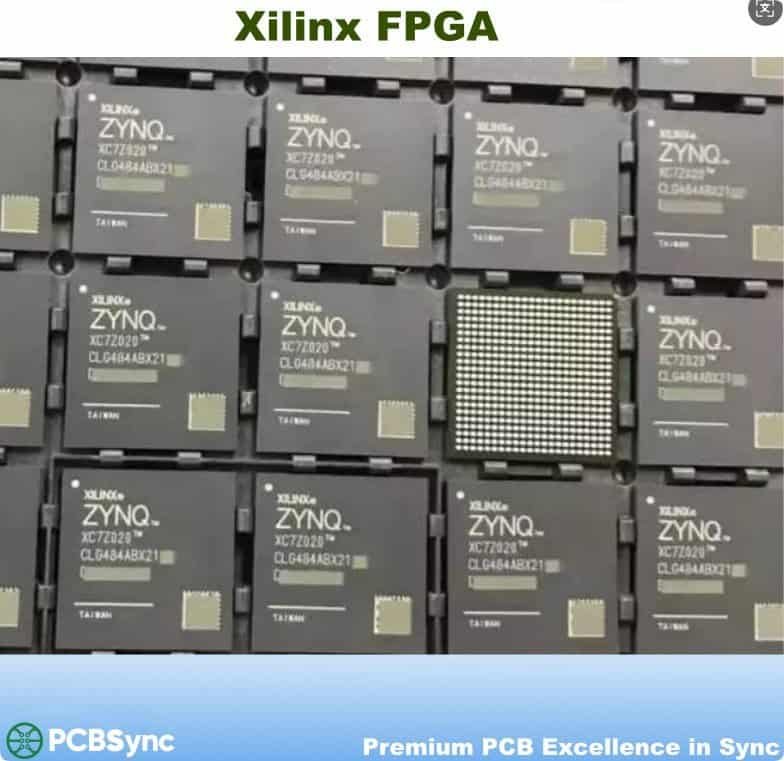
Overview of XCV300E-6BG352I FPGA
The XCV300E-6BG352I is a powerful Field Programmable Gate Array (FPGA) from AMD Xilinx’s acclaimed Virtex-E family. This industrial-grade programmable logic device delivers exceptional performance for complex digital signal processing, embedded systems, and high-reliability applications. With 6,912 logic cells and 260 I/O pins, the XCV300E-6BG352I represents a proven solution for engineers requiring robust, reconfigurable hardware in demanding environments.
Key Technical Specifications
Electrical and Logic Characteristics
| Specification |
Value |
| Part Number |
XCV300E-6BG352I |
| Manufacturer |
AMD Xilinx |
| Product Family |
Virtex-E |
| Logic Elements/Cells |
6,912 |
| Number of LABs/CLBs |
1,536 |
| System Gates |
300,000 (nominal) / 411,955 (actual) |
| Total RAM Bits |
131,072 (128 Kbit) |
| Block RAM |
288 Kbit |
| Number of I/O Pins |
260 |
| Maximum Frequency |
450 MHz |
| Supply Voltage |
1.71V ~ 1.89V (1.8V nominal) |
Package and Environmental Specifications
| Specification |
Details |
| Package Type |
352-LBGA (Land Grid Ball Array) |
| Package Configuration |
Exposed Pad, Metal |
| Supplier Package |
352-MBGA (35×35 mm) |
| Mounting Type |
Surface Mount |
| Operating Temperature Range |
-40°C to +100°C (TJ) |
| Product Status |
Obsolete (Legacy support available) |
| Packaging |
Tray |
Advanced Features and Capabilities
Hardware Architecture
The XCV300E-6BG352I incorporates several advanced architectural features that make it suitable for sophisticated digital design projects:
- High-Density Logic Resources: With nearly 7,000 logic cells, this FPGA provides ample resources for complex state machines, arithmetic functions, and custom digital circuits
- Configurable Block RAM: The 131 Kbit of total RAM supports efficient data buffering, FIFO implementations, and memory-intensive applications
- Flexible I/O Standards: The 260 I/O pins support multiple voltage standards and signaling protocols for seamless interface with various components
- Phase-Locked Loop (PLL): Internal clock management resources enable precise timing control and frequency synthesis
Speed Grade and Performance
The “-6” speed grade designation indicates this device offers balanced performance characteristics suitable for most industrial applications. Operating at frequencies up to 450 MHz, the XCV300E-6BG352I delivers adequate processing speed for:
- Digital signal processing (DSP) algorithms
- Real-time data acquisition systems
- High-speed communications protocols
- Embedded control systems
- Industrial automation applications
Application Areas for XCV300E-6BG352I
Primary Use Cases
| Application Domain |
Typical Implementation |
| Telecommunications |
Protocol converters, data packet processing, baseband processing |
| Industrial Control |
PLC functionality, motor control, sensor interfacing |
| Automotive Systems |
Electronic control units (ECU), dashboard controllers, safety systems |
| Medical Equipment |
Signal processing for diagnostic devices, patient monitoring systems |
| Test & Measurement |
Logic analyzers, oscilloscopes, protocol analyzers |
| Consumer Electronics |
Video processing, audio DSP, interface controllers |
Sample Implementation: Digital Clock Design
The XCV300E-6BG352I’s reconfigurable architecture makes it ideal for educational and prototyping applications. A digital clock implementation might utilize:
- Clock Generation: Internal PLL resources generate stable timing signals
- Time Keeping Logic: Counters and state machines track hours, minutes, and seconds
- Display Interface: I/O pins drive seven-segment displays or LCD modules
- Additional Features: Alarm functionality, stopwatch modes, calendar features
Technical Advantages of Virtex-E FPGAs
Why Choose Virtex-E Technology
The Xilinx FPGA Virtex-E family revolutionized programmable logic by introducing high-performance capabilities in a cost-effective package. Key advantages include:
- Proven Reliability: Extensive field deployment across multiple industries
- Rich Ecosystem Support: Comprehensive development tools, IP cores, and documentation
- Design Flexibility: Full reconfigurability allows design modifications without hardware changes
- Lower Power Consumption: 1.8V core voltage reduces power requirements compared to earlier generations
- Extensive IP Library: Access to pre-verified design blocks accelerates development
Power Management Features
The XCV300E-6BG352I incorporates intelligent power management capabilities:
- Dynamic power scaling based on utilization
- Low-power standby modes
- Optimized voltage regulation (1.71V – 1.89V range)
- Reduced power consumption through advanced 0.18μm process technology
Design and Development Considerations
Programming and Configuration
Engineers working with the XCV300E-6BG352I typically use:
- Hardware Description Languages: Verilog, VHDL, or SystemVerilog
- Development Tools: Xilinx ISE Design Suite (legacy) or compatible toolchains
- Configuration Methods: JTAG programming, master/slave serial configuration
- Simulation: ModelSim, ISIM, or other HDL simulators
Pin Assignment and I/O Planning
| I/O Feature |
Specification |
| Total User I/O |
260 pins |
| Bank Architecture |
Multiple I/O banks for voltage flexibility |
| I/O Standards Supported |
LVTTL, LVCMOS, SSTL, HSTL, and others |
| Differential Pairs |
Support for LVDS and other differential standards |
Procurement and Availability
Product Status and Support
While the XCV300E-6BG352I carries an “obsolete” designation from the manufacturer, this FPGA remains available through:
- Authorized distributors with existing inventory
- Independent component suppliers and brokers
- Electronic component marketplaces
- Legacy support programs
Quality Assurance
Reputable suppliers provide:
- Authenticity Verification: Anti-counterfeit measures and traceability
- Pre-Shipment Inspection: Quality control testing before delivery
- Original Packaging: Factory-sealed, anti-static packaging
- Warranty Coverage: Typically 90 days to 1 year depending on supplier
Ordering Information
| Component |
Details |
| Base Part Number |
XCV300E |
| Speed Grade |
-6 (commercial speed) |
| Package Code |
BG352 (352-ball BGA) |
| Temperature Range |
I (Industrial: -40°C to +100°C) |
| Full Part Number |
XCV300E-6BG352I |
Comparison with Similar FPGAs
Virtex-E Family Variants
| Part Number |
Logic Cells |
I/O Pins |
Package |
Key Difference |
| XCV300E-6BG352I |
6,912 |
260 |
352-BGA |
Standard industrial variant |
| XCV300E-6BG432C |
6,912 |
316 |
432-BGA |
More I/O pins, commercial temp |
| XCV300E-6FG456I |
6,912 |
316 |
456-BGA |
Fine-pitch BGA package |
| XCV300E-4BG352I |
6,912 |
260 |
352-BGA |
Slower speed grade (-4) |
Installation and Integration Guidelines
PCB Design Recommendations
When integrating the XCV300E-6BG352I into circuit board designs:
- Thermal Management: Ensure adequate heat dissipation for the exposed pad package
- Power Supply Design: Provide clean, stable 1.8V core voltage with proper decoupling
- Signal Integrity: Follow high-speed design practices for clock and critical signals
- Ground Planes: Implement solid ground planes for EMI reduction
- Ball Grid Array Layout: Use appropriate PCB stackup and via structures for BGA mounting
Reference Design Resources
Developers can leverage:
- Application notes from AMD Xilinx
- Reference schematics for Virtex-E boards
- Community forums and design examples
- Third-party development boards and evaluation kits
Troubleshooting and Common Issues
Design Challenges and Solutions
| Challenge |
Solution |
| Timing Closure |
Optimize synthesis settings, use pipelining, adjust placement constraints |
| Resource Utilization |
Efficient HDL coding, resource sharing, block RAM usage optimization |
| Configuration Issues |
Verify bitstream generation, check JTAG connections, validate configuration mode |
| I/O Standard Mismatch |
Carefully specify IOSTANDARD constraints in UCF file |
Long-Term Support and Alternatives
Legacy Product Considerations
For new designs, engineers should consider:
- Current Availability: Assess long-term supply chain for XCV300E-6BG352I
- Lifecycle Planning: Plan for potential obsolescence and component sourcing
- Alternative Devices: Evaluate newer Xilinx families (Spartan, Artix, Kintex) for new projects
- Stock Management: Maintain adequate inventory for ongoing production
Migration Path Options
Organizations using XCV300E-6BG352I can explore:
- Direct drop-in replacements (if available)
- Pin-compatible alternatives from the Virtex-E family
- Design migration to newer FPGA architectures
- Last-time-buy opportunities from suppliers
Frequently Asked Questions
What is the XCV300E-6BG352I used for?
The XCV300E-6BG352I serves applications requiring reconfigurable digital logic, including telecommunications equipment, industrial control systems, automotive electronics, medical devices, and embedded systems requiring custom processing capabilities.
Is the XCV300E-6BG352I still in production?
The XCV300E-6BG352I is classified as obsolete by AMD Xilinx, meaning active production has ceased. However, inventory remains available through distributors, surplus suppliers, and independent component brokers.
What development tools support XCV300E-6BG352I?
This FPGA is supported by Xilinx ISE Design Suite (legacy toolchain). Modern tools like Vivado do not support Virtex-E devices, so designers must use ISE version 14.7 or earlier.
What is the difference between XCV300E-6BG352I and XCV300E-6BG352C?
The primary difference is temperature range: the “I” suffix indicates industrial temperature range (-40°C to +100°C), while “C” denotes commercial temperature range (0°C to +85°C).
Can I replace XCV300E-6BG352I with a newer FPGA?
Direct replacement depends on your specific application. While newer FPGAs offer better performance, pin compatibility, voltage requirements, and software tools differ. A design migration would likely be necessary rather than a simple swap.
Conclusion: Reliable FPGA Solution for Industrial Applications
The XCV300E-6BG352I remains a valuable programmable logic solution for maintenance, repair, and legacy system support. Its combination of 6,912 logic cells, 260 I/O pins, and industrial temperature range makes it suitable for demanding applications where proven technology and reliability are paramount.
While classified as obsolete, the extensive installed base and continued availability ensure that engineers can confidently specify this device for legacy product support and specific applications where its capabilities align with project requirements. For organizations maintaining existing XCV300E-6BG352I-based systems, reputable suppliers continue to provide authentic components with quality assurance and warranty support.
When evaluating FPGAs for new projects, designers should assess current-generation alternatives while recognizing that the XCV300E-6BG352I’s proven track record in industrial environments represents decades of field-tested reliability.