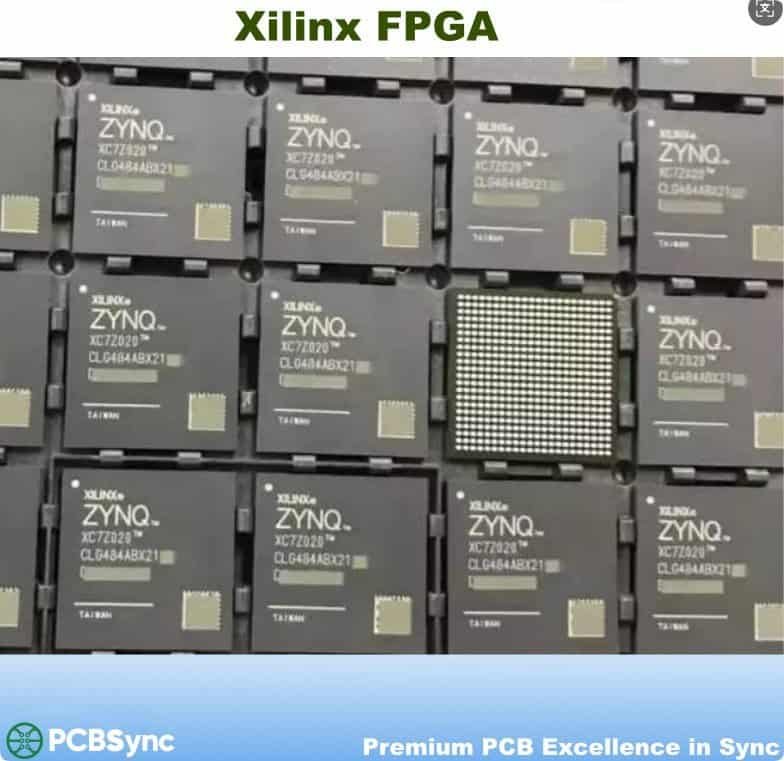
Overview of XCV300E-5BG352C FPGA
The XCV300E-5BG352C is a powerful Field Programmable Gate Array (FPGA) from AMD Xilinx’s renowned Virtex-E family. This advanced programmable logic device delivers exceptional performance for complex digital designs, offering 300,000 system gates in a compact 352-ball BGA package. Ideal for telecommunications, industrial automation, and embedded systems applications, the XCV300E-5BG352C provides engineers with the flexibility and processing power needed for demanding FPGA projects.
Key Technical Specifications
| Specification |
Details |
| Part Number |
XCV300E-5BG352C |
| Manufacturer |
AMD Xilinx (formerly Xilinx Inc.) |
| Product Family |
Virtex-E |
| System Gates |
300,000 gates |
| Logic Cells |
6,912 cells |
| CLBs (Configurable Logic Blocks) |
1,536 CLBs |
| Total RAM Bits |
65,536 bits |
| I/O Pins |
260 I/O |
| Package Type |
352-MBGA (Micro Ball Grid Array) |
| Package Dimensions |
35mm x 35mm |
| Supply Voltage |
1.8V core |
| Operating Temperature Range |
0°C to +85°C (Commercial) |
| Speed Grade |
-5 (Standard Performance) |
| Mounting Type |
Surface Mount Technology (SMT) |
| Part Status |
Mature/Legacy Product |
XCV300E-5BG352C Architecture and Features
Advanced Logic Resources
The XCV300E-5BG352C FPGA architecture provides comprehensive logic resources for complex digital system implementation:
- 6,912 Logic Cells: Sufficient capacity for implementing sophisticated digital functions
- 1,536 Configurable Logic Blocks: Flexible building blocks for custom logic design
- 65,536 RAM Bits: Integrated block RAM for data storage and buffering
- 260 User I/O Pins: Extensive connectivity options for interfacing with external devices
High-Speed Performance Characteristics
This Xilinx FPGA delivers reliable performance across various applications:
- Speed grade -5 provides balanced performance for most applications
- Low-power 1.8V core voltage operation
- Support for various I/O standards including LVTTL, LVCMOS, and differential signaling
- On-chip clock management resources
XCV300E-5BG352C Applications
| Application Area |
Use Cases |
| Telecommunications |
Digital signal processing, protocol conversion, network switching |
| Industrial Control |
Motor control, sensor interfacing, factory automation |
| Medical Devices |
Imaging equipment, diagnostic instruments, patient monitoring |
| Test & Measurement |
Logic analyzers, oscilloscopes, data acquisition systems |
| Embedded Systems |
Custom computing platforms, hardware acceleration, co-processing |
| Aerospace/Defense |
Signal processing, radar systems, secure communications |
Package Information: 352-MBGA
Physical Characteristics
| Package Parameter |
Value |
| Package Type |
MBGA (Micro Ball Grid Array) |
| Ball Count |
352 balls |
| Package Size |
35mm x 35mm |
| Ball Pitch |
Standard fine-pitch BGA |
| Mounting |
Surface Mount (Reflow soldering) |
| Thermal Performance |
Enhanced thermal dissipation through substrate |
Design Advantages
The 352-MBGA package offers several engineering benefits:
- Compact footprint: Minimal PCB real estate requirement
- High I/O density: 260 I/O pins in a small package
- Excellent electrical performance: Short signal paths reduce inductance
- Superior thermal characteristics: Efficient heat dissipation for reliable operation
- Industry-standard footprint: Compatible with standard PCB manufacturing processes
Development Resources and Tools
Compatible Development Software
| Tool |
Purpose |
| Xilinx ISE Design Suite |
Complete FPGA design environment |
| ModelSim |
HDL simulation and verification |
| Synplify |
Advanced synthesis tool |
| ChipScope Pro |
On-chip debugging and analysis |
Programming and Configuration
The XCV300E-5BG352C supports multiple configuration modes:
- JTAG boundary scan programming
- Master Serial mode
- Slave Serial mode
- Master SelectMAP mode
- Slave SelectMAP mode
Comparison: XCV300E Speed Grades
| Model |
Speed Grade |
Performance |
Power |
Typical Use |
| XCV300E-4BG352C |
-4 |
Highest |
Higher |
Maximum performance applications |
| XCV300E-5BG352C |
-5 |
Standard |
Balanced |
General purpose designs |
| XCV300E-6BG352C |
-6 |
Moderate |
Lower |
Power-sensitive applications |
| XCV300E-7BG352C |
-7 |
Lower |
Lowest |
Cost-optimized solutions |
| XCV300E-8BG352C |
-8 |
Entry-level |
Minimal |
Legacy support, low-complexity |
Design Considerations for XCV300E-5BG352C
Power Supply Requirements
Proper power distribution is critical for optimal FPGA performance:
- VCCINT (Core): 1.8V ± 5%
- VCCO (I/O): Varies by I/O standard (1.5V to 3.3V)
- Decoupling: Multiple bypass capacitors required near power pins
- Power sequencing: Follow manufacturer guidelines for power-up/down sequences
Thermal Management
Effective thermal design ensures long-term reliability:
- Maximum junction temperature: 125°C
- Recommend heatsink for continuous operation at high utilization
- Thermal vias in PCB design improve heat dissipation
- Monitor power consumption during design phase
PCB Design Guidelines
| Design Aspect |
Recommendation |
| Layer Stack |
Minimum 6-layer PCB recommended |
| Via Technology |
Laser-drilled microvias for BGA fanout |
| Trace Impedance |
Controlled impedance for high-speed signals |
| Ground Planes |
Solid ground planes for noise reduction |
| Signal Integrity |
Length matching for critical signal groups |
XCV300E-5BG352C vs Modern Alternatives
Legacy Product Considerations
While the XCV300E-5BG352C remains available for existing designs, engineers should consider:
- Availability: Mature product with potential long-term availability concerns
- Cost: May be higher than newer equivalent devices
- Support: Limited ongoing development tool updates
- Migration path: Evaluation of modern Xilinx 7-Series or UltraScale devices for new designs
Recommended Modern Alternatives
| Modern Device |
Advantages |
Considerations |
| Artix-7 XC7A35T |
Lower power, higher performance, current architecture |
Pin-out differences require PCB redesign |
| Spartan-7 XC7S50 |
Cost-effective, modern toolchain support |
Different I/O capabilities |
Quality and Reliability
Manufacturing Standards
AMD Xilinx maintains rigorous quality standards:
- ISO 9001 certified manufacturing
- RoHS compliant (lead-free options available)
- Automotive grade variants available (extended temperature)
- Comprehensive reliability testing per JEDEC standards
Reliability Metrics
| Reliability Parameter |
Specification |
| MTBF |
>1,000,000 hours at 55°C |
| ESD Protection |
HBM: 2000V, CDM: 500V |
| Moisture Sensitivity |
MSL 3 (per J-STD-020) |
| Latch-up Immunity |
>200mA per JEDEC-78 |
Procurement and Supply Chain
Availability and Sourcing
The XCV300E-5BG352C can be sourced through:
- Authorized Distributors: Digi-Key, Mouser, Arrow, Avnet
- Direct from Manufacturer: AMD Xilinx direct sales
- Aftermarket: Specialized FPGA component suppliers
- Obsolescence Management: Recommend securing long-term supply for legacy designs
Packaging Options
| Package Type |
Quantity |
Lead Time |
| Tray |
90 units |
8-12 weeks |
| Tube |
Custom quantity |
10-14 weeks |
| Tape & Reel |
250 units |
8-12 weeks |
Getting Started with XCV300E-5BG352C
Development Kit Recommendations
While specific XCV300E development boards may be limited, compatible development platforms include:
- Generic Virtex-E evaluation boards
- Custom prototype boards with 352-MBGA socket
- Third-party FPGA development systems with Virtex-E support
Design Flow Overview
- Specification: Define functional requirements and I/O interfaces
- HDL Coding: Implement design in VHDL or Verilog
- Simulation: Verify functionality with testbenches
- Synthesis: Convert HDL to netlist using ISE tools
- Implementation: Place and route design to FPGA fabric
- Timing Analysis: Verify timing constraints are met
- Programming: Configure device via JTAG or other method
- Validation: Test on target hardware
Frequently Asked Questions
What is the difference between XCV300E-5BG352C and XCV300E-6BG352C?
The primary difference is the speed grade (-5 vs -6). The XCV300E-5BG352C offers faster performance with shorter propagation delays, while the -6 variant provides slower performance at potentially lower power consumption. The -5 grade is suitable for applications requiring higher clock frequencies and faster timing margins.
Is the XCV300E-5BG352C still in production?
The Virtex-E family is a mature product line. While devices may still be available through distributors and aftermarket suppliers, AMD Xilinx has transitioned focus to newer architectures. Check with authorized distributors for current availability and lead times.
What development tools support XCV300E-5BG352C?
The Xilinx ISE Design Suite (version 14.7 and earlier) fully supports the XCV300E-5BG352C. Note that newer Vivado tools do not support Virtex-E devices, so ISE must be used for design entry, synthesis, and implementation.
Can I use the XCV300E-5BG352C in automotive applications?
Standard commercial-grade XCV300E devices are rated for 0°C to +85°C operation. For automotive applications, consider industrial-grade variants with extended temperature ranges (-40°C to +100°C) or automotive-qualified alternatives from the current AMD Xilinx portfolio.
Conclusion: XCV300E-5BG352C for Professional FPGA Design
The XCV300E-5BG352C represents a proven FPGA solution from AMD Xilinx’s established Virtex-E architecture. With 300,000 system gates, 260 I/O pins, and comprehensive logic resources, this device continues to serve existing embedded systems and industrial applications effectively. While newer FPGA families offer enhanced features and performance, the XCV300E-5BG352C remains a viable choice for maintenance, legacy system support, and applications where the proven Virtex-E architecture meets design requirements.
For engineers working with existing XCV300E-5BG352C designs, AMD Xilinx provides continued support through mature design tools and documentation. Organizations planning new projects should evaluate modern Xilinx FPGA families to leverage current technology advantages while considering the established reliability and proven performance of the Virtex-E platform.