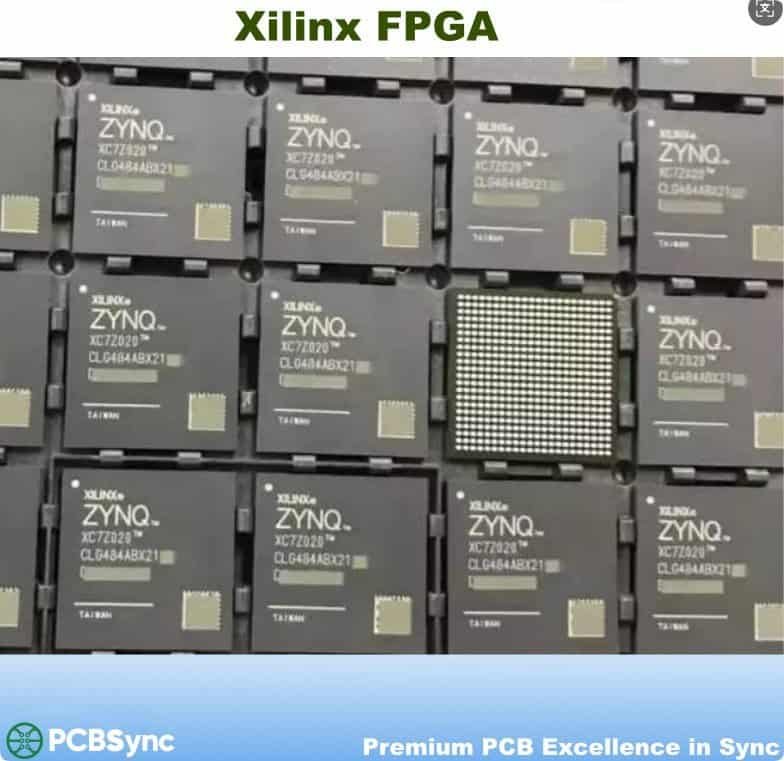
The XCV200E-6PQ240C is a powerful field-programmable gate array (FPGA) from AMD’s (formerly Xilinx) renowned Virtex-E family, designed to deliver exceptional performance and flexibility for embedded system applications. This advanced programmable logic device combines high gate density, low power consumption, and versatile I/O capabilities in a compact 240-pin PQFP package.
Product Overview
The XCV200E-6PQ240C represents a significant advancement in FPGA technology, offering engineers and designers a cost-effective solution for implementing complex digital logic functions. Built on advanced 0.18μm CMOS technology, this FPGA delivers the performance and reliability required for mission-critical applications across telecommunications, industrial control, medical devices, and embedded computing systems.
Technical Specifications
| Specification |
Details |
| Part Number |
XCV200E-6PQ240C |
| Manufacturer |
AMD (Xilinx) |
| Product Family |
Virtex-E FPGAs |
| Logic Elements/Cells |
5,292 Cells |
| System Gates |
236,666 Gates |
| Configurable Logic Blocks (CLBs) |
Variable Configuration |
| Operating Voltage |
1.8V Core |
| I/O Voltage |
2.5V / 3.3V |
| Maximum Clock Frequency |
333 MHz |
| Package Type |
240-Pin PQFP (Plastic Quad Flat Pack) |
| Package Dimensions |
Standard PQFP Footprint |
| Number of I/Os |
166 User I/Os |
| Operating Temperature Range |
0°C to +85°C (Commercial) |
| Speed Grade |
-6 (Standard Performance) |
| Technology Node |
0.18μm CMOS Process |
| Mounting Type |
Surface Mount |
Key Features and Benefits
High Logic Density
The XCV200E-6PQ240C integrates 236,666 system gates and 5,292 logic cells, providing ample resources for implementing complex digital designs. This high gate density enables designers to consolidate multiple discrete components into a single FPGA, reducing board space and system costs.
Flexible I/O Configuration
With 166 user-configurable I/Os, this Xilinx FPGA supports various interface standards including LVTTL, LVCMOS, PCI, and more. The flexible I/O architecture allows seamless integration with diverse system components and peripherals.
Advanced Block RAM Resources
Embedded Block RAM provides efficient on-chip memory storage for data buffering, lookup tables, and FIFO implementations. This integrated memory reduces the need for external memory components and improves system performance.
High-Performance DSP Capabilities
The XCV200E-6PQ240C includes dedicated DSP resources optimized for arithmetic-intensive applications such as digital signal processing, video/image processing, and communications algorithms.
Low Power Consumption
Designed with power efficiency in mind, the Virtex-E architecture minimizes static and dynamic power consumption, making it ideal for battery-powered and thermally-constrained applications.
Architecture and Design Resources
Configurable Logic Blocks (CLBs)
Each CLB in the XCV200E-6PQ240C contains:
- Four-input lookup tables (LUTs) for combinatorial logic
- Flip-flops for sequential logic implementation
- Dedicated carry logic for efficient arithmetic operations
- Multiplexers for data routing and selection
Interconnect Resources
The hierarchical routing architecture features:
- Fast dedicated routing for critical paths
- General-purpose interconnect for flexible signal routing
- Clock distribution networks for low-skew timing
- Global routing resources for wide fanout signals
I/O Resources
Each I/O block provides:
- Programmable slew rate control
- Adjustable drive strength
- Input/output registers for improved timing performance
- Support for multiple I/O standards
Application Areas
| Application Domain |
Use Cases |
| Telecommunications |
Protocol converters, line cards, baseband processing, network interfaces |
| Industrial Automation |
Motor control, PLCs, sensor interfaces, real-time control systems |
| Medical Equipment |
Diagnostic imaging, patient monitoring, medical signal processing |
| Automotive Electronics |
Engine control units, infotainment systems, driver assistance systems |
| Video/Image Processing |
Video encoding/decoding, image enhancement, surveillance systems |
| Embedded Computing |
Custom processors, hardware acceleration, peripheral controllers |
| Test & Measurement |
Signal generators, logic analyzers, data acquisition systems |
| Aerospace & Defense |
Avionics, radar systems, secure communications, guidance systems |
Development Tools and Software Support
Vivado Design Suite
The XCV200E-6PQ240C is supported by AMD’s comprehensive Vivado Design Suite, which provides:
- Integrated design environment (IDE) for FPGA development
- High-level synthesis (HLS) for C/C++ to HDL conversion
- Advanced timing analysis and optimization
- Power analysis and optimization tools
- Comprehensive IP library and core generator
ISE Design Suite
Legacy support is also available through the ISE Design Suite, offering:
- HDL synthesis and implementation
- Simulation and verification tools
- Constraint management
- Device programming utilities
Programming Languages
Designers can implement logic using:
- VHDL (VHSIC Hardware Description Language)
- Verilog HDL
- SystemVerilog
- High-Level Synthesis (C/C++)
Package Information
| Package Details |
Specifications |
| Package Type |
PQFP (Plastic Quad Flat Pack) |
| Pin Count |
240 Pins |
| Pin Pitch |
0.5mm |
| Package Dimensions |
32mm x 32mm (nominal) |
| Body Thickness |
3.4mm (nominal) |
| Mounting Style |
Surface Mount Technology (SMT) |
| MSL Rating |
Moisture Sensitivity Level 3 |
| RoHS Compliance |
Varies by production date (check specific lot) |
| Lead-Free Status |
Check specific part marking |
Performance Characteristics
Timing Specifications
- Maximum System Frequency: 333 MHz
- Setup Time: Varies by I/O standard
- Clock-to-Out Delay: Optimized for high-speed operation
- Propagation Delay: Minimized through advanced routing
Power Specifications
- Core Voltage (VCCINT): 1.8V ± 5%
- I/O Voltage (VCCO): 1.2V to 3.3V (programmable)
- Static Power: Typically <500mW (design-dependent)
- Dynamic Power: Depends on design utilization and switching activity
Memory Resources
| Memory Type |
Capacity |
| Block RAM |
Configurable blocks (18 Kbit each) |
| Distributed RAM |
Implemented using LUT resources |
| Total RAM Bits |
Design-dependent configuration |
Design Considerations
Thermal Management
The XCV200E-6PQ240C requires proper thermal design to ensure reliable operation:
- Maintain junction temperature below maximum rating
- Provide adequate airflow for natural or forced convection
- Consider heatsink solutions for high-power designs
- Monitor thermal performance during system testing
Power Supply Design
Recommended power supply practices:
- Provide separate, well-regulated 1.8V and 2.5V/3.3V supplies
- Implement proper decoupling capacitors near power pins
- Use adequate power plane design for low impedance
- Consider sequencing requirements for multiple voltage rails
PCB Layout Guidelines
- Follow manufacturer’s PCB design guidelines
- Maintain controlled impedance for high-speed signals
- Implement proper grounding and power distribution
- Provide adequate clearance for package dimensions
- Consider signal integrity for critical nets
Configuration and Programming
Configuration Modes
The XCV200E-6PQ240C supports multiple configuration options:
- Master Serial Mode: FPGA controls configuration device
- Slave Serial Mode: External controller provides configuration data
- SelectMAP Mode: Parallel configuration for faster startup
- JTAG Mode: In-system programming and boundary scan
Configuration Memory
- Requires external configuration memory (PROM, Flash, or controller)
- Configuration bitstream size varies by design utilization
- Supports bitstream compression for reduced memory requirements
- Fast configuration for rapid system startup
Quality and Reliability
Manufacturing Standards
- Manufactured in ISO-certified facilities
- Complies with industry quality standards
- Rigorous testing and screening procedures
- Full traceability for production lots
Reliability Specifications
- MTBF: Exceeds 1 million hours (typical conditions)
- Operating Life: >20 years under normal conditions
- ESD Protection: Human Body Model (HBM) and Machine Model (MM) tested
- Latch-up Immunity: Meets JEDEC specifications
Ordering Information
When ordering the XCV200E-6PQ240C, specify:
- Complete part number: XCV200E-6PQ240C
- Quantity required
- Packaging type (tray, tube, or tape & reel)
- Any special testing or screening requirements
- Required documentation (datasheets, quality certificates)
Comparison with Related Products
| Feature |
XCV200E-6PQ240C |
XCV300E-6PQ240C |
XCV50E-6PQ240C |
| System Gates |
236,666 |
322,394 |
59,904 |
| Logic Cells |
5,292 |
7,168 |
1,536 |
| Package |
240-PQFP |
240-PQFP |
240-PQFP |
| I/Os |
166 |
166 |
166 |
| Speed Grade |
-6 |
-6 |
-6 |
Support and Resources
Documentation
- Datasheet (DS022): Complete technical specifications
- User Guide (UG): Design implementation guidelines
- Application Notes: Design tips and best practices
- Errata: Known issues and workarounds
Technical Support
- Online technical forums and communities
- Application engineering support
- Design consultation services
- Training and certification programs
Frequently Asked Questions
Q: What development tools are required for the XCV200E-6PQ240C? A: The primary development tool is Xilinx Vivado Design Suite or ISE Design Suite (legacy). A JTAG programmer is required for device configuration and debugging.
Q: Can the XCV200E-6PQ240C be used in industrial temperature applications? A: The standard -6PQ240C variant is rated for commercial temperature (0°C to +85°C). For extended or industrial temperature ranges, consider the -6PQ240I variant.
Q: What is the difference between speed grades -6, -7, and -8? A: Speed grades indicate performance levels. -6 is standard performance, -7 is faster, and -8 is the highest performance grade. Higher speed grades support higher operating frequencies.
Q: Is the XCV200E-6PQ240C RoHS compliant? A: RoHS compliance varies by production lot and date code. Consult the specific part marking or manufacturer documentation for your device.
Q: What configuration memory is recommended? A: Configuration memory selection depends on the application requirements. Common options include Xilinx Platform Flash PROMs or standard SPI Flash memory devices.
Conclusion
The XCV200E-6PQ240C FPGA delivers an optimal balance of performance, power efficiency, and cost-effectiveness for embedded system applications. With its substantial gate density, flexible I/O options, and comprehensive development tool support, this device enables engineers to implement complex digital designs with confidence. Whether you’re developing telecommunications equipment, industrial control systems, or medical devices, the XCV200E-6PQ240C provides the programmable logic resources and reliability required for demanding applications.
For the latest datasheets, design resources, and technical support, visit the manufacturer’s website or consult authorized distributors. The XCV200E-6PQ240C continues to serve as a proven solution for embedded FPGA applications requiring robust performance and design flexibility.