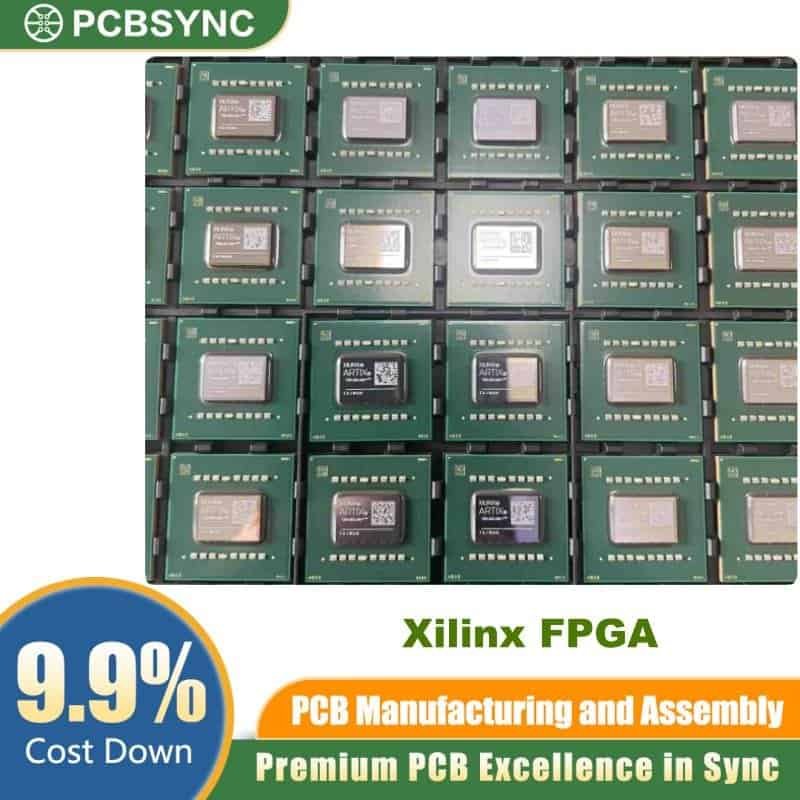
Overview of the XCV2000E-7FG680C Field Programmable Gate Array
The XCV2000E-7FG680C is a cutting-edge Field Programmable Gate Array (FPGA) from AMD Xilinx’s renowned Virtex-E family, designed to deliver exceptional performance for complex digital systems and high-speed data processing applications. This advanced programmable logic device combines high gate density, fast processing capabilities, and energy efficiency, making it an ideal choice for telecommunications, industrial automation, aerospace, and embedded computing solutions.
As a member of the Virtex-E 1.8V FPGA series, the XCV2000E-7FG680C represents a significant advancement in programmable logic technology, offering engineers and designers a powerful, flexible platform for implementing sophisticated digital circuits without the need for custom ASIC development.
Key Features and Technical Specifications
Core Architecture Specifications
The XCV2000E-7FG680C incorporates advanced features that set it apart in the Xilinx FPGA product line:
| Specification |
Value |
Description |
| Logic Gates |
518,400 gates (518.4K) |
Massive gate count for complex logic implementation |
| Logic Cells |
43,200 cells |
High-density programmable logic elements |
| Operating Voltage |
1.8V |
Low-power operation for energy-efficient designs |
| Process Technology |
0.18μm CMOS |
Advanced 6-layer metal fabrication process |
| Maximum Frequency |
400 MHz |
High-speed clock operation for demanding applications |
| Package Type |
FG680 (680-pin FBGA) |
Fine-pitch Ball Grid Array for compact PCB layouts |
| Speed Grade |
-7 |
Commercial-grade speed performance |
| I/O Count |
404 I/O pins |
Extensive connectivity options |
| Total RAM Bits |
655,360 bits |
Generous embedded memory resources |
Performance and Speed Grade
The -7 speed grade designation indicates this FPGA is optimized for commercial applications requiring reliable performance across standard operating conditions. This speed grade offers an excellent balance between performance and cost-effectiveness, making it suitable for a wide range of industrial and commercial applications.
Technical Advantages and Benefits
Advanced Architectural Design
The XCV2000E-7FG680C leverages Xilinx’s innovative Virtex-E architecture, which has been optimized for:
- Place-and-Route Efficiency: Streamlined design implementation reduces development time
- Silicon Utilization: Maximized logic density per square millimeter
- Interconnect Hierarchy: Fast, flexible routing resources for complex designs
- System Integration: Rich set of built-in features for complete system implementation
Manufacturing and Quality
Manufactured using an advanced 0.18-micron CMOS process with 6-layer metal interconnect, the XCV2000E-7FG680C delivers:
- Enhanced signal integrity
- Reduced power consumption
- Improved timing characteristics
- Superior thermal performance
Application Areas and Use Cases
Telecommunications Infrastructure
The high gate count and processing speed make the XCV2000E-7FG680C ideal for:
- Base station controllers
- Digital signal processing applications
- Protocol conversion systems
- Network switching equipment
- High-speed data routing
Industrial Automation and Control
Engineers deploy this FPGA in:
- Programmable logic controllers (PLCs)
- Motion control systems
- Real-time monitoring equipment
- Industrial vision systems
- Process control interfaces
Aerospace and Defense Systems
The reliability and performance characteristics support:
- Avionics systems
- Radar signal processing
- Secure communications
- Navigation systems
- Mission-critical embedded computing
Medical Equipment
Healthcare technology benefits from:
- Medical imaging systems
- Patient monitoring devices
- Diagnostic equipment
- Laboratory automation
- Surgical robotics controllers
Package Information: FG680 FBGA
Package Characteristics
| Package Feature |
Specification |
| Package Type |
Fine-pitch Ball Grid Array (FBGA) |
| Pin Count |
680 pins |
| Ball Pitch |
Fine-pitch for high-density routing |
| Thermal Performance |
Optimized for effective heat dissipation |
| Mounting |
Surface-mount technology (SMT) |
PCB Design Considerations
When designing with the FG680 package:
- Requires controlled-impedance PCB design
- Multi-layer boards recommended (minimum 6-8 layers)
- Adequate thermal management through vias and ground planes
- Precision BGA reflow soldering process
- X-ray inspection recommended for quality assurance
Memory and Configuration Resources
Embedded Memory Architecture
The XCV2000E-7FG680C features substantial embedded memory resources:
- Total RAM: 655,360 bits of configurable RAM
- Block RAM: Dual-port memory blocks for data buffering
- Distributed RAM: LUT-based memory for small, fast storage
- Configuration Memory: Non-volatile storage for FPGA configuration
Flexible Memory Allocation
Engineers can configure memory resources as:
- FIFO buffers
- Lookup tables (LUTs)
- Dual-port RAM
- Shift registers
- ROM storage
Development and Programming Tools
Supported Design Software
The XCV2000E-7FG680C is compatible with industry-standard FPGA development tools:
- Xilinx ISE Design Suite: Comprehensive development environment
- Vivado Design Suite: Advanced design and synthesis tools
- ModelSim: Industry-standard simulation platform
- ChipScope Pro: Real-time debugging and analysis
Programming Options
Multiple configuration methods are supported:
- JTAG boundary-scan programming
- Serial configuration via SPI flash
- SelectMAP parallel configuration
- Remote system upgrade capability
Power Consumption and Thermal Management
Power Specifications
| Power Parameter |
Typical Value |
Notes |
| Core Voltage |
1.8V ±5% |
Tight regulation required |
| I/O Voltage |
1.8V to 3.3V |
Multiple I/O standards supported |
| Static Power |
Low quiescent current |
Power-optimized design |
| Dynamic Power |
Design-dependent |
Varies with utilization |
Thermal Considerations
Proper thermal management is essential:
- Maximum junction temperature: 85°C (commercial grade)
- Heat sink recommended for high-utilization designs
- Thermal vias for improved heat dissipation
- Airflow considerations in dense PCB assemblies
Comparison with Related Products
XCV2000E-6FG680C vs XCV2000E-7FG680C
| Feature |
-6 Speed Grade |
-7 Speed Grade |
| Performance |
Faster timing |
Standard commercial |
| Price |
Higher cost |
More cost-effective |
| Power |
Slightly higher |
Optimized efficiency |
| Applications |
High-speed critical |
General commercial |
Migration and Scalability
The Virtex-E family offers seamless migration paths:
- Lower Density: XCV1600E for less complex designs
- Higher Density: XCV3200E for expanded requirements
- Pin Compatibility: Within same package families
- Software Compatibility: Unified tool chain across family
Quality and Reliability Standards
Manufacturing Quality
AMD Xilinx implements rigorous quality control:
- ISO 9001 certified manufacturing
- Automotive-grade options available
- 100% electrical testing
- Burn-in testing for critical applications
- Full traceability and lot control
Reliability Metrics
- MTBF: High mean time between failures
- Operating Temperature: -40°C to +100°C (industrial grade available)
- ESD Protection: Human body model (HBM) compliant
- Latch-up Immunity: CMOS design protection
Purchasing and Availability Considerations
Procurement Information
When sourcing the XCV2000E-7FG680C:
- Verify authentic AMD Xilinx components
- Check date codes for current production
- Consider lead times for large quantities
- Request certificates of conformance
- Evaluate authorized distributor networks
Package and Handling
Products typically ship in:
- Anti-static trays for component protection
- Moisture-sensitive packaging (MSL 3)
- Proper labeling with part numbers and lot codes
- Handling procedures to prevent ESD damage
Design Best Practices and Recommendations
Optimal Implementation Strategies
To maximize performance with the XCV2000E-7FG680C:
- Clock Domain Management: Carefully partition clock domains
- Timing Constraints: Define comprehensive timing requirements
- Resource Utilization: Balance logic and routing resources
- Power Distribution: Design robust power delivery network
- Signal Integrity: Follow high-speed design guidelines
Common Design Challenges
Engineers should address:
- Clock distribution and skew management
- High-speed signal routing
- EMI/EMC compliance
- Power sequencing requirements
- Configuration security
Frequently Asked Questions
What is the difference between XCV2000E-7FG680C and XCV2000E-7FG680I?
The “C” suffix designates commercial temperature range (0°C to +85°C), while “I” indicates industrial temperature range (-40°C to +100°C). Choose based on your operating environment requirements.
Can I use 3.3V I/O with this device?
Yes, the XCV2000E-7FG680C supports multiple I/O standards including 3.3V LVTTL/LVCMOS, while the core operates at 1.8V.
What programming cable is required?
Standard Xilinx programming cables such as Platform Cable USB II or Digilent JTAG cables are compatible for JTAG programming.
Is this device RoHS compliant?
Current production XCV2000E-7FG680C devices are available in RoHS-compliant versions. Verify with your supplier for specific requirements.
Technical Support and Resources
Documentation and References
Essential resources for working with the XCV2000E-7FG680C:
- Virtex-E family datasheet
- Configuration user guide
- PCB design guidelines
- Power distribution design recommendations
- Application notes and reference designs
Community and Support
Access to extensive support networks:
- Xilinx community forums
- Technical support portal
- Application engineering assistance
- Training webinars and courses
- Design consultation services
Conclusion: Why Choose the XCV2000E-7FG680C?
The XCV2000E-7FG680C represents a proven, reliable solution for engineers developing complex digital systems. Its combination of high gate density, fast processing capabilities, and energy-efficient operation makes it an excellent choice for demanding applications across telecommunications, industrial, aerospace, and medical markets.
Whether you’re implementing high-speed data processing, complex control systems, or advanced signal processing applications, this Virtex-E FPGA provides the performance, flexibility, and reliability needed for successful product development. The extensive support ecosystem, mature development tools, and proven track record make the XCV2000E-7FG680C a smart investment for your next FPGA-based design.
For more information about integrating Xilinx FPGA solutions into your designs, consult with authorized distributors or AMD Xilinx technical support teams to ensure optimal component selection and implementation strategy.