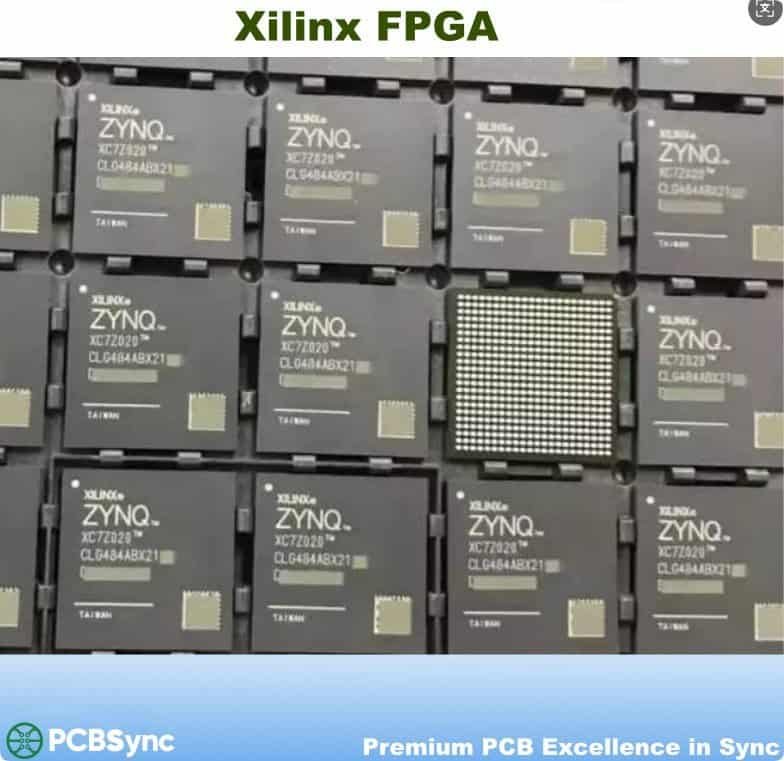
Overview of XCV100E-8FG256C FPGA
The XCV100E-8FG256C is a high-performance Field-Programmable Gate Array (FPGA) from AMD’s renowned Virtex-E family. This programmable logic device delivers exceptional processing capabilities with 176 user I/O pins in a compact 256-pin FBGA package, making it an ideal solution for complex digital signal processing, communications systems, and industrial automation applications.
Built on advanced 0.18μm CMOS technology with a 6-layer metal architecture, the XCV100E-8FG256C represents a significant advancement in programmable logic design, offering designers the flexibility and performance needed for demanding embedded applications.
Key Technical Specifications
Core Performance Parameters
| Specification |
Value |
| Logic Elements/Cells |
2,700 cells |
| Total Gates |
128,236 (system gates) |
| Configurable Logic Blocks (CLBs) |
600 |
| User I/O Pins |
176 |
| Total RAM Bits |
81,920 bits |
| Maximum Frequency |
416 MHz |
| Process Technology |
0.18μm, 6-layer metal CMOS |
Electrical and Physical Characteristics
| Parameter |
Specification |
| Supply Voltage |
1.71V ~ 1.89V (1.8V nominal) |
| Operating Temperature |
0°C ~ 85°C (TJ) |
| Package Type |
256-FBGA (Fine-pitch Ball Grid Array) |
| Pin Count |
256 pins |
| Mounting Type |
Surface Mount |
| Speed Grade |
-8 (high performance) |
Package and Environmental Details
| Attribute |
Details |
| Series |
Virtex®-E |
| Product Status |
Obsolete (legacy support available) |
| RoHS Compliance |
Contains lead / RoHS non-compliant |
| ECCN Code |
EAR99 |
| Packaging |
Tray |
Understanding Virtex-E FPGA Architecture
What Makes the XCV100E-8FG256C Special?
The Virtex-E family represents a revolutionary advancement in FPGA technology. The XCV100E-8FG256C leverages this architecture to deliver:
- Optimized Place-and-Route Efficiency: Advanced architecture designed for superior routing density and performance
- High-Speed Interconnects: Rich hierarchy of fast, flexible interconnect resources
- Embedded Memory Blocks: 81,920 bits of distributed RAM for efficient data buffering
- Advanced I/O Capabilities: 176 configurable I/O pins supporting various signaling standards
Processing Power and Logic Capacity
With 2,700 logic cells and over 128,000 system gates, this Xilinx FPGA provides substantial processing resources for:
- Complex algorithmic implementations
- Multi-channel data processing
- State machine implementations
- Custom protocol handlers
- Digital signal processing (DSP) functions
Primary Applications and Use Cases
Industrial and Communications
The XCV100E-8FG256C excels in various industrial and communication applications:
- Telecommunications Equipment: Protocol conversion, packet processing, and signal routing
- Wireless Infrastructure: Baseband processing and channel encoding/decoding
- Industrial Automation: Motion control, sensor interfacing, and PLC functionality
- Test and Measurement: High-speed data acquisition and real-time signal analysis
Embedded Systems Development
Engineers choose this FPGA for embedded applications requiring:
- Digital Signal Processing: Fast Fourier Transforms (FFT), filtering, and convolution
- Data Encryption: Hardware-accelerated cryptographic algorithms
- Image Processing: Real-time video processing and computer vision
- Control Systems: Complex control algorithms and feedback loops
PC and Personal Electronics
- Peripheral Controllers: High-speed interface bridges and controllers
- Prototype Development: Rapid prototyping of custom digital circuits
- Hardware Acceleration: Offloading computationally intensive tasks from CPUs
Technical Advantages and Benefits
Performance Features
High-Speed Operation
Operating at frequencies up to 416 MHz, the XCV100E-8FG256C delivers the processing speed required for real-time applications. The -8 speed grade indicates optimized performance for timing-critical designs.
Low Power Consumption
The 1.8V core voltage (1.71V ~ 1.89V range) ensures efficient power consumption, making it suitable for:
- Battery-powered devices
- Thermally-constrained environments
- Energy-efficient system designs
Flexible I/O Architecture
With 176 user I/O pins, designers can interface with multiple peripherals simultaneously, supporting various voltage standards and signaling protocols.
Design Flexibility
The XCV100E-8FG256C offers unparalleled design flexibility through:
- Reconfigurable Logic: Reprogram the device for different applications
- Custom IP Integration: Implement proprietary algorithms in hardware
- Rapid Prototyping: Quick design iterations without custom ASIC development
- Future-Proof Designs: Update firmware in the field for enhanced functionality
Development Tools and Design Support
Xilinx ISE Design Suite
The XCV100E-8FG256C is supported by Xilinx’s ISE (Integrated Software Environment) Design Suite, which provides:
- Synthesis Tools: Convert HDL code to gate-level implementations
- Implementation Tools: Place-and-route optimization
- Simulation: Functional and timing verification
- Programming Utilities: Device configuration and debugging
Hardware Description Languages
Design engineers can develop for this FPGA using:
- VHDL: Industry-standard hardware description language
- Verilog: Widely-used HDL for digital design
- Schematic Entry: Visual design entry for simple circuits
Package Information: 256-FBGA
Physical Dimensions and Layout
The 256-pin Fine-pitch Ball Grid Array (FBGA) package offers:
- Compact Footprint: Space-efficient surface-mount design
- Excellent Thermal Performance: Efficient heat dissipation through the package
- High Pin Density: Maximum I/O in minimal space
- Industry-Standard Footprint: Compatible with standard PCB manufacturing
PCB Design Considerations
When designing with the XCV100E-8FG256C:
- Power Distribution: Ensure robust power delivery with appropriate decoupling
- Signal Integrity: Follow high-speed design practices for critical signals
- Thermal Management: Provide adequate cooling based on power dissipation
- Layer Stack-up: Use appropriate PCB layer count for routing complexity
Comparison with Alternative FPGAs
Similar Xilinx Devices
| Part Number |
Logic Cells |
I/O Pins |
Package |
Key Difference |
| XCV100E-6FG256C |
2,700 |
176 |
256-FBGA |
Slower speed grade (-6) |
| XCV100E-7PQ240C |
2,700 |
158 |
240-PQFP |
Different package, fewer I/O |
| XCV50E-8FG256C |
1,728 |
176 |
256-FBGA |
Fewer logic resources |
| XCV200E-8FG456C |
4,704 |
316 |
456-FBGA |
Higher capacity |
Competitive Alternatives
Engineers also consider these alternatives:
- Intel Stratix IV EP4SGX30: Comparable performance, newer technology
- Xilinx Spartan Series: Lower cost, reduced performance
- Lattice ECP5: Power-optimized alternative
Ordering Information and Availability
Part Number Breakdown
XCV100E-8FG256C
- XC: Xilinx Commercial product
- V100E: Virtex-E, 100,000 system gates
- -8: Speed grade (fastest grade for this family)
- FG256: Fine-pitch BGA, 256 pins
- C: Commercial temperature range (0°C to 85°C)
Quality and Authenticity
When sourcing the XCV100E-8FG256C:
- Purchase from authorized distributors to ensure genuine parts
- Verify date codes and lot numbers for traceability
- Request certificates of conformance for critical applications
- Be aware of obsolescence status when planning long-term designs
Implementation Best Practices
Design Optimization Tips
- Resource Utilization: Efficiently use available CLBs and RAM blocks
- Timing Closure: Apply appropriate timing constraints for reliable operation
- Power Management: Implement clock gating and power-down modes where possible
- Testing Strategy: Develop comprehensive test benches for validation
Programming and Configuration
The XCV100E-8FG256C supports multiple configuration modes:
- Master Serial Mode: FPGA controls configuration process
- Slave Serial Mode: External controller manages configuration
- JTAG Mode: Boundary-scan testing and programming
- SelectMAP Mode: High-speed parallel configuration
Thermal Management Guidelines
Power Dissipation Considerations
Typical power consumption depends on:
- Design complexity and resource utilization
- Clock frequencies and I/O activity
- Environmental temperature
- Selected I/O standards
Cooling Solutions
Recommended thermal management approaches:
- Natural Convection: Adequate for low-power designs
- Forced Air Cooling: Required for high-utilization applications
- Heat Sinks: Attach to package for improved thermal performance
- Thermal Simulation: Model heat dissipation during design phase
Legacy Support and Long-Term Considerations
Product Lifecycle Status
The XCV100E-8FG256C is classified as obsolete by AMD Xilinx. This means:
- Limited Availability: Stock may be constrained through authorized channels
- Last-Time Buy: Consider purchasing adequate inventory for product lifetime
- Migration Path: Evaluate newer FPGA families for new designs
- Support: Limited technical support compared to current products
Migration Recommendations
For new designs, consider migrating to:
- Artix-7 Series: Modern architecture with better power efficiency
- Spartan-7 Series: Cost-optimized replacement
- Kintex-7 Series: Higher performance requirements
Frequently Asked Questions
Q: Is the XCV100E-8FG256C suitable for new designs?
While technically capable, this FPGA is obsolete. For new projects, AMD Xilinx recommends their 7-Series or newer FPGA families that offer better performance, lower power consumption, and long-term availability.
Q: What development tools do I need?
You’ll need Xilinx ISE Design Suite (version 14.7 or compatible) for synthesis, implementation, and programming. Newer Vivado tools do not support Virtex-E devices.
Q: Can I use modern I/O standards with this FPGA?
The XCV100E-8FG256C supports legacy I/O standards common when it was released. Check the datasheet for specific supported standards like LVTTL, LVCMOS, and some differential standards.
Q: What is the difference between speed grades?
The -8 speed grade offers the fastest performance. Lower numbers (like -6 or -7) indicate slower timing specifications but may consume less power and cost less.
Q: How do I handle the obsolescence status?
Options include: securing lifetime buy quantities, redesigning with current FPGAs, or working with distributors specializing in obsolete components.
Technical Resources and Documentation
Essential Downloads
- Datasheet: Complete electrical and timing specifications
- User Guide: Detailed architecture and feature descriptions
- Application Notes: Design guidance and reference implementations
- PCB Footprints: CAD library files for board layout
- Constraints Files: Timing and physical constraint templates
Additional Support Resources
- Community Forums: TechForum and online FPGA communities
- Design Examples: Reference designs and IP cores
- Training Materials: Tutorials and webinars on FPGA design
- Errata Documents: Known issues and workarounds
Conclusion: Is the XCV100E-8FG256C Right for Your Project?
The XCV100E-8FG256C represents mature FPGA technology that has proven reliable in countless applications over the years. While obsolete for new designs, it remains a viable solution for:
- Replacement and Repair: Maintaining existing equipment
- Legacy Product Support: Continuing production of established designs
- Educational Purposes: Learning FPGA design fundamentals
- Prototype Verification: Testing concepts before moving to modern devices
For engineers working with this device, understanding its capabilities, limitations, and proper design practices ensures successful implementation. The Virtex-E architecture’s proven track record demonstrates the enduring value of well-designed programmable logic solutions.
When planning new projects, consult with AMD Xilinx representatives to identify the most appropriate modern FPGA that meets your performance, power, and cost requirements while ensuring long-term product availability.