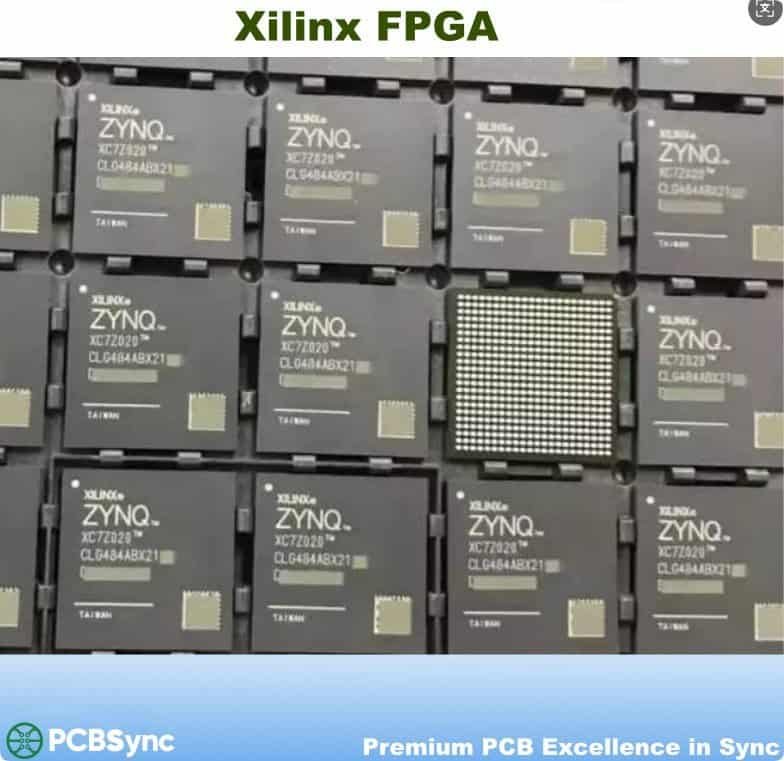
Overview of XCV100E-6PQ240C FPGA Technology
The XCV100E-6PQ240C is a powerful field-programmable gate array from AMD Xilinx’s Virtex-E family, designed to deliver exceptional performance for demanding digital design applications. This 1.8V FPGA combines high-speed operation, flexible programmability, and advanced 0.18μm CMOS process technology to provide engineers with a reliable solution for complex logic implementation.
As part of the proven Xilinx FPGA product line, the XCV100E-6PQ240C offers an optimal balance of logic capacity, I/O resources, and speed performance, making it ideal for telecommunications, industrial control, signal processing, and embedded computing applications.
Key Technical Specifications
Core Features and Performance Metrics
| Specification |
Value |
| Device Family |
Virtex-E |
| Logic Cells |
2,700 |
| System Gates |
32,400 (32.4K) |
| Total Equivalent Gates |
81,920 |
| User I/O Pins |
158 |
| Maximum Frequency |
357 MHz |
| Operating Voltage |
1.8V |
| Process Technology |
0.18μm CMOS |
| Speed Grade |
-6 |
| Package Type |
240-Pin PQFP (Plastic Quad Flat Pack) |
Package and Environmental Specifications
| Parameter |
Details |
| Package Designation |
PQ240 |
| Total Pin Count |
240 |
| Temperature Range |
Commercial (0°C to +85°C) |
| Temperature Grade |
C = Commercial |
| Mounting Type |
Surface Mount |
| Package Dimensions |
240-BFQFP |
Advanced Architecture and Design Capabilities
Configurable Logic Blocks (CLBs)
The XCV100E-6PQ240C features advanced Configurable Logic Blocks that provide the foundation for implementing complex digital circuits. Each CLB contains multiple logic cells with lookup tables (LUTs), flip-flops, and multiplexers, enabling efficient implementation of both combinational and sequential logic functions.
Routing and Interconnect Resources
The device incorporates a sophisticated General Routing Matrix (GRM) that enables flexible signal routing between logic blocks. The hierarchical interconnect architecture includes:
- Fast local interconnects for intra-CLB connections
- General-purpose routing for medium-distance connections
- Long-line resources for high-fanout, low-skew signals
- Dedicated carry chains for high-speed arithmetic operations
SelectIO Technology
The XCV100E-6PQ240C supports multiple I/O standards through Xilinx’s SelectIO technology, including:
- LVTTL (Low Voltage TTL)
- LVCMOS2 (Low Voltage CMOS)
- PCI (Peripheral Component Interconnect)
- LVDS (Low Voltage Differential Signaling)
- LVPECL (Low Voltage Positive Emitter-Coupled Logic)
Each I/O pin can be individually configured with optional pull-up, pull-down, or weak-keeper circuits for maximum design flexibility.
Application Areas and Use Cases
Telecommunications and Networking
The high-speed performance and flexible I/O capabilities make the XCV100E-6PQ240C ideal for:
- Protocol converters and bridges
- Network packet processing
- Telecom interface cards
- Digital signal processing applications
Industrial Control Systems
Engineers leverage this FPGA for:
- Motor control algorithms
- Real-time process monitoring
- Industrial automation controllers
- Data acquisition systems
Embedded Computing
The device excels in embedded applications requiring:
- Custom peripheral interfaces
- High-speed data processing
- System-on-chip (SoC) implementations
- Hardware acceleration tasks
Design Tools and Development Support
ISE Design Suite Compatibility
The XCV100E-6PQ240C is fully supported by Xilinx ISE Design Suite, providing comprehensive tools for:
- HDL synthesis (VHDL and Verilog)
- Place and route optimization
- Timing analysis and constraints
- In-system debugging
Configuration Options
This FPGA supports multiple configuration modes:
- Master Serial mode
- Slave Serial mode
- Boundary Scan (JTAG)
- SelectMAP parallel configuration
Part Number Nomenclature Breakdown
Understanding the XCV100E-6PQ240C part number helps identify key device characteristics:
| Code |
Meaning |
| XC |
Xilinx Commercial product |
| V |
Virtex family |
| 100E |
Virtex-E series, 100K system gates |
| -6 |
Speed grade (faster performance) |
| PQ |
Plastic Quad flat pack |
| 240 |
240 pins |
| C |
Commercial temperature range |
Electrical Characteristics and Power Management
Supply Voltage Requirements
| Power Rail |
Voltage |
Purpose |
| VCCINT |
1.8V |
Core logic power |
| VCCO |
Varies by I/O standard |
I/O bank power |
| VCCAUX |
3.3V |
Auxiliary circuits |
Power Consumption Considerations
The 0.18μm process technology enables lower power consumption compared to previous FPGA generations while maintaining high performance. Actual power consumption varies based on:
- Design complexity and resource utilization
- Clock frequencies used
- I/O switching activity
- Number of active I/O standards
Quality and Reliability
Manufacturing Standards
AMD Xilinx manufactures the XCV100E-6PQ240C using advanced semiconductor processes with rigorous quality control:
- Industry-standard testing procedures
- Comprehensive electrical parameter validation
- Long-term reliability testing
- RoHS compliant manufacturing
Proven Track Record
The Virtex-E family has been deployed in thousands of applications worldwide, demonstrating:
- High reliability in demanding environments
- Long product lifecycle support
- Excellent field failure rates
- Comprehensive documentation and support
Comparison with Related Virtex-E Devices
| Device |
Logic Cells |
User I/O |
System Gates |
Package Options |
| XCV50E |
1,728 |
176 |
23,040 |
FG256, BG352 |
| XCV100E |
2,700 |
158-176 |
32,400 |
PQ240, FG256 |
| XCV200E |
5,292 |
221-284 |
64,800 |
PQ240, FG456 |
| XCV300E |
8,448 |
316 |
103,680 |
FG456, BG432 |
Getting Started with XCV100E-6PQ240C
Design Flow Overview
- Design Entry: Create your logic design using HDL or schematic entry
- Synthesis: Convert high-level design to gate-level netlist
- Implementation: Place and route design within FPGA architecture
- Simulation: Verify functionality through behavioral and timing simulation
- Configuration: Program device using supported configuration method
Development Board Options
While specific development boards vary by vendor, common prototyping platforms supporting the PQ240 package include:
- Custom PCB designs with PQFP socket
- Xilinx evaluation boards (model-specific)
- Third-party FPGA development platforms
Procurement and Availability
The XCV100E-6PQ240C is available through authorized distributors including:
- Digi-Key Electronics
- Mouser Electronics
- Arrow Electronics
- Avnet
Note: As a mature product from the Virtex-E family, availability may vary. Contact authorized distributors for current stock levels and lead times.
Technical Support and Documentation
Essential Resources
- Product Datasheet: Complete electrical specifications and timing parameters
- User Guide: Detailed architecture description and design guidelines
- Application Notes: Implementation best practices and design examples
- Answer Database: Searchable technical support articles
Online Support
AMD Xilinx provides comprehensive online resources:
- Technical forums and community support
- Design hub with reference designs
- Video training tutorials
- Webinars on advanced FPGA techniques
Conclusion: Why Choose XCV100E-6PQ240C?
The XCV100E-6PQ240C represents a proven FPGA solution that balances performance, capacity, and cost-effectiveness. Its 2,700 logic cells, 158 I/O pins, and 357 MHz maximum frequency provide sufficient resources for a wide range of digital design applications.
Key advantages include:
✓ Mature technology with extensive design ecosystem
✓ Flexible I/O supporting multiple industry standards
✓ Optimized architecture for efficient place-and-route
✓ Commercial temperature operation for standard environments
✓ Competitive pricing for mid-range FPGA applications
Whether you’re developing telecommunications equipment, industrial controllers, or custom embedded systems, the XCV100E-6PQ240C delivers the programmable logic performance your project demands.