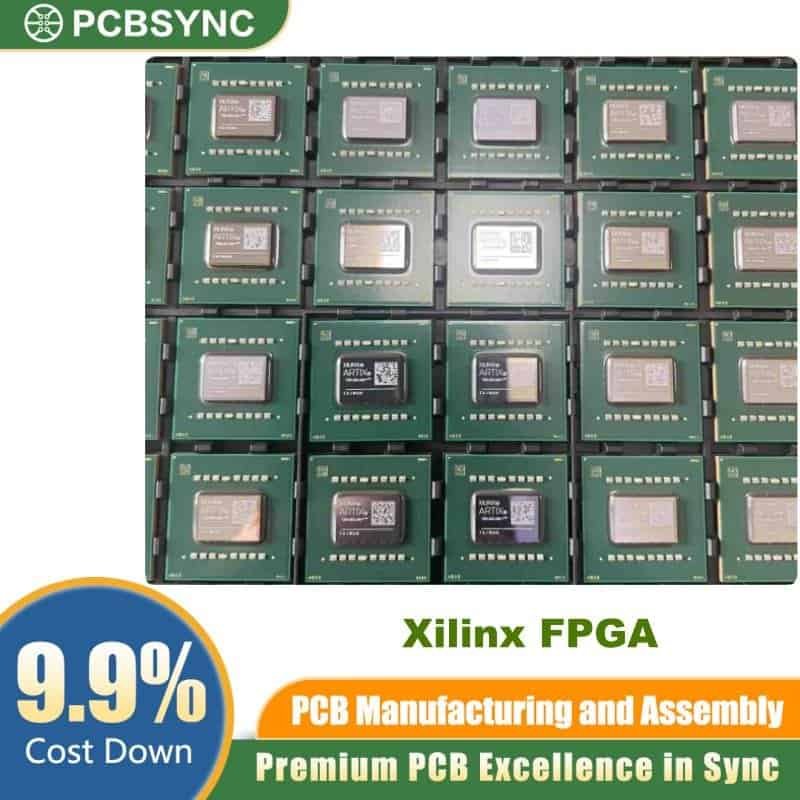
The XC2S200-6FGG976C is a powerful field-programmable gate array (FPGA) from AMD Xilinx’s renowned Spartan-II family, designed to deliver exceptional performance, flexibility, and cost-effectiveness for complex digital design applications. This industrial-grade programmable logic device combines 200,000 system gates with superior speed performance, making it an ideal solution for telecommunications, industrial automation, embedded systems, and high-speed data processing applications.
Overview of XC2S200-6FGG976C Spartan-II FPGA
The XC2S200-6FGG976C represents a superior alternative to traditional mask-programmed ASICs, offering designers the flexibility to implement, modify, and upgrade designs without the lengthy development cycles and significant upfront costs associated with conventional ASIC solutions. This Xilinx FPGA delivers outstanding performance with its advanced architecture, comprehensive I/O capabilities, and robust feature set.
Key Features and Benefits
The XC2S200-6FGG976C stands out in the competitive FPGA market with its impressive combination of logic density, speed performance, and integrated memory resources. Engineers and designers choose this device for applications requiring high-speed signal processing, complex state machines, and sophisticated digital control systems.
XC2S200-6FGG976C Technical Specifications
Understanding the detailed specifications of the XC2S200-6FGG976C is essential for successful design implementation and optimal performance.
Core Architecture Specifications
| Specification |
Value |
Description |
| Logic Cells |
5,292 |
Provides ample resources for complex digital designs |
| System Gates |
200,000 |
Equivalent gate count for design capacity estimation |
| CLB Array |
28 x 42 |
Configurable Logic Blocks arranged in grid structure |
| Total CLBs |
1,176 |
Individual configurable logic blocks available |
| Speed Grade |
-6 |
Highest performance speed grade for demanding applications |
| Technology |
0.18µm |
Advanced CMOS process technology |
| Core Voltage |
2.5V |
Standard operating voltage for core logic |
Memory and Storage Resources
| Memory Type |
Capacity |
Application |
| Distributed RAM |
75,264 bits |
Flexible distributed memory within CLBs |
| Block RAM |
56K bits |
Dedicated high-speed memory blocks |
| Total RAM |
131,328 bits |
Combined memory resources for data storage |
I/O and Package Information
| Parameter |
Specification |
Details |
| User I/O Pins |
284 (maximum) |
Configurable input/output connections |
| Package Type |
FGG976 |
Fine-pitch Ball Grid Array |
| Pin Count |
976 pins |
Total package connections |
| Temperature Range |
Commercial (C) |
0°C to +85°C operating temperature |
Performance Characteristics of XC2S200-6FGG976C
Speed and Timing Performance
The -6 speed grade designation indicates that the XC2S200-6FGG976C is optimized for high-performance applications requiring maximum operating frequencies. This speed grade ensures:
- Maximum System Performance: Clock frequencies up to 200+ MHz for demanding applications
- Low Propagation Delays: Optimized signal paths for minimal latency
- High-Speed I/O: Support for various high-speed interface standards
- Deterministic Timing: Predictable timing characteristics for critical applications
Power Consumption Profile
| Operating Mode |
Typical Power |
Optimization |
| Active Operation |
Varies by design |
Dynamic power management |
| Standby Mode |
Low power |
Reduced consumption when idle |
| I/O Power |
Design dependent |
Based on I/O standards used |
XC2S200-6FGG976C Application Areas
Industrial Automation and Control
The XC2S200-6FGG976C excels in industrial environments where reliability and real-time performance are critical. Applications include:
- Motor Control Systems: Precise PWM generation and feedback processing
- Process Automation: Real-time monitoring and control algorithms
- Factory Automation: High-speed sensor interfaces and actuator control
- Robotic Systems: Coordinated motion control and sensor fusion
Telecommunications Infrastructure
In telecommunications applications, the XC2S200-6FGG976C provides:
- Protocol Processing: Implementation of communication protocols
- Data Routing: High-speed packet processing and switching
- Signal Processing: Digital filtering and modulation/demodulation
- Network Interface: Multi-protocol interface implementation
Embedded Systems Design
| Application Domain |
Implementation Benefits |
| Consumer Electronics |
Flexible feature updates and customization |
| Medical Devices |
Reliable signal processing and data acquisition |
| Automotive Systems |
Real-time control and diagnostic capabilities |
| Aerospace Applications |
High-reliability computational processing |
Design Implementation and Development
Development Tools and Software
The XC2S200-6FGG976C is fully supported by comprehensive design tools:
ISE Design Suite Integration
- Design Entry: Schematic capture and HDL editor support
- Synthesis: Advanced synthesis optimization for Spartan-II architecture
- Implementation: Place and route with timing-driven optimization
- Verification: Comprehensive simulation and timing analysis
- Programming: Multiple configuration options and debugging support
Programming Languages and Standards
| Language/Standard |
Support Level |
Use Case |
| VHDL |
Full support |
Complex digital design |
| Verilog HDL |
Full support |
Hardware description and verification |
| Schematic Entry |
Supported |
Visual design representation |
| IP Core Integration |
Extensive library |
Pre-verified functional blocks |
XC2S200-6FGG976C Configuration and Programming
Configuration Methods
The XC2S200-6FGG976C supports multiple configuration methods for maximum flexibility:
- Master Serial Mode: FPGA controls configuration process
- Slave Serial Mode: External controller manages configuration
- JTAG Configuration: Industry-standard boundary scan interface
- Parallel Configuration: High-speed configuration option
Configuration Memory Options
| Memory Type |
Capacity Range |
Application |
| Platform Flash |
Various sizes |
Non-volatile configuration storage |
| Serial PROM |
Scalable |
Cost-effective configuration solution |
| SPI Flash |
Flexible |
Modern configuration approach |
Competitive Advantages of XC2S200-6FGG976C
Cost-Effectiveness Compared to ASICs
The XC2S200-6FGG976C offers significant advantages over traditional ASIC development:
- No NRE Costs: Eliminate expensive mask and tooling charges
- Rapid Prototyping: Quick design iterations and testing
- Field Upgradability: Update functionality after deployment
- Lower Risk: Avoid silicon respins and design mistakes
- Faster Time-to-Market: Accelerated development schedules
Flexibility and Reconfigurability
| Feature |
Benefit |
Impact |
| In-System Programming |
Update designs in deployed systems |
Reduced maintenance costs |
| Partial Reconfiguration |
Modify portions without full reload |
Enhanced flexibility |
| Multiple Configurations |
Store different designs |
Versatile functionality |
Quality and Reliability Standards
Manufacturing Quality
The XC2S200-6FGG976C meets stringent quality standards:
- Temperature Testing: Comprehensive thermal characterization
- Reliability Testing: Extended operational life validation
- Quality Assurance: ISO-certified manufacturing processes
- Lot Traceability: Complete production tracking and documentation
Environmental Compliance
| Standard |
Status |
Description |
| RoHS Compliance |
Available |
Lead-free packaging options (G designation) |
| REACH Compliant |
Yes |
European chemical safety regulations |
| Conflict Minerals |
Certified |
Responsible sourcing verification |
Ordering and Package Information
Part Number Breakdown
Understanding the XC2S200-6FGG976C part number:
- XC2S200: Device family and logic capacity
- -6: Speed grade (highest performance)
- FGG976: Package type (Fine-pitch BGA, 976 pins)
- C: Commercial temperature range (0°C to +85°C)
Available Package Options
While the XC2S200-6FGG976C features the 976-pin FGG package, the XC2S200 family offers various package configurations:
| Package Code |
Pin Count |
Dimensions |
Best For |
| FGG976 |
976 pins |
High I/O density |
Maximum connectivity requirements |
| FG456 |
456 pins |
Medium footprint |
Balanced I/O and size |
| FG256 |
256 pins |
Compact size |
Space-constrained applications |
| PQ208 |
208 pins |
Quad flat pack |
Traditional through-hole mounting |
Design Resources and Support
Technical Documentation
Comprehensive documentation supports XC2S200-6FGG976C implementation:
- Datasheet: Complete electrical and timing specifications
- User Guide: Detailed architecture and feature descriptions
- Application Notes: Design tips and best practices
- PCB Guidelines: Layout recommendations and thermal considerations
Development Boards and Kits
| Resource Type |
Description |
Purpose |
| Evaluation Boards |
Pre-configured development platforms |
Rapid prototyping and testing |
| Starter Kits |
Complete development packages |
Learning and initial development |
| Reference Designs |
Proven design examples |
Accelerated implementation |
Migration and Compatibility
Device Family Migration
The XC2S200-6FGG976C fits within the broader Spartan-II family, allowing easy migration:
Upward Migration Path
- XC2S150: Smaller design capacity (150K gates)
- XC2S200: Current device (200K gates)
- Higher-Density Options: Migration to newer families when needed
Pin Compatibility Considerations
When migrating between package options or device densities, designers should consider:
- I/O Bank Organization: Voltage and standard compatibility
- Power Pin Distribution: Adequate decoupling and power delivery
- Clock Resource Allocation: Global clock network access
- Special Function Pins: JTAG, configuration, and dedicated inputs
Frequently Asked Questions About XC2S200-6FGG976C
What Makes the XC2S200-6FGG976C Suitable for High-Speed Applications?
The -6 speed grade of the XC2S200-6FGG976C represents the fastest performance option in the Spartan-II family, offering optimized timing characteristics, reduced propagation delays, and support for high-frequency clock domains exceeding 200 MHz.
How Does the XC2S200-6FGG976C Compare to Modern FPGAs?
While the Spartan-II family represents mature technology, the XC2S200-6FGG976C remains relevant for cost-sensitive applications, legacy system support, and designs where proven reliability is essential. For new designs requiring cutting-edge performance, consider modern Spartan-7 or Artix-7 families.
What Development Tools Are Required?
The XC2S200-6FGG976C is supported by Xilinx ISE Design Suite (versions 14.7 and earlier), which provides complete design entry, synthesis, implementation, and verification capabilities. The software supports both VHDL and Verilog design entry.
Can the XC2S200-6FGG976C Be Used in Industrial Temperature Applications?
The XC2S200-6FGG976C with “C” designation operates across the commercial temperature range (0°C to +85°C). For industrial temperature requirements (-40°C to +100°C), specify devices with the “I” temperature grade designation.
Conclusion: Why Choose XC2S200-6FGG976C
The XC2S200-6FGG976C represents an excellent choice for designers seeking a balance of performance, flexibility, and cost-effectiveness in programmable logic solutions. With 200,000 system gates, 5,292 logic cells, and the highest -6 speed grade, this Spartan-II FPGA delivers the computational resources and performance needed for demanding digital design applications.
Whether you’re developing industrial control systems, telecommunications infrastructure, embedded computing platforms, or high-speed data processing solutions, the XC2S200-6FGG976C provides the programmable logic foundation for successful implementation. Its comprehensive development tool support, extensive documentation, and proven reliability make it a trusted choice for engineers worldwide.
For sourcing authentic XC2S200-6FGG976C devices, technical support, and detailed implementation guidance, consult authorized AMD Xilinx distributors and reference the official datasheet and user documentation.