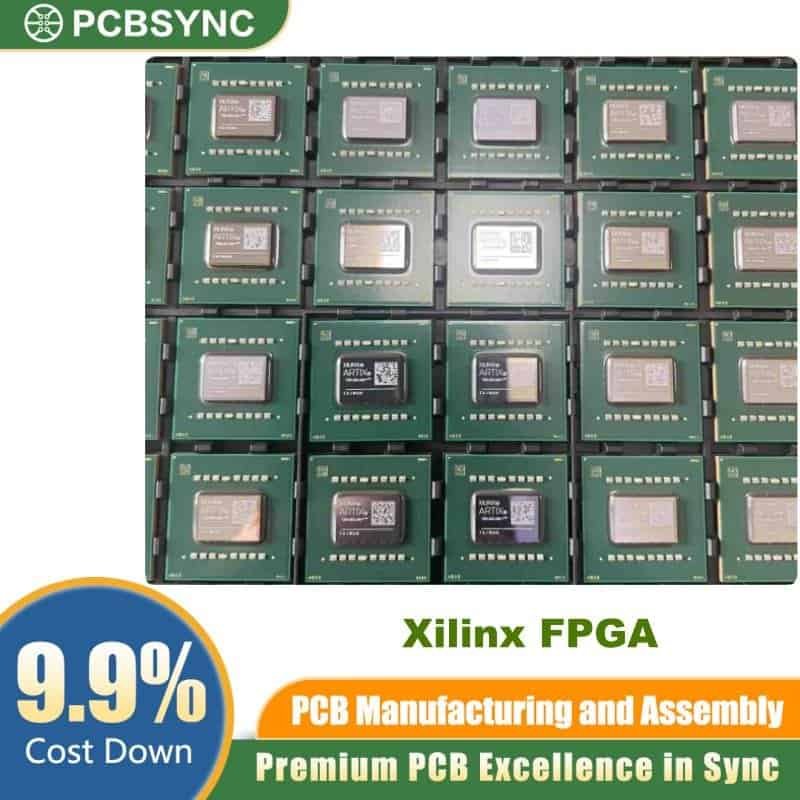
Overview of XC2S150E-6FG456C Field Programmable Gate Array
The XC2S150E-6FG456C is a cutting-edge field-programmable gate array (FPGA) manufactured by AMD Xilinx, belonging to the renowned Spartan-IIE family. This high-density programmable logic device delivers exceptional performance with 150,000 system gates and 3,888 logic cells, making it an ideal choice for telecommunications, industrial automation, automotive electronics, and consumer product applications.
With advanced 0.15-micron technology and a low 1.8V core voltage, this FPGA offers superior power efficiency while maintaining robust processing capabilities. The device operates at speeds up to 357MHz, providing the computational power necessary for demanding digital design projects.
Key Technical Specifications
| Specification |
Details |
| Part Number |
XC2S150E-6FG456C |
| Manufacturer |
AMD Xilinx (formerly Xilinx) |
| FPGA Family |
Spartan-IIE 1.8V |
| System Gates |
150,000 gates |
| Logic Cells |
3,888 cells |
| Maximum Frequency |
357MHz |
| Process Technology |
0.15µm (150nm) |
| Core Voltage |
1.8V |
| Speed Grade |
-6 (fastest commercial grade) |
| Package Type |
FBGA (Fine-Pitch Ball Grid Array) |
| Pin Count |
456 pins |
| Package Dimensions |
27mm x 27mm |
| Temperature Range |
Commercial (0°C to +85°C) |
| I/O Pins |
Up to 355 user I/O |
Advanced Features and Capabilities
Memory Resources
The XC2S150E-6FG456C incorporates robust memory architecture with:
- Block RAM: Up to 288 Kbits of true dual-port configurable memory
- Distributed RAM: Up to 221,184 bits utilizing LUT-based RAM
- SelectRAM Technology: Hierarchical memory structure with 16 bits/LUT distributed RAM
Clock Management
- Four Delay-Locked Loops (DLLs): Positioned at each corner for advanced clock management
- Clock Deskewing: Eliminates on-chip clock distribution delays
- Clock Multiplication/Division: Flexible clock frequency synthesis
- Multiple Clock Domains: Support for complex multi-clock designs
I/O Standards and Flexibility
This Xilinx FPGA supports 19 selectable I/O standards, including:
- LVTTL and LVCMOS (3.3V, 2.5V, 1.8V, 1.5V)
- SSTL2 and SSTL3
- GTL and GTL+
- PCI compliance at 33MHz and 66MHz
- Advanced signaling standards for high-speed interfaces
Architecture Highlights
- Based on Virtex-E Architecture: Streamlined features from Xilinx’s proven platform
- Fast Interconnect: Predictable routing for consistent timing closure
- Unlimited Reprogrammability: In-system configuration updates without hardware replacement
- JTAG Boundary Scan: IEEE 1149.1 compliant for testing and debugging
Performance Advantages Table
| Feature |
Benefit |
Application Impact |
| 357MHz Operation |
High-speed processing |
Real-time signal processing, fast data acquisition |
| 150K System Gates |
Large design capacity |
Complex state machines, multi-function systems |
| 1.8V Core |
Low power consumption |
Battery-powered devices, thermal-sensitive applications |
| 456-Pin FBGA |
High I/O density |
Multi-interface systems, high pin-count requirements |
| Four DLLs |
Advanced clock control |
Synchronous multi-domain designs, clock distribution |
| 19 I/O Standards |
Interface flexibility |
Mixed-voltage systems, legacy interface support |
Application Areas
Telecommunications
The XC2S150E-6FG456C excels in telecommunications infrastructure with sufficient logic resources for protocol processing, signal conditioning, and data packet handling at high speeds.
Industrial Automation
Perfect for programmable logic controllers (PLCs), motor control systems, and industrial networking applications requiring reliable, field-upgradeable logic.
Automotive Electronics
Suitable for advanced driver assistance systems (ADAS), infotainment controllers, and engine management systems where reprogrammability provides future-proofing.
Consumer Electronics
Ideal for set-top boxes, digital cameras, portable media players, and other consumer devices requiring flexible, cost-effective digital logic.
Test and Measurement
Excellent choice for oscilloscopes, logic analyzers, and automated test equipment requiring high-speed data acquisition and processing.
Design Tools and Software Support
Development Environment
- ISE Design Suite: Legacy support for Spartan-IIE family development
- Synthesis Tools: XST (Xilinx Synthesis Technology) integration
- Simulation: ModelSim, ISim support for functional verification
- Programming: iMPACT for device configuration
Programming Options
- JTAG: Standard boundary-scan programming interface
- Master/Slave Serial: Direct configuration from external memory
- SelectMAP: Parallel configuration for fast programming
- Boundary-Scan: IEEE 1149.1 compliant test access
Package and Pin Configuration Details
| Package Characteristic |
Specification |
| Package Style |
Fine-Pitch BGA (FBGA) |
| Body Size |
27mm x 27mm |
| Pin Pitch |
1.0mm |
| Total Balls |
456 |
| User I/O Available |
Up to 355 pins |
| Dedicated Config Pins |
Multiple options |
| Power/Ground Pins |
Distributed for signal integrity |
| Thermal Characteristics |
θJA varies by mounting |
Competitive Advantages Over ASIC Solutions
Cost Effectiveness
- No NRE Costs: Eliminates expensive mask tooling charges
- Fast Time-to-Market: Immediate implementation without fabrication delays
- Volume Flexibility: Economical for low to medium production volumes
Design Flexibility
- Field Updates: Remote firmware updates without physical replacement
- Design Iterations: Rapid prototyping and testing cycles
- Bug Fixes: Post-deployment corrections without hardware recalls
- Feature Additions: Product enhancement through software updates
Risk Mitigation
- No Long-term Commitment: Avoid ASIC inventory risks
- Technology Adaptability: Design modifications accommodate market changes
- Shorter Development Cycle: Reduced time from concept to production
Power Consumption Characteristics
| Operating Mode |
Typical Current |
Power Range |
| Active (Core @ 357MHz) |
Design dependent |
~500mW – 2W typical |
| I/O Banks Active |
Per standard |
50-200mW per bank |
| Standby Mode |
Ultra-low |
<10mW |
| Configuration |
Brief peak |
<500mW |
Note: Actual power consumption varies based on design utilization, switching activity, and I/O loading.
Ordering Information and Availability
Part Number Breakdown
XC2S150E-6FG456C
- XC2S: Spartan-II family identifier
- 150E: 150K gates, Enhanced (IIE) version
- 6: Speed grade (-6 is fastest commercial)
- FG456: Fine-pitch BGA, 456 pins
- C: Commercial temperature range
Package Options
The XC2S150E is available in multiple package configurations to suit various design requirements. The FG456 variant offers the highest I/O count for this density level.
Lead-Free Compliance
Standard commercial versions use Pb-free packaging meeting RoHS environmental standards. Alternative package codes with “G” designator indicate green/Pb-free options.
Quality and Reliability
Manufacturing Standards
- Manufactured in ISO-certified facilities
- AEC-Q100 qualification available for automotive variants
- Comprehensive reliability testing including HTOL, TC, and HAST
- ESD protection on all I/O pins
Testing and Screening
- 100% electrical testing at manufacturing
- Burn-in available for high-reliability applications
- Traceability through batch coding
- Quality assurance documentation available
Design Considerations and Best Practices
Power Supply Design
- Provide adequate decoupling capacitors near power pins
- Use separate power planes for core and I/O voltages
- Consider power sequencing requirements for multiple voltage rails
- Follow manufacturer thermal management guidelines
PCB Layout Recommendations
- Match controlled impedance for high-speed signals
- Minimize stub lengths on clock distribution
- Proper grounding techniques for signal integrity
- Adequate spacing for thermal management
Clock Distribution
- Utilize dedicated global clock buffers for primary clocks
- Consider DLL jitter specifications for timing-critical applications
- Plan clock domain crossing carefully
- Use appropriate clock gating techniques
Migration and Pin Compatibility
Family Migration
The Spartan-IIE family offers upward migration paths within the same package footprint, allowing design scalability:
- XC2S100E: Lower gate count for cost optimization
- XC2S200E: Higher capacity for feature expansion
- Pin-compatible options facilitate hardware reuse
Legacy Considerations
While newer FPGA families offer enhanced features, the XC2S150E-6FG456C remains an excellent choice for established designs, second-source requirements, and cost-sensitive applications.
Technical Support Resources
Documentation
- Comprehensive datasheets available from AMD Xilinx
- Application notes for specific design challenges
- Reference designs and IP cores
- User guides for development tools
Community Support
- Active user forums and knowledge bases
- Third-party IP vendor ecosystem
- Design service partners worldwide
- Training and certification programs
Comparison with Modern Alternatives
| Aspect |
XC2S150E (Legacy) |
Modern FPGAs |
| Process Technology |
150nm |
28nm – 7nm |
| Power Efficiency |
Good for generation |
Superior |
| Logic Density |
150K gates |
Millions of gates |
| Price Point |
Very competitive |
Higher |
| Availability |
Established inventory |
Varies by model |
| Design Maturity |
Proven platform |
Cutting edge |
Conclusion: Why Choose XC2S150E-6FG456C
The XC2S150E-6FG456C represents an excellent balance of performance, cost-effectiveness, and proven reliability. Its 150,000 system gates provide substantial logic resources for mid-complexity designs, while the 357MHz operating frequency ensures adequate processing speed for most applications. The 1.8V core voltage delivers power efficiency crucial for modern electronics.
For engineers seeking a dependable, well-documented FPGA with strong tool support and established design practices, the XC2S150E-6FG456C remains a compelling choice. Its cost advantage over newer families makes it particularly attractive for production designs where the latest process technology isn’t required.
Whether you’re developing telecommunications equipment, industrial controllers, automotive systems, or consumer electronics, this Spartan-IIE FPGA provides the programmable logic capabilities, I/O flexibility, and performance characteristics needed for successful product development.