Inquire: Call 0086-755-23203480, or reach out via the form below/your sales contact to discuss our design, manufacturing, and assembly capabilities.
Quote: Email your PCB files to Sales@pcbsync.com (Preferred for large files) or submit online. We will contact you promptly. Please ensure your email is correct.
Notes: For PCB fabrication, we require PCB design file in Gerber RS-274X format (most preferred), *.PCB/DDB (Protel, inform your program version) format or *.BRD (Eagle) format. For PCB assembly, we require PCB design file in above mentioned format, drilling file and BOM. Click to download BOM template To avoid file missing, please include all files into one folder and compress it into .zip or .rar format.
PiJuice HAT Review: The Ultimate UPS Solution for Raspberry Pi
I’ve been designing power management circuits for embedded systems for over a decade, and finding a proper raspberry pi ups solution has always been a headache. Most options either lack the features you actually need or require so much custom work that you might as well design your own board. The PiJuice HAT changes that equation entirely.
After putting the pijuice through months of real-world testing across multiple projects, I can confidently say it’s the most complete uninterruptible power supply solution available for the Raspberry Pi ecosystem. Let me break down exactly what makes this board worth your attention — and where it falls short.
The pijuice hat isn’t just a battery holder with some protection circuitry. Pi Supply designed this board around an STM32F030CCT6 microcontroller that handles power management independently from your Pi. This matters because the MCU continues operating even when your Pi is completely shut down, drawing only 0.5mA in standby mode.
From a circuit design perspective, this architecture solves the fundamental problem with simple battery backup solutions: they can’t intelligently manage power states. The pijuice monitors battery levels, handles graceful shutdowns, schedules wake-up events, and provides a hardware watchdog — all without relying on software running on the Pi itself.
Core Hardware Specifications
The pijuice hat packs serious functionality into the standard HAT form factor. Here’s what you’re working with:
Specification
Details
MCU
STM32F030CCT6 ARM Cortex-M0
Default Battery
BP7X 1820mAh LiPo/LiIon
Battery Input Range
3.7V single cell (supports 500mAh to 12000mAh+)
External Power Input
4.2V to 10V
Output Current (5V GPIO)
Up to 2.5A (with 3500mAh+ battery)
Output Current (VSYS)
Up to 2.1A
RTC
Yes, with battery backup
GPIO Usage
5 pins only (power + I2C)
Standby Current
0.5mA from battery
The board accepts power through multiple paths: the onboard micro USB, the Pi’s USB port (shared via GPIO), a screw terminal for external batteries, or a header designed for solar panels and other renewable sources.
Real-World Battery Life Testing
The included 1820mAh battery provides decent runtime for basic raspberry pi ups applications, but actual uptime varies significantly based on your Pi model and workload. I ran standardized discharge tests to give you realistic expectations.
Battery Runtime by Raspberry Pi Model
Pi Model
Idle Runtime
Load Runtime
Notes
Pi Zero W
8-10 hours
5-6 hours
Best efficiency
Pi 3B+
3-4 hours
1.8-2 hours
Moderate draw
Pi 4B (2GB)
2-2.5 hours
1.5-1.8 hours
Higher power consumption
Pi 4B (4GB/8GB)
2-2.3 hours
1.4-1.6 hours
Slightly higher than 2GB
These numbers assume the stock 1820mAh battery. Upgrading to a 5000mAh or 12000mAh external battery extends runtime proportionally. Pi Supply offers batteries up to 12000mAh that connect via the onboard screw terminal, pushing potential runtime past 24 hours for lighter workloads.
The pijuice includes a battery discharge calculator that factors in your specific configuration. I’ve found it reasonably accurate for planning purposes, though real-world testing remains essential for mission-critical deployments.
Setting Up the PiJuice HAT
Installation takes about five minutes for the hardware side. The software setup requires more attention but nothing complicated.
Hardware Installation Steps
Physical installation follows standard HAT conventions. Remove the plastic battery isolation tab if your unit shipped with the battery pre-installed — this catches many first-time users who wonder why their pijuice reports 0% charge.
Align the stacking header with your Pi’s GPIO pins and press firmly until seated. The four standoff mounting holes accept the included plastic screws for mechanical stability. Pop the battery into the holder (orientation matters — check the polarity marking), and you’re ready for software configuration.
One quirk worth noting: the pogo pin for the wake function doesn’t align perfectly with some Pi models, particularly the 3B+. You can either add a short bodge wire or simply power through the PiJuice’s micro USB directly, which bypasses the need for the pogo pin entirely.
Software Installation
The pijuice works at a basic level without any software — it will keep your Pi powered during outages and handle basic charging. However, the real value comes from the software suite.
For headless installations:
sudo apt-get install pijuice-base
For desktop environments with GUI:
sudo apt-get install pijuice-gui
After installation and reboot, a battery icon appears in your system tray showing charge percentage. Right-clicking opens the settings interface where you configure all the advanced functionality.
Essential Configuration Options
The settings interface presents numerous options. Focus on these for a solid raspberry pi ups configuration:
Wakeup Alarm Tab: Set the RTC time (it operates independently from the Pi’s system clock), configure scheduled wake events, and enable automatic startup after power restoration.
System Task Tab: Configure what happens at different battery thresholds. I typically set a graceful shutdown at 10% remaining charge with a 30-second warning.
Battery Tab: Select the correct battery profile for your cell. Using the wrong profile causes inaccurate charge reporting and potentially unsafe charging parameters.
IO Tab: Configure the three programmable buttons and two RGB LEDs for your specific application needs.
PiJuice HAT vs Other Raspberry Pi UPS Options
The raspberry pi ups market has several contenders. Here’s how the pijuice hat stacks up against the alternatives I’ve tested:
Feature
PiJuice HAT
Waveshare UPS HAT
Geekworm X728
Generic Power Banks
True UPS (seamless switchover)
Yes
Yes
Yes
Varies
RTC included
Yes
No
Yes
No
Hardware watchdog
Yes
No
No
No
Scheduled wake/sleep
Yes
No
Limited
No
Solar panel support
Yes
No
No
No
Software suite
Excellent
Basic
Good
None
GPIO pins used
5
2 (pogo)
4
0
Stacking header
Yes
Yes
Yes
N/A
Approximate price
$70-90
$25-35
$40-50
$15-30
The pijuice commands a premium price, but the feature set justifies the cost for serious applications. If you need scheduled operations, hardware watchdog protection, or solar charging capability, nothing else comes close.
For simple battery backup where you just need to survive brief outages, cheaper alternatives or even a quality power bank with pass-through charging might suffice.
Best Use Cases for the PiJuice HAT
After deploying pijuice boards across various projects, certain applications showcase its strengths particularly well.
Remote Environmental Monitoring
The combination of RTC scheduling, low standby current, and solar panel support makes the pijuice ideal for remote sensor stations. Configure the Pi to wake every hour, collect sensor data, transmit via cellular or LoRa, then return to deep sleep. The 0.5mA standby draw means a modest solar panel keeps the system running indefinitely.
Home Automation Controllers
Home Assistant, OpenHAB, and similar platforms running on Pi benefit enormously from proper raspberry pi ups protection. The hardware watchdog ensures your automation hub recovers from crashes automatically, while clean shutdown protection prevents SD card corruption during power events.
Network Infrastructure
Pi-hole, local DNS servers, VPN endpoints, and similar always-on services need reliability. The pijuice provides both ride-through capability for brief outages and graceful shutdown for extended ones. The I2C interface lets you monitor battery status programmatically and trigger alerts when running on battery power.
Time-Lapse and Wildlife Cameras
Scheduled wake functionality combined with battery operation enables sophisticated time-lapse setups. Wake at sunrise, capture images throughout the day, sleep at sunset. Solar charging handles power replenishment automatically.
Known Limitations and Workarounds
No product is perfect. Here’s what I’ve encountered and how to address it:
Cooling constraints: The HAT sits directly above the Pi’s SoC, limiting heatsink options. Small passive heatsinks work fine. Large tower coolers won’t fit. For Pi 4 running heavy workloads, consider the pijuice Zero (pHAT form factor) with a Zero 2 W, or accept that active cooling requires creative mounting.
Battery fuel gauge quirks: The charge level reporting can be inaccurate during charging/discharging transitions due to how the fuel gauge IC measures battery impedance. This resolves after a few complete charge cycles as the algorithm learns your specific battery characteristics.
Current limitations with stock battery: The 1820mAh battery limits maximum sustained output current to around 1.1A at 5V. Pi 4 boards under heavy load can exceed this. Upgrading to a 3500mAh+ battery increases the current delivery capability to the full 2.5A rating.
Price point: At $70-90 depending on retailer, the pijuice hat represents a significant investment. For simple projects, this may be overkill. Evaluate your actual requirements before committing.
Official documentation, software, and community support
https://github.com/PiSupply/PiJuice
Battery Discharge Calculator
Estimate runtime for different configurations
https://learn.pi-supply.com/battery-levels/
Pi Supply Learn Portal
Tutorials and project guides
https://learn.pi-supply.com
PiJuice CLI Reference
Command line tools documentation
GitHub Wiki
Raspberry Pi Forums
Community discussions and troubleshooting
https://forums.raspberrypi.com
Monitoring Commands
Check battery status from command line:
pijuice_cli status
Get detailed battery information:
pijuice_cli get_battery_profile
Frequently Asked Questions
Does the PiJuice HAT work with Raspberry Pi 5?
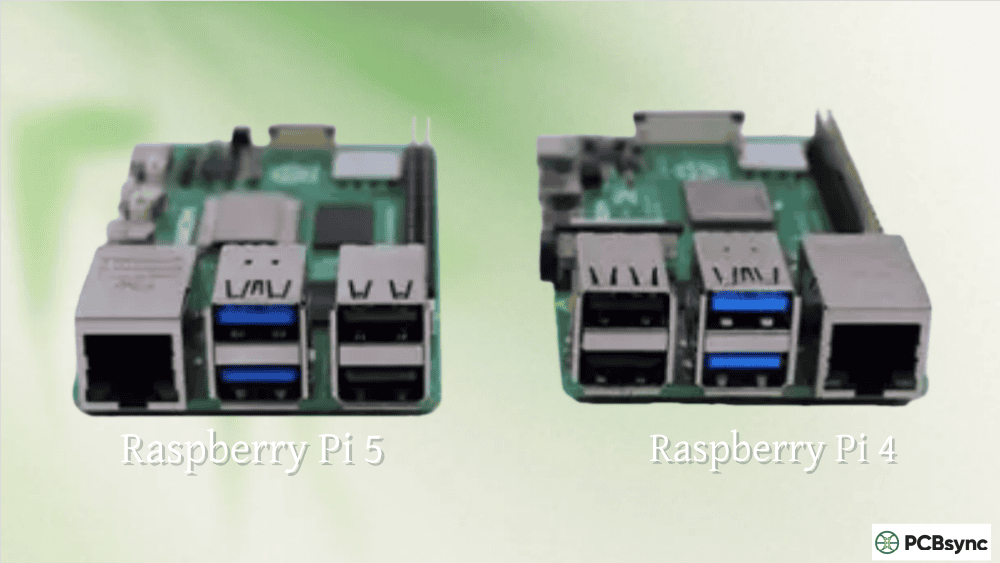
The pijuice hat was designed for the 40-pin GPIO header found on Pi models from the A+ onwards. While it physically connects to Pi 5, full software compatibility requires updated drivers. Check the GitHub repository for current Pi 5 support status before purchasing.
Can I use any LiPo battery with PiJuice?
The pijuice supports any single-cell LiPo or LiIon battery (3.7V nominal). For batteries connected via the screw terminal, Pi Supply strongly recommends cells with built-in protection circuits and NTC temperature sensors. Using unprotected cells is possible but introduces safety risks you should understand before proceeding.
How long does the PiJuice battery take to charge?
With the stock 1820mAh battery and a standard 2.5A power supply, expect roughly 2-3 hours for a full charge from empty. The charging current is limited by the battery profile settings and can be adjusted through the software interface for larger cells.
Will PiJuice shut down my Pi safely before the battery dies?
Yes, when properly configured. The software monitors battery percentage and can trigger a graceful shutdown at your specified threshold. The default is typically around 5-10%, giving sufficient margin for the shutdown process to complete before power cuts out entirely.
Can I run the PiJuice from solar panels alone?
The pijuice includes a dedicated header for solar panel connection, accepting 4.2V to 10V input. Combined with the RTC-scheduled deep sleep mode (0.5mA draw), even modest panels can maintain indefinite operation. Pi Supply offers matched 6W and 12W solar panels, though any panel meeting the voltage requirements works.
Final Verdict
The pijuice hat earns its reputation as the most capable raspberry pi ups solution available. The combination of intelligent power management, scheduling capability, hardware watchdog, and extensive software support addresses requirements that simpler battery solutions simply cannot match.
Is it worth the premium price? For mission-critical applications, remote deployments, or projects requiring sophisticated power management — absolutely. The engineering quality and feature depth justify the investment.
For basic battery backup where you just need to survive occasional power blips, consider whether the full pijuice feature set is necessary. A cheaper UPS HAT or quality power bank might serve adequately at a fraction of the cost.
After extensive testing, the pijuice remains my go-to recommendation when clients ask about reliable Raspberry Pi power solutions. The initial investment pays dividends in reliability and capability that cheaper alternatives simply cannot provide.
Inquire: Call 0086-755-23203480, or reach out via the form below/your sales contact to discuss our design, manufacturing, and assembly capabilities.
Quote: Email your PCB files to Sales@pcbsync.com (Preferred for large files) or submit online. We will contact you promptly. Please ensure your email is correct.
Notes: For PCB fabrication, we require PCB design file in Gerber RS-274X format (most preferred), *.PCB/DDB (Protel, inform your program version) format or *.BRD (Eagle) format. For PCB assembly, we require PCB design file in above mentioned format, drilling file and BOM. Click to download BOM template To avoid file missing, please include all files into one folder and compress it into .zip or .rar format.