Inquire: Call 0086-755-23203480, or reach out via the form below/your sales contact to discuss our design, manufacturing, and assembly capabilities.
Quote: Email your PCB files to Sales@pcbsync.com (Preferred for large files) or submit online. We will contact you promptly. Please ensure your email is correct.
Notes: For PCB fabrication, we require PCB design file in Gerber RS-274X format (most preferred), *.PCB/DDB (Protel, inform your program version) format or *.BRD (Eagle) format. For PCB assembly, we require PCB design file in above mentioned format, drilling file and BOM. Click to download BOM template To avoid file missing, please include all files into one folder and compress it into .zip or .rar format.
After 12 years of working in PCB manufacturing, I’ve seen countless boards arrive damaged—scratched copper traces, corroded pads, and ESD-fried components. Most of these failures could have been prevented with one simple solution: interleave paper.
If you’re shipping, storing, or handling printed circuit boards without proper interleaving protection, you’re gambling with your product quality. This guide covers everything I’ve learned about why interleave paper matters and how to choose the right type for your application.
What Is Interleave Paper and Why Does It Matter for PCBs?
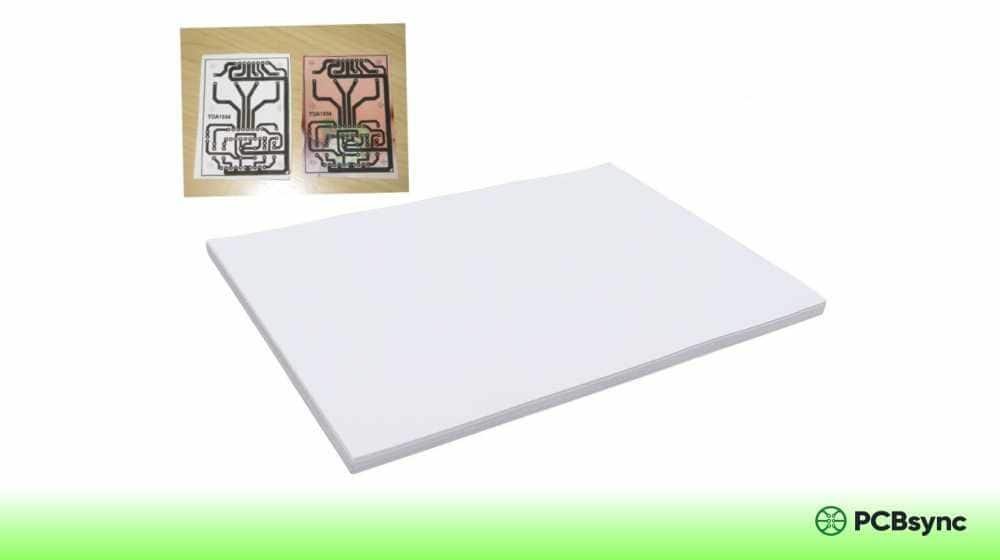
Interleave paper is a specialized protective material placed between stacked PCBs or electronic components during storage, manufacturing, and shipping. Unlike regular paper, quality interleave paper is engineered with specific properties that prevent damage to sensitive electronics:
pH-neutral or slightly acidic composition to prevent chemical reactions with copper
Low sulfur and chloride content to avoid tarnishing and corrosion
Controlled surface cleanliness to eliminate particle contamination
Anti-static properties to prevent electrostatic discharge damage
Here’s what happens without proper interleave paper: when you stack bare PCBs directly on top of each other, the bottom board’s components press into the top board’s surface. During transport, vibration causes the boards to shift and rub against each other. The result? Micro-scratches on solder mask, damaged traces, and contaminated surfaces that cause soldering defects downstream.
I learned this lesson the hard way during a production run in 2015. We received 500 boards from a supplier who used regular newsprint as a separator. Within three months in storage, 40% showed visible corrosion on exposed copper areas. The sulfur compounds in that cheap paper had migrated to the metal surfaces and accelerated oxidation. That single mistake cost the company over $15,000 in scrapped inventory.
How Interleave Paper Works: The Science Behind Protection
Before diving into specific threats, it helps to understand the protective mechanisms at work. Quality interleave paper provides multiple layers of defense:
Physical Barrier Protection: The paper creates a sacrificial layer that absorbs mechanical impacts and prevents direct board-to-board contact. When two boards shift during transport, the interleave paper takes the friction rather than the copper traces or solder mask.
Chemical Buffering: pH-neutral paper neither donates nor accepts ions from metal surfaces. This chemical stability prevents acid or alkaline attack on exposed copper. Some papers include calcium carbonate buffers that actively neutralize acids as they form.
Moisture Management: Paper fibers absorb ambient moisture, reducing the relative humidity in the immediate vicinity of the PCB surface. This reduces condensation risk during temperature cycling and slows oxidation reactions.
Static Dissipation: ESD-safe papers include conductive or dissipative coatings that provide a controlled path for static charges to flow safely. Rather than building up to damaging levels, charges bleed off gradually through the paper’s surface resistivity.
Vapor Phase Protection: VCI-treated papers release corrosion-inhibiting molecules that deposit as a molecular film on metal surfaces. This invisible barrier blocks oxygen and moisture from initiating corrosion reactions.
The combination of these mechanisms makes interleave paper far more effective than simple separation. Each layer works synergistically to address different damage pathways.
The Real Threats to Your PCBs During Storage and Transport
Understanding why interleave paper matters starts with knowing what can damage your boards. These aren’t theoretical risks—they’re problems I’ve personally troubleshot on production lines.
Electrostatic Discharge (ESD) Damage
According to the ESD Association, 25% of all electronics damaged for “unknown reasons” can be attributed to ESD, costing the industry an estimated $5 billion annually. Modern integrated circuits can be damaged by discharges as low as 10 volts—far below the 3,000+ volts humans can perceive.
Regular paper is an insulator that can hold static charges. When PCBs contact charged materials or when operators handle boards improperly, discharge events occur. The damage isn’t always visible—ESD can cause latent defects that only manifest as field failures weeks or months later.
Surface Contamination and Scratches
PCB surfaces are surprisingly delicate. Even minor scratches on solder mask expose underlying copper to oxidation. Dust particles trapped between stacked boards act like sandpaper during vibration. These defects cause:
Solder bridging during assembly
Cold joints from contaminated pads
Delamination at scratch sites under thermal stress
Cosmetic rejections that increase scrap rates
Corrosion and Oxidation
Copper oxidizes rapidly in humid environments, especially when exposed to sulfur compounds or chlorides. What starts as a thin tarnish layer can progress to complete pad dissolution over months. Corrosion resistance is why interleave paper must be manufactured from virgin fibers with controlled chemistry—recycled paper often contains contaminants that accelerate metal degradation.
Moisture Damage
PCBs are hygroscopic—they absorb moisture from the environment. Trapped moisture can cause catastrophic failures during reflow soldering (the “popcorn effect”) and promotes galvanic corrosion between dissimilar metals. Proper interleave paper helps manage humidity by absorbing excess moisture or creating a barrier layer.
The problem compounds in several ways:
Moisture-Sensitive Device (MSD) degradation: Components rated MSL-3 and above absorb moisture through their plastic packaging. When heated during reflow, this moisture vaporizes explosively, causing internal cracking and delamination.
Dendritic growth: In the presence of moisture and electrical bias, metal ions can migrate across PCB surfaces, forming conductive whiskers that short adjacent traces. This failure mode is insidious because it often develops weeks or months after exposure.
Hygroscopic flux residue activation: Even no-clean flux residues can become corrosive when exposed to high humidity, creating localized corrosion cells under components.
Solder joint degradation: Moisture penetrating through solder mask openings can weaken the intermetallic bond between solder and pad, leading to brittle fractures under thermal or mechanical stress.
Quality interleave paper with moisture-wicking properties helps buffer these humidity fluctuations, giving boards additional protection during storage and transport through varying climate conditions.
Mechanical Stress and Vibration
During shipping, packages experience constant vibration, sudden shocks, and compression forces. Without proper interleaving:
Component lead damage: Tall components on one board can bend or break leads on adjacent boards in the stack.
BGA pad stress: Ball Grid Array packages can develop cracked solder joints from repeated micro-impacts.
Flex circuit fatigue: Flexible portions of rigid-flex assemblies can develop stress fractures from vibration.
Connector damage: Edge connectors and pin headers can be bent or contaminated by contact with adjacent surfaces.
Creped interleave paper provides cushioning that absorbs these mechanical stresses, while smooth papers prevent abrasive damage to surface finishes.
Real-World Case Studies: Lessons from the Production Floor
Learning from actual failures provides the most compelling argument for proper interleave paper selection. Here are three cases from my direct experience:
Case Study 1: The Sulfur Contamination Disaster
A medical device manufacturer stored 2,000 bare PCBs with gold-plated edge connectors using standard newsprint separators. After six months, inspection revealed significant tarnishing on the gold surfaces. Analysis showed sulfur compound migration from the paper had contaminated the gold, requiring expensive rework to restore acceptable contact resistance.
Root cause: Recycled paper containing sulfur-bearing compounds from the pulping process.
Solution: Switched to sulfur-free, electronic-grade kraft paper with <100 ppm sulfur content.
Cost of failure: $45,000 in rework and delayed shipments.
Case Study 2: ESD Damage in Automated Handling
An automotive electronics supplier experienced a 3% yield loss in their SMT line that couldn’t be traced to any process parameter. Investigation revealed that boards were being charged as they passed over standard kraft interleave paper in the destacking equipment. The resulting ESD events damaged sensitive CMOS ICs below the detection threshold.
Root cause: Insulative interleave paper combined with low-humidity winter conditions generated triboelectric charges.
Solution: Implemented ESD-dissipative interleave paper meeting MIL-PRF-81705D requirements.
Cost of failure: $180,000 annually in scrap and warranty returns before the issue was identified.
Case Study 3: Moisture-Induced Soldering Defects
A contract manufacturer received a large shipment of boards from Asia during monsoon season. Despite vacuum-sealed ESD bags, the interleave paper between boards had absorbed significant moisture during the ocean freight journey. When boards were reflowed, widespread solder balling and tombstoning occurred.
Root cause: Standard paper absorbed moisture inside the sealed package, releasing it during the reflow profile.
Solution: Added desiccant packets inside packages and specified polycoated interleave paper for moisture-sensitive shipments.
Cost of failure: $62,000 in rejected assemblies and expedited replacement shipments.
These cases illustrate why interleave paper selection isn’t a trivial decision—the wrong choice can have significant financial consequences.
Types of Interleave Paper for Electronic Applications
Not all interleave paper is created equal. The right choice depends on your specific protection requirements, storage duration, and budget. Here’s a breakdown of the main types you’ll encounter:
Kraft Interleave Paper
Best for: General PCB storage, cost-effective protection, short to medium-term storage
Kraft paper is the workhorse of the interleaving industry. Quality kraft interleave paper is made from 100% virgin fiber, pH-neutral, and low in sulfur and chloride content. Look for papers specifically rated for electronic applications—not all kraft paper meets the chemical purity requirements.
Property
Standard Kraft
Electronic-Grade Kraft
pH Level
6.0-8.0
6.5-7.5 (neutral)
Sulfur Content
Variable
<100 ppm
Chloride Content
Variable
<50 ppm
Surface Cleanliness
Basic
Controlled
ESD-Safe Interleave Paper
Best for: ESD-sensitive components, automated handling, manufacturing environments
Static dissipative paper is coated or treated to safely dissipate electrostatic charges. Products like Cortec’s EcoSonic ESD Paper conform to MIL-PRF-81705D specifications for static decay rate and surface resistivity. These papers combine ESD protection with corrosion inhibition, making them ideal for sensitive electronics.
Key specifications to look for:
Surface resistivity: 10^5 to 10^11 ohms/square (static dissipative range)
Static decay rate: Less than 2 seconds from 5,000V to 0V
Charge generation: Non-tribocharging when handling
Anti-Tarnish and VCI Paper
Best for: Long-term storage, precious metal contacts, high-humidity environments
Vapor Corrosion Inhibitor (VCI) paper releases protective molecules that form an invisible barrier on metal surfaces. This technology is particularly valuable for protecting gold, silver, and tin-plated contacts from sulfur-induced tarnishing.
Anti-tarnish papers like Cortec’s Corrosorber VpCI Paper can protect precious metals for up to two years when properly enclosed. Some products include color-change indicators that show when protection is depleted.
Glassine Interleave Paper
Best for: High-cleanliness applications, optical inspection areas, delicate surface finishes
Glassine is a dense, smooth paper that offers excellent particle-free surfaces. Its translucent nature allows visual inspection without removing the protection. While not typically anti-static on its own, glassine works well as an inner layer combined with ESD outer packaging.
Creped papers feature a textured surface that provides cushioning and conformability. The crepe structure absorbs impact energy and accommodates thickness variations across stacked assemblies. These papers excel at protecting boards with tall components or uneven surfaces.
The crepe structure typically adds 15-25% elongation capability, meaning the paper can stretch to conform around components without tearing. This is particularly valuable for:
Boards with tall electrolytic capacitors or heat sinks
Assemblies with edge connectors that extend beyond the PCB edge
Mixed-height component populations
Rigid-flex assemblies where the flex portion needs gentle support
Polycoated and Laminated Interleave Paper
Best for: Moisture-critical applications, extended overseas shipping, tropical climates
When standard paper doesn’t provide adequate moisture protection, polyethylene-coated papers add a vapor barrier. These laminated products combine the cushioning and anti-tarnish properties of paper with the moisture resistance of plastic film.
Cortec’s Cor-Pak VpCI Polycoated Paper is a common example—it provides both vapor-phase corrosion inhibition and a physical moisture barrier. The polyethylene coating can be applied to one or both sides depending on the required protection level.
Polycoated papers are especially valuable for:
Ocean freight shipments where containers experience condensation
Storage in non-climate-controlled warehouses
Applications requiring both VCI protection and moisture resistance
Long-term archive storage of assembled boards
Comparison: Interleave Paper vs. Other PCB Packaging Solutions
How does interleave paper stack up against other common packaging methods? Here’s a practical comparison based on real-world performance:
Protection Method
ESD Protection
Scratch Prevention
Moisture Barrier
Corrosion Inhibition
Cost
Reusability
ESD Interleave Paper
★★★★☆
★★★★★
★★★☆☆
★★★★☆
Low
Yes
ESD Bags (Metallized)
★★★★★
★★★☆☆
★★★★★
★★★☆☆
Medium
Limited
Pink Anti-Static Foam
★★★★☆
★★★★☆
★★☆☆☆
★☆☆☆☆
Medium
Limited
Conductive Foam
★★★★★
★★★☆☆
★☆☆☆☆
★☆☆☆☆
Medium-High
No
Bubble Wrap (Standard)
★☆☆☆☆
★★★☆☆
★★★☆☆
★☆☆☆☆
Low
Limited
VCI Paper
★★☆☆☆
★★★★★
★★★★☆
★★★★★
Medium
Yes
The key insight: interleave paper and ESD bags serve different purposes. Anti-static bags create a Faraday cage that shields contents from external static fields. Interleave paper prevents board-to-board damage within a stack. For optimal protection, use both—interleave paper between boards, then place the stack in an ESD shielding bag.
Cost-Benefit Analysis: Why Quality Interleave Paper Pays for Itself
Many engineers and purchasing managers hesitate to specify premium interleave paper due to cost concerns. Let’s put this in perspective with real numbers.
Cost Comparison Table
Interleave Paper Type
Approximate Cost per Sheet (24″ x 36″)
Protection Level
Cost per PCB (typical)
Standard Kraft
$0.08 – $0.15
Basic
$0.02 – $0.04
Electronic-Grade Kraft
$0.15 – $0.30
Good
$0.04 – $0.08
ESD-Dissipative Paper
$0.30 – $0.60
Excellent
$0.08 – $0.15
VCI Anti-Tarnish Paper
$0.50 – $1.00
Premium
$0.12 – $0.25
Polycoated VCI Paper
$0.75 – $1.50
Maximum
$0.18 – $0.35
ROI Calculation Example
Consider a production run of 10,000 PCBs with an average board value of $50:
Total inventory value: $500,000
Premium interleave paper cost: $0.15 × 10,000 = $1,500
Scrap rate without proper protection: 2% = $10,000
Scrap rate with proper protection: 0.2% = $1,000
Net savings: $10,000 – $1,000 – $1,500 = $7,500
This doesn’t even account for warranty returns, customer dissatisfaction, or the engineering time spent investigating intermittent failures. The true return on investment is typically 5-10x the material cost.
How to Choose the Right Interleave Paper for Your Application
Selecting appropriate interleave paper requires matching the paper properties to your specific risk factors. Here’s my decision framework:
Step 1: Assess Your Primary Threats
Ask yourself:
How long will boards be stored? Longer storage requires better corrosion protection.
What’s the humidity in your environment? High humidity demands moisture barriers or VCI protection.
Are your boards populated with ESD-sensitive components? Use static dissipative paper.
Do your boards have delicate surface finishes? Prioritize smooth, low-lint materials.
Step 2: Check Chemical Compatibility
For copper-clad and tin-plated surfaces, verify the interleave paper meets these specifications:
Parameter
Recommended Value
Critical for
pH
6.5-7.5 (neutral)
Preventing acid/alkaline attack
Sulfur
<100 ppm
Preventing tarnish on precious metals
Chloride
<50 ppm
Preventing pitting corrosion on aluminum
Lignin
0% (lignin-free)
Long-term stability
Step 3: Consider Operational Requirements
Automated handling: ESD-safe papers prevent charge buildup on conveyor systems.
Visual inspection: Translucent glassine allows verification without opening packaging.
Space constraints: Thin papers minimize stack height for dense storage.
Cost targets: Standard kraft paper works for low-value, short-term storage.
Step 4: Validate with Testing
Before committing to a new interleave paper for production use, run a validation test:
Store a sample batch under worst-case conditions (high humidity, temperature cycling)
Inspect after 30, 60, and 90 days for signs of degradation
Run solderability testing on exposed copper surfaces
Compare against your current solution or a control group
Best Practices for Using Interleave Paper with PCBs
Having the right interleave paper is only half the battle. Proper handling and application techniques are equally important.
Handling Guidelines
Wear clean, lint-free gloves when handling interleave paper—skin oils can transfer contaminants.
Store paper in its original packaging until needed to prevent moisture absorption.
Use paper that matches board dimensions—undersized sheets leave exposed areas, oversized sheets waste material.
Replace paper after each use when working with VCI products—the protective compounds deplete over time.
Storage Best Practices
Control humidity: Maintain 30-50% relative humidity in storage areas.
Avoid temperature extremes: Rapid temperature changes cause condensation.
Stack boards horizontally with interleave paper between each layer—vertical storage concentrates weight on edges.
Limit stack heights to prevent crushing bottom boards—follow paper manufacturer recommendations.
Integration with Other Packaging
For maximum protection, combine interleave paper with complementary packaging:
Clean boards before packaging to remove flux residues and contamination.
Place interleave paper between each board in the stack.
Wrap the stack in additional interleave paper to protect outer surfaces.
Insert into an ESD shielding bag with desiccant packets for moisture control.
Place the sealed bag into a rigid container with cushioning material.
Label the package with ESD warning stickers and handling instructions.
Industry Standards and Specifications
Several standards govern ESD protection and packaging materials for electronics. Reference these when specifying interleave paper:
Standard
Description
Key Requirements
ANSI/ESD S20.20
ESD Control Program
Overall ESD protection requirements
MIL-PRF-81705D
Static Shielding Bags
Static decay and surface resistivity specs
MIL-PRF-3420H
VCI Wrapping Materials
Vapor corrosion inhibiting performance
IPC-1601
Printed Board Handling
Best practices for PCB handling
IEC 61340-5-1
ESD Protected Areas
EPA setup and maintenance requirements
Useful Resources and Databases
Here are some valuable resources for PCB packaging and interleave paper selection:
Technical Resources
ESD Association (ESDA):https://www.esda.org — Standards, training, and certification for ESD control
IPC Standards:https://www.ipc.org — Industry standards for electronics manufacturing including IPC-1601 for board handling
JEDEC Standards:https://www.jedec.org — Component handling standards including JESD625-A
ESD Testing Labs: Many ESD product manufacturers offer third-party certification for packaging materials meeting MIL-PRF-81705D and ANSI/ESD S541 requirements
Surface Resistivity Testing: ASTM D257 standard test method for DC resistance of insulating materials
Frequently Asked Questions About Interleave Paper for PCBs
Can interleave paper be reused between PCB batches?
It depends on the paper type. Standard kraft interleave paper can typically be reused 2-3 times if it remains clean and undamaged. However, VCI and anti-tarnish papers should generally be replaced after each use because the protective compounds deplete over time. ESD-treated papers may lose their static dissipative properties after repeated use or exposure to high humidity. Always inspect paper for contamination, tears, or moisture damage before reuse.
What’s the difference between anti-static and static shielding materials?
Anti-static materials prevent static charge buildup through triboelectric contact—they won’t generate static when rubbed against other materials. However, they don’t protect against external static fields or discharges from outside sources. Static shielding materials (like metallized bags) create a Faraday cage that blocks external static fields. For complete protection, use anti-static interleave paper inside a static shielding bag.
How long can PCBs be safely stored with interleave paper protection?
Storage duration depends on environmental conditions and paper type. With quality kraft interleave paper in a controlled environment (40-50% RH, 20-25°C), bare PCBs can typically be stored for 6-12 months. VCI paper extends this to 2-3 years for corrosion-sensitive applications. Populated boards with moisture-sensitive components should follow MSL (Moisture Sensitivity Level) guidelines—often requiring vacuum sealing with desiccant for extended storage.
Is regular printer paper acceptable as a temporary interleaving solution?
No. Regular printer paper often contains optical brighteners, sizing chemicals, and recycled content that can contaminate PCB surfaces. The sulfur compounds in standard paper accelerate copper tarnishing, and the uncontrolled pH can cause chemical reactions. In emergency situations, aluminum foil provides better short-term protection than regular paper, though ESD-safe interleave paper should be used whenever possible.
Do I need different interleave paper for flex circuits versus rigid PCBs?
Flex circuits benefit from softer, more conformable interleave papers like creped kraft or tissue papers that won’t stress the flexible substrate. The smooth, rigid surface of standard interleave paper can create pressure points that damage flex circuits over time. Additionally, flex circuits with adhesiveless polyimide substrates may require unbuffered interleave paper to prevent chemical interactions with the base material.
Conclusion: Protecting Your PCBs Is Protecting Your Bottom Line
After 12 years in this industry, I can confidently say that proper interleave paper is one of the most cost-effective quality controls you can implement. The material cost is negligible compared to a single damaged production batch or field failure.
Here’s my recommendation: start with quality electronic-grade kraft interleave paper for general storage and shipping. Add ESD-safe paper for sensitive components and VCI paper for long-term storage or humid environments. Combine with proper ESD bags and controlled storage conditions.
The investment in proper interleaving protection pays for itself many times over—in reduced scrap rates, fewer field failures, and happier customers receiving products that work as intended.
Inquire: Call 0086-755-23203480, or reach out via the form below/your sales contact to discuss our design, manufacturing, and assembly capabilities.
Quote: Email your PCB files to Sales@pcbsync.com (Preferred for large files) or submit online. We will contact you promptly. Please ensure your email is correct.
Notes: For PCB fabrication, we require PCB design file in Gerber RS-274X format (most preferred), *.PCB/DDB (Protel, inform your program version) format or *.BRD (Eagle) format. For PCB assembly, we require PCB design file in above mentioned format, drilling file and BOM. Click to download BOM template To avoid file missing, please include all files into one folder and compress it into .zip or .rar format.