Inquire: Call 0086-755-23203480, or reach out via the form below/your sales contact to discuss our design, manufacturing, and assembly capabilities.
Quote: Email your PCB files to Sales@pcbsync.com (Preferred for large files) or submit online. We will contact you promptly. Please ensure your email is correct.
Notes: For PCB fabrication, we require PCB design file in Gerber RS-274X format (most preferred), *.PCB/DDB (Protel, inform your program version) format or *.BRD (Eagle) format. For PCB assembly, we require PCB design file in above mentioned format, drilling file and BOM. Click to download BOM template To avoid file missing, please include all files into one folder and compress it into .zip or .rar format.
I’ve spent over a decade working with printed circuit boards, and if there’s one thing I’ve learned, it’s that knowing how to cut a PCB properly can make or break your project. Whether you’re trimming a prototype to fit a custom enclosure or depaneling production boards, the techniques you use directly impact your board’s functionality and reliability.
This guide covers everything I wish someone had told me when I started—from basic score-and-snap methods to industrial laser depaneling. Let’s dive in.
PCB cutting isn’t just about making boards smaller. It’s a critical manufacturing step that affects:
Board integrity – Poor cuts can crack traces or delaminate layers
Component safety – Excessive force or heat damages nearby components
Fit and finish – Clean edges ensure proper enclosure mounting
Production efficiency – The right method saves hours on large batches
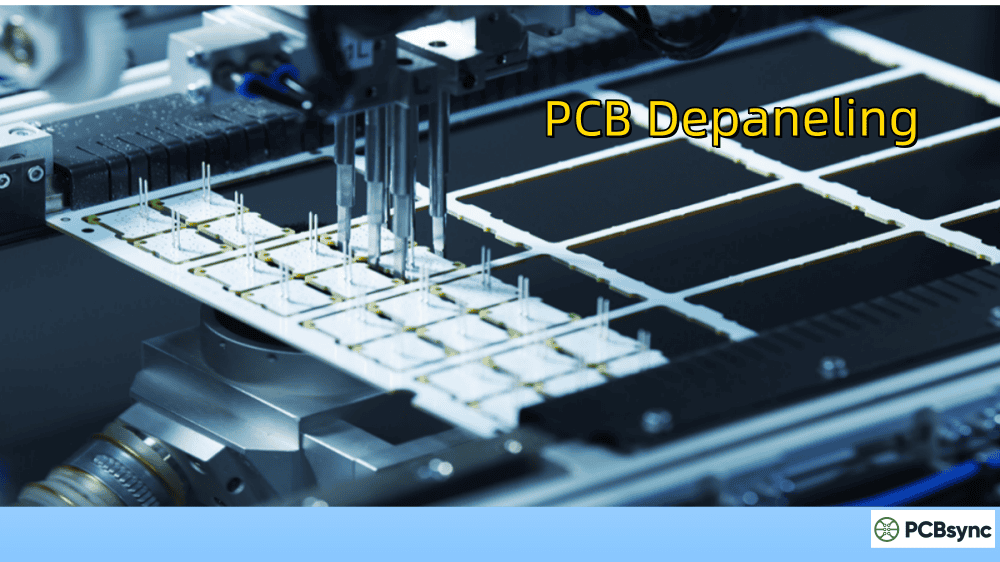
Most PCBs ship as panels—multiple boards connected together for efficient manufacturing. Separating these individual boards (called depaneling) requires precision. Even hobbyists regularly cut boards to fit project boxes or remove damaged sections.
Understanding PCB Materials Before You Cut
Before picking up any tool, you need to understand what you’re cutting through. Different materials behave very differently.
FR4 is the industry standard, making up roughly 90% of rigid PCBs. That fiberglass content makes it tough on cutting tools and produces hazardous dust—something we’ll address in the safety section.
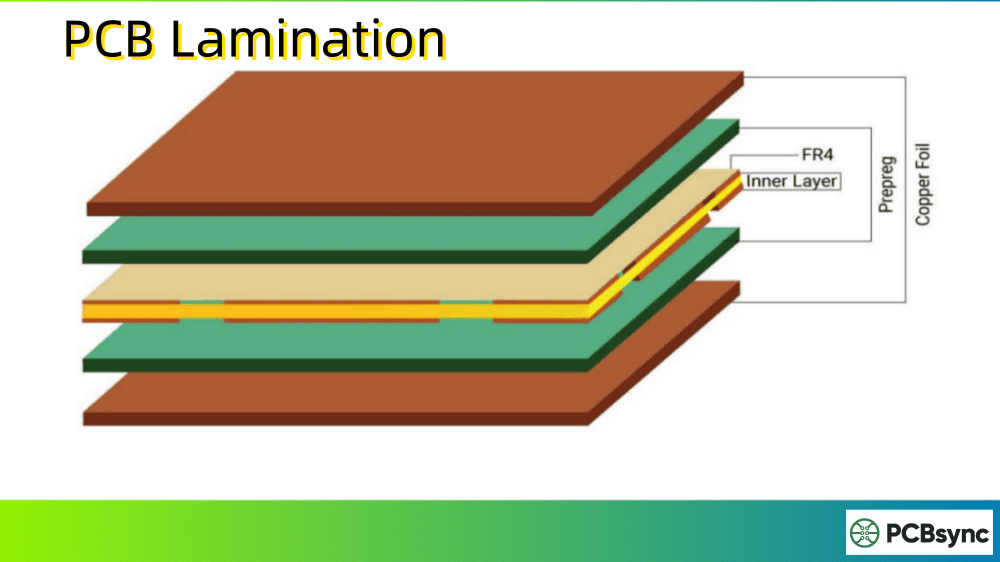
PCB Construction Layers
Every PCB consists of multiple layers that respond differently to cutting:
Substrate layer – The structural foundation (FR4 fiberglass is most common)
Copper traces – Conductive pathways that can smear or short if cut improperly
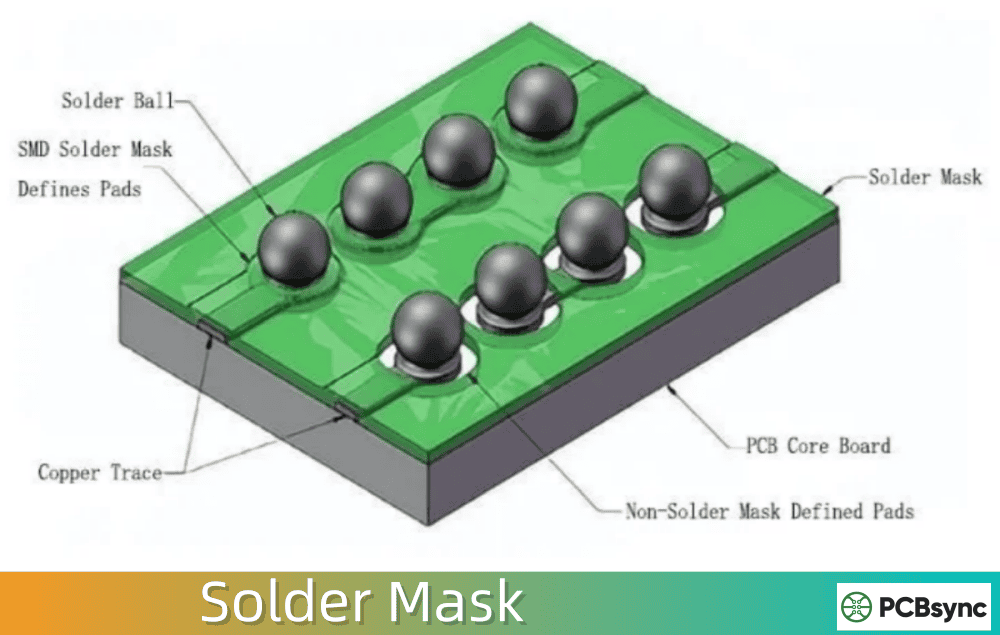
Solder mask – Green protective coating that can chip or peel
Silkscreen– Component labels that may flake off at cut edges
Surface finish – HASL, ENIG, or OSP coatings on exposed copper
Understanding this layered construction helps you choose cutting parameters that minimize delamination.
7 PCB Cutting Methods: From DIY to Industrial
Method 1: Score and Snap (Manual Cutting)
This is the simplest approach and works surprisingly well for thin boards (under 1.6mm).
How it works:
Use a sharp utility knife or carbide scriber
Score a deep groove along a straightedge on both sides
Align the score line with a table edge
Apply firm, even pressure to snap the board
Best for: Single-layer boards, FR2 material, quick prototypes
Limitations: Only works for straight cuts; edges require sanding
Pro tip: Score multiple passes rather than trying to cut deep in one stroke. This prevents the blade from wandering.
Method 2: Dremel and Rotary Tools
Rotary tools like Dremel are popular among hobbyists because they’re versatile and relatively affordable.
Recommended accessories:
Fiberglass-reinforced cut-off wheels (Dremel #426 or #409)
Diamond-coated cutting discs for longer life
Drill press stand for straight cuts
Step-by-step process:
Mark your cut line with a fine-tip marker
Secure the PCB with clamps or a vise
Start at low speed, gradually increasing
Let the tool do the work—don’t force it
Make multiple light passes rather than one deep cut
Best for: Curved cuts, notches, small modifications
Watch out for: Heat buildup can damage nearby components. Work slowly and pause if you smell burning.
Method 3: PCB Shears and Guillotines
Professional PCB shears provide clean, dust-free cuts without the mess of power tools.
Shear Type
Price Range
Best For
Manual hand shears
$30-80
Light hobby use
Lever-action guillotine
$150-400
Small production runs
Pneumatic shears
$500-1500
High-volume depaneling
Advantages:
No dust generation
Fast, repeatable cuts
Minimal edge finishing required
Limitations:
Only straight cuts
Maximum thickness usually 2mm
Can stress boards if not properly supported
Method 4: V-Cut Scoring (V-Groove)
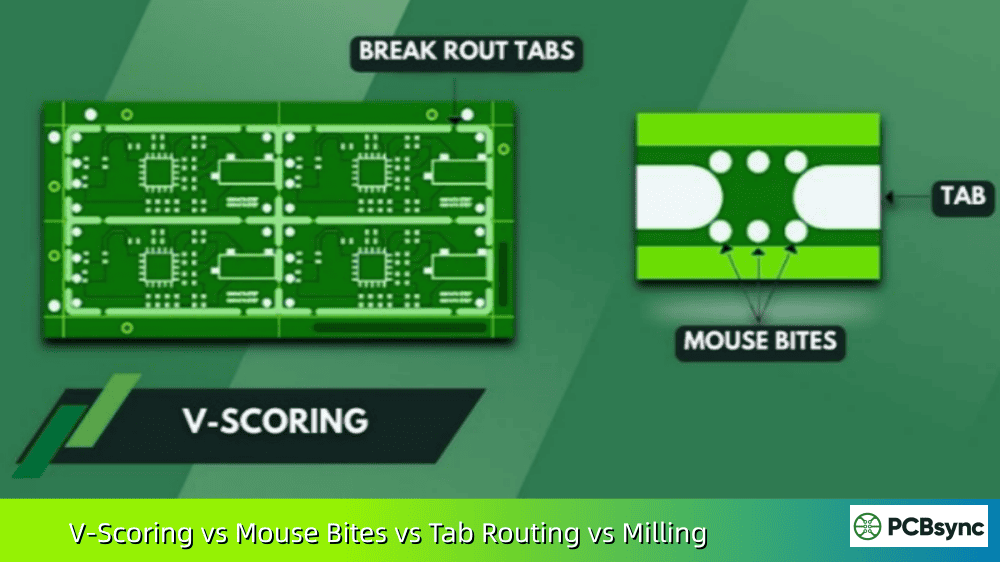
V-cut is the most common industrial depaneling method. During PCB fabrication, a V-shaped groove is machined between boards, leaving a thin web of material.
How V-cut works:
Grooves cut to approximately 1/3 board thickness from each side
Remaining material (0.35-0.8mm) holds panels together during assembly
Boards separate by bending along the groove or using a pizza-cutter style machine
Standard V-cut parameters:
Groove angle: 30°, 45°, or 60°
Depth: 1/3 of total thickness per side
Typical residual thickness: 0.4mm for 1.6mm boards
Best for: High-volume production, rectangular boards, straight separation lines
Design consideration: Keep components at least 1mm away from V-cut lines to prevent damage during separation.
Router depaneling uses a high-speed rotating bit to mill through connection tabs between boards.
Key specifications:
Spindle speed: 40,000-60,000 RPM
Feed rate: 0.5-3 m/min depending on material
Typical bit diameter: 1.0-2.0mm for PCB work
Generates the least mechanical stress of all methods
Tab design guidelines:
3-5 tabs per board edge (depending on size)
Tab width: 1.5-3mm
Use mouse bites (perforations) to weaken tabs
Advantages over V-cut:
Handles complex board shapes and curves
Lower mechanical stress on components
Can cut internal features
Dust management: Router depaneling generates significant FR4 dust. Industrial machines include vacuum extraction systems—essential for worker safety and machine longevity.
Method 6: Laser Cutting
Laser depaneling represents the cutting edge (pun intended) of PCB separation technology.
Common laser types:
UV laser (355nm) – Preferred for PCB work; minimal heat-affected zone
CO2 laser – Better for flex circuits and thin materials
Fiber laser – Used for metal-core PCBs
Advantages:
No mechanical contact = zero stress on components
Extremely precise (±0.025mm accuracy)
Can cut complex geometries
No tool wear
Limitations:
High equipment cost ($50,000+)
Slower than mechanical methods for thick boards
May cause slight carbonization at cut edges
Best for: Flex PCBs, densely populated boards, high-precision requirements
Method 7: Waterjet Cutting
Waterjet uses high-pressure water (30,000-60,000 PSI) mixed with abrasive particles to cut through virtually any material.
Characteristics:
No heat generation (cold cutting process)
Cuts up to 50mm thick materials
Kerf width: approximately 0.5-1mm
Consideration for PCBs: Water exposure requires proper drying and may affect moisture-sensitive components. Typically used for specialty applications rather than standard PCB work.
PCB Cutting Tools: A Practical Comparison
Here’s a straightforward comparison to help you choose the right tool for your situation:
Tool
Cost
Precision
Speed
Dust
Best Application
Utility knife
$5-15
Low
Slow
None
Quick prototypes
Dremel + cut-off wheel
$50-150
Medium
Medium
High
Hobby projects, curves
Hacksaw
$10-30
Low
Slow
Medium
Occasional use
Tin snips
$15-40
Low
Fast
Low
Rough cuts only
Tile saw (wet)
$70-200
Medium
Fast
Very Low
Bulk cutting
PCB shears
$150-500
High
Fast
None
Small production
CNC router
$2,000-20,000
Very High
Fast
Medium
Professional production
Laser cutter
$50,000+
Excellent
Medium
Low
High-precision work
For most hobbyists, I recommend starting with a quality utility knife for straight cuts and a Dremel with fiberglass cut-off wheels for more complex work. As your volume increases, a bench-mounted PCB shear pays for itself quickly.
Step-by-Step: How to Cut PCB at Home
Let me walk you through the practical process I use for cutting PCBs in my workshop.
What You’ll Need
Essential supplies:
Sharp utility knife or carbide scriber
Metal straightedge (not plastic—it’ll get damaged)
Fine-point permanent marker
220-grit and 400-grit sandpaper
Isopropyl alcohol (90%+)
Lint-free cloth
Safety equipment:
P3/N95 respirator mask (essential for FR4)
Safety glasses with side shields
Work gloves
Preparation Steps
1. Clean the board Wipe the PCB with isopropyl alcohol to remove dust and oils. A clean surface ensures your marking is visible and accurate.
2. Mark your cut lines Use a fine-tip marker and straightedge to draw precise cut lines. Mark both sides of the board if you’re scoring.
3. Verify measurements Measure twice, cut once. Check that your cut won’t damage any traces or components.
4. Set up your workspace Work in a well-ventilated area. If cutting FR4, consider working outdoors or near an exhaust fan.
Cutting Process
For score-and-snap:
Position your straightedge firmly on the cut line
Score along the line with firm, consistent pressure
Make 5-10 passes, deepening the groove each time
Flip the board and score the opposite side, aligning with your first groove
Place the scored line along a table edge
Support both sides and apply downward pressure to snap
For rotary tool cutting:
Secure the PCB firmly in a vise or with clamps
Position dust collection nearby
Start the tool at low speed before touching the material
Follow your marked line steadily
Let the tool cut—don’t force it
Pause periodically to prevent overheating
Finishing the Edges
Raw cut edges are usually rough and may have sharp fiberglass splinters.
Start with 220-grit sandpaper to remove major burrs
Progress to 400-grit for a smoother finish
Sand at a 45° angle to break sharp edges
Wipe with alcohol-dampened cloth to remove dust
Inspect under good lighting for any remaining roughness
Safety Precautions: Don’t Skip This Section
I can’t stress this enough: FR4 fiberglass dust is hazardous. Those tiny glass particles don’t break down in your lungs.
Essential Safety Measures
Respiratory protection:
Use a P3 or N95-rated respirator minimum
Standard dust masks are NOT adequate for fiberglass
If you can smell the material, your protection is insufficient
Eye protection:
Safety glasses with side shields
Consider a full face shield for power tool work
Fiberglass particles can cause serious eye irritation
Skin protection:
Wear long sleeves and gloves
Fiberglass causes itching and skin irritation
Wash hands thoroughly after handling cut boards
Workspace considerations:
Work in well-ventilated areas
Use dust extraction whenever possible
A wet tile saw eliminates airborne dust
Clean up dust immediately with a HEPA vacuum—not a regular vacuum
What to Avoid
Never blow dust away with compressed air
Don’t cut in enclosed spaces without ventilation
Avoid eating or drinking in your work area
Don’t use the same clothes for other activities without washing
Common PCB Cutting Mistakes (And How to Avoid Them)
After years of cutting PCBs, I’ve made plenty of mistakes. Here’s what I’ve learned:
Mistake #1: Using dull tools Dull blades require more force, leading to cracked boards and jagged edges. Replace utility blades frequently—they’re cheap.
Mistake #2: Insufficient board support An unsupported board flexes during cutting, causing cracks and uneven edges. Always clamp or support both sides of the cut line.
Mistake #3: Cutting too fast Rushing leads to heat buildup (which damages components) and inaccurate cuts. Take your time.
Mistake #4: Ignoring trace locations Check your board layout before cutting. Accidentally severing a trace renders the board useless.
Mistake #5: Skipping edge finishing Sharp edges and fiberglass splinters cause problems during assembly and can even cut through wire insulation over time.
Aluminum PCB: CNC router or specialized metal shears
Frequently Asked Questions
Can I cut a PCB with regular scissors?
No—and you shouldn’t try. Regular scissors lack the strength and sharpness to cut FR4 cleanly. You’ll end up with cracked edges, delaminated layers, and probably ruined scissors. Use proper aviation snips or PCB shears for thin boards, or the appropriate power tool for thicker materials.
What’s the best way to cut FR4 PCB material?
For hobbyists, a wet tile saw offers the best balance of clean cuts, low dust, and reasonable cost. The water captures fiberglass particles, and diamond blades handle FR4 easily. For occasional use, score-and-snap with a carbide tool works for boards under 1.6mm. For production environments, V-cut scoring during fabrication followed by machine depaneling is standard practice.
Is cutting a populated PCB safe?
Cutting through assembled boards is risky and generally not recommended. The mechanical forces can crack solder joints, damage sensitive components, and create conductive debris that causes shorts. If you must cut a populated board, remove nearby components first, use a method with minimal vibration (like scoring), and thoroughly clean the board afterward.
How do I cut curves or complex shapes in PCB?
For curved cuts, a Dremel or rotary tool with a fiberglass cutting wheel gives you the most control. Work slowly, follow your marked line, and make multiple shallow passes. For professional applications, CNC routers handle complex geometries precisely. Tab routing with mouse bites can accommodate irregular board shapes in production panels.
What causes PCB delamination during cutting, and how do I prevent it?
Delamination happens when cutting forces separate the PCB’s layers. Common causes include dull tools, excessive speed, inadequate support, and cutting against the grain of the fiberglass weave. Prevent it by: using sharp tools, working slowly, supporting both sides of the cut line, scoring before snapping, and avoiding excessive heat buildup.
Final Thoughts
PCB cutting doesn’t have to be intimidating. Start with the method that matches your tools and volume, prioritize safety (especially respiratory protection), and take your time. Clean cuts come from patience, not force.
For most hobbyists, a combination of score-and-snap for straight cuts and a Dremel for complex work handles 90% of projects. As your needs grow, invest in proper PCB shears—they’ll pay for themselves in cleaner edges and faster workflow.
Whatever method you choose, remember: that fiberglass dust is no joke. Protect yourself, clean up thoroughly, and your lungs will thank you for decades to come.
Inquire: Call 0086-755-23203480, or reach out via the form below/your sales contact to discuss our design, manufacturing, and assembly capabilities.
Quote: Email your PCB files to Sales@pcbsync.com (Preferred for large files) or submit online. We will contact you promptly. Please ensure your email is correct.
Notes: For PCB fabrication, we require PCB design file in Gerber RS-274X format (most preferred), *.PCB/DDB (Protel, inform your program version) format or *.BRD (Eagle) format. For PCB assembly, we require PCB design file in above mentioned format, drilling file and BOM. Click to download BOM template To avoid file missing, please include all files into one folder and compress it into .zip or .rar format.