Inquire: Call 0086-755-23203480, or reach out via the form below/your sales contact to discuss our design, manufacturing, and assembly capabilities.
Quote: Email your PCB files to Sales@pcbsync.com (Preferred for large files) or submit online. We will contact you promptly. Please ensure your email is correct.
Notes: For PCB fabrication, we require PCB design file in Gerber RS-274X format (most preferred), *.PCB/DDB (Protel, inform your program version) format or *.BRD (Eagle) format. For PCB assembly, we require PCB design file in above mentioned format, drilling file and BOM. Click to download BOM template To avoid file missing, please include all files into one folder and compress it into .zip or .rar format.
If you’ve spent any time on a production floor watching boards come off a reflow oven, you’ve probably seen it happen—a board that looked perfectly flat going in comes out with a noticeable curve or one corner lifting off the table. That’s PCB bow and PCB twist in action, and it’s one of the most frustrating issues we deal with as engineers.
I’ve been working with circuit boards for over a decade, and I can tell you that understanding bow and twist isn’t just academic—it directly impacts your assembly yields, product reliability, and ultimately your bottom line. This guide breaks down everything you need to know about PCB warpage, from the technical definitions to practical prevention strategies that actually work in real-world manufacturing.
What Is PCB Bow and Twist? Understanding the Basics
Before we dive into solutions, let’s get clear on what we’re actually talking about. PCB bow and PCB twist are two distinct types of board deformation, and treating them the same way is a common mistake.
PCB Bow Explained
PCB bow occurs when your board develops a cylindrical or spherical curvature while all four corners remain in the same plane. Picture placing the board on a flat granite surface—all four corners touch, but the middle section rises up like a gentle hill or dips down like a shallow bowl.
The IPC defines bow specifically as: “The deviation from flatness of a board characterized by a roughly cylindrical or spherical curvature such that, if the product is rectangular, its four corners are in the same plane.”
PCB Twist Explained
PCB twist is a completely different animal. With twist, when you place the board on a flat surface and press down on three corners, the fourth corner won’t touch—it lifts up. The deformation runs diagonally across the board, creating a propeller-like warpage.
According to IPC standards: “Twist is the deformation of a rectangular sheet, panel, or printed board that occurs parallel to a diagonal across its surface, such that one of the corners of the sheet is not in the plane that contains the other three corners.”
Quick Comparison: Bow vs. Twist
Characteristic
PCB Bow
PCB Twist
Visual appearance
Curved like a bowl or dome
Propeller-like diagonal warp
Corner behavior
All 4 corners in same plane
One corner elevated
Measurement axis
Along length or width
Along diagonal
Common cause
Uneven heating/cooling
Asymmetric copper distribution
Why Should You Care About PCB Flatness?
You might be thinking—a little warpage never hurt anyone, right? Unfortunately, that’s not how modern electronics manufacturing works. Here’s what happens when bow and twist exceed acceptable limits.
Assembly Problems That Kill Your Yields
Modern SMT lines run at incredible speeds. A pick-and-place machine expects your board to be flat within very tight tolerances. When it’s not:
Component placement errors: Fine-pitch components like 0402s or BGAs won’t seat properly on a warped surface
Solder paste inconsistency: Stencil printing becomes uneven, leading to too much or too little paste in different areas
Conveyor jams: Warped boards can get stuck in transport rails, shutting down your entire line
Reflow defects: Tombstoning, bridging, and cold joints increase dramatically
Long-Term Reliability Issues
Even if a warped board makes it through assembly, you’re not out of the woods:
Stressed solder joints: Constant mechanical stress leads to fatigue failures over time
Via cracking: Especially problematic for high aspect ratio vias in thick boards
Connector problems: Board-to-board connectors may not mate properly
Enclosure fit issues: That perfectly designed case? It won’t work if your board is warped
The Real Cost of Ignoring Warpage
I’ve seen companies lose thousands of dollars on a single production run because they didn’t catch warpage issues early. Between scrap boards, rework labor, and line downtime, the costs add up fast. Prevention is always cheaper than correction.
The good news is that we don’t have to guess what “acceptable” means. The IPC has established clear standards that most of the electronics industry follows.
IPC-A-600 and IPC-6012 Requirements
These standards define the maximum allowable bow and twist for different board types:
Board Type
Maximum Bow and Twist
SMT boards (surface mount)
≤ 0.75%
Through-hole only boards
≤ 1.5%
Mixed technology
≤ 0.75% (follow stricter SMT requirement)
Note: Some applications require even tighter tolerances—0.5% or less—especially for BGA-heavy designs or boards that will be used as SMT components themselves.
IPC-TM-650 Test Method
The official measurement procedure is documented in IPC-TM-650, Section 2.4.22. This test method specifies exactly how to measure and calculate bow and twist percentages to ensure everyone is speaking the same language.
Key points from the standard:
Measurements should be taken on finished boards in their “delivered form”
Panels containing multiple boards should be assessed in panel form
For odd-shaped boards, the IPC recommends AABUS (As Agreed Between User and Supplier)
How to Measure PCB Bow and Twist
Knowing how to properly measure warpage is essential for quality control. Here’s the practical approach based on IPC-TM-650.
For production-level QC, many shops use a simpler go/no-go approach:
Calculate the maximum allowable bow and twist distances for your board size
Select a feeler gauge of that thickness
If the gauge slides under the board without touching, you have a reject
Quick Reference for Maximum Allowable Distances (0.75% SMT):
Board Size (mm)
Max Bow (Length)
Max Bow (Width)
Max Twist
100 × 100
0.75mm
0.75mm
1.06mm
150 × 200
1.50mm
1.13mm
1.88mm
200 × 300
2.25mm
1.50mm
2.71mm
250 × 400
3.00mm
1.88mm
3.54mm
What Causes PCB Bow and Twist?
Now we’re getting to the meat of the matter. Understanding the root causes is the key to prevention. I group these into two categories: intrinsic factors (related to design and materials) and extrinsic factors (related to manufacturing and handling).
Intrinsic Causes
1. Unbalanced Copper Distribution
This is the number one cause I see in real-world production. Copper and FR4 have different coefficients of thermal expansion (CTE). When your board heats up:
Heavy copper areas expand more aggressively
Light copper areas expand less
The resulting internal stress causes warping
Real example: A power supply board with a massive ground plane on one side and sparse signal traces on the other is basically designed to warp.
2. Asymmetric Layer Stack-Up
Your stack-up should be symmetric about the center axis. Problems occur when:
Copper weights differ between corresponding layers (e.g., 2oz on top, 1oz on bottom)
Core and prepreg thicknesses aren’t balanced
Different materials are used on opposite sides of the stack
3. Material Selection Issues
Not all laminates are created equal. Key factors include:
Tg (glass transition temperature): Low-Tg materials soften at lower temperatures and are more prone to permanent deformation
CTE mismatch: Mixing materials from different vendors can create stress due to differing thermal expansion properties
Prepreg weave style: The warp and weft directions of the glass cloth matter—misaligned orientations between layers compound warpage
Extrinsic Causes
4. Thermal Stress During Manufacturing
Every heating step is an opportunity for warpage:
Lamination: Uneven press temperatures or poor cooling profiles
Solder mask curing: Localized heating can create stress
HASL/Surface finish: Hot air leveling subjects boards to extreme thermal shock
Reflow soldering: The biggest culprit in assembly-induced warpage
5. Moisture Absorption
FR4 absorbs moisture like a sponge. During reflow:
Trapped moisture vaporizes rapidly
Steam pressure causes internal delamination
The board warps as layers separate unevenly
This is why proper baking before pcb assembly is critical.
6. Improper Handling and Storage
Even mechanically sound boards can be ruined by:
Stacking without proper support
Standing boards on edge during storage
Bending during inspection
Rough handling during transport
7. Panel and Breakaway Design
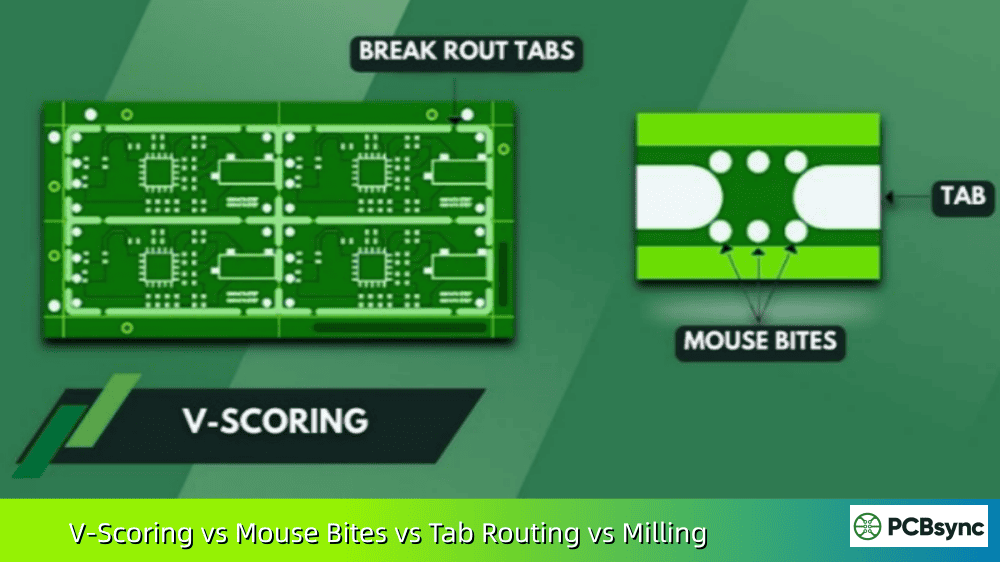
The copper pattern in your breakaway tabs should mirror the board itself. If the panel frame is perfectly balanced but your board isn’t, you’ll create stress at the separation points that manifests as twist.
How to Prevent PCB Bow and Twist
Prevention beats correction every time. Here’s my practical checklist organized by design, fabrication, and assembly stages.
Design Stage Prevention
Balance Your Copper Distribution
Aim for uniform copper density across each layer
Use copper thieving (dummy fills) to balance sparse areas
Keep copper weights consistent between corresponding layers
Pro tip: Many CAD tools can analyze copper distribution by layer. Use them.
Design a Symmetric Stack-Up
Match copper weights on mirrored layers (Layer 1 = Layer N, Layer 2 = Layer N-1, etc.)
Use identical core thicknesses symmetrically
Specify prepreg symmetry in your stack-up notes
Choose Appropriate Materials
Use high-Tg laminates (170°C+) for lead-free assembly
Consider panel size—larger panels have more warpage potential
Fabrication Stage Prevention
Work with Your Fabricator
A good PCB fabricator can make or break your warpage control:
Request proper laminate storage and pre-baking
Specify warp/weft alignment for prepreg layers
Ask about their press parameters and cooling profiles
Discuss copper thieving if your design is unbalanced
Pre-Bake Incoming Materials
Most fabricators bake boards before shipment, but verify this. Recommended conditions:
Temperature: 120-150°C (248-302°F)
Duration: 2-4 hours minimum
Store in moisture-barrier bags with desiccant after baking
Assembly Stage Prevention
Control Your Reflow Profile
Use gradual temperature ramps (2-3°C/second maximum)
Avoid rapid cooling—let boards cool naturally
Consider using nitrogen atmosphere for better thermal control
Use Proper Board Support
For large or thin boards during reflow:
Add center support pins to the conveyor
Use pallets or fixtures to maintain flatness
Keep component weight distributed evenly
Pre-Bake Assembled Boards
If boards have been stored for more than 8 hours in uncontrolled humidity:
Bake at 100-125°C for 2-4 hours before assembly
This drives out absorbed moisture and prevents “popcorn” effect
Storage and Handling Best Practices
Store boards flat, not standing on edge
Use vacuum-sealed moisture barrier bags with desiccant
Control humidity in storage areas (≤30% RH ideal)
Don’t stack too many boards—weight causes warpage
Can You Fix a Warped PCB?
Here’s the honest truth: if your board comes out of fabrication severely warped, your options are limited.
For Bare Boards (Pre-Assembly)
Mild warpage (just over specification) can sometimes be corrected:
Place the board between flat metal plates
Bake at 150°C under controlled pressure for 3-6 hours
Allow slow cooling to room temperature
Re-measure to verify improvement
Success rate: Variable. Works better for bow than twist, and results aren’t always permanent.
For Assembled Boards
Don’t try to flatten assembled boards. Applying mechanical pressure to straighten an assembled PCB will:
Crack solder joints
Damage components
Create reliability problems that won’t show up until the field
If an assembled board is warped beyond spec, it’s a reject. Period.
The Bottom Line
Prevention is infinitely better than attempted correction. Invest the time upfront in proper design and process control—it pays dividends in the long run.
Useful Resources and Downloads
Here are some official resources for further reading:
IPC Standards (Purchase Required)
Document
Description
IPC-A-600
Acceptability of Printed Boards (Section 2.11 covers flatness)
IPC-6012
Qualification and Performance Specification for Rigid Printed Boards
IPC-TM-650
Test Methods Manual (Section 2.4.22 for bow and twist measurement)
Saturn PCB Design Toolkit: Free software with CTE and stack-up calculators
Recommended Reading
“Printed Circuit Board Design Techniques for EMC Compliance” by Mark Montrose—excellent stack-up guidance
IPC Designer Certification Study Guide—comprehensive design principles
Frequently Asked Questions (FAQs)
1. What is the difference between PCB bow and PCB twist?
PCB bow is a curved deformation where all four corners remain in the same plane while the center rises or dips. Think of it like a gentle dome or bowl shape. PCB twist is a diagonal warpage where one corner lifts when the other three are held flat—similar to a propeller blade. Both are types of warpage but require different measurement methods and often have different root causes.
2. What is the maximum allowable PCB warpage according to IPC standards?
For boards with surface mount components (SMT), IPC-6012 specifies a maximum bow and twist of 0.75% or less. For through-hole only boards, the limit is 1.5% or less. Some high-reliability applications or designs with fine-pitch BGAs may require even tighter tolerances of 0.5% or stricter, which should be agreed upon between the designer and fabricator.
3. Can moisture absorption cause PCB warpage?
Absolutely. FR4 and other laminate materials are hygroscopic—they absorb moisture from the environment. During reflow soldering, this trapped moisture rapidly vaporizes, creating internal steam pressure. This pressure can cause delamination, blistering, and significant warpage. Always store PCBs in moisture-controlled conditions and pre-bake boards that have been exposed to humidity before assembly.
4. Why do thin PCBs warp more easily than thick ones?
Thin boards have less structural rigidity to resist the internal stresses caused by thermal expansion mismatches. A board that’s 0.8mm thick has far less resistance to bending forces than one that’s 1.6mm thick. Additionally, thin boards are more susceptible to warping during handling and storage. If you must use thin boards (under 0.8mm), pay extra attention to copper balance, material selection, and handling procedures throughout the process.
5. Can I straighten a warped PCB after it has been assembled?
You should not attempt to flatten assembled PCBs. Applying mechanical pressure or heat to straighten an assembled board will stress the solder joints, potentially causing cracks, opens, or latent defects that lead to field failures. The forces required to flatten a warped substrate will damage component connections. If an assembled board exceeds warpage specifications, it should be scrapped. Focus your efforts on prevention rather than correction.
Advanced Warpage Measurement Techniques
While feeler gauges and dial indicators work well for incoming inspection, modern manufacturing often demands more sophisticated measurement approaches.
Shadow Moiré Method
This optical technique uses interference patterns created when light passes through two overlapping grids. It provides:
Full-field warpage mapping in seconds
Dynamic measurement capability (can track warpage during thermal cycling)
Resolution down to 10 microns or better
Ideal for BGA and area array package coplanarity
Many contract manufacturers now use shadow moiré for 100% inspection of high-value assemblies.
3D Laser Scanning
Laser profilometers create detailed surface maps of your boards:
Can measure complex board shapes and odd geometries
Generates exportable data for statistical process control
Higher cost but excellent for R&D and failure analysis
Coordinate Measuring Machines (CMM)
For the ultimate in precision:
Touch-probe measurement at specific points
Can correlate warpage with specific board features
Traceability to national standards
Slower than optical methods but highly accurate
When to Upgrade Your Measurement Approach
Consider investing in advanced measurement equipment if:
You’re assembling high-value boards with BGAs or fine-pitch components
Your customer demands statistical warpage data
You’re troubleshooting chronic warpage problems
You need to correlate warpage with specific design features or process parameters
Case Study: Solving a Persistent Warpage Problem
Let me share a real-world example that illustrates how these principles come together.
The Problem
A customer was experiencing 15% scrap rate on a 10-layer industrial control board. The boards were warping during reflow, causing BGA solder defects. The fabricator insisted their boards met spec; the assembler blamed the design.
Investigation Process
Step 1: Measurement and Documentation
We measured incoming boards and found they were at 0.6% bow—within spec but on the high end. After reflow, boards were hitting 1.2%—way over the SMT limit.
Step 2: Design Analysis
Looking at the Gerber files, we found:
Layers 1-2 had 70% copper coverage (ground planes)
Layers 9-10 had only 25% copper coverage (signal routing)
The stack-up was NOT symmetric around the center
Step 3: Root Cause Identification
The heavy copper on the top side contracted more aggressively during cooling than the lighter copper on the bottom. This created a “bimetallic strip” effect that pulled the board into a bow shape.
The Solution
Working with the designer, we implemented three changes:
Added copper thieving to layers 9-10 to balance density
Adjusted stack-up to make copper weights symmetric
Specified higher-Tg laminate (Tg 170°C vs. 140°C)
Results
After implementing changes:
Incoming warpage dropped to 0.3%
Post-reflow warpage stayed under 0.5%
Scrap rate went from 15% to less than 1%
The fix cost virtually nothing in terms of materials but saved thousands per month in scrap and rework.
Industry Trends Affecting PCB Warpage
Several trends are making warpage control more challenging—and more important—than ever.
Thinner Boards
Consumer electronics demand thinner products. We’re seeing more designs at 0.6mm, 0.4mm, and even thinner. These boards have dramatically less rigidity and require exceptional attention to copper balance and process control.
Lead-Free Assembly
Lead-free soldering temperatures (peak temps of 245-260°C) are significantly higher than traditional tin-lead processes. This additional thermal stress increases warpage risk, especially with marginal designs or materials.
HDI and Microvia Technology
High-density interconnect boards with blind and buried vias add complexity to the stack-up. More sequential lamination cycles mean more opportunities for warpage to accumulate.
Larger Board Sizes
Data center, telecom, and automotive applications are driving demand for larger boards. A board that might be perfectly flat at 100mm × 100mm can develop significant warpage at 300mm × 400mm.
Package-on-Package (PoP) and 2.5D/3D Integration
Advanced packaging technologies have extremely tight coplanarity requirements. Even minor warpage that would pass traditional inspection can cause failures in these applications.
Checklist: PCB Bow and Twist Prevention
Here’s a practical checklist you can use for your next design:
Design Review Checklist
Copper distribution analyzed and balanced on all layers
Stack-up is symmetric about center axis
Copper weights match between corresponding layers
High-Tg laminate specified if using lead-free assembly
Panel breakaway copper matches PCB pattern
Board thickness appropriate for size and application
Thermal relief properly designed for large copper areas
Fabrication Specification Checklist
Warpage requirement clearly stated on drawing (e.g., ≤0.75%)
Material specification includes Tg and CTE requirements
Laminate manufacturer specified (no substitutions)
Pre-bake requirement specified if shipping vacuum-sealed
Assembly Process Checklist
Boards baked before assembly if stored >8 hours unsealed
Reflow profile uses gradual temperature ramps
Board support provided for large or thin boards
Post-reflow cooling is controlled, not rapid
Wrapping Up
PCB bow and twist might seem like a minor manufacturing detail, but it’s anything but. In today’s world of fine-pitch components, high-speed assembly, and demanding reliability requirements, maintaining board flatness is essential for success.
The key takeaways from this guide:
Know the difference between bow and twist—they’re distinct problems with different measurement methods
Design with warpage in mind from day one—balanced copper, symmetric stack-ups, and appropriate materials
Work closely with your fabricator—they’re your partners in preventing warpage
Control your assembly process—thermal profiles and board support matter
Prevention beats correction—once a board is warped, your options are limited
Whether you’re designing your first multilayer board or managing a high-volume production line, understanding and controlling bow and twist will save you time, money, and headaches. The investment in proper design practices and process controls pays off in higher yields and more reliable products.
Got questions about bow and twist in your specific application? Drop a comment below or reach out—happy to help fellow engineers tackle these challenges.
Inquire: Call 0086-755-23203480, or reach out via the form below/your sales contact to discuss our design, manufacturing, and assembly capabilities.
Quote: Email your PCB files to Sales@pcbsync.com (Preferred for large files) or submit online. We will contact you promptly. Please ensure your email is correct.
Notes: For PCB fabrication, we require PCB design file in Gerber RS-274X format (most preferred), *.PCB/DDB (Protel, inform your program version) format or *.BRD (Eagle) format. For PCB assembly, we require PCB design file in above mentioned format, drilling file and BOM. Click to download BOM template To avoid file missing, please include all files into one folder and compress it into .zip or .rar format.