Inquire: Call 0086-755-23203480, or reach out via the form below/your sales contact to discuss our design, manufacturing, and assembly capabilities.
Quote: Email your PCB files to Sales@pcbsync.com (Preferred for large files) or submit online. We will contact you promptly. Please ensure your email is correct.
Notes: For PCB fabrication, we require PCB design file in Gerber RS-274X format (most preferred), *.PCB/DDB (Protel, inform your program version) format or *.BRD (Eagle) format. For PCB assembly, we require PCB design file in above mentioned format, drilling file and BOM. Click to download BOM template To avoid file missing, please include all files into one folder and compress it into .zip or .rar format.
Notes for Gerber Files Generated from Specific Versions: Eagle 9.x and KiCad 7/8/9
Every PCB designer knows the frustration of submitting Gerber files only to receive a message from the manufacturer asking for corrections. The problem often traces back to version-specific export quirks in your CAD software. Eagle 9.x and KiCad 7/8/9 each have particular settings, default behaviors, and known issues that can cause manufacturing problems if you’re not aware of them. This guide documents the critical notes, settings, and workarounds for generating clean Gerber files from these popular PCB design tools.
Gerber export functions change between software versions. What worked in Eagle 8 may produce different results in Eagle 9. KiCad 7’s default settings differ from KiCad 8 and 9. Manufacturers receive thousands of Gerber packages weekly, and files with subtle export errors create delays, extra engineering questions, and sometimes costly respins.
Common Version-Related Issues
Issue Category
Eagle 9.x Impact
KiCad 7/8/9 Impact
Format compatibility
RS-274X vs X2 confusion
X2 attributes causing import errors
Missing layers
Bottom silkscreen not exported by default
NPTH drill files generated separately
Board outline
Milling layer (46) often omitted
Edge.Cuts layer gaps cause rejection
Drill files
Coordinate format inconsistencies
PTH/NPTH merge options changed
Naming conventions
Non-standard extensions confuse fab
Protel extensions require explicit enable
Understanding these version-specific behaviors prevents manufacturing delays and ensures your boards come back exactly as designed.
Eagle 9.x Gerber Export Notes
Eagle 9.x introduced significant changes to the CAM Processor interface compared to earlier versions. Autodesk continues updating Eagle frequently, and each point release can introduce subtle differences in export behavior.
CAM Processor Changes in Eagle 9.x
The CAM Processor in Eagle 9.x works differently than versions 7 and 8. The interface changed substantially, and some legacy CAM job files require modification to work correctly.
Eagle Version
CAM Processor Behavior
Eagle 7.x
Separate gerb274x.cam and excellon.cam files
Eagle 8.x
Combined CAM jobs, legacy interface
Eagle 9.0-9.1
New interface, compatibility issues with legacy jobs
Eagle 9.2+
Built-in Gerber preview, automatic ZIP output
Eagle 9.6+
Improved example CAM jobs, template system
Key change: Eagle 9.x versions automatically package output files into a ZIP archive. Earlier versions required manual file collection.
Critical Settings for Eagle 9.20 and Later
Eagle 9.20 introduced new default settings that can cause manufacturing problems if not corrected before export.
Solder Mask Negative Polarity Issue
When opening the CAM Processor in Eagle 9.20+, the solder mask layers have “Negative Polarity” checked by default. This setting must be unchecked for correct output, otherwise the solder mask Gerber files will be inverted—pads covered instead of exposed.
Profile Layer Configuration
The board outline requires both the Dimension layer (20) and Milling layer (46) for complete output. Many CAM job files only include Dimension, missing cutouts and slots defined on the Milling layer.
Layer
Purpose
Must Include
20 Dimension
Board outline, external edges
Always
46 Milling
Internal cutouts, slots, v-cuts
If present in design
Multilayer Drill File Generation
For boards with more than 4 layers containing blind or buried vias, Eagle 9.x requires explicit drill file generation based on the PCB stackup:
Right-click on Drill → Excellon in the CAM Processor
Select “Generate Excellon outputs based on PCB stackup”
Process Job to generate all required drill files
Eagle 9.x Layer Mapping for Gerber Export
Eagle Layer
Gerber Purpose
Protel Extension
1 Top
Top copper
.GTL
16 Bottom
Bottom copper
.GBL
29 tStop
Top solder mask
.GTS
30 bStop
Bottom solder mask
.GBS
21 tPlace + 25 tNames
Top silkscreen
.GTO
22 bPlace + 26 bNames
Bottom silkscreen
.GBO
20 Dimension + 46 Milling
Board outline
.GKO
Drills + Holes
Drill data
.XLN or .DRL
Bottom Silkscreen Export Issue
Eagle’s default CAM jobs only export top silkscreen (tPlace and tNames layers). If your board has bottom silkscreen, you must manually add the bottom silkscreen output:
In CAM Processor, click “Add” to create a new section
Name it “Silkscreen Bottom” or similar
Set filename to “%N.GBO” (using Protel extension)
Select layers: 20 Dimension, 22 bPlace, 26 bNames
Deselect all other layers
Eagle 9.x RS-274X vs X2 Format Issues
Some Eagle 9.x versions output Gerber X2 format even when RS-274X is specified. This causes compatibility problems with manufacturers whose CAM software doesn’t support X2 headers.
Workaround options:
Use legacy CAM job files from Eagle 8.5.2 without modification. The older format CAM jobs produce clean RS-274X output.
Manually edit exported Gerber files to remove X2 header lines (lines starting with %TF, %TA, %TO) if your manufacturer rejects them.
Eagle 9.x Slot and Cutout Handling
Eagle doesn’t support slots directly in the same way as other CAD tools. Slots appear in different ways depending on how they were created:
Slot Type
Eagle Layer
Export Behavior
Milled slots (non-plated)
Layer 46 Milling
Merged into outline (.GKO)
Plated slots
Copper layers + Drills
Merged into drill file (.XLN)
V-cuts
Layer 46 Milling
Included in outline layer
Minimum plated slot width is typically 0.65mm (25.6 mils). Ensure your CAM job includes both Dimension and Milling layers in the outline output.
KiCad 7 Gerber Export Notes
KiCad 7 established the modern Gerber export workflow that continues through versions 8 and 9. Understanding version 7’s behavior provides the foundation for working with all recent KiCad releases.
KiCad 7 Plot Settings for Manufacturing
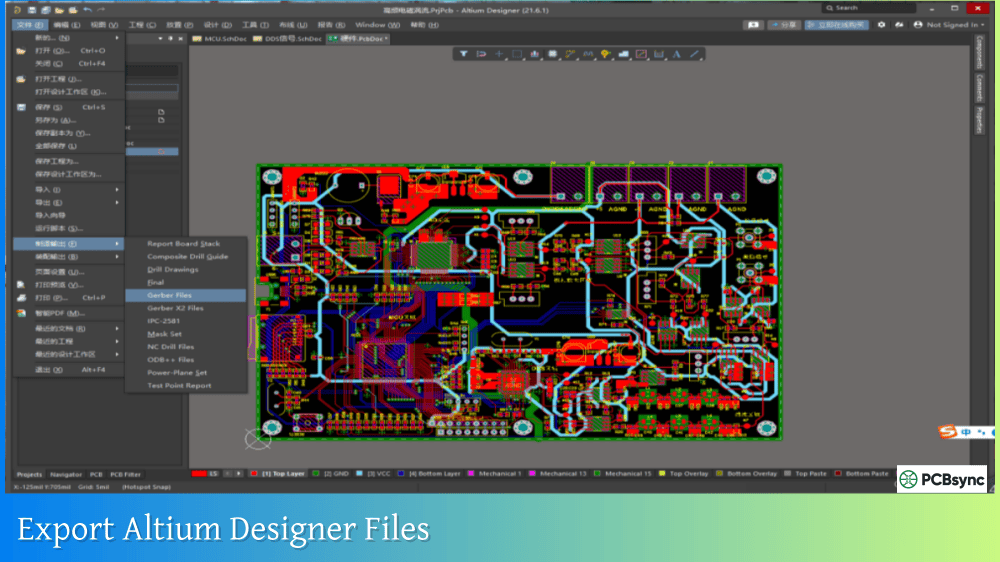
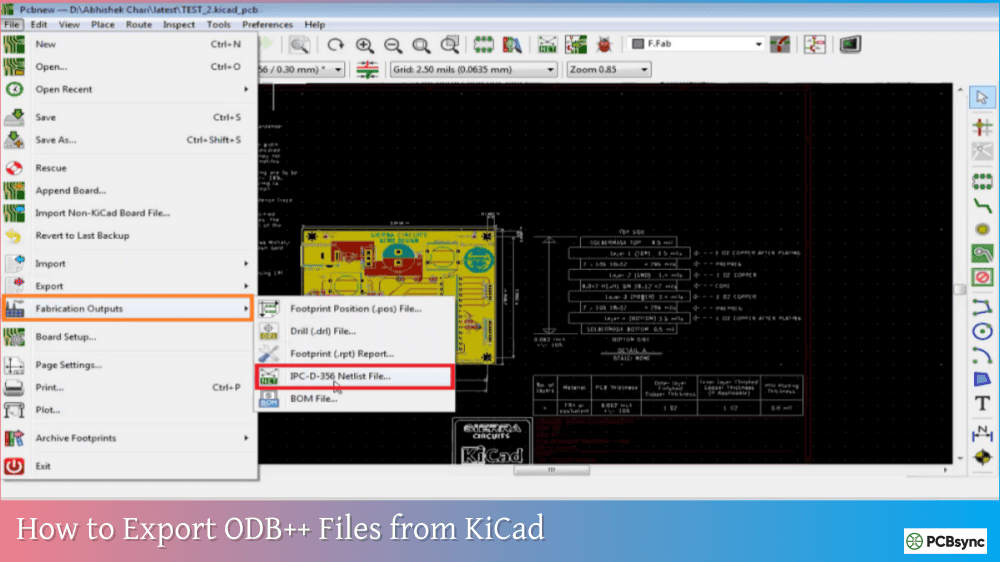
Access Gerber export through File → Fabrication Outputs → Gerbers (.gbr). The default settings in KiCad 7 are NOT suitable for most manufacturers without adjustment.
Required Settings Changes for KiCad 7:
Setting
Default
Recommended
Use Protel filename extensions
Unchecked
Checked
Subtract soldermask from silkscreen
Unchecked
Checked
Plot reference designators
Unchecked
Checked
Check zone fills before plotting
Unchecked
Checked
Use extended X2 format
Checked
Depends on manufacturer
Important: Many Chinese PCB manufacturers (JLCPCB, PCBWay, etc.) prefer RS-274X format and may have issues with X2 attributes. If in doubt, uncheck “Use extended X2 format.”
KiCad 7 Required Layers for Export
KiCad Layer
Function
Protel Extension
F.Cu
Front copper
.GTL
B.Cu
Back copper
.GBL
F.Silkscreen
Front silkscreen
.GTO
B.Silkscreen
Back silkscreen
.GBO
F.Mask
Front solder mask
.GTS
B.Mask
Back solder mask
.GBS
Edge.Cuts
Board outline
.GKO
In1.Cu, In2.Cu…
Inner layers (if applicable)
.G2, .G3…
KiCad 7 Drill File Generation
After generating Gerber files, click “Generate Drill Files…” in the same Plot window. Critical settings:
Setting
Recommended Value
Drill Units
Millimeters (preferred) or Inches
Zeros Format
Decimal format
Drill Origin
Absolute or Drill/place file origin
Drill File Format
Excellon
PTH and NPTH in single file
Check for simplicity
Oval Holes Drill Mode
Use alternate drill mode
PTH/NPTH Note: KiCad 7 may generate separate PTH (plated through-hole) and NPTH (non-plated through-hole) drill files. If your manufacturer prefers merged files, check “PTH and NPTH in single file” to avoid missing holes.
KiCad 8 Gerber Export Notes
KiCad 8 refined the export interface and changed some default behaviors from version 7. Most settings remain similar, but several options moved or changed names.
KiCad 8 Interface Changes
The Plot dialog in KiCad 8 reorganized options for better clarity. Key functional changes:
Feature
KiCad 7
KiCad 8
Gerber preview
Limited
Improved built-in viewer
Zone fill check
Manual enable
More prominent warning
Drill file button
Same window
Same window, clearer layout
X2 format option
General Options
Gerber Options section
KiCad 8 Specific Considerations
Zone Fill Warning
KiCad 8 more aggressively warns about outdated zone fills. When “Check zone fills before plotting” is enabled and fills are stale, KiCad prompts for confirmation before regenerating. Always click “Refill” to ensure copper pours reflect your current design.
Aperture Macro Support
KiCad 8 uses aperture macros for complex pad shapes. Some older CAM software has issues with these macros. If you experience problems with hexagonal pads, custom pad shapes, or thermal reliefs not displaying correctly:
Check “Disable aperture macros” in the Gerber Options
This increases file size but improves compatibility
Only use this option if experiencing specific problems
Gerber X2 Slot Definition Issue
A known issue in KiCad 8 (and earlier versions) involves slot holes in Gerber X2 format drill files. KiCad uses obround apertures with Flash commands for slots, which technically violates the Gerber specification. Most manufacturers handle this correctly, but if you encounter slot problems:
Use Excellon format for drill files instead of Gerber X2
Or regenerate drill files with “PTH and NPTH in single file” checked
Read more How to convert PCB Files in different Design software:
KiCad 9 introduced further refinements to the export workflow, with some options renamed or relocated compared to version 8.
KiCad 9 Interface Changes from Version 8
Users upgrading from KiCad 8 to 9 notice several changes in the Gerber generation dialog:
Change
KiCad 8 Location
KiCad 9 Status
Global solder mask minimum
Board Setup
Warning displayed during plot
Tent vias option
Plot dialog
Moved/renamed
Plot footprint values
General Options
Reorganized
Plot footprint text
Separate option
Combined options
Adaptation tip: If following manufacturer guides written for KiCad 8, expect minor differences in option locations. The underlying functionality remains the same—just look for similarly named options in the reorganized interface.
KiCad 9 Recommended Export Settings
Setting Category
Option
Recommended
Plot format
Gerber
Yes (default)
Output directory
Your choice
Create dedicated folder
Include Layers
All fabrication layers
Select appropriately
General Options
Plot reference designators
Checked
General Options
Use drill/place file origin
Checked
General Options
Check zone fills before plotting
Checked
Gerber Options
Use Protel filename extensions
Checked
Gerber Options
Subtract soldermask from silkscreen
Checked
Gerber Options
Use extended X2 format
Manufacturer dependent
Gerber Options
Disable aperture macros
Only if needed
KiCad 9 Drill File Best Practices
KiCad 9 maintains the same drill file generation workflow as versions 7 and 8. Generate drill files from within the Plot dialog by clicking “Generate Drill Files…”
Recommended drill settings for KiCad 9:
Format: Excellon (most compatible)
Drill Units: Millimeters
Zeros Format: Decimal format
Map File Format: Gerber (optional, for reference)
PTH and NPTH: Single file unless manufacturer specifies otherwise
Common Issues Across Both Tools
Certain Gerber export problems appear regardless of whether you’re using Eagle or KiCad. Awareness of these issues helps catch problems before submission.
Board Outline Problems
Problem
Eagle Solution
KiCad Solution
Missing outline
Include layers 20 + 46
Verify Edge.Cuts is selected
Gaps in outline
Check wire connections
Ensure closed shape
Outline on wrong layer
Use Dimension layer
Use only Edge.Cuts
Missing cutouts
Add Milling layer to output
Draw cutouts on Edge.Cuts
Drill Alignment Issues
Both tools can produce drill files that don’t align with copper layers if coordinate settings differ between outputs.
Prevention checklist:
Use consistent units (mm or inches) across all outputs
Use the same origin reference for Gerber and drill files
Verify coordinate format matches between copper and drill exports
Check zero suppression settings match manufacturer requirements
File Naming for Manufacturer Compatibility
Standard Protel extensions improve automated layer recognition at PCB factories.
Layer Function
Protel Extension
Eagle Default
KiCad Default
Top Copper
.GTL
.cmp
-F_Cu.gbr
Bottom Copper
.GBL
.sol
-B_Cu.gbr
Top Mask
.GTS
.stc
-F_Mask.gbr
Bottom Mask
.GBS
.sts
-B_Mask.gbr
Top Silk
.GTO
.plc
-F_Silkscreen.gbr
Bottom Silk
.GBO
.pls
-B_Silkscreen.gbr
Outline
.GKO
.gko
-Edge_Cuts.gbr
Drill
.DRL or .XLN
.drl
.drl
Enable Protel extensions in both tools to avoid layer identification confusion at the manufacturer.
Useful Resources
Eagle 9.x Resources
Resource
URL
Description
JLCPCB Eagle CAM Files
jlcpcb.com/help/article/137
Predefined CAM jobs for Eagle
PCBWay Eagle Guide
pcbway.com/helpcenter/generate_gerber
Version-specific tutorials
Seeed Studio CAM Files
seeedstudio.com/blog
Updated CAM files for 9.4.2+
Autodesk Eagle Forums
forums.autodesk.com/t5/eagle-forum
Community support
KiCad 7/8/9 Resources
Resource
URL
Description
KiCad Official Documentation
docs.kicad.org
Version-specific guides
JLCPCB KiCad Guides
jlcpcb.com/help
KiCad 7, 8, 9 tutorials
PCBWay KiCad Tutorials
pcbway.com/helpcenter/generate_gerber
Export walkthroughs
KiCad Forums
forum.kicad.info
Community support
OSH Park KiCad Guide
docs.oshpark.com/design-tools/kicad
Manufacturer-specific settings
Gerber Viewers for Verification
Tool
Platform
URL
KiCad GerbView
All
Included with KiCad
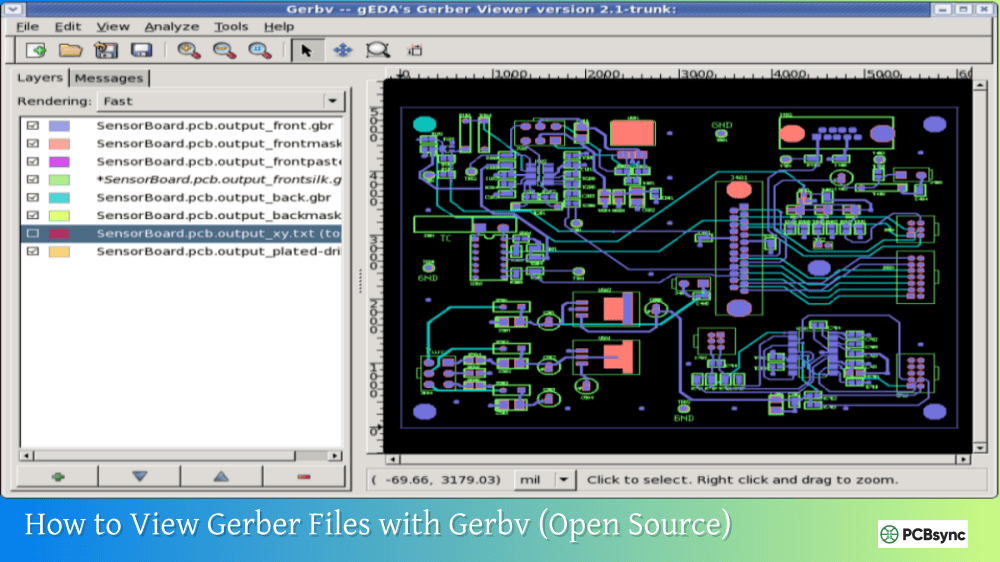
Gerbv
All
gerbv.github.io
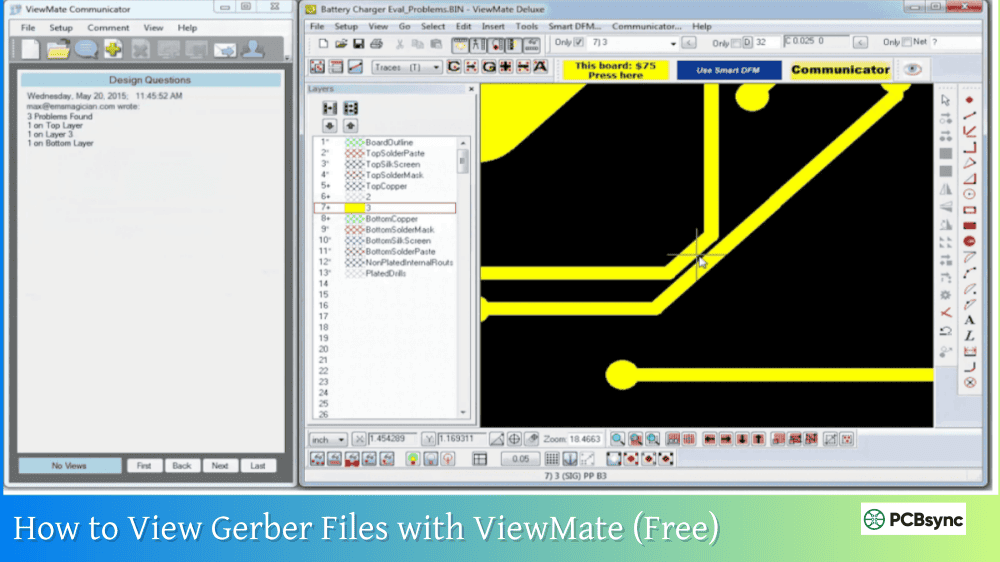
ViewMate
Windows
pentalogix.com
JLCPCB Gerber Viewer
Online
jlcpcb.com
PCBWay Gerber Viewer
Online
pcbway.com
Frequently Asked Questions
Why does my manufacturer reject Gerber X2 files from KiCad?
Some manufacturers’ CAM software doesn’t fully support Gerber X2 attributes, particularly the %TF (file attributes) and %TA (aperture attributes) headers. While X2 is the newer standard with useful metadata, compatibility varies. If your manufacturer reports parsing errors or layer identification problems with X2 files, regenerate with “Use extended X2 format” unchecked in KiCad’s Plot settings. This produces RS-274X format files that virtually all CAM systems accept. Eagle 9.x users experiencing similar issues should use legacy CAM job files from version 8.5.2.
How do I fix the negative polarity solder mask issue in Eagle 9.20?
Eagle 9.20 and later versions default to “Negative Polarity” checked for solder mask layers in the CAM Processor. This inverts the mask, covering pads instead of exposing them. Before processing your job, expand the solder mask section in the CAM Processor and uncheck “Negative Polarity” for both top and bottom solder mask outputs. Alternatively, download manufacturer-provided CAM job files that have this setting correctly configured. Always verify solder mask layers in a Gerber viewer before submission—pads should appear as openings (exposed areas) in the mask.
Why are my KiCad drill holes in a separate NPTH file?
KiCad generates separate files for plated through-holes (PTH) and non-plated through-holes (NPTH) by default. This separation is technically correct since these holes require different manufacturing processes. However, some manufacturers prefer merged files, and having separate files increases the risk of forgetting to include the NPTH file. To merge them, check “PTH and NPTH in single file” in the Generate Drill Files dialog. If you’re using footprints imported from other sources, verify their hole definitions—mounting hole footprints sometimes incorrectly specify NPTH when they should be PTH, causing unexpected file separation.
What layers must I include for a complete Eagle 9.x Gerber package?
A complete Eagle 9.x Gerber package for a two-layer board requires these outputs: Top Copper (layer 1), Bottom Copper (layer 16), Top Solder Mask (layer 29 tStop), Bottom Solder Mask (layer 30 bStop), Top Silkscreen (layers 21 tPlace + 25 tNames + 20 Dimension), Board Outline (layers 20 Dimension + 46 Milling), and Drill File (Drills + Holes layers). If your board has bottom silkscreen, manually add that output including layers 22 bPlace + 26 bNames + 20 Dimension. For multilayer boards, add inner copper layers and potentially multiple drill files for blind/buried vias. Always verify against your manufacturer’s specific requirements.
How do I handle slots and cutouts in KiCad 7/8/9?
Internal cutouts and board edge features go on the Edge.Cuts layer in KiCad. Draw cutouts as closed shapes (rectangles, polygons, or connected line segments) on Edge.Cuts—the Gerber export includes them automatically with the board outline. For slot holes in components, KiCad handles these through the footprint definition as obround or slot-type pads, which export to the drill file. If you’re creating custom slots, define them in the footprint using the appropriate pad type rather than drawing on Edge.Cuts, which would create a routed cutout rather than a drilled slot. Verify slot dimensions meet your manufacturer’s minimum requirements (typically 0.5-0.65mm width for plated slots).
Conclusion
Generating clean Gerber files from Eagle 9.x and KiCad 7/8/9 requires attention to version-specific settings and behaviors. Eagle users must watch for the negative polarity default in version 9.20+, ensure milling layers are included in outline output, and manually add bottom silkscreen when needed. KiCad users should enable Protel filename extensions, decide on X2 format based on manufacturer support, and verify PTH/NPTH drill file handling.
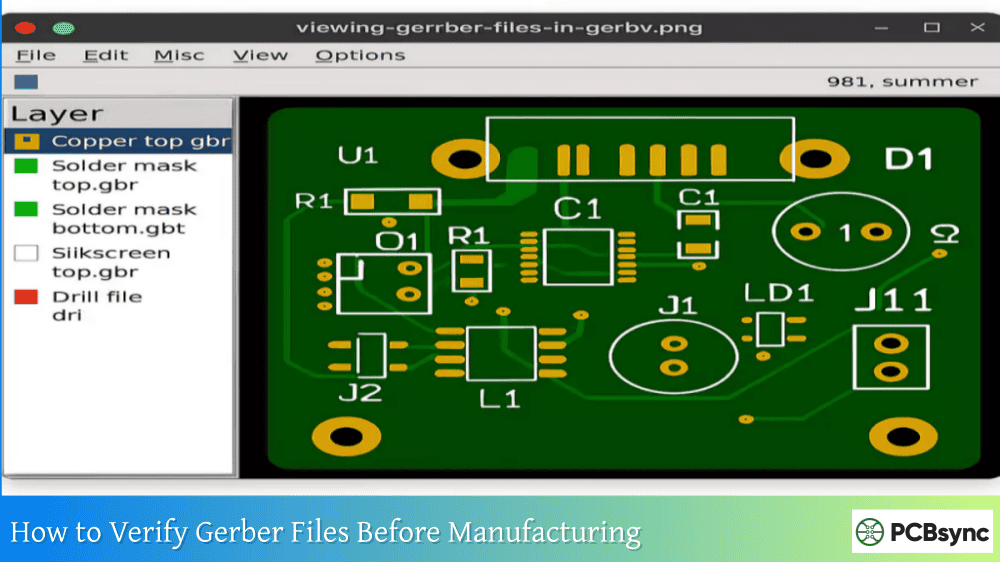
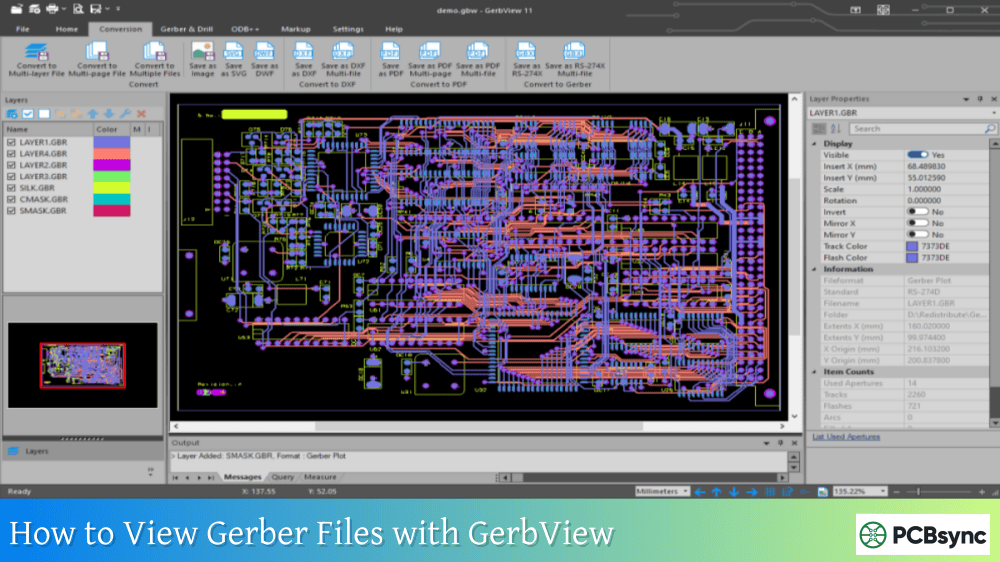
Before every submission, verify your Gerber package in a standalone viewer. Check that copper layers show expected traces and pads, solder masks expose the correct areas, silkscreen text is readable and not overlapping pads, the board outline is closed without gaps, and drill holes align with pad centers.
The few minutes spent understanding your CAD tool’s export quirks pays dividends in faster turnaround, fewer engineering questions, and boards that work correctly the first time.
Inquire: Call 0086-755-23203480, or reach out via the form below/your sales contact to discuss our design, manufacturing, and assembly capabilities.
Quote: Email your PCB files to Sales@pcbsync.com (Preferred for large files) or submit online. We will contact you promptly. Please ensure your email is correct.
Notes: For PCB fabrication, we require PCB design file in Gerber RS-274X format (most preferred), *.PCB/DDB (Protel, inform your program version) format or *.BRD (Eagle) format. For PCB assembly, we require PCB design file in above mentioned format, drilling file and BOM. Click to download BOM template To avoid file missing, please include all files into one folder and compress it into .zip or .rar format.