Inquire: Call 0086-755-23203480, or reach out via the form below/your sales contact to discuss our design, manufacturing, and assembly capabilities.
Quote: Email your PCB files to Sales@pcbsync.com (Preferred for large files) or submit online. We will contact you promptly. Please ensure your email is correct.
Notes: For PCB fabrication, we require PCB design file in Gerber RS-274X format (most preferred), *.PCB/DDB (Protel, inform your program version) format or *.BRD (Eagle) format. For PCB assembly, we require PCB design file in above mentioned format, drilling file and BOM. Click to download BOM template To avoid file missing, please include all files into one folder and compress it into .zip or .rar format.
Protecting Power Systems: A Guide to Neutral Grounding Resistor Selection
In the world of electrical distribution and heavy industrial power, we spend a lot of time worrying about what happens when things go wrong. While a PCB engineer focuses on preventing a short circuit from frying a microcontroller, a power systems engineer is focused on preventing a ground fault from vaporizing a multi-million dollar generator or transformer.
This is where the neutral grounding resistor (NGR) comes into play. It is, quite literally, the “safety valve” of a medium-voltage or high-voltage power system. If you’ve ever seen a massive stainless steel enclosure sitting next to a substation transformer, you’ve seen an NGR. It’s a component designed to do one thing: control the chaos of a ground fault.
In this deep dive, we’ll explore the “why” and “how” of neutral grounding, the specific criteria for NGR selection, and how these systems compare to other grounding methods like solid grounding or ungrounded systems.
The Problem: The Destructive Power of a Ground Fault
To understand the neutral grounding resistor, you first have to understand the nightmare scenario it prevents: the single-line-to-ground (SLG) fault.
In a perfectly balanced three-phase system, the vector sum of the currents is zero. But the moment a phase conductor touches a motor frame, a cable shield, or a grounded enclosure, that balance is destroyed. In a “solidly grounded” system, the current through that fault can reach thousands of amps instantly.
This massive surge causes:
Arc Flash Hazards: Extreme heat and pressure that can destroy equipment and injure personnel.
Point-of-Fault Damage: Melting of motor windings or transformer cores.
Voltage Dips: Dropping the voltage for the rest of the facility, causing sensitive electronics (and your PCBs) to reset or fail.
By implementing neutral grounding via a resistor, we insert a deliberate impedance between the system neutral and the earth. This limits the fault current to a predetermined, manageable level.
The Purpose of a Neutral Grounding Resistor (NGR)
The primary goal of an NGR is to find the “Goldilocks zone” of fault current—not so high that it destroys equipment, but not so low that your protection relays can’t detect it.
1. Limiting Fault Current
An NGR limits the current to a level that is high enough to be detected by protective relays (like a 51N or 50N relay) but low enough to prevent mechanical and thermal damage to the equipment. Typically, these currents are limited to anywhere from 10A to 1000A, depending on the system voltage and the sensitivity of the protection.
2. Reducing Transient Overvoltages
In an “ungrounded” system, a ground fault can lead to “arcing grounds,” where the voltage on the healthy phases can soar to 6 times the nominal voltage or more. This stresses the insulation of every motor and cable in the plant. A neutral grounding resistor “anchors” the neutral, significantly reducing these dangerous voltage spikes.
3. Improving Personnel Safety
By limiting the ground fault current, we drastically reduce the arc-flash energy at the point of the fault. This makes the environment safer for electricians and maintenance teams working near energized equipment.
Selection Criteria: How to Specify the Right NGR
As an engineer, you don’t just “buy an NGR.” You specify it based on the system’s thermal and electrical requirements. Here are the four critical parameters you must define.
1. System Voltage ($V_{line-to-neutral}$)
The resistor’s rated voltage is the system’s line-to-neutral voltage ($V_{L-N}$). For a 4.16kV system, the resistor is rated for $2400V$. This is because during a ground fault, the neutral point will shift, and the resistor will see the full phase-to-ground voltage.
2. Desired Fault Current ($I_f$)
This is the “current rating” of the resistor.
High-Resistance Grounding (HRG): Usually limits current to 10A or less. This allows the system to continue running during a single ground fault—a major advantage for continuous process industries like paper mills or chemical plants.
Low-Resistance Grounding (LRG): Usually limits current to 100A–1000A. This level is used when you want the system to “trip” (disconnect) immediately to prevent any damage.
3. On-Time Rating (Duty Cycle)
How long must the resistor survive the heat of a fault?
10 Seconds: Standard for LRG systems. The protection relays should trip the circuit long before 10 seconds pass.
Continuous: Standard for HRG systems, because the system might run for hours or days with a fault while maintenance locates the source.
4. Resistor Material and Construction
Unlike the tiny surface-mount resistors on a PCB, NGRs use massive stainless steel or stamped chrome-aluminum elements. They are built to withstand high temperatures (up to 760°C) without melting or changing resistance value significantly.
Comparison of Grounding Methods
Choosing the right type of neutral grounding is a trade-off between equipment protection, system availability, and cost.
Grounding Method
Fault Current Level
Transient Overvoltages
Reliability/Availability
Best Application
Solidly Grounded
Very High (10kA+)
Low
Low (Instant Trip)
Residential, 480V Comms
Ungrounded
Very Low (Charging only)
Very High (Dangerous)
High (No Trip)
Legacy Industrial
High Resistance (HRG)
Low (5A – 10A)
Controlled
Highest (No Trip)
Data Centers, Critical Process
Low Resistance (LRG)
Moderate (100A – 800A)
Controlled
Moderate (Instant Trip)
Medium Voltage (2.4kV – 35kV)
The Components of a Neutral Grounding System
An NGR is rarely just a box of resistors. To be functional in a modern facility, it includes several auxiliary components:
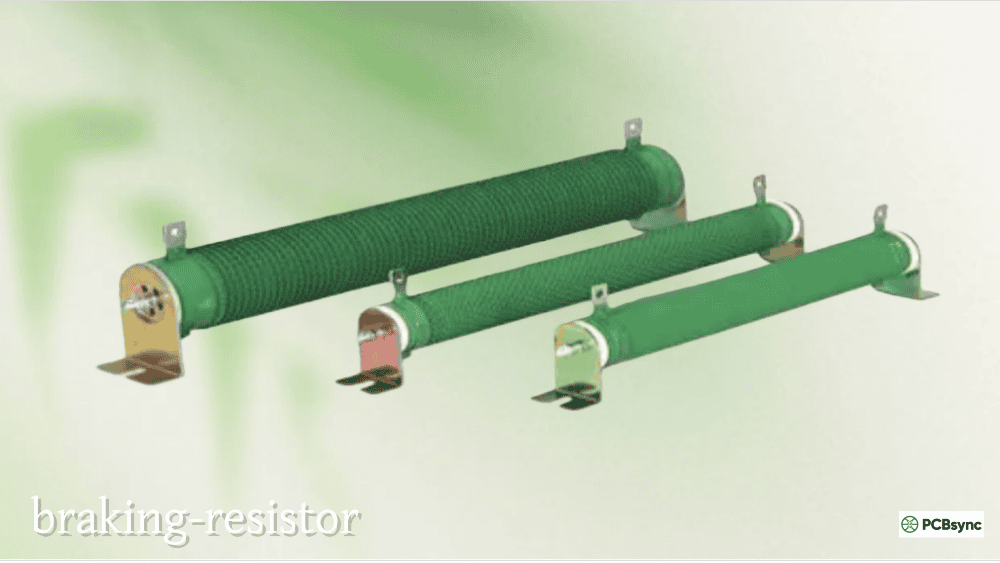
The Resistor Bank: The core “heating element” that provides the impedance.
Current Transformer (CT): Mounted on the neutral lead to measure the current flowing through the NGR. This signal goes to the protection relay.
Potential Transformer (PT): Used to measure the voltage across the resistor (useful for detecting high-impedance faults).
Enclosure: Typically NEMA 3R stainless steel to protect the elements from the elements.
Monitoring Relay: A specialized device that checks the continuity of the resistor. If the resistor breaks, your system effectively becomes “ungrounded” and dangerous—the relay alerts you to this “Open NGR” condition.
Installation and Layout: Engineering Best Practices
From a layout perspective, there are a few “non-negotiables” when installing a neutral grounding resistor.
Clearances and Airflow
These units get incredibly hot during a fault. You must ensure adequate clearance from other equipment and buildings. If you are mounting it on a rooftop or in a tight substation, ensure the ventilation louvers are not obstructed.
Connection Integrity
The cable from the transformer neutral to the NGR is the most important wire in your facility. If it breaks, your grounding protection is gone. We typically use heavy-gauge copper and ensure the connections are torqued and inspected regularly with thermography (IR cameras).
PCB-Level Monitoring?
In modern “Smart Grid” or industrial IoT setups, we are seeing more electronics integrated into the NGR enclosure. This might include an ARM-based microcontroller board for real-time monitoring of harmonic content in the ground current or sending telemetry via Modbus/TCP to a SCADA system. As a PCB engineer, this is where our worlds collide—designing ruggedized sensing boards that can survive the high EMI environment of a power substation.
Useful Resources for Power Engineers
If you are currently in the selection phase for an NGR, these resources are indispensable:
Technical Standards:
IEEE Std 142 (The Green Book): The definitive guide for grounding industrial and commercial power systems.
IEEE Std 32: Standard requirements, terminology, and test procedures for neutral grounding devices.
Manufacturer Databases & Manuals:
Post Glover Resistors – One of the biggest names in the NGR industry with excellent technical white papers.
1. Can I use an NGR on a Delta-connected transformer?
Technically, a Delta transformer doesn’t have a neutral point. To use neutral grounding, you must first create a “virtual neutral” using a Zig-Zag Transformer or a Grounding Transformer. Once you have that artificial neutral, you can connect the NGR.
2. Why not just ground everything solidly?
Solid grounding is cheaper, but the damage caused by a fault is massive. In a data center or a hospital, a solid ground fault could trip the main breaker and shut down the entire facility. An NGR (specifically an HRG) keeps the power on while you fix the fault.
3. Does an NGR affect my electricity bill?
No. During normal operation, there is virtually zero current flowing through the NGR (only a tiny amount of unbalanced “leakage” current). It only “works” and consumes energy when a fault occurs.
4. How often should I test my neutral grounding resistor?
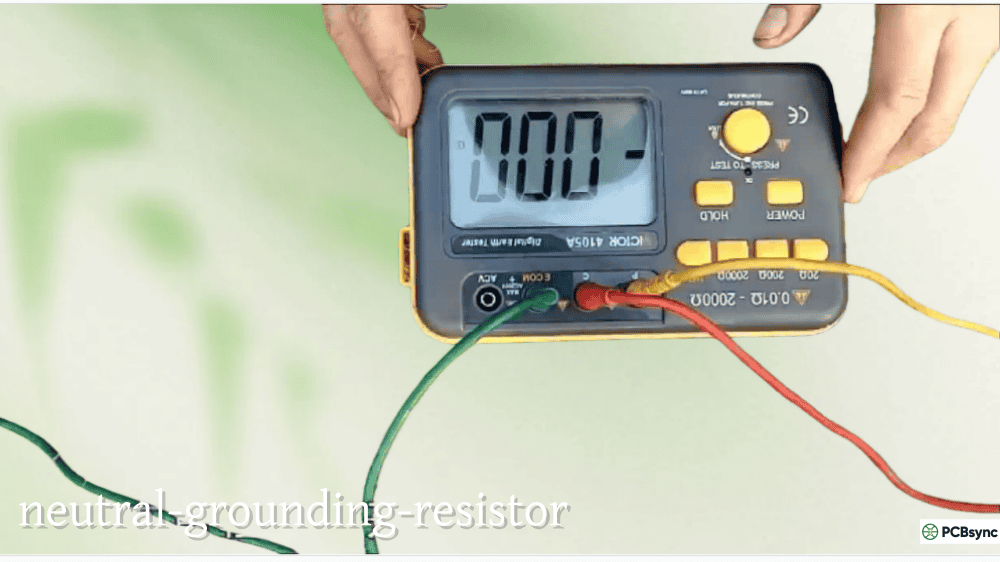
You should perform a visual inspection annually and a resistance measurement every 2–3 years. If the resistance varies by more than 10% from the nameplate value, it’s time to investigate for corrosion or broken elements.
5. What is the “10-Second Rule” in NGR selection?
Most LRG systems are rated for 10 seconds. This is a thermal rating. It means the resistor can absorb the heat generated by the full fault current for exactly 10 seconds before it risks melting. Your protection relays are usually set to trip in less than 1 second.
Conclusion: Balancing Protection and Performance
Selecting a neutral grounding resistor is about understanding the specific needs of your facility. Are you running a 24/7 semiconductor fab where any downtime costs millions? Go with a High-Resistance Grounding system. Are you managing a medium-voltage distribution network where you need to isolate faults immediately to protect expensive switchgear? Low-Resistance Grounding is your answer.
Regardless of the choice, the neutral grounding strategy is the backbone of your system’s reliability. By limiting the current, we stop a minor insulation failure from becoming a catastrophic event.
Would you like me to help you calculate the specific resistance value ($R$) needed for a 13.8kV system with a target fault current of 400A?
Inquire: Call 0086-755-23203480, or reach out via the form below/your sales contact to discuss our design, manufacturing, and assembly capabilities.
Quote: Email your PCB files to Sales@pcbsync.com (Preferred for large files) or submit online. We will contact you promptly. Please ensure your email is correct.
Notes: For PCB fabrication, we require PCB design file in Gerber RS-274X format (most preferred), *.PCB/DDB (Protel, inform your program version) format or *.BRD (Eagle) format. For PCB assembly, we require PCB design file in above mentioned format, drilling file and BOM. Click to download BOM template To avoid file missing, please include all files into one folder and compress it into .zip or .rar format.