Inquire: Call 0086-755-23203480, or reach out via the form below/your sales contact to discuss our design, manufacturing, and assembly capabilities.
Quote: Email your PCB files to Sales@pcbsync.com (Preferred for large files) or submit online. We will contact you promptly. Please ensure your email is correct.
Notes: For PCB fabrication, we require PCB design file in Gerber RS-274X format (most preferred), *.PCB/DDB (Protel, inform your program version) format or *.BRD (Eagle) format. For PCB assembly, we require PCB design file in above mentioned format, drilling file and BOM. Click to download BOM template To avoid file missing, please include all files into one folder and compress it into .zip or .rar format.
Modular PCB Design: Microcontroller-Based Expandable Systems
After spending fifteen years designing embedded systems, I’ve watched the industry shift dramatically toward modular PCB design. What started as a niche approach for prototyping has become the backbone of modern electronics development. Whether you’re building industrial controllers, IoT devices, or consumer electronics, understanding how to design microcontroller-based expandable systems will save you countless hours of redesign work and thousands in production costs.
This guide breaks down everything you need to know about modular PCB design, from selecting the right microcontroller architecture to implementing standardized expansion interfaces that future-proof your products.
Modular PCB design is a methodology where you divide a complex electronic system into separate, interconnected circuit boards rather than cramming everything onto a single PCB. Each module handles a specific function—power management, microcontroller processing, communication interfaces, or sensor input—and connects to other modules through standardized connectors or cables.
Think of it like building with LEGO blocks instead of sculpting from a single piece of clay. When your microcontroller becomes obsolete in two years (and it will), you only need to redesign the processor module. The power supply, sensor interfaces, and communication boards remain unchanged.
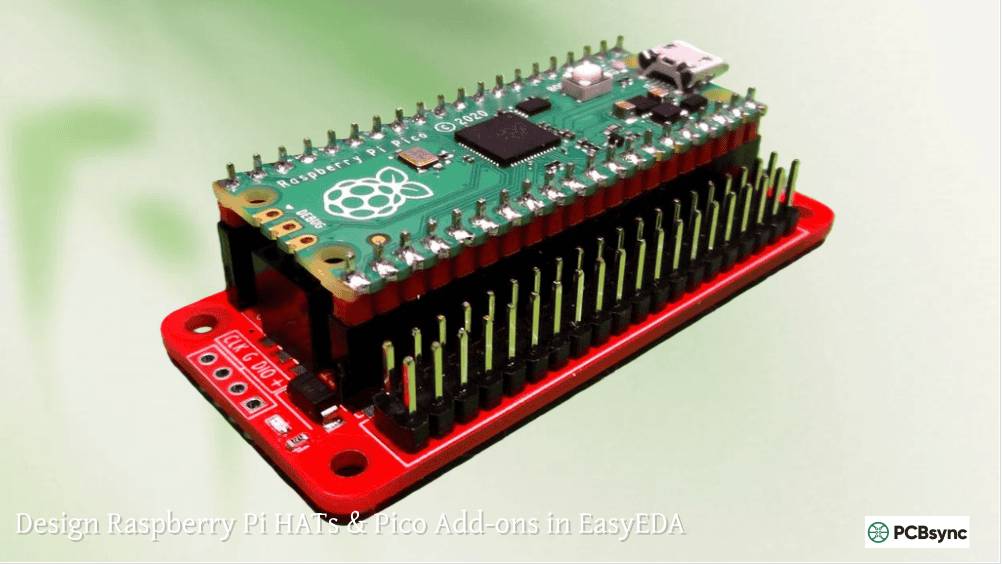
The concept isn’t new. Arduino shields and Raspberry Pi HATs have popularized this approach in the maker community. But professional modular PCB design goes much deeper, requiring careful attention to signal integrity, power distribution, and mechanical alignment that hobbyist platforms often overlook.
Why Engineers Choose Modular PCB Design for Microcontroller Systems
I’ve converted dozens of monolithic designs to modular architectures over the years. Here’s why this approach consistently outperforms single-board designs for microcontroller-based systems:
Faster Development Cycles
When your design team can work on the power module while the firmware engineers debug the microcontroller board, projects move faster. Each module becomes an independent workstream with its own testing and validation timeline. I’ve seen development time drop by 30-40% on complex embedded systems simply by parallelizing the hardware development.
Component Obsolescence Management
Microcontrollers and network ICs typically see upgrades every 2-3 years. In a monolithic design, this means a complete board respin. With modular microcontroller PCB design, you swap out the processor module and maintain everything else. One client saved $180,000 in NRE costs when their primary MCU went EOL because they only needed to redesign a single module.
Simplified Testing and Debugging
Troubleshooting a 500-component PCB is a nightmare. Isolating faults becomes exponentially harder as component density increases. Modular systems let you test each functional block independently—if the power module checks out, you know the fault lies elsewhere. This approach has cut my debugging time in half on complex mixed-signal designs.
Scalability Across Product Lines
A well-designed modular architecture lets you create product variants by mixing different modules. Your flagship product might include WiFi, Bluetooth, and cellular connectivity modules, while the budget version uses only the WiFi board. Same base design, different capabilities, minimal additional engineering.
Core Components of Microcontroller PCB Design
Before diving into modular architectures, you need solid fundamentals in microcontroller PCB design. Here are the critical elements every MCU board must address:
Microcontroller Selection Criteria
Choosing the right MCU determines everything that follows. Consider these factors:
For modular designs, I generally prefer MCUs with abundant I/O pins even when the immediate application doesn’t require them. Routing unused pins to expansion headers adds minimal cost but dramatically increases system flexibility.
Power Supply Architecture
The power module typically forms the foundation of any modular microcontroller system. Design considerations include:
Your voltage regulator choice matters more than most engineers realize. For MCU applications, I recommend low-dropout regulators (LDOs) for clean, low-noise rails when current requirements permit. Switching converters offer better efficiency for higher current draws but require careful layout to minimize EMI coupling into sensitive analog circuits.
Place bulk capacitors (typically 10µF-100µF) near the regulator output, with smaller ceramic capacitors (100nF) as close as possible to each MCU power pin. For STM32 microcontrollers, the rule of thumb is n × 100nF + 1 × 4.7µF, where n equals the number of VDD pins.
Decoupling and Power Integrity
Every VDD pin on your microcontroller needs proper decoupling. Place 100nF ceramic capacitors within 3mm of each power pin—farther placement increases trace inductance and reduces effectiveness at high frequencies.
For BGAs and other packages with hidden power pins, use via-in-pad technology with filled and capped vias to maintain reliable connections while allowing optimal capacitor placement.
Programming and Debug Interfaces
Never forget the programming interface. SWD (Serial Wire Debug) requires minimal pins and works excellently for ARM-based MCUs. JTAG offers more debugging capability but consumes additional I/O. Whichever you choose, break out these signals to a standardized header that remains accessible even when modules are stacked.
Include provisions for bootloader modes—you’ll thank yourself during firmware updates in the field.
Designing Expansion Headers for Modular Systems
The expansion interface defines your modular system’s flexibility. Poor connector choices create maintenance headaches for years. Here’s what works:
Pin Header Standards
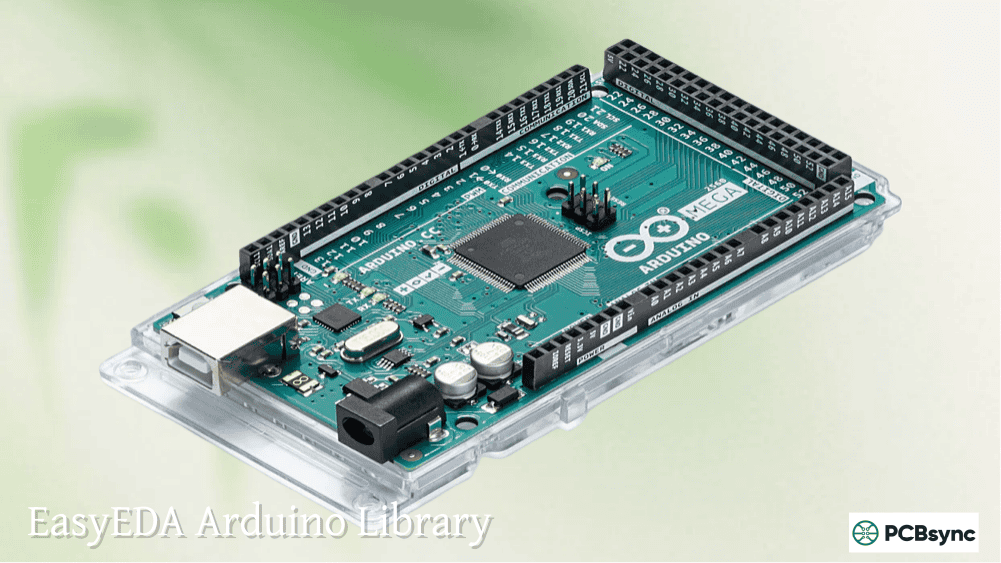
The Arduino shield format has become a de facto standard for microcontroller expansion. Its success stems from simplicity: 0.1″ (2.54mm) pitch headers arranged in a consistent pinout across thousands of compatible boards. When designing Arduino-compatible shields:
Match the mechanical dimensions exactly—the 160-mil offset between digital pins 7 and 8 catches many first-time designers
Use stackable headers (10.5mm leg length) to enable multiple shield stacking
Maintain the standard power, ground, and signal pin assignments
The Raspberry Pi 40-pin GPIO header offers another widely-adopted standard, particularly for Linux-based embedded systems. Its 2.54mm dual-row format includes I2C, SPI, UART, and PWM signals in standardized positions.
Board-to-Board Connectors
For production systems requiring higher reliability than pin headers, board-to-board connectors offer several advantages:
Connector Type
Pitch
Best Application
Mating Cycles
Samtec BSH
0.5mm
High-density, low-profile
100+
Hirose DF12
0.5mm
Consumer electronics
30+
Molex SlimStack
0.4mm
Mobile devices
30+
TE AMP Micro
1.27mm
Industrial systems
100+
Mill-Max 0.1″
2.54mm
Prototyping, education
500+
For high-speed signals, choose connectors rated for your frequency requirements. A 0.5mm pitch connector rated for 3Gbps won’t cut it for 10Gbps interfaces.
Alignment and Stacking Considerations
Nothing frustrates more than modules that don’t physically align. Design your board outlines with mechanical alignment in mind:
Include mounting holes in consistent positions across all modules
Consider standoff heights when selecting connectors—the combined stack must fit your enclosure
Add alignment pins or notches for foolproof assembly orientation
Verify Z-axis clearances for tall components like electrolytic capacitors or inductors
Communication Protocols for Modular Microcontroller Systems
Standardized communication interfaces enable true plug-and-play modularity. Each protocol has distinct advantages:
I2C (Inter-Integrated Circuit)
I2C uses just two wires—SCL (clock) and SDA (data)—to connect multiple devices on a shared bus. Each slave device has a unique 7-bit or 10-bit address, eliminating the need for individual chip-select lines.
When to use I2C:
Connecting multiple sensors or low-speed peripherals
Board-to-board communication within enclosures
When pin count is severely constrained
Design considerations:
Add 4.7kΩ pull-up resistors on both SCL and SDA lines
Keep traces short (under 1 meter for standard mode)
Consider I2C multiplexers for address conflicts
Maximum speed: 400kHz standard, up to 3.4MHz in high-speed mode
SPI (Serial Peripheral Interface)
SPI trades I2C’s simplicity for raw speed. Four lines—MOSI, MISO, SCLK, and CS—enable full-duplex communication at rates exceeding 50MHz with the right hardware.
When to use SPI:
High-speed data transfer (displays, SD cards, flash memory)
Real-time sensor data acquisition
When latency cannot be tolerated
Design considerations:
Each slave requires a dedicated chip-select line
Keep trace lengths matched for high-speed operation
Terminate long traces to prevent reflections
Route SPI signals as differential pairs for best signal integrity
UART remains the workhorse of embedded communication. Its asynchronous nature eliminates the need for a shared clock, making it ideal for inter-module communication where clock routing would be impractical.
When to use UART:
Debug and console interfaces
GPS, cellular, and Bluetooth module communication
Long-distance inter-board connections
Design considerations:
Match baud rates precisely between devices (within 2%)
Include RTS/CTS lines for flow control in high-throughput applications
Consider RS-422/RS-485 transceivers for industrial environments
Protocol Selection Guide
Requirement
Best Protocol
Reasoning
Maximum speed
SPI
Full-duplex, no addressing overhead
Minimum pins
I2C
Only two wires, addressable devices
Long distance
UART/RS-485
Differential signaling, noise immunity
Multiple sensors
I2C
Shared bus, unique addresses
Flash memory
SPI
High throughput, simple timing
Debug console
UART
Human-readable, standard tools
Best Practices for Microcontroller PCB Design
After reviewing thousands of microcontroller board designs, certain patterns consistently separate professional work from amateur attempts:
Component Placement Strategy
Place components in a logical order that reflects signal flow:
Microcontroller first: Position the MCU centrally to minimize average trace length. Central placement can reduce total routing by 20-30% compared to edge placement.
Power components second: Locate voltage regulators, inductors, and bulk capacitors near the power input. Keep switching regulators away from sensitive analog sections.
High-speed components third: Place crystal oscillators, clock generators, and high-speed memory as close to the MCU as possible.
Expansion connectors last: Position expansion headers at board edges for easy access when modules are stacked.
For most modular microcontroller designs, four layers strike the optimal balance between cost and performance. Dedicate one layer exclusively to ground—continuous ground planes reduce loop areas and minimize EMI radiation.
Trace Routing Guidelines
Keep these principles in mind during layout:
Route clock signals first, with attention to length matching
Avoid 90-degree trace bends; use 45-degree corners or smooth arcs
Maintain at least 3× trace width clearance between high-speed signals
Route sensitive analog traces away from digital switching noise
Cross analog and digital signals at 90 degrees when crossing is unavoidable
Never split ground planes under signal traces
Thermal Management
Microcontrollers generate heat, especially under heavy processing loads. Design for thermal performance:
Connect exposed pads directly to ground planes with multiple vias
Provide adequate copper pour around voltage regulators
Consider thermal relief patterns for hand-soldering on prototypes
Leave clearance for heat sinks on high-power components
PCB Design Software for Modular Systems
Your choice of design tool significantly impacts productivity. Here’s how the major platforms compare:
Commercial Options
Altium Designer represents the industry standard for professional PCB design. Its unified environment integrates schematic capture, layout, simulation, and manufacturing output into a single application. Key strengths include:
Advanced multi-board design support
Real-time collaboration through Altium 365
Extensive component libraries with supplier integration
Sophisticated design rule checking
High-speed design analysis tools
The main drawback is cost—subscriptions run approximately $355/month, with perpetual licenses around $12,000. Student licenses are available at no cost.
Cadence OrCAD/Allegro offers comparable capabilities with particularly strong analysis tools. Many aerospace and defense contractors mandate Cadence tools.
Open-Source Alternatives
KiCad has matured remarkably over the past five years. This free, open-source platform now handles complex designs that previously required commercial tools:
Full schematic capture and PCB layout
3D visualization and MCAD export
Interactive router with length matching
Growing library of community-contributed components
Cross-platform support (Windows, macOS, Linux)
KiCad works excellently for modular designs, particularly when combined with hierarchical schematics for module reuse. The learning curve is gentler than Altium, making it ideal for engineers transitioning from hobbyist to professional work.
Software Comparison
Feature
Altium Designer
KiCad
OrCAD
License Cost
$355/mo or $12k
Free
$1,200-$30,000+
Learning Curve
Moderate
Gentle
Steep
High-Speed Design
Excellent
Good
Excellent
Component Libraries
Extensive
Growing
Extensive
Multi-Board Design
Native support
Manual
Plugin-based
Collaboration
Cloud-based
Git-friendly
Limited
For startups and individual engineers, KiCad provides professional-grade capabilities without the substantial investment. As projects scale, Altium’s efficiency gains often justify the licensing costs.
Testing Modular Microcontroller PCB Designs
Modular architecture enables systematic testing that catches issues before integration:
Module-Level Testing
Test each module independently before system integration:
Power module: Verify output voltages under load, check ripple with an oscilloscope, confirm thermal performance
MCU module: Test programming interface, verify clock frequencies, exercise all I/O pins
Communication modules: Loopback tests for UART, scan addresses for I2C, verify SPI timing
Interface Verification
Once modules pass individual testing, verify inter-module communication:
Use logic analyzers to capture I2C/SPI/UART transactions
Verify signal integrity at expansion headers with an oscilloscope
Check for ground loops and noise coupling between modules
Include LED indicators for power rails and status signals
Add jumpers for isolating modules during debug
Provide UART access for console output
Useful Resources for Modular PCB Design
These resources have proven invaluable in my own work:
Component Databases and Libraries
Resource
Description
Link
SnapEDA
Free schematic symbols, footprints, 3D models
snapeda.com
Ultra Librarian
CAD models for multiple EDA platforms
ultralibrarian.com
Component Search Engine
Cross-references multiple libraries
componentsearchengine.com
SamacSys
Manufacturer-verified component models
samacsys.com
Design Calculators and Tools
Tool
Purpose
Link
Saturn PCB Toolkit
Trace width, via current, impedance
saturnpcb.com
EEWeb Trace Calculator
Quick trace width calculations
eeweb.com/tools
JLCPCB Impedance Calculator
Stackup and impedance planning
jlcpcb.com
Texas Instruments WEBENCH
Power supply design tool
ti.com/webench
Technical Documentation
Resource
Description
Arduino Shield Design Guide
Official specifications for shield compatibility
Raspberry Pi Hardware Documentation
GPIO pinouts, HAT design guidelines
STM32 Hardware Design Guide
Application notes for STM32 layout
Altium Documentation
Comprehensive PCB design tutorials
KiCad Documentation
Official user manuals and tutorials
PCB Fabrication Services
Service
Strength
Typical Lead Time
JLCPCB
Low cost, fast turnaround
2-5 days production
PCBWay
Flexible options, assembly
3-5 days production
OSH Park
High quality, USA-based
12 days production
Seeed Studio Fusion
Prototyping with components
7-10 days
Sierra Circuits
Advanced technology, quick-turn
1-5 days production
Common Mistakes in Modular PCB Design
Learn from others’ errors:
Connector Misalignment
Nothing derails a project faster than modules that don’t physically mate. Always create 3D models and verify clearances before ordering boards. I’ve seen six-figure projects delayed by 2mm miscalculations.
Inadequate Power Distribution
Daisy-chaining power through expansion connectors works for low-current modules but fails spectacularly under load. Design dedicated power distribution with appropriately rated traces and connectors.
Signal Integrity Neglect
High-speed signals don’t care about your modular boundaries. Treat inter-module connections with the same signal integrity rigor as on-board routing. Impedance discontinuities at connectors cause reflections that degrade performance.
Thermal Isolation Failures
Heat travels. A well-designed power module will radiate thermal energy into adjacent boards. Consider thermal barriers and airflow paths in your mechanical design.
Frequently Asked Questions
What is the minimum layer count for a microcontroller PCB?
Simple microcontroller breakout boards work fine on two layers. However, for most practical applications involving mixed signals, multiple power rails, or expansion interfaces, four layers are recommended. The dedicated ground and power planes in a four-layer stackup dramatically improve signal integrity, simplify routing, and reduce EMI.
How close should decoupling capacitors be to microcontroller power pins?
As close as physically possible—ideally within 3mm of the power pins. The trace inductance between the capacitor and the MCU power pin reduces the capacitor’s effectiveness at high frequencies. For BGA packages with interior power balls, consider via-in-pad construction to minimize this distance.
Can I mix 3.3V and 5V modules in the same system?
Yes, but you’ll need level-shifting circuitry for any signals crossing voltage domains. Bidirectional level shifters based on BSS138 MOSFETs or dedicated ICs like the TXS0108E work well for I2C and GPIO signals. SPI and UART interfaces may require different approaches depending on direction and speed requirements.
What’s the best connector pitch for modular systems?
It depends on your priorities. Standard 2.54mm (0.1″) headers offer maximum compatibility with prototyping tools and hand assembly. For production systems with space constraints, 1.27mm or 0.5mm pitch connectors provide higher density but require machine assembly. Balance connector cost, assembly requirements, and signal density for your specific application.
How do I prevent ground loops between modules?
Use a star grounding topology where each module connects to a central ground point rather than daisy-chaining grounds through connectors. Ensure adequate copper weight for ground connections, and avoid splitting ground planes. For sensitive analog modules, consider isolated ground planes with single-point connections to the system ground.
Inquire: Call 0086-755-23203480, or reach out via the form below/your sales contact to discuss our design, manufacturing, and assembly capabilities.
Quote: Email your PCB files to Sales@pcbsync.com (Preferred for large files) or submit online. We will contact you promptly. Please ensure your email is correct.
Notes: For PCB fabrication, we require PCB design file in Gerber RS-274X format (most preferred), *.PCB/DDB (Protel, inform your program version) format or *.BRD (Eagle) format. For PCB assembly, we require PCB design file in above mentioned format, drilling file and BOM. Click to download BOM template To avoid file missing, please include all files into one folder and compress it into .zip or .rar format.