Inquire: Call 0086-755-23203480, or reach out via the form below/your sales contact to discuss our design, manufacturing, and assembly capabilities.
Quote: Email your PCB files to Sales@pcbsync.com (Preferred for large files) or submit online. We will contact you promptly. Please ensure your email is correct.
Notes: For PCB fabrication, we require PCB design file in Gerber RS-274X format (most preferred), *.PCB/DDB (Protel, inform your program version) format or *.BRD (Eagle) format. For PCB assembly, we require PCB design file in above mentioned format, drilling file and BOM. Click to download BOM template To avoid file missing, please include all files into one folder and compress it into .zip or .rar format.
MIL-PRF-31032: The Definitive Guide to Military-Grade PCB Requirements
When a circuit board failure can mean the difference between mission success and catastrophe, commercial standards simply don’t cut it. That’s exactly why MIL-PRF-31032 exists. After working with military PCB projects for over a decade, I’ve seen firsthand how this specification separates boards that survive the battlefield from those that don’t. This comprehensive guide breaks down everything you need to know about MIL-PRF-31032, from qualification requirements to testing protocols, helping you understand whether your PCB fabricator truly meets the mark.
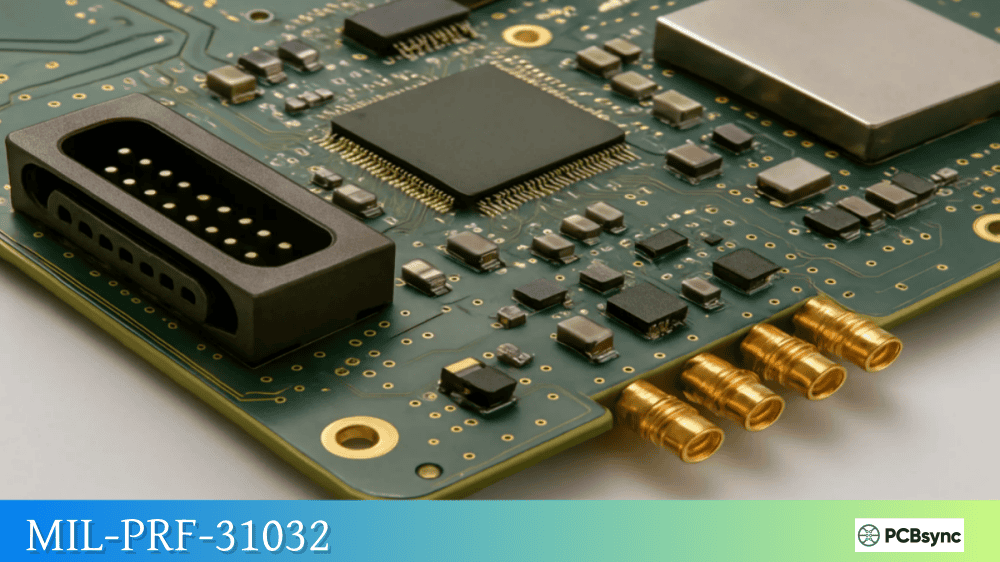
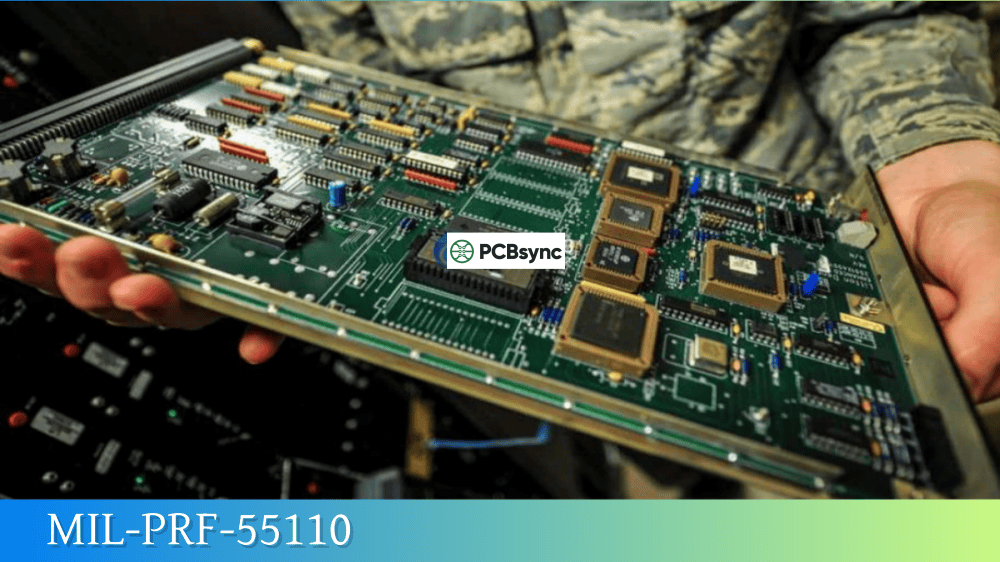
MIL-PRF-31032 is the U.S. Department of Defense performance specification that establishes requirements for the design, fabrication, testing, and qualification of printed circuit boards used in military applications. First released in November 1995 as a successor to MIL-PRF-55110, this specification has become the gold standard for military-grade PCB manufacturing.
Unlike quality management certifications such as ISO 9001 or AS9100 that focus primarily on process documentation, MIL-PRF-31032 is a true performance specification. This means it defines specific, measurable performance requirements that every military PCB must meet, along with verification methods to prove compliance. The specification covers everything from raw materials and layer stack-ups to plating quality, hole dimensions, and environmental testing.
The Defense Logistics Agency (DLA) Land and Maritime division serves as the qualifying activity responsible for certifying manufacturers to MIL-PRF-31032. Once certified, manufacturers are listed on the Qualified Manufacturers List (QML), which defense contractors and military OEMs use to identify approved suppliers for their programs.
Why MIL-PRF-31032 Matters for Defense Electronics
Military electronic systems operate in conditions that would destroy commercial boards within hours. Consider an avionics system that must function reliably at 40,000 feet where temperatures swing from -55°C to +125°C, or a ground vehicle communications unit subjected to constant vibration and shock while operating in desert heat or arctic cold.
MIL-PRF-31032 certification tells procurement officers and prime contractors that a PCB manufacturer has demonstrated the capability to produce boards that will survive these conditions. Without this certification, a fabricator cannot legally supply PCBs for DoD contracts requiring the specification.
MIL-PRF-31032 Specification Structure
The MIL-PRF-31032 specification uses a hierarchical structure consisting of a base document and multiple slash sheets that address specific PCB technologies. Understanding this structure is essential for specifying the correct requirements on your procurement documents.
Base Document and Slash Sheets
The base MIL-PRF-31032 document (currently Revision D, dated March 2025) establishes the overall framework, quality management requirements, and certification process. The technology-specific requirements are contained in slash sheets:
Slash Sheet
Description
Technology Coverage
MIL-PRF-31032/1
Rigid Multilayer
Thermosetting resin, with/without blind and buried vias
MIL-PRF-31032/2
Rigid Single/Double Layer
Thermosetting resin, with/without PTH
MIL-PRF-31032/3
Flexible Single/Double Layer
With/without PTH, with/without stiffeners
MIL-PRF-31032/4
Rigid-Flex and Flexible Multilayer
With PTH, with/without stiffeners
MIL-PRF-31032/5
Rigid Multilayer High Frequency
Thermoplastic/thermosetting for RF/microwave
MIL-PRF-31032/6
Rigid Single/Double Layer High Frequency
For RF/microwave applications
Each slash sheet defines specific dimensional requirements, material specifications, testing protocols, and acceptance criteria for its covered technology. A manufacturer must qualify separately for each slash sheet they intend to produce.
Appendices and Their Requirements
The base specification includes several critical appendices that guide implementation:
Appendix
Title
Status
Appendix A
Quality Management Plan Outline
Guidance (not mandatory)
Appendix B
Qualification Procedure Requirements
Mandatory
Appendix C
Conformance Inspection Requirements
Mandatory
Appendix D
Test Optimization
Guidance (not mandatory)
Appendix E
Status Reporting
Mandatory
Appendix F
Resistance to Soldering Heat
Referenced by slash sheets
Appendix J
Solderability Requirements
Referenced by slash sheets
The mandatory appendices establish the framework that every certified manufacturer must follow, while the guidance appendices provide flexibility in implementation.
MIL-PRF-31032 Qualification Process
Becoming qualified to MIL-PRF-31032 is not a simple paperwork exercise. The process typically takes 12 to 24 months and requires significant investment in documentation, testing, and process controls. Here’s how it works.
Step 1: Quality Management Program Development
The foundation of MIL-PRF-31032 certification is a comprehensive Quality Management (QM) program tailored specifically to military PCB production. This goes beyond a standard ISO quality manual and must address:
Technical Review Board (TRB): Every certified manufacturer must establish a TRB consisting of senior management and technical staff. The TRB is responsible for verifying the QM plan implementation, approving process changes, evaluating performance data, and communicating with the DLA qualifying activity.
Process Flow Documentation: A detailed process flow must document every manufacturing, inspection, and test step from order entry through shipment. Each step must reference specific procedures or work instructions.
Failure Analysis Program: A dedicated failure analysis plan must address failed boards from all manufacturing stages and customer returns, with documented corrective action protocols.
Step 2: Self-Assessment and Validation
Before the DLA audit, the manufacturer’s TRB conducts a thorough self-assessment to verify the QM plan is fully implemented. This internal audit specifically addresses MIL-PRF-31032 requirements beyond standard quality system audits.
The self-assessment must demonstrate:
Process flow matches actual production
All procedures are current and followed
Training records are complete
Calibration programs are active
Document control meets retention requirements
Step 3: DLA Certification Audit
Once the manufacturer believes their system is ready, documentation is submitted to the DLA qualifying activity. The DLA then schedules an on-site audit to validate TRB effectiveness and QM program implementation.
The audit team reviews documentation, interviews personnel, observes production processes, and examines quality records. Any findings must be addressed with acceptable corrective actions before certification can proceed.
Step 4: Qualification Testing
After passing the certification audit, the manufacturer must demonstrate capability to produce PCBs meeting the specification requirements through qualification testing. This involves:
Test Vehicle Development: Creating a qualification PCB design that represents the maximum complexity the manufacturer wishes to qualify, including specific attributes like layer count, minimum trace/space, hole sizes, and aspect ratios.
Production and Testing: Manufacturing the qualification test vehicles using documented processes, followed by comprehensive testing at both internal facilities and DLA-approved external laboratories.
Documentation Package: Submitting travelers, test results, microsection reports, dimensional data, and electrical test records to the DLA.
Qualified Capabilities
Upon successful qualification, the manufacturer receives a listing on QML-31032 that specifies their qualified capabilities:
Capability Parameter
Example Qualified Value
Maximum panel size
18″ x 24″
Maximum layer count
24 layers
Minimum trace width
0.003″
Minimum space
0.003″
Minimum hole size (after plating)
0.008″
Maximum aspect ratio
11:1
Board thickness range
0.010″ to 0.220″
Qualified finish types
HASL, ENIG, Immersion Silver
Manufacturers can only accept MIL-PRF-31032 orders within their qualified capability range. Exceeding these limits by more than 25% requires add-on qualification.
MIL-PRF-31032 Testing Requirements
Testing under MIL-PRF-31032 is far more rigorous than commercial standards. The specification requires both ongoing production testing and periodic verification testing through DLA-approved laboratories.
In-House Testing Requirements
Manufacturers must perform certain tests internally on every production lot:
Test
Method
Purpose
Visual Inspection
IPC-A-600/MIL-PRF-31032
Verify external acceptability
Dimensional Inspection
IPC-TM-650 2.2.5
Confirm design compliance
Electrical Testing
Continuity/Isolation
Verify circuit integrity
Microsectioning
IPC-TM-650 2.1.1
Evaluate internal construction
Thermal Stress
IPC-TM-650 2.6.8
Assess solder float resistance
Solderability
J-STD-003/MIL-PRF-31032 App J
Verify surface finish quality
External Laboratory Testing
DLA-approved third-party laboratories must perform additional testing for qualification and ongoing conformance:
Periodic Conformance Inspection (PCI): Monthly testing on coupons from the most complex DoD lot produced. Results must be submitted to the qualifying activity. PCI includes microsectioning, thermal stress evaluation, and other tests defined by the applicable slash sheet.
Capability Verification Inspection (CVI): Conducted every two years to verify continued capability for each qualified base material type. CVI includes extended thermal shock testing (typically 100 cycles) followed by microsection evaluation.
Critical Test Parameters
The specification defines strict acceptance criteria for key parameters:
Parameter
Requirement
Copper plating thickness
Minimum 0.001″ (25μm) in holes
Plating voids
Maximum 5% of hole depth, no voids at layer interfaces
Annular ring
Minimum 0.002″ external, 0.001″ internal
Dielectric spacing
Per design, no violations
Thermal stress
No delamination, blistering, or measling after solder float
Thermal shock
Maximum 5% resistance change after 100 cycles
These requirements exceed typical IPC Class 3 criteria and reflect the demanding environments military boards must survive.
MIL-PRF-31032 vs. IPC Class 3: Key Differences
Many engineers wonder whether IPC-6012 Class 3 certification is equivalent to MIL-PRF-31032. While there’s significant overlap, important differences exist:
Aspect
MIL-PRF-31032
IPC-6012 Class 3
Governing Body
DoD/DLA
IPC (Industry association)
Qualification Required
Yes, DLA audit and testing
No formal qualification
Ongoing Monitoring
Monthly PCI, biennial CVI
None required
Technical Review Board
Mandatory
Not required
Approved Lab Testing
Required
Optional
QML Listing
Required for DoD supply
Not applicable
Material Traceability
Full lot traceability required
Recommended but not mandated
Defect Acceptance
Stricter rejection criteria
More allowances for minor defects
The bottom line: IPC-6012 Class 3 sets high performance requirements, but MIL-PRF-31032 adds qualification rigor, ongoing surveillance, and accountability that commercial certifications lack. For actual DoD contracts requiring MIL-PRF-31032, Class 3 alone is not sufficient unless the contract specifically allows IPC-6013 Class 3/C as a COTS alternative for flex circuits.
Material Requirements Under MIL-PRF-31032
Material selection for military PCBs must comply with both the base specification and applicable slash sheets. The specification emphasizes using qualified materials and maintaining full traceability.
Base Material Specifications
MIL-PRF-31032 requires base materials to meet established specifications:
Material Type
Specification
Common Designations
Glass epoxy (standard Tg)
MIL-I-24768 or IPC-4101
FR-4, Type GF
Glass epoxy (high Tg)
IPC-4101
High-Tg FR-4
Polyimide
MIL-I-24768 or IPC-4101
Type GI
PTFE/Ceramic
IPC-4103
Rogers, Taconic
Flexible polyimide
IPC-4203/4204
Kapton, Pyralux
All materials must include manufacturer certificates of conformance (C of C) with lot numbers for traceability. The qualified manufacturer must maintain records linking every military board to its material lot numbers.
Copper Foil Requirements
Copper foil must meet IPC-4562 (previously MIL-S-13949) requirements. For military applications, electrodeposited (ED) copper is most common, though rolled annealed copper may be specified for flex circuits requiring superior flex life.
Surface finishes must meet solderability requirements per Appendix J and provide adequate shelf life for military logistics chains, which can extend years between manufacture and assembly.
Design Considerations for MIL-PRF-31032 Compliance
Designing a PCB for MIL-PRF-31032 compliance requires attention to several factors beyond standard commercial designs.
Minimum Feature Sizes
Slash sheets define minimum acceptable features. Designers should verify their fabricator’s qualified capabilities before finalizing designs:
Feature
Typical Minimum (Qualified)
Trace width
0.003″ – 0.005″
Trace spacing
0.003″ – 0.005″
Finished hole size
0.008″ – 0.010″
Annular ring (external)
0.002″ minimum
Annular ring (internal)
0.001″ minimum
Test Coupon Requirements
Military boards require test coupons fabricated on the same panel for destructive testing. These Quality Conformance Test Circuitry (QCTC) coupons must include:
Daisy-chain patterns for continuity/isolation testing
Microsection evaluation sites
Thermal stress test structures
Solderability test patterns
Designers must allocate panel space for these coupons, typically 1-2 inches along panel edges.
Documentation Requirements
Master drawings for MIL-PRF-31032 boards must include:
Reference to applicable slash sheet and revision
Complete stack-up with material callouts
All dimensional requirements with tolerances
Test requirements and acceptance criteria
Marking requirements per MIL-PRF-31032
Any special requirements (conformal coating, etc.)
Maintaining MIL-PRF-31032 Certification
Qualification is not a one-time achievement. Maintaining MIL-PRF-31032 certification requires ongoing commitment and resources.
Monthly Reporting
Certified manufacturers must submit monthly reports to the DLA including:
PCI test results from approved laboratories
Lot conformance inspection data
Any nonconformances and corrective actions
Tensile strength and elongation test results (required monthly regardless of DoD production)
Change Control
All process changes require TRB review and approval. Changes affecting qualified capabilities must be evaluated for potential requalification requirements. The qualifying activity must be notified of significant changes.
Biennial Requirements
Every two years, manufacturers must complete:
CVI thermal shock testing for each qualified base material
Updated qualification documentation
DLA surveillance audits (scheduled or unannounced)
Failure to maintain these requirements results in suspension or removal from QML-31032.
I-Connect007: Publishes extensive articles on MIL-PRF-31032 requirements
IPC: Offers training courses on military PCB specifications
DLA Land and Maritime: Primary contact for certification questions
Frequently Asked Questions About MIL-PRF-31032
What is the difference between MIL-PRF-31032 and MIL-PRF-55110?
MIL-PRF-55110 was the predecessor specification for rigid PCBs that MIL-PRF-31032 replaced. While you can no longer obtain new qualification to MIL-PRF-55110, manufacturers already certified can continue producing to that specification for legacy programs. MIL-PRF-31032 encompasses all board types (rigid, flex, rigid-flex, high-frequency) under one specification with technology-specific slash sheets, whereas MIL-PRF-55110 only covered rigid boards.
How long does MIL-PRF-31032 certification take?
The typical timeline from initial commitment to QML listing ranges from 12 to 24 months. This includes developing the quality management program (3-6 months), internal validation and self-assessment (2-3 months), DLA certification audit and corrective actions (2-4 months), and qualification testing with external laboratories (3-6 months). Manufacturers with existing robust quality systems may complete the process faster.
Can a foreign manufacturer obtain MIL-PRF-31032 certification?
Yes, foreign manufacturers can achieve MIL-PRF-31032 certification. Currently, several Canadian facilities hold QML-31032 listings. However, many DoD contracts include additional requirements like ITAR compliance or domestic sourcing mandates that may restrict foreign suppliers regardless of their MIL-PRF-31032 status. Always verify contract-specific requirements with the contracting officer.
What happens if a certified manufacturer fails PCI testing?
A PCI failure triggers immediate corrective action requirements. The manufacturer must perform failure analysis, identify root cause, implement corrections, and report findings to the DLA. Depending on severity, the qualifying activity may require additional testing, suspend the manufacturer’s ability to ship affected product types, or initiate a surveillance audit. Repeated failures can result in QML removal.
Is MIL-PRF-31032 required for all military PCBs?
Not all military or defense-related PCBs require MIL-PRF-31032 certification. The requirement depends on the specific contract and program. Some programs accept IPC Class 3 boards as COTS (Commercial Off-The-Shelf) items, particularly for non-critical applications. However, for mission-critical systems, weapons platforms, and flight-certified electronics, MIL-PRF-31032 compliance is typically mandatory. Always verify requirements with your prime contractor or program office.
Common Challenges in MIL-PRF-31032 Compliance
Based on my experience working with manufacturers pursuing certification, several challenges consistently arise during the MIL-PRF-31032 qualification journey.
Documentation Gaps
Many fabricators underestimate the documentation requirements. MIL-PRF-31032 demands complete traceability from raw material receipt through final shipment. Every material lot, process parameter, and inspection result must be recorded and retrievable. Shops accustomed to commercial work often discover their existing systems lack the granularity required.
The solution involves investing in robust traveler systems and quality management software before beginning the certification process. Retrofitting documentation practices while simultaneously pursuing qualification creates unnecessary complexity and delays.
External Testing Logistics
Coordinating with DLA-approved laboratories presents logistical challenges, particularly for initial qualification. Test turnaround times vary, and laboratories have limited capacity during busy periods. Planning test submissions well in advance and establishing relationships with multiple approved labs helps avoid schedule bottlenecks.
Process Stability Requirements
The DLA expects process stability before granting certification. Manufacturers who recently made significant equipment or chemistry changes may struggle to demonstrate the consistent results that auditors expect. Allow adequate time for new processes to stabilize and collect sufficient data before scheduling the certification audit.
Ongoing Compliance Costs
Some manufacturers underestimate the ongoing costs of maintaining certification. Monthly PCI testing, biennial CVI testing, laboratory fees, and the administrative burden of reporting consume resources continuously. Factor these costs into your business model when evaluating whether the military market justifies the investment.
Future of MIL-PRF-31032
The specification continues evolving to address advancing PCB technology and changing military requirements. Recent revisions have added provisions for high-frequency materials, updated test methods, and clarified requirements based on industry feedback.
Emerging technologies like embedded components, ultra-HDI, and advanced substrate materials will likely drive future specification updates. Manufacturers should monitor DLA announcements and participate in industry working groups to stay ahead of changes that could affect their qualified capabilities.
The trend toward system miniaturization and increased electronic content in military platforms ensures continued demand for MIL-PRF-31032 certified boards. As commercial supply chains prove increasingly vulnerable to disruption, maintaining a qualified domestic supplier base becomes strategically important.
Conclusion
MIL-PRF-31032 represents the highest standard for military PCB manufacturing in the United States. The specification’s combination of performance requirements, ongoing surveillance, and third-party verification creates accountability that commercial certifications cannot match. For defense contractors and military program managers, specifying MIL-PRF-31032 and sourcing from QML-listed manufacturers provides assurance that PCBs will perform reliably in the demanding conditions that military systems face.
Whether you’re an engineer designing boards for a new defense program, a procurement specialist evaluating suppliers, or a PCB fabricator considering military market entry, understanding MIL-PRF-31032 requirements is essential. The investment in certification is substantial, but for manufacturers serving the defense market, QML listing opens doors to programs where reliability truly matters and price is secondary to performance.
For the latest specification revisions and qualified manufacturer listings, always reference the official DLA ASSIST database. Specifications evolve, and ensuring you’re working with current requirements is fundamental to compliance.
Inquire: Call 0086-755-23203480, or reach out via the form below/your sales contact to discuss our design, manufacturing, and assembly capabilities.
Quote: Email your PCB files to Sales@pcbsync.com (Preferred for large files) or submit online. We will contact you promptly. Please ensure your email is correct.
Notes: For PCB fabrication, we require PCB design file in Gerber RS-274X format (most preferred), *.PCB/DDB (Protel, inform your program version) format or *.BRD (Eagle) format. For PCB assembly, we require PCB design file in above mentioned format, drilling file and BOM. Click to download BOM template To avoid file missing, please include all files into one folder and compress it into .zip or .rar format.