Inquire: Call 0086-755-23203480, or reach out via the form below/your sales contact to discuss our design, manufacturing, and assembly capabilities.
Quote: Email your PCB files to Sales@pcbsync.com (Preferred for large files) or submit online. We will contact you promptly. Please ensure your email is correct.
Notes: For PCB fabrication, we require PCB design file in Gerber RS-274X format (most preferred), *.PCB/DDB (Protel, inform your program version) format or *.BRD (Eagle) format. For PCB assembly, we require PCB design file in above mentioned format, drilling file and BOM. Click to download BOM template To avoid file missing, please include all files into one folder and compress it into .zip or .rar format.
MIL-PRF-19500: Military Semiconductor Device Specification Explained
When you’re working on military electronics, integrated circuits get most of the attention. But discrete semiconductors—transistors, diodes, rectifiers, thyristors—form the backbone of power systems, protection circuits, and analog designs that keep defense systems running. MIL-PRF-19500 is the specification that governs these critical components, and understanding it matters for anyone designing or procuring military-grade discrete devices.
I’ve lost count of how many times a seemingly simple diode or transistor selection turned into a deep dive through MIL-PRF-19500 slash sheets. This guide breaks down what engineers actually need to know about the specification, from quality levels to testing requirements to practical procurement considerations.
MIL-PRF-19500 is the U.S. Department of Defense performance specification covering discrete semiconductor devices for military and aerospace applications. The specification establishes requirements for diodes, transistors, thyristors, and other discrete semiconductor components used in high-reliability systems.
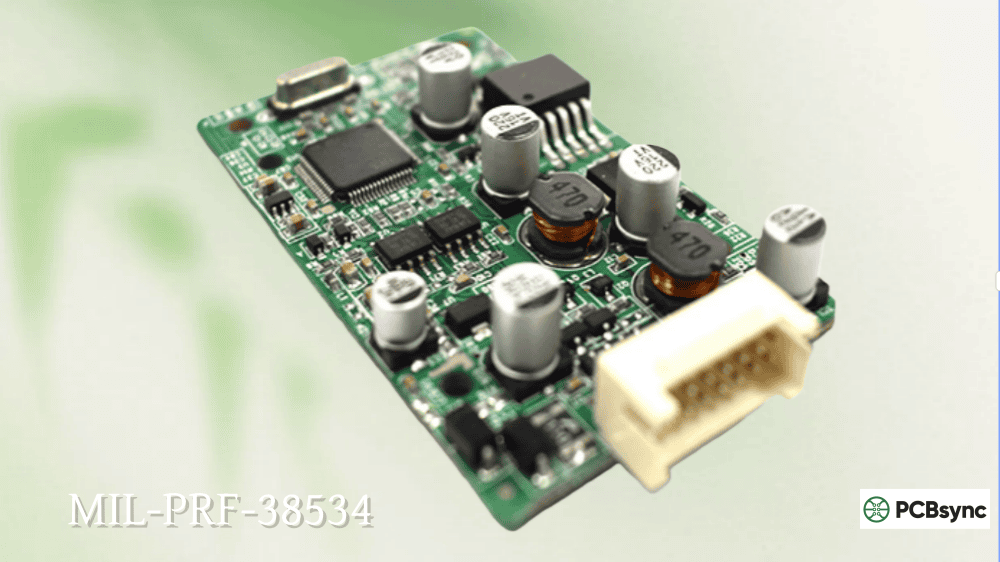
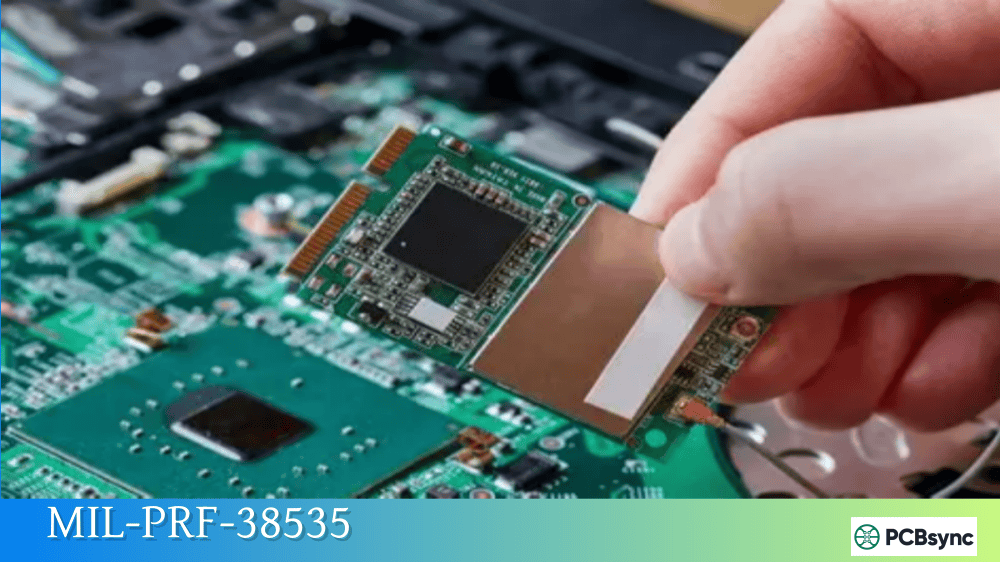
Unlike MIL-PRF-38535 (integrated circuits) or MIL-PRF-38534 (hybrid microcircuits), MIL-PRF-19500 focuses on individual semiconductor elements—single-function devices that serve as fundamental building blocks in electronic circuits. These components might seem basic compared to complex ICs, but when your power supply fails because of a substandard rectifier, you appreciate why military specifications exist.
Scope of MIL-PRF-19500 Coverage
The specification covers an extensive range of discrete semiconductor devices:
Device Category
Examples
Common Applications
Diodes
Signal, switching, Zener, Schottky
Rectification, protection, voltage reference
Rectifiers
Standard, fast recovery, bridge
Power supplies, motor drives
Transistors
BJT (NPN, PNP), JFET
Amplification, switching
MOSFETs
N-channel, P-channel
Power switching, signal processing
Thyristors
SCR, TRIAC
Power control, motor drives
Voltage regulators
Fixed, adjustable
Power management
Optoelectronics
Optocouplers, LEDs
Isolation, indication
Why MIL-PRF-19500 Matters for Your Designs
From a practical engineering standpoint, MIL-PRF-19500 compliance provides several assurances that commercial parts don’t offer:
Guaranteed parameter limits: Every device meets specified electrical parameters across the full military temperature range, not just at room temperature.
Consistent quality: Lot-to-lot variation is controlled through statistical process control and screening requirements.
Complete traceability: Manufacturing records allow tracking from wafer through final test—essential for failure analysis.
Environmental robustness: Devices are tested for temperature extremes, humidity, mechanical stress, and other environmental factors.
Long-term availability: QPL (Qualified Products List) status means suppliers commit to maintaining production capability.
MIL-PRF-19500 Quality Levels and Classifications
The specification defines quality levels that indicate screening intensity and reliability requirements. Selecting the appropriate level balances cost against application criticality.
JANS, JANTXV, JANTX, JAN: Understanding the Quality Hierarchy
Quality Level
Designation
Screening Intensity
Typical Applications
JANS
Space grade
Maximum
Satellites, spacecraft, strategic missiles
JANTXV
Extended reliability
Very high
Aircraft avionics, critical systems
JANTX
High reliability
High
Shipboard, tactical systems
JAN
Standard military
Moderate
Support equipment, ground systems
The naming convention dates back decades—”JAN” originally stood for Joint Army-Navy. While the terminology feels dated, the quality distinctions remain meaningful.
JANS (Space Grade) Requirements
JANS represents the highest reliability level under MIL-PRF-19500. These devices undergo the most extensive screening:
Requirement
JANS Specification
100% screening
All tests performed on every device
Burn-in
Extended duration at elevated temperature
Hermeticity
Fine and gross leak testing (hermetic packages)
External visual
100% inspection per MIL-STD-750
Radiographic
X-ray inspection for internal defects
PIND
Particle impact noise detection
Serialization
Individual device traceability
JANTXV Level Requirements
JANTXV adds the “V” designation for additional screening beyond standard JANTX:
Screening
JANTXV Additions
100% burn-in
Required at elevated temperature
Pre/post burn-in
Delta parameter measurements
Extended temperature cycling
Additional thermal stress
Enhanced visual inspection
Per TM 2072 requirements
JANTX Level Requirements
JANTX provides solid military reliability without space-grade costs:
Requirement
JANTX Level
Group A testing
100% electrical verification
Group B testing
Sample-based package integrity
Group C testing
Periodic life and environmental
Burn-in
Optional or reduced duration
JAN (Standard) Level
JAN level represents minimum military quality:
Requirement
JAN Level
Basic screening
Per device specification
Reduced sampling
Lower LTPD requirements
Standard testing
Core electrical parameters
MIL-PRF-19500 Testing Requirements
The testing requirements under MIL-PRF-19500 follow a group structure similar to other military semiconductor specifications. Each group addresses different aspects of device quality.
Group A Testing (Electrical Verification)
Group A tests verify electrical parameters on production lots. These tests confirm devices meet their specified characteristics.
Subgroup
Test Type
Parameters
A1
Static DC at 25°C
Forward voltage, leakage, breakdown
A2
Static DC at high temperature
Hot parameters (+125°C or +150°C)
A3
Static DC at low temperature
Cold parameters (-55°C)
A4
Dynamic/switching
Turn-on time, turn-off time, recovery
A5
Functional
Device-specific performance
Group B Testing (Die and Package Integrity)
Group B evaluates the physical construction of the device.
Test
Method
Purpose
Solderability
MIL-STD-750 TM 2026
Verify lead solder acceptance
Terminal strength
MIL-STD-750 TM 2036
Lead attachment integrity
Internal visual
MIL-STD-750 TM 2072/2074
Die and bond inspection
Bond strength
MIL-STD-750 TM 2037
Wire bond pull strength
Die attach
MIL-STD-750 TM 2017
Die-to-header shear strength
Group C Testing (Package and Environmental)
Group C tests evaluate package integrity and environmental resistance.
Test
Conditions
Acceptance
Hermetic seal (fine)
Helium leak detection
Per TM 1071
Hermetic seal (gross)
Fluorocarbon bubble
No visible bubbles
Thermal shock
-65°C to +150°C liquid
No parameter degradation
Temperature cycling
-65°C to +200°C
No mechanical damage
Moisture resistance
10 cycles per TM 1021
Electrical compliance
Shock
Per TM 2016
No physical damage
Vibration
Per TM 2046
No failures
Constant acceleration
Per TM 2006
No internal damage
Salt atmosphere
Per TM 1041
No corrosion
Group D Testing (Endurance/Life)
Group D tests evaluate long-term reliability through accelerated life testing.
Test
Conditions
Duration
Operating life
Max junction temp, rated current
1000 hours minimum
High temperature storage
+150°C to +200°C
1000 hours
Intermittent operating life
Power cycling
Per device spec
Forward bias
Rated current, elevated temp
1000 hours
Reverse bias
Rated voltage, elevated temp
1000 hours
MIL-PRF-19500 Screening Flows
Understanding the screening sequence helps when estimating lead times and troubleshooting lot rejections.
JANS Screening Flow (Diodes/Transistors)
Wafer Level:
Wafer acceptance testing (electrical probing)
Visual inspection of wafer
Die separation and sort
Assembly Level: 4. Die attach to package header 5. Wire bonding 6. Pre-cap visual inspection (100%) 7. Stabilization bake (+150°C, 24 hours) 8. Temperature cycling (-65°C to +200°C, 10 cycles) 9. Constant acceleration (for applicable packages) 10. Pre-seal visual inspection (100%) 11. Seal package (weld or braze) 12. Gross and fine leak test (100%) 13. Radiographic inspection (X-ray) 14. PIND testing (hermetic packages) 15. Burn-in (240 hours minimum) 16. Final electrical (25°C, hot, cold) 17. External visual inspection (100%) 18. Serialization and marking
JANTX Screening Flow
The JANTX flow is similar but with reduced requirements:
Step
JANS
JANTX
Difference
Burn-in
240 hours
96-168 hours
Shorter duration
X-ray
100%
Sample
Reduced coverage
PIND
100%
When specified
Optional
Serialization
Required
Not required
Less traceability
MIL-PRF-19500 Slash Sheets Explained
The MIL-PRF-19500 specification uses a slash sheet system to define specific device types. Understanding this structure is essential for procurement.
Slash Sheet Number Format
Each device type has a unique slash sheet that defines its specific requirements:
MIL-PRF-19500/XXX
Where XXX is the slash sheet number identifying the device type.
A full part number contains all information needed to specify the device:
JANTXV1N6642U-1
Element
Meaning
JANTXV
Quality level (extended reliability)
1N
Device type prefix (diode)
6642
Base device number
U
Package type (per slash sheet)
-1
Dash number variant
Common Device Prefixes
Prefix
Device Type
1N
Diodes (one junction)
2N
Transistors (two junctions)
3N
FETs (three terminals, different technology)
4N
Optocouplers
MIL-PRF-19500 Package Types
Package selection affects thermal performance, reliability, and board layout. MIL-PRF-19500 devices come in various package configurations.
Common Military Semiconductor Packages
Package
Description
Thermal Resistance
Applications
DO-35
Axial glass
300-400°C/W
Small signal diodes
DO-41
Axial glass, larger
50-100°C/W
Medium power diodes
DO-204
Metal can
30-50°C/W
Power diodes, rectifiers
TO-18
Metal can, 3-lead
150-200°C/W
Small signal transistors
TO-39
Metal can, larger
100-150°C/W
Medium power transistors
TO-3
Large metal
1-3°C/W
Power transistors
TO-5
Metal can, 8-10 lead
100-150°C/W
Precision transistors
JEDEC DO-214
SMD
Varies
Surface mount
Hermetic vs. Plastic Packages
Characteristic
Hermetic
Plastic
Moisture protection
Excellent
Limited
Temperature range
-55°C to +200°C
-55°C to +150°C
Long-term reliability
Superior
Good
Cost
Higher
Lower
Availability
MIL-PRF-19500 standard
Typically commercial
Weight
Heavier
Lighter
Most MIL-PRF-19500 qualified parts use hermetic packages (glass-to-metal or ceramic-to-metal seals) for maximum reliability. Some newer slash sheets include plastic packages for less demanding applications.
Comparing MIL-PRF-19500 to Commercial Semiconductor Specs
Engineers often ask whether commercial parts can substitute for MIL-PRF-19500 devices. Here’s an honest comparison:
Parameter Comparison
Parameter
Commercial
Industrial
Automotive
MIL-PRF-19500
Temperature range
0°C to +70°C
-40°C to +85°C
-40°C to +150°C
-55°C to +175°C
Burn-in
None
Rare
Sometimes
Required (JANTX+)
Lot traceability
None
Limited
Partial
Complete
Screening
AQL sampling
Enhanced
100% typical
100% + groups
Life testing
168-1000 hrs
1000 hrs
1000+ hrs
1000-4000 hrs
Data retention
Limited
5-10 years
15 years
Indefinite
Hermeticity
Plastic typical
Mixed
Automotive grade
Hermetic standard
When MIL-PRF-19500 Parts Are Essential
You should use MIL-PRF-19500 qualified parts when:
Contract requirements mandate them
Operating temperature exceeds +125°C or drops below -40°C
High-altitude or vacuum operation requires hermetic packaging
Radiation tolerance is required
Field failure has mission-critical consequences
Long service life (20+ years) is expected
Full traceability for failure analysis is needed
When Alternatives Might Work
Commercial or industrial parts might suffice for:
Prototype development
Ground support equipment
Redundant non-critical functions
Applications with benign environments
Programs allowing Source Control Drawings
However, upscreening commercial discretes to military specs is problematic. The die, bonding, and package materials differ from the start in QPL-listed parts.
Procuring MIL-PRF-19500 Components
Discrete semiconductors seem simple, but military procurement has nuances that can trip up inexperienced buyers.
Qualified Products List (QPL) Sources
Unlike QML-based specifications, MIL-PRF-19500 maintains a Qualified Products List for each slash sheet. Only QPL-listed manufacturers and distributors may supply parts marked with JAN designations.
Manufacturer
Specialties
Notable Product Lines
Microsemi (Microchip)
Power discretes, rectifiers
JAN diodes, transistors
Central Semiconductor
Small signal devices
Full JAN line
Solid State Inc.
General purpose
Standard JAN devices
Sensitron
High reliability
JANS devices
M/A-COM (MACOM)
RF transistors
High-frequency JAN
Semicoa
Specialty discretes
Space-grade
API Technologies
Specialty devices
Radiation hardened
Lead Time Expectations
Quality Level
Typical Lead Time
Notes
JAN
8-16 weeks
Standard stock
JANTX
12-20 weeks
Enhanced screening
JANTXV
16-26 weeks
Extended screening
JANS
26-52 weeks
Full space screening
Plan procurement early. Lead times for military discretes often exceed those for commercial equivalents by 3-5x.
Documentation Requirements
Document
Content
When Required
Certificate of Conformance
QPL compliance statement
Every shipment
Test data summary
Group A results
Per lot
Traceability records
Lot/date code history
Upon request
Failure analysis reports
Root cause documentation
Any rejects
GIDEP alerts
Known issues
Check before procurement
Counterfeit Prevention
Military discretes are counterfeiting targets because they’re expensive and have long lead times. Protect yourself by:
Buying only from QPL-listed sources
Verifying date codes are plausible
Inspecting incoming lots (visual, X-ray if hermetic)
What is the difference between JAN, JANTX, JANTXV, and JANS quality levels?
These designations indicate increasing levels of screening and reliability assurance under MIL-PRF-19500. JAN is the baseline military quality with standard screening. JANTX adds enhanced testing including mandatory burn-in. JANTXV includes everything in JANTX plus additional screening like 100% electrical testing at temperature extremes and tighter parameter limits. JANS (space grade) represents maximum reliability with full serialization, extended burn-in (240+ hours), 100% radiographic inspection, and complete traceability. Each step up increases cost but provides additional assurance for critical applications. For most military ground and airborne applications, JANTX provides adequate reliability, while JANS is typically reserved for space missions and strategic systems.
Can I substitute a commercial semiconductor for a MIL-PRF-19500 qualified part?
Generally, no—at least not without explicit program approval and documentation. MIL-PRF-19500 qualified parts are manufactured using controlled processes, specified materials, and hermetic packaging that commercial equivalents don’t match. Even if the electrical specifications appear identical, commercial parts lack the screening, traceability, and environmental robustness that military applications require. Some programs allow commercial parts under Source Control Drawings with additional testing, but this requires engineering analysis, customer approval, and often 100% screening. The cost savings from commercial parts frequently disappears when you add the screening, documentation, and qualification effort required for military applications.
How do I find the correct slash sheet for a MIL-PRF-19500 device?
Start with the DLA Land and Maritime website (landandmaritimeapps.dla.mil/Programs/Milspec/) and use their search function. Enter the base device number (for example, “1N6642” for a Zener diode) to find the applicable slash sheet. Each slash sheet defines the device family’s electrical characteristics, test requirements, package options, and qualified manufacturers. You can also search the ASSIST database (quicksearch.dla.mil) using the full specification number (MIL-PRF-19500) and browse available slash sheets. If you’re trying to find a military equivalent for a commercial part, cross-reference databases from major manufacturers can help identify corresponding MIL-PRF-19500 slash sheet numbers.
Why are MIL-PRF-19500 devices so much more expensive than commercial equivalents?
The cost difference comes from three main factors: screening, materials, and volume. Screening alone can add weeks of testing including burn-in (running every device at elevated temperature under bias for hundreds of hours), 100% electrical testing at multiple temperatures, hermeticity testing, and visual inspection. These aren’t automated processes—they require skilled technicians and expensive equipment. Materials differ too: hermetic packages cost more than plastic, and the die themselves may be from dedicated military wafer lots with tighter process controls. Finally, volumes are lower, spreading the fixed costs of qualification, documentation, and manufacturing setup across fewer units. A commercial diode might ship millions per year while its JANTX equivalent ships thousands, dramatically affecting per-unit economics.
What happens if a MIL-PRF-19500 part I need becomes obsolete?
Obsolescence is an ongoing challenge with military discretes as manufacturers consolidate and older processes are retired. When you receive a GIDEP obsolescence notice or last-time-buy notification, act quickly. First, calculate lifetime requirements including spares and attrition. Execute a lifetime buy if economically feasible—this is often the lowest-risk solution. Second, identify potential alternates from QPL sources and begin qualification testing. Third, if no QPL alternates exist, work with your program office to qualify a replacement, potentially using Source Control Drawings. Some programs bank die or wafers for future assembly. Document everything, because qualification data and rationale will be needed throughout the program’s life. Start obsolescence monitoring early rather than reacting to notifications—proactive programs track manufacturer roadmaps and plan transitions before parts become unavailable.
Practical Guidance for Working with MIL-PRF-19500
After years of specifying and troubleshooting military discretes, here are lessons learned:
Don’t underestimate lead times. Military discrete lead times routinely exceed estimates. Build margin into your procurement schedule, especially for JANTXV and JANS parts.
Verify QPL status before design commitment. Manufacturers lose and gain QPL qualification. Check current QPL listings before finalizing your design around a specific supplier’s part.
Understand your temperature requirements. If your actual operating environment stays within -40°C to +85°C, you might not need the full -55°C to +175°C capability (and cost) of military parts. But verify with thermal analysis, not assumptions.
Keep slash sheets on file. The detailed specifications in slash sheets matter when troubleshooting or qualifying alternates. Maintain a technical data package for every military discrete in your design.
Test incoming lots. Even from authorized sources, verify critical parameters on incoming parts. Simple curve tracer tests catch gross failures and deter counterfeiters.
Plan for obsolescence. Monitor GIDEP and manufacturer notifications. Build obsolescence management into your program from the start, not as a crisis response.
MIL-PRF-19500 discrete semiconductors remain essential building blocks for military electronics. The specification ensures these fundamental components meet the reliability demands of defense applications—demands that commercial parts simply cannot satisfy. Understanding the quality levels, testing requirements, and procurement considerations outlined here positions you to design and build systems that perform when they must.
Inquire: Call 0086-755-23203480, or reach out via the form below/your sales contact to discuss our design, manufacturing, and assembly capabilities.
Quote: Email your PCB files to Sales@pcbsync.com (Preferred for large files) or submit online. We will contact you promptly. Please ensure your email is correct.
Notes: For PCB fabrication, we require PCB design file in Gerber RS-274X format (most preferred), *.PCB/DDB (Protel, inform your program version) format or *.BRD (Eagle) format. For PCB assembly, we require PCB design file in above mentioned format, drilling file and BOM. Click to download BOM template To avoid file missing, please include all files into one folder and compress it into .zip or .rar format.