Inquire: Call 0086-755-23203480, or reach out via the form below/your sales contact to discuss our design, manufacturing, and assembly capabilities.
Quote: Email your PCB files to Sales@pcbsync.com (Preferred for large files) or submit online. We will contact you promptly. Please ensure your email is correct.
Notes: For PCB fabrication, we require PCB design file in Gerber RS-274X format (most preferred), *.PCB/DDB (Protel, inform your program version) format or *.BRD (Eagle) format. For PCB assembly, we require PCB design file in above mentioned format, drilling file and BOM. Click to download BOM template To avoid file missing, please include all files into one folder and compress it into .zip or .rar format.
Metal Film Resistor: Precision & Low Noise Applications
If you look at a professional-grade circuit board—whether it is a high-end audio pre-amplifier, a medical EKG machine, or a precise industrial multimeter—you will notice a sea of small, blue components. These are metal film resistors, and they are the backbone of modern precision electronics.
As a PCB engineer, I spend a lot of time optimizing the Signal-to-Noise Ratio (SNR) of my designs. You can buy the most expensive Operational Amplifier (Op-Amp) on the market, but if you pair it with a noisy, drifting resistor, you have wasted your money.
While the cheaper carbon film resistor (the beige one) is fine for blinking an LED, the metal film resistor is what we reach for when “good enough” isn’t acceptable. It offers tight tolerance, exceptional temperature stability, and significantly lower noise. This guide explores the construction, the specifications, and the specific design scenarios where upgrading to metal film is mandatory.
A metal film resistor is a passive component that uses a thin layer of metal alloy (usually Nickel-Chromium or “Nichrome”) deposited onto a ceramic core to limit the flow of electricity.
Unlike carbon resistors, which use a mixture of carbon dust and binder (granular structure), a metal film resistor uses a solid, continuous metallic structure. This difference in materials is what gives the metal film its superior electrical properties.
In the industry, we often distinguish them visually by their body color:
Carbon Film: Beige / Tan body.
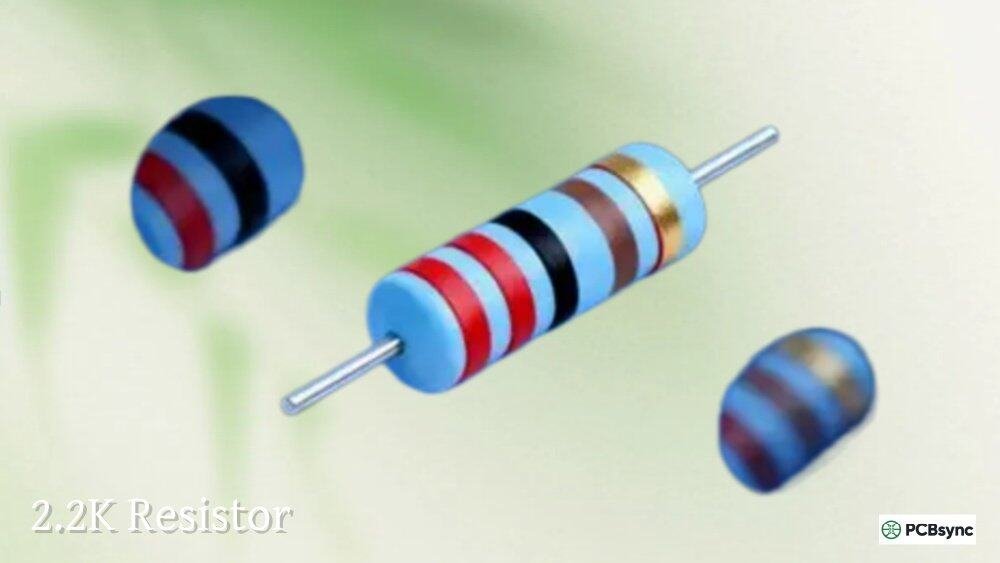
Metal Film: Blue / Cyan body.
Precision: 5 Color Bands (usually).
Construction: The Sputtering Process
To understand why a metal film resistor is more precise than a carbon one, you have to look at how it is made. It is a high-tech vacuum process compared to the “baking” process of carbon resistors.
1. Vacuum Deposition
It starts with a high-purity ceramic rod (alumina). Inside a vacuum chamber, a solid piece of Nickel-Chromium (NiCr) alloy is bombarded with ions (Sputtering). This ejects metal atoms that settle onto the ceramic rod, creating a uniform, atomic-level metallic coating.
Engineer’s Note: The thickness of this film determines the base resistance. Because it is a solid metal alloy, it doesn’t absorb moisture or age as poorly as carbon.
2. Laser Trimming (Helixing)
To get the exact resistance value (e.g., 10.00 kΩ), a laser cuts a spiral groove through the metal layer. This lengthens the resistive path. Because lasers are incredibly precise, manufacturers can easily hit tolerances of ±1% or even ±0.1%.
3. Aging and Stabilization
The resistors are subjected to thermal cycling to relieve any internal stresses in the metal film. This ensures that when you solder them onto your board later, their value doesn’t shift.
4. Encapsulation
The final unit is coated in an epoxy resin (usually blue) which provides better moisture resistance and insulation than the phenolic resin used on cheaper carbon types.
Metal Film vs. Carbon Film: The Engineering Trade-off
This is the most common question junior engineers ask: “Why should I pay $0.05 for a metal film resistor when a carbon film resistor costs $0.01?”
The answer lies in Noise and Stability.
1. The Noise Factor
All resistors generate noise.
Thermal Noise (Johnson Noise): Generated by electrons bouncing around due to heat. Both carbon and metal resistors have this; it depends only on resistance and temperature.
Current Noise (1/f Noise): This is where they differ. Carbon is granular. Electrons have to “jump” gaps between carbon particles, creating a crackling noise (micro-arcs). Metal film is a solid alloy. The electrons flow smoothly.
Result: In a microphone preamp with 60dB of gain, using carbon resistors will create a noticeable background hiss. Metal film resistors will be silent.
2. Temperature Stability (TCR)
Carbon Film: Has a high Negative Temperature Coefficient (-500 ppm/°C). As it gets hot, resistance drops significantly.
Metal Film: Has a low Temperature Coefficient (±50 to ±100 ppm/°C).
Scenario: You design a 5V voltage regulator. If you use carbon resistors in the feedback loop, your output might drift to 4.8V as the device warms up. With metal film, it stays rock solid at 5.0V.
Comparison Table
Feature
Carbon Film Resistor
Metal Film Resistor
Typical Tolerance
±5% (Gold Band)
±1% (Brown Band) or ±0.1%
TCR (Drift)
High (-300 to -1000 ppm/°C)
Low (±15 to ±100 ppm/°C)
Noise Level
High (0.1 – 3.0 µV/V)
Low (0.01 – 0.1 µV/V)
Frequency Response
Good
Excellent (Better at HF)
Cost (1k pcs)
Lowest ($)
Moderate ($$)
Body Color
Beige / Tan
Blue
Key Specifications for Selection
When selecting a metal film resistor from a distributor like DigiKey or Mouser, these are the specs you must scrutinize.
1. Tolerance
Standard metal film resistors are ±1%.
This is the industry standard for “general purpose precision.”
Design Tip: For differential amplifiers or high-precision voltage dividers, look for 0.1% tolerance. It saves you from having to use a potentiometer to calibrate the circuit manually.
2. Temperature Coefficient (TCR)
This is measured in ppm/°C (parts per million per degree Celsius).
Standard Metal Film: 50ppm or 100ppm.
Precision: 10ppm or 25ppm.
Calculation: A 100ppm resistor heating up by 50°C changes by 0.5%. If 0.5% drift breaks your circuit, you need a better TCR.
3. Voltage Coefficient (VCR)
In high-voltage applications, resistance can actually change based on the voltage potential applied, regardless of heat. Metal film resistors have a very low Voltage Coefficient compared to carbon, making them safer for metering circuits and multimeters.
4. Power Rating
Most through-hole metal film resistors are rated for 1/4 Watt (0.25W).
Warning: Metal film is thin. It cannot handle massive energy pulses (surges) as well as wire wound or carbon composition resistors. If you expect lightning surges or large capacitor inrush currents, check the datasheet for “Pulse Capability” or use a specialized “Metal Oxide” resistor instead.
Applications: When to Use Metal Film
As a rule of thumb in professional PCB design: Metal Film is the default. We only switch to carbon to save pennies in high-volume toys, or to wirewound for high power.
1. Analog Signal Processing (Audio/Video)
If the signal is analog, use metal film.
Audio Mixers: Low noise floor is critical.
Guitar Pedals: To prevent “tone suck” and hiss.
Active Filters: Because the resistance value dictates the cutoff frequency ($f_c = 1 / 2\pi RC$), a 5% error in a carbon resistor shifts your filter frequency by 5%. A 1% metal film resistor keeps your filter accurate.
2. Sensor Interfaces & Bridges
Wheatstone bridges (used in load cells and pressure sensors) rely on the balance of four resistors. If one resistor drifts due to temperature, the sensor reports false data.
Best Practice: Use metal film resistors with matching TCRs so they drift together, cancelling out the error.
3. Voltage References & Regulators
Any circuit that sets a voltage standard must be stable.
ADC Inputs: If you are measuring a voltage with a 12-bit Analog-to-Digital Converter, a 1% drift in your divider resistor will ruin your measurement accuracy.
4. 4-20mA Industrial Loops
In industrial automation, current loops are used to transmit data. These systems operate in harsh thermal environments (factories). The low TCR of metal film ensures the current reading remains accurate even if the control panel is 60°C.
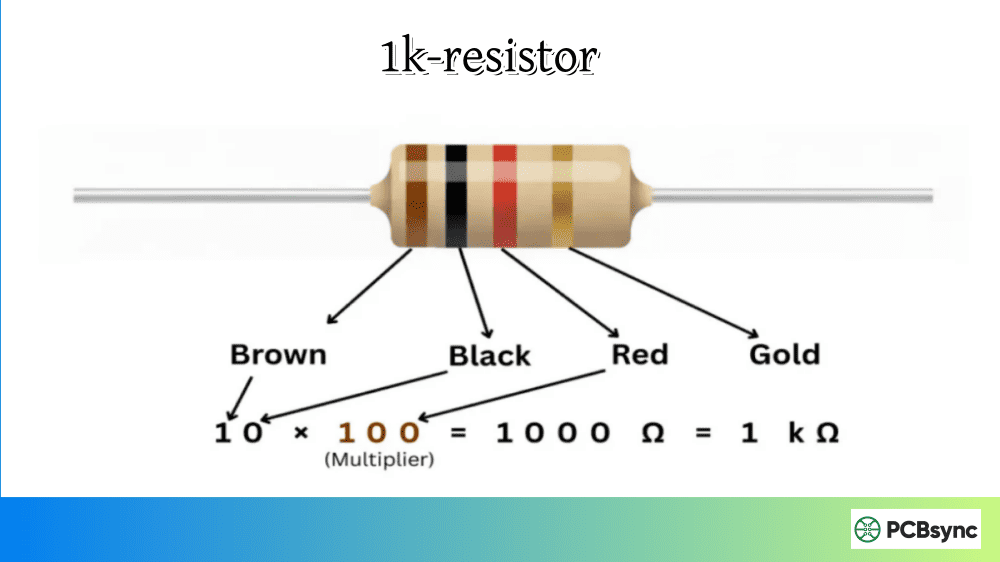
Because metal film resistors are usually 1% or better, they need an extra digit of resolution. Standard 4-band codes aren’t enough.
Most metal film resistors use the 5-Band System.
Reading Direction: Start from the band closest to the edge (or the band that is NOT the tolerance band, which is usually Brown or Red and spaced slightly apart).
Band 1: 1st Significant Digit
Band 2: 2nd Significant Digit
Band 3: 3rd Significant Digit
Band 4: Multiplier (Number of Zeros)
Band 5: Tolerance
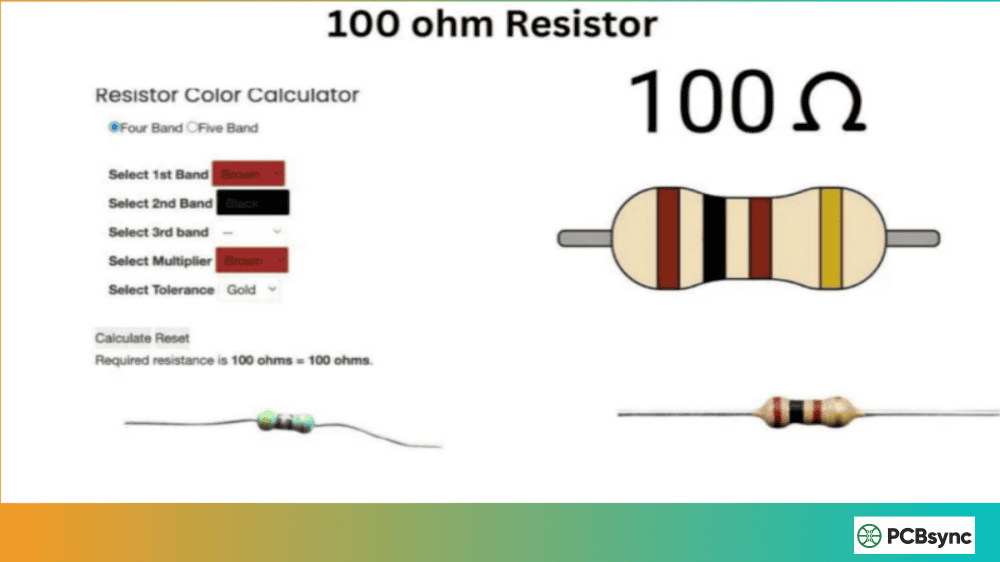
Example:
Brown (1)
Black (0)
Black (0)
Red (x 100)
Brown (1%)
Calculation: 100 x 100 = 10,000 Ω = 10 kΩ, ±1%.
Engineer’s Tip: Don’t try to be a hero and memorize the chart perfectly. Download an app like “Electrodoc” or keep a chart on your wall. Reading 5-band blue resistors under bad lab lighting is notoriously difficult.
Design Challenges & Considerations
While metal film is superior, it is not magic.
1. High Frequency Parasitics
Metal film resistors are spiral-cut (helical). This technically creates a tiny inductor (coil).
For audio and general electronics (< 1 MHz), this is negligible.
For RF (Radio Frequency) > 100 MHz, this inductance matters. In RF designs, we often prefer Thin Film SMD chips (which are flat and non-inductive) over axial leaded metal film resistors.
2. Moisture Vulnerability
While better than carbon, the metal film can still oxidize if the epoxy coating is cracked. In high-humidity environments (marine electronics), ensure you use reputable brands (Vishay, TE, Panasonic) with high-grade conformal coatings.
3. The “Pulse” Weakness
As mentioned, the film is microns thick. A short, high-energy spike (like ESD) can vaporize a spot on the film, causing the resistance to drift upwards or fail open. For ESD protection lines, use Carbon Composition or Pulse-Rated Wirewound resistors, not standard metal film.
Useful Resources
For the engineer creating a BOM (Bill of Materials), here are the reliable sources and tools:
Vishay / Dale: The “CMF” series is legendary in the industry for industrial metal film resistors.
Yageo: Great for high-volume, cost-effective MFR series.
TE Connectivity: Look for their precision Holsworthy range for high-spec needs.
Resistor Color Code Calculator (DigiKey): Essential for verifying those 5-band codes.
TCR Calculator: Tools to simulate how much your resistance will change over a given temperature range.
Frequently Asked Questions (FAQ)
1. Can I replace a carbon film resistor with a metal film resistor?
Yes, absolutely. It is a direct upgrade. The metal film resistor will have the same resistance but will be more stable and less noisy. The only downside is a marginally higher cost, which is usually irrelevant for repair or hobby projects.
2. Why are metal film resistors blue?
It is an industry convention to help technicians distinguish them from the lower-quality carbon types (which are beige). However, this is not a law. Some specialized military-grade metal film resistors are coated in red or brown, but 99% of commercial ones are blue or cyan.
3. What is the difference between “Thin Film” and “Metal Film”?
Technically, they are both thin metal layers. However, in industry jargon:
“Metal Film” usually refers to the cylindrical, axial-leaded through-hole resistor.
“Thin Film” usually refers to high-precision Surface Mount (SMD) chips.
Both offer high precision, but Thin Film SMDs are generally even more precise (0.1%) and non-inductive.
4. Does the direction of the resistor matter?
No. Metal film resistors are non-polarized. You can install them in either direction. However, for the sake of professionalism and ease of debugging, PCB engineers usually align the tolerance bands to the right or bottom so the values are easy to read in a line.
5. How do I test if a resistor is metal film or carbon?
If the body paint is ambiguous, you can crack it open (destructively). A carbon resistor will have a solid black core (or rod). A metal film resistor will have a white ceramic rod with a very thin, shiny metallic coating on the surface. Alternatively, measure the temperature drift with a heat gun and a multimeter; the carbon one will drop in value rapidly as it heats up.
Conclusion
The metal film resistor is the unsung hero of the precision electronics world. It bridges the gap between the cheap, noisy carbon resistor and the expensive, bulky wirewound resistor.
For a PCB engineer, making the switch to metal film is one of the easiest ways to improve product quality. Whether you are filtering a sensor signal, setting the gain on an op-amp, or just want your device to work the same way in winter as it does in summer, the metal film resistor is your component of choice. It represents the standard of modern reliability: precise, quiet, and robust.
Inquire: Call 0086-755-23203480, or reach out via the form below/your sales contact to discuss our design, manufacturing, and assembly capabilities.
Quote: Email your PCB files to Sales@pcbsync.com (Preferred for large files) or submit online. We will contact you promptly. Please ensure your email is correct.
Notes: For PCB fabrication, we require PCB design file in Gerber RS-274X format (most preferred), *.PCB/DDB (Protel, inform your program version) format or *.BRD (Eagle) format. For PCB assembly, we require PCB design file in above mentioned format, drilling file and BOM. Click to download BOM template To avoid file missing, please include all files into one folder and compress it into .zip or .rar format.