Inquire: Call 0086-755-23203480, or reach out via the form below/your sales contact to discuss our design, manufacturing, and assembly capabilities.
Quote: Email your PCB files to Sales@pcbsync.com (Preferred for large files) or submit online. We will contact you promptly. Please ensure your email is correct.
Notes: For PCB fabrication, we require PCB design file in Gerber RS-274X format (most preferred), *.PCB/DDB (Protel, inform your program version) format or *.BRD (Eagle) format. For PCB assembly, we require PCB design file in above mentioned format, drilling file and BOM. Click to download BOM template To avoid file missing, please include all files into one folder and compress it into .zip or .rar format.
What is MCPCB? Metal Core PCB Complete Guide [2026]
If you’ve ever wondered why your LED lights stay cool even after hours of operation, or how power electronics manage to handle intense heat without failing, the answer often lies in a specialized type of circuit board called MCPCB (Metal Core Printed Circuit Board).
Unlike traditional FR4 circuit boards that struggle with heat dissipation, MCPCBs use a metal base—typically aluminum or copper—to pull heat away from sensitive components. This simple but powerful design has made metal core PCBs the go-to solution for LED lighting, automotive electronics, power supplies, and countless other applications where thermal management is critical.
In this comprehensive guide, we’ll break down everything you need to know about MCPCBs: how they work, the different types available, their advantages over standard PCBs, real-world applications, design considerations, and how to choose the right one for your project. Whether you’re an engineer, a purchasing manager, or just curious about PCB technology, this guide has you covered.
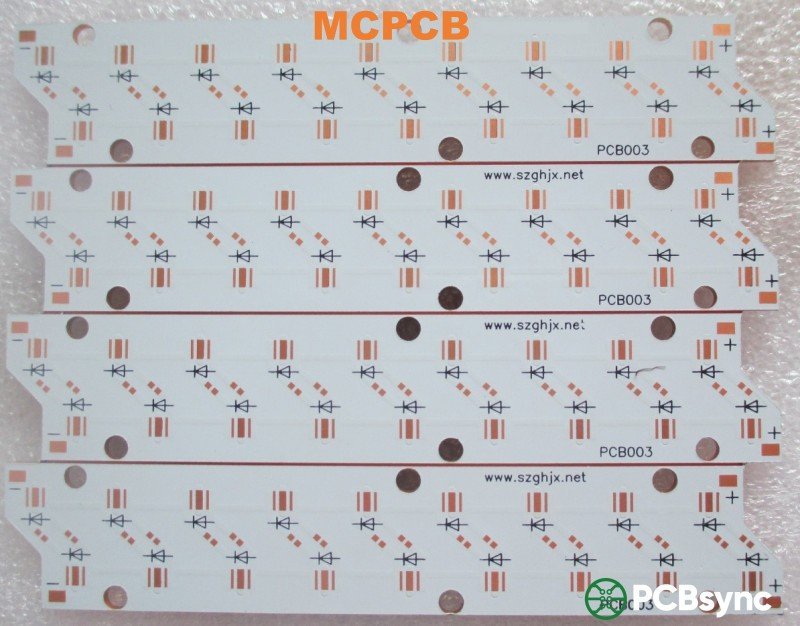
A Metal Core Printed Circuit Board (MCPCB), also known as a thermal PCB, insulated metal substrate (IMS), or metal-clad PCB, is a type of circuit board that uses a metal layer as its base material instead of the traditional fiberglass (FR4) substrate.
The metal core—usually aluminum or copper—acts as a built-in heat sink. When electronic components generate heat during operation, the metal base efficiently draws that thermal energy away from sensitive parts and disperses it across a larger surface area or into an external heat sink. This prevents overheating, extends component life, and improves overall system reliability.
Think of it this way: a standard FR4 PCB is like wearing a wool sweater in summer—it traps heat. An MCPCB is more like a cooling vest that actively pulls heat away from your body.
Basic Structure of an MCPCB
Every metal core PCB consists of three main layers, each serving a distinct purpose:
Layer
Function
Copper Circuit Layer
The top layer where electrical traces and component pads are etched. Thickness typically ranges from 1oz to 6oz (35μm to 210μm), with 1-2oz being most common for LED applications.
Dielectric Layer
A thin insulating layer (typically 0.003-0.006 inches) that electrically isolates the copper traces from the metal core while allowing heat to pass through. Made from thermally conductive polymers or ceramic-filled resins.
Metal Core/Base
The foundation layer, usually aluminum (30-125 mil thick) or copper. This acts as the primary heat spreader and provides mechanical stability to the board.
The magic happens in that dielectric layer. It needs to accomplish two seemingly contradictory tasks: block electrical current while efficiently conducting heat. Modern dielectric materials achieve thermal conductivity of 1-3 W/mK (some premium options reach 8-10 W/mK), which is significantly better than standard FR4’s 0.3 W/mK.
How Heat Flows in an MCPCB
Understanding heat flow helps explain why MCPCBs are so effective. When a component like an LED or power transistor operates, it generates heat at its junction. In a traditional FR4 board, this heat struggles to escape—the fiberglass substrate acts as a thermal insulator, trapping heat near the component.
In an MCPCB, the heat path is dramatically different. Heat travels from the component through the copper pad, passes quickly through the thin dielectric layer, and spreads across the metal core. The large surface area of the metal base then dissipates heat into the surrounding air or transfers it to an attached heat sink. This efficient thermal path keeps component temperatures significantly lower than equivalent FR4 designs.
The dielectric layer’s thickness is crucial here. A thinner dielectric means lower thermal resistance and better heat transfer—but it must remain thick enough to provide adequate electrical isolation (typically rated at 3kV or higher breakdown voltage). Most MCPCB designs use dielectric layers between 75μm and 200μm, carefully balanced between thermal and electrical requirements.
Types of Metal Core PCBs
MCPCBs come in several configurations, each suited for different applications and complexity levels. Understanding these options helps you select the right board for your specific needs.
By Core Material
Property
Aluminum Core
Copper Core
Steel Alloy Core
Thermal Conductivity
~205 W/mK
~398 W/mK
~16-50 W/mK
Weight
Light
Heavy
Heavy
Cost
Low-Medium
High
Medium
Machinability
Easy
Moderate
Difficult
Best For
LED lighting, consumer electronics
High-power, automotive, RF
High rigidity needs
Aluminum Core PCBs are the workhorses of the MCPCB world. They account for the vast majority of metal core boards manufactured globally, primarily because they offer an excellent balance of thermal performance, weight, and cost. You’ll find them in everything from street lights to laptop backlights.
Copper Core PCBs step in when aluminum just isn’t enough. With nearly double the thermal conductivity, copper cores excel in high-power applications like power converters, EV battery management systems, and RF amplifiers. The trade-off? They cost more, weigh more, and are harder to machine.
Steel Alloy Core PCBs are less common but useful in applications requiring extreme mechanical rigidity. Their thermal performance is lower, so they’re typically reserved for situations where structural stability takes priority over heat dissipation.
By Layer Configuration
Single-Layer MCPCB: The most common and cost-effective configuration. One copper circuit layer sits atop the dielectric and metal base. Perfect for LED arrays and simple power circuits where components can be mounted on a single side.
Double-Layer MCPCB: Features two copper circuit layers, typically both on the same side of the metal core (with the core at the bottom). This allows for more complex routing while maintaining good thermal performance. Used in power modules, audio equipment, and communication electronics.
Double-Sided MCPCB: Has copper layers on both sides of the metal core, connected through vias. The metal core sits in the middle, allowing component mounting on both top and bottom surfaces. More complex to manufacture but enables higher component density.
Multi-Layer MCPCB: Contains more than two copper layers separated by dielectric material, with the metal core providing the foundation. Can have 4, 6, or even 8 layers. These are significantly more expensive and technically challenging to produce but necessary for complex high-power applications.
COB (Chip-on-Board) MCPCB: A specialized design where LED chips or other components are mounted directly on the metal core without a dielectric layer between them. This achieves thermal conductivity nearly equal to the metal itself (200+ W/mK for aluminum), making it ideal for high-power LED modules requiring maximum heat dissipation.
MCPCB vs FR4 PCB: Key Differences
The decision between a metal core PCB and a traditional FR4 board comes down to your application’s thermal demands. Here’s how they compare across critical parameters:
Parameter
MCPCB
FR4 PCB
Thermal Conductivity
1-9 W/mK (board)
0.2-0.3 W/mK
Heat Transfer Speed
8-9x faster than FR4
Baseline
Max Temperature
Up to 400°C
130-140°C (Tg)
Mechanical Strength
High (metal base)
Moderate
Vibration Resistance
Excellent
Good
Layer Options
1-8 layers typical
2-40+ layers
Cost
Higher
Lower
The bottom line: If your application generates significant heat (power components, high-brightness LEDs, motor drivers), an MCPCB will dramatically improve reliability and potentially allow you to eliminate external heat sinks. For low-power digital circuits or applications where thermal management isn’t critical, FR4 remains the more economical choice.
It’s worth noting that the choice isn’t always binary. Some designs use a hybrid approach—mounting high-power components on an MCPCB section while using FR4 for the control circuitry. This optimizes both thermal performance and cost. Additionally, advances in FR4 thermal via technology and copper thickness options have narrowed the gap somewhat for moderate thermal loads.
Another consideration is reliability over time. Components operating at lower temperatures typically last significantly longer. The Arrhenius equation suggests that for every 10°C reduction in operating temperature, component life roughly doubles. An MCPCB that keeps your LED junction 20°C cooler could theoretically quadruple its operational lifespan—a compelling argument for applications where reliability and maintenance costs matter.
Advantages of Metal Core PCBs
Beyond the obvious thermal benefits, MCPCBs offer several advantages that make them attractive for demanding applications:
Superior Heat Dissipation: The metal core transfers heat 8-9 times faster than FR4, keeping junction temperatures low and extending component life significantly.
Reduced Heatsink Requirements: In many cases, the metal base itself serves as the heat sink, eliminating the need for bulky external cooling hardware.
Improved Dimensional Stability: Metal cores have lower coefficients of thermal expansion (CTE) than FR4, reducing thermal stress on solder joints and components during temperature cycling.
Enhanced Mechanical Strength: The metal base provides excellent structural rigidity, making boards more resistant to bending, impact, and vibration.
Better Power Density: Efficient heat removal allows higher-power components to be packed into smaller areas without overheating.
Longer Product Lifespan: Lower operating temperatures directly correlate with improved reliability and extended service life for electronic devices.
EMI Shielding Potential: When properly grounded, the metal core can provide electromagnetic shielding, reducing interference in sensitive applications.
Environmental Benefits: Aluminum is recyclable and non-toxic, making MCPCB production more environmentally friendly than some alternatives.
Common Applications of MCPCB
Metal core PCBs have found their way into virtually every industry where heat and electronics collide. Here are the primary application areas:
LED Lighting
This is the single largest application for MCPCBs. LED chips are highly efficient at converting electricity to light, but they still generate substantial heat that can degrade performance and shorten lifespan. Metal core boards are found in street lights, architectural lighting, automotive headlights and taillights, display backlights, stadium lighting, industrial fixtures, and residential LED bulbs.
Automotive Electronics
Modern vehicles are packed with high-power electronics operating in harsh thermal environments. MCPCBs are used extensively in engine control units (ECUs), power steering controllers, transmission controls, LED headlight modules, EV battery management systems, DC-DC converters, and motor drivers.
Power Electronics
Any application involving power conversion generates heat. MCPCBs are essential in power supplies and adapters, solar inverters, motor drives and controllers, uninterruptible power supplies (UPS), welding equipment, and industrial automation systems.
Audio Equipment
High-power audio amplifiers, particularly Class D designs, generate significant heat in their output stages. MCPCBs help maintain stable operation and prevent thermal shutdown during extended use. Professional audio equipment, PA systems, and high-end home theater amplifiers frequently incorporate metal core boards.
Telecommunications
Base stations, repeaters, and network infrastructure equipment operate continuously and generate substantial heat. MCPCBs are used in RF power amplifiers, signal processing units, and power management systems within telecom equipment. The excellent thermal stability helps maintain signal quality and system reliability.
Renewable Energy
Solar inverters convert DC power from photovoltaic panels to AC power for grid connection. These devices handle significant power levels and require efficient thermal management for optimal performance and longevity. MCPCBs are also found in wind turbine power electronics and energy storage systems.
Medical Devices
Medical imaging equipment such as CT scanners, MRI machines, and X-ray systems contain high-power electronics that must operate reliably. MCPCBs provide the thermal stability required for consistent imaging quality. Surgical lighting systems also rely heavily on LED-based designs using metal core boards.
Consumer Electronics
Beyond these industrial applications, MCPCBs have made their way into everyday consumer products. You’ll find them in laptop and desktop computer power supplies, gaming console cooling systems, high-performance graphics cards, wireless charging pads, and smart home devices with LED displays.
MCPCB Design Guidelines
Designing a metal core PCB requires attention to thermal, electrical, and mechanical considerations that differ from standard FR4 design. Here are key guidelines to follow:
Thermal Design
Calculate your thermal requirements first. Determine the power dissipation of each component and the maximum allowable junction temperature.
Select dielectric material based on power density. For applications under 3W/cm², standard 1.5-2.0 W/mK dielectric is sufficient. For 3-10W/cm², consider copper cores with higher-conductivity dielectrics.
Use thermal vias under high-power components (minimum 0.5mm diameter, 1.5mm pitch or less).
Maintain adequate spacing between high-power components (minimum 2mm) to prevent thermal interference.
Electrical Design
Remember that the metal core is conductive. Ensure proper electrical isolation between the circuit and base.
Ground the metal core to the chassis or system ground to utilize it as an EMI shield.
Use wider traces for high-current paths (minimum 1mm for currents over 2A).
Avoid sharp angles in copper traces, which can create thermal hotspots.
Mechanical Considerations
Standard board thickness ranges from 0.8mm to 3mm. Thicker boards provide better heat spreading but add weight and cost.
Account for CTE mismatch between copper traces (~17 ppm/°C) and aluminum core (~23 ppm/°C). This affects solder joint reliability.
Consider how the board will mount to the enclosure. The metal back can often attach directly to a heat sink or chassis.
Common Design Mistakes to Avoid
Don’t place thermal vias too close together—this can weaken the board structurally and cause delamination.
Avoid clustering high-power components in one area. Distribute them across the board for more even heat distribution.
Don’t assume the metal core eliminates all thermal concerns. Poor component placement can still create hotspots.
Remember to include thermal interface material (TIM) between the MCPCB and external heat sink in your thermal calculations.
MCPCB Technical Specifications
When specifying an MCPCB for your project, these are the key parameters to define:
Specification
Typical Values
Metal Core Thickness
0.8mm – 3.2mm (30-125 mil); 1.0mm and 1.6mm most common
Copper Foil Thickness
1oz – 6oz (35μm – 210μm); 1oz and 2oz most common
Dielectric Thickness
75μm – 200μm (0.003″ – 0.008″)
Thermal Conductivity
1.0 – 3.0 W/mK standard; up to 8-10 W/mK premium
Dielectric Breakdown
>3kV typical; some applications require >5kV
Solder Resistance
288°C for 180+ seconds (lead-free compatible)
Surface Finishes
HASL, Lead-free HASL, ENIG, Immersion Silver, OSP
Solder Mask Colors
White (best for LEDs), Green, Black, Blue, Red, Yellow
How MCPCBs Are Manufactured
The manufacturing process for metal core PCBs shares many steps with standard PCB production but includes some unique considerations:
Material Preparation: The metal base (aluminum or copper sheets) is cut to panel size and cleaned to ensure proper adhesion.
Dielectric Application: A thermally conductive dielectric layer is laminated or applied to the metal base. This is the most critical step for thermal performance.
Copper Lamination: Copper foil is bonded to the dielectric under heat and pressure.
Circuit Imaging: Photoresist is applied, exposed with the circuit pattern, and developed.
Etching: Unwanted copper is chemically removed, leaving the circuit traces.
Drilling: Holes are drilled for mounting and (in multi-layer boards) vias. Special tooling may be needed for the metal base.
Solder Mask & Silkscreen: Protective solder mask and component markings are applied.
Surface Finish: Final surface treatment (HASL, ENIG, etc.) is applied to exposed copper.
Routing/Profiling: Individual boards are cut from the panel. This requires specialized routing equipment for metal substrates.
Testing: Electrical testing, visual inspection, and thermal performance validation.
How to Choose the Right MCPCB
Selecting the optimal metal core PCB for your application involves balancing performance requirements against cost and availability. Here’s a practical decision framework:
1. Determine your thermal requirements: Calculate the total power dissipation and the maximum allowable temperature rise. This determines whether you need standard or high-conductivity dielectric material.
2. Choose the core material: For most LED and moderate-power applications, aluminum is the cost-effective choice. Opt for copper when thermal performance is paramount and budget allows.
3. Select the layer count: Single-layer for simple designs; double-layer for moderate complexity; multi-layer only when absolutely necessary for circuit density.
4. Specify dielectric thermal conductivity: Match the dielectric to your power density. Standard 1.5-2.0 W/mK for low power; 3.0+ W/mK for high-power applications.
5. Consider your supplier carefully: Request thermal conductivity test data, verify PCB manufacturing certifications (ISO 9001, IATF 16949 for automotive), and ask about their experience with similar applications.
Frequently Asked Questions (FAQs)
What does MCPCB stand for?
MCPCB stands for Metal Core Printed Circuit Board. It’s also commonly referred to as a thermal PCB, IMS (Insulated Metal Substrate), metal-clad PCB, or aluminum PCB (when using an aluminum base).
Why are MCPCBs more expensive than FR4 PCBs?
Several factors contribute to higher costs: the metal base material itself (especially copper), specialized dielectric materials with high thermal conductivity, more complex manufacturing processes (routing metal requires different tooling), and typically lower production volumes compared to standard FR4 boards.
Can MCPCBs be used for through-hole components?
Yes, but with limitations. Through-holes must be isolated from the metal core to prevent short circuits. This is typically done by drilling oversized holes and filling them with insulating resin before drilling the final hole size. Most MCPCB designs favor surface-mount components to maximize thermal transfer to the metal base.
How do I calculate thermal conductivity requirements for my MCPCB?
Start with your component’s power dissipation and maximum junction temperature. Use thermal simulation software or the basic formula: Temperature Rise = (Power × Thermal Resistance). Your MCPCB supplier can help with detailed thermal calculations based on your specific layout and component placement.
What’s the lead time for MCPCB prototypes?
Prototype lead times typically range from 5-10 business days for standard aluminum MCPCBs. Copper core boards or designs requiring high-conductivity dielectric materials may take 2-3 weeks. Rush services are available from many manufacturers at additional cost.
Additional Resources
For further learning about MCPCBs and thermal management in electronics, consider these resources:
IPC Standards: IPC-4101 (Base Material Specifications) and IPC-2221 (PCB Design Standard) provide industry guidelines for thermal design.
Manufacturer Technical Resources: Companies like Bergquist (Henkel), Laird, and major PCB manufacturers publish detailed application notes on thermal management.
Thermal Simulation Tools: Software like ANSYS Icepak, Mentor FloTHERM, and SolidWorks Flow Simulation can model heat flow in your designs.
Academic Journals: IEEE Transactions on Components, Packaging and Manufacturing Technology regularly publishes research on PCB thermal management.
Conclusion
Metal core PCBs have become indispensable in modern electronics where heat management is critical. From the LED lights illuminating our cities to the power electronics in electric vehicles, MCPCBs enable higher performance, greater reliability, and longer product lifespans. The technology has matured significantly over the past decade, with improvements in dielectric materials, manufacturing processes, and design tools making MCPCBs more accessible and cost-effective than ever.
When choosing between aluminum and copper cores, single-layer and multi-layer designs, or standard and premium dielectric materials, the key is matching the board’s thermal capabilities to your application’s requirements. Don’t over-specify—an aluminum MCPCB with standard dielectric handles most LED applications perfectly well. But don’t under-specify either—inadequate thermal management leads to premature component failure and warranty issues that far exceed the cost savings from cheaper boards.
Work closely with your PCB manufacturer to optimize the design. Experienced suppliers can provide valuable insights from similar projects and help you balance performance against cost. Many offer thermal simulation services that can identify potential hotspots before you commit to production. Take advantage of these resources—they can save significant time and money in the development process.
As electronics continue to shrink while power densities increase, the importance of effective thermal management will only grow. Electric vehicles, 5G infrastructure, high-performance computing, and LED lighting are all driving demand for better thermal solutions. Understanding MCPCB technology positions you to make better design decisions and create more reliable products.
Whether you’re designing your first LED array or optimizing a complex power converter, the principles covered in this guide will serve you well. Start with a clear understanding of your thermal requirements, select appropriate materials and construction, and validate your design before production. With the right approach, MCPCBs can solve thermal challenges that would be impossible with traditional PCB technology.
Inquire: Call 0086-755-23203480, or reach out via the form below/your sales contact to discuss our design, manufacturing, and assembly capabilities.
Quote: Email your PCB files to Sales@pcbsync.com (Preferred for large files) or submit online. We will contact you promptly. Please ensure your email is correct.
Notes: For PCB fabrication, we require PCB design file in Gerber RS-274X format (most preferred), *.PCB/DDB (Protel, inform your program version) format or *.BRD (Eagle) format. For PCB assembly, we require PCB design file in above mentioned format, drilling file and BOM. Click to download BOM template To avoid file missing, please include all files into one folder and compress it into .zip or .rar format.