Inquire: Call 0086-755-23203480, or reach out via the form below/your sales contact to discuss our design, manufacturing, and assembly capabilities.
Quote: Email your PCB files to Sales@pcbsync.com (Preferred for large files) or submit online. We will contact you promptly. Please ensure your email is correct.
Notes: For PCB fabrication, we require PCB design file in Gerber RS-274X format (most preferred), *.PCB/DDB (Protel, inform your program version) format or *.BRD (Eagle) format. For PCB assembly, we require PCB design file in above mentioned format, drilling file and BOM. Click to download BOM template To avoid file missing, please include all files into one folder and compress it into .zip or .rar format.
When you’re designing IoT systems that need to communicate over several kilometers without consuming batteries in weeks, LoRa Arduino implementations become your practical solution. As a PCB engineer who’s deployed hundreds of LoRa nodes across agricultural fields and industrial sites, I can tell you that understanding LoRa goes beyond just connecting an SX1278 module to an Arduino board. This technology fundamentally changes how we approach wireless sensor networks, offering transmission ranges that WiFi and Bluetooth can’t match while operating on coin cell batteries for years.
LoRa stands for Long Range—a physical layer modulation technique developed by Semtech that uses chirp spread spectrum (CSS) technology. Think of it like how dolphins and bats communicate using frequency-modulated chirps. The technology encodes data by sweeping radio frequencies across a bandwidth, creating signals remarkably resistant to interference and capable of traveling extraordinary distances.
The key distinction many engineers miss: LoRa is the physical radio layer, while LoRaWAN is the network protocol built on top. When you work with LoRa Arduino projects, you’re typically implementing point-to-point or point-to-multipoint communication using the LoRa physical layer directly. This differs from LoRaWAN networks that require gateways, network servers, and adherence to the LoRa Alliance protocol specifications.
Core Technical Specifications of LoRa
LoRa operates in license-free ISM (Industrial, Scientific, Medical) frequency bands. The specific frequency depends on your geographic region—433 MHz, 868 MHz, and 915 MHz are most common. These unlicensed bands mean you can deploy LoRa systems without expensive spectrum licensing fees, though you must respect regional regulations including duty cycle limitations and maximum transmission power.
The technology achieves sensitivity levels down to -148dBm, which translates to incredible range. In practical outdoor deployments with line-of-sight, I’ve measured reliable communication beyond 15 kilometers using simple wire antennas. Urban environments with buildings and obstacles typically yield 2-5 kilometer ranges. Indoor penetration remains excellent—signals pass through multiple concrete floors where WiFi struggles.
LoRa Arduino vs WiFi and Cellular: Making the Right Choice
Parameter
LoRa Arduino
WiFi
Cellular (4G/5G)
Bluetooth
Range (Outdoor)
10-15+ km
100-200 m
Nationwide
10-100 m
Range (Urban)
2-5 km
50-100 m
Nationwide
10-30 m
Power Consumption
Ultra-low (years on battery)
High (hours-days)
Very high (days)
Low (weeks-months)
Data Rate
0.3-27 Kbps
1-1300+ Mbps
1-100+ Mbps
1-3 Mbps
Cost per Node
$3-8
$2-5
$20-50 + subscription
$1-3
Infrastructure Required
None (P2P)
Router/AP
Cell towers + subscription
None (P2P)
Ideal Use Cases
Sensor networks, remote monitoring
High-bandwidth local networks
Mobile devices, video
Wearables, short-range data
The table reveals LoRa’s sweet spot: applications requiring infrequent transmission of small data packets over long distances with minimal power consumption. Agricultural soil moisture sensors checking in every 30 minutes? Perfect. Streaming video from security cameras? Wrong technology entirely.
Popular LoRa Modules for Arduino Integration
SX1278/SX1276 Module Specifications
The SX1278 (and its siblings SX1276, SX1277, SX1279) form the most common LoRa chipset family used in Arduino projects. These Semtech chips integrate the complete LoRa transceiver including power amplifier, synthesizer, and baseband processor in a compact QFN package.
Most Arduino hobbyists work with pre-built modules like the Ra-02 or HopeRF RFM95/96/98 series rather than soldering the bare chip. These modules break out the necessary pins to 2mm headers and include matching networks for the antenna connection. The modules require only basic SPI connections plus a few GPIO pins for control.
Critical specifications for the SX1278:
Operating Voltage: 1.8-3.7V (typically powered from 3.3V supply) Operating Current: 120mA transmitting at +20dBm, 10-12mA receiving, <1µA sleep mode Sensitivity: -137dBm to -148dBm depending on bandwidth and spreading factor Output Power: -4dBm to +20dBm programmable in 1dB steps Frequency Range: 137-525 MHz (specific variants for different bands)
Power Supply Considerations for LoRa Arduino
The 120mA transmission current creates the primary PCB design challenge. Arduino Uno’s onboard 3.3V regulator can provide sufficient current, but Arduino Nano’s regulator often cannot—this causes brownouts and communication failures. I recommend external 3.3V regulators rated for at least 250mA continuous current to provide headroom during transmission peaks.
Additionally, add bulk capacitance (100-470µF electrolytic) close to the module’s power pins. LoRa transmission involves current spikes as the power amplifier switches on. Without adequate local energy storage, these spikes cause voltage droops that reset the module or corrupt transmissions.
For battery-powered designs, consider the duty cycle carefully. A typical agricultural sensor might wake every 30 minutes, transmit for 1 second, then sleep. This yields phenomenal battery life—a 2000mAh battery can power such a node for 2-3 years. The secret lies in LoRa’s sub-microamp sleep current combined with infrequent transmissions.
Wiring LoRa Modules to Arduino Boards
LoRa modules communicate via SPI (Serial Peripheral Interface), requiring six essential connections: MISO, MOSI, SCK, NSS (chip select), RESET, and DIO0 (interrupt). The specific Arduino pins vary by board type.
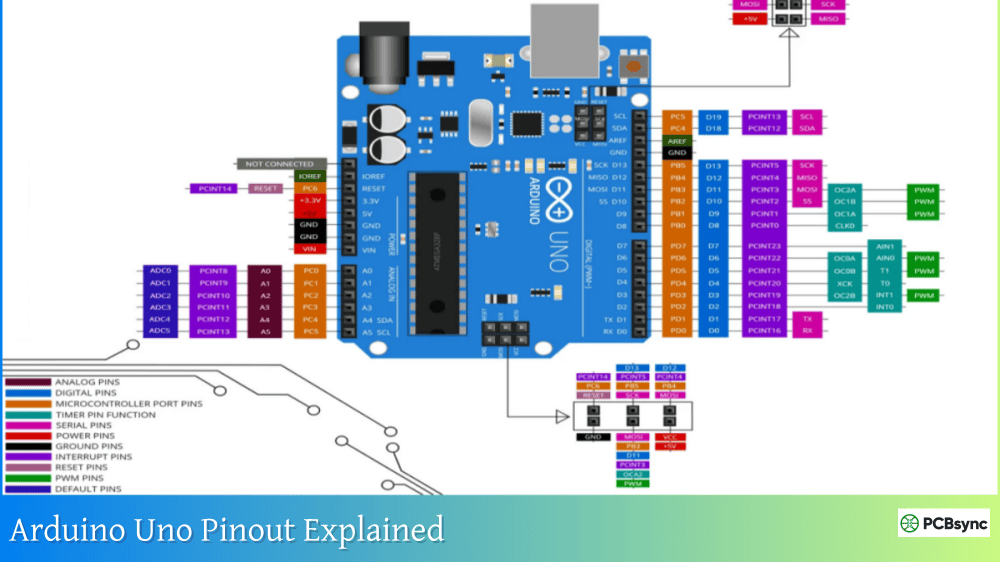
Standard Pinout for Arduino Uno and LoRa SX1278
LoRa Module Pin
Arduino Uno Pin
Function
Notes
GND
GND
Ground
Multiple ground connections recommended
3.3V
3.3V
Power supply
Ensure adequate current capability
MISO
D12
SPI Master In
Data from LoRa to Arduino
MOSI
D11
SPI Master Out
Data from Arduino to LoRa
SCK
D13
SPI Clock
Clock signal
NSS
D10
Chip Select
Activates the LoRa module
RESET
D9
Module Reset
Hardware reset control
DIO0
D2
Interrupt
Signals packet reception (must be interrupt-capable pin)
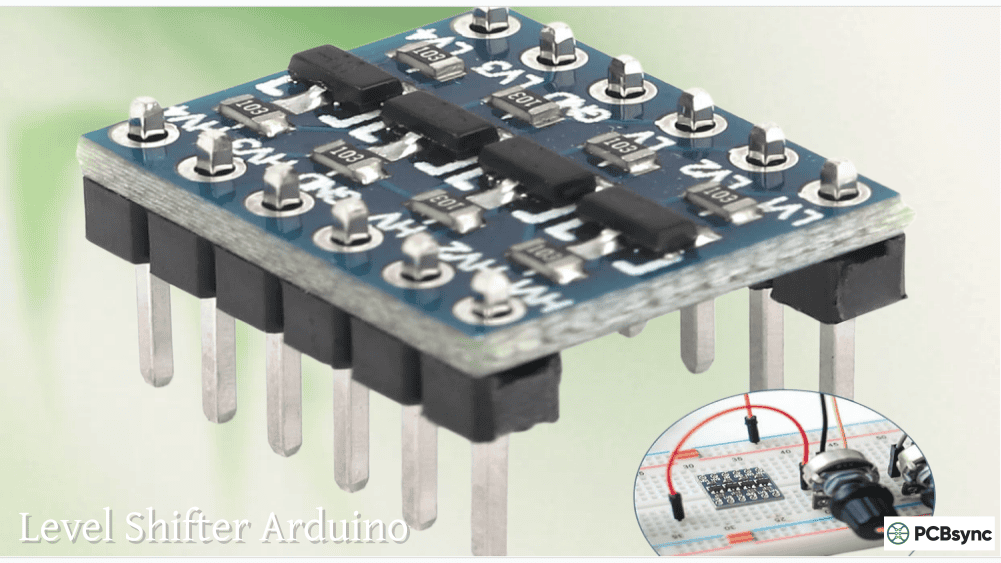
Critical voltage level warning: Arduino Uno operates at 5V logic, but LoRa modules use 3.3V logic. While many engineers report success connecting directly (the SX1278 appears somewhat 5V tolerant on inputs), proper engineering practice demands voltage level translation. Use resistor dividers or dedicated level shifters (like TXB0104) on MOSI, SCK, and NSS lines. The MISO line going to Arduino is safe since 3.3V reads as high on 5V logic inputs.
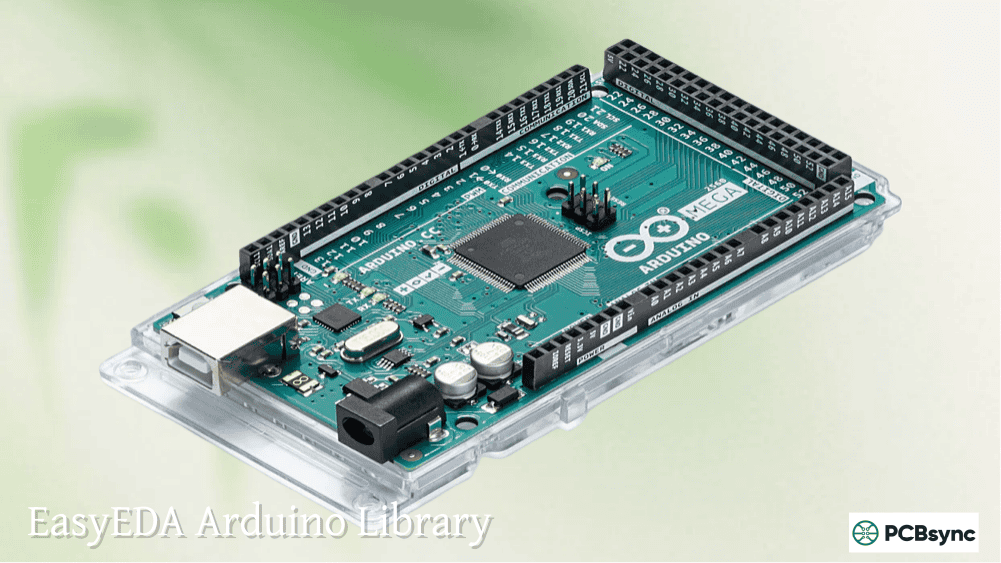
Arduino Mega and Leonardo Pin Modifications
Arduino Mega boards require connecting to different SPI pins:
MISO → D50
MOSI → D51
SCK → D52
NSS → D10 (or any available digital pin)
Arduino Leonardo and Pro Micro use the ICSP header for SPI:
Use the 6-pin ICSP header, not the digital pins
Or remap in software using the LoRa library’s setPins() function
The DIO0 pin should connect to an interrupt-capable pin on all boards—pins 2 and 3 on Uno, pins 2, 3, 18, 19, 20, 21 on Mega, and pins 0, 1, 2, 3, 7 on Leonardo.
Programming LoRa Arduino: Libraries and Code Structure
Installing the Sandeep Mistry LoRa Library
The most popular Arduino LoRa library comes from Sandeep Mistry and is simply called “LoRa.” Install it through Arduino IDE’s Library Manager:
Open Arduino IDE and navigate to Sketch → Include Library → Manage Libraries
Search for “LoRa”
Find “LoRa by Sandeep Mistry”
Click Install
This library handles all low-level SPI communication, register configuration, and packet framing. The API abstracts complex radio parameters into simple functions that feel similar to using Serial.print().
The library supports custom pin configurations through LoRa.setPins(ss, reset, dio0). This flexibility allows using LoRa modules with various Arduino boards or when pins conflict with other shields.
Basic Transmitter Code Structure
#include <SPI.h>
#include <LoRa.h>
int counter = 0;
void setup() {
Serial.begin(9600);
while (!Serial);
Serial.println(“LoRa Transmitter”);
// Initialize LoRa at 433MHz (use 868E6 or 915E6 for other regions)
if (!LoRa.begin(433E6)) {
Serial.println(“Starting LoRa failed!”);
while (1);
}
// Optional: configure transmission power and other parameters
The code demonstrates LoRa’s simplicity—packet transmission resembles printing to Serial. The beginPacket() and endPacket() functions frame your data, handling preamble, sync word, and CRC automatically.
Receiver Implementation with Callback
#include <SPI.h>
#include <LoRa.h>
void setup() {
Serial.begin(9600);
while (!Serial);
Serial.println(“LoRa Receiver”);
if (!LoRa.begin(433E6)) {
Serial.println(“Starting LoRa failed!”);
while (1);
}
// Register callback for received packets
LoRa.onReceive(onReceive);
LoRa.receive(); // Put radio in receive mode
}
void loop() {
// Nothing here – processing happens in callback
}
void onReceive(int packetSize) {
if (packetSize == 0) return;
String incoming = “”;
// Read packet
while (LoRa.available()) {
incoming += (char)LoRa.read();
}
// Print packet details
Serial.print(“Received: “);
Serial.print(incoming);
Serial.print(” RSSI: “);
Serial.print(LoRa.packetRssi());
Serial.print(” SNR: “);
Serial.println(LoRa.packetSnr());
}
The callback approach allows responsive reception without polling. When DIO0 interrupts signal packet arrival, the onReceive() function executes immediately. This proves essential for battery-powered receivers that sleep between packets.
Understanding LoRa Parameters and Link Budget
Spreading Factor: Trading Speed for Range
Spreading factor (SF) represents the number of chirps used to encode each bit—higher spreading factors provide better sensitivity but lower data rates. The parameter ranges from SF7 to SF12:
Spreading Factor
Data Rate (BW=125kHz)
Sensitivity
Time-on-Air (10 bytes)
Use Case
SF7
5.47 Kbps
-123dBm
41 ms
Short range, fast updates
SF8
3.13 Kbps
-126dBm
72 ms
Balanced performance
SF9
1.76 Kbps
-129dBm
144 ms
Moderate range
SF10
0.98 Kbps
-132dBm
288 ms
Long range applications
SF11
0.54 Kbps
-134.5dBm
577 ms
Very long range
SF12
0.29 Kbps
-137dBm
1155 ms
Maximum range
Notice the dramatic time-on-air increase at higher spreading factors. An SF12 transmission takes 28× longer than SF7 for the same payload. This impacts both battery life and network capacity—fewer nodes can share the channel when transmissions occupy airtime longer.
In my field deployments, SF7 works well for sensors within 1-2 kilometers. Remote sensors at 10+ kilometers typically require SF10 or SF11. The LoRa library configures spreading factor via LoRa.setSpreadingFactor(7) through LoRa.setSpreadingFactor(12).
Bandwidth and Coding Rate
Bandwidth determines the frequency range of the chirp—wider bandwidths increase data rate but reduce sensitivity. Available bandwidths: 7.8 kHz, 10.4 kHz, 15.6 kHz, 20.8 kHz, 31.25 kHz, 41.7 kHz, 62.5 kHz, 125 kHz, 250 kHz, 500 kHz. Standard LoRa implementations use 125 kHz bandwidth, offering good balance.
Coding rate adds redundancy for forward error correction. Options include 4/5, 4/6, 4/7, and 4/8. Higher coding rates (more redundancy) improve reliability in noisy environments at the cost of lower effective data rate. Default 4/5 coding rate works for most applications.
Agriculture represents LoRa’s killer application. Soil moisture sensors, weather stations, and irrigation controllers spread across hundreds of acres need connectivity without trenching cables or paying cellular subscriptions. A typical deployment includes:
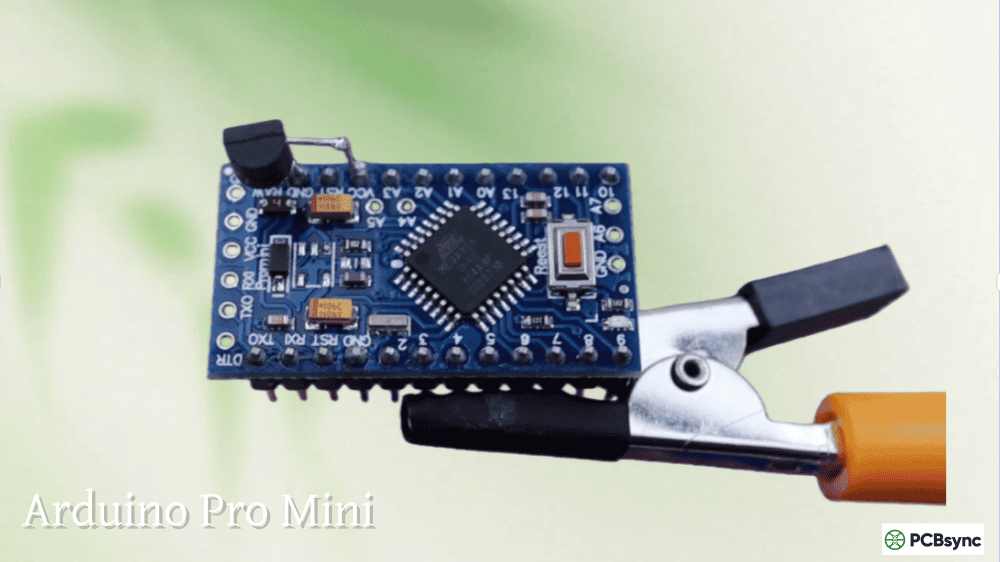
Sensor Nodes: Arduino Pro Mini (3.3V version), SX1278 module, capacitive soil moisture sensor, BME280 temperature/humidity sensor, solar panel with battery. The node wakes every 30 minutes, reads sensors, transmits readings, then sleeps. Battery life exceeds two years even with modest solar panels.
Gateway/Receiver: Arduino Mega with LoRa module connected via Ethernet shield or ESP32 to WiFi. The gateway receives all node transmissions and forwards data to cloud platforms (ThingSpeak, Blynk, custom servers). Multiple gateways provide redundancy across large properties.
Implementation specifics: Nodes include unique IDs in transmissions so the gateway distinguishes between sensors. JSON formatting simplifies parsing: {“id”:1,”moisture”:45,”temp”:22.5,”battery”:3.8}. The receiver uses this structured data for database storage and analysis.
Water conservation metrics from LoRa-based irrigation show 30-50% reduction in water usage compared to timer-based systems. The real-time soil moisture data allows precision irrigation—watering only when and where needed.
Industrial Equipment Monitoring
Manufacturing facilities use LoRa Arduino systems for predictive maintenance. Vibration sensors detect bearing wear, temperature sensors flag overheating motors, and current sensors identify struggling equipment. The long range allows monitoring equipment spread throughout large facilities without WiFi dead zones.
A motor monitoring node transmits vibration frequency analysis, winding temperature, and operating current. The gateway compares readings against baseline profiles and generates maintenance alerts when parameters deviate. This prevents catastrophic failures and schedules maintenance during planned downtime rather than emergency repairs.
The low power consumption means sensors install anywhere without electrical connections—critical for monitoring legacy equipment not designed for IoT integration.
Remote Environmental Sensing
Weather stations, air quality monitors, and wildlife tracking benefit from LoRa’s range. I’ve deployed weather stations at mountain hiking trails, transmitting temperature, humidity, pressure, wind, and precipitation to valley visitor centers 12 kilometers away with line-of-sight.
These installations use solar panels (10W), sealed batteries (12V 7Ah), and weatherproof enclosures. The Arduino Pro Mini enters deep sleep between hourly transmissions, waking via watchdog timer. Even winter months with limited sunlight maintain operation indefinitely.
Frequency Regulations and Legal Compliance
Operating LoRa systems requires understanding regional frequency regulations. The ISM bands are license-free but have restrictions:
Regional Frequency Allocations
Region
Primary Frequency
Alternative
Regulatory Notes
North America
915 MHz (902-928 MHz)
433 MHz
FCC Part 15.247, 1W max with FHSS
Europe
868 MHz (863-870 MHz)
433 MHz
ETSI EN 300.220, 1% duty cycle limit
Asia
923 MHz (920-923 MHz)
865-867 MHz
Varies by country
Australia
915 MHz (915-928 MHz)
–
ACMA regulations
China
470-510 MHz
433 MHz
Restricted, special licensing
Duty cycle limitations: European 868 MHz band imposes 1% duty cycle—transmit maximum 36 seconds per hour. Design systems accounting for this restriction. Attempting continuous transmission violates regulations and interferes with other users.
Power restrictions: Maximum output power varies by region and sub-band. Most regions limit to +14dBm (25mW) to +20dBm (100mW). The LoRa library’s setTxPower() configures this: LoRa.setTxPower(14) for 14dBm output.
Verify module frequency: LoRa modules are frequency-specific. An SX1278-433 module cannot operate on 868 MHz. Purchase modules matching your region’s legal frequency. Operating on incorrect frequencies may violate regulations even if the module physically transmits.
Antenna Selection and Matching
Never operate LoRa modules without proper antennas—the high output power can damage the module when reflected back into the power amplifier. The antenna must match the module’s frequency.
Antenna Types and Performance
Quarter-wave wire antennas: Simple, cheap, effective. Length = 300/frequency(MHz)/4 meters. For 433 MHz: 17.3cm. For 868 MHz: 8.6cm. For 915 MHz: 8.2cm. Solder directly to the antenna pad. Vertical orientation provides omnidirectional coverage.
Commercial dipole/rubber duck antennas: Pre-tuned antennas with SMA connectors offer convenience and better performance than wire. Cost $2-5. Ensure frequency match—a 915 MHz antenna performs poorly on 868 MHz.
High-gain directional antennas: Yagi or panel antennas provide 6-12dBi gain, extending range dramatically. Use at gateway locations for increased coverage. Point-to-point links achieve 30+ kilometer ranges with high-gain antennas at both ends.
PCB trace antennas: For custom PCBs, meandering trace antennas save space and cost. Requires careful impedance matching and ground plane design. Tools like Antenna Magus assist with design. Professional manufacturing and RF testing recommended—DIY PCB antennas rarely perform well without iterations.
Try line-of-sight with modules 1-2 meters apart to isolate range issues
Verify both modules use same sync word: LoRa.setSyncWord(0x12)
Unstable Communication or Random Resets
Symptom: Occasional packet loss, module resets during transmission, erratic behavior.
Solutions:
Add bulk capacitance (100-470µF) close to module power pins
Use external 3.3V regulator instead of Arduino onboard regulator
Check all ground connections—star ground topology with heavy gauge wire
Reduce transmission power if operating at +20dBm with marginal supply
Implement voltage level shifting on 5V Arduino data lines
Shield module from electromagnetic interference sources
Advanced LoRa Arduino Techniques
Implementing Acknowledgment and Retry Logic
Basic LoRa transmissions are fire-and-forget—no guarantee the receiver got the packet. Critical applications need acknowledgments:
// Transmitter requests ACK
LoRa.beginPacket();
LoRa.print(“{\”id\”:1,\”data\”:123,\”ack\”:1}”);
LoRa.endPacket();
// Wait for ACK packet
unsigned long timeout = millis() + 2000;
while(millis() < timeout) {
int packetSize = LoRa.parsePacket();
if(packetSize) {
String ack = “”;
while(LoRa.available()) ack += (char)LoRa.read();
if(ack.indexOf(“ACK”) >= 0) break; // ACK received
}
}
The receiver, upon receiving packets requesting ACK, immediately transmits confirmation. The transmitter retries up to three times if no ACK arrives. This dramatically improves reliability in noisy environments.
Encryption for Secure Communication
The Sandeep Mistry LoRa library transmits data unencrypted—anyone with compatible LoRa hardware receives your transmissions. Sensitive applications require encryption:
Use lightweight cryptography libraries like AES128 or ChaCha20. Encrypt the payload before LoRa.print(), decrypt at receiver. The encryption overhead is minimal compared to transmission time.
Manage encryption keys carefully—hardcoding in source code is insecure. Consider using Arduino’s EEPROM for key storage with physical security of the device.
Essential Resources and Downloads
Software Libraries and Tools
Sandeep Mistry LoRa Library: The standard Arduino LoRa library
API documentation: https://github.com/sandeepmistry/arduino-LoRa/blob/master/API.md
RadioHead Library: Alternative library with more advanced features including mesh networking
Supports encryption, reliability layers, and various radio modules
More complex but offers additional capabilities
LoRa Calculator: Online tool for computing link budget, time-on-air, and range estimates
https://www.loratools.nl/#/airtime
Essential for planning deployments and optimizing parameters
Hardware Resources and Datasheets
Resource
Description
Source
SX1278 Datasheet
Complete technical specifications
Semtech official site
RFM95/96 Datasheet
HopeRF module documentation
HopeRF website
Ra-02 Module Specs
Ai-Thinker module datasheet
Manufacturer site
Antenna Design Guide
Theory and calculations
Semtech Application Notes
Regional Frequency Tables
Legal operating frequencies
LoRa Alliance website
Example Projects and Code
Arduino Project Hub: Numerous LoRa projects with code and schematics
Temperature monitoring systems
GPS trackers
Weather stations
Agricultural automation
GitHub Repositories: Search for “Arduino LoRa” to find complete project examples demonstrating various applications. Many include PCB designs, 3D printable enclosures, and full documentation.
Online Communities and Support
Arduino Forum LoRa Section: Active community discussing LoRa implementations, troubleshooting, and project ideas.
The Things Network Community: Although focused on LoRaWAN, many discussions relevant to basic LoRa communication.
Reddit r/LoRa: Community sharing projects and solving technical challenges.
Practical Deployment Tips from Production Experience
Based on deploying commercial LoRa systems, these practices improve reliability:
Start with conservative settings: Begin testing with SF10, maximum power, and good antennas. Once reliable communication establishes, optimize (lower SF, reduce power) to improve battery life and network capacity.
Deploy redundant gateways: For critical applications, place multiple receivers to ensure packet reception even if one fails or experiences temporary interference.
Implement watchdog timers: LoRa modules occasionally hang requiring power cycle. Watchdog timers automatically reset unresponsive systems.
Log RSSI and SNR: Record signal strength and signal-to-noise ratio for every received packet. This data identifies coverage gaps, antenna problems, and optimal placement locations during deployment.
Test under worst-case conditions: Verify communication during peak interference periods (industrial facilities during work hours), worst weather (rain attenuates signals), and with lowest battery voltage.
Document everything: Record node locations, frequencies, spreading factors, and deployment dates. Six months later when troubleshooting, you’ll thank yourself for detailed records.
Plan for battery replacement: Even with multi-year battery life, plan access for replacement. Mounting nodes in inaccessible locations without considering maintenance creates problems later.
Frequently Asked Questions
Q: What’s the maximum range I can achieve with LoRa Arduino?
A: Range depends heavily on environment, antenna quality, and radio parameters. In open rural areas with line-of-sight, properly configured LoRa achieves 15-20 kilometers with simple wire antennas, and 30+ kilometers with high-gain directional antennas. Urban environments typically yield 2-5 kilometers due to buildings and interference. Indoor range through multiple floors reaches 500-1000 meters. The world record LoRa transmission exceeded 700 kilometers using high-altitude balloons, though this represents extreme conditions rather than typical applications.
Q: Can I use LoRa for video streaming or high-speed data transfer?
A: No, LoRa is fundamentally wrong for high-bandwidth applications. Maximum data rate of 27 Kbps (at shortest range with SF7) makes video streaming impossible. LoRa excels at infrequent small messages—sensor readings, GPS coordinates, simple commands. Each typical 20-byte transmission takes 40-1000 milliseconds depending on spreading factor. Applications requiring continuous data or bandwidth above 10 Kbps should use WiFi, cellular, or other technologies. LoRa’s strength is not speed but rather range, low power, and penetration—choose the right tool for the job.
Q: How many LoRa nodes can operate in the same area without interference?
A: Unlike WiFi with collision detection, LoRa uses multiple spreading factors that are orthogonal—SF7 and SF12 transmissions don’t interfere despite using the same frequency. This allows dozens of nodes per gateway. However, practical limits exist. Network capacity depends on duty cycle regulations (1% in Europe), time-on-air, and collision probability. A single gateway typically serves 50-200 sensor nodes transmitting every 15-30 minutes. For higher node density, deploy additional gateways on different frequencies or implement time-division schemes. The LoRa library doesn’t include CSMA (carrier sense), so nodes transmit without checking channel availability—careful network planning prevents congestion.
Q: Is LoRa secure enough for sensitive data transmission?
A: Raw LoRa using the Sandeep Mistry library provides no encryption—transmissions broadcast openly to any compatible receiver. For security, implement encryption at the application layer using libraries like AES128 before transmission. LoRaWAN networks include end-to-end AES-128 encryption automatically, but basic Arduino LoRa projects require manual encryption implementation. The transmission itself uses spread spectrum which resists jamming better than narrow-band systems, but this is security through obscurity rather than actual encryption. Always encrypt sensitive data before transmission, and recognize that without bidirectional authentication, replay attacks remain possible.
Q: Can LoRa work through walls, underground, or in challenging environments?
A: LoRa’s low frequency and spread spectrum modulation provide excellent penetration compared to WiFi or Bluetooth. Signals pass through multiple concrete floors, dense foliage, and reasonable distances underground. However, metal enclosures and thick concrete walls still attenuate signals significantly. For underground sensors (soil moisture, parking garages), expect 50-80% range reduction compared to surface deployment. Water heavily absorbs radio signals—submerged antennas don’t work. Mount antennas above ground with clear path toward receivers. In buildings, LoRa reaches areas where WiFi fails, though corner rooms and basements with minimal external windows prove challenging. External gateway antennas positioned high with clear sight lines dramatically improve indoor coverage.
Conclusion
LoRa Arduino combinations provide practical long-range wireless solutions for IoT applications where WiFi’s range or cellular’s power consumption and costs prove prohibitive. The technology’s sweet spot lies in sensor networks requiring infrequent data transmission over several kilometers while operating on batteries for years.
Success requires understanding the tradeoffs between range, data rate, and power consumption. Higher spreading factors extend range but increase transmission time and reduce battery life. Proper antenna selection, frequency compliance, and robust power supply design separate reliable systems from frustrating failures.
For embedded systems engineers and makers, LoRa opens opportunities previously requiring expensive cellular connectivity or impossible due to range limitations. Agricultural monitoring, environmental sensing, industrial automation, and countless IoT applications benefit from this mature, proven technology. Start with simple point-to-point projects, experiment with parameters, measure actual performance in your environment, then scale to production deployments with confidence.
The combination of Arduino‘s accessibility and LoRa’s capabilities democratizes long-range IoT development. With $15 in components and a few hours learning, anyone can build systems communicating kilometers away—technology that would have required thousands of dollars in professional equipment just a decade ago.
Inquire: Call 0086-755-23203480, or reach out via the form below/your sales contact to discuss our design, manufacturing, and assembly capabilities.
Quote: Email your PCB files to Sales@pcbsync.com (Preferred for large files) or submit online. We will contact you promptly. Please ensure your email is correct.
Notes: For PCB fabrication, we require PCB design file in Gerber RS-274X format (most preferred), *.PCB/DDB (Protel, inform your program version) format or *.BRD (Eagle) format. For PCB assembly, we require PCB design file in above mentioned format, drilling file and BOM. Click to download BOM template To avoid file missing, please include all files into one folder and compress it into .zip or .rar format.