Inquire: Call 0086-755-23203480, or reach out via the form below/your sales contact to discuss our design, manufacturing, and assembly capabilities.
Quote: Email your PCB files to Sales@pcbsync.com (Preferred for large files) or submit online. We will contact you promptly. Please ensure your email is correct.
Notes: For PCB fabrication, we require PCB design file in Gerber RS-274X format (most preferred), *.PCB/DDB (Protel, inform your program version) format or *.BRD (Eagle) format. For PCB assembly, we require PCB design file in above mentioned format, drilling file and BOM. Click to download BOM template To avoid file missing, please include all files into one folder and compress it into .zip or .rar format.
Building a digital weighing scale has been one of my favorite embedded projects over the years. The Load Cell HX711 Arduino combination provides an incredibly accurate and affordable solution for weight measurement applications. Whether you’re creating a kitchen scale, industrial monitoring system, or automated inventory tracker, this setup delivers professional-grade results.
In this comprehensive guide, I’ll walk you through everything needed to build a working digital scale using a load cell and the HX711 amplifier with Arduino. We’ll cover the underlying theory, practical wiring, calibration procedures, and working code examples that you can implement immediately.
A load cell is a transducer that converts mechanical force into an electrical signal. When weight is applied, the load cell produces a voltage output proportional to the force. This principle makes load cells the foundation of virtually every electronic weighing system you encounter daily.
How Strain Gauge Load Cells Work
Most load cells used with Arduino projects are strain gauge based. A strain gauge is a thin metallic foil pattern bonded to a flexible backing material. When this foil stretches or compresses, its electrical resistance changes proportionally.
The typical strain gauge has a nominal resistance of 120 ohms or 350 ohms. When force is applied, this resistance might change by only 0.1 to 0.3 ohms. That’s an incredibly small change that requires specialized circuitry to detect accurately.
Here’s where the clever engineering comes in. Load cells arrange four strain gauges in a Wheatstone bridge configuration. This diamond-shaped circuit arrangement amplifies the tiny resistance changes into a measurable voltage difference. When you apply weight, two gauges stretch (increasing resistance) while two compress (decreasing resistance), creating an imbalance that produces an output voltage.
Load Cell Types and Capacity Ratings
Load Cell Type
Typical Capacity
Common Applications
Bar/Beam Type
1kg – 200kg
Kitchen scales, platform scales
S-Type
5kg – 5000kg
Tension/compression measurement
Button Type
10kg – 500kg
Compact installations
Shear Beam
100kg – 10000kg
Industrial floor scales
Single Point
3kg – 500kg
Retail scales, bench scales
For most Arduino projects, bar-type load cells in the 1kg to 20kg range offer the best combination of sensitivity, size, and cost. The 5kg and 10kg variants are particularly popular because they provide good resolution for typical household items while remaining compact.
HX711 Amplifier Module Explained
The HX711 is purpose-built for interfacing load cells with microcontrollers. Without this amplifier, the millivolt signals from a load cell would be impossible for an Arduino’s ADC to read accurately.
HX711 Key Specifications
Parameter
Value
ADC Resolution
24-bit
Input Channels
2 differential inputs (A and B)
Programmable Gain
Channel A: 64 or 128, Channel B: 32
Operating Voltage
2.6V – 5.5V
Operating Current
< 1.5mA
Output Data Rate
10 SPS or 80 SPS (selectable)
Interface
Two-wire serial (Clock and Data)
The 24-bit resolution is the standout feature here. This means the HX711 can distinguish over 16 million different levels between its minimum and maximum input voltage. For a 5kg load cell, this theoretically allows detection of weight changes as small as 0.0003 grams. In practice, electrical noise and mechanical factors limit real-world resolution to roughly 0.1% of the load cell capacity.
HX711 Module Pinout
The HX711 breakout board has connections on both sides. One side interfaces with the load cell, while the other connects to your microcontroller.
HX711 Pin
Connection
Function
E+
Load Cell Red
Excitation positive (bridge power)
E-
Load Cell Black
Excitation negative (bridge ground)
A+
Load Cell Green
Channel A positive signal
A-
Load Cell White
Channel A negative signal
B+
Optional
Channel B positive signal
B-
Optional
Channel B negative signal
VCC
Arduino 5V
Module power supply
GND
Arduino GND
Ground reference
DT
Arduino Digital Pin
Data output
SCK
Arduino Digital Pin
Serial clock input
Channel A offers selectable gains of 128 or 64, while Channel B provides a fixed gain of 32. For most load cell applications, Channel A with gain 128 delivers the best sensitivity.
Load Cell HX711 Arduino Wiring
Proper wiring is critical for stable, accurate measurements. I’ve seen many projects fail simply due to poor connections or incorrect wire routing.
Load Cell Wire Color Coding
Load cells follow a standard color convention, though some manufacturers may vary:
Wire Color
Function
HX711 Connection
Red
Excitation+ (E+)
E+
Black
Excitation- (E-)
E-
Green
Signal+ (S+, A+, O+)
A+
White
Signal- (S-, A-, O-)
A-
Yellow (if present)
Shield/Ground
GND (optional)
Arduino Uno Wiring Connections
HX711 Pin
Arduino Uno Pin
VCC
5V
GND
GND
DT (Data)
Digital Pin 3
SCK (Clock)
Digital Pin 2
You can use any available digital pins for DT and SCK. The HX711 uses a simple serial protocol that doesn’t require hardware I2C or SPI peripherals.
Wiring Best Practices
After troubleshooting dozens of load cell projects, here are the practices that consistently produce stable results:
Keep load cell wires short and twisted together to minimize electromagnetic interference. If possible, use shielded cable for runs longer than 30cm.
Solder connections rather than using breadboard jumpers for permanent installations. The tiny signals involved are sensitive to connection resistance.
Add a 100nF ceramic capacitor between VCC and GND on the HX711 module if you experience noise issues. Some modules include this capacitor, but adding an extra one rarely hurts.
Mount the load cell securely with proper hardware. Any mechanical movement or vibration translates directly into measurement noise.
Installing the HX711 Arduino Library
Several libraries exist for the HX711. The most widely used is the “HX711” library by Bogdan Necula (bogde), which provides a clean, well-documented interface.
Installation Steps
Open Arduino IDE
Navigate to Sketch → Include Library → Manage Libraries
Search for “HX711”
Find “HX711 Arduino Library” by bogde
Click Install
Alternative libraries include “HX711_ADC” by Olav Kallhovd, which offers more advanced features like automatic calibration and temperature compensation. For beginners, the standard bogde library works perfectly.
Load Cell HX711 Arduino Calibration Process
Calibration transforms raw ADC readings into meaningful weight values. Without proper calibration, your scale will display arbitrary numbers that bear no relationship to actual weight.
Understanding the Calibration Factor
The calibration factor is a number that converts raw HX711 readings into your desired weight units (grams, kilograms, pounds, etc.). This factor depends on your specific load cell, HX711 module, gain setting, and even the mechanical mounting arrangement.
The calibration formula is straightforward:
Calibration Factor = Raw Reading Change / Known Weight
For example, if placing a 500g weight changes the raw reading by 250,000 units, your calibration factor would be 250000/500 = 500 units per gram.
Step-by-Step Calibration Procedure
First, upload this calibration sketch to your Arduino:
#include “HX711.h”
const int LOADCELL_DOUT_PIN = 3;
const int LOADCELL_SCK_PIN = 2;
HX711 scale;
float calibration_factor = -7050; // Starting value, adjust as needed
void setup() {
Serial.begin(9600);
Serial.println(“HX711 Calibration”);
Serial.println(“Remove all weight from scale”);
Serial.println(“Place known weight and adjust factor with +/- keys”);
scale.begin(LOADCELL_DOUT_PIN, LOADCELL_SCK_PIN);
scale.set_scale();
scale.tare(); // Reset scale to zero
Serial.println(“Tare complete. Place known weight on scale.”);
}
void loop() {
scale.set_scale(calibration_factor);
Serial.print(“Reading: “);
Serial.print(scale.get_units(10), 2); // Average of 10 readings
Serial.print(” g”);
Serial.print(” | Calibration Factor: “);
Serial.println(calibration_factor);
if (Serial.available()) {
char input = Serial.read();
if (input == ‘+’)
calibration_factor += 10;
else if (input == ‘-‘)
calibration_factor -= 10;
else if (input == ‘a’)
calibration_factor += 100;
else if (input == ‘z’)
calibration_factor -= 100;
}
delay(200);
}
Calibration Steps:
Upload the sketch with the scale empty
Open Serial Monitor at 9600 baud
Wait for tare to complete
Place a known weight on the scale (use at least 50% of capacity for best accuracy)
Adjust calibration_factor using +/- keys until the displayed weight matches your known weight
Record the final calibration_factor for use in your main program
The calibration factor can be positive or negative depending on your load cell orientation and wiring. Don’t be alarmed if you need large adjustments.
Complete Load Cell HX711 Arduino Code Example
Once calibrated, this code provides a functional digital scale with tare capability:
#include “HX711.h”
const int LOADCELL_DOUT_PIN = 3;
const int LOADCELL_SCK_PIN = 2;
const int TARE_BUTTON_PIN = 4;
HX711 scale;
// Replace with your calibration factor
const float CALIBRATION_FACTOR = -7050.0;
void setup() {
Serial.begin(9600);
Serial.println(“Load Cell HX711 Arduino Scale”);
pinMode(TARE_BUTTON_PIN, INPUT_PULLUP);
scale.begin(LOADCELL_DOUT_PIN, LOADCELL_SCK_PIN);
scale.set_scale(CALIBRATION_FACTOR);
scale.tare();
Serial.println(“Scale ready. Press button to tare.”);
}
void loop() {
// Check for tare button press
if (digitalRead(TARE_BUTTON_PIN) == LOW) {
Serial.println(“Taring…”);
scale.tare();
delay(500); // Debounce
}
// Read weight (average of 5 readings for stability)
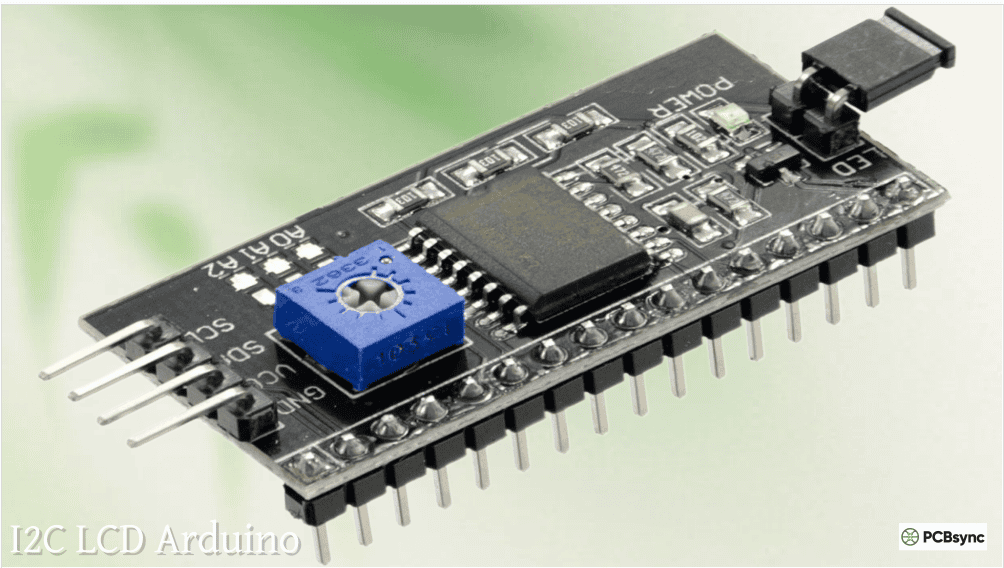
For standalone operation without a computer, add a 16×2 LCD with I2C backpack:
#include “HX711.h”
#include <Wire.h>
#include <LiquidCrystal_I2C.h>
const int LOADCELL_DOUT_PIN = 3;
const int LOADCELL_SCK_PIN = 2;
const int TARE_BUTTON_PIN = 4;
HX711 scale;
LiquidCrystal_I2C lcd(0x27, 16, 2);
const float CALIBRATION_FACTOR = -7050.0;
void setup() {
lcd.init();
lcd.backlight();
lcd.setCursor(0, 0);
lcd.print(“Digital Scale”);
lcd.setCursor(0, 1);
lcd.print(“Initializing…”);
pinMode(TARE_BUTTON_PIN, INPUT_PULLUP);
scale.begin(LOADCELL_DOUT_PIN, LOADCELL_SCK_PIN);
scale.set_scale(CALIBRATION_FACTOR);
scale.tare();
lcd.clear();
lcd.setCursor(0, 0);
lcd.print(“Scale Ready”);
delay(1000);
}
void loop() {
if (digitalRead(TARE_BUTTON_PIN) == LOW) {
lcd.clear();
lcd.print(“Taring…”);
scale.tare();
delay(500);
}
float weight = scale.get_units(5);
lcd.setCursor(0, 0);
lcd.print(“Weight: “);
lcd.setCursor(0, 1);
if (weight < 0) {
lcd.print(“0.00 g “);
} else if (weight < 1000) {
lcd.print(weight, 1);
lcd.print(” g “);
} else {
lcd.print(weight / 1000, 3);
lcd.print(” kg “);
}
delay(200);
}
Mounting the Load Cell Properly
Physical mounting affects measurement accuracy as much as electrical connections. Bar-type load cells should be mounted in a “Z” configuration between two rigid plates.
Mounting Requirements
Aspect
Requirement
Fixed End
Securely bolted to rigid base
Free End
Attached to weighing platform
Clearance
Gap beneath load cell for deflection
Alignment
Arrow on load cell points toward applied force
Hardware
Use washers and lock nuts to prevent loosening
The arrow printed on most load cells indicates the direction of applied force. Mount the cell so weight pushes in this direction for accurate readings.
Troubleshooting Common Issues
Unstable or Drifting Readings
Unstable readings typically stem from mechanical or electrical problems. Check that the load cell is mounted rigidly with no wobble. Verify all wire connections are secure and properly soldered. Add shielding if the load cell wires run near motors or switching power supplies.
Temperature changes cause drift in load cell readings. For applications requiring high stability, allow the system to warm up for 15-30 minutes before calibrating, and consider implementing temperature compensation in software.
Always Reading Zero
If the scale always reads zero regardless of applied weight, verify the load cell wire colors match the HX711 connections. Some manufacturers use non-standard colors. Use a multimeter to identify the excitation and signal pairs by measuring resistance between wires.
Negative Weight Values
Negative readings indicate reversed signal wires. Swap the A+ and A- connections on the HX711, or simply use a negative calibration factor in your code.
Very Noisy Readings
Excessive noise can result from inadequate power supply decoupling, long unshielded wires, or nearby electromagnetic interference. Add filtering capacitors, shield signal wires, and keep the load cell away from motors and switching regulators.
Load Cell HX711 Arduino Applications
The versatility of this weight measurement system enables countless practical projects:
Smart Kitchen Scale: Build a scale that connects to your smartphone, logs nutritional information, and tracks ingredient usage for recipes.
Pet Food Monitor: Automatically detect when your pet’s food bowl needs refilling and send alerts to your phone.
Inventory Management: Track consumable supplies like filament spools, coffee beans, or chemicals by monitoring weight changes.
Plant Watering System: Measure soil moisture indirectly by tracking pot weight and trigger automatic watering when plants need water.
Industrial Process Control: Monitor material flow, detect jams in conveyors, or verify packaging weights in production environments.
Beehive Monitoring: Track hive weight to monitor honey production and colony health throughout the season.
Useful Resources for Load Cell HX711 Arduino Projects
Resource
URL
Description
HX711 Library (bogde)
github.com/bogde/HX711
Most popular Arduino library
HX711_ADC Library
github.com/olkal/HX711_ADC
Advanced library with more features
HX711 Datasheet
sparkfun.com/datasheets
Official IC specifications
SparkFun Hookup Guide
learn.sparkfun.com
Detailed wiring tutorial
Arduino Reference
arduino.cc/reference
Official documentation
Load Cell Basics
omega.com/en-us
Engineering theory
Component Sources:
SparkFun (sparkfun.com) – HX711 breakout boards and load cells
Adafruit (adafruit.com) – Quality modules with tutorials
Amazon – Budget kits with load cells and HX711 included
AliExpress – Lowest prices for bulk purchases
FAQs About Load Cell HX711 Arduino Projects
What is the maximum weight I can measure with the Load Cell HX711 Arduino setup?
The maximum weight depends entirely on your load cell’s rated capacity. Load cells are available from 100 grams to several tons. For Arduino projects, 1kg to 50kg load cells are most common. The HX711 amplifier works with any Wheatstone bridge load cell regardless of capacity. Choose a load cell rated slightly above your maximum expected weight to avoid permanent damage from overload.
How accurate is a Load Cell HX711 Arduino scale compared to commercial scales?
With proper calibration and stable mounting, a Load Cell HX711 Arduino scale can achieve accuracy within 0.1% of the load cell capacity. For a 5kg load cell, this means approximately ±5 gram accuracy. Commercial scales often achieve better consistency through temperature compensation and higher-quality load cells, but for most DIY applications, the HX711 system provides excellent results comparable to mid-range retail scales.
Why does my Load Cell HX711 Arduino scale give different readings each time?
Inconsistent readings usually result from mechanical instability, poor electrical connections, or insufficient averaging in the code. Ensure the load cell is rigidly mounted with no flex in the mounting hardware. Check all solder joints and wire connections. Increase the number of samples averaged in your code (the get_units() function parameter) to smooth out electrical noise. Also verify your power supply is stable and provides clean 5V.
Can I connect multiple load cells to one HX711 module for larger scales?
Yes, you can connect up to four load cells in parallel to a single HX711 to build platform scales like bathroom scales. The load cells must have identical specifications (same capacity and sensitivity). Connect all red wires together to E+, all black to E-, and use a load cell combinator board or wire the signal outputs appropriately. This configuration averages the output of all cells, allowing accurate measurement even when weight is not centered perfectly.
How do I convert my Load Cell HX711 Arduino scale readings to different units?
Unit conversion is simply a matter of adjusting your calibration factor or applying a mathematical conversion after reading. If you calibrated in grams and want kilograms, divide by 1000. For pounds, multiply grams by 0.00220462. The cleanest approach is to calibrate directly in your desired units by using a known weight expressed in those units during the calibration process. For example, calibrate with a 1 lb weight to get readings directly in pounds.
Conclusion
The Load Cell HX711 Arduino combination offers remarkable capability for weight measurement projects at minimal cost. With a basic understanding of strain gauge principles, proper wiring techniques, and careful calibration, you can build scales that rival commercial products in accuracy.
Start with a simple serial monitor setup to verify your hardware and calibration. Once confident in the readings, add displays, buttons, and connectivity features to create a complete weighing solution. The projects possible with this technology range from simple kitchen scales to sophisticated industrial monitoring systems.
The key to success lies in attention to mechanical mounting and thorough calibration with known reference weights. Take your time with these steps, and you’ll be rewarded with stable, accurate measurements for years of reliable operation.
Inquire: Call 0086-755-23203480, or reach out via the form below/your sales contact to discuss our design, manufacturing, and assembly capabilities.
Quote: Email your PCB files to Sales@pcbsync.com (Preferred for large files) or submit online. We will contact you promptly. Please ensure your email is correct.
Notes: For PCB fabrication, we require PCB design file in Gerber RS-274X format (most preferred), *.PCB/DDB (Protel, inform your program version) format or *.BRD (Eagle) format. For PCB assembly, we require PCB design file in above mentioned format, drilling file and BOM. Click to download BOM template To avoid file missing, please include all files into one folder and compress it into .zip or .rar format.