Inquire: Call 0086-755-23203480, or reach out via the form below/your sales contact to discuss our design, manufacturing, and assembly capabilities.
Quote: Email your PCB files to Sales@pcbsync.com (Preferred for large files) or submit online. We will contact you promptly. Please ensure your email is correct.
Notes: For PCB fabrication, we require PCB design file in Gerber RS-274X format (most preferred), *.PCB/DDB (Protel, inform your program version) format or *.BRD (Eagle) format. For PCB assembly, we require PCB design file in above mentioned format, drilling file and BOM. Click to download BOM template To avoid file missing, please include all files into one folder and compress it into .zip or .rar format.
The LCD 20×4 Arduino combination provides 80 characters of display space, more than double what a standard 16×2 offers. When your project needs to show multiple sensor readings, navigation menus, or detailed status information, this larger format becomes essential.
I’ve built dozens of projects using 20×4 displays, from environmental monitoring stations to CNC controller interfaces. This guide covers everything from basic wiring to advanced menu systems and multi-display configurations.
The 20×4 format excels in applications where information density matters.
Display Capacity Comparison
Feature
16×2 LCD
20×4 LCD
Total Characters
32
80
Lines
2
4
Characters per Line
16
20
Typical Use
Simple readings
Complex interfaces
Four lines allow you to display labels and values together without cramming everything onto two rows. Twenty characters per line accommodate longer descriptions without truncation.
LCD 20×4 Technical Specifications
The 20×4 LCD uses the same HD44780 controller as smaller displays, making the programming identical.
Standard Specifications
Parameter
Value
Operating Voltage
5V DC
Backlight Voltage
5V DC
Controller
HD44780 or compatible
Character Matrix
5×8 dots
Interface Options
4-bit, 8-bit parallel, or I2C
Operating Temperature
-20°C to 70°C
Viewing Area
77 x 25.2 mm
Module Dimensions
98 x 60 x 13.6 mm
The larger physical size requires more mounting space but provides significantly better readability from a distance.
Understanding 20×4 LCD Memory Mapping
The HD44780 controller contains 80 bytes of DDRAM organized in a way that seems counterintuitive at first.
DDRAM Row Addresses
Row
Starting Address
Ending Address
Row 0
0x00
0x13
Row 1
0x40
0x53
Row 2
0x14
0x27
Row 3
0x54
0x67
Notice that rows 0 and 2 are consecutive in memory, as are rows 1 and 3. If you write more than 20 characters starting at row 0, text continues on row 2, not row 1. The LiquidCrystal library handles this automatically when you use setCursor(), but understanding the underlying mapping helps when troubleshooting.
I2C LCD 20×4 Arduino Wiring
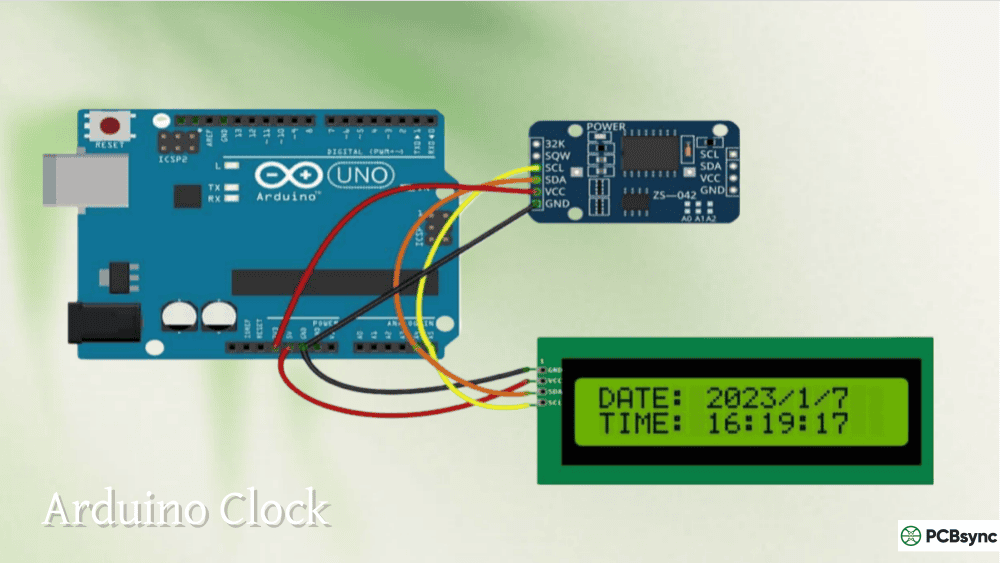
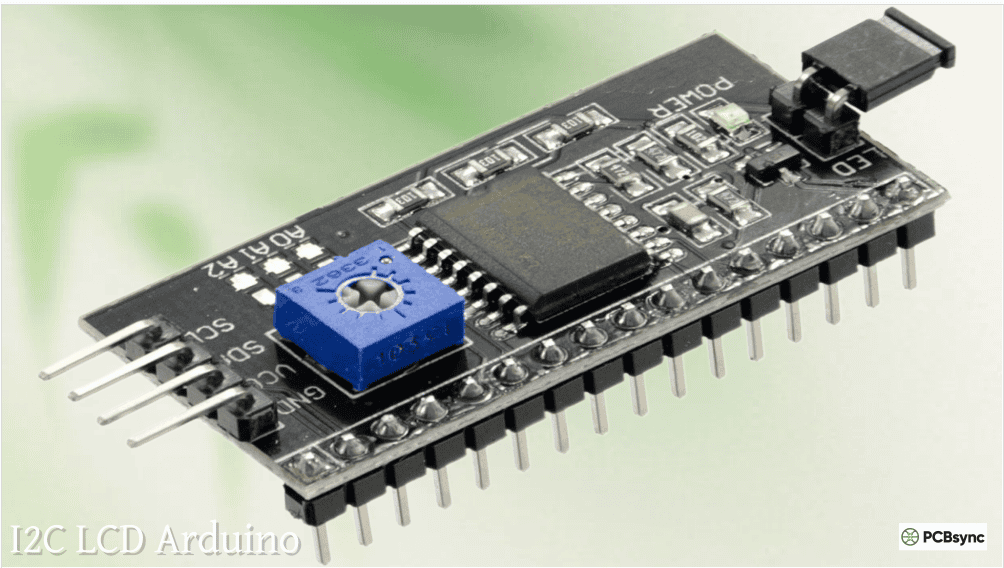
The I2C interface reduces wiring to just four connections, making it the preferred method for most Arduino projects.
I2C Connection Table
I2C Module Pin
Arduino Uno
Arduino Mega
Arduino Nano
GND
GND
GND
GND
VCC
5V
5V
5V
SDA
A4
20
A4
SCL
A5
21
A5
The PCF8574 I/O expander on the I2C backpack converts serial data to the parallel signals the LCD needs. A small potentiometer on the module adjusts contrast.
Finding Your I2C Address
Most modules ship with address 0x27 or 0x3F. Run this scanner if you’re unsure:
#include <Wire.h>
void setup() {
Wire.begin();
Serial.begin(9600);
for (byte address = 1; address < 127; address++) {
Wire.beginTransmission(address);
if (Wire.endTransmission() == 0) {
Serial.print(“Found device at 0x”);
Serial.println(address, HEX);
}
}
}
void loop() {}
Basic LCD 20×4 Arduino Code
Install the LiquidCrystal_I2C library through the Arduino IDE Library Manager, then use this starter code:
#include <Wire.h>
#include <LiquidCrystal_I2C.h>
LiquidCrystal_I2C lcd(0x27, 20, 4);
void setup() {
lcd.init();
lcd.backlight();
lcd.setCursor(0, 0);
lcd.print(“Line 1: Row 0”);
lcd.setCursor(0, 1);
lcd.print(“Line 2: Row 1”);
lcd.setCursor(0, 2);
lcd.print(“Line 3: Row 2”);
lcd.setCursor(0, 3);
lcd.print(“Line 4: Row 3”);
}
void loop() {}
The init() function replaces begin() used with the standard LiquidCrystal library. Always call backlight() to illuminate the display.
Displaying Multiple Sensor Readings
The 20×4 format handles multiple data points elegantly:
#include <Wire.h>
#include <LiquidCrystal_I2C.h>
LiquidCrystal_I2C lcd(0x27, 20, 4);
void setup() {
lcd.init();
lcd.backlight();
}
void loop() {
float temp = 23.5;
float humidity = 65.2;
float pressure = 1013.25;
int lightLevel = 780;
lcd.setCursor(0, 0);
lcd.print(“Temp: “);
lcd.print(temp, 1);
lcd.print(” C”);
lcd.setCursor(0, 1);
lcd.print(“Humidity: “);
lcd.print(humidity, 1);
lcd.print(” %”);
lcd.setCursor(0, 2);
lcd.print(“Pressure: “);
lcd.print(pressure, 0);
lcd.print(” hPa”);
lcd.setCursor(0, 3);
lcd.print(“Light: “);
lcd.print(lightLevel);
lcd.print(” lux”);
delay(1000);
}
Aligning values to the same column position improves readability.
Building Menu Systems with 20×4 LCD
Four lines make menu navigation practical without scrolling:
#include <Wire.h>
#include <LiquidCrystal_I2C.h>
LiquidCrystal_I2C lcd(0x27, 20, 4);
const char* menuItems[] = {
“Set Temperature”,
“Set Humidity Alarm”,
“Calibrate Sensors”,
“System Settings”
};
int menuIndex = 0;
const int menuSize = 4;
void setup() {
lcd.init();
lcd.backlight();
displayMenu();
}
void displayMenu() {
lcd.clear();
for (int i = 0; i < 4; i++) {
lcd.setCursor(0, i);
if (i == menuIndex) {
lcd.print(“>”);
} else {
lcd.print(” “);
}
lcd.print(menuItems[i]);
}
}
void loop() {
// Add button handling to change menuIndex
// Call displayMenu() when selection changes
}
The cursor indicator clearly shows the current selection while all options remain visible.
Custom Characters for Data Visualization
Create visual indicators using the 8 available custom character slots:
byte thermometer[8] = {
0b00100, 0b01010, 0b01010, 0b01010,
0b01110, 0b11111, 0b11111, 0b01110
};
byte droplet[8] = {
0b00100, 0b00100, 0b01010, 0b01010,
0b10001, 0b10001, 0b10001, 0b01110
};
void setup() {
lcd.init();
lcd.backlight();
lcd.createChar(0, thermometer);
lcd.createChar(1, droplet);
lcd.setCursor(0, 0);
lcd.write(byte(0));
lcd.print(” Temperature: 25C”);
lcd.setCursor(0, 1);
lcd.write(byte(1));
lcd.print(” Humidity: 60%”);
}
Custom icons provide instant visual recognition of different measurement types.
Progress Bar Implementation
The extra width accommodates meaningful progress indicators:
byte fullBlock[8] = {
0x1F, 0x1F, 0x1F, 0x1F, 0x1F, 0x1F, 0x1F, 0x1F
};
void drawProgressBar(int row, int percent) {
int fillWidth = map(percent, 0, 100, 0, 16);
lcd.setCursor(0, row);
lcd.print(“[“);
for (int i = 0; i < 16; i++) {
if (i < fillWidth) {
lcd.write(byte(0));
} else {
lcd.print(” “);
}
}
lcd.print(“]”);
lcd.print(percent);
lcd.print(“%”);
}
A 16-character progress bar leaves room for the percentage value on the same line.
Projects needing more than 80 characters can use multiple displays on the same I2C bus.
I2C Address Configuration
The PCF8574 module has solder pads (A0, A1, A2) to change addresses:
A0
A1
A2
PCF8574 Address
Open
Open
Open
0x27
Closed
Open
Open
0x26
Open
Closed
Open
0x25
Closed
Closed
Open
0x24
LiquidCrystal_I2C lcd1(0x27, 20, 4);
LiquidCrystal_I2C lcd2(0x26, 20, 4);
void setup() {
lcd1.init();
lcd2.init();
lcd1.backlight();
lcd2.backlight();
lcd1.print(“Display 1”);
lcd2.print(“Display 2”);
}
Power Considerations
The 20×4 LCD draws more current than smaller displays due to the larger backlight area.
Typical Current Consumption
Component
Current Draw
LCD Logic
1-2 mA
LED Backlight
40-150 mA
Total (typical)
50-160 mA
For battery-powered projects, control the backlight programmatically:
lcd.noBacklight(); // Turn off backlight
delay(5000);
lcd.backlight(); // Turn on backlight
Some Arduino boards struggle to supply enough current through USB. Use an external 5V supply for the LCD if you experience dimming or erratic behavior.
Troubleshooting LCD 20×4 Arduino Issues
Common Problems and Solutions
Symptom
Likely Cause
Solution
Blank display, backlight on
Wrong I2C address
Run I2C scanner
Two rows of blocks
No initialization
Verify code uploaded
Garbled characters
Incorrect library
Use LiquidCrystal_I2C
Dim display
Insufficient power
Add external 5V supply
Text on wrong lines
Memory mapping confusion
Use setCursor() correctly
Flickering
Loose connections
Check wiring and solder joints
Contrast Adjustment
If characters are invisible or display appears all black, adjust the blue potentiometer on the I2C backpack. Turn slowly while watching the display until characters become clearly visible.
Practical Project Applications
The LCD 20×4 Arduino combination suits projects requiring detailed information display. Weather stations benefit from showing temperature, humidity, pressure, and forecast simultaneously. Home automation controllers can display room status, setpoints, and schedules without page scrolling.
Data loggers show current values alongside min/max readings and timestamps. CNC and 3D printer controllers display coordinates, speeds, and job progress on dedicated lines. Aquarium controllers monitor pH, temperature, and feeding schedules with room for alerts.
Parallel Wiring Alternative
When I2C isn’t suitable, direct parallel wiring provides faster updates at the cost of more pins.
4-Bit Parallel Connection Table
LCD Pin
Name
Arduino Pin
1
VSS
GND
2
VDD
5V
3
VO
Potentiometer wiper
4
RS
Digital 12
5
RW
GND
6
E
Digital 11
11
D4
Digital 5
12
D5
Digital 4
13
D6
Digital 3
14
D7
Digital 2
15
A
5V (through 220Ω)
16
K
GND
Use the standard LiquidCrystal library for parallel connections:
#include <LiquidCrystal.h>
LiquidCrystal lcd(12, 11, 5, 4, 3, 2);
void setup() {
lcd.begin(20, 4);
lcd.print(“Parallel Mode”);
}
Optimizing Display Updates
Avoid calling lcd.clear() repeatedly as it causes visible flicker. Instead, overwrite specific positions:
void updateValue(int row, int col, int value) {
lcd.setCursor(col, row);
lcd.print(value);
lcd.print(” “); // Clear trailing characters
}
For static labels, print them once in setup() and only update the changing values in loop().
Memory-Efficient String Handling
Use the F() macro to store static strings in program memory:
lcd.print(F(“Temperature: “)); // Stored in flash
This preserves SRAM for variables, especially important on memory-limited boards like the Arduino Uno.
Yes, just change the initialization parameters. Replace LiquidCrystal_I2C lcd(0x27, 16, 2) with LiquidCrystal_I2C lcd(0x27, 20, 4). The library functions work identically, though you’ll want to adjust cursor positions to use the additional space.
Why does text wrap from line 1 to line 3 instead of line 2?
This behavior results from the HD44780’s internal memory organization. The controller treats the display as two 40-character lines, mapped to create four 20-character rows. The library’s setCursor() function handles this automatically, so always use it rather than relying on text wrapping.
How many 20×4 LCDs can I connect to one Arduino?
Using I2C, you can connect up to 8 displays by configuring unique addresses via the A0-A2 solder pads on each backpack. Ensure your power supply can handle the combined current draw.
Why is my display very dim even with backlight on?
The Arduino’s USB power may be insufficient. Connect an external 5V supply directly to the LCD’s VCC pin or use a powered USB hub. Also verify the contrast potentiometer isn’t turned to an extreme position.
Can I use a 20×4 LCD with a 3.3V Arduino?
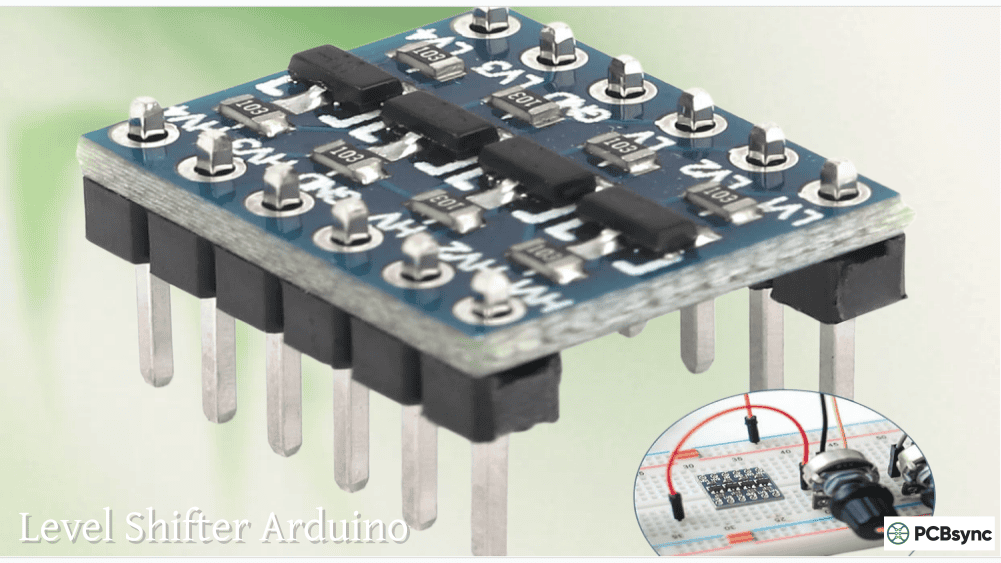
Most 20×4 LCDs require 5V for proper operation. With 3.3V boards like ESP32, you’ll need a logic level shifter on the I2C lines and a separate 5V supply for the LCD module. Some newer modules are 3.3V compatible but check your specific display’s datasheet first.
Choosing Between Display Sizes
Consider your specific project requirements when selecting a display format.
Selection Criteria
Project Type
Recommended Display
Simple sensor reading
16×2 LCD
Multiple readings
20×4 LCD
Menu-driven interface
20×4 LCD
Portable/battery device
16×2 LCD (lower power)
Dashboard/status panel
20×4 LCD
The 20×4 format costs slightly more but eliminates the frustration of cramming information onto inadequate display space. When in doubt, choose the larger display since you can always use fewer lines, but you cannot expand a smaller LCD after installation.
Inquire: Call 0086-755-23203480, or reach out via the form below/your sales contact to discuss our design, manufacturing, and assembly capabilities.
Quote: Email your PCB files to Sales@pcbsync.com (Preferred for large files) or submit online. We will contact you promptly. Please ensure your email is correct.
Notes: For PCB fabrication, we require PCB design file in Gerber RS-274X format (most preferred), *.PCB/DDB (Protel, inform your program version) format or *.BRD (Eagle) format. For PCB assembly, we require PCB design file in above mentioned format, drilling file and BOM. Click to download BOM template To avoid file missing, please include all files into one folder and compress it into .zip or .rar format.