Inquire: Call 0086-755-23203480, or reach out via the form below/your sales contact to discuss our design, manufacturing, and assembly capabilities.
Quote: Email your PCB files to Sales@pcbsync.com (Preferred for large files) or submit online. We will contact you promptly. Please ensure your email is correct.
Notes: For PCB fabrication, we require PCB design file in Gerber RS-274X format (most preferred), *.PCB/DDB (Protel, inform your program version) format or *.BRD (Eagle) format. For PCB assembly, we require PCB design file in above mentioned format, drilling file and BOM. Click to download BOM template To avoid file missing, please include all files into one folder and compress it into .zip or .rar format.
The LCD 16×2 Arduino tutorial covers everything you need to display text, sensor readings, and custom characters on a character LCD. These displays remain the go-to choice for countless projects because they’re inexpensive, easy to wire, and work reliably with the built-in LiquidCrystal library.
I’ve used these displays on everything from environmental monitors to custom control panels. This guide walks through both direct wiring and the I2C method, with practical code examples you can use immediately.
A 16×2 LCD can display 32 characters total, arranged in two rows of 16 characters each. Each character occupies a 5×8 pixel matrix, giving you 40 individual pixels per character position. The display uses a Hitachi HD44780 compatible controller chip that handles all the pixel-level work.
HD44780 Controller Features
The HD44780 controller manages three types of internal memory:
Memory Type
Purpose
Capacity
CGROM
Pre-defined character patterns
208 characters
DDRAM
Currently displayed content
80 characters
CGRAM
Custom character storage
8 characters
The CGROM contains the standard ASCII characters plus some special symbols. DDRAM holds whatever is currently visible on screen. CGRAM is where you store your own custom characters, though you’re limited to eight at a time.
16×2 LCD Pinout Reference
The standard 16×2 LCD has 16 pins. Understanding each pin’s function helps troubleshoot wiring problems.
Complete Pin Functions
Pin
Name
Function
1
VSS
Ground connection
2
VDD
+5V power supply
3
VO
Contrast adjustment (0-5V)
4
RS
Register Select (Command/Data)
5
RW
Read/Write mode
6
E
Enable signal
7-10
D0-D3
Data bits (8-bit mode only)
11-14
D4-D7
Data bits (4-bit and 8-bit mode)
15
A
Backlight anode (+5V through resistor)
16
K
Backlight cathode (Ground)
The RS pin determines whether you’re sending commands (cursor position, clear screen) or data (actual characters to display). When RS is LOW, the LCD interprets incoming bytes as commands. When RS is HIGH, it interprets them as character data.
The RW pin selects between read and write operations. For most Arduino projects, you’ll tie this directly to ground since you’re always writing to the display, never reading from it.
4-Bit vs 8-Bit Mode Comparison
The LCD supports two communication modes. Your choice affects wiring complexity and available pins.
Feature
4-Bit Mode
8-Bit Mode
Data Pins Required
4 (D4-D7)
8 (D0-D7)
Total Arduino Pins
6
10
Transfer Speed
Slower (2 transfers per byte)
Faster (1 transfer per byte)
Common Usage
Most projects
Speed-critical applications
The speed difference is negligible for text display. A human can’t perceive the extra microseconds required for 4-bit transfers. I always use 4-bit mode to preserve Arduino pins for other sensors and outputs.
LCD 16×2 Arduino Wiring (4-Bit Mode)
This standard wiring works with the built-in LiquidCrystal library without modifications.
Standard Connection Table
LCD Pin
LCD Name
Arduino Uno Pin
1
VSS
GND
2
VDD
5V
3
VO
Potentiometer wiper
4
RS
Digital 12
5
RW
GND
6
E
Digital 11
11
D4
Digital 5
12
D5
Digital 4
13
D6
Digital 3
14
D7
Digital 2
15
A
5V (through 220Ω resistor)
16
K
GND
Potentiometer Wiring for Contrast
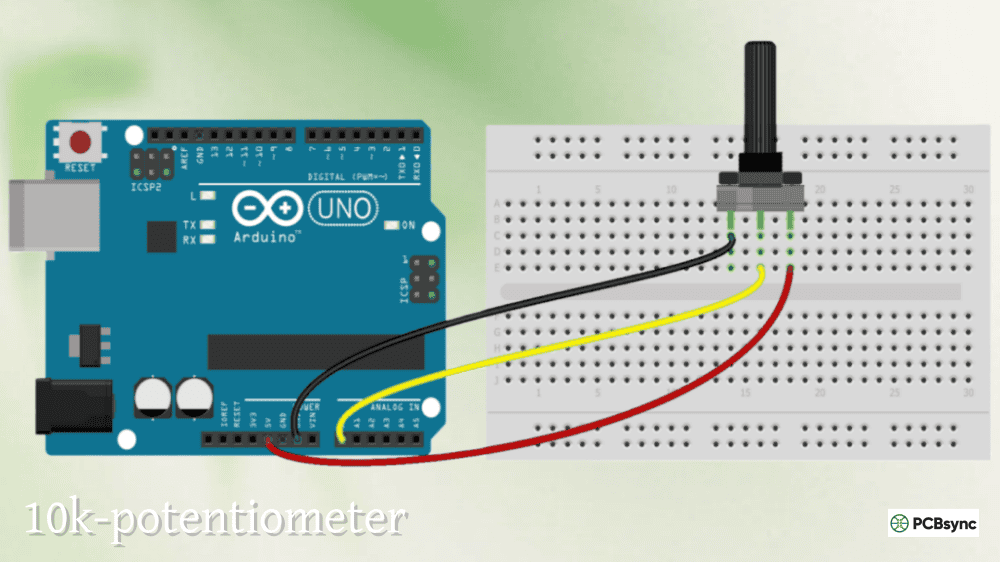
The contrast adjustment requires a 10kΩ potentiometer wired as a voltage divider:
Potentiometer Pin
Connection
Left terminal
+5V
Right terminal
GND
Center wiper
LCD Pin 3 (VO)
Turning the potentiometer adjusts the voltage at VO between 0V and 5V, controlling character visibility. Most displays work best with VO around 0.3V to 0.5V.
Basic LCD 16×2 Arduino Code
The LiquidCrystal library comes pre-installed with the Arduino IDE. This example displays text on both lines:
#include <LiquidCrystal.h>
// Initialize: RS, E, D4, D5, D6, D7
LiquidCrystal lcd(12, 11, 5, 4, 3, 2);
void setup() {
lcd.begin(16, 2); // 16 columns, 2 rows
lcd.print(“Hello World!”);
lcd.setCursor(0, 1); // Column 0, Row 1
lcd.print(“LCD Tutorial”);
}
void loop() {
// Nothing needed here
}
The begin() function initializes the display with your column and row count. The setCursor() function positions where the next character will appear, using zero-based indexing.
LiquidCrystal Library Functions Reference
The library provides numerous functions for controlling display behavior.
Essential Functions
Function
Purpose
Example
begin(cols, rows)
Initialize display size
lcd.begin(16, 2)
print(text)
Display text at cursor
lcd.print(“Hello”)
setCursor(col, row)
Position cursor
lcd.setCursor(0, 1)
clear()
Erase display and home cursor
lcd.clear()
home()
Move cursor to position 0,0
lcd.home()
Display Control Functions
Function
Purpose
display()
Turn on display (content preserved)
noDisplay()
Turn off display (content preserved)
cursor()
Show underscore cursor
noCursor()
Hide cursor
blink()
Enable blinking block cursor
noBlink()
Disable blinking cursor
Scrolling Functions
Function
Purpose
scrollDisplayLeft()
Shift entire display one position left
scrollDisplayRight()
Shift entire display one position right
autoscroll()
Auto-shift display when printing
noAutoscroll()
Disable auto-shift
Displaying Sensor Data on LCD
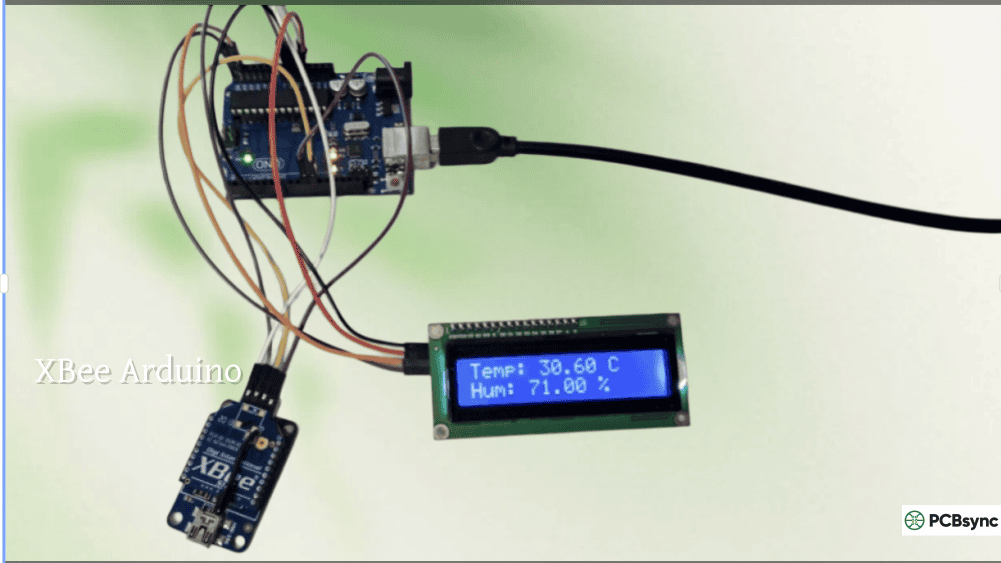
Combining sensor readings with LCD output is where these displays shine. This example shows a temperature reading:
These displays are reliable but have common failure modes.
Display Problems and Solutions
Symptom
Likely Cause
Solution
Blank screen, backlight on
Contrast too high/low
Adjust potentiometer
Black boxes on first row
No initialization
Check code uploads properly
Random characters
Loose data wires
Verify D4-D7 connections
Partial display works
Wrong pin assignments
Match code to actual wiring
No backlight
Missing power to pin 15/16
Add 220Ω resistor to pin 15
Flickering display
Unstable power
Add 100µF capacitor across VCC/GND
Contrast Adjustment Issues
If the potentiometer doesn’t seem to affect contrast, check these points:
The potentiometer wiper must connect to pin 3 (VO), not pin 2 (VDD). Some displays with negative voltage requirements need the potentiometer connected differently. If standard adjustment doesn’t work, try connecting VO directly to ground through a 1kΩ to 4.7kΩ fixed resistor.
Black boxes appearing on the first row typically indicate the LCD received power but no initialization commands from your Arduino. Check that your code actually uploaded successfully, verify the RS and E pin connections match your code, and ensure the Arduino is running.
Can I use a 16×2 LCD with a 3.3V Arduino board?
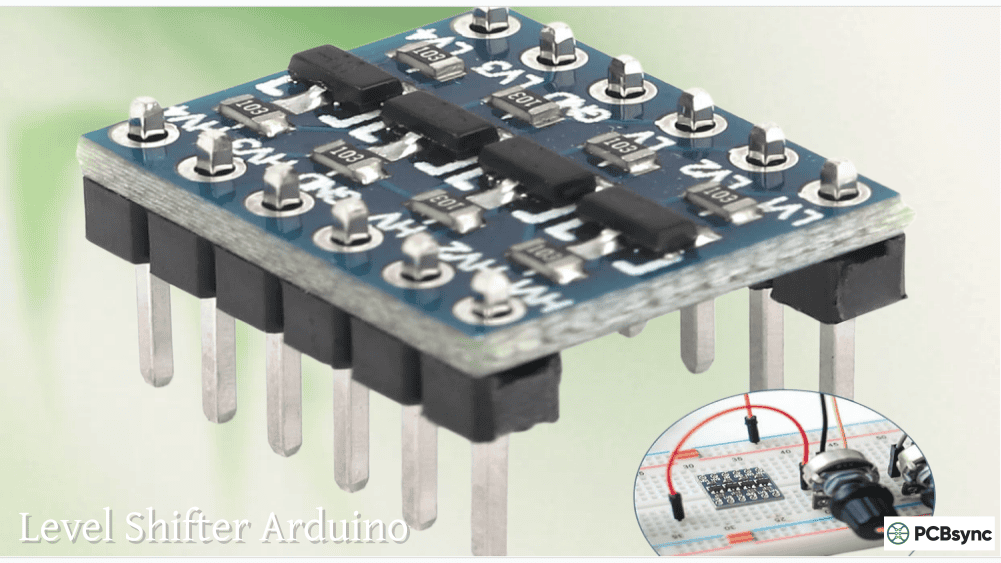
Most 16×2 LCDs require 5V logic levels. When using 3.3V boards like the Arduino Due or ESP32, you’ll need a logic level shifter on the data and control lines. Some LCDs labeled as “3.3V compatible” exist but aren’t common.
How many custom characters can I create?
The HD44780 controller provides CGRAM space for exactly eight custom characters, stored at positions 0-7. You can redefine these during runtime if you need more symbols than eight, but only eight can exist simultaneously.
Why does my display show garbage characters after running for a while?
Electromagnetic interference from motors, relays, or switching power supplies can corrupt LCD commands. Add 0.1µF ceramic capacitors close to the LCD power pins and keep signal wires short. In severe cases, shield the LCD or add series resistors (100-330Ω) on the data lines.
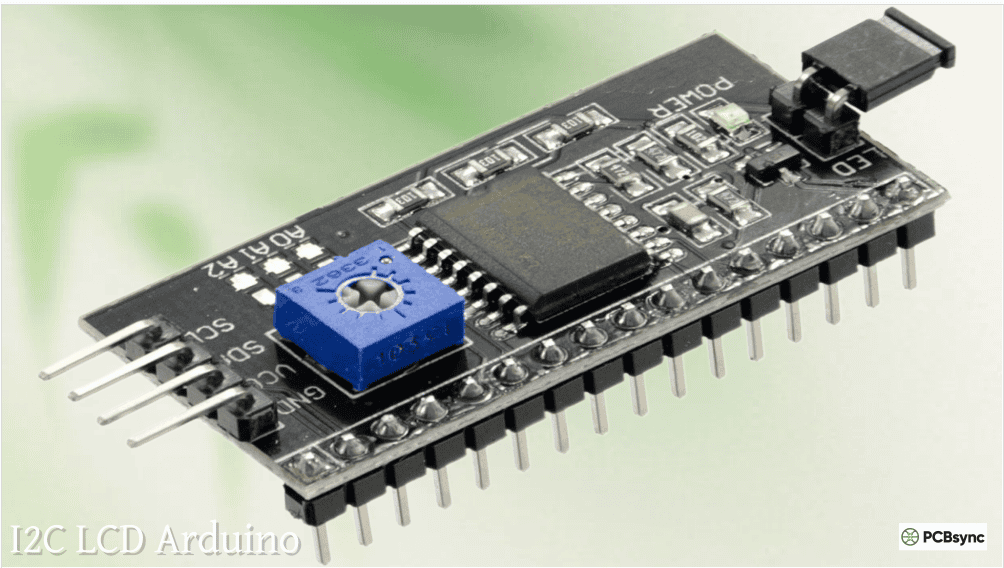
Should I use direct wiring or an I2C module?
Use I2C modules when pin count matters or you need long cable runs between the Arduino and display. Use direct wiring when you need the fastest possible update speed or want to avoid the I2C library overhead. For most hobby projects, I2C simplicity outweighs the minor speed penalty.
Multi-Line Display Formatting
Properly formatting information across both LCD lines improves readability.
Centering Text on Display
void printCentered(int row, String text) {
int padding = (16 – text.length()) / 2;
lcd.setCursor(padding, row);
lcd.print(text);
}
void setup() {
lcd.begin(16, 2);
printCentered(0, “WELCOME”);
printCentered(1, “Press Start”);
}
Displaying Multiple Values
When showing multiple sensor readings, organize them logically:
Understanding power requirements helps with battery-powered projects.
Typical Current Draw
Component
Current Draw
LCD logic
1-2 mA
LED backlight
20-120 mA
Total (backlight on)
25-125 mA
Total (backlight off)
1-2 mA
For battery operation, control the backlight with a transistor and turn it off when not needed:
const int backlightPin = 9;
void setup() {
pinMode(backlightPin, OUTPUT);
lcd.begin(16, 2);
}
void setBacklight(bool state) {
digitalWrite(backlightPin, state ? HIGH : LOW);
}
Alternative LCD Sizes
The same HD44780 controller and code work with other LCD dimensions:
Display Size
Characters
Code Modification
16×1
16
lcd.begin(16, 1)
16×2
32
lcd.begin(16, 2)
16×4
64
lcd.begin(16, 4)
20×2
40
lcd.begin(20, 2)
20×4
80
lcd.begin(20, 4)
Note that 16×1 displays sometimes have unusual memory mapping where the first 8 characters are at one address range and the second 8 at another. Test positioning with setCursor() if characters appear in unexpected locations.
Best Practices for LCD Projects
Following these guidelines improves reliability and code quality.
Initialization Timing
Always add a brief delay after power-up before initializing the LCD. The HD44780 needs time for its internal reset sequence:
void setup() {
delay(100); // Wait for LCD power stabilization
lcd.begin(16, 2);
}
Avoiding Display Flicker
Repeatedly calling lcd.clear() causes visible flicker. Instead, overwrite existing text with spaces:
// Bad – causes flicker
void updateBad(int value) {
lcd.clear();
lcd.print(“Value: “);
lcd.print(value);
}
// Good – no flicker
void updateGood(int value) {
lcd.setCursor(7, 0);
lcd.print(value);
lcd.print(” “); // Clear any remaining digits
}
Memory Efficient String Handling
Store static strings in program memory using the F() macro to conserve RAM:
lcd.print(F(“Hello World!”)); // Stored in flash, not RAM
Practical Applications for 16×2 LCDs
The LCD 16×2 Arduino combination works well for numerous projects:
Environmental monitoring systems display temperature, humidity, and air quality readings in real-time. Menu-driven interfaces let users configure settings without requiring a computer connection. Status panels show sensor states, alarm conditions, and operational parameters.
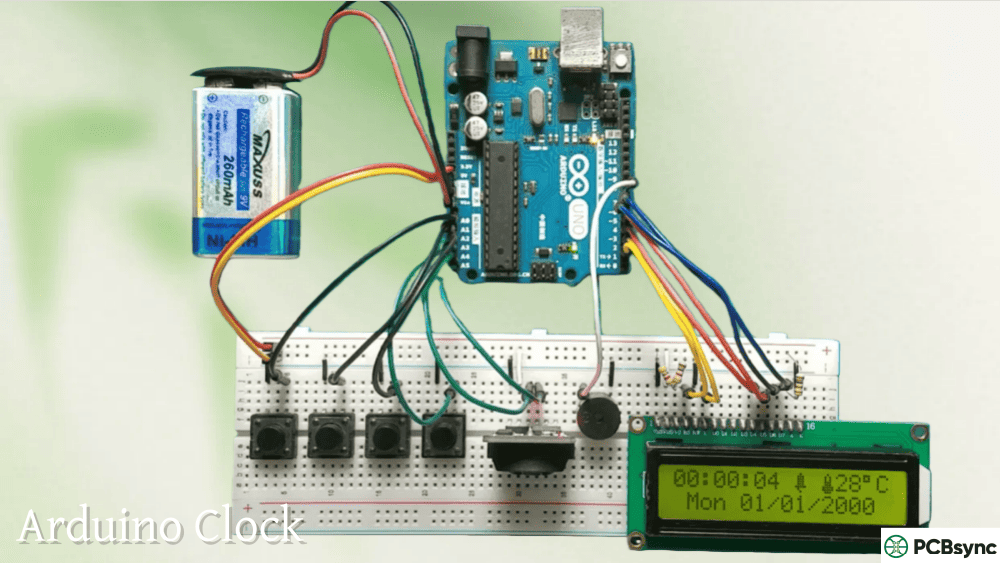
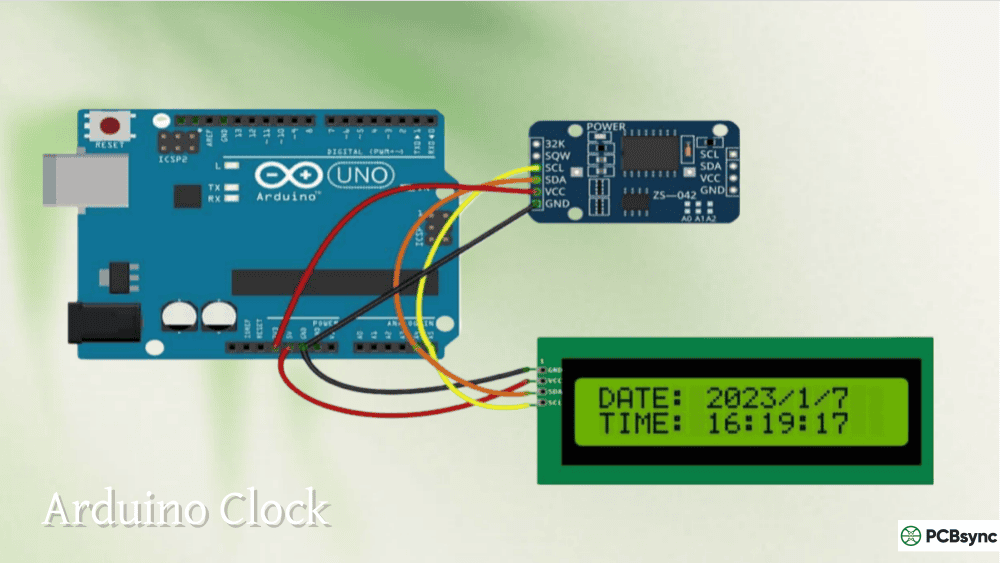
Countdown timers and clocks provide standalone time display for events and automation sequences. Data loggers can show current values while recording to SD cards. Industrial control panels display setpoints, measured values, and system states.
The learning curve for these displays is gentle, making them perfect for beginners while remaining useful for advanced projects. Once you understand the basic wiring and library functions, you can integrate LCD output into virtually any Arduino project that benefits from visual feedback.
Inquire: Call 0086-755-23203480, or reach out via the form below/your sales contact to discuss our design, manufacturing, and assembly capabilities.
Quote: Email your PCB files to Sales@pcbsync.com (Preferred for large files) or submit online. We will contact you promptly. Please ensure your email is correct.
Notes: For PCB fabrication, we require PCB design file in Gerber RS-274X format (most preferred), *.PCB/DDB (Protel, inform your program version) format or *.BRD (Eagle) format. For PCB assembly, we require PCB design file in above mentioned format, drilling file and BOM. Click to download BOM template To avoid file missing, please include all files into one folder and compress it into .zip or .rar format.