Inquire: Call 0086-755-23203480, or reach out via the form below/your sales contact to discuss our design, manufacturing, and assembly capabilities.
Quote: Email your PCB files to Sales@pcbsync.com (Preferred for large files) or submit online. We will contact you promptly. Please ensure your email is correct.
Notes: For PCB fabrication, we require PCB design file in Gerber RS-274X format (most preferred), *.PCB/DDB (Protel, inform your program version) format or *.BRD (Eagle) format. For PCB assembly, we require PCB design file in above mentioned format, drilling file and BOM. Click to download BOM template To avoid file missing, please include all files into one folder and compress it into .zip or .rar format.
Working with motors in embedded systems has always been a balancing act between power requirements and control logic. After years of designing motor control circuits for robotics platforms, I’ve learned that the L293D Arduino motor driver shield remains one of the most practical solutions for multi-motor projects, despite newer alternatives flooding the market.
The L293D shield isn’t just a convenient add-on for your Arduino board. It’s a carefully engineered interface that solves fundamental electrical incompatibilities between microcontrollers and motors. Understanding its architecture, limitations, and proper implementation separates functional prototypes from reliable production systems.
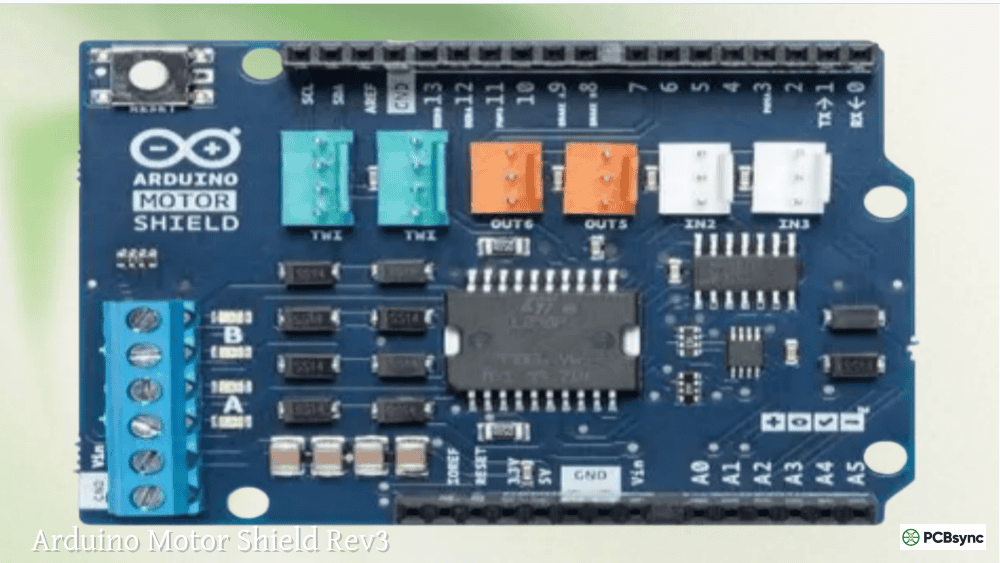
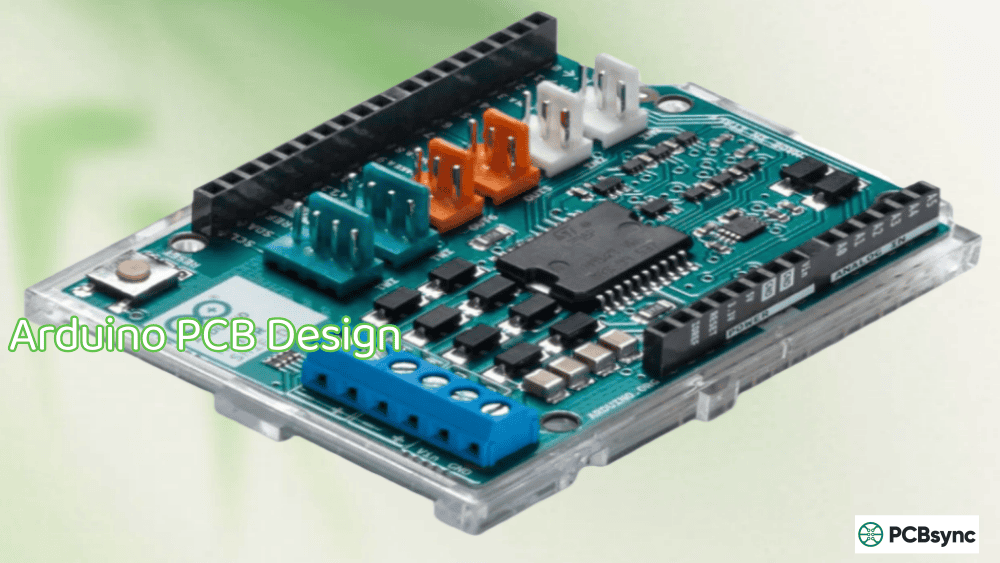
The L293D motor driver shield represents a complete motor control ecosystem on a single PCB. Unlike standalone motor driver ICs that require external components and custom PCB layouts, this shield mounts directly onto Arduino UNO or MEGA boards through the standard header pin configuration.
At its core, the shield integrates two L293D dual H-bridge motor driver chips manufactured by STMicroelectronics. This gives you four independent H-bridge circuits capable of driving four DC motors bidirectionally or two bipolar stepper motors simultaneously. Each H-bridge channel provides up to 600mA continuous current with peak capacity reaching 1.2A for brief periods.
The Role of the 74HC595 Shift Register
Here’s what many tutorials gloss over: the shield uses a 74HC595 serial-to-parallel shift register to expand Arduino’s limited GPIO availability. This 8-bit shift register takes serial data from just four Arduino pins and converts it into eight parallel outputs that control the direction inputs of both L293D chips.
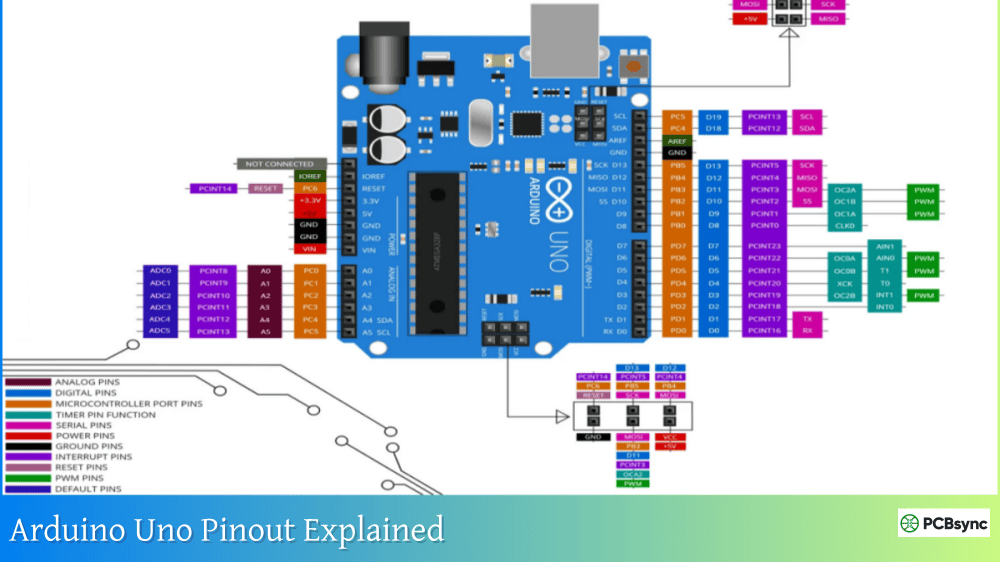
This architecture is brilliant from a design standpoint. Without the shift register, controlling four motors bidirectionally would consume 12 Arduino pins minimum. With it, the shield uses only pins 4, 7, 8, and 12 for direction control through the shift register, plus pins 3, 5, 6, and 11 for PWM speed control. This leaves analog pins A0-A5 and pins 2, 9, 10, and 13 available for sensors, displays, and other peripherals.
L293D Arduino Shield Technical Specifications
Understanding the electrical characteristics prevents the most common failures. Here’s the complete specification breakdown:
Parameter
Value
Notes
Operating Voltage (Motor)
4.5V – 25V
Official rating from datasheet
Logic Supply Voltage
4.5V – 5.5V
Powers the L293D logic circuits
Continuous Current per Channel
600mA
Per H-bridge output
Peak Current per Channel
1.2A
Non-repetitive, brief duration
Total Shield Current
2.4A
All four channels combined
Voltage Drop
1.4V – 2.5V
Depends on load current
PWM Frequency Range
1kHz – 8kHz
Configurable through library
Operating Temperature
0°C – 70°C
Ambient temperature
Thermal Shutdown
150°C
Junction temperature protection
Number of Motor Ports
4 DC motors or 2 stepper motors
M1, M2, M3, M4 terminals
Pin Utilization and Availability
Arduino Pins
Shield Function
User Accessible
D4, D7, D8, D12
74HC595 shift register control
No (always used)
D3 (PWM)
Motor 2 speed control
No when M2 active
D5 (PWM)
Motor 3 speed control
No when M3 active
D6 (PWM)
Motor 4 speed control
No when M4 active
D11 (PWM)
Motor 1 speed control
No when M1 active
D9 (PWM)
Servo 2 control
Yes (servo header)
D10 (PWM)
Servo 1 control
Yes (servo header)
D2, D13
Available
Yes
A0 – A5
Analog inputs
Yes
I2C (A4, A5)
I2C communication
Yes (shared with analog)
Power Supply Architecture and Configuration
The power supply design requires careful attention. The L293D shield supports multiple powering strategies, but choosing the wrong one causes 90% of motor control problems I’ve troubleshooted.
Power Jumper Configuration
The PWR jumper on the shield determines power routing between Arduino and the motor driver:
Jumper Installed: Motor power supply (connected to EXT_PWR or Arduino DC jack) also powers the Arduino through its VIN pin. Use this configuration when:
Running the entire system from a single battery pack
Supply voltage is between 7V-12V (safe for Arduino’s onboard regulator)
Total current draw (Arduino + motors) doesn’t exceed power supply capacity
Jumper Removed: Arduino and motors use separate power supplies. This is the recommended configuration for:
Motor voltages above 12V
USB-powered Arduino during development
Situations where motor noise might reset the Arduino
Professional applications requiring isolated power domains
Proper Power Connection Methods
Method 1: Single Power Supply (Jumper Installed)
Power Supply (7-12V, 2A+) → Arduino DC Jack
PWR Jumper: INSTALLED
Result: Both Arduino and motors powered from same source
Method 2: Dual Power Supply (Jumper Removed – Recommended)
USB Cable or External Supply → Arduino power
Separate Battery/PSU (4.5-25V) → Shield EXT_PWR terminal
PWR Jumper: REMOVED
Result: Isolated power domains, cleaner operation
Method 3: Shield-Only Power
Power Supply (7-12V) → Shield EXT_PWR terminal
PWR Jumper: INSTALLED
Result: Shield powers Arduino through VIN
Warning: Less stable than Method 1
The power LED indicator on the shield illuminates when motor power is correctly supplied, providing instant visual confirmation.
Understanding Current Limitations
The 600mA continuous current rating per channel is not a suggestion—it’s a hard thermal limit. Each L293D chip contains bipolar junction transistors (BJTs) in the H-bridge configuration. Unlike MOSFET-based drivers, BJTs have higher on-resistance and generate significant heat under load.
Real-World Current Considerations
Common hobby motors and their typical current requirements:
Motor Type
Voltage
No-Load Current
Stall Current
L293D Compatible?
TT Gear Motor
3-6V
40-70mA
250-400mA
Yes
BO Motor
3-12V
50-100mA
300-600mA
Yes (borderline at stall)
N20 Micro Motor
6V
60mA
300mA
Yes
130 Size Motor
6V
100mA
800mA
No (exceeds rating)
28BYJ-48 Stepper
5V
150mA per coil
300mA total
Yes
NEMA 17 Stepper
12V
400mA per coil
800mA total
No
If your motor’s stall current exceeds 600mA, you risk thermal shutdown or permanent damage. Motors don’t always run at stall current, but startup transients, mechanical binding, or obstacle contact can trigger these conditions momentarily.
Installing the AFMotor Library
The Adafruit Motor Shield library (version 1) provides the essential functions for L293D shield operation. While you could control the shield by directly manipulating shift register pins, the library handles timing requirements and provides intuitive motor control methods.
Library Installation Steps
Open Arduino IDE and navigate to Sketch → Include Library → Manage Libraries. In the Library Manager search box, type “Adafruit Motor Shield” and install version 1.x (the legacy version specifically for L293D shields, not the V2 library for MOSFET-based shields).
Alternatively, download directly from the GitHub repository:
After installation, include the library in your sketch:
#include <AFMotor.h>
DC Motor Control Implementation
Controlling DC motors requires understanding three fundamental parameters: port selection, speed, and direction. Here’s a complete implementation with practical examples.
Basic DC Motor Control Code
#include <AFMotor.h>
// Create motor object
// Parameters: (motor port number, PWM frequency)
// Port: 1-4 for M1-M4 terminals
// Frequency: MOTOR12_1KHZ, MOTOR12_2KHZ, MOTOR12_8KHZ for M1/M2
// MOTOR34_1KHZ, MOTOR34_2KHZ, MOTOR34_8KHZ for M3/M4
AF_DCMotor motor1(1, MOTOR12_8KHZ);
void setup() {
// Set initial motor speed (0-255)
motor1.setSpeed(200);
// Stop motor initially
motor1.run(RELEASE);
}
void loop() {
// Run motor forward at current speed
motor1.run(FORWARD);
delay(2000);
// Stop motor (coast)
motor1.run(RELEASE);
delay(1000);
// Run motor backward
motor1.run(BACKWARD);
delay(2000);
// Brake (short brake)
motor1.run(BRAKE);
delay(500);
}
Dual Motor Robot Car Example
This practical example demonstrates differential drive control for a two-wheel robot:
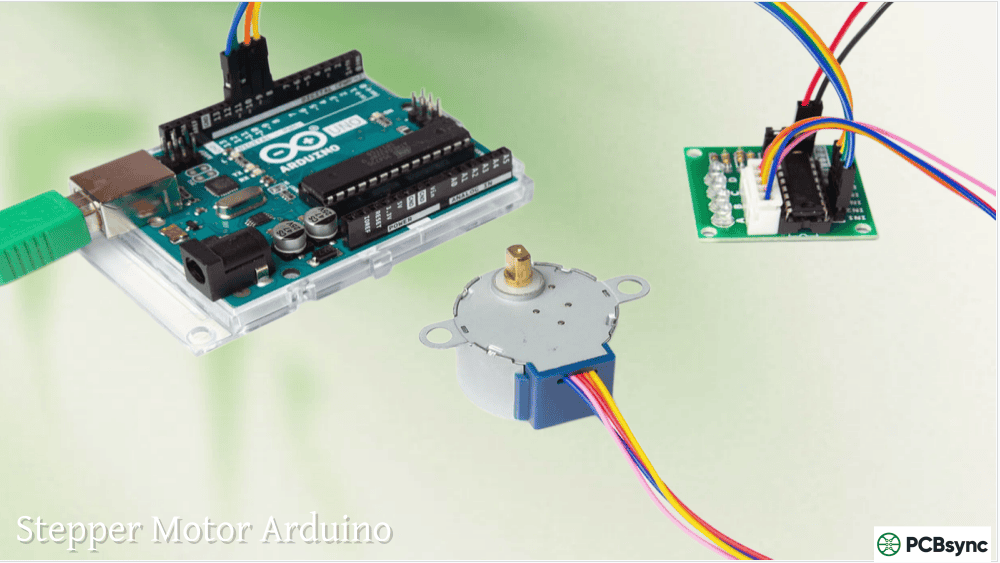
The L293D Arduino shield excels at driving small bipolar stepper motors. Each stepper requires two motor ports (one port per coil), so you can control up to two steppers simultaneously.
Stepper Motor Connection
Connect your stepper motor using either M1-M2 (port 1) or M3-M4 (port 2) terminals:
Coil A: Connect to M1 (or M3)
Coil B: Connect to M2 (or M4)
For unipolar steppers with center tap wires, leave the center taps unconnected or tie them to the motor supply positive.
Stepper Motor Code Example
#include <AFMotor.h>
// Create stepper motor object
// Parameters: (steps per revolution, port number)
// Common values: 200 steps (1.8° per step), 48 steps (7.5° per step)
AF_Stepper stepper(200, 1); // 200 steps/rev on port 1 (M1-M2)
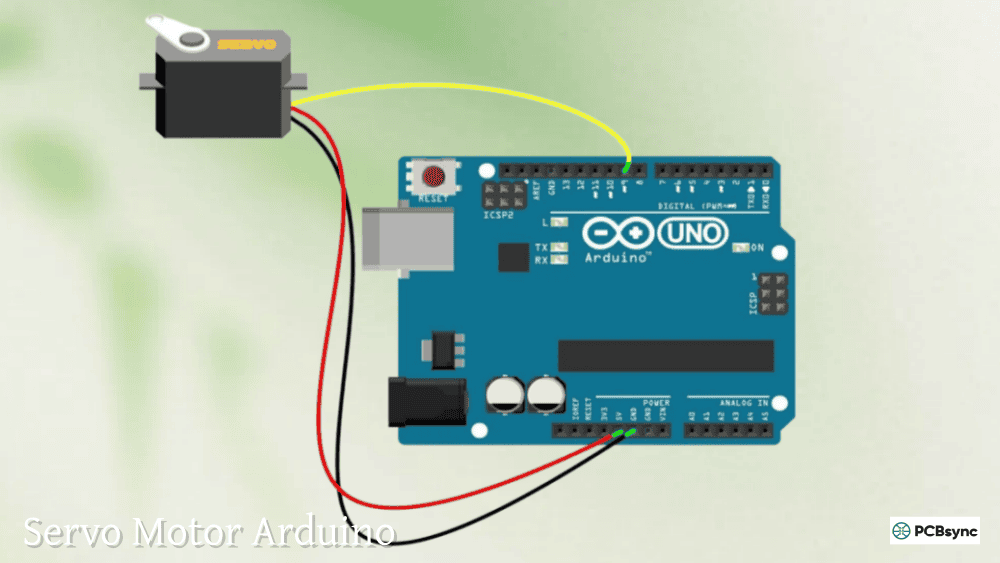
The L293D shield breaks out Arduino pins D9 and D10 to dedicated 3-pin servo headers, making servo integration straightforward. Unlike DC motors, servos draw power from Arduino’s onboard 5V regulator, not the external motor supply.
Servo Control Example
#include <Servo.h>
Servo servo1; // Servo connected to D10 header
Servo servo2; // Servo connected to D9 header
void setup() {
servo1.attach(10); // Attach to pin 10
servo2.attach(9); // Attach to pin 9
// Center both servos
servo1.write(90);
servo2.write(90);
}
void loop() {
// Sweep servo 1 from 0 to 180 degrees
for(int angle = 0; angle <= 180; angle += 5) {
servo1.write(angle);
delay(15);
}
// Sweep servo 2 in opposite direction
for(int angle = 180; angle >= 0; angle -= 5) {
servo2.write(angle);
delay(15);
}
}
Important Servo Limitation: Standard hobby servos draw 100-500mA under load. Arduino’s 5V regulator can typically supply 500mA maximum. Driving two servos simultaneously under load may exceed this capacity, causing brown-out resets. For multiple servos or high-torque servos, use an external 5V power supply.
After debugging hundreds of L293D shield projects, these issues appear repeatedly. Here’s how to diagnose and fix them systematically.
Motors Don’t Run at All
Symptom: Motors connected, code uploaded, but no movement.
Diagnostic Steps:
Check power LED on shield—if off, no motor power supplied
Verify PWR jumper configuration matches your power setup
Measure voltage at EXT_PWR terminals with multimeter
Confirm motor connections at screw terminals are tight
Test motor by connecting directly to power supply
Common Causes:
Removed PWR jumper but forgot to supply external motor power
Insufficient power supply current capacity (needs 2A minimum)
Incorrect library installation or version mismatch
Motor voltage below 4.5V threshold
Motors Run Weakly or Erratically
Symptom: Motors spin but with insufficient torque or intermittent operation.
Root Causes:
Inadequate power supply: 9V batteries provide poor current capacity (200mA typical). Switch to lithium-ion packs, NiMH cells, or bench supplies rated 2A+.
Voltage drop: The L293D loses 1.4-2.5V internally. A 6V motor needs 7.5-8.5V supply for full performance.
Shared power supply noise: Motor switching generates electrical noise that resets Arduino. Solution: Use separate supplies or add 1000μF electrolytic capacitor across motor power terminals.
Motor current exceeds rating: If motors draw >600mA, they’ll trigger thermal protection. Verify motor current with ammeter under load.
Shield Overheating
Symptom: L293D chips become hot to touch, possibly triggering thermal shutdown.
Engineering Solutions:
Add adhesive heatsinks to both L293D chips
Reduce motor speed to decrease average current
Implement PWM frequency optimization (higher frequency = more switching losses)
Verify motor current doesn’t exceed 600mA continuous
Ensure adequate PCB ventilation in enclosure
Thermal Calculation: At 600mA per channel with 2V drop, each channel dissipates 1.2W. With four channels active, that’s 4.8W total—enough to raise junction temperature significantly without heatsinking.
Arduino Random Resets
Symptom: Arduino resets unpredictably during motor operation.
Typical Causes:
Shared power supply brownouts: Motor starting current causes voltage sag that resets Arduino
Ground loops: Poor ground connections create reference voltage differences
Insufficient decoupling: EMI couples into Arduino power rails
Fixes:
Use separate, isolated power supplies for Arduino and motors
Add 100μF capacitor between Arduino VIN and GND
Add 0.1μF ceramic capacitor between motor terminals
Ensure star-grounded configuration (all grounds meet at single point)
Twist motor wires to reduce EMI radiation
L293D vs L298N Comparison
Understanding when to use L293D versus L298N prevents costly redesigns mid-project.
Feature
L293D Shield
L298N Module
Motor Channels
4 DC or 2 stepper
2 DC or 1 stepper
Continuous Current
600mA per channel
2A per channel
Peak Current
1.2A
3A
Voltage Drop
1.4-2.5V
2-4V
Operating Voltage
4.5-25V
5-46V
Form Factor
Arduino shield
Standalone module
Protection Diodes
Internal
External required
Typical Applications
Small robots, educational
High-power robots, industrial
Breadboard Compatible
Yes (DIP package)
No (requires module)
Thermal Management
Passive (add heatsink)
Active (includes heatsink)
Arduino Integration
Direct mount shield
Requires jumper wires
When to Choose L293D:
Multi-motor projects (need 3-4 motors)
Small motors (BO motors, TT gear motors, micro steppers)
Battery-powered portable robots
Educational projects and prototyping
Budget-constrained applications
When to Choose L298N:
High-current motors (>600mA)
Higher voltage motors (>12V)
Heavy-load applications requiring maximum torque
Only need 1-2 motors
Industrial or production environments
Practical Applications and Project Ideas
Four-Wheel Drive Robot Platform
The L293D shield’s four-channel capability makes it ideal for 4WD robots:
AF_DCMotor motorFL(1); // Front Left
AF_DCMotor motorFR(2); // Front Right
AF_DCMotor motorRL(3); // Rear Left
AF_DCMotor motorRR(4); // Rear Right
void moveForward() {
motorFL.run(FORWARD);
motorFR.run(FORWARD);
motorRL.run(FORWARD);
motorRR.run(FORWARD);
}
Dual Stepper CNC Plotter
Control two stepper motors for X and Y axis movement:
Q: Can I use the L293D Arduino shield with motors that draw more than 600mA?
No, exceeding the 600mA continuous rating will trigger thermal shutdown protection or cause permanent damage to the L293D chips. The 1.2A peak rating applies only to very brief transients (milliseconds), not sustained operation. If your motors require more current, upgrade to an L298N-based driver with 2A continuous rating or consider MOSFET-based drivers like the TB6612FNG.
Q: Why do my motors run at different speeds even with identical code and PWM values?
This occurs due to manufacturing variations in motor construction, including differences in winding resistance, bearing friction, magnetic field strength, and rotor mass. Even motors from the same production batch exhibit 5-15% speed variation at identical voltages. For applications requiring precise speed matching (like differential drive robots), implement closed-loop control with encoders, or manually calibrate PWM values for each motor through testing.
Q: Can I control both DC motors and stepper motors simultaneously on the same shield?
Yes, but with constraints. The shield has four motor ports total. You could run two DC motors on M1 and M2, plus one stepper motor using M3-M4. However, you cannot run three DC motors and one stepper, as each stepper requires two full motor ports. The total current across all active motors must not exceed 2.4A (600mA × 4 channels).
Q: What’s the difference between motor.run(RELEASE) and motor.run(BRAKE)?
RELEASE opens all H-bridge transistors, allowing the motor to coast to a stop gradually due to mechanical friction. This mode draws no current and generates no heat. BRAKE shorts the motor terminals together through the H-bridge, creating dynamic braking that stops the motor quickly through electromagnetic resistance. BRAKE mode consumes current proportional to motor speed and generates heat in both the motor and driver. Use RELEASE for normal stops and BRAKE when rapid deceleration is required.
Q: My Arduino resets randomly when motors start or reverse direction. How do I fix this?
This indicates power supply problems. Motor starting current creates voltage dips on shared power rails that trigger Arduino’s brown-out reset. Solutions in order of effectiveness: (1) Use completely separate power supplies for Arduino and motors with PWR jumper removed, (2) Add 1000μF electrolytic capacitor between motor supply positive and ground near the shield, (3) Use higher-capacity power supply (3A minimum), (4) Add 100μF capacitor between Arduino VIN and GND, (5) Ensure proper star-grounding with all ground points meeting at one location. The combination of separate supplies plus bulk capacitance eliminates 95% of reset issues.
Conclusion
The L293D Arduino motor driver shield remains a practical choice for multi-motor robotics projects requiring moderate current capacity. Its direct Arduino integration, four-channel capability, and mature software ecosystem make prototyping straightforward without complex wiring or breadboard circuits.
From a PCB design perspective, the shield demonstrates solid engineering: the shift register maximizes GPIO availability, internal protection diodes simplify the BOM, and the modular screw terminal approach accommodates various motor types. However, the BJT-based H-bridges inherently generate more heat and waste more power than modern MOSFET alternatives.
Understanding the 600mA per channel limit is critical. This isn’t a soft guideline—it’s a thermal constraint based on the IC’s ability to dissipate heat. Exceeding it doesn’t just risk component failure; it creates intermittent faults that are difficult to diagnose. Always verify your motors’ current requirements under load before committing to the L293D platform.
For educational projects, small robots, and applications where you need to control multiple motors simultaneously from a single shield, the L293D Arduino solution delivers excellent value. Just respect its current limits, implement proper power supply design, and add heatsinking when running near maximum ratings. These practices separate hobby projects that work occasionally from engineered systems that perform reliably.
Inquire: Call 0086-755-23203480, or reach out via the form below/your sales contact to discuss our design, manufacturing, and assembly capabilities.
Quote: Email your PCB files to Sales@pcbsync.com (Preferred for large files) or submit online. We will contact you promptly. Please ensure your email is correct.
Notes: For PCB fabrication, we require PCB design file in Gerber RS-274X format (most preferred), *.PCB/DDB (Protel, inform your program version) format or *.BRD (Eagle) format. For PCB assembly, we require PCB design file in above mentioned format, drilling file and BOM. Click to download BOM template To avoid file missing, please include all files into one folder and compress it into .zip or .rar format.