Inquire: Call 0086-755-23203480, or reach out via the form below/your sales contact to discuss our design, manufacturing, and assembly capabilities.
Quote: Email your PCB files to Sales@pcbsync.com (Preferred for large files) or submit online. We will contact you promptly. Please ensure your email is correct.
Notes: For PCB fabrication, we require PCB design file in Gerber RS-274X format (most preferred), *.PCB/DDB (Protel, inform your program version) format or *.BRD (Eagle) format. For PCB assembly, we require PCB design file in above mentioned format, drilling file and BOM. Click to download BOM template To avoid file missing, please include all files into one folder and compress it into .zip or .rar format.
IPC-9851 Explained: Complete Guide to SMEMA Machine Interface for SMT Lines
Setting up an SMT line sounds straightforward until you try connecting a stencil printer from one vendor to a pick-and-place machine from another. The printer finishes a board and tries to send it downstream. The placement machine isn’t ready. The board sits there. Or worse, both machines think they’re ready simultaneously, and you get a collision at the conveyor handoff.
This is exactly the problem IPC-9851 solves. The standard defines how SMT equipment communicates during board transfers—the mechanical dimensions that ensure conveyors align, the electrical signals that coordinate “I have a board” and “I’m ready to receive,” and the timing that prevents collisions and jams.
If you’re integrating equipment from multiple vendors, troubleshooting line stoppages, or planning an upgrade to Industry 4.0 capabilities, understanding IPC-9851 is essential.
IPC-9851, officially titled “IPC-SMEMA-9851 Mechanical Equipment Interface Standard,” defines the mechanical and electrical interface specifications for board transfer between SMT assembly equipment. Published in February 2007, it supersedes the earlier SMEMA 1.2 specification and remains the foundation for machine-to-machine communication in most SMT production lines worldwide.
Standard Information
Details
Full Title
IPC-SMEMA-9851 Mechanical Equipment Interface Standard
Active (widely deployed, being supplemented by Hermes)
The standard covers two critical aspects: the physical dimensions that ensure boards transfer smoothly between machines, and the electrical signals that coordinate when transfers occur.
History of SMEMA and IPC-9851
SMEMA—the Surface Mount Equipment Manufacturers Association—was founded in 1984 when North American equipment suppliers recognized that their machines needed to work together on customer production lines. Without standardization, every equipment combination required custom engineering.
Timeline
Development
1984
SMEMA founded by equipment suppliers
1987
First formal SMEMA specification published
1999
SMEMA merges with IPC to form IPC SMEMA Council
2007
IPC-SMEMA-9851 published, superseding SMEMA 1.2
2017
Hermes Protocol released as next-generation solution
2018
IPC recognizes Hermes as IPC-HERMES-9852
The founding companies—including Dynapert, Zevatech, Universal Instruments, MPM, and BTU—established the core concepts that persist today: standardized conveyor dimensions and simple electrical handshaking signals.
IPC-9851 Mechanical Interface Specifications
The mechanical interface ensures that PCBs transfer smoothly from one machine’s exit conveyor to the next machine’s entry conveyor.
Conveyor Width Requirements
IPC-9851 specifies adjustable conveyor width to accommodate different board sizes:
Parameter
Specification
Width Range
50mm to 216mm (independently adjustable)
Dual-Lane
Each lane independently controllable
Edge Clearance
Maximum 5mm
Maximum Gap
19mm between machines
Lead-In
Minimum 3mm at maximum 30° angle
The 50mm to 216mm range covers most standard PCB sizes, from small modules to larger mainboards. The independent adjustability for dual-lane configurations became increasingly important as manufacturers adopted parallel processing to increase throughput.
Board Transport Direction
The standard specifies left-to-right board flow as the default configuration, though the same specifications apply for right-to-left installations. This consistency simplifies line layout planning and equipment placement.
Transport Element
Requirement
Default Direction
Left to right
Board Support
Edge-guided conveyor rails
Transfer Method
Continuous conveyor or push transfer
Alignment
Rail-to-rail alignment between machines
Dual-Lane Configuration
IPC-9851 added explicit dual-lane requirements that weren’t fully addressed in SMEMA 1.2:
Dual-Lane Parameter
Specification
Lane Independence
Each lane has independent width adjustment
Electrical Interface
Each lane has independent transfer signals
Asynchronous Operation
Lanes operate independently
Lane Spacing
Per equipment manufacturer specification
Dual-lane capability allows processing two boards simultaneously, effectively doubling line capacity without doubling floor space.
IPC-9851 Electrical Interface Requirements
The electrical interface is where most integration challenges occur. IPC-9851 defines the signals, connectors, and electrical characteristics for board transfer coordination.
Signal Lines and Functions
Three signal lines coordinate board transfers:
Signal
Function
Required
Machine Ready
Downstream machine ready to receive board
Yes
Board Available
Upstream machine has board ready to send
Yes
Failed Board Available
Upstream machine has failed/rejected board
Optional
The handshake is simple: when the upstream machine has a board ready (Board Available = active) AND the downstream machine can accept it (Machine Ready = active), the transfer occurs.
Connector Specifications
IPC-9851 specifies AMP Multimate connectors for the interface:
Connector Element
Specification
Connector Type
AMP Multimate (14-pin)
Pins Used for Data
4 pins
Shielding
Pin 8
Interface Direction
Upstream and downstream connectors
Each machine has both upstream (input) and downstream (output) connectors. The upstream connector receives signals from the previous machine; the downstream connector sends signals to the next machine.
Electrical Characteristics
Parameter
Specification
Switching Voltage
30 VDC minimum
Switching Current
10 mA minimum
Output LOW Voltage
≤ 0.8 VDC at 10 mA
Isolation
Optical isolators optional
Contact Type
Relay or solid-state
The 30 VDC / 10 mA specification allows both relay-based and optocoupler-based implementations. This flexibility has occasionally caused compatibility issues when connecting equipment using different technologies.
Pin Assignments
The standard 14-pin connector uses the following assignments for a typical single-lane configuration:
Pin
Function
Direction
1
Machine Ready Signal
Input (from downstream)
2
Machine Ready Return
Input (from downstream)
3
Board Available Signal
Output (to downstream)
4
Board Available Return
Output (to downstream)
5-7
Reserved/Unused
–
8
Shield/Ground
–
9-14
Reserved/Additional functions
Per implementation
Note that pin assignments can vary between manufacturers, particularly for dual-lane configurations. Always verify pinouts when connecting equipment from different vendors.
Understanding the signal timing prevents most board transfer problems.
Normal Transfer Sequence
A successful board transfer follows this sequence:
Step
Upstream Machine
Downstream Machine
1
Processing board
Idle, Machine Ready = HIGH
2
Processing complete, Board Available = HIGH
Machine Ready = HIGH
3
Begins board transfer
Detects board entering
4
Board exits, Board Available = LOW
Board fully received
5
Ready for next board
Machine Ready = LOW (processing)
The critical timing parameter is the overlap period when both signals are active—this triggers the physical board transfer.
Signal Timing Requirements
Timing Parameter
Typical Value
Signal Debounce
50ms minimum
Board Available Hold
Until board clears exit sensor
Machine Ready Response
Within 100ms of board clear
Transfer Timeout
Equipment-specific
The 50ms debounce prevents false triggers from electrical noise or contact bounce. This timing is critical when using relay-based interfaces.
Failed Board Handling
When the optional Failed Board Available signal is implemented:
Condition
Board Available
Failed Board
Action
Good board ready
HIGH
LOW
Normal transfer
Failed board ready
LOW
HIGH
Route to reject path
No board
LOW
LOW
Waiting
This allows automatic routing of boards that failed inspection (AOI, SPI) to reject conveyors without stopping the line.
Common IPC-9851 Integration Issues
After years of working with SMEMA interfaces, certain problems appear repeatedly.
Optocoupler vs. Relay Polarity
The most common integration headache involves connecting optocoupler-based equipment to relay-based equipment:
Issue
Cause
Solution
Signals always active
Reversed polarity on opto input
Swap signal and return wires
No communication
Open circuit due to polarity
Verify pin 1 = signal, pin 2 = return
Intermittent operation
Marginal drive current
Check voltage/current at receiver
Optocouplers are polarity-sensitive; relays are not. When a relay-based machine connects to an opto-based machine with reversed wiring, the protection diode conducts and the signal appears permanently active.
Signal Level Issues
Problem
Symptom
Fix
Insufficient drive
Receiving machine doesn’t see signal
Verify 30 VDC / 10 mA capability
Excessive voltage
Component damage
Check for voltage spikes, add protection
Ground loops
Erratic operation
Verify shield connections
Mechanical Alignment
Problem
Cause
Solution
Board jams at transfer
Conveyor height mismatch
Adjust machine leveling
Board skewing
Rail misalignment
Align rails with straightedge
Edge damage
Excessive gap or offset
Reduce gap, verify edge clearance
IPC-9851 vs. IPC-HERMES-9852: Understanding the Transition
In 2018, IPC recognized The Hermes Standard as IPC-HERMES-9852, the next-generation successor to IPC-9851. Understanding the differences helps plan upgrade strategies.
Comparison Overview
Aspect
IPC-9851 (SMEMA)
IPC-HERMES-9852
Communication
Electrical signals (discrete I/O)
TCP/IP over Ethernet
Data Format
Binary on/off
XML messages
Board Identification
Not supported
Unique board IDs, barcodes
Board Data
Not supported
Dimensions, product type, state
Wiring
14-pin dedicated cables
Standard Ethernet
Industry 4.0
Not compatible
Full support
What Hermes Adds
IPC-HERMES-9852 extends beyond simple board transfer coordination:
Capability
Benefit
Board ID Tracking
Traceability without repeated scanning
Product Data Transfer
Automatic recipe selection downstream
Conveyor Speed Communication
Optimized transfer timing
Digital Twin Data
Board dimensions, state, routing
Bi-directional Communication
Status queries, configuration
Coexistence and Migration
Most modern equipment supports both standards simultaneously:
Scenario
Recommendation
All new equipment
Implement Hermes, use SMEMA as backup
Mixed new/legacy
Hermes between capable machines, SMEMA for legacy
All legacy equipment
Continue with IPC-9851, plan upgrade path
Retrofit required
SMEMA-to-Hermes adaptors available
SMEMA-to-Hermes adaptors allow legacy equipment to participate in Hermes-enabled lines by converting the discrete I/O signals to Hermes messages.
What is the difference between SMEMA and IPC-9851?
SMEMA refers to both the organization (Surface Mount Equipment Manufacturers Association) and its original interface specifications. IPC-9851 is the formal IPC standard that superseded SMEMA 1.2 when SMEMA merged with IPC in 1999. In practice, engineers often use “SMEMA” and “IPC-9851” interchangeably when referring to the interface standard. The key point is that IPC-9851 is the current official version, published in 2007, and includes updates like explicit dual-lane support that weren’t in the original SMEMA specifications.
Can I mix equipment using IPC-9851 and IPC-HERMES-9852 on the same line?
Yes, and this is the most common migration scenario. Modern equipment typically supports both protocols simultaneously. Machines communicate via Hermes when both support it, and fall back to SMEMA signals when connecting to legacy equipment. For older machines that only support SMEMA, adaptor devices can convert between the protocols. The key is ensuring the SMEMA electrical interface remains functional even when Hermes is the primary communication method—this provides redundancy if network issues occur.
Why do I get board transfer failures when connecting machines from different vendors?
The most common cause is signal polarity mismatch between optocoupler-based and relay-based interfaces. One vendor’s machine may use optocouplers for isolation, which are polarity-sensitive, while another uses relays that work regardless of polarity. If the wiring polarity doesn’t match the optocoupler orientation, signals appear stuck or inverted. Check the actual voltage at the receiving machine’s input pins—you should see close to 30 VDC when the signal is inactive (open) and less than 0.8 VDC when active (closed). Swapping the signal and return wires typically resolves this.
Is IPC-9851 obsolete now that IPC-HERMES-9852 exists?
No, IPC-9851 remains widely deployed and fully supported. While IPC-HERMES-9852 is recognized as the next-generation standard with significantly enhanced capabilities for Industry 4.0, the vast majority of installed SMT equipment uses SMEMA interfaces. Equipment manufacturers continue to include SMEMA support in new machines alongside Hermes capability. For basic board transfer coordination, SMEMA works perfectly well—Hermes becomes important when you need board-level traceability, automatic recipe management, or integration with manufacturing execution systems. Plan for Hermes capability in new equipment purchases, but don’t feel pressured to replace functional SMEMA-based lines.
How do I verify that my SMEMA interface is working correctly?
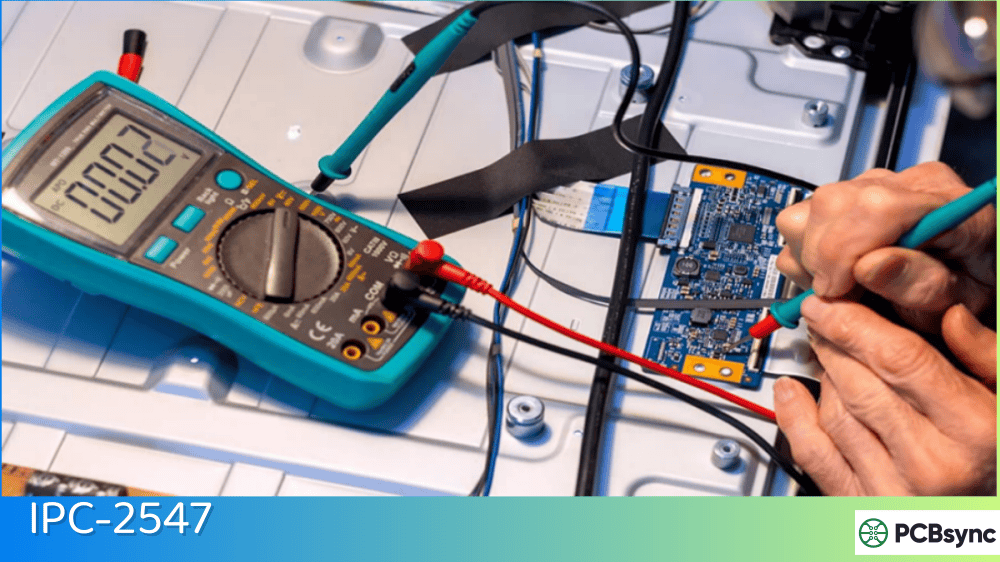
Start with a multimeter. Measure voltage between pin 1 and pin 2 (Machine Ready) at your machine’s upstream connector—you should see the downstream machine’s signal. With no board ready downstream, voltage should be near 30 VDC (open circuit). When the downstream machine is ready to receive, voltage should drop below 0.8 VDC (circuit closed). Repeat for Board Available (pins 3-4) at the downstream connector. If signals look correct but transfers still fail, check timing with an oscilloscope—the 50ms debounce and signal overlap during transfer are critical. Finally, perform a manual transfer test: with both machines in automatic mode but conveyors stopped, verify the signals change appropriately as you manually position a board.
Conclusion
IPC-9851 has been the backbone of SMT line communication for decades, and it continues to serve that role even as IPC-HERMES-9852 brings Industry 4.0 capabilities to the production floor. The standard’s strength lies in its simplicity—a few mechanical dimensions and two or three electrical signals are enough to coordinate board transfers between any compliant equipment.
For process engineers working with existing lines, understanding the mechanical specifications, electrical interface, and signal timing covered in this guide provides the foundation for successful equipment integration and efficient troubleshooting. For those planning new lines or upgrades, the transition path from IPC-9851 to IPC-HERMES-9852 offers a clear migration strategy that protects existing investments while enabling future capabilities.
Whether you’re connecting a new AOI machine to a legacy placement system or planning a complete line upgrade, IPC-9851 knowledge remains essential. The machines may get smarter, but the fundamental requirement—getting boards from one machine to the next without jams, collisions, or miscommunication—hasn’t changed.
Inquire: Call 0086-755-23203480, or reach out via the form below/your sales contact to discuss our design, manufacturing, and assembly capabilities.
Quote: Email your PCB files to Sales@pcbsync.com (Preferred for large files) or submit online. We will contact you promptly. Please ensure your email is correct.
Notes: For PCB fabrication, we require PCB design file in Gerber RS-274X format (most preferred), *.PCB/DDB (Protel, inform your program version) format or *.BRD (Eagle) format. For PCB assembly, we require PCB design file in above mentioned format, drilling file and BOM. Click to download BOM template To avoid file missing, please include all files into one folder and compress it into .zip or .rar format.