Inquire: Call 0086-755-23203480, or reach out via the form below/your sales contact to discuss our design, manufacturing, and assembly capabilities.
Quote: Email your PCB files to Sales@pcbsync.com (Preferred for large files) or submit online. We will contact you promptly. Please ensure your email is correct.
Notes: For PCB fabrication, we require PCB design file in Gerber RS-274X format (most preferred), *.PCB/DDB (Protel, inform your program version) format or *.BRD (Eagle) format. For PCB assembly, we require PCB design file in above mentioned format, drilling file and BOM. Click to download BOM template To avoid file missing, please include all files into one folder and compress it into .zip or .rar format.
IPC-4781 Guide: Silkscreen Ink Types, Testing & Qualification for PCBs
For years, the PCB industry operated without a proper specification for legend and marking inks. Solder masks had IPC-SM-840, conformal coatings had IPC-CC-830, but silkscreen inks? Engineers and fabricators were left to work from supplier datasheets and hope for the best. That changed in May 2008 when IPC released IPC-4781, the industry’s first comprehensive specification for qualifying legend and marking inks.
I’ve seen firsthand what happens when legend ink fails—text that washes off during cleaning, markings that disappear after soldering, or worse, conductive contamination from ink migrating onto exposed circuits. As board geometries shrink and conductor spacing tightens, these issues become more critical. IPC-4781 provides the framework to prevent these problems before they reach production. In this guide, I’ll break down everything you need to know about this specification.
IPC-4781, officially titled “Qualification and Performance Specification of Permanent, Semi-Permanent and Temporary Legend and/or Marking Inks,” is a 17-page specification that establishes requirements for evaluating legend and marking ink materials used on printed circuit boards. Developed by the IPC Legend Inks Task Group (5-33E), this document provides standardized criteria for material qualification and process conformance.
The specification addresses a critical gap that had existed in the industry. While solder masks and conformal coatings had well-established qualification standards, legend inks—despite being applied to virtually every PCB—had no equivalent specification. As conductor spacing decreased and fine-pitch components became standard, the potential for legend ink to cause electrical failures increased significantly.
IPC-4781 Scope and Purpose
IPC-4781 establishes requirements for:
Purpose
What IPC-4781 Covers
Material evaluation
Criteria for testing and qualifying legend ink materials
Process qualification
Requirements for qualifying PCB production processes using legend inks
Performance criteria
Pass/fail requirements based on end-use environment reliability
Test methods
Referenced IPC-TM-650 methods and other applicable standards
The specification explicitly states that legend and marking ink materials, when applied to PCB substrates, shall not degrade the performance of the printed board. This is the fundamental requirement—the legend layer must add value (identification, traceability) without compromising reliability.
IPC-4781 Legend Ink Types Explained
IPC-4781 categorizes legend and marking inks into four distinct types based on their permanence and application:
Type 1: Permanent Legend Ink with Direct Metal Contact
Type 1 inks are permanent markings that may come in direct contact with electrical nodes—exposed copper, plated surfaces, or other conductive areas. This is the most demanding category because the ink must not cause electrical issues when touching conductors.
Applications: Markings on test points, edge connector areas, or any location where ink may contact exposed metal.
Critical requirements: Electrical properties (insulation resistance, ionic contamination) are mandatory for Type 1 qualification.
Type 2: Permanent Legend Ink without Direct Metal Contact
Type 2 inks are permanent markings applied over solder mask or other dielectric surfaces, with no direct contact to electrical conductors. This is the most common category for standard silkscreen applications.
Applications: Reference designators, component outlines, polarity markings, logos, part numbers—all applied over solder mask.
Critical requirements: Adhesion to solder mask, resistance to soldering processes, durability through assembly and end-use.
Type 3: Semi-Permanent Legend Ink
Type 3 inks are designed for markings that need to survive production processes but may be removed or will fade over time in service. These are less common but serve specific applications.
Applications: Temporary identification during manufacturing that persists through some assembly steps, markings intended for limited service life.
Type 4: Temporary Legend Ink
Type 4 inks are markings intended for removal after serving their purpose. They must not leave residue or damage the underlying surface.
Applications: Process identification, lot tracking during fabrication, temporary assembly aids.
IPC-4781 Ink Type Comparison
Characteristic
Type 1
Type 2
Type 3
Type 4
Permanence
Permanent
Permanent
Semi-permanent
Temporary
Metal contact
Yes (direct)
No
No
No
Electrical testing
Required
Not required
Not required
Not required
Hardness testing
Yes
Yes
Yes
No
Adhesion testing
Yes
Yes
Yes
AABUS*
Flammability
Yes
Yes
Yes
No
Solder resistance
Yes
Yes
AABUS
No
*AABUS = As Agreed Between User and Supplier
Key Test Requirements in IPC-4781
IPC-4781 specifies a comprehensive set of tests to qualify legend ink materials. Understanding these requirements is essential for both ink suppliers and PCB fabricators.
Physical Property Tests
Hardness (Paragraph 3.5.1) Legend ink must resist scratching and abrasion during handling and assembly. IPC-4781 references ASTM D3363, the pencil hardness test, where the cured ink surface is tested against pencils of increasing hardness until scratching occurs.
Ink Type
Hardness Test Required
Type 1
Yes
Type 2
Yes
Type 3
Yes
Type 4
No
Adhesion to Solder Mask (Paragraph 3.5.2.1) This critical test evaluates how well the legend ink bonds to the underlying solder mask. IPC-4781 references IPC-TM-650 Method 2.4.28.1 (tape test method). The ink must remain adhered after tape pull-off testing.
Conformal Coating Adhesion When boards will receive conformal coating, the legend ink must not interfere with coating adhesion. This is typically “as agreed between user and supplier” (AABUS) because not all boards receive conformal coating.
Chemical Resistance Tests
Resistance to Solvents and Cleaning Agents (Paragraph 3.5.3) Legend ink must survive exposure to cleaning chemicals used during PCB fabrication and assembly. IPC-TM-650 Method 2.3.42 evaluates resistance to isopropyl alcohol, flux removers, and other common solvents.
Resistance to Tin-Lead Solder (Paragraph 3.5.5) For boards using traditional tin-lead soldering, the legend ink must withstand solder pot temperatures and flux exposure without degradation, discoloration, or loss of legibility.
Resistance to Lead-Free Solder (Paragraph 3.5.6) Lead-free soldering operates at higher temperatures (typically 245-260°C peak versus 215-230°C for tin-lead). IPC-4781 specifically addresses lead-free compatibility, requiring legend ink to survive these elevated temperatures without failure.
Soldering Process
Typical Peak Temperature
Legend Ink Must Survive
Tin-lead wave
250°C
Yes (Types 1, 2, 3)
Tin-lead reflow
215-230°C
Yes (Types 1, 2, 3)
Lead-free wave
260-270°C
Yes (Types 1, 2, 3)
Lead-free reflow
245-260°C
Yes (Types 1, 2, 3)
Thermal Tests
Thermal Shock Legend ink must survive rapid temperature transitions without cracking, delamination, or loss of adhesion. This simulates the thermal stresses encountered during soldering and in end-use applications.
Discoloration After Soldering While some color change may be acceptable, severe discoloration that affects legibility fails this requirement. The specification addresses appearance after exposure to soldering conditions.
Electrical Property Tests
Electrical testing applies primarily to Type 1 inks that contact electrical conductors:
Dielectric Constant and Dissipation Factor (Paragraph 3.8.4) For high-frequency applications, the electrical properties of legend ink over signal traces can affect performance. IPC-4781 addresses dielectric constant (Dk) and dissipation factor (Df) requirements.
Moisture and Insulation Resistance (Paragraph 3.8.5) Type 1 inks must maintain high insulation resistance under humidity exposure. This test evaluates the ink’s ability to prevent current leakage between conductors under accelerated humidity conditions.
Surface Insulation Resistance (SIR) When legend ink contacts conductors, it must not introduce ionic contamination that could cause electrochemical migration or reduced insulation resistance.
Visual and Legibility Requirements
Color/Hiding Power and Contrast (Paragraph 3.9.1) Legend markings must be readable. This requires adequate contrast between the ink color and the underlying surface (typically solder mask). White ink on green solder mask, black ink on white solder mask, etc.
Resolution/Legibility and Feature Size (Paragraph 3.9.2) The ink must maintain sharp edges and readable text at the specified feature sizes. Minimum line widths, text heights, and spacing depend on the printing method used.
IPC-4781 addresses thickness requirements for legend markings. Adequate thickness ensures durability and opacity, while excessive thickness can cause problems with component placement or solder bridging near pad edges.
IPC-4781 distinguishes between two levels of qualification, following the pattern established by IPC-SM-840 and IPC-CC-830.
Material Qualification
Material qualification tests the legend ink itself, independent of any specific PCB fabrication process. This is typically performed by the ink manufacturer or an independent test laboratory.
Who performs it: Material supplier (ink manufacturer)
What it proves: The ink material meets IPC-4781 requirements when properly processed according to manufacturer specifications.
Documentation: Qualification test report documenting all required tests and results.
Process Qualification (PB Process)
Process qualification tests the combination of legend ink material and specific fabrication process at a particular PCB shop. This verifies that the fabricator can consistently apply the ink to meet specification requirements.
Who performs it: PCB fabricator
What it proves: The fabricator’s equipment, procedures, and personnel can produce conforming legend markings.
Documentation: Process qualification records demonstrating capability.
Test Responsibility Matrix
IPC-4781 Table 3-2 defines who is responsible for each test:
Requirement
Material Supplier
PCB Fabricator
End User
Hardness
Required
Required
Not required
Adhesion to solder mask
Required
Required
Not required
Conformal coating adhesion
Not required
AABUS
Required
Flammability
Required
Not required
Not required
Solvent resistance
Required
AABUS
Not required
Solder resistance
Required
Required
Not required
Electrical properties
Required (Type 1)
AABUS
AABUS
Legend Printing Methods and IPC-4781
IPC-4781 applies regardless of the printing method used. However, different methods have different capabilities and limitations that affect how specification requirements are met.
Screen Printing (Manual/Semi-Automatic)
Traditional screen printing uses a mesh stencil to transfer ink onto the PCB surface. A squeegee pushes ink through the mesh openings.
Characteristics:
Established, cost-effective process
Best for high-volume production
Thicker ink deposit (better durability)
Limited resolution (7 mil minimum line width typical)
Requires screen fabrication for each design
IPC-4781 considerations: Screen-printed legends typically have excellent adhesion and durability due to thicker ink deposit. Resolution limits may constrain minimum text sizes.
Liquid Photo Imaging (LPI)
LPI applies photoimageable ink to the entire board, then uses UV exposure through a photomask to define the legend pattern. Unexposed areas are washed away during development.
Characteristics:
Higher resolution than screen printing (4 mil minimum)
Consistent thickness across board
More complex process (similar to solder mask application)
Higher cost for low volumes
Excellent durability (epoxy-based inks)
IPC-4781 considerations: LPI produces durable, high-resolution legends that typically exceed specification requirements. Preferred for fine-pitch applications.
Direct Legend Printing (DLP/Inkjet)
DLP uses industrial inkjet technology to print legends directly from CAD data. No stencils or photomasks required.
Characteristics:
Highest resolution capability (down to 3-4 mil)
Digital—no tooling costs, easy design changes
Fast turnaround for prototypes
Thinner ink film than screen printing
May not work on all surface finishes (silver incompatibility)
Acrylic ink cured with UV light
IPC-4781 considerations: DLP legends may have lower durability than screen-printed or LPI legends due to thinner ink deposit. Verify adhesion and solvent resistance meet requirements.
Printing Method Comparison
Factor
Screen Print
LPI
DLP/Inkjet
Resolution
Low-medium
High
Highest
Durability
Excellent
Excellent
Good
Thickness
Thick
Medium
Thin
Setup cost
Medium
High
None
Per-board cost (high volume)
Low
Medium
Medium
Per-board cost (low volume)
High
Medium
Low
Design flexibility
Low
Low
High
Silver finish compatible
Yes
Yes
No
IPC-4781 and IPC-SM-840 Relationship
IPC-4781 includes an important note regarding legend ink used as a primary dielectric:
“If a permanent legend and/or marking ink is to be used as a primary dielectric (solder mask), it shall require qualification as a solder mask per IPC-SM-840.”
This means legend ink applied over bare copper (acting as an insulator between conductors) must meet the more stringent solder mask requirements, not just legend ink requirements.
When Does This Apply?
Application
Specification Required
Legend over solder mask
IPC-4781 only
Legend on bare laminate (no conductors)
IPC-4781 only
Legend covering conductors as insulation
IPC-SM-840 + IPC-4781
Legend on exposed metal (Type 1)
IPC-4781 with electrical requirements
Design Considerations for IPC-4781 Compliance
Designing for proper legend application starts in the PCB layout phase.
Minimum Feature Sizes
Design legend features within the capability of your chosen printing method:
Feature
Screen Print
LPI
DLP
Minimum line width
7 mil (0.18 mm)
4 mil (0.10 mm)
3 mil (0.08 mm)
Minimum text height
40 mil (1.0 mm)
32 mil (0.8 mm)
25 mil (0.6 mm)
Minimum spacing
7 mil (0.18 mm)
4 mil (0.10 mm)
4 mil (0.10 mm)
Height-to-width ratio
6:1 recommended
5:1 minimum
5:1 minimum
Clearance from Pads and Vias
Legend ink over solder pads or via holes can cause soldering defects. Maintain adequate clearance:
Minimum 5-8 mil clearance from pad edges
No legend over exposed via holes
Consider solder mask expansion when calculating clearance
Orientation and Readability
For IPC-4781 compliance, legibility is a requirement:
Orient all text for reading from one or two directions maximum
Avoid upside-down or sideways text when possible
Ensure adequate contrast (white on green, black on white, etc.)
Place reference designators near associated components
Industry Applications and Compliance
Different industries may have additional requirements beyond IPC-4781:
Military and Aerospace
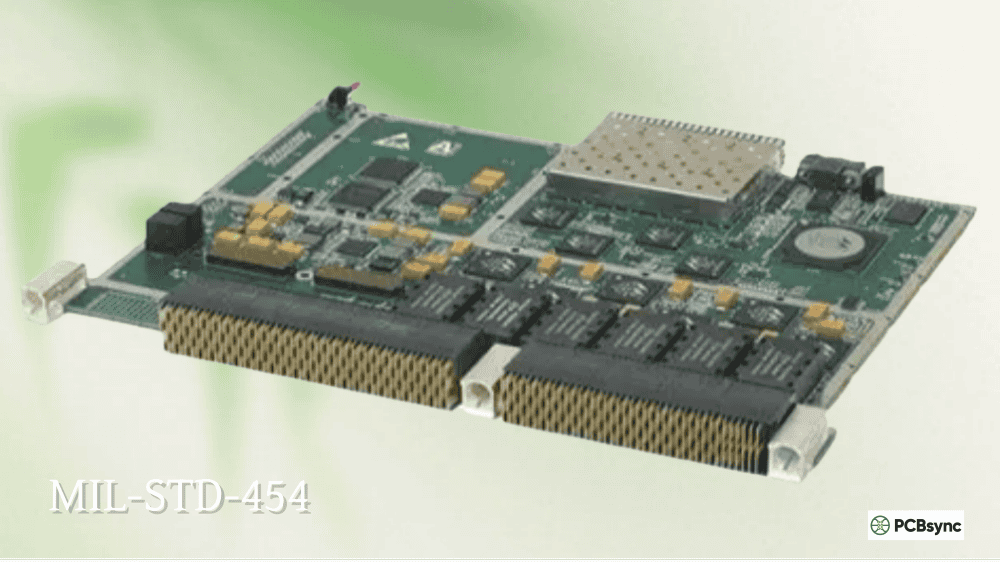
The US DoD has historically used MIL-I-43553, A-A-56032, and MIL-PRF-37271 for marking ink requirements. While IPC-4781 was developed to potentially replace or supplement these specifications, military contracts may still invoke specific MIL-SPECs.
Automotive
Automotive applications often require extended temperature range performance and resistance to automotive fluids. Verify legend ink compatibility with any additional environmental requirements.
Medical
Medical devices may require biocompatibility considerations depending on the application. IPC-4781 does not address biocompatibility—additional testing may be required.
Resources for IPC-4781
Where to Purchase
Source
URL
Notes
IPC Store
shop.ipc.org
Official source, PDF or print
ANSI Webstore
webstore.ansi.org
PDF format
GlobalSpec
standards.globalspec.com
Standards information
Accuris (IHS)
store.accuristech.com
Multiple format options
Related IPC Documents
Document
Relationship to IPC-4781
IPC-SM-840
Solder mask specification (referenced for legend used as dielectric)
Taiyo America – Legend inks for multiple processes
Peters (Lackwerke Peters) – European legend ink manufacturer
Agfa – Inkjet legend printing systems
Nazdar – Screen printing inks
Frequently Asked Questions About IPC-4781
What is the difference between IPC-4781 ink types?
IPC-4781 defines four ink types based on permanence and electrical contact. Type 1 is permanent ink that may contact electrical conductors—requiring electrical property testing. Type 2 is permanent ink over solder mask with no conductor contact—the most common category. Type 3 is semi-permanent ink designed for limited service life. Type 4 is temporary ink meant for removal after manufacturing. The key distinction is whether the ink contacts electrical conductors, which triggers additional electrical testing requirements.
Does legend ink need to meet IPC-SM-840 solder mask requirements?
Only if the legend ink serves as a primary dielectric—meaning it’s the only insulating layer between conductors. Standard silkscreen applied over solder mask only needs to meet IPC-4781. However, if legend ink is applied directly over copper traces as the sole insulation, it must meet the more stringent IPC-SM-840 solder mask requirements in addition to IPC-4781. This is explicitly stated in the specification’s scope section.
How does IPC-4781 address lead-free soldering compatibility?
IPC-4781 includes specific requirements for lead-free solder resistance in Section 3.5.6. Because lead-free soldering operates at higher peak temperatures (typically 245-260°C versus 215-230°C for tin-lead), legend inks must survive these elevated temperatures without degradation, loss of adhesion, or illegibility. This requirement applies to Type 1, Type 2, and Type 3 inks. Type 4 temporary inks are typically removed before soldering.
Who is responsible for IPC-4781 qualification testing?
Responsibility is shared between the ink material supplier and the PCB fabricator. The material supplier qualifies the ink material itself—proving it meets requirements when properly processed. The PCB fabricator qualifies their process—proving they can consistently apply the ink to meet requirements using their specific equipment and procedures. Some tests (like conformal coating adhesion) are performed by the end user when applicable. IPC-4781 Table 3-2 details specific test responsibilities.
Can inkjet-printed (DLP) legends meet IPC-4781 requirements?
Yes, direct legend printing (DLP) using inkjet technology can meet IPC-4781 requirements, but with some considerations. DLP typically produces thinner ink films than screen printing or LPI, which may affect durability and scratch resistance. Additionally, acrylic inks used in DLP may not cure properly on silver surface finishes. Fabricators using DLP should verify their specific ink and process combination meets adhesion, hardness, and solvent resistance requirements through process qualification testing.
Conclusion
IPC-4781 filled a significant gap in PCB industry specifications when it was released in 2008. Before this standard, legend and marking inks were selected based primarily on supplier claims and past experience, with no consistent industry-wide qualification criteria. As PCB geometries continue to shrink and conductor spacing tightens, the importance of properly qualified legend inks only increases.
For PCB fabricators, IPC-4781 provides clear requirements for qualifying both materials and processes. For ink suppliers, it establishes a level playing field where materials can be evaluated against consistent criteria. For OEMs and end users, it provides confidence that legend inks meet defined performance requirements.
The key takeaways from IPC-4781 are: understand which ink type applies to your application, verify lead-free solder compatibility for modern assemblies, ensure proper adhesion to your specific solder mask, and maintain adequate clearances in your PCB design. Following these guidelines helps ensure your legend markings remain legible and reliable throughout the product lifecycle.
Whether you’re qualifying new ink materials, setting up a new printing process, or simply trying to understand why legend markings failed in the field, IPC-4781 provides the framework for evaluation and troubleshooting.
Suggested Meta Descriptions:
Primary (160 characters): IPC-4781 is the qualification specification for PCB legend and silkscreen inks. Learn about ink types, test requirements, and qualification process for marking inks.
Alternative 1 (158 characters): Complete guide to IPC-4781 legend ink specification. Covers permanent, semi-permanent, and temporary marking inks, testing requirements, and PCB qualification.
Alternative 2 (155 characters): IPC-4781 explained: the industry standard for PCB silkscreen ink qualification. Covers adhesion, solder resistance, and electrical testing requirements.
Inquire: Call 0086-755-23203480, or reach out via the form below/your sales contact to discuss our design, manufacturing, and assembly capabilities.
Quote: Email your PCB files to Sales@pcbsync.com (Preferred for large files) or submit online. We will contact you promptly. Please ensure your email is correct.
Notes: For PCB fabrication, we require PCB design file in Gerber RS-274X format (most preferred), *.PCB/DDB (Protel, inform your program version) format or *.BRD (Eagle) format. For PCB assembly, we require PCB design file in above mentioned format, drilling file and BOM. Click to download BOM template To avoid file missing, please include all files into one folder and compress it into .zip or .rar format.