Inquire: Call 0086-755-23203480, or reach out via the form below/your sales contact to discuss our design, manufacturing, and assembly capabilities.
Quote: Email your PCB files to Sales@pcbsync.com (Preferred for large files) or submit online. We will contact you promptly. Please ensure your email is correct.
Notes: For PCB fabrication, we require PCB design file in Gerber RS-274X format (most preferred), *.PCB/DDB (Protel, inform your program version) format or *.BRD (Eagle) format. For PCB assembly, we require PCB design file in above mentioned format, drilling file and BOM. Click to download BOM template To avoid file missing, please include all files into one folder and compress it into .zip or .rar format.
IPC-2582 Guide: How to Structure PCB Order & Supply Data in IPC-2581 Files
Anyone who’s worked with contract manufacturers knows the frustration of order miscommunication. You send a PCB design package, but somewhere between your engineering team and the factory floor, critical details get lost. The purchase order says one thing, the CAD data implies another, and suddenly you’re on a conference call at 6 AM trying to sort out which surface finish was actually specified.
IPC-2582 addresses this exact problem. As the administrative sectional standard within the IPC-2581 family, it defines how ordering information, personnel contacts, and supply chain data should be structured within your PCB manufacturing data files. Instead of relying on separate purchase orders, email threads, and verbal confirmations, IPC-2582 embeds all that administrative context directly into your manufacturing data package.
IPC-2582 is officially titled “Sectional Requirements for Implementation of Administrative Methods for Manufacturing Data Description.” Released by IPC in March 2007, this 13-page standard specifies the XML schema for describing administrative information related to ordering and specifying printed boards, printed board assemblies, fixtures, and components.
The standard is part of the IPC-2580 series, which provides detailed sectional requirements that work alongside the parent IPC-2581 specification. While IPC-2581 defines the overall intelligent data format for PCB manufacturing, IPC-2582 focuses specifically on the business and logistical data that surrounds every manufacturing order.
IPC-2582 at a Glance
Attribute
Details
Full Title
Sectional Requirements for Implementation of Administrative Methods for Manufacturing Data Description
Standard Number
IPC-2582
Release Date
March 2007
Page Count
13 pages
Parent Standard
IPC-2581 (mandatory companion)
Format
XML Schema
Cost
Free download from IPC
Predecessor
IPC-2512 (GenCAM administrative methods)
The format itself is a convergence of the Valor Computerized Systems ODB++ structure and the IPC-2511B GenCAM format, translated into XML schema. This heritage means that if you’ve worked with either of those formats, many IPC-2582 concepts will feel familiar.
Understanding the IPC-2580 Series Architecture
Before diving deeper into IPC-2582, it helps to understand where it fits within the broader standards family. IPC-2581 serves as the generic parent standard containing all general requirements, while seven sectional standards (IPC-2582 through IPC-2588) provide detailed implementation guidance for specific data categories.
IPC-2581 Sectional Standards Overview
Standard
Focus Area
Data Type
IPC-2582
Administrative Methods
Order data, personnel, supply information
IPC-2583
Component Mounting Description
Pick-and-place, component orientation
IPC-2584
Printed Board Fabrication
Layer stackup, copper artwork, drilling
IPC-2585
Printed Board Assembly
Assembly drawings, process specifications
IPC-2586
Bare Board Testing
Electrical test requirements, netlists
IPC-2587
Assembly Testing
In-circuit test, functional test data
IPC-2588
Parts List Description
BOM structure, component specifications
Each sectional standard paraphrases the important requirements from IPC-2581 and provides suggested usage examples for its specific topic. IPC-2582’s role is to ensure that every manufacturing data package carries complete administrative context—who ordered what, from whom, with what specifications, and who to contact when questions arise.
What Data Does IPC-2582 Cover?
The administrative data defined by IPC-2582 falls into several functional categories. Understanding these categories helps you structure your manufacturing data packages correctly and ensures that critical business information travels with your technical data.
Personnel and Contact Information
One of IPC-2582’s most practical contributions is standardizing how contact information is embedded in manufacturing files. Instead of hoping your manufacturer has the right phone number on file, the data package itself carries current contact details for every relevant role.
Personnel Role
Purpose
Typical Information
OWNER
File creator/responsible party
Name, company, contact details
DESIGNER
Original PCB designer
Engineering contact for design questions
ENGINEER
Process/manufacturing engineer
Technical support contact
BUYER
Procurement contact
Commercial and pricing questions
CUSTOMERSERVICE
Support contact
Order status and logistics
SENT
Person who transmitted file
Transmission verification
RECEIVED
Intended recipient
Delivery confirmation
ACCEPT
Approval authority
Sign-off and acceptance
BILLTO
Billing contact
Invoice and payment processing
The standard uses a person model that allows the same individual to be referenced across multiple roles. If your lead engineer handles both design questions and process engineering, you define them once and reference their ID in both roles. This eliminates redundancy and ensures consistency.
Order and Specification Data
Beyond personnel, IPC-2582 structures the actual order information that drives manufacturing. This includes part numbers, quantities, revision levels, delivery requirements, and manufacturing specifications that might otherwise live only in purchase orders or email exchanges.
Modern PCB manufacturing involves multiple supply chain participants. IPC-2582 provides structures for referencing approved vendors, component sources, and material specifications. This data links directly to the BOM and AVL (Approved Vendor List) information defined in IPC-2588, creating a complete procurement picture within the manufacturing data package.
IPC-2582 XML Structure and Key Elements
For those implementing IPC-2582 in their workflows, understanding the XML structure is essential. The standard defines specific elements that integrate with the broader IPC-2581 file architecture.
LogisticHeader Element
The LogisticHeader is the primary container for IPC-2582 administrative data within an IPC-2581 file. This element captures information about the owner of the file and administrative details surrounding the manufacturing order.
Child Element
Purpose
Required
Enterprise
Company/organization information
Yes
Person
Individual contact details
Yes
Role
Role assignments for personnel
Yes
Specification
Manufacturing specifications
Optional
Approval
Sign-off and acceptance tracking
Optional
Person Model Structure
The person model in IPC-2582 allows flexible definition of individuals involved in the manufacturing process. Each person is assigned a unique identifier that can be referenced throughout the file.
Person Element Attributes:- person_id: Unique identifier for the individual- name: Full name- enterpriseRef: Link to company/organization- phone: Contact phone number- email: Email address- location: Physical address or site
This model supports scenarios where one person fills multiple roles, or where different individuals handle different aspects of the same project. The person_id provides a single point of reference that multiple role assignments can share.
Integration with IPC-2581 Content Element
Within a complete IPC-2581 file, the administrative data from IPC-2582 integrates through the Content element. The Content element serves as the root container for all data and references both technical sections (like Ecad and Bom) and administrative sections (LogisticHeader).
IPC-2581 Top-Level Element
Related Sectional Standard
Content
IPC-2581 (generic requirements)
LogisticHeader
IPC-2582 (administrative methods)
Bom
IPC-2588 (parts list)
Avl
IPC-2588 (approved vendors)
Ecad
IPC-2583, 2584, 2585 (design/fab/assembly)
Implementing IPC-2582 in Your Workflow
Moving from traditional order management to IPC-2582-embedded administrative data requires workflow adjustments, but the benefits in reduced miscommunication are substantial.
Step 1: Identify Administrative Data Sources
Before you can embed administrative data in your IPC-2581 files, you need to identify where that data currently lives. For most organizations, it’s scattered across multiple systems.
Data Type
Typical Current Source
IPC-2582 Destination
Contact information
ERP system, email signatures
Person elements
Part numbers/revisions
PLM system
LogisticHeader specifications
Order quantities
Purchase orders
Specification elements
Quality requirements
Customer specifications
Specification elements
Delivery schedules
MRP/scheduling system
LogisticHeader
Step 2: Configure CAD Export Settings
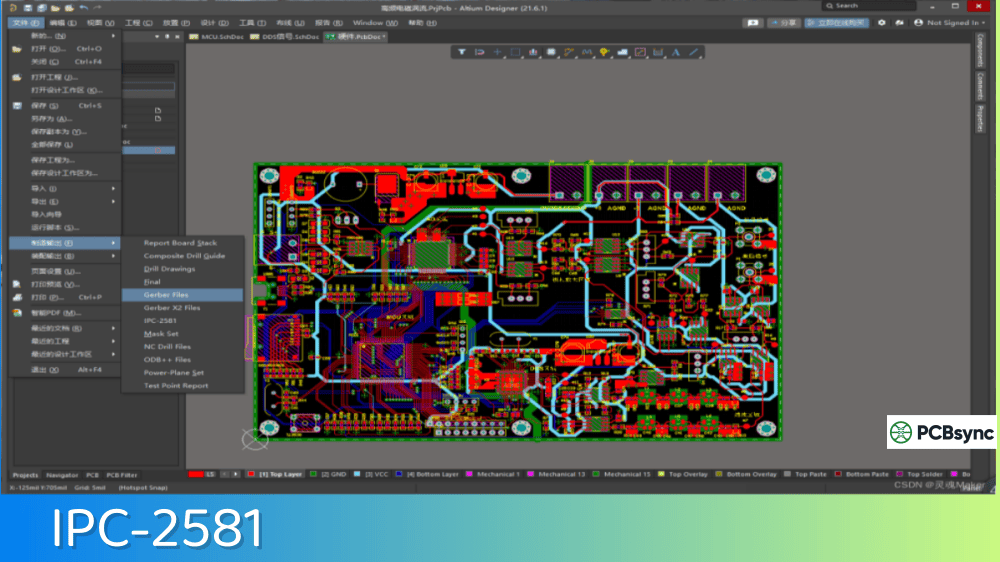
Most EDA tools that support IPC-2581 export also support the administrative sections defined by IPC-2582. The challenge is ensuring your CAD tool has access to the administrative data it needs to populate these fields.
CAD Tool
IPC-2582 Support
Configuration Notes
Cadence Allegro
Full support
Configure LogisticHeader in export dialog
Mentor Xpedition
Full support
Administrative data pulled from design properties
Altium Designer
Partial support
Some manual configuration required
Zuken CR-8000
Full support
Enterprise integration available
Step 3: Validate Administrative Content
After generating your IPC-2581 file with administrative data, validate that the IPC-2582 sections are correctly populated. Missing or incorrect administrative data can cause as many problems as missing technical data.
Key validation checkpoints include verifying that all required personnel roles have assigned contacts, confirming that part numbers and revision levels match your PLM system, ensuring that manufacturing specifications are complete and unambiguous, and checking that contact information is current and accurate.
Step 4: Communicate with Manufacturing Partners
Your contract manufacturers need to know you’re including IPC-2582 administrative data in your files and how to use it. Many CMs still default to extracting order information from purchase orders, even when the same data exists in the manufacturing file.
Establish clear expectations about which data source takes precedence when conflicts arise. Ideally, the IPC-2581/2582 data should be authoritative, with purchase orders serving as commercial confirmation rather than technical specification.
Organizations that fully implement IPC-2582 report measurable improvements in their manufacturing communication processes.
Quantified Improvements
Metric
Typical Improvement
Source
Order clarification requests
40-60% reduction
Industry case studies
Quote turnaround time
25% faster
Automated data extraction
Order entry errors
70%+ reduction
Elimination of manual transcription
Engineering change communication
50% faster
Embedded revision tracking
Operational Benefits
Beyond the numbers, IPC-2582 implementation delivers qualitative improvements that affect daily operations. Engineering teams spend less time answering basic questions about order specifications. Procurement teams have better visibility into what was actually ordered versus what was quoted. Quality teams can trace specifications back to their authoritative source when disputes arise.
The embedded contact information alone saves significant time. When a manufacturer has a question at 2 AM their time, they don’t have to wait for business hours to find the right person to call—the contact is right there in the data file.
IPC-2582 and Related Standards
Understanding how IPC-2582 relates to other standards helps you build a complete manufacturing data strategy.
Relationship to IPC-2570 Series (PDX)
The IPC-2570 series (Product Data eXchange) addresses supply chain communication at a higher level than the IPC-2580 series. While there’s some overlap in administrative data coverage, the standards serve different purposes.
Standard Series
Focus
Administrative Data Approach
IPC-2580 (2581-2588)
Manufacturing data exchange
Embedded in manufacturing files
IPC-2570 (2571-2578)
Supply chain communication
Standalone PDX packages
IPC-2576 and IPC-2578 from the PDX series address as-built data and BOM exchange respectively. Organizations often use both series together—IPC-2581/2582 for manufacturing data delivery, and IPC-2571/2578 for broader supply chain communication.
Relationship to GenCAM (IPC-2510 Series)
IPC-2582 evolved from IPC-2512, the administrative methods sectional within the older GenCAM standard family. If you have legacy systems that generate GenCAM data, the concepts map directly to IPC-2582, though the XML syntax differs.
GenCAM Standard
IPC-2581 Equivalent
IPC-2511 (Generic)
IPC-2581
IPC-2512 (Admin)
IPC-2582
IPC-2514 (Fabrication)
IPC-2584
IPC-2516 (Assembly)
IPC-2585
Tools and Resources for IPC-2582
Official Documentation
Resource
Source
Access
IPC-2582 Standard
shop.ipc.org
Free download
IPC-2581 Standard
shop.ipc.org
Purchase required
IPC-2581 XML Schema
IPC-2581 Consortium
Free download
Implementation Guide
ipc2581.com
Free access
Software Tools
Tool
Provider
IPC-2582 Support
IPC-2581 Viewer
Cadence
View administrative sections
Valor NPI
Siemens
Full import/export
CAM350
DownStream Technologies
Import support
FAB 3000
Numerical Innovations
Import support
Consortium Resources
The IPC-2581 Consortium (www.ipc2581.com) provides implementation resources, sample files, and industry contacts for organizations adopting the standard. Consortium members include major OEMs like Cisco, Ericsson, and Lockheed Martin, as well as EDA vendors and contract manufacturers.
Frequently Asked Questions About IPC-2582
What is the difference between IPC-2582 and IPC-2581?
IPC-2581 is the parent standard that defines the complete XML schema for PCB manufacturing data exchange. IPC-2582 is one of seven sectional standards that provide detailed requirements for specific data categories—in this case, administrative methods including order information, personnel contacts, and supply data. You cannot implement IPC-2582 without IPC-2581; the sectional standard extends and clarifies the parent standard’s administrative data sections.
Is IPC-2582 required when using IPC-2581?
IPC-2581 itself is mandatory when generating any IPC-258X file, but the degree to which you populate IPC-2582 administrative data depends on your application. For basic design-to-manufacturing data transfer, you might include minimal administrative information. For complete order packages intended to replace traditional purchase order documentation, full IPC-2582 implementation provides maximum value.
Can I download IPC-2582 for free?
Yes. Unlike the parent IPC-2581 standard, which requires purchase, IPC-2582 is available as a free download from the IPC shop (shop.ipc.org). This makes it easy to review the standard’s requirements before committing to implementation.
How does IPC-2582 handle multiple contacts for the same role?
The IPC-2582 person model allows multiple individuals to be defined and assigned to roles as needed. If you have primary and backup contacts for engineering support, both can be included with appropriate role designations. The person_id system ensures that each individual is defined once and can be referenced multiple times throughout the file.
Do contract manufacturers accept IPC-2582 administrative data?
Acceptance varies by manufacturer. Large EMS providers and those serving aerospace, defense, and automotive industries typically have full IPC-2581/2582 support. Smaller fabricators may still prefer traditional purchase orders for administrative data even if they accept IPC-2581 for technical data. Always confirm your specific manufacturer’s capabilities and preferences before relying solely on embedded administrative data for critical order information.
Making Administrative Data Work for Your Organization
The promise of IPC-2582 is simple: put your order information where your design data is, and stop managing parallel documentation streams that inevitably diverge. The reality of implementation requires coordination across engineering, procurement, and manufacturing operations, but organizations that make the investment report meaningful reductions in order errors and communication overhead.
Start with a pilot project where administrative data accuracy is particularly critical—perhaps a high-reliability product or a new manufacturing partner relationship. Use the pilot to identify gaps in your data flow and refine your processes before broader rollout. The 13 pages of IPC-2582 may seem modest compared to the hundreds of pages in IPC-2581, but the administrative data it structures often determines whether a manufacturing order succeeds or stumbles.
Your technical data deserves the context that IPC-2582 provides. When your manufacturer opens your IPC-2581 file and finds not just copper artwork and drill data but also complete contact information, order specifications, and supply chain references, you’ve eliminated an entire category of potential miscommunication. That’s worth the implementation effort.
Inquire: Call 0086-755-23203480, or reach out via the form below/your sales contact to discuss our design, manufacturing, and assembly capabilities.
Quote: Email your PCB files to Sales@pcbsync.com (Preferred for large files) or submit online. We will contact you promptly. Please ensure your email is correct.
Notes: For PCB fabrication, we require PCB design file in Gerber RS-274X format (most preferred), *.PCB/DDB (Protel, inform your program version) format or *.BRD (Eagle) format. For PCB assembly, we require PCB design file in above mentioned format, drilling file and BOM. Click to download BOM template To avoid file missing, please include all files into one folder and compress it into .zip or .rar format.