Inquire: Call 0086-755-23203480, or reach out via the form below/your sales contact to discuss our design, manufacturing, and assembly capabilities.
Quote: Email your PCB files to Sales@pcbsync.com (Preferred for large files) or submit online. We will contact you promptly. Please ensure your email is correct.
Notes: For PCB fabrication, we require PCB design file in Gerber RS-274X format (most preferred), *.PCB/DDB (Protel, inform your program version) format or *.BRD (Eagle) format. For PCB assembly, we require PCB design file in above mentioned format, drilling file and BOM. Click to download BOM template To avoid file missing, please include all files into one folder and compress it into .zip or .rar format.
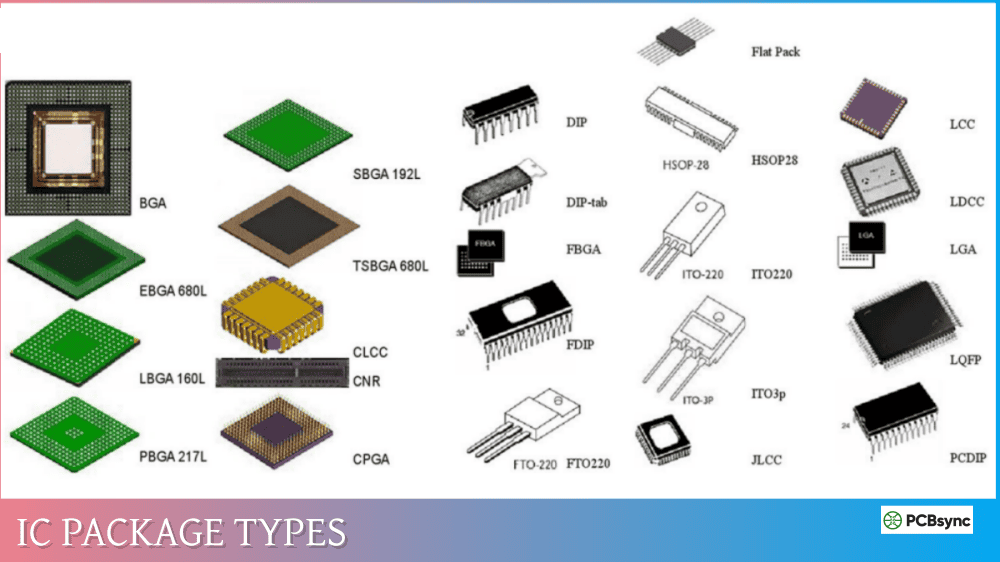
IC Package Types: Complete Guide (DIP, SMD, QFP, BGA)
Selecting the right IC package types can make or break your PCB design. I’ve seen projects delayed by weeks because someone chose a BGA when a QFP would have been easier to assemble, or specified a DIP package that simply wouldn’t fit the board’s height constraints. Understanding integrated circuit packages isn’t just academic knowledge—it directly impacts your design’s manufacturability, reliability, thermal performance, and cost.
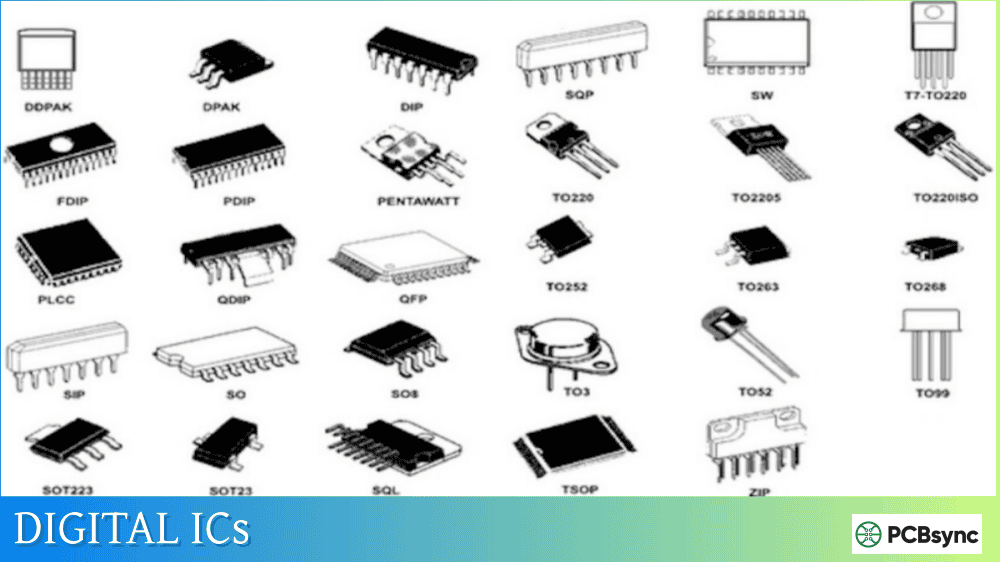
This IC packaging guide walks through every major package family you’ll encounter, from the classic DIP that hobbyists love to the advanced BGA packages powering modern smartphones and servers. Whether you’re designing your first prototype or optimizing a high-volume production board, knowing these packages inside and out will save you considerable time and frustration.
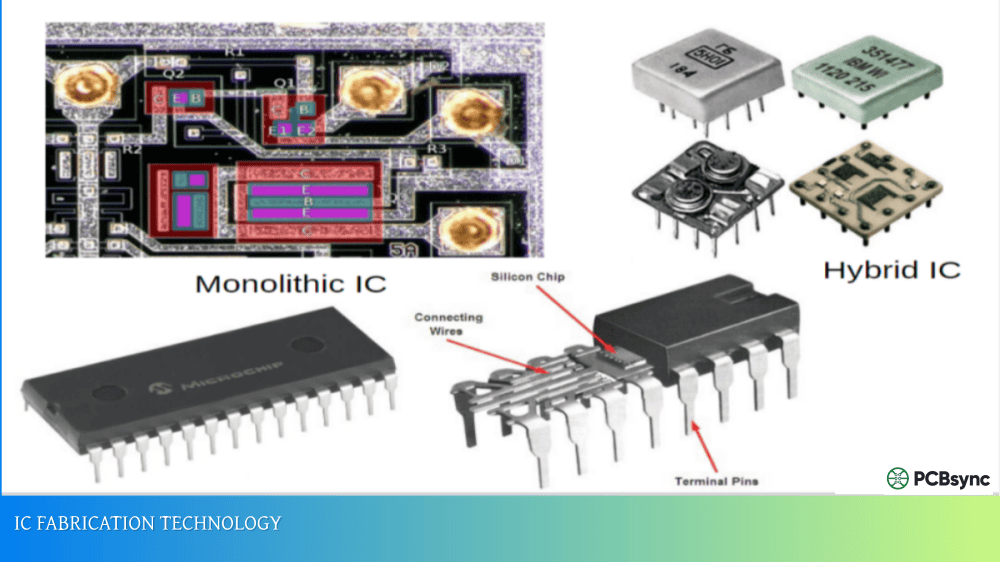
IC packaging refers to the protective enclosure that houses a semiconductor die and provides the electrical connections between the chip and the printed circuit board. The package serves several critical functions that directly affect your design’s success.
Protection stands as the primary purpose. The silicon die inside is extremely fragile and susceptible to moisture, dust, mechanical stress, and electrostatic discharge. The package shields the die from these environmental hazards throughout the product’s lifetime.
Electrical interconnection enables signals to flow between the microscopic bond pads on the die and the much larger PCB traces. Wire bonds, flip-chip bumps, or other connection technologies route signals from the die to the package’s external leads or pads.
Thermal management becomes increasingly important as power densities rise. The package provides a heat path from the die to the PCB and ambient air. Some packages include exposed thermal pads or integrated heat spreaders to enhance heat dissipation.
Mechanical support allows handling during assembly and provides structural integrity in the final product. The package must withstand the stresses of pick-and-place machines, reflow ovens, and years of thermal cycling in service.
Through-Hole vs Surface Mount IC Package Types
Before diving into specific packages, understanding the two fundamental mounting technologies helps frame the discussion.
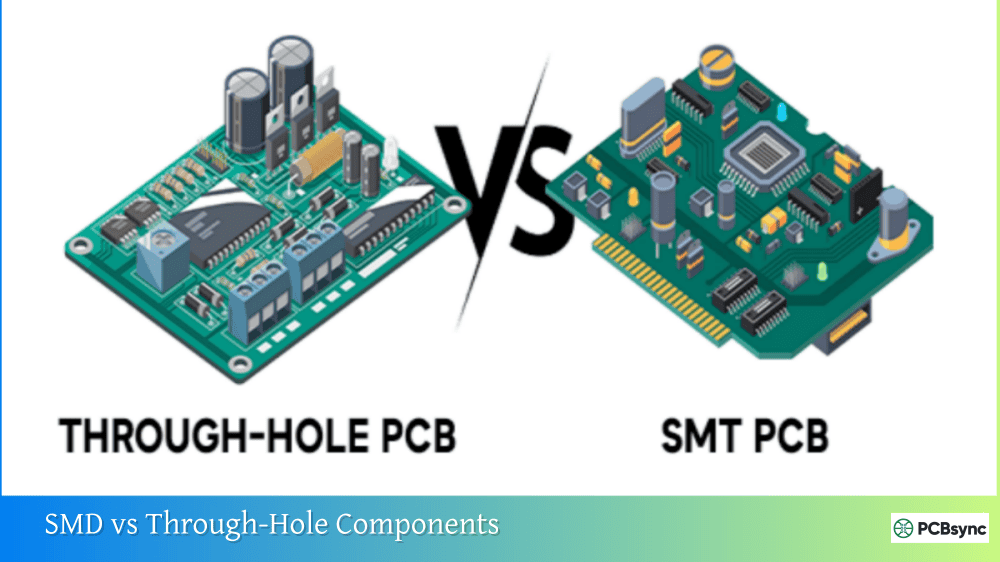
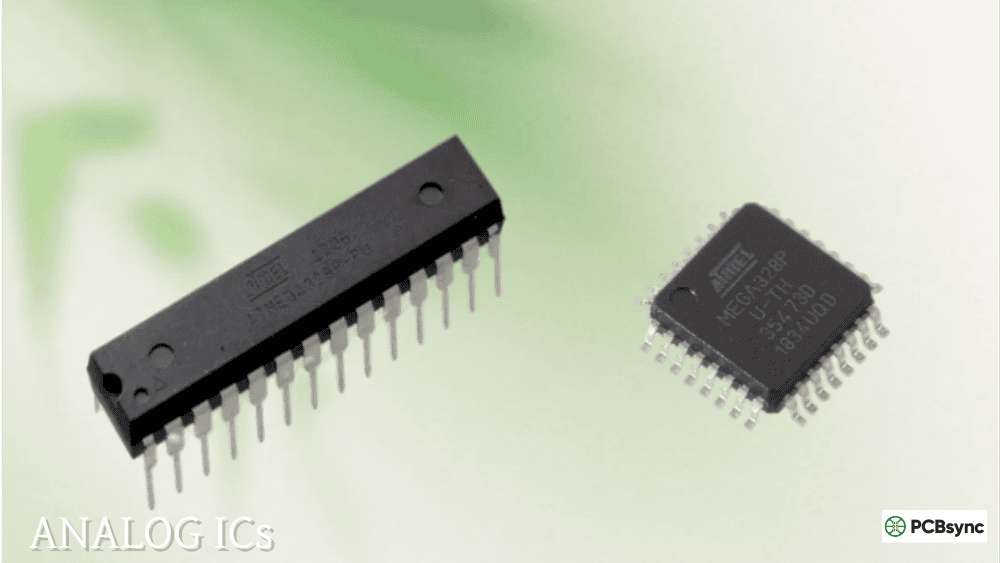
Through-hole technology (THT) involves inserting component leads through holes drilled in the PCB and soldering them on the opposite side. Through-hole packages like DIP dominated the industry for decades and remain popular for prototyping, hobbyist projects, and applications requiring maximum mechanical strength.
Surface mount technology (SMT) places components directly onto pads on the PCB surface, eliminating the need for drilled holes. SMT enables smaller packages, higher component density, and automated assembly. The vast majority of modern electronics use surface mount IC package types.
Characteristic
Through-Hole (THT)
Surface Mount (SMT)
Mounting Method
Leads through PCB holes
Directly on PCB surface
PCB Holes Required
Yes
No
Component Size
Larger
Smaller
Assembly
Manual or wave solder
Automated reflow
Mechanical Strength
Excellent
Good to moderate
Component Density
Lower
Higher
Rework
Easy
Varies by package
Common Examples
DIP, TO-220, SIP
SOIC, QFP, QFN, BGA
DIP: The Dual In-Line Package
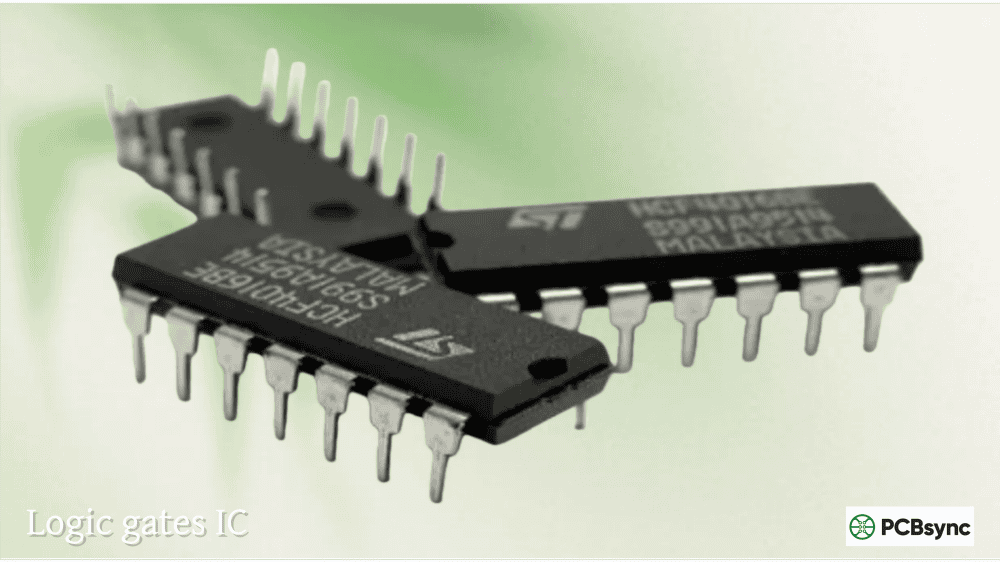
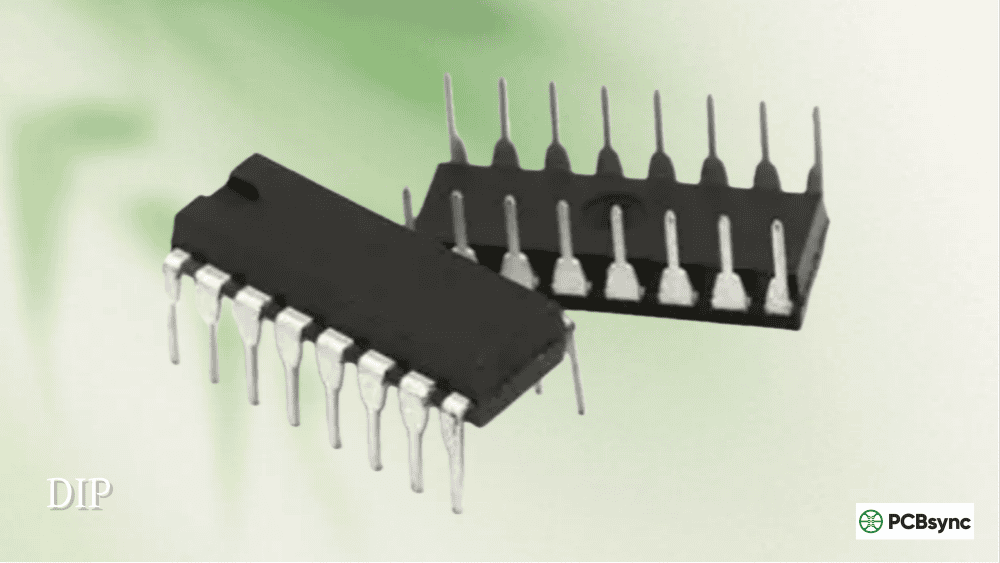
The Dual In-Line Package remains one of the most recognizable IC package types in electronics. Introduced in the late 1960s, DIP packages feature two parallel rows of pins extending perpendicular to a rectangular plastic or ceramic body.
DIP Package Specifications and Variants
Standard DIP packages use a 2.54mm (0.1 inch) pin pitch, matching the grid spacing of breadboards and standard prototyping boards. This compatibility makes DIPs ideal for learning, experimentation, and initial prototyping.
DIP Variant
Pin Count Range
Body Width
Typical Applications
Narrow DIP
8-28 pins
7.62mm (0.3″)
Op-amps, timers, logic ICs
Wide DIP
24-64 pins
15.24mm (0.6″)
Microcontrollers, memory
Skinny DIP
8-20 pins
7.62mm (0.3″)
Low pin count ICs
Ceramic DIP (CDIP)
8-64 pins
Various
Military, aerospace
The pin count determines the package length. An 8-pin DIP measures approximately 9.5mm long, while a 40-pin DIP extends to about 52mm. Wider body variants accommodate larger dies or additional power/ground pins.
DIP Package Advantages
Ease of use makes DIP packages perfect for prototyping and education. They plug directly into breadboards, allowing rapid circuit experimentation without soldering. When soldering is required, the large pin pitch and through-hole mounting make DIP among the easiest packages to work with.
Socket compatibility allows ICs to be replaced without desoldering. DIP sockets are inexpensive and widely available, making them standard practice for development systems, test fixtures, and applications where field replacement might be necessary.
Visual inspection of solder joints is straightforward since the joints are visible on the bottom of the PCB. Troubleshooting and rework require only basic soldering equipment.
Mechanical robustness exceeds that of surface mount packages. The leads passing through the board and soldered on both sides create strong mechanical connections that resist vibration and shock.
DIP Package Limitations
Size represents the primary disadvantage. A 40-pin DIP occupies substantial board area and stands 4-5mm tall. For any design with space constraints, DIP packages quickly become impractical.
Lead inductance increases with lead length, degrading high-frequency performance. The 2.54mm pitch and relatively long leads make DIP unsuitable for signals above a few tens of MHz.
Thermal performance suffers because heat must travel through thin leads to reach the PCB. High-power ICs in DIP packages often require heat sinks or forced air cooling.
Assembly cost is higher for through-hole components in volume production. Wave soldering or selective soldering adds process steps compared to reflow-only SMT assembly.
SMD Packages: SOIC, SOP, SSOP, and TSSOP
Surface mount device (SMD) packages revolutionized electronics manufacturing by enabling smaller, denser, and more automated PCB assembly. The Small Outline family represents the surface mount evolution of DIP packages.
SOIC Package Specifications
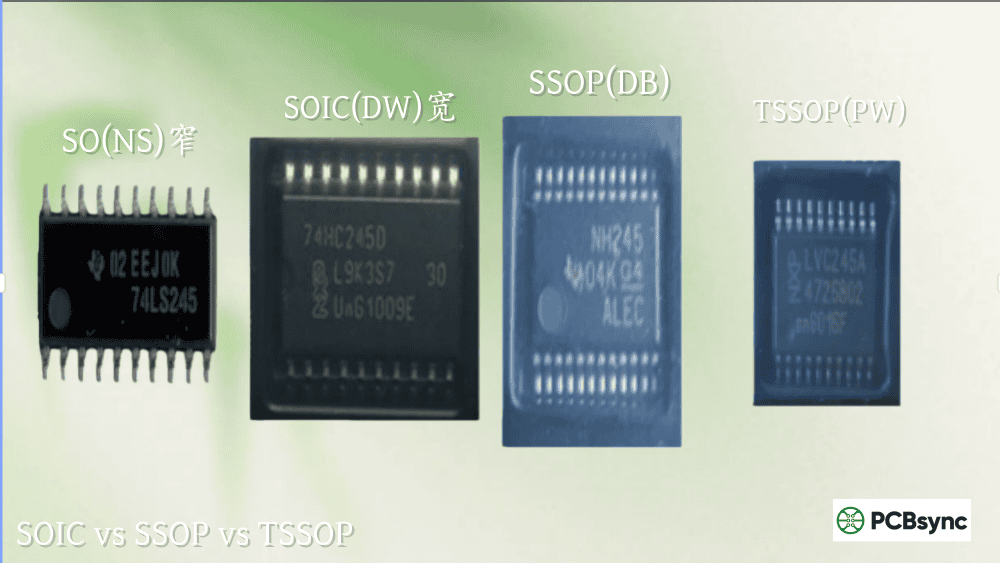
The Small Outline Integrated Circuit (SOIC) package is the surface mount equivalent of DIP, occupying 30-50% less area with 70% less height. SOIC uses gull-wing leads extending from two sides of the package body.
Standard SOIC features a 1.27mm (50 mil) lead pitch, making it relatively easy to solder by hand while supporting automated assembly. Two body widths are common: narrow body at 3.9mm (150 mil) and wide body at 7.5mm (300 mil).
SOIC Variant
Body Width
Lead Pitch
Height
Typical Pin Count
SOIC Narrow
3.9mm
1.27mm
1.75mm max
8-16 pins
SOIC Wide
7.5mm
1.27mm
2.65mm max
16-28 pins
Mini-SOIC
3.0mm
0.5mm
0.9mm
8-10 pins
SOP, SSOP, and TSSOP Variants
The Small Outline Package (SOP) family evolved to meet demands for even smaller footprints. Each variant trades size reduction for increased assembly difficulty.
SOP (Small Outline Package) serves as the generic term for gull-wing surface mount packages. In some contexts, SOP refers specifically to packages with 5.3mm body width, distinct from SOIC.
SSOP (Shrink Small Outline Package) reduces the lead pitch to 0.65mm or 0.635mm, cutting package width roughly in half compared to equivalent SOIC packages. The tighter pitch requires more precise PCB fabrication and assembly but enables significantly higher component density.
TSSOP (Thin Shrink Small Outline Package) combines the reduced pitch of SSOP with a thinner body, typically 1.0-1.2mm maximum height. TSSOP packages are popular for memory ICs, gate drivers, and applications where both footprint and height are constrained.
TSOP (Thin Small Outline Package) features an extremely thin profile under 1.2mm with lead pitches of 0.5-0.8mm. TSOP was the dominant package for DRAM modules before BGA took over.
Package
Lead Pitch
Body Height
Applications
SOIC
1.27mm
1.75mm
General purpose ICs
SSOP
0.65mm
2.0mm
Higher density designs
TSSOP
0.65mm
1.1mm
Space-constrained, memory
TSOP
0.5mm
1.0mm
Flash memory, DRAM
MSOP
0.5mm
1.1mm
Ultra-compact designs
PCB Design Considerations for Small Outline Packages
Designing for SOIC and its variants requires attention to several factors.
Pad geometry must match the specific package variant. SOIC packages have well-defined land patterns specified in IPC-7351, but variations exist between manufacturers. Always verify pad dimensions against the specific component datasheet.
Solder mask openings should provide adequate clearance around pads while preventing solder bridging. For 1.27mm pitch SOIC, solder mask defined (SMD) or non-solder mask defined (NSMD) pads both work well. Finer pitch packages typically benefit from NSMD pads.
Stencil design affects solder paste volume and joint quality. Standard stencil thickness of 0.12-0.15mm works for most SOIC packages. Finer pitch packages may require thinner stencils or area reduction to prevent bridging.
Trace routing from SOIC packages is straightforward due to the peripheral lead arrangement. Escape routing typically requires only two PCB layers even for 28-pin packages.
QFP: Quad Flat Package Family
Quad Flat Packages extend the gull-wing lead concept to all four sides of the package, dramatically increasing pin count capability. QFP packages dominate applications requiring 32 to 200+ pins in a surface mount format.
QFP Package Types and Specifications
The QFP family includes numerous variants optimized for different requirements:
QFP Variant
Body Thickness
Lead Pitch
Pin Count Range
Key Feature
QFP
2.0-3.8mm
0.4-1.0mm
32-304
Standard quad flat
LQFP
1.4mm
0.4-0.8mm
32-256
Low profile
TQFP
1.0mm
0.4-0.8mm
32-256
Thin profile
PQFP
2.0-3.8mm
0.5-1.0mm
44-240
Plastic, larger body
BQFP
3.0-3.8mm
0.635mm
84-196
Bumpered corners
FQFP
1.4mm
0.4-0.5mm
48-256
Fine pitch
LQFP (Low-Profile Quad Flat Package) limits body height to 1.4mm while maintaining lead pitches from 0.4mm to 0.8mm. LQFP is the most common QFP variant in modern designs, used extensively for microcontrollers, FPGAs, and digital signal processors.
TQFP (Thin Quad Flat Package) further reduces height to approximately 1.0mm. TQFP packages can often mount on LQFP footprints if the lead pitch matches, providing flexibility in component selection.
Exposed pad variants of QFP packages include a thermal pad on the package bottom. This pad should be soldered to a corresponding PCB pad connected to a ground plane or thermal relief structure. Exposed pads significantly improve thermal performance and can provide a low-inductance ground connection.
QFP Assembly and Rework
QFP packages offer significant advantages in assembly and rework compared to leadless alternatives.
Visual inspection is straightforward because gull-wing leads and solder fillets are fully visible. Automated optical inspection (AOI) systems can easily verify solder joint quality.
Manual soldering is feasible for experienced technicians, even at 0.5mm pitch. Drag soldering techniques with flux and fine solder work well for prototypes and rework. Finer pitches below 0.5mm become increasingly challenging for manual work.
Rework requires only hot air or focused infrared heating. The visible leads allow precise alignment during replacement, and the gull-wing shape provides some self-centering during reflow.
Lead coplanarity is critical for QFP assembly. All leads must lie in the same plane within tight tolerances (typically ±0.1mm). Bent leads prevent proper contact with PCB pads and cause open circuits. Handle QFP packages carefully and inspect before placement.
QFP PCB Layout Guidelines
Proper PCB layout maximizes QFP assembly yield and reliability.
Land pattern design should follow IPC-7351 recommendations or manufacturer specifications. Pad length typically extends 0.5-1.0mm beyond the lead heel to ensure adequate solder fillet formation.
Escape routing from fine-pitch QFP packages requires careful planning. A 0.5mm pitch 144-pin LQFP may require 4 PCB layers for complete fanout, with traces running between pads at minimum width and spacing.
Power and ground distribution benefits from multiple pins distributed around the package periphery. Connect all power and ground pins with short, wide traces to reduce inductance.
Thermal pad connection (for exposed pad variants) should include thermal vias to inner layers or the bottom copper. A checkerboard pattern of paste apertures in the stencil prevents the package from floating on excess solder during reflow.
QFN: Quad Flat No-Lead Packages
QFN packages eliminate the gull-wing leads of QFP, placing connection pads directly on the package bottom. This leadless design offers significant advantages in size, thermal performance, and high-frequency behavior.
QFN Package Architecture
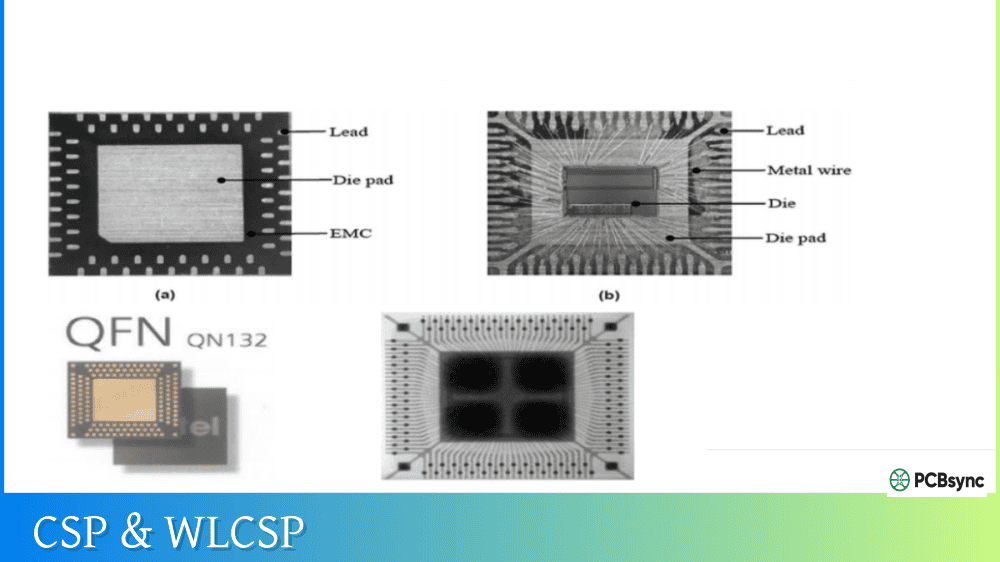
A QFN package consists of a copper lead frame with pads exposed on the bottom surface. The die attaches to a central thermal pad, with wire bonds connecting to peripheral pads. Plastic molding encapsulates the assembly, leaving pad surfaces exposed for soldering.
QFN Characteristic
Typical Value
Impact
Body size
2×2mm to 12×12mm
Compact footprint
Lead pitch
0.4-0.65mm
High pin density
Height
0.75-1.0mm
Low profile
Thermal pad
Yes (most variants)
Excellent heat dissipation
Lead inductance
<1nH per pin
Superior high-frequency performance
Thermal resistance
10-15°C/W typical
2-3× better than QFP
DFN (Dual Flat No-Lead) packages are the two-sided equivalent of QFN, with pads on only two opposite edges. DFN serves applications with lower pin counts where a smaller footprint than SOIC is needed.
Wettable flank variants feature lead frame extensions visible on the package sides, allowing visual inspection of solder joints. Standard QFN lacks this feature, making inspection more challenging.
QFN vs QFP: When to Choose Each
The choice between QFN and QFP depends on your specific requirements:
Factor
QFN Advantage
QFP Advantage
Footprint size
30-50% smaller
—
Thermal performance
2-3× better
—
High-frequency performance
Superior (lower inductance)
—
Visual inspection
—
Fully visible joints
Manual rework
—
Much easier
Pin count
Up to ~100 practical
Up to 300+
Assembly tolerance
—
More forgiving
Cost (assembly)
—
Lower yield risk
Choose QFN when:
Space is severely constrained
Thermal dissipation exceeds 1-2W
Operating frequencies exceed 100MHz
Low inductance is critical (RF, power supply)
Choose QFP when:
Pin counts exceed 100
Visual inspection is required
Manual prototype assembly is planned
Rework capability is important
QFN PCB Design Best Practices
QFN packages require careful PCB design for reliable assembly.
Thermal pad design significantly impacts both thermal performance and assembly yield. The thermal pad should connect to inner ground planes through thermal vias. Via diameter of 0.3mm with 0.6mm pitch works well for most QFN packages.
Stencil aperture design for the thermal pad requires special attention. A solid aperture causes excess solder, allowing the package to float and rotate during reflow. Use a crosshatch or windowed pattern providing 50-80% coverage of the pad area.
Pad definition should use non-solder mask defined (NSMD) pads for peripheral connections. NSMD pads allow solder to wet the pad sides, improving joint strength and reliability compared to solder mask defined pads.
Via-in-pad under QFN packages requires filled and plated vias to prevent solder wicking. Unfilled vias can cause solder to drain away from the joint during reflow, creating voids or open connections.
Ball Grid Array packages represent the pinnacle of high-density IC packaging. By placing solder balls in a grid across the entire package bottom, BGA achieves pin counts and densities impossible with peripheral-lead packages.
Understanding BGA Package Types
BGA packages vary significantly in size, ball pitch, and construction:
BGA Type
Ball Pitch
Pin Count
Substrate
Applications
PBGA (Plastic)
1.0-1.27mm
100-600
Organic
General high pin count
CBGA (Ceramic)
1.0-1.27mm
100-400
Ceramic
High reliability, military
FBGA (Fine-pitch)
0.5-0.8mm
50-500
Organic
Mobile, compact designs
CSP (Chip Scale)
0.4-0.65mm
20-200
Various
Ultra-compact
WLCSP (Wafer Level)
0.3-0.5mm
4-100
None
Smallest footprint
FCBGA (Flip Chip)
0.8-1.0mm
500-2500
Organic
High-performance processors
PBGA (Plastic Ball Grid Array) uses organic laminate substrates with BT resin or similar materials. PBGA dominates consumer and commercial applications due to its balance of performance and cost.
CBGA (Ceramic Ball Grid Array) employs ceramic substrates for improved thermal performance and reliability. The CTE mismatch between ceramic and FR-4 PCB requires careful consideration in designs experiencing thermal cycling.
CSP (Chip Scale Package) defines packages with area no more than 1.2× the die area and ball pitch ≤1.0mm. CSP represents the ultimate in miniaturization for packaged ICs, used extensively in smartphones and wearables.
WLCSP (Wafer Level Chip Scale Package) places solder bumps directly on the silicon die surface, eliminating the interposer entirely. WLCSP provides the smallest possible footprint but requires advanced PCB fabrication for fine pitches.
BGA Advantages for High-Performance Designs
BGA packages offer compelling advantages for demanding applications:
Higher pin counts become practical when connections span the entire package area rather than just the perimeter. A 35mm BGA at 1.0mm pitch can accommodate over 1,000 connections.
Shorter interconnects between die and PCB reduce inductance and improve signal integrity. BGA’s ball height of 0.2-0.6mm creates significantly shorter paths than leaded packages, enabling multi-gigahertz signaling.
Superior thermal performance results from the large contact area between package and PCB. Heat spreads efficiently through the ball array to PCB copper planes. FCBGA packages with thermal balls achieve junction-to-board thermal resistance under 5°C/W.
Self-alignment during reflow occurs because surface tension of molten solder pulls the package into correct alignment with PCB pads. This self-centering effect compensates for placement tolerances, improving assembly yield.
Via-in-pad becomes necessary when ball pitch prevents escape routing between pads. Vias must be filled and plated to prevent solder wicking. Alternative approaches include via-in-pad with conductive fill or via next to pad with dog-bone routing.
Layer count increases with BGA complexity. A 1.0mm pitch BGA typically requires 4 layers to escape 6 rows of balls from each side. Finer pitches may require 6-8 layers or HDI construction with microvias.
Pad diameter should approximately match ball size. Common recommendations specify pad diameter equal to ball diameter, with solder mask openings 0.1mm larger than pads.
Trace and space minimums for escape routing depend on ball pitch. A 0.8mm pitch BGA requires 0.1mm traces and spaces between pads, necessitating controlled impedance PCB fabrication.
Ball Pitch
Typical Pad Size
Required Trace/Space
PCB Class
1.27mm
0.6mm
0.15/0.15mm
Standard
1.0mm
0.5mm
0.125/0.125mm
Standard
0.8mm
0.4mm
0.1/0.1mm
HDI preferred
0.5mm
0.25mm
0.075/0.075mm
HDI required
0.4mm
0.2mm
0.05/0.05mm
Advanced HDI
BGA Assembly and Inspection
BGA assembly requires precise process control and specialized inspection methods.
Solder paste printing must achieve consistent volume across all pads. Stencil thickness of 0.1-0.15mm with 1:1 aperture-to-pad ratio works for standard BGA pitches. Finer pitches may require stepped stencils or laser-cut apertures with specialized geometries.
Placement accuracy of ±0.05mm or better is necessary for fine-pitch BGA. Modern pick-and-place machines achieve this readily, but older equipment may struggle with sub-0.65mm pitch devices.
Reflow profile optimization prevents defects like head-in-pillow (incomplete ball collapse) or bridging. The profile must ensure all balls reach liquidus temperature simultaneously while avoiding thermal shock to the package.
X-ray inspection is mandatory for BGA quality verification since solder joints are hidden beneath the package. X-ray reveals voids, bridging, insufficient solder, and misalignment. Automated X-ray inspection (AXI) integrates into production lines for 100% inspection.
Rework requires specialized BGA rework stations with split-beam optics for alignment and controlled heating profiles. Removing a BGA without damaging adjacent components or the PCB requires skill and proper equipment.
Specialty and Advanced IC Package Types
Beyond the mainstream packages, several specialty formats address specific application requirements.
PGA: Pin Grid Array
Pin Grid Array packages feature pins in a grid pattern on the package bottom, similar to BGA but with insertable pins rather than solder balls. PGA dominated microprocessor packaging before BGA’s rise.
ZIF sockets (Zero Insertion Force) allow PGA processors to be installed and removed without soldering, enabling easy upgrades. Desktop and server motherboards historically used PGA/ZIF for CPUs.
LGA (Land Grid Array) reverses the PGA concept, placing flat pads on the package that mate with spring contacts in the socket. Modern Intel desktop processors use LGA packaging for improved power delivery and thermal performance.
SOT: Small Outline Transistor
SOT packages house discrete transistors and small ICs in ultra-compact surface mount formats.
SOT Package
Dimensions (LxWxH)
Pin Count
Applications
SOT-23
2.9×1.3×1.1mm
3-6
Transistors, diodes, small ICs
SOT-223
6.5×3.5×1.8mm
4
Medium power regulators
SOT-89
4.5×2.5×1.5mm
3
Power transistors
SOT-363
2.0×1.25×0.95mm
6
Dual transistors
SOT-563
1.6×1.2×0.6mm
6
Ultra-compact ICs
SOT-23 is ubiquitous in modern electronics, housing everything from single transistors to complete voltage regulators and sensor ICs.
Advanced Multi-Chip Packaging
Modern applications increasingly demand integration of multiple dies within single packages.
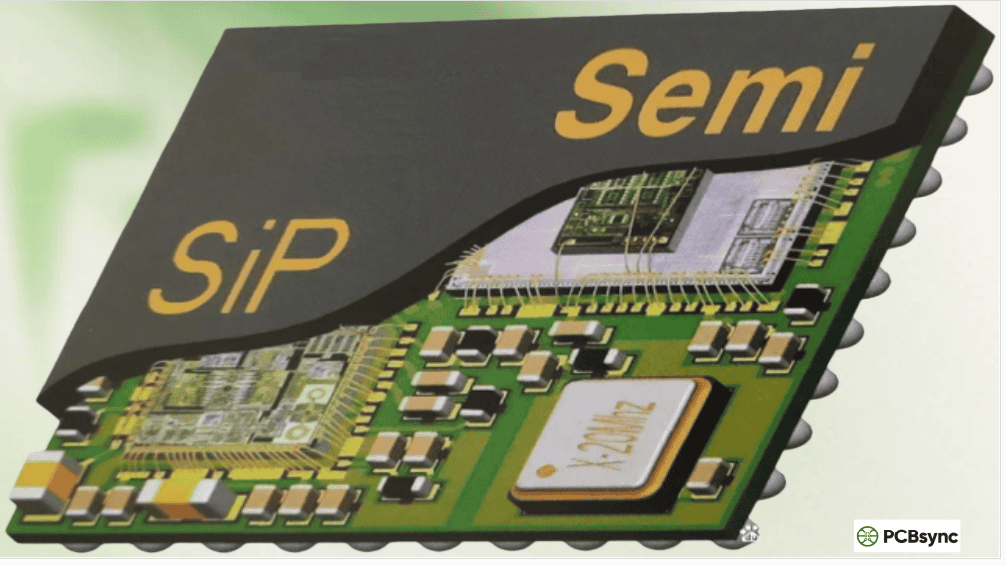
System-in-Package (SiP) combines multiple die, passive components, and sometimes other packages into a single module. SiP is common in wireless modules, power management units, and IoT devices.
Multi-Chip Module (MCM) integrates bare dies on a common substrate, connected by wire bonds or flip-chip connections. MCM predates SiP but remains relevant for high-performance applications.
2.5D packaging places multiple dies side-by-side on a silicon interposer containing through-silicon vias (TSVs). The interposer provides high-density routing between dies. High-bandwidth memory (HBM) stacks connect to processors via 2.5D interposers.
3D IC packaging stacks dies vertically, connected through TSVs. True 3D integration achieves the highest density and shortest interconnects but presents thermal management challenges.
Chiplet architectures decompose large monolithic dies into smaller functional blocks (chiplets) manufactured on optimal process nodes and integrated using advanced packaging. AMD’s EPYC and Ryzen processors demonstrate chiplet benefits for yield improvement and design flexibility.
When working with complex FPGAs in advanced packages, the Altera FPGA lineup offers various package options to match your design requirements.
Selecting the Right IC Package Type
Choosing the optimal package requires balancing multiple factors against your design constraints.
Package Selection Decision Framework
Factor
Questions to Ask
Package Implications
Pin count
How many I/Os needed?
DIP: ≤40, QFP: ≤300, BGA: ≤2500
Board space
What area/height available?
SMT saves 50%+ vs THT
Frequency
What signal speeds?
QFN/BGA for >100MHz
Power
Heat dissipation requirement?
Exposed pad or BGA for >1W
Assembly
Manual or automated?
DIP/SOIC easiest manual
Volume
Prototype or production?
Assembly cost varies
Rework
Field serviceability needed?
Through-hole or leaded SMT
Reliability
Environment, lifetime?
Package/die matching critical
Application-Specific Recommendations
Consumer electronics typically use QFN and fine-pitch BGA to minimize size while managing thermal loads from compact enclosures. WLCSP enables the thinnest designs for smartphones and wearables.
Industrial equipment often favors QFP and SOIC for their balance of density and serviceability. Exposed pad QFP handles moderate power while remaining reworkable.
Automotive systems require packages meeting AEC-Q100 qualification. QFP and BGA dominate automotive electronics, with careful attention to thermal cycling reliability.
Medical devices demand high reliability and often long-term availability. Conservative package choices like SOIC and LQFP provide proven reliability and multiple sourcing options.
Aerospace and defense applications may require ceramic packages (CDIP, CBGA) for radiation tolerance and extreme temperature operation. COTS (commercial off-the-shelf) components in plastic packages increasingly find use with appropriate derating.
Useful Resources for IC Package Design
When working with integrated circuit packages, these resources prove invaluable:
Component Databases and Libraries:
Ultra Librarian: Free PCB footprints and 3D models
SnapEDA: Component symbols and footprints
Octopart: Cross-reference and sourcing data
DigiKey/Mouser: Parametric search with datasheets
Industry Standards:
JEDEC: Package outline standards (MO series)
IPC-7351: Land pattern calculator and guidelines
IPC-A-610: Acceptability standards for assemblies
J-STD-020: Moisture sensitivity classification
Manufacturer Resources:
Texas Instruments Package Database
Analog Devices Package Information
NXP Package Outlines
Microchip Package Drawings
Design Tools:
IPC-7351 Land Pattern Calculator
Saturn PCB Toolkit (free)
Cadence Allegro PCB Footprint Viewer
Emerging Trends in IC Packaging
The integrated circuit packaging industry continues evolving rapidly, driven by demands for higher performance, greater integration, and smaller form factors.
Heterogeneous Integration and Chiplet Technology
Heterogeneous integration represents a fundamental shift in semiconductor design philosophy. Rather than scaling monolithic dies to ever-larger sizes with the associated yield challenges, designers now partition systems into smaller chiplets optimized for their specific functions.
Chiplet benefits include improved yield (smaller dies have exponentially better defect rates), process flexibility (different chiplets can use different technology nodes), and design reuse (proven chiplets become modular building blocks). AMD’s Zen architecture processors demonstrate these advantages, combining multiple CPU compute chiplets with I/O dies manufactured on different processes.
Advanced interconnect technologies enable chiplet communication at bandwidths approaching on-chip interconnects. UCIe (Universal Chiplet Interconnect Express) provides an open standard for die-to-die connections, promoting ecosystem development around chiplet-based designs.
2.5D and 3D packaging technologies support heterogeneous integration. Silicon interposers provide high-density routing between chiplets placed side-by-side. Through-silicon vias enable vertical stacking with minimal interconnect length. TSMC’s CoWoS (Chip-on-Wafer-on-Substrate) and Intel’s EMIB (Embedded Multi-die Interconnect Bridge) represent leading implementations.
Fan-Out Wafer Level Packaging (FOWLP)
Fan-out packaging redistributes die connections across an area larger than the die itself, enabling higher I/O density without the cost of silicon interposers.
FOWLP advantages include thin profiles (as low as 0.3mm), excellent electrical performance, and good thermal characteristics. The technology suits mobile processors, RF front-end modules, and other applications demanding compact, high-performance packaging.
eWLB (embedded Wafer Level Ball Grid Array) from Infineon/STATS ChipPAC was an early FOWLP implementation. Today, TSMC’s InFO (Integrated Fan-Out) leads the market, packaging Apple’s A-series processors for iPhone.
Package-on-Package (PoP) and Memory Integration
Package-on-Package stacks a logic package (typically an application processor) with memory packages, minimizing footprint while maintaining upgradeability. PoP dominates smartphone design, allowing memory capacity changes without redesigning the processor package.
High-Bandwidth Memory (HBM) integrates multiple DRAM dies in a 3D stack, connected to logic via silicon interposer. HBM provides memory bandwidth exceeding 1TB/s, essential for AI accelerators and high-performance GPUs.
Compute Express Link (CXL) and similar protocols enable coherent memory access across package boundaries, supporting memory expansion beyond what fits in a single package.
Market Trends and Future Outlook
The advanced packaging market reached approximately $44 billion in 2024 and projects growth exceeding 11% annually through 2030. Key growth drivers include:
AI and high-performance computing demanding maximum memory bandwidth and processing density
Automotive electronics requiring reliable, thermally efficient packages for power electronics and ADAS systems
5G infrastructure pushing RF packaging innovation for massive MIMO antennas
IoT and wearables driving ultra-compact packaging for battery-powered devices
Consumer electronics account for over 50% of advanced packaging demand, but automotive applications show the fastest growth rate at over 6% annually. The industry is shifting investment from traditional OSAT (Outsourced Semiconductor Assembly and Test) to foundry-integrated advanced packaging, with TSMC, Samsung, and Intel all expanding packaging capabilities.
Thermal Management Across Package Types
Thermal performance often determines package selection more than any other factor. Understanding thermal characteristics helps make informed decisions.
Thermal Resistance Comparison
Junction-to-ambient thermal resistance (θJA) measures how easily heat flows from the die to the surrounding air. Lower values indicate better thermal performance.
Package Type
Typical θJA (°C/W)
Maximum Power Dissipation
DIP-8
100-130
0.3-0.5W
DIP-40
50-70
0.5-1.0W
SOIC-8
110-150
0.3-0.5W
SOIC-16
80-100
0.5-0.8W
TSSOP-20
90-120
0.3-0.6W
QFP-100
35-50
1.0-1.5W
QFN-32 (exposed pad)
25-40
1.5-2.5W
BGA-256
20-30
2.0-4.0W
FCBGA-1000
8-15
5.0-20W+
PCB Contribution to Thermal Performance
The PCB significantly affects achieved thermal resistance. A minimal footprint on a two-layer board yields much higher θJA than the same package on a multilayer board with thermal vias and ground planes.
Thermal via arrays under exposed pads or BGA thermal balls provide heat paths to inner copper layers and the board’s opposite side. Via diameter of 0.3mm, 1.0mm spacing, and filled construction optimize thermal transfer while maintaining manufacturability.
Copper pour area surrounding the package spreads heat laterally. Increasing copper weight (2oz vs 1oz) in thermal areas further improves heat spreading.
Airflow considerations matter for forced convection cooling. Package height affects boundary layer development, with taller packages sometimes achieving better cooling despite larger thermal resistance to the board.
Frequently Asked Questions About IC Package Types
What is the difference between QFP and QFN packages?
QFP (Quad Flat Package) features gull-wing leads extending from all four sides, while QFN (Quad Flat No-Lead) has flat pads on the package bottom with no protruding leads. QFN offers 30-50% smaller footprint, better thermal performance through its exposed center pad, and lower lead inductance for high-frequency applications. However, QFP provides easier visual inspection, simpler rework, and more forgiving assembly tolerances. Choose QFN when size and thermal performance are critical; choose QFP when inspectability and reworkability matter more.
How do I choose between BGA and QFP for my design?
The choice depends primarily on pin count, frequency, and assembly capabilities. BGA becomes necessary when pin counts exceed what QFP can practically accommodate (roughly 200-300 pins) or when signal frequencies exceed several hundred MHz. BGA also provides superior thermal performance for high-power devices. However, BGA requires X-ray inspection, specialized rework equipment, and often more PCB layers for routing. If your design has moderate pin counts, lower frequencies, and you value inspectability and rework capability, QFP is often the better choice.
Can I hand solder fine-pitch QFP or QFN packages?
Fine-pitch QFP packages (0.5mm pitch and above) can be hand soldered by experienced technicians using drag soldering techniques with flux and fine solder. The visible leads provide feedback during the process. QFN packages are significantly more challenging because the pads are hidden underneath. Hand soldering QFN typically requires a hot air rework station, precise paste application with a stencil or syringe, and considerable practice. For production, both package types should use automated assembly with reflow soldering.
What PCB technology level do I need for different BGA pitches?
Standard PCB fabrication (≥0.1mm trace/space) handles BGA pitches of 0.8mm and above with via-in-pad or dog-bone escape routing. BGA pitches of 0.5-0.65mm typically require HDI (High Density Interconnect) technology with blind/buried microvias and trace/space capabilities of 0.075mm. Ultra-fine pitch BGA (0.4mm and below) demands advanced HDI with multiple microvia layers and fabrication capabilities under 0.05mm trace/space. The PCB cost and lead time increase significantly as pitch decreases.
How does package selection affect thermal management?
Package thermal performance varies dramatically. Through-hole DIP packages have thermal resistance (junction-to-ambient) of 50-100°C/W, limiting them to low-power applications. Standard SOIC achieves 80-120°C/W. QFN with proper thermal pad design reaches 15-40°C/W, making it suitable for moderate power. BGA packages achieve 10-30°C/W for PBGA and under 10°C/W for FCBGA with thermal balls. For any IC dissipating more than 0.5-1W, exposed pad packages (QFN, exposed pad QFP) or BGA are essential. The PCB design significantly impacts achieved thermal resistance—proper thermal via arrays, copper pours, and airflow all contribute to the final result.
Inquire: Call 0086-755-23203480, or reach out via the form below/your sales contact to discuss our design, manufacturing, and assembly capabilities.
Quote: Email your PCB files to Sales@pcbsync.com (Preferred for large files) or submit online. We will contact you promptly. Please ensure your email is correct.
Notes: For PCB fabrication, we require PCB design file in Gerber RS-274X format (most preferred), *.PCB/DDB (Protel, inform your program version) format or *.BRD (Eagle) format. For PCB assembly, we require PCB design file in above mentioned format, drilling file and BOM. Click to download BOM template To avoid file missing, please include all files into one folder and compress it into .zip or .rar format.