Inquire: Call 0086-755-23203480, or reach out via the form below/your sales contact to discuss our design, manufacturing, and assembly capabilities.
Quote: Email your PCB files to Sales@pcbsync.com (Preferred for large files) or submit online. We will contact you promptly. Please ensure your email is correct.
Notes: For PCB fabrication, we require PCB design file in Gerber RS-274X format (most preferred), *.PCB/DDB (Protel, inform your program version) format or *.BRD (Eagle) format. For PCB assembly, we require PCB design file in above mentioned format, drilling file and BOM. Click to download BOM template To avoid file missing, please include all files into one folder and compress it into .zip or .rar format.
IC Fabrication Technologies: CMOS, BiCMOS, TTL & More
Every integrated circuit in your electronic devices—from the processor in your computer to the sensors in your car—is built using specific IC fabrication technology. Understanding these technologies isn’t just academic; it directly affects how you design PCBs, select components, and troubleshoot circuits. The choice between CMOS vs TTL or knowing when BiCMOS makes sense can mean the difference between a product that works flawlessly and one that fails in the field.
This comprehensive guide explores the major semiconductor technology families that have shaped—and continue to shape—modern electronics. Whether you’re selecting logic ICs for a new design or trying to understand why certain components behave the way they do, this knowledge is fundamental to effective electronic design.
Understanding IC Fabrication Technology Fundamentals
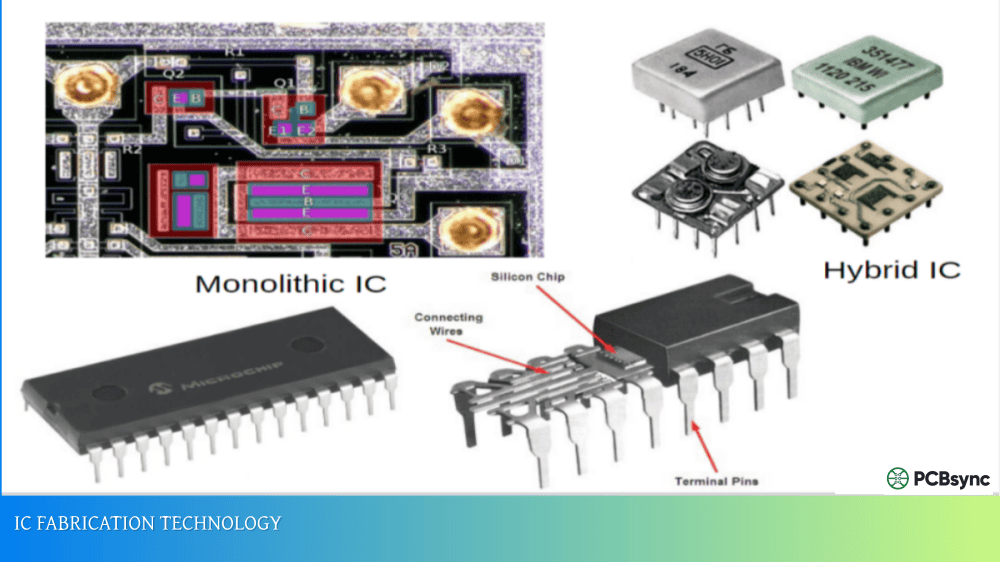
IC fabrication technology refers to the manufacturing processes and circuit architectures used to create integrated circuits. Different technologies use different types of transistors, circuit topologies, and fabrication methods, resulting in vastly different performance characteristics.
The major logic families that have dominated IC fabrication include:
CMOS (Complementary Metal-Oxide-Semiconductor): Uses complementary pairs of MOSFETs
BiCMOS: Combines bipolar and CMOS transistors on a single chip
ECL (Emitter-Coupled Logic): Uses non-saturating bipolar transistors for maximum speed
Each technology emerged to solve specific challenges and offers distinct advantages. Understanding their characteristics helps engineers make informed decisions about component selection and circuit design.
CMOS Technology: The Dominant Force in Modern ICs
CMOS (Complementary Metal-Oxide-Semiconductor) has become the overwhelming choice for IC fabrication, accounting for approximately 99% of all integrated circuits manufactured today. This dominance didn’t happen overnight—it took decades of development and refinement.
How CMOS Works
CMOS technology uses complementary pairs of n-type and p-type MOSFETs (Metal-Oxide-Semiconductor Field-Effect Transistors) to implement logic functions. In any CMOS logic gate:
When the output is HIGH, PMOS transistors conduct while NMOS transistors are off
When the output is LOW, NMOS transistors conduct while PMOS transistors are off
This complementary operation is the key to CMOS’s remarkable efficiency. Because one transistor type is always off when the other is on, there’s virtually no direct path from power supply to ground in the steady state. Current flows only during switching transitions.
CMOS Advantages
Extremely Low Static Power Consumption: A CMOS gate consumes negligible power when not switching—on the order of nanowatts. This makes CMOS ideal for battery-powered devices and high-density integration where power dissipation is critical.
High Noise Immunity: CMOS logic levels swing nearly rail-to-rail, providing excellent noise margins. A typical 5V CMOS gate might have noise margins exceeding 2V.
Wide Operating Voltage Range: CMOS can operate across a broad voltage range (typically 3V to 15V for 4000-series, lower for modern variants), simplifying power supply design.
High Integration Density: CMOS transistors can be made extremely small, enabling billions of transistors on a single chip. Modern processors wouldn’t exist without this capability.
High Fan-Out: CMOS gates have very high input impedance, allowing one output to drive many inputs (fan-out of 50 or more) without signal degradation.
CMOS Limitations
Susceptibility to ESD: CMOS gate inputs are insulated by thin oxide layers that can be destroyed by electrostatic discharge. Proper handling procedures are essential.
Dynamic Power Consumption: While static power is negligible, CMOS power consumption increases with switching frequency. At very high frequencies, total power consumption can become significant.
Input Capacitance: The gate capacitance of CMOS inputs must be charged and discharged during transitions, affecting speed when driving multiple loads.
CMOS Logic Families
Several CMOS logic families have evolved over the decades:
Family
Supply Voltage
Propagation Delay
Features
4000-series
3-15V
25-100ns
Original CMOS, wide voltage range
74HC
2-6V
8-25ns
High-speed CMOS, TTL pin-compatible
74HCT
4.5-5.5V
10-30ns
CMOS with TTL-compatible input levels
74AC
2-5.5V
3-8ns
Advanced CMOS, faster than HC
74ACT
4.5-5.5V
4-10ns
Advanced CMOS with TTL inputs
74LVC
1.65-3.6V
2-5ns
Low-voltage CMOS for modern systems
Modern programmable logic devices, including Altera FPGA products, are manufactured using advanced CMOS processes that achieve remarkable density and performance.
TTL Technology: The Legacy Standard
TTL (Transistor-Transistor Logic) was the dominant logic family from the late 1960s through the 1980s. While largely superseded by CMOS in new designs, understanding TTL remains important because many legacy systems still use it, and its characteristics influence modern design practices.
How TTL Works
TTL circuits use bipolar junction transistors (BJTs) to implement logic functions. The “transistor-transistor” name comes from using transistors for both the logic function and the output drive stage. A typical TTL gate uses:
Multi-emitter input transistors for the logic function
Phase-splitter transistors to generate complementary drive signals
Totem-pole output stage with active pull-up and pull-down
Unlike CMOS, TTL transistors operate in saturation and cutoff regions, which affects switching speed and power consumption.
TTL Advantages
Robust Against ESD: TTL’s bipolar construction is inherently more resistant to electrostatic discharge than CMOS, making it more forgiving of handling.
Fast Switching (historically): When introduced, TTL was significantly faster than early CMOS. While modern CMOS has surpassed TTL in speed, some TTL variants remain competitive.
Proven Reliability: Decades of use have established TTL’s reliability in demanding environments.
Low Input Current Sinking: TTL inputs sink current when low, which can simplify interfacing with certain sensors and switches.
TTL Limitations
High Power Consumption: TTL gates consume significant power even when not switching—typically 1-20mW per gate depending on the variant. This limits integration density and battery-powered applications.
Fixed Supply Voltage: TTL requires a regulated 5V supply (4.75-5.25V). Operation outside this range isn’t possible without risking damage or malfunction.
Lower Noise Immunity: TTL logic swings are smaller than CMOS, resulting in reduced noise margins (typically 0.4V).
Limited Fan-Out: Standard TTL has a fan-out of about 10 loads due to input current requirements.
TTL Logic Families
Family
Designation
Power/Gate
Propagation Delay
Notes
Standard TTL
74xx
10mW
10ns
Original, obsolete
Low-Power TTL
74Lxx
1mW
33ns
Lower power, slower
High-Speed TTL
74Hxx
22mW
6ns
Faster, more power
Schottky TTL
74Sxx
19mW
3ns
Schottky diodes prevent saturation
Low-Power Schottky
74LSxx
2mW
10ns
Best power-speed compromise
Advanced Schottky
74ASxx
8mW
1.5ns
High performance
Fast TTL
74Fxx
4mW
3ns
Optimized for speed
Advanced LS
74ALSxx
1mW
4ns
Lower power than LS
The 74LSxx (Low-Power Schottky) family became the de facto standard for many years, offering the best balance of speed, power, and cost.
CMOS vs TTL: A Detailed Comparison
The CMOS vs TTL debate has largely been settled in favor of CMOS for most applications, but understanding the differences remains relevant for interfacing legacy systems and selecting specialty components.
Electrical Characteristics Comparison
Parameter
TTL (74LSxx)
CMOS (74HC)
CMOS (4000-series)
Supply Voltage
4.75-5.25V
2-6V
3-15V
VOH (min)
2.7V
4.9V (at 5V)
VDD-0.05V
VOL (max)
0.5V
0.1V (at 5V)
0.05V
VIH (min)
2.0V
3.5V (at 5V)
70% VDD
VIL (max)
0.8V
1.0V (at 5V)
30% VDD
IIH
20µA
1µA
1µA
IIL
-0.4mA
-1µA
-1µA
IOH
-0.4mA
-4mA
-0.5mA
IOL
8mA
4mA
0.5mA
Power/Gate (static)
2mW
~10nW
~10nW
Fan-Out
10
50+
50+
Interfacing TTL and CMOS
When mixing TTL and CMOS in the same system, voltage level compatibility must be addressed:
TTL driving CMOS (74HC): Generally works at 5V, but the TTL high output (2.7V minimum) may not reliably exceed the CMOS high input threshold (3.5V). Use 74HCT (CMOS with TTL-compatible inputs) for reliable interfacing.
CMOS driving TTL: CMOS high output easily exceeds TTL requirements, but CMOS may not sink enough current for multiple TTL loads. Check current specifications or use buffer ICs.
Level Shifting: When voltage levels differ significantly, use dedicated level-shifting ICs or discrete translator circuits.
BiCMOS Technology: Best of Both Worlds
BiCMOS (Bipolar CMOS) technology combines bipolar transistors and CMOS transistors on a single integrated circuit, exploiting the advantages of both technologies.
How BiCMOS Works
In a BiCMOS process, both bipolar junction transistors (BJTs) and MOSFETs are fabricated on the same silicon substrate. The fabrication requires additional process steps compared to pure CMOS, typically adding 3-4 mask layers.
The design philosophy uses:
CMOS transistors for high-density logic functions with low static power
Bipolar transistors for high-speed analog functions, I/O buffers, and precision circuits
BiCMOS Advantages
Mixed-Signal Integration: BiCMOS excels at combining digital logic with analog circuits on a single chip. ADCs, DACs, and complete radio systems benefit from this capability.
Improved Speed Over Pure CMOS: Bipolar output stages can drive capacitive loads faster than CMOS, reducing propagation delays in I/O-intensive designs.
Better Analog Performance: Bipolar transistors provide higher transconductance, lower noise, and better matching than MOSFETs for many analog applications.
Flexible I/O: BiCMOS can interface directly with TTL, CMOS, and ECL logic levels, simplifying mixed-technology systems.
High Current Drive: Bipolar transistors handle higher output currents more efficiently than CMOS alone.
BiCMOS Applications
BiCMOS technology has found its niche in several key areas:
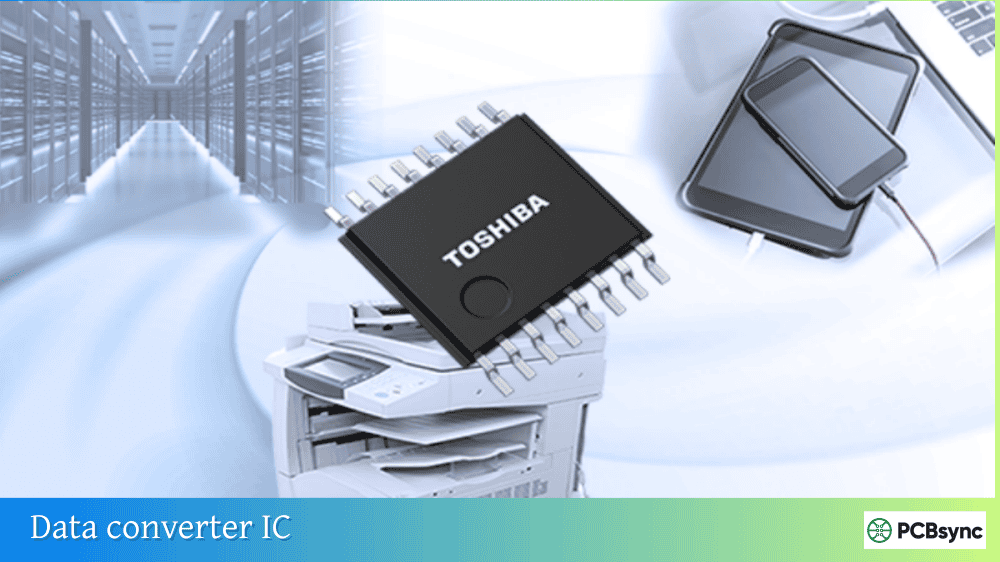
Mixed-Signal ICs: Data converters, analog front-ends, complete transceiver systems
RF and Wireless: Cellular communication ICs, radar systems, high-frequency amplifiers
Silicon-Germanium (SiGe) BiCMOS represents an advanced variant that incorporates silicon-germanium heterojunction bipolar transistors (HBTs). SiGe HBTs achieve:
Transition frequencies (fT) exceeding 300 GHz
Maximum oscillation frequencies (fmax) over 400 GHz
Operation well into millimeter-wave frequencies
This makes SiGe BiCMOS essential for:
5G and 6G wireless systems
Automotive radar (77 GHz)
High-speed optical communication
Precision instrumentation
ECL Technology: When Speed is Everything
Emitter-Coupled Logic (ECL) represents the fastest bipolar logic family, achieving propagation delays under 1 nanosecond. While its high power consumption limits widespread use, ECL remains relevant for specific high-speed applications.
How ECL Works
ECL uses differential amplifier circuits with emitter-coupled bipolar transistors. The key innovation is preventing transistors from entering saturation, which eliminates the storage time delay that slows TTL. Key characteristics include:
Non-saturating operation: Transistors remain in the active region
Small voltage swing: Typically 0.8V between logic levels
Differential signaling: Both true and complement outputs available
Constant current consumption: Minimizes supply noise
ECL Advantages
Highest Speed: ECL gates achieve propagation delays of 0.5-2ns, faster than any other bipolar technology.
Low Noise Generation: Constant current draw means minimal switching noise on power supply lines.
Differential Outputs: Both Q and Q-bar outputs are naturally available, simplifying differential signal distribution.
Transmission Line Driving: ECL outputs are designed to drive terminated transmission lines directly.
ECL Limitations
High Power Consumption: ECL gates consume 25-60mW per gate, significantly more than TTL or CMOS.
Negative Supply Voltages: Traditional ECL uses negative supplies (typically -5.2V), complicating power supply design.
Low Integration Density: High power limits the number of gates that can be integrated.
Special Design Requirements: ECL’s fast edges require careful attention to transmission line effects.
ECL Variants
Family
Propagation Delay
Power/Gate
Notes
MECL I
8ns
25mW
Original (1962)
MECL II
4ns
25mW
Improved (1966)
MECL III
1ns
60mW
High-speed (1968)
10K
2ns
25mW
Standard (1971)
100K
0.75ns
40mW
High-speed
ECLinPS
<0.5ns
40mW
Picosecond delays
PECL
~1ns
25mW
Positive supply variant
ECL Applications
ECL finds use in applications where speed justifies its power consumption:
Modern semiconductor technology has pushed CMOS to remarkable limits through continuous innovation in transistor architecture.
Planar CMOS Evolution
Traditional planar CMOS dominated from the 1970s until approximately 2011, with process nodes shrinking from micrometers to 28nm. Key milestones included:
Introduction of strain engineering (90nm)
High-k metal gate (45nm)
Immersion lithography (65nm)
FinFET Technology
At 22nm and below, planar transistors encountered fundamental physical limits. Intel introduced FinFET (Fin Field-Effect Transistor) technology, featuring a three-dimensional channel structure:
The channel forms a thin “fin” rising vertically from the substrate
The gate wraps around three sides of the fin
Superior electrostatic control enables continued scaling
FinFET advantages:
Reduced leakage current
Lower operating voltage
Higher drive current per unit area
Better short-channel control
Gate-All-Around (GAA) FET
Beyond FinFET, Gate-All-Around transistors (also called nanosheet or nanowire transistors) provide even better channel control:
Analog Devices Mixed-Signal Design: BiCMOS design resources
ON Semiconductor ECL Resources: High-speed logic design guides
Design Tools
LTspice: Free circuit simulation for analog and mixed-signal design
SPICE Models: Available from most semiconductor manufacturers
EDA Tools: Cadence, Synopsys, Mentor for professional IC design
Frequently Asked Questions
What is the main difference between CMOS and TTL?
The fundamental difference is the transistor type: CMOS uses complementary pairs of MOSFETs (n-type and p-type), while TTL uses bipolar junction transistors (BJTs). This leads to dramatically different characteristics. CMOS consumes almost no power when static (nanowatts per gate) because one transistor type is always off, while TTL consumes milliwatts per gate continuously. CMOS also offers wider voltage range operation, higher noise immunity, and much greater integration density, which is why it dominates modern electronics.
Why is CMOS susceptible to ESD damage?
CMOS transistors have extremely thin gate oxide layers (often just a few nanometers thick) that provide insulation between the gate and channel. While this enables high input impedance and low power consumption, it creates vulnerability to electrostatic discharge. A voltage spike of just 100V can punch through the oxide, permanently damaging the transistor. This is why proper ESD handling procedures—grounding straps, conductive work surfaces, and ESD-safe packaging—are essential when working with CMOS devices.
When should I use BiCMOS instead of pure CMOS?
BiCMOS is the right choice when you need to combine high-density digital logic with precision analog functions on a single chip. Typical applications include mixed-signal ICs (ADCs, DACs), RF transceivers, high-speed I/O interfaces, and systems requiring multiple interface voltage levels. BiCMOS is also preferred when bipolar transistor characteristics—higher transconductance, better matching, lower noise—are needed for analog sections. However, BiCMOS costs more and has higher design complexity than pure CMOS, so it’s only justified when its capabilities are actually needed.
Is ECL still used in modern designs?
Yes, but in specialized applications where its extreme speed justifies the high power consumption. ECL and its derivatives (PECL, LVPECL) are still used in fiber-optic transceivers, high-frequency clock distribution, precision timing systems, and test equipment requiring sub-nanosecond performance. While advanced CMOS has closed the speed gap for many applications, ECL retains advantages in constant-current operation (minimal supply noise) and differential signaling. For most digital logic, CMOS has replaced ECL, but niche applications continue to rely on ECL’s unique capabilities.
How do process nodes (7nm, 5nm, 3nm) affect IC performance?
Smaller process nodes generally provide improved transistor performance: higher speed, lower power consumption per transistor, and greater integration density. However, the relationship isn’t linear. A “5nm” process doesn’t mean transistors are 5nm in size—it’s a marketing designation. Each node typically offers 15-30% speed improvement or 30-50% power reduction versus the previous generation, plus roughly double the transistor density. Smaller nodes also cost significantly more to manufacture and require advanced design techniques to manage effects like leakage current, variability, and reliability.
Conclusion
IC fabrication technology forms the foundation of all electronic systems. Understanding the characteristics of different technologies—CMOS, TTL, BiCMOS, ECL, and their variants—enables better design decisions, more effective troubleshooting, and successful system integration.
Key takeaways from this guide:
CMOS dominates modern electronics due to its unmatched combination of low power, high density, and excellent noise immunity
TTL remains relevant for legacy systems and specific interface requirements
BiCMOS bridges analog and digital for mixed-signal and RF applications
ECL provides ultimate speed when power consumption is secondary
Interfacing different logic families requires careful attention to voltage levels and current requirements
Whether you’re designing a new product, maintaining legacy systems, or simply trying to understand why your circuit behaves the way it does, knowledge of semiconductor technology fundamentals provides the insight needed for success.
The evolution continues—from planar CMOS to FinFETs to Gate-All-Around transistors, and eventually to technologies we haven’t yet imagined. Staying current with these developments ensures your designs remain competitive and your skills remain relevant in an ever-advancing field.
Inquire: Call 0086-755-23203480, or reach out via the form below/your sales contact to discuss our design, manufacturing, and assembly capabilities.
Quote: Email your PCB files to Sales@pcbsync.com (Preferred for large files) or submit online. We will contact you promptly. Please ensure your email is correct.
Notes: For PCB fabrication, we require PCB design file in Gerber RS-274X format (most preferred), *.PCB/DDB (Protel, inform your program version) format or *.BRD (Eagle) format. For PCB assembly, we require PCB design file in above mentioned format, drilling file and BOM. Click to download BOM template To avoid file missing, please include all files into one folder and compress it into .zip or .rar format.