Inquire: Call 0086-755-23203480, or reach out via the form below/your sales contact to discuss our design, manufacturing, and assembly capabilities.
Quote: Email your PCB files to Sales@pcbsync.com (Preferred for large files) or submit online. We will contact you promptly. Please ensure your email is correct.
Notes: For PCB fabrication, we require PCB design file in Gerber RS-274X format (most preferred), *.PCB/DDB (Protel, inform your program version) format or *.BRD (Eagle) format. For PCB assembly, we require PCB design file in above mentioned format, drilling file and BOM. Click to download BOM template To avoid file missing, please include all files into one folder and compress it into .zip or .rar format.
How to Merge Multiple Gerber Files: Complete Guide for PCB Engineers
The first time I needed to combine multiple PCB designs into a single Gerber package, I spent far too long searching for the right approach. Whether you’re trying to panelize different boards together, combine layers from separate exports, or merge silkscreen files with assembly drawings, knowing how to merge Gerber files properly saves both time and manufacturing costs. This guide covers every scenario where merging Gerber files makes sense and walks through the practical methods to accomplish it.
There are several situations where PCB engineers need to merge Gerber files, and each requires a slightly different approach.
Common Reasons for Gerber File Merging
Scenario
Purpose
Typical Approach
Panelization
Combine multiple boards into one manufacturing panel
Merge all layers + add panel features
Layer combining
Merge silkscreen with assembly layer
Combine specific layers only
Mixed designs
Different boards on same panel
Full file set merging
Revision consolidation
Combine old and new design sections
Selective layer merging
Logo/artwork addition
Add graphics to existing design
Single layer merge
Cost reduction
Multiple prototypes in one order
Full panelization merge
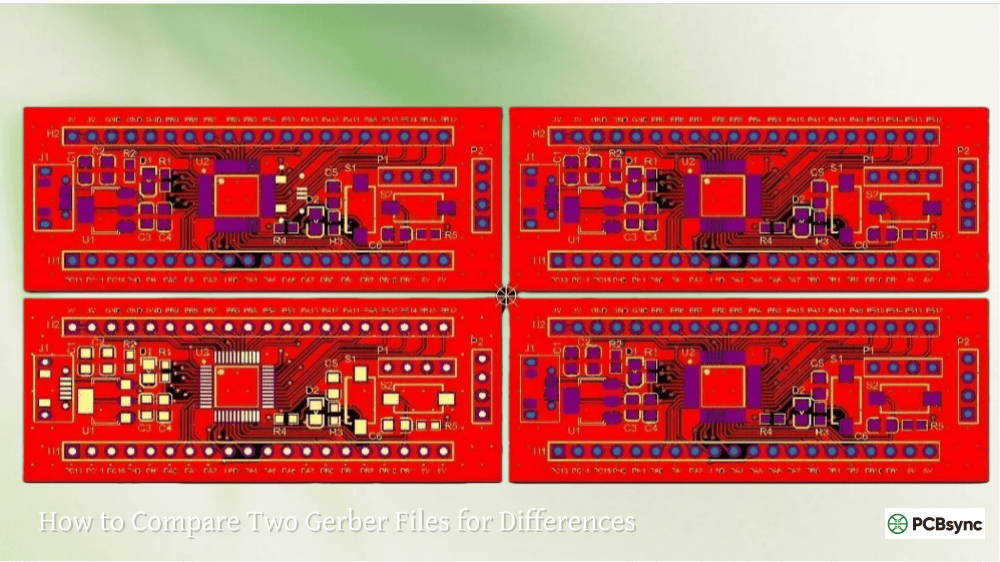
Understanding your specific goal determines which merging method works best. Panelizing requires merging corresponding layers from multiple designs while maintaining alignment. Adding a logo to silkscreen only requires merging a single layer.
Understanding Gerber File Structure for Merging
Before merging Gerber files, you need to understand what you’re combining. Each Gerber file represents a single layer—merging combines the graphical data from multiple files while maintaining the coordinate system.
Layer Matching Requirements
When merging multiple PCB designs, corresponding layers must be combined:
Source Board 1
Source Board 2
Merged Output
board1.GTL
board2.GTL
panel.GTL
board1.GBL
board2.GBL
panel.GBL
board1.GTS
board2.GTS
panel.GTS
board1.GBS
board2.GBS
panel.GBS
board1.GTO
board2.GTO
panel.GTO
board1.GBO
board2.GBO
panel.GBO
board1.GKO
board2.GKO
panel.GKO
board1.DRL
board2.DRL
panel.DRL
The merging process reads each layer file, applies coordinate offsets to position boards correctly, and writes combined output files that contain data from all source boards.
Critical Merge Considerations
Factor
Importance
Notes
Coordinate origin
Critical
All boards must use consistent origin reference
Units
Critical
Don’t mix inch and metric within a merge
Format
Important
RS-274X recommended for all files
Layer count
Critical
All boards must have same layer count
Aperture definitions
Important
May need consolidation
Board specifications
Critical
Same thickness, copper weight, finish
Methods to Merge Multiple Gerber Files
You have several options for merging Gerber files, ranging from free command-line tools to professional CAM software.
Method 1: GerberPanelizer (Free GUI Tool)
GerberPanelizer is a free Windows application that merges Gerber files through a visual interface. It’s designed primarily for panelization but works for any Gerber merging task.
Step-by-step process:
Prepare source files: Organize each board’s Gerbers in separate folders with proper naming (.GTL, .GBL, .GTS, etc.)
Rename outline files: If using KiCad, rename .gm1 files to .gko (the extension GerberPanelizer expects for board outlines)
Create new project: Open GerberPanelizer, select File → New
Set panel dimensions: Configure panel size in Panel Properties (e.g., 100x100mm)
Import boards: Drag each Gerber folder onto the workspace. Boards appear in the layout area.
Arrange boards: Use Board Placement → Autopack or manually position boards. Right-click boards to add instances for duplicates.
Add breakaway features: If panelizing, use Breaktabs → Create Breaktabs to add mouse bites between boards
Verify panel: All boards should show green status indicating valid panel configuration
When combining multiple boards, the original board outlines become internal routing paths, and a new panel outline encompasses all boards.
Original Files
Merged Result
Board 1 outline
Internal routing path
Board 2 outline
Internal routing path
Panel boundary
New outer outline
Breakaway tabs
Added between boards
Common Merging Problems and Solutions
Gerber merging can introduce issues that weren’t present in original files.
Alignment Problems
Symptom: Layers don’t align correctly in merged output
Causes and fixes:
Cause
Solution
Different origins
Standardize origin before merging
Coordinate format mismatch
Convert all files to same format
Unit inconsistency
Convert all to mm or all to inches
Scaling issues
Verify no scaling applied during merge
Drill Misalignment
Symptom: Drill holes offset from copper pads
Common causes:
Different coordinate origins between Gerber and drill exports
Trailing vs. leading zero format mismatch
Inch vs. metric unit confusion
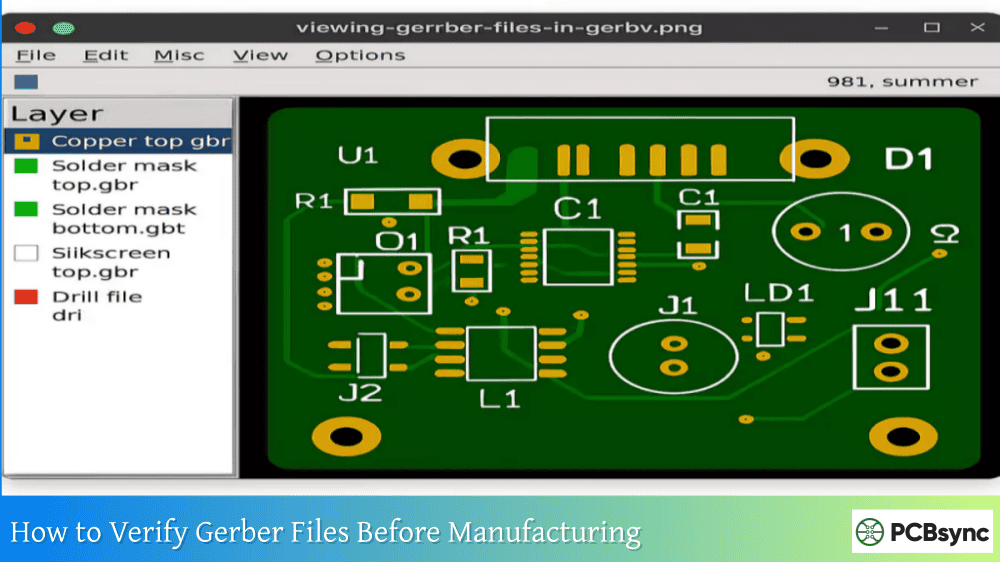
Solution: Open merged files in viewer, overlay drill layer on copper, and verify alignment before sending to manufacturer.
Aperture Conflicts
Symptom: Strange pad shapes or missing features
Cause: D-code conflicts when merging files with different aperture definitions
Solution: Use merge tool that properly consolidates aperture lists, or manually verify aperture table in merged output.
Missing Layers
Symptom: Some layers don’t appear in merged output
Cause: File extension mismatch or layer mapping errors
Solution: Verify all source files use consistent naming conventions before merging.
Best Practices for Merging Gerber Files
Follow these guidelines to ensure successful merges.
Pre-Merge Checklist
Step
Action
1
Verify all source boards DRC-clean
2
Confirm identical layer stackup
3
Standardize file naming conventions
4
Convert all files to RS-274X format
5
Use consistent coordinate units
6
Document board origins
During Merge
Step
Action
1
Import files from organized folder structure
2
Verify each board loads correctly
3
Check layer mapping before proceeding
4
Position boards with adequate spacing
5
Save intermediate work
6
Add panel features (outline, tabs, fiducials)
Post-Merge Verification
Check
Method
Layer alignment
Overlay all layers in viewer
Drill alignment
Overlay drill on copper layers
Board spacing
Measure in viewer
File completeness
Verify all layer files present
Aperture validity
Check for errors when loading
Manufacturer acceptance
Upload to online viewer/DFM tool
Useful Resources for Merging Gerber Files
Merging Tools
Tool
Type
Platform
URL
GerberPanelizer
GUI
Windows
github.com/ThisIsNotRocketScience/GerberTools
GerbMerge
CLI
Cross-platform
github.com/unwireddevices/gerbmerge
hm-panelizer
GUI
Cross-platform
github.com/halfmarble/hm-panelizer
KiKit
CLI/Plugin
Cross-platform
github.com/yaqwsx/KiKit
CAM350
Professional
Windows
downstreamtech.com
Camtastic
Professional
Windows
altium.com
Verification Tools
Tool
Purpose
URL
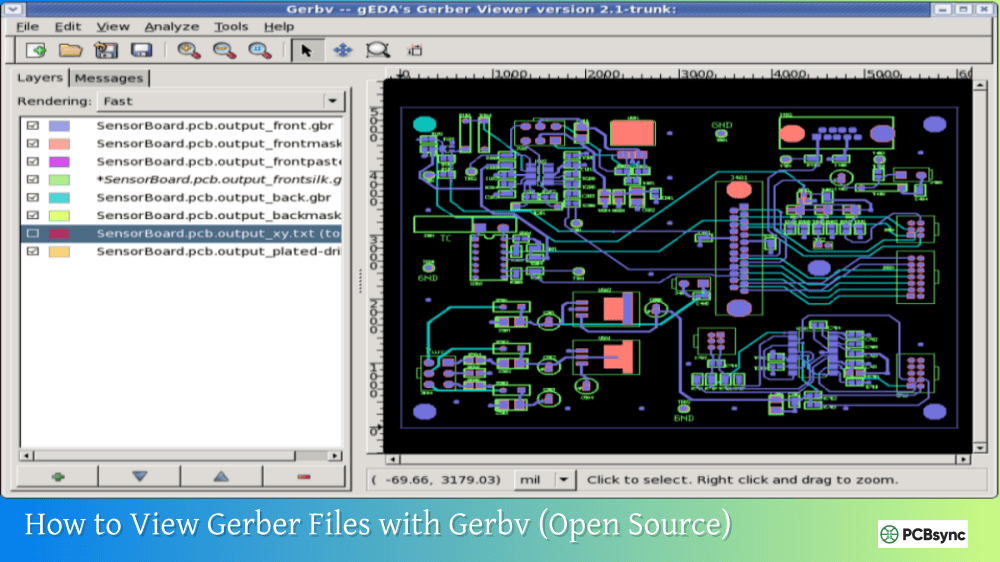
Gerbv
Free Gerber viewer
gerbv.github.io
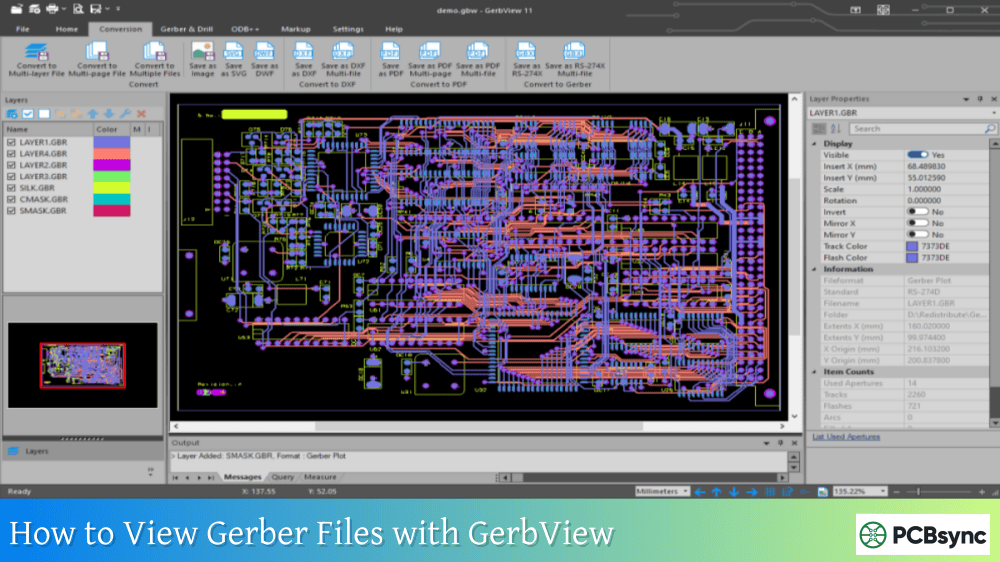
KiCad GerbView
Free Gerber viewer
kicad.org
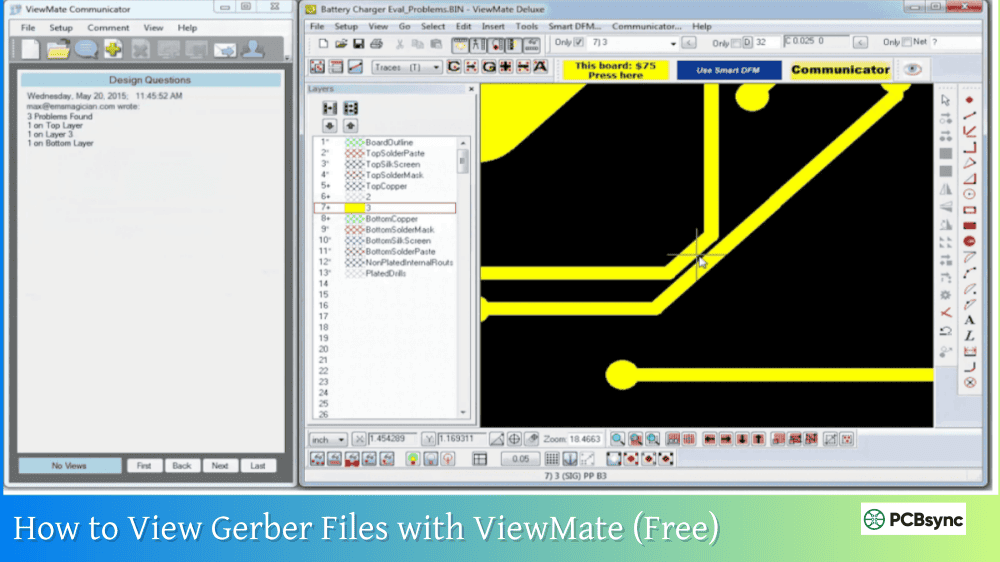
ViewMate
Free/paid viewer
pentalogix.com
HQDFM Online
Online DFM check
nextpcb.com
Ucamco Reference Viewer
Online viewer
gerber-viewer.ucamco.com
Manufacturer Online Viewers
Service
Notes
JLCPCB
Instant render, DFM feedback
PCBWay
Layer preview, pricing
OSH Park
Renders with purple mask
Seeed Studio
Panel preview
Frequently Asked Questions
Can I merge Gerber files from different CAD tools?
Yes, Gerber is a standardized format, so files from different CAD tools (KiCad, Eagle, Altium, OrCAD) can be merged together. However, you must ensure all files use the same format version (RS-274X recommended), consistent units, and compatible coordinate systems. The challenge is usually in file naming conventions—different tools use different extensions. Standardize naming to Protel conventions (.GTL, .GBL, etc.) before merging. Also verify that all source designs share identical specifications: same layer count, board thickness, copper weight, and surface finish.
How do I merge just one layer, like adding a logo to silkscreen?
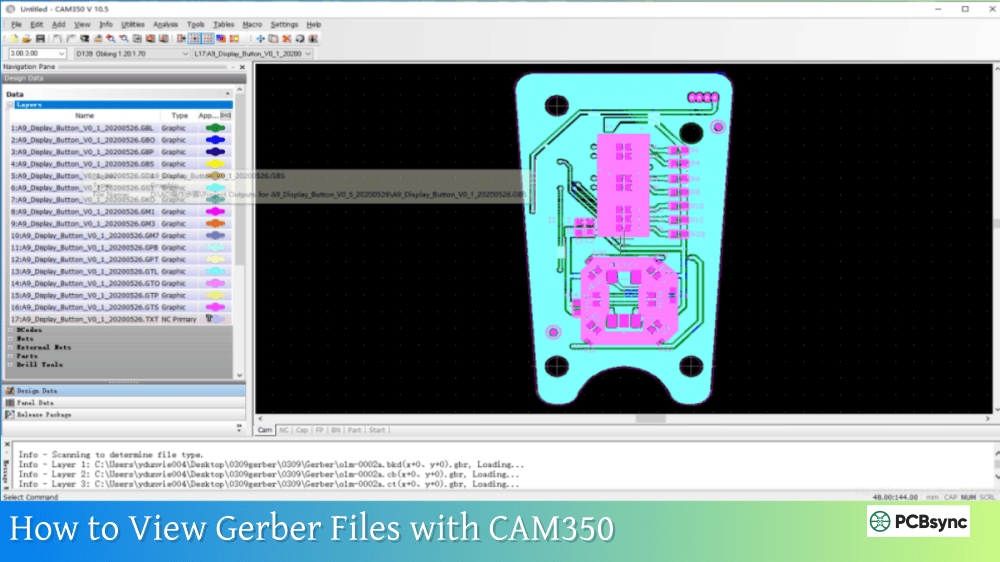
To merge a single layer (such as adding a logo to existing silkscreen), you only need to combine the specific layer files. In GerberPanelizer, you can add a logo Gerber to the same folder as your board—files merge by extension, so both .GTO files combine automatically. In CAM350, import both files to the same layer and they’ll overlay. The key is positioning—apply a coordinate offset to the logo file so it appears in the correct location. Create the logo as a separate Gerber file with the same origin as your main design for easiest alignment.
What’s the maximum number of boards I can merge into one panel?
There’s no hard limit on the number of boards you can merge—the constraint is typically the maximum drill tool count. Most merging tools and manufacturers support 26-99 unique drill sizes across the merged panel. If your combined designs exceed this limit, you’ll need to standardize hole sizes across designs before merging. Physical constraints also apply: your merged panel must fit within your manufacturer’s maximum panel size (commonly 450x600mm for production). For prototype services, panels are typically limited to 100x100mm or similar, which practically limits the number of boards you can include.
Why do my merged drill files show holes in wrong positions?
Drill misalignment after merging almost always results from inconsistent coordinate settings between original Gerber and drill exports. Check three things: First, verify the coordinate origin used for drill export matches the Gerber origin. Second, confirm the coordinate format (leading/trailing zero suppression) is consistent. Third, ensure units match—mixing inch Gerbers with metric drill files causes 25.4x scaling errors. To diagnose, load merged output in a Gerber viewer and overlay the drill layer on top copper. If holes are systematically offset in one direction, the origin was different. If holes appear scaled wrong, you have a unit mismatch.
Should I merge Gerber files myself or let the manufacturer do it?
For standard panelization of identical boards, manufacturers typically handle this automatically and efficiently—they combine your design with other customers’ boards to fill their production panels. However, merge Gerber files yourself when you need multiple different designs on one panel (manufacturers charge extra for this), when you have specific panel configuration requirements, or when you want control over board arrangement and breakaway tab placement. For prototypes where you’re ordering from pooled services (OSH Park, JLCPCB), letting them panelize is usually more cost-effective. For production quantities or mixed-design panels, creating your own merged Gerbers gives you full control.
Conclusion
Merging multiple Gerber files is a fundamental skill for PCB engineers working with panelization, cost optimization, or complex multi-board projects. Whether you choose a free GUI tool like GerberPanelizer, a command-line solution like GerbMerge, or professional CAM software like CAM350, the principles remain the same: organize your source files consistently, merge corresponding layers correctly, verify the output thoroughly.
The most important step is verification. Always load your merged output in a Gerber viewer before sending to manufacturing. Check layer alignment, drill positions, board spacing, and panel outline. A few minutes of verification prevents expensive mistakes and manufacturing delays.
Start with simple merges—combining identical boards into a panel—before attempting complex multi-design merges. As you gain experience, you’ll develop workflows that reliably produce correct merged output, saving time and reducing your per-board manufacturing costs through efficient panelization.
Inquire: Call 0086-755-23203480, or reach out via the form below/your sales contact to discuss our design, manufacturing, and assembly capabilities.
Quote: Email your PCB files to Sales@pcbsync.com (Preferred for large files) or submit online. We will contact you promptly. Please ensure your email is correct.
Notes: For PCB fabrication, we require PCB design file in Gerber RS-274X format (most preferred), *.PCB/DDB (Protel, inform your program version) format or *.BRD (Eagle) format. For PCB assembly, we require PCB design file in above mentioned format, drilling file and BOM. Click to download BOM template To avoid file missing, please include all files into one folder and compress it into .zip or .rar format.