Inquire: Call 0086-755-23203480, or reach out via the form below/your sales contact to discuss our design, manufacturing, and assembly capabilities.
Quote: Email your PCB files to Sales@pcbsync.com (Preferred for large files) or submit online. We will contact you promptly. Please ensure your email is correct.
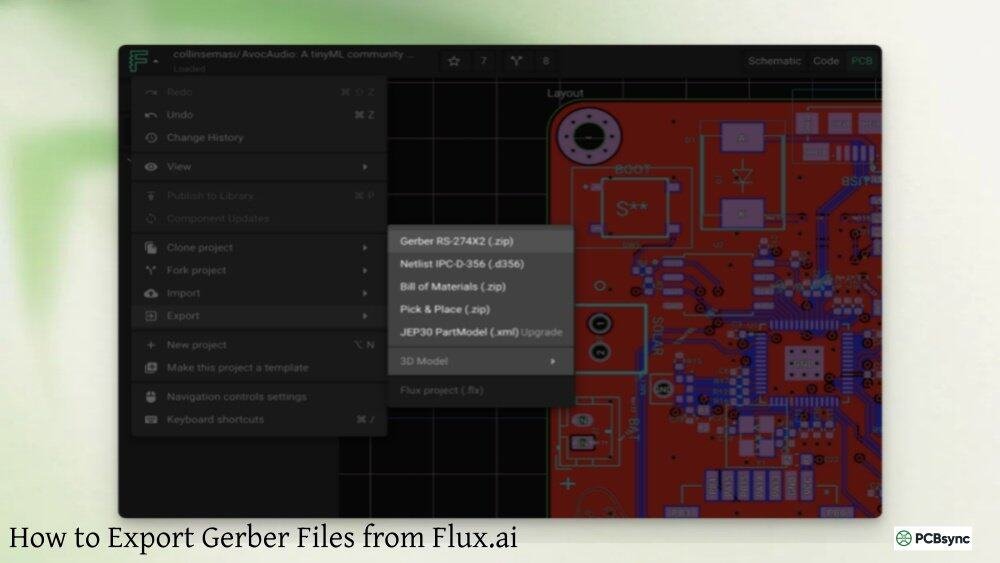
Notes: For PCB fabrication, we require PCB design file in Gerber RS-274X format (most preferred), *.PCB/DDB (Protel, inform your program version) format or *.BRD (Eagle) format. For PCB assembly, we require PCB design file in above mentioned format, drilling file and BOM. Click to download BOM template To avoid file missing, please include all files into one folder and compress it into .zip or .rar format.
How to Generate Gerber X3 Files with Assembly Data: The Complete Guide
After working with PCB manufacturing files for over a decade, I’ve watched the industry struggle with the same problem repeatedly: getting assembly data to the fab house without errors. Separate BOM files, pick-and-place spreadsheets, and fabrication drawings that don’t quite match the Gerber files. It’s been a mess. That’s why Gerber X3 caught my attention when Ucamco released it in 2020. For the first time, we can embed component placement and BOM data directly into our Gerber files. This guide explains everything you need to know about generating Gerber X3 files with assembly data, from understanding the format to practical implementation.
What is Gerber X3 and Why Does Assembly Data Matter?
Gerber X3 is the latest evolution of the Gerber format, developed by Ucamco and released in 2020. While Gerber X2 added intelligent metadata about fabrication layers, X3 extends this capability into the assembly domain. The format introduces dedicated component layers that contain placement information, manufacturer part numbers, and other assembly-critical data.
The traditional workflow requires sending separate files for fabrication (Gerbers) and assembly (BOM, centroid/pick-and-place files). These files come from different export processes, use different formats, and are prone to mismatches. I’ve personally experienced situations where a BOM showed a different footprint than what was actually in the layout, leading to costly rework.
Gerber X3 solves this by embedding component data directly within the Gerber file set, ensuring the assembly information is inherently linked to the physical layout data.
The Evolution from X1 to X3
Format Version
Year
Key Features
RS-274D (Standard)
1960s
Basic NC format, required external aperture files
RS-274X (Extended/X1)
1998
Self-contained image files, embedded apertures
Gerber X2
2014
Added metadata attributes for fabrication
Gerber X3
2020
Added component layers for assembly data
Each version builds upon the previous while maintaining backward compatibility. An X3-capable reader can process X1 files, and legacy software that only understands X1 will simply ignore the X2/X3 attributes and process the image data normally.
Understanding Gerber X3 Component Layers
The key innovation in Gerber X3 is the introduction of component layers. These are dedicated Gerber files that describe component placement on the top and bottom of the board.
What Component Layers Contain
Data Type
Description
Example
Component Centroid
X-Y location of component center
X45.720Y23.114
Component Outline
Physical footprint boundary
Rectangle, polygon
Pin Locations
Positions of component pins
Pin 1, 2, 3 locations
Rotation Angle
Component orientation
0°, 90°, 180°, 270°
Reference Designator
Component identifier
U1, R15, C23
Manufacturer Part Number
Specific component to use
LM7805CT
Package Description
Footprint type
0603, SOIC-8, QFP-48
Component Layer File Function Attribute
Component layers are identified using the standard X2 FileFunction attribute with new parameters:
These files sit alongside your standard copper, mask, and silkscreen layers but contain no image data for fabrication. They exist purely to communicate assembly information.
What Assembly Data Does Gerber X3 Include?
Gerber X3 consolidates data that previously required multiple separate files. Here’s what gets embedded:
Bill of Materials (BOM) Data
Traditional BOM Field
X3 Attribute
Reference Designator
.C (Component attribute)
Manufacturer
.Cmpn (Manufacturer)
Manufacturer Part Number
.Cval (Value)
Package/Footprint
.Cpkg (Package)
Description
Embedded in component object
Pick-and-Place (Centroid) Data
Traditional CPL Field
X3 Implementation
RefDes
Object attribute .C
X Position
Gerber coordinate
Y Position
Gerber coordinate
Rotation
Object attribute .Crot
Side
Determined by which component layer
Additional Assembly Attributes
X3 introduces several attributes specific to assembly operations:
Attribute
Purpose
Example Values
.CRot
Rotation angle in degrees
0, 90, 180, 270
.CMfr
Component manufacturer
Texas Instruments
.CMPN
Manufacturer part number
SN74HC595N
.Csup
Supplier name
Digi-Key
.CSupPn
Supplier part number
296-1600-5-ND
.CVal
Component value
10K, 100nF, LM7805
.CMnt
Mount type
SMD, TH (through-hole)
.CFtp
Footprint name
R0603, SOIC-8
How to Generate Gerber X3 Files: Practical Approaches
Here’s where things get practical. The reality is that Gerber X3 support in EDA tools is still maturing. Not every tool has native X3 export, but there are ways to achieve X3-compliant output.
Current EDA Tool Support for Gerber X3
EDA Tool
Native X3 Export
Alternative Approach
KiCad
Experimental (via plugins)
Export X2 + separate P&P/BOM
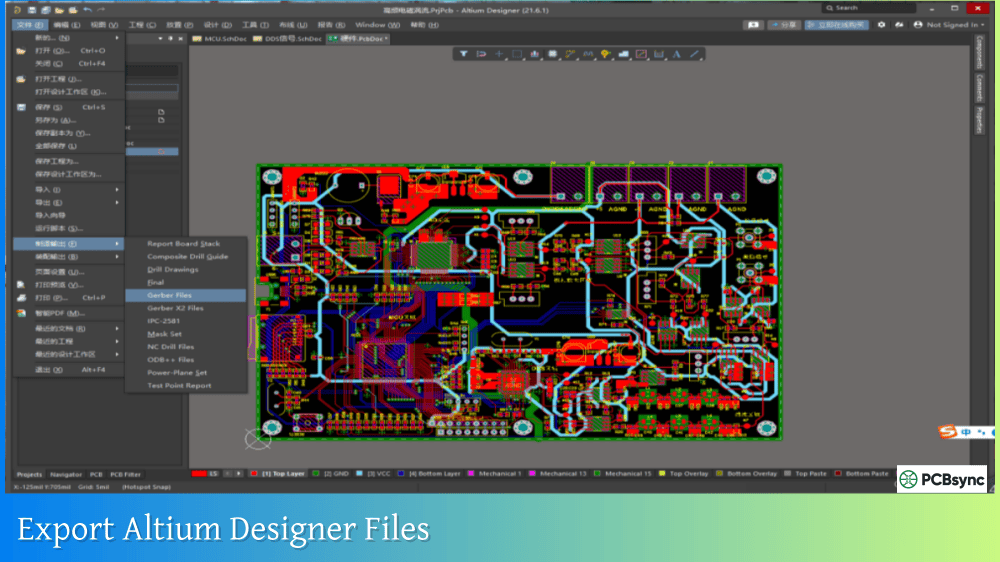
Altium Designer
Not native
Export X2 + ODB++ or IPC-2581
Eagle
No
Export X2 + separate files
OrCAD/Allegro
Limited
IPC-2581 recommended
Pentalogix
Yes (verified by Ucamco)
Full X3 output
Eurocircuits Tools
Yes (early adopter)
Direct X3 support
Method 1: Using Native X3 Export (When Available)
If your EDA tool supports X3 export natively, the process typically involves:
Step 1: Prepare Your Design Data
Ensure your schematic and PCB have complete component information including manufacturer part numbers, values, and footprint references. Missing data results in incomplete X3 output.
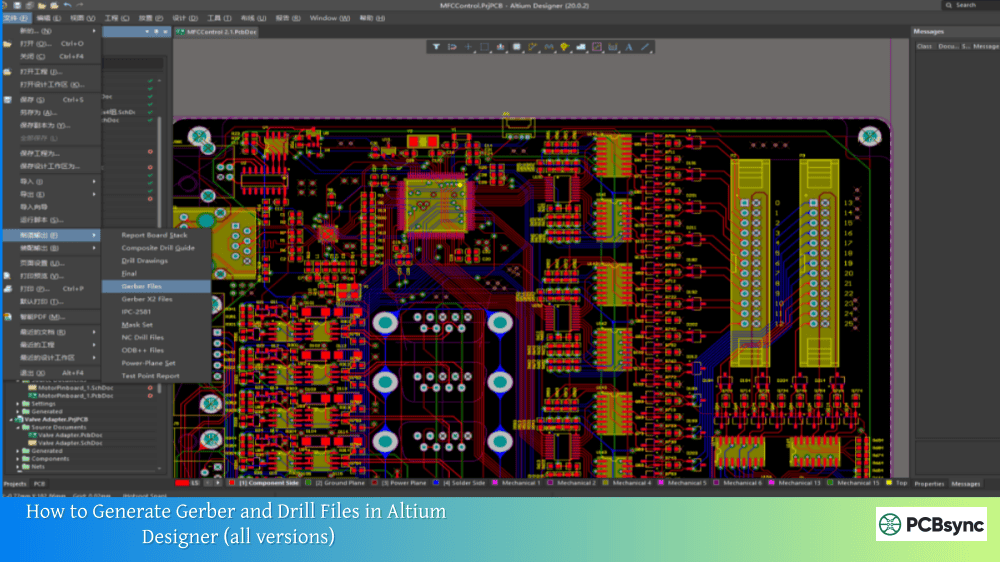
Step 2: Access the Gerber Export Dialog
Navigate to your tool’s fabrication output menu. Look for options mentioning “X3,” “component layers,” or “assembly data in Gerber.”
Step 3: Configure Component Layer Export
Enable the generation of component layers for both top and bottom. Select which attributes to include (manufacturer, part number, value, etc.).
Step 4: Generate Standard X2 Layers Plus Component Layers
Export your standard fabrication layers with X2 attributes enabled, then generate the additional component layer files.
Method 2: Manual Assembly for X3 Compliance
When native support isn’t available, you can create an X3-compliant package manually:
Step 1: Export Gerber X2 Files
Generate your standard Gerber files with X2 attributes enabled. This gives you the fabrication data with intelligent layer identification.
Step 2: Export Pick-and-Place Data
Generate a centroid file containing reference designators, X-Y coordinates, rotation, and side (top/bottom).
Step 3: Export Bill of Materials
Create a BOM with manufacturer part numbers, values, and footprint information linked to reference designators.
Step 4: Use Conversion Tools
Several CAM tools can combine X2 Gerbers with BOM and pick-and-place data to create X3-compliant component layer files. Eurocircuits’ online tools and Pentalogix software offer this capability.
Method 3: Working with Assembly Houses That Accept X3
Some assembly houses, particularly Eurocircuits (who helped develop the X3 spec), can accept X3 files directly. When working with these manufacturers, you can upload your design files and have them generate the X3 component layers as part of their CAM process.
Step-by-Step: Creating Component Layer Files
For those who want to understand the technical details, here’s how a component layer file is structured:
You want assembly data integrated without learning a new format
Backward compatibility with existing workflows is important
You’re working with manufacturers who specifically support X3
Consider alternatives when:
You need complete stack-up definition in manufacturing data
Your manufacturer prefers or requires ODB++ or IPC-2581
You need embedded design rules for DFM analysis
Resources for Working with Gerber X3
Official Documentation
Ucamco Gerber Specification: ucamco.com/gerber – The definitive source for X3 format details
Gerber X3 Specification PDF: Available from Ucamco’s download section
Gerber Generations Document: Overview of format evolution (available in English and German)
Tools and Viewers
Reference Gerber Viewer: Official viewer from Ucamco for format compliance testing
Eurocircuits Online Tools: eurocircuits.com – Early adopter with full X3 support
HQDFM (NextPCB): Free online Gerber viewer with DFM analysis
Manufacturer Support
Eurocircuits: Full X3 support, helped develop the specification
Pentalogix: Verified X3 output implementation
Check with your fab house: Many are adding X3 support as adoption grows
Frequently Asked Questions
Do I need Gerber X3 for PCB assembly, or can I use separate BOM and pick-and-place files?
You don’t strictly need X3 for assembly. The traditional approach of separate Gerber files plus BOM and pick-and-place files still works and is widely accepted. X3 offers advantages in data consistency and error reduction, but if your current workflow is working well and your manufacturer doesn’t specifically support X3, there’s no urgent need to switch.
Is Gerber X3 backward compatible with manufacturers who only support X2 or RS-274X?
Yes, Gerber X3 maintains full backward compatibility. The component layer files are separate from your fabrication layers. If a manufacturer’s CAM system doesn’t understand X3 component layers, they can simply ignore those files and process the standard fabrication layers as usual. The worst case is they fall back to requesting traditional BOM and pick-and-place files.
Which EDA tools currently support native Gerber X3 export?
As of 2024, native X3 support is limited. Pentalogix has verified X3 output, and KiCad has experimental support through development efforts by Jean-Pierre Charras (who helped develop the X3 spec). Major tools like Altium Designer and Eagle don’t have native X3 export yet, though they support X2. Check your tool’s latest release notes, as support is being added over time.
How does Gerber X3 compare to IPC-2581 for assembly data?
Both formats can transfer assembly data, but they differ significantly. IPC-2581 is a single XML file containing everything (fabrication, assembly, stack-up, design rules), while X3 maintains the familiar multi-file Gerber structure with added component layers. IPC-2581 is more comprehensive but requires both designer and manufacturer to adopt a completely different workflow. X3 extends what most of the industry already uses.
Can I convert existing BOM and pick-and-place files to Gerber X3 format?
Yes, with the right tools. Some CAM software can combine X2 Gerber files with separate BOM and pick-and-place data to create X3-compliant component layers. Eurocircuits’ online tools offer this capability. Alternatively, you can manually create component layer files following the X3 specification, though this is tedious for boards with many components.
Best Practices for Gerber X3 Implementation
Based on experience and industry feedback, here are recommendations for adopting X3:
Start with Complete Design Data
The quality of your X3 output depends entirely on the completeness of your component information. Before exporting, ensure every component has a manufacturer part number, value, and accurate footprint reference in your schematic and PCB.
Verify Before Submitting
Always check your X3 component layers against your copper and paste layers. Component centroids should align with pads, and rotation values should match the actual orientation visible on silkscreen.
Communicate with Your Manufacturer
Before sending X3 files, confirm your manufacturer can process them. Some may need time to update their CAM systems. If they can’t handle X3 yet, they can extract the traditional files they need while you enjoy the benefits of having everything in one consistent package.
Keep Traditional Files as Backup
During the transition period, generate both X3 component layers and traditional BOM/pick-and-place files. This ensures you’re covered regardless of which format your manufacturer prefers.
Conclusion
Gerber X3 represents a meaningful step forward in unifying fabrication and assembly data within a single, familiar format. By adding component layers to the established Gerber ecosystem, Ucamco has given us a way to reduce the errors that come from managing separate files for manufacturing and assembly.
The format isn’t universally supported yet, but adoption is growing. Major PCB manufacturers like Eurocircuits have embraced it, and EDA tool support continues to expand. For engineers tired of troubleshooting mismatches between their Gerbers and assembly files, X3 offers a cleaner solution.
Whether you adopt X3 now or wait for broader tool support, understanding the format prepares you for where the industry is heading. The days of juggling separate spreadsheets for BOM and pick-and-place data alongside Gerber files are numbered. Gerber X3 shows us what an integrated, intelligent manufacturing data package can look like while staying true to the simple, human-readable philosophy that made Gerber the industry standard in the first place.
Inquire: Call 0086-755-23203480, or reach out via the form below/your sales contact to discuss our design, manufacturing, and assembly capabilities.
Quote: Email your PCB files to Sales@pcbsync.com (Preferred for large files) or submit online. We will contact you promptly. Please ensure your email is correct.
Notes: For PCB fabrication, we require PCB design file in Gerber RS-274X format (most preferred), *.PCB/DDB (Protel, inform your program version) format or *.BRD (Eagle) format. For PCB assembly, we require PCB design file in above mentioned format, drilling file and BOM. Click to download BOM template To avoid file missing, please include all files into one folder and compress it into .zip or .rar format.