Inquire: Call 0086-755-23203480, or reach out via the form below/your sales contact to discuss our design, manufacturing, and assembly capabilities.
Quote: Email your PCB files to Sales@pcbsync.com (Preferred for large files) or submit online. We will contact you promptly. Please ensure your email is correct.
Notes: For PCB fabrication, we require PCB design file in Gerber RS-274X format (most preferred), *.PCB/DDB (Protel, inform your program version) format or *.BRD (Eagle) format. For PCB assembly, we require PCB design file in above mentioned format, drilling file and BOM. Click to download BOM template To avoid file missing, please include all files into one folder and compress it into .zip or .rar format.
How to Generate Gerber X2 Files in Altium Designer: A Complete Guide
If you’ve been designing PCBs for any length of time, you know that getting manufacturing files right is just as critical as the design itself. As someone who has dealt with countless manufacturing handoffs, I can tell you that switching to Gerber X2 files in Altium Designer has significantly reduced the back-and-forth with fab houses and eliminated many common miscommunication issues. This guide walks you through everything you need to know about generating Gerber X2 files in Altium Designer.
Gerber X2 is an enhanced version of the traditional Gerber RS-274X format that adds intelligent metadata to your manufacturing files. Released by Ucamco in February 2014, Gerber X2 transforms what was essentially a “dumb” image format into a smart data transfer format that your manufacturer’s CAM software can actually understand.
The traditional RS-274X format works fine for describing copper patterns, but it lacks context. When you send RS-274X files, your manufacturer has to manually interpret which file is the top copper layer, which is the solder mask, and how everything stacks together. Gerber X2 eliminates this guesswork by embedding attributes directly into each file.
Key Advantages of Gerber X2 Over RS-274X
Feature
RS-274X (Traditional)
Gerber X2
Layer Function
Manual interpretation required
Embedded in file attributes
Stack-up Information
Separate documentation needed
Included automatically
Pad Function
Not specified
Clearly defined (via, component, etc.)
Impedance Data
Separate notes required
Can be embedded
Part Type
Manual identification
Autodetected (single, panel, coupon)
Backward Compatibility
N/A
Fully compatible with RS-274X viewers
The beauty of Gerber X2 is its backward compatibility. If your manufacturer hasn’t upgraded their CAM software, they can still process your X2 files as standard RS-274X files, they just won’t benefit from the additional metadata.
Understanding Gerber X2 Attributes in Altium Designer
Before diving into the export process, let’s understand what attributes Altium Designer embeds in your Gerber X2 files. These attributes are what make X2 “intelligent” compared to traditional Gerber formats.
File Attributes
These describe the entire file and are placed at the beginning of each Gerber file:
Attribute
Description
Example Values
.FileFunction
Identifies the layer type
Copper,L1,Top / SolderMask,Top / Legend,Top
.FilePolarity
Whether layer is additive or subtractive
Positive / Negative
.Part
Type of design represented
Single / CustomerPanel / ProductionPanel / Coupon
.GenerationSoftware
Software that created the file
Altium,Altium Designer,XX.X
Aperture Attributes
These describe individual features within the file:
Attribute
Description
Purpose
.AperFunction
Function of the aperture
Identifies if pad is via, component, SMD, etc.
.DrillTolerance
Drilling tolerance
Specifies acceptable variation
.FlashText
Text strings
Preserves text information
Step-by-Step Guide to Generate Gerber X2 Files in Altium Designer
Now let’s get into the practical steps. Altium Designer provides two methods for generating Gerber X2 files: directly from the PCB editor or through an Output Job file. I’ll cover both approaches.
Method 1: Direct Export from PCB Editor
This is the quickest method for one-off exports or when you’re iterating on a design.
Step 1: Open the Gerber X2 Setup Dialog
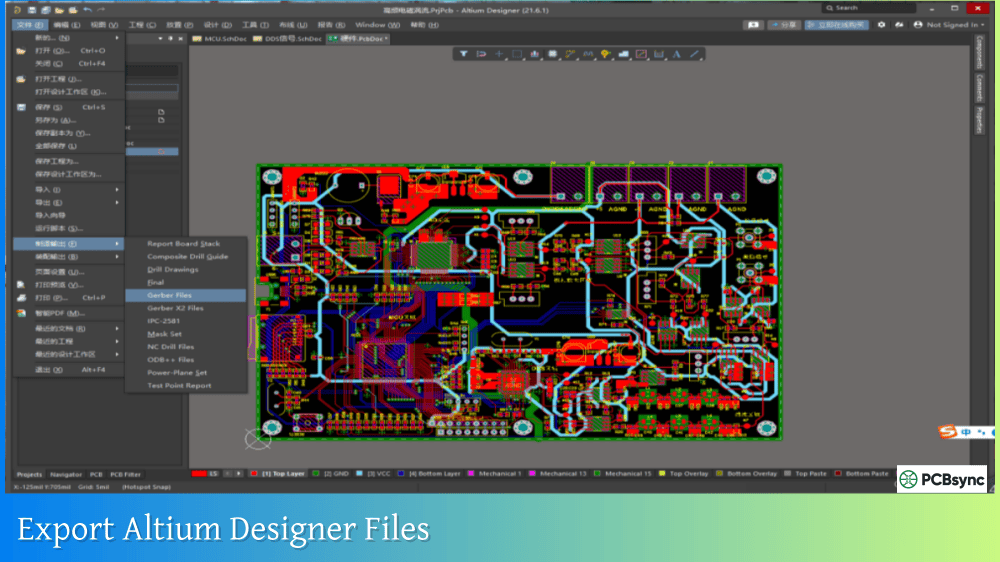
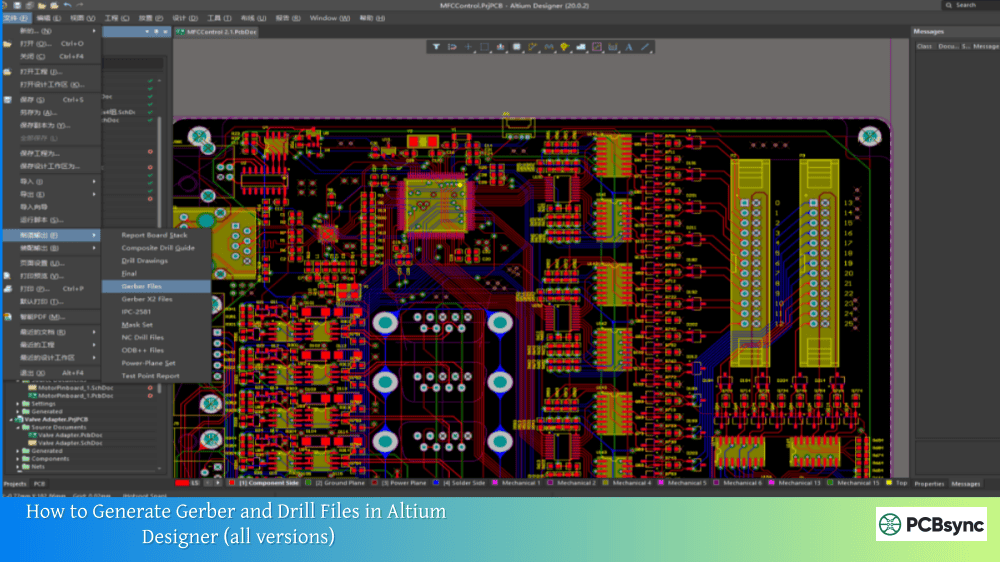
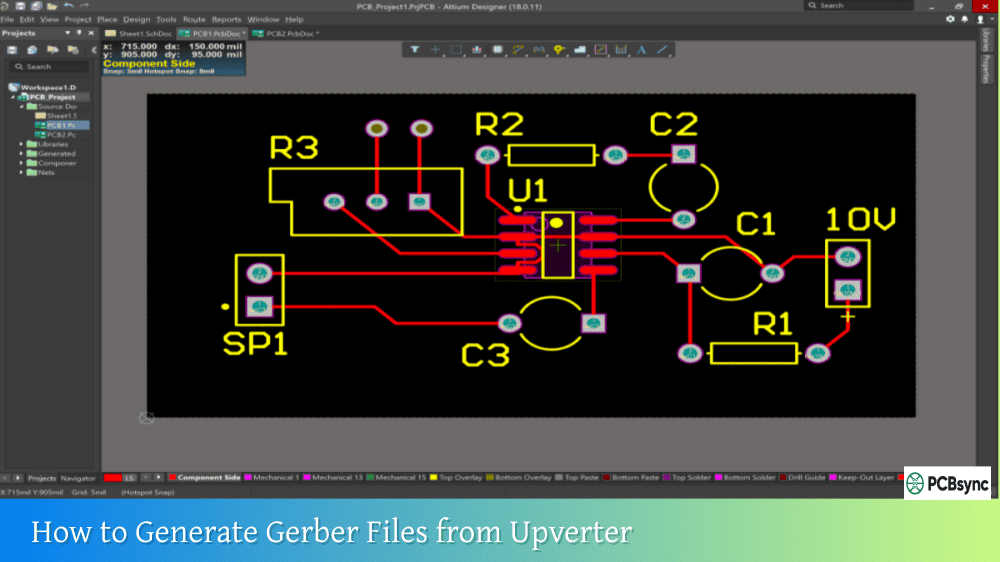
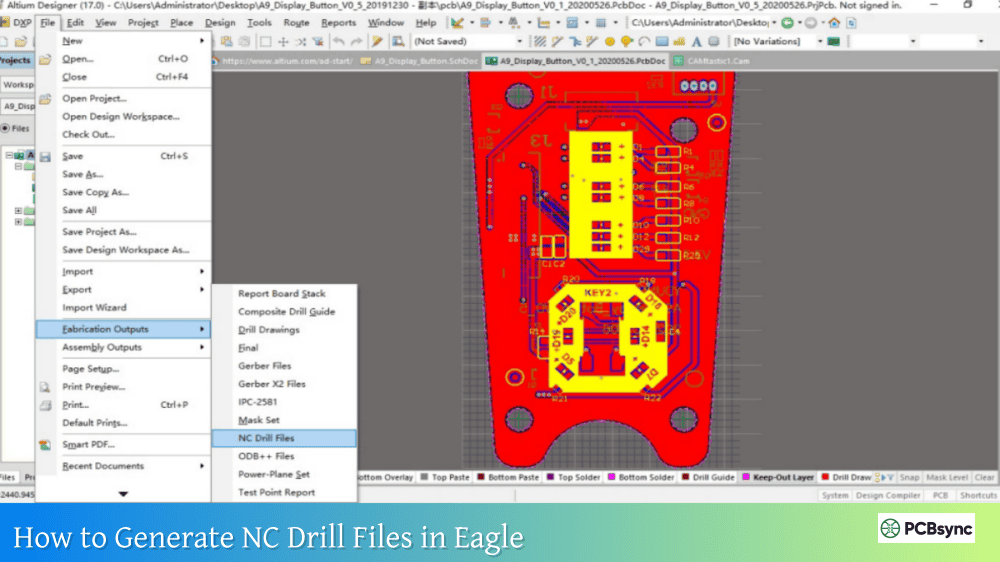
With your PCB document open and active, navigate to File → Fabrication Outputs → Gerber X2 Files. This opens the Gerber X2 Setup dialog.
Step 2: Configure General Settings
On the left side of the dialog, configure these essential parameters:
Setting
Recommended Value
Notes
Units
Millimeters
Most manufacturers prefer metric; confirm with your fab
Format
4:5
Provides 0.00001 mm precision; sufficient for most designs
File Subject
Autodetect
Let Altium determine if it’s single board, panel, or coupon
File Comment
Optional
Add project name or revision if helpful
Step 3: Select Layers to Plot
Click on the Layers to Plot tab. Here you’ll see all available layers in your design. For a typical 2-layer board, select:
Top Layer (signal)
Bottom Layer (signal)
Top Overlay (silkscreen)
Bottom Overlay (silkscreen)
Top Solder (solder mask)
Bottom Solder (solder mask)
Top Paste (paste mask)
Bottom Paste (paste mask)
Keep-Out Layer (board outline)
Mechanical Layer (if used for outline or dimensions)
For multilayer boards, include all internal copper layers and any additional mechanical layers your design uses.
Pro tip: Use Plot Layers → Used On to quickly select all layers that contain actual data in your design.
Step 4: Configure Drill Drawings
Click the Drills Drawing tab to configure drill output. Select the appropriate layer pairs:
Top Layer – Bottom Layer: For through-hole drilling
Any blind/buried via pairs: If your design uses HDI features
Backdrill pairs: If backdrilling is required
Step 5: Generate Files
Click OK to generate the Gerber X2 files. The output will be saved to the location specified in your project options (Project → Project Options → Options tab → Output Path field).
Method 2: Using Output Job Files (Recommended for Production)
For production-ready designs, I strongly recommend using Output Job files. They provide consistency across projects and make it easy to regenerate outputs without reconfiguring settings.
Step 1: Create a New Output Job
Right-click on your project in the Projects panel and select Add New to Project → Output Job File. This creates a new .OutJob file.
Step 2: Add Gerber X2 Output
In the Output Job editor, right-click under Fabrication Outputs and select Add New Fabrication Output → Gerber X2 Files. Then select your PCB document as the data source.
Step 3: Configure the Output
Right-click on the newly created Gerber X2 entry and select Configure. This opens the same Gerber X2 Setup dialog described above. Configure your settings and click OK.
Step 4: Set Up Output Container
In the Output Containers section, configure where files will be saved. You can choose:
Select the outputs you want to generate and click Generate Content in the right-hand panel. All selected outputs will be generated according to your configuration.
Recommended Gerber X2 Export Settings for Common Scenarios
Different manufacturing requirements call for different settings. Here are optimized configurations for common scenarios:
Gerber X2 files alone aren’t sufficient for manufacturing. You’ll also need these complementary files:
NC Drill Files
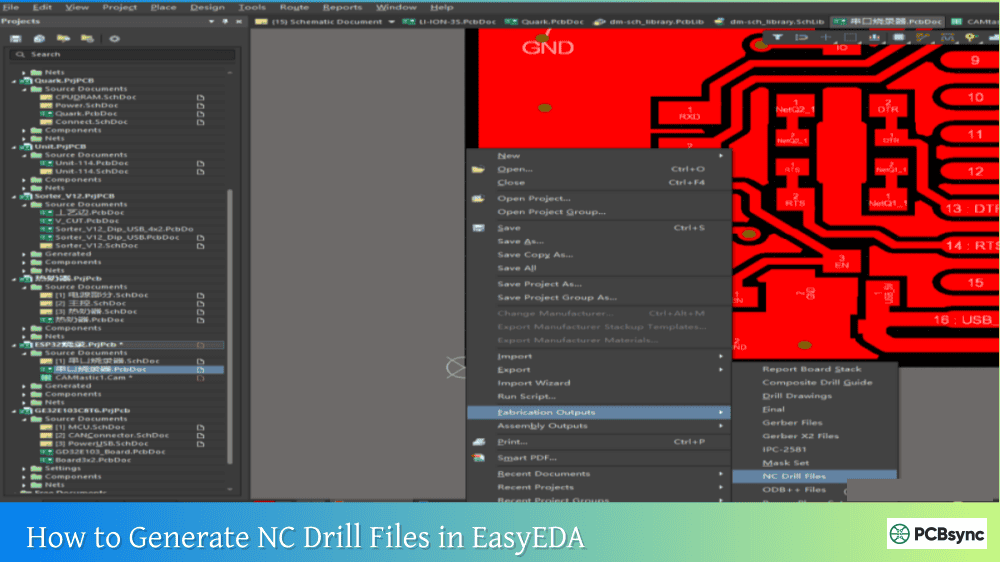
Navigate to File → Fabrication Outputs → NC Drill Files to generate drill data. Use these settings:
Setting
Recommended Value
Units
Same as Gerber files (Millimeters)
Format
Same as Gerber files (4:5)
Generate separate files
Enable for plated/non-plated holes
Pick and Place Files
For assembly, generate pick and place data via File → Assembly Outputs → Generates pick and place files. This provides component positions and rotations for automated assembly.
Bill of Materials (BOM)
Generate a BOM through Reports → Bill of Materials or include it in your Output Job file for a complete manufacturing package.
Verifying Your Gerber X2 Files Before Submission
Never submit manufacturing files without verification. Here are the tools and steps I use to validate Gerber X2 exports:
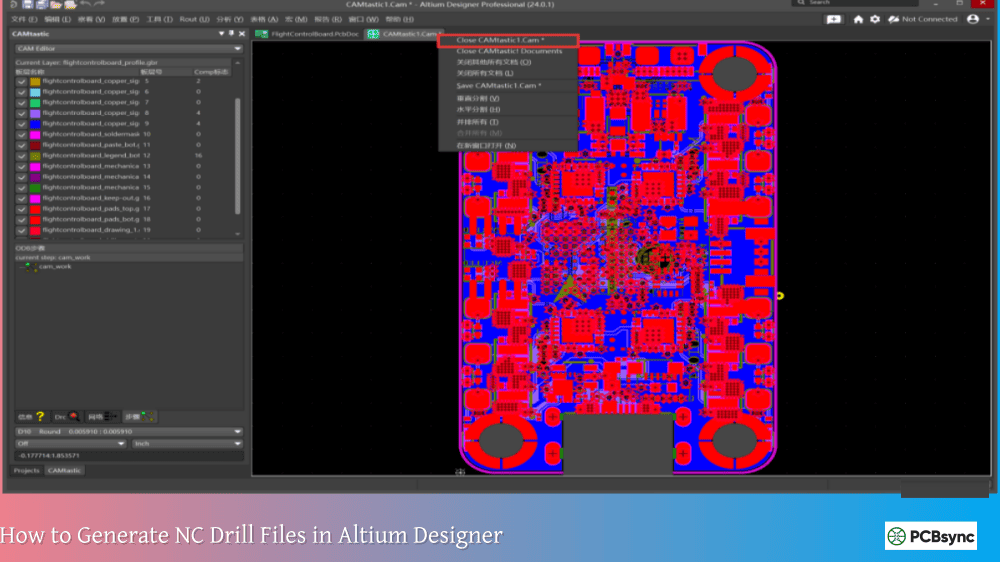
Built-in CAMtastic Viewer
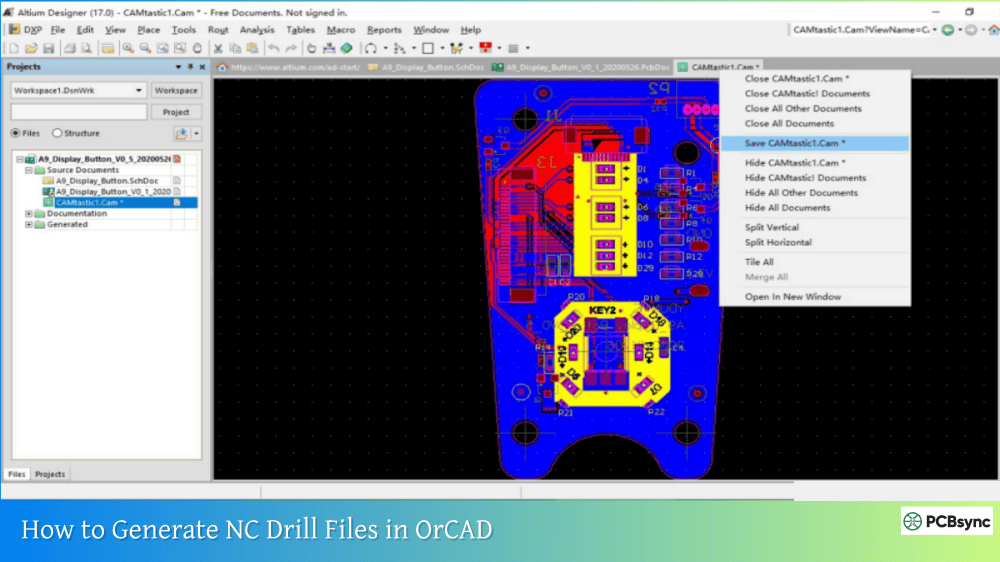
Altium Designer automatically opens generated Gerber files in its CAMtastic viewer. Use this to:
Verify all layers are present
Check that layer alignment is correct
Confirm board outline is properly defined
Inspect critical features like fine-pitch pads
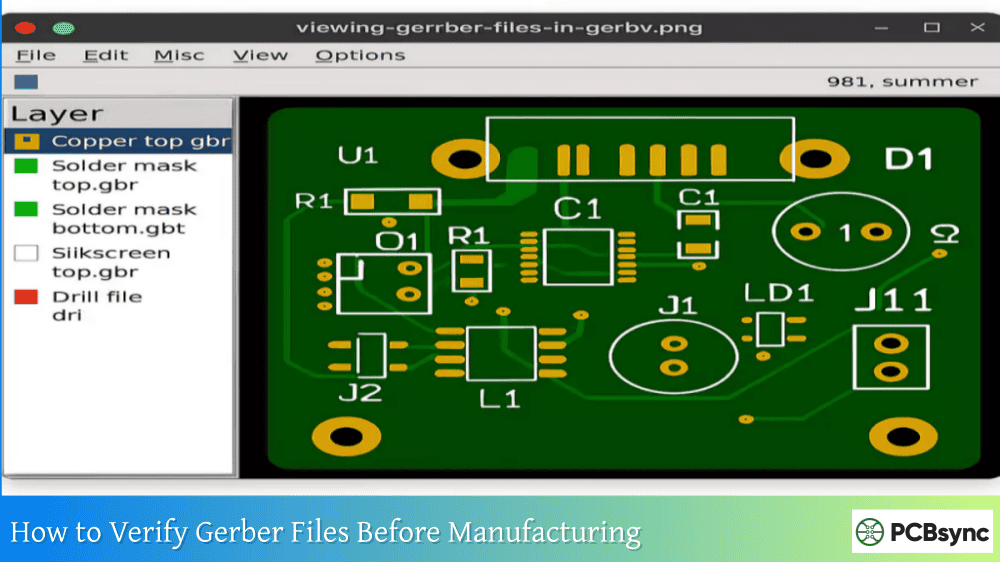
Free External Gerber X2 Viewers
Tool
Features
Best For
HQDFM (NextPCB)
Online, DFM analysis, layer auto-alignment
Quick verification + DFM checks
Altium 365 Viewer
Online, supports X2, compare revisions
Sharing with team/manufacturer
ZofzPCB
3D visualization, layer stack view
Visual stack-up verification
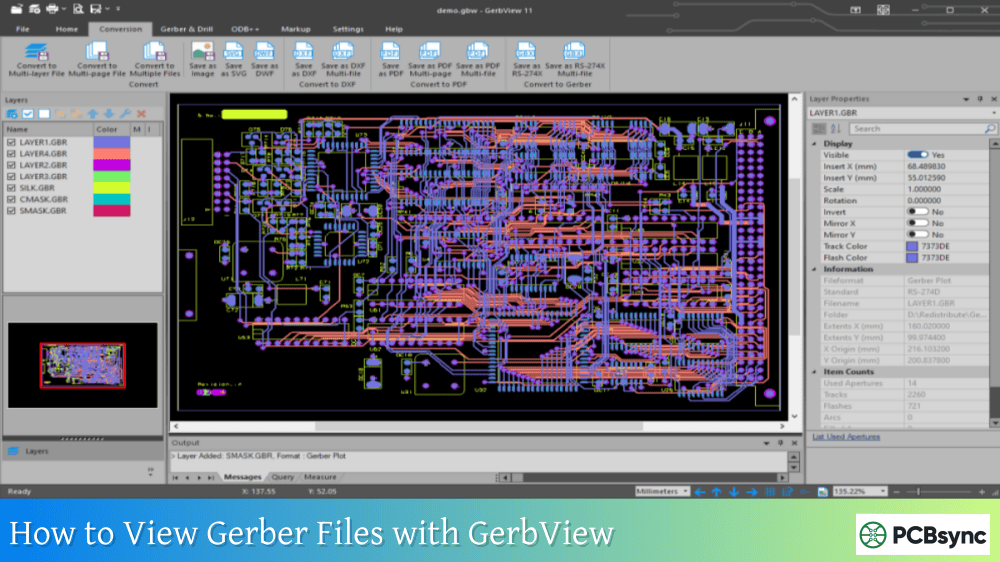
KiCad GerbView
Free, reads X2 job files, measurements
Detailed inspection
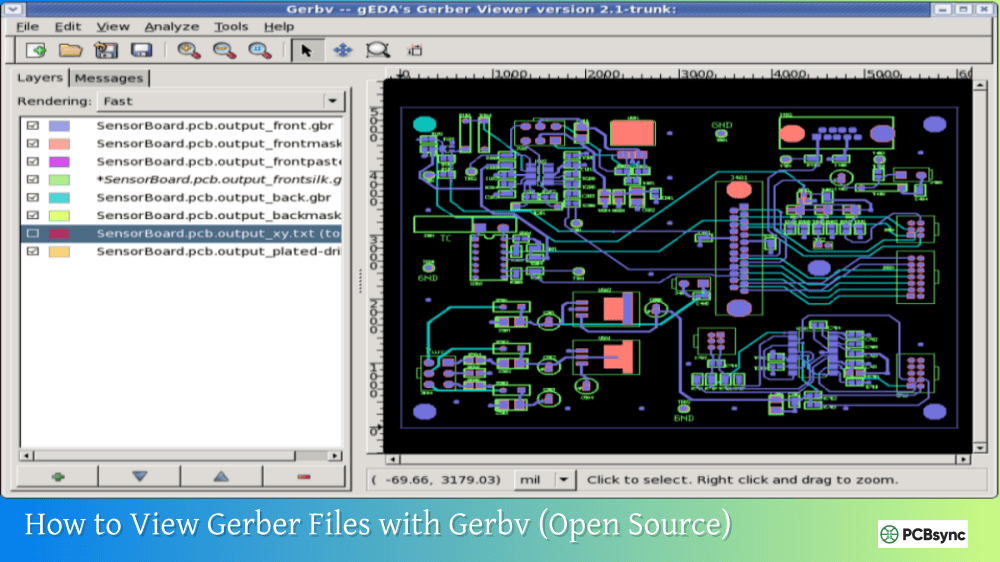
Gerbv
Free, open source, multi-platform
Basic viewing
Reference Gerber Viewer
Official Ucamco viewer
Format compliance verification
Verification Checklist
Before sending files to your manufacturer, verify:
All copper layers are present and correctly ordered
Solder mask layers show proper pad openings
Silkscreen doesn’t overlap pads
Board outline is a closed contour
Drill files match the copper layer hole locations
No unintended features on any layer
File naming clearly identifies each layer
Troubleshooting Common Gerber X2 Export Issues
Even experienced designers encounter problems occasionally. Here are solutions to common issues:
Missing Layers in Export
Problem: Some layers don’t appear in the exported files.
Solution: Check that the layers are enabled in the Layer to Plot tab. Also verify that the layers actually contain data, empty layers won’t generate output files.
Incorrect Layer Order
Problem: Manufacturer reports layer stack doesn’t match intent.
Solution: Verify your layer stack in Altium’s Layer Stack Manager matches your design intent. Gerber X2 embeds this information automatically, but it must be correct in your design first.
Aperture Errors
Problem: CAM software reports invalid or missing apertures.
Solution: Ensure all pads and vias have proper flash shapes defined. Check for zero-width traces or non-standard primitives that might not export correctly.
File Size Too Large
Problem: Generated files are unusually large.
Solution: Check for excessive polygon vertices or unnecessary precision. Consider simplifying copper pours or reducing the coordinate format precision if appropriate.
Gerber X2 vs Other Manufacturing Formats
While this guide focuses on Gerber X2, it’s worth understanding how it compares to alternatives:
Format
Intelligence Level
Adoption
Best For
Gerber RS-274X
Low (image only)
Universal
Legacy systems
Gerber X2
Medium (image + attributes)
Growing
General production
Gerber X3
High (includes assembly data)
Emerging
Advanced workflows
ODB++
High (proprietary)
High
Volume production
IPC-2581
High (open standard)
Growing
Industry 4.0 integration
For most projects, Gerber X2 offers the best balance of intelligence and compatibility. If your manufacturer supports ODB++ or IPC-2581, consider those formats for even richer data transfer.
Resources for Altium Designer Users
Here are valuable resources for mastering Gerber X2 exports and PCB manufacturing:
JLCPCB Gerber Guide: Specific requirements for JLCPCB orders
PCBWay Help Center: Detailed Altium export tutorials
Sierra Circuits Knowledge Base: Advanced manufacturing insights
Frequently Asked Questions
Should I use Gerber X2 or stick with RS-274X?
Use Gerber X2 whenever possible. It’s backward compatible, so even if your manufacturer’s CAM software doesn’t fully support X2, they can still process the files. The embedded metadata reduces errors and speeds up CAM processing for manufacturers who do support it.
Do all PCB manufacturers accept Gerber X2 files?
Most modern manufacturers accept Gerber X2 files. Since X2 is backward compatible with RS-274X, any manufacturer that accepts standard Gerber files can process X2 files. However, to benefit from the enhanced metadata, the manufacturer needs X2-capable CAM software. When in doubt, ask your manufacturer.
What’s the difference between Gerber X2 and Gerber X3?
Gerber X3, released in 2020, extends X2 by incorporating component and assembly data directly into the Gerber files. While X2 focuses on fabrication data, X3 adds information traditionally found in pick-and-place files. X3 adoption is still emerging, but it represents the future direction of the Gerber format.
Can I generate both RS-274X and Gerber X2 from the same Altium project?
Yes, absolutely. You can create multiple output configurations in an Output Job file, one for RS-274X and another for Gerber X2. This is useful when working with multiple manufacturers who have different capabilities.
How do I know if my Gerber X2 files were generated correctly?
Use a Gerber viewer that supports X2 attributes to verify your files. The Altium 365 Viewer, HQDFM, or KiCad’s GerbView can read X2 metadata and confirm that layer functions and attributes are correctly embedded. Also check that your layer count matches expectations and that all features are visible on each layer.
Conclusion
Generating Gerber X2 files in Altium Designer is straightforward once you understand the process and settings involved. The key advantages of using X2 over traditional RS-274X, embedded layer information, automatic attribute assignment, and reduced manual interpretation, make it well worth adopting for your manufacturing workflow.
Whether you’re prototyping a simple 2-layer board or preparing complex multilayer designs for volume production, Gerber X2 provides a more reliable data transfer method that reduces errors and improves communication with your manufacturer. The format’s backward compatibility means you can start using it today without worrying about manufacturer support, any fab house that accepts standard Gerber files can process your X2 outputs.
Take the time to set up proper Output Job configurations for your common project types. The initial investment in creating standardized export settings pays dividends in consistency and reduced setup time for future projects. And always, always verify your manufacturing files before submission, a few minutes with a Gerber viewer can save days of manufacturing delays.
The PCB industry continues to evolve toward more intelligent data formats, and Gerber X2 represents an important step in that direction. By mastering X2 exports in Altium Designer, you’re positioning yourself for smoother manufacturing handoffs today while preparing for even more advanced formats in the future.
Inquire: Call 0086-755-23203480, or reach out via the form below/your sales contact to discuss our design, manufacturing, and assembly capabilities.
Quote: Email your PCB files to Sales@pcbsync.com (Preferred for large files) or submit online. We will contact you promptly. Please ensure your email is correct.
Notes: For PCB fabrication, we require PCB design file in Gerber RS-274X format (most preferred), *.PCB/DDB (Protel, inform your program version) format or *.BRD (Eagle) format. For PCB assembly, we require PCB design file in above mentioned format, drilling file and BOM. Click to download BOM template To avoid file missing, please include all files into one folder and compress it into .zip or .rar format.