Inquire: Call 0086-755-23203480, or reach out via the form below/your sales contact to discuss our design, manufacturing, and assembly capabilities.
Quote: Email your PCB files to Sales@pcbsync.com (Preferred for large files) or submit online. We will contact you promptly. Please ensure your email is correct.
Notes: For PCB fabrication, we require PCB design file in Gerber RS-274X format (most preferred), *.PCB/DDB (Protel, inform your program version) format or *.BRD (Eagle) format. For PCB assembly, we require PCB design file in above mentioned format, drilling file and BOM. Click to download BOM template To avoid file missing, please include all files into one folder and compress it into .zip or .rar format.
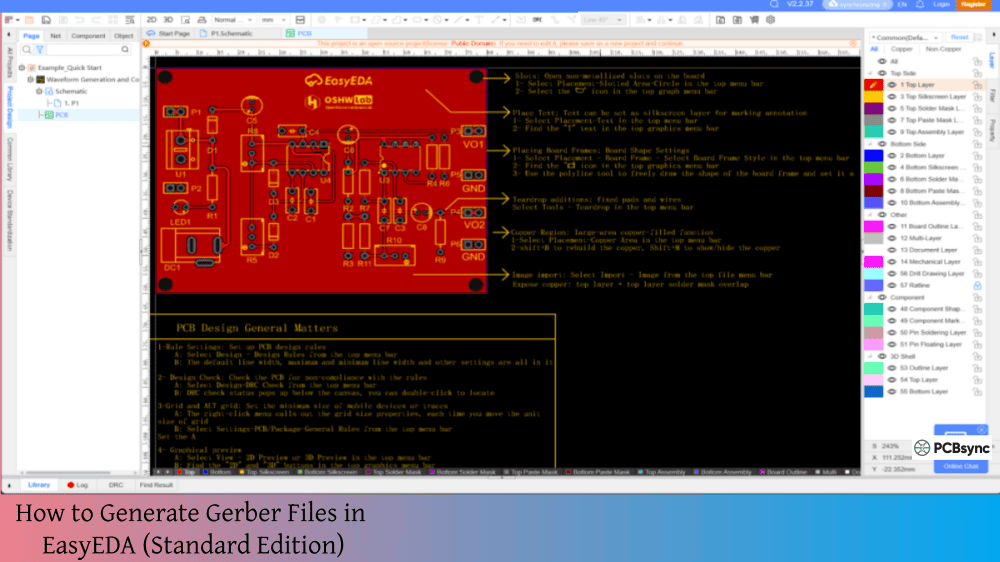
How to Generate Gerber Files in EasyEDA Standard Edition: Complete PCB Engineer’s Guide
You’ve spent hours perfecting your PCB layout in EasyEDA, routing traces, placing components, and checking your design. Now you’re ready for the moment that actually turns your digital design into physical hardware: generating Gerber files.
As someone who’s designed dozens of boards using EasyEDA Standard Edition, I can tell you that this browser-based tool makes Gerber generation remarkably simple compared to traditional desktop software. But there are still important details that can trip you up if you’re not careful. This guide walks you through the entire process, from pre-export checks to verification, ensuring your files are ready for any PCB manufacturer.
Before diving into the export process, let’s clarify what Gerber files actually are and why they matter. Gerber files (RS-274X format) are the industry-standard way to communicate PCB designs to manufacturers. They’re essentially 2D vector images that describe each layer of your board, from copper traces to solder mask to silkscreen.
EasyEDA generates Gerber files in RS-274X format, which embeds aperture information directly into the files. This is the modern standard that virtually all PCB fabricators accept. When you export from EasyEDA, you’re creating a complete manufacturing package that includes Gerber files for each layer plus Excellon drill files for all the holes in your board.
Gerber Files Generated by EasyEDA Standard Edition
File Name
Extension
Description
Gerber_TopLayer
.GTL
Top copper layer with traces and pads
Gerber_BottomLayer
.GBL
Bottom copper layer
Gerber_Inner1, Inner2…
.G1, .G2…
Inner copper layers (multilayer boards)
Gerber_TopSolderMaskLayer
.GTS
Top solder mask openings
Gerber_BottomSolderMaskLayer
.GBS
Bottom solder mask openings
Gerber_TopSilkscreenLayer
.GTO
Top silkscreen markings
Gerber_BottomSilkscreenLayer
.GBO
Bottom silkscreen markings
Gerber_TopPasteMaskLayer
.GTP
Top paste mask for stencils
Gerber_BottomPasteMaskLayer
.GBP
Bottom paste mask for stencils
Gerber_BoardOutlineLayer
.GKO
Board outline and cutouts
Drill_PTH_Through
.DRL
Plated through-hole drill file
Drill_NPTH_Through
.DRL
Non-plated through-hole drill file
Pre-Export Preparation: Essential Checks Before Generating Gerbers
Rushing straight to Gerber generation without proper preparation is a common mistake that leads to manufacturing delays, rejected files, or worse, boards that don’t work. Here’s what you need to check first.
Run Design Rule Check (DRC)
EasyEDA’s Design Rule Check is your first line of defense against manufacturing problems. The tool features real-time DRC that marks errors with an “X” flag as you design, but you should still run a full check before export.
To run DRC in EasyEDA Standard Edition:
Navigate to Tools → Design Rule… or right-click the canvas and select Design Rule…
Review and adjust your design rules if needed
Go to Design Manager → DRC Error or Top Menu → Design → Check DRC
Click the refresh icon to run the complete check
Address all errors before proceeding
The DRC checks for clearance violations between objects with different nets, track width violations, via diameter issues, and drill diameter problems. If your PCB includes copper areas, the DRC may take longer to complete, so be patient with larger designs.
Verify Your Design Rules Match Manufacturer Capabilities
EasyEDA’s default design rules are configured to work with most manufacturers, including JLCPCB. However, if you’re using a different fabricator or have specific requirements, verify your rules match their capabilities.
Design Parameter
JLCPCB Minimum
EasyEDA Default
Recommended
Minimum Track Width
0.127mm (5mil)
0.254mm
0.2mm or higher
Minimum Clearance
0.127mm (5mil)
0.254mm
0.2mm or higher
Minimum Via Diameter
0.4mm
0.6mm
0.5mm or higher
Minimum Via Drill
0.2mm
0.3mm
0.3mm or higher
Minimum Hole Size
0.2mm
—
0.3mm or higher
Setting your clearances slightly higher than the manufacturer’s minimum gives you a safety margin and often results in faster, cheaper fabrication.
Rebuild Copper Areas
If you’ve made any changes to your design since last filling your copper pours, you need to rebuild them before generating Gerbers. Outdated copper fills won’t show in your Gerber output, potentially causing shorts or opens in your manufactured board.
Press Shift+B to rebuild all copper areas, or right-click on a copper area and select Rebuild Copper Area. Always verify the copper fill looks correct in your design before exporting.
Check Board Outline
Your board outline (Edge.Cuts layer in some tools, part of the BoardOutlineLayer in EasyEDA) must form a completely closed shape. Any gaps in the outline will cause your manufacturer to reject the files or make assumptions about your board shape.
Zoom in on corners and verify the outline is continuous. Slots and cutouts drawn using the solid region tool (Type: NPTH) will appear in the board outline file after Gerber generation.
Step-by-Step Guide to Generate Gerber Files in EasyEDA Standard Edition
With your design verified and ready, let’s walk through the Gerber generation process.
Step 1: Access the Gerber Generation Dialog
There are multiple ways to open the Gerber export dialog in EasyEDA Standard Edition:
Method 2 (Alternative Menu): Go to Fabrication → PCB Fabrication File(Gerber)
Method 3 (Toolbar): Click the Generate Gerber button in the top toolbar (folder icon with “G”)
Any of these methods opens the Gerber generation dialog where you’ll configure and export your files.
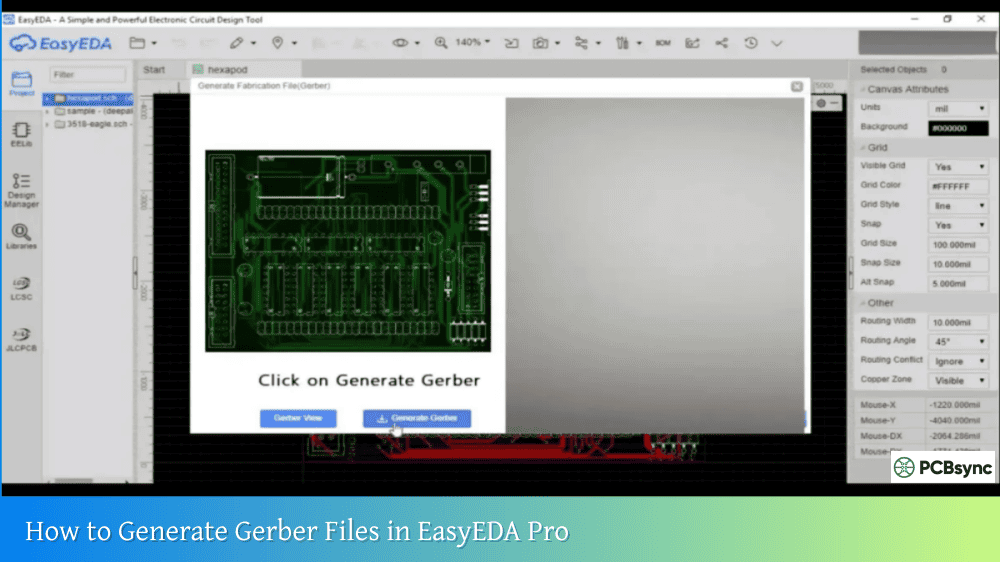
Step 2: Review the Gerber Preview
When the dialog opens, you’ll see a preview image of your PCB along with manufacturing parameters. Take a moment to verify:
The board dimensions look correct
All layers are represented
The board outline is closed and accurate
No obvious missing features
This preview gives you a quick sanity check before committing to the export.
Step 3: Configure Export Options
EasyEDA Standard Edition uses sensible defaults for Gerber generation, but you should understand the key settings:
Drill File Coordinate Format: The default is 3:3 (three integer digits, three decimal digits). This works for most boards. For very large PCBs exceeding the coordinate range, EasyEDA automatically switches to 4:2 format.
Gerber Format: EasyEDA generates RS-274X format, which is universally compatible. The aperture information is embedded in the files.
Coordinate Origin: Gerber file coordinates follow the canvas coordinates in your design. Keep this in mind if you need specific positioning for panelization.
Step 4: Generate the Gerber Files
Click the Generate Gerber button at the bottom of the dialog. EasyEDA will process your design and create a compressed ZIP archive containing all the necessary manufacturing files.
Important: The Gerber files are generated by your browser, so you must use your browser’s built-in download function to save them. Third-party download managers may not work correctly.
The ZIP file will download to your default downloads folder. The filename typically includes your project name for easy identification.
Step 5: Verify File Contents
After downloading, unzip the archive and verify all expected files are present:
Copper layer files (.GTL, .GBL, and inner layers if applicable)
Solder mask files (.GTS, .GBS)
Silkscreen files (.GTO, .GBO)
Paste mask files (.GTP, .GBP) if your design has SMD components
Board outline file (.GKO)
Drill files (.DRL) for PTH and NPTH holes
Missing files usually indicate missing features in your design. For example, if there’s no bottom silkscreen file, your design likely has no silkscreen on the bottom layer.
Understanding EasyEDA Gerber File Contents
Let me break down what each file in your Gerber package actually contains, so you know what to look for when verifying.
Copper Layer Files (GTL, GBL, G1, G2…)
These files contain all the copper features on each layer: traces, pads, vias, and copper pours. The top copper is .GTL (Gerber Top Layer), bottom is .GBL (Gerber Bottom Layer), and inner layers are numbered .G1, .G2, etc.
Solder Mask Files (GTS, GBS)
Solder mask files define where the mask should NOT be applied, exposing copper for soldering. These files show openings over pads, vias (if not tented), and any other areas where you need bare copper.
Silkscreen Files (GTO, GBO)
Silkscreen layers contain component outlines, reference designators, logos, and other markings printed on your board. The top silkscreen is .GTO, bottom is .GBO.
Paste Mask Files (GTP, GBP)
These files define stencil openings for solder paste application during SMT assembly. Only SMD pads appear in paste mask files. If you’re not doing assembly or using through-hole only, these files may be empty or omitted.
Board Outline File (GKO)
The board outline file defines the physical shape of your PCB. The manufacturer uses this to route (cut) your board from the panel. It includes the outer boundary plus any internal cutouts or slots.
Drill Files (DRL)
EasyEDA generates separate drill files for plated through-holes (PTH) and non-plated through-holes (NPTH). PTH includes vias and component holes that need copper plating. NPTH includes mounting holes and slots that should not be plated.
Assembly and Documentation Files
EasyEDA also generates additional files that don’t affect manufacturing but provide useful information:
File
Extension
Purpose
Gerber_TopAssemblyLayer
.GTA
Top assembly drawing (reference only)
Gerber_BottomAssemblyLayer
.GBA
Bottom assembly drawing (reference only)
Gerber_MechanicalLayer
.GML
Mechanical notes, V-cut paths (reference only)
Gerber_DocumentLayer
.GDL
Documentation notes (reference only)
Verifying Your EasyEDA Gerber Files
Never send Gerber files to a manufacturer without verification. A few minutes of checking can save days of delays and wasted money.
Using EasyEDA’s Built-in Gerber Viewer
EasyEDA provides an online Gerber viewer that’s perfect for quick verification. In the Gerber generation dialog, click Gerber View to open your files in the viewer. You can also access the viewer directly at https://easyeda.com/GerberViewer.
The EasyEDA Gerber Viewer provides:
Layer-by-layer viewing with toggles
Top and bottom photo-realistic views
Basic DFM (Design for Manufacturability) analysis
Board dimension detection
Drill hole information
Third-Party Gerber Viewers
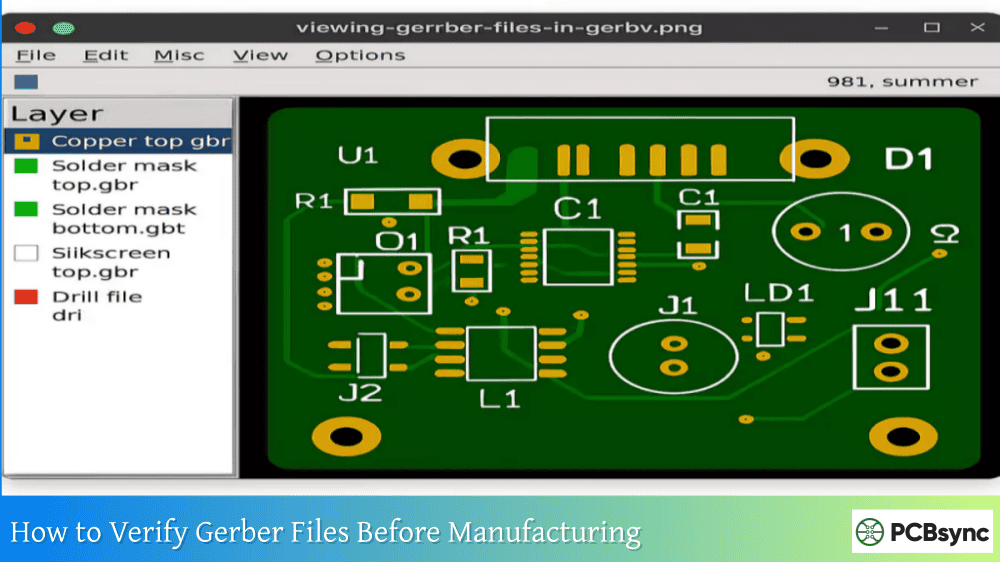
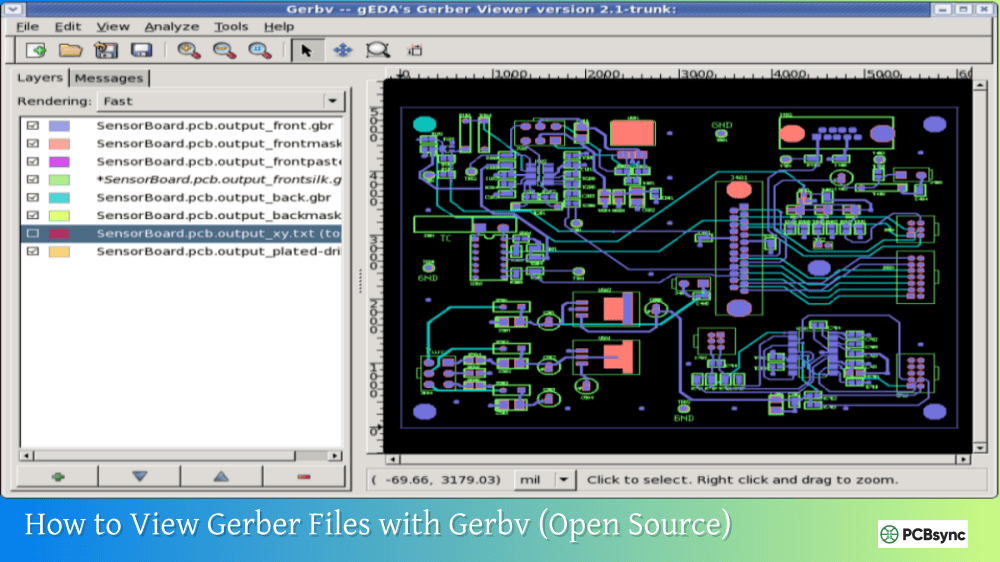
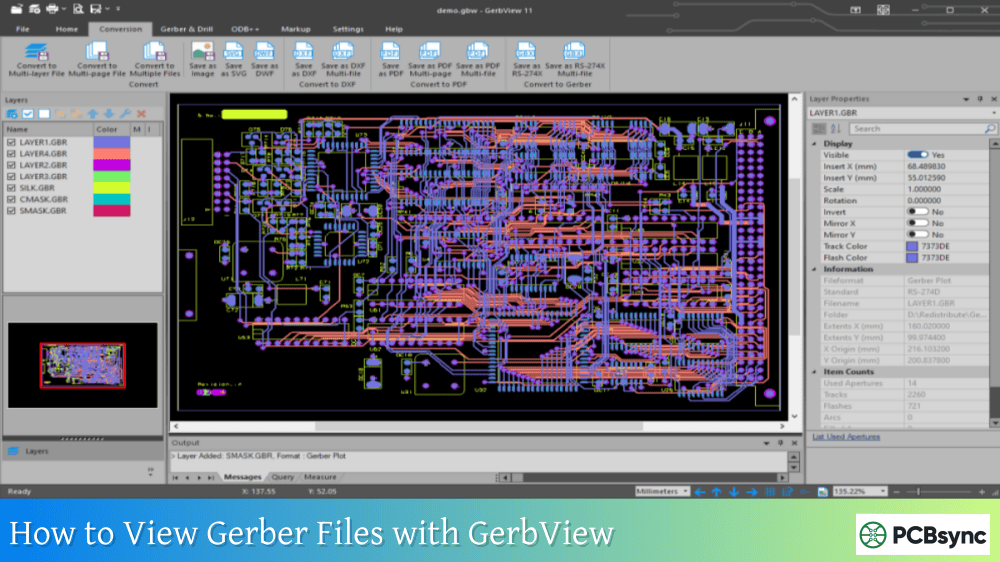
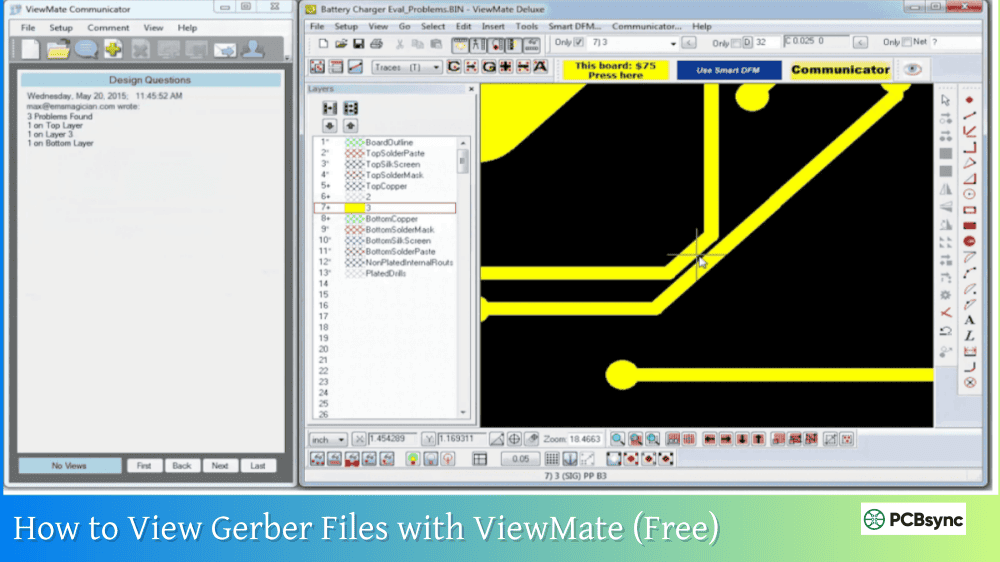
For more thorough verification, especially if you’re using a manufacturer other than JLCPCB, consider these free Gerber viewers:
One of EasyEDA’s biggest advantages is its seamless integration with JLCPCB for ordering. Since EasyEDA is owned by JLCPCB, the workflow is optimized for direct ordering.
Direct Order Process
Instead of clicking “Generate Gerber,” you can click Save to Cart in the Gerber dialog. This:
Automatically uploads your Gerber files to JLCPCB
Runs their automated DFM check
Calculates pricing based on your board specifications
Adds the order to your JLCPCB cart
You’ll see real-time pricing as you adjust parameters like quantity, color, thickness, and finish.
Using Gerbers with Other Manufacturers
If you prefer a different manufacturer, simply download the Gerber ZIP file and upload it to your chosen fabricator’s website. EasyEDA’s Gerber output is industry-standard RS-274X format, compatible with virtually any PCB manufacturer worldwide.
Popular alternatives include:
PCBWay
OSH Park
Seeed Studio Fusion
AllPCB
Elecrow
Each manufacturer has their own upload portal and may run additional DFM checks on your files.
Common EasyEDA Gerber Generation Issues and Solutions
Even with EasyEDA’s streamlined process, issues can occur. Here are the problems I encounter most frequently and how to solve them.
Drill Holes Appear Offset in Viewer
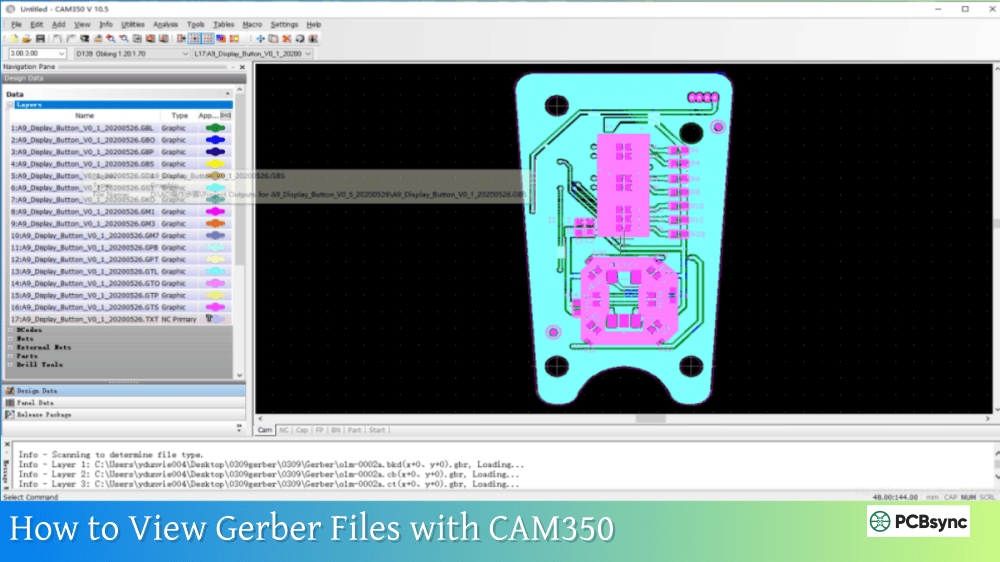
Symptom: When viewing Gerbers in tools like CAM350, drill holes don’t align with pads.
Cause: Coordinate format mismatch between the Gerber files and your viewer settings.
Solution: In your Gerber viewing tool, set the drill file coordinate format to 3:3 (mm) or 2:4 (inches) to match EasyEDA’s output. EasyEDA defaults to 3:3 format for standard-sized boards.
Cannot Find Generate Gerber Option
Symptom: The Gerber generation menu item is missing or grayed out.
Cause: You’re likely in the Footprint Editor or Schematic Editor instead of the PCB Editor. Gerbers can only be generated from PCB designs.
Solution: Open your PCB file (not schematic or footprint) in the PCB Editor. The Gerber generation option is only available when editing a PCB document.
DRC Errors Blocking Export
Symptom: EasyEDA prompts about DRC errors when you try to generate Gerbers.
Cause: Your design has unresolved design rule violations.
Solution: Click “Yes” to review the errors, or “No” to continue with export despite errors. While you can generate Gerbers with DRC errors, doing so risks manufacturing problems. Fix all errors for production-quality boards.
Missing Copper Pour in Gerber Output
Symptom: Copper areas that appear in your design are missing from the Gerber files.
Cause: Copper areas weren’t rebuilt after design changes.
Solution: Press Shift+B to rebuild all copper areas before generating Gerbers. If the option “Check Object to Copper Area” is disabled in DRC settings, copper areas may not update automatically.
Download Fails or File is Corrupt
Symptom: The Gerber ZIP file won’t download or can’t be extracted.
Cause: Third-party download managers interfering with browser-generated files.
Solution: Use your browser’s built-in download function only. Disable download managers temporarily if needed. Try a different browser (Chrome typically works best with EasyEDA).
Flying Leads Warning
Symptom: EasyEDA warns about flying leads when generating Gerbers.
Solution: Click “Yes” to locate and review unconnected nets, or “No” to ignore and continue. Flying leads often indicate incomplete routing that should be addressed before manufacturing.
Can I use EasyEDA Gerber files with any PCB manufacturer?
Yes, EasyEDA generates industry-standard RS-274X Gerber files that are compatible with virtually all PCB manufacturers worldwide. While EasyEDA integrates seamlessly with JLCPCB, you can download the Gerber ZIP file and upload it to PCBWay, OSH Park, Seeed Studio, or any other fabricator. The files include all necessary layers and drill information in universally accepted formats.
Why does EasyEDA generate separate PTH and NPTH drill files?
Plated through-holes (PTH) and non-plated through-holes (NPTH) require different manufacturing processes. PTH holes like vias and component leads need copper plating on the inner walls to create electrical connections between layers. NPTH holes like mounting holes shouldn’t have plating. Keeping them separate gives manufacturers clear instructions about which holes need plating. Most manufacturers accept merged drill files too, but separate files reduce the chance of errors.
What should I do if my Gerber viewer shows misaligned drill holes?
This is almost always a coordinate format mismatch. EasyEDA defaults to 3:3 format (three integer digits, three decimal digits) for the drill file. In your Gerber viewer’s settings, ensure the drill file import format matches. In Gerbv, this is set when opening the file. In CAM350, check the drill file import settings. Try different format combinations (3:3, 2:4, 4:2) until the holes align with pads.
How do I generate Gerbers for a multilayer PCB in EasyEDA?
The process is identical to two-layer boards. When you generate Gerbers, EasyEDA automatically includes all copper layers in your design. For a 4-layer board, you’ll get GTL (top), G1 (inner 1), G2 (inner 2), and GBL (bottom) copper files, plus all the standard mask, silkscreen, and drill files. Verify in your Gerber viewer that all inner layers contain the expected routing and planes.
Can I edit Gerber files after exporting from EasyEDA?
EasyEDA does not support importing or editing Gerber files directly. If you need to make changes, you must edit your PCB design in the EasyEDA editor and regenerate the Gerbers. While some professional CAM tools like CAM350 or ViewMate Deluxe can edit Gerbers, this is generally not recommended. Editing Gerbers directly can introduce errors and breaks the link between your design files and manufacturing files. Always make changes in your source PCB design.
Final Thoughts
Generating Gerber files in EasyEDA Standard Edition is straightforward once you understand the workflow. The key steps are: verify your design with DRC, rebuild copper areas, generate the Gerber package, and verify the output before ordering.
What makes EasyEDA particularly appealing is the tight integration with JLCPCB. You can go from completed design to ordered PCBs in literally three clicks. But even if you’re using a different manufacturer, EasyEDA’s standard RS-274X output works everywhere.
The most important advice I can give: never skip verification. Load your Gerbers into a viewer, check every layer, verify drill alignment, and confirm your board outline is correct. Those few minutes of checking are worth far more than the time and money lost to a bad board order.
Inquire: Call 0086-755-23203480, or reach out via the form below/your sales contact to discuss our design, manufacturing, and assembly capabilities.
Quote: Email your PCB files to Sales@pcbsync.com (Preferred for large files) or submit online. We will contact you promptly. Please ensure your email is correct.
Notes: For PCB fabrication, we require PCB design file in Gerber RS-274X format (most preferred), *.PCB/DDB (Protel, inform your program version) format or *.BRD (Eagle) format. For PCB assembly, we require PCB design file in above mentioned format, drilling file and BOM. Click to download BOM template To avoid file missing, please include all files into one folder and compress it into .zip or .rar format.