Inquire: Call 0086-755-23203480, or reach out via the form below/your sales contact to discuss our design, manufacturing, and assembly capabilities.
Quote: Email your PCB files to Sales@pcbsync.com (Preferred for large files) or submit online. We will contact you promptly. Please ensure your email is correct.
Notes: For PCB fabrication, we require PCB design file in Gerber RS-274X format (most preferred), *.PCB/DDB (Protel, inform your program version) format or *.BRD (Eagle) format. For PCB assembly, we require PCB design file in above mentioned format, drilling file and BOM. Click to download BOM template To avoid file missing, please include all files into one folder and compress it into .zip or .rar format.
How to Generate Gerber Files in CircuitMaker: Complete Guide for PCB Manufacturing
If you’ve just finished designing your PCB in CircuitMaker and you’re staring at your screen wondering how to get this thing manufactured, you’re in the right place. I’ve been through this exact process dozens of times, and I can tell you that generating Gerber files from CircuitMaker is straightforward once you understand the workflow.
CircuitMaker, developed by Altium, is a powerful free PCB design tool that’s become incredibly popular among hobbyists, makers, and students. Unlike many free EDA tools, it doesn’t artificially limit your designs. You get 16 signal layers, 16 plane layers, and no restrictions on board dimensions. But all that design freedom means nothing if you can’t get your boards manufactured. That’s where proper Gerber file generation comes in.
Before diving into the how-to, let’s briefly discuss what Gerber files actually are. In the simplest terms, Gerber files are the universal language between PCB designers and manufacturers. They’re 2D vector image files that describe each layer of your circuit board with extreme precision.
When you send your design to any PCB fabrication house, whether it’s JLCPCB, PCBWay, OSH Park, or any other manufacturer, they need these files to produce your boards. The RS-274X format (also called Extended Gerber) is the industry standard that embeds all necessary information within the files themselves.
Files You Need to Generate in CircuitMaker
For a complete manufacturing package from CircuitMaker, you’ll need to generate the following files:
File Extension
Layer Type
Description
.GTL
Top Copper
Component-side copper traces
.GBL
Bottom Copper
Solder-side copper traces
.GTS
Top Solder Mask
Defines exposed copper areas on top
.GBS
Bottom Solder Mask
Defines exposed copper areas on bottom
.GTO
Top Silkscreen
Component labels and markings (top)
.GBO
Bottom Silkscreen
Markings on solder side
.GML or .Outline
Board Outline
Physical board dimensions
.TXT or .DRL
NC Drill
Hole locations and sizes
.GL2, .GL3
Inner Layers
For 4+ layer boards only
Design Rules to Check Before Generating Gerber Files
Before you even think about clicking that Generate button, make sure your design passes all necessary checks. CircuitMaker inherits Altium Designer’s powerful Design Rule Check (DRC) system, and running it before output generation can save you from costly mistakes.
Essential Pre-Export Checks:
Run your DRC and resolve all violations. Even minor clearance warnings can translate to manufacturing defects. Verify that all nets are properly routed with no open connections or accidental stubs. Check that your board outline forms a complete, closed shape. Confirm that component footprints match your actual parts. Ensure via sizes and drill holes meet your manufacturer’s minimum specifications.
Most PCB manufacturers have minimum design rules for trace width (typically 6 mil), spacing (6 mil), and hole sizes (0.3mm minimum). CircuitMaker allows you to set design rules that match your target manufacturer’s capabilities, so configure these before starting your layout.
Step-by-Step Guide to Generate Gerber Files in CircuitMaker
Let me walk you through the exact process I use every time I need to export manufacturing files from CircuitMaker. I’m assuming you’ve already completed your PCB design, run your Design Rule Checks, and are ready to send your board for fabrication.
Step 1: Access the Generate Outputs Dialog
There are two ways to access the output generation in CircuitMaker. You can either open your PCB design file and navigate to the Project menu, then click Generate Outputs. Alternatively, you can right-click on the project name (the .PrjPcb file) in the Projects panel and select Generate Outputs from the context menu.
CircuitMaker will prompt you to save and commit any unsaved changes. Click OK to proceed. This is important because CircuitMaker’s cloud-based architecture requires your design to be synced before generating outputs.
Step 2: Select Output Types
In the Generate Output Files dialog box, you’ll see several output options available. For PCB manufacturing, you need to check the boxes next to both Gerber Files and NC Drill Files. These are the minimum requirements for any PCB fabrication order.
If your manufacturer supports ODB++ format, CircuitMaker can generate that as well, but Gerber files remain the most universally accepted format across all PCB manufacturers worldwide.
Step 3: Configure Gerber File Settings
Click the Configure link next to Gerber Files to open the Gerber Setup dialog. This is where the magic happens, and getting these settings right is crucial for successful manufacturing.
General Tab Configuration:
Setting
Recommended Value
Notes
Units
Inches or Millimeters
Either works, just be consistent
Format
2:4 or 2:5
Higher precision is better
Embedded Apertures
RS-274X
Always use this format
The format setting (like 2:4) determines coordinate precision. The first number represents integer digits, and the second represents decimal places. A 2:4 format in inches gives you 0.0001″ precision, which is more than adequate for most designs.
Important tip: Whatever settings you choose here, remember them because you’ll need to use identical settings when configuring your NC Drill files. Mismatched settings between Gerber and drill files can cause layer misalignment during manufacturing.
Step 4: Select Layers to Export
Navigate to the Layers tab in the Gerber Setup dialog. This is where you specify which layers to include in your output. For a standard 2-layer board, select the following layers in the Plot column:
Layer
Include?
Purpose
Top Layer
Yes
Top copper routing
Bottom Layer
Yes
Bottom copper routing
Top Overlay
Yes
Top silkscreen
Bottom Overlay
Yes if used
Bottom silkscreen
Top Solder
Yes
Top solder mask
Bottom Solder
Yes
Bottom solder mask
Top Paste
Yes if SMD components
Stencil for solder paste
Bottom Paste
Yes if SMD components
Bottom paste stencil
Outline
Yes
Board outline
Keep-Out Layer
No
See warning below
Critical Warning About the Keep-Out Layer:
Do NOT check the Keep-Out Layer for export. Many PCB manufacturers’ automated systems look for .GKO files and may incorrectly interpret this as your board outline. This can cause serious problems with your order. Always use the dedicated Outline layer (.GML) for your board boundary instead.
If you’re designing a 4-layer or 6-layer board, don’t forget to include your inner layers (GL2, GL3, etc.) in the export.
Step 5: Configure Advanced Settings
Click on the Advanced tab and configure the following options:
Batch Mode: Select “Separate file per layer” to generate individual Gerber files for each layer. This is the standard format that all manufacturers expect.
Other Settings: The Film Size and Aperture Matching Tolerance can typically be left at default values. However, make sure to uncheck G54, Optimize Change Location Commands, and other options unless you have a specific reason to enable them.
For settings like leading/trailing zeroes, vector/raster mode, and absolute/relative coordinates, maintain consistency with what you’ll configure in your NC Drill settings.
Step 6: Configure NC Drill Files
Click OK to close the Gerber Setup, then click Configure next to NC Drill Files in the Generate Output Files dialog.
NC Drill Setup Configuration:
Setting
Recommended Value
Units
Same as Gerber settings
Format
Same as Gerber settings
Zero Suppression
Keep leading and trailing zeroes
Coordinate Position
Reference to absolute origin
Separate files for plated/non-plated
Check if applicable
The most critical aspect here is matching your NC Drill settings to your Gerber settings. If your Gerber files use 2:4 format in inches with absolute coordinates, your drill files must use the same configuration.
Step 7: Generate the Output Files
With both Gerber and NC Drill configured, return to the Generate Output Files dialog. Ensure both checkboxes are selected and click the Generate button.
CircuitMaker will display a dialog saying “The project has modifications…” Click Save and Commit Changes. Then click OK in the Save to Server dialog that appears.
Step 8: Release and Download Your Files
Here’s where CircuitMaker’s cloud-based workflow comes into play. After generation, click the Release button in the Generate Output Files dialog. This saves your generated files to Altium’s cloud servers.
A Confirm Release window will appear where you can optionally add release notes. Click OK to proceed.
Once the release is complete, click “Open in Web Browser” to access your files. In the web interface, click Show Files to display your generated outputs, then click the download icon to download your Gerber and drill files as a ZIP package.
Understanding CircuitMaker’s Cloud-Based Workflow
Unlike traditional desktop PCB software, CircuitMaker stores all projects on Altium’s cloud servers. This has implications for how you access your Gerber files. Your output files aren’t saved to a local folder. Instead, they’re uploaded to the cloud and associated with your project release.
This cloud-centric approach enables CircuitMaker’s collaborative features, allowing multiple users to work on designs simultaneously. However, it does mean you need an internet connection to generate and access your manufacturing files.
CircuitMaker 2.0 introduced the ability to have up to 5 private projects, so you’re not forced to share everything with the community if you prefer to keep your designs confidential.
Verifying Your Gerber Files Before Manufacturing
Never send Gerber files to a manufacturer without verifying them first. I’ve learned this lesson the hard way, and trust me, catching errors before fabrication is much cheaper than dealing with scrap boards.
Using a Gerber Viewer
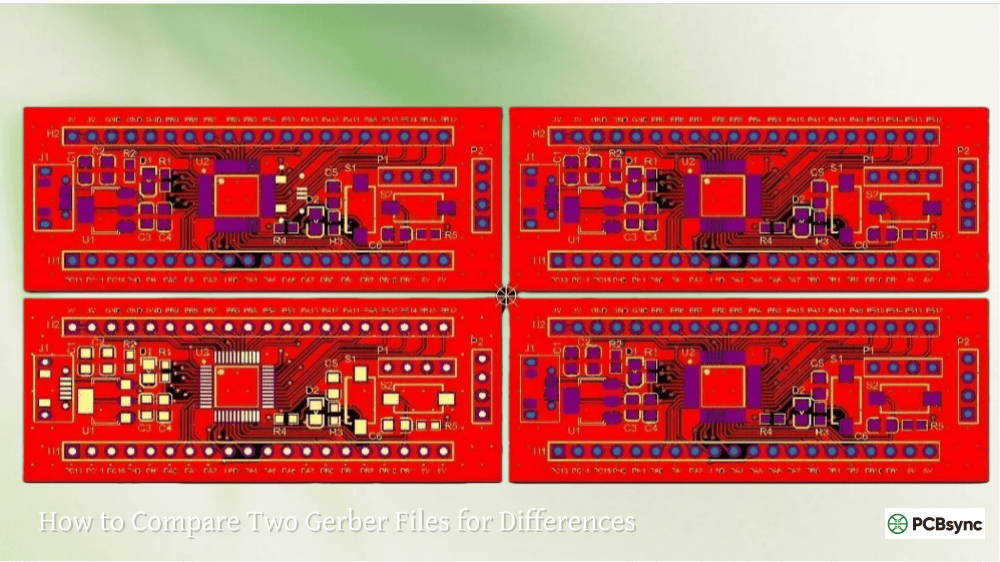
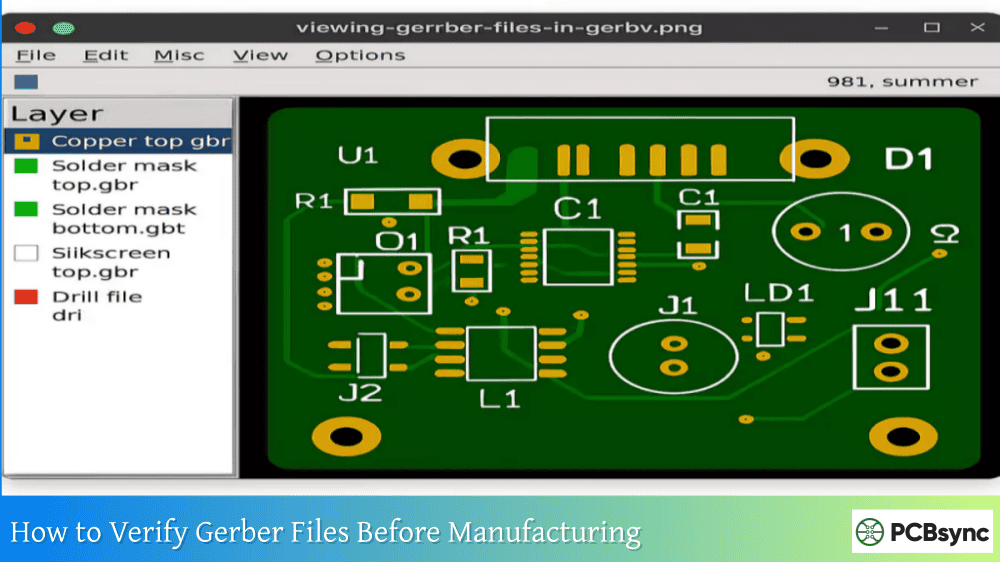
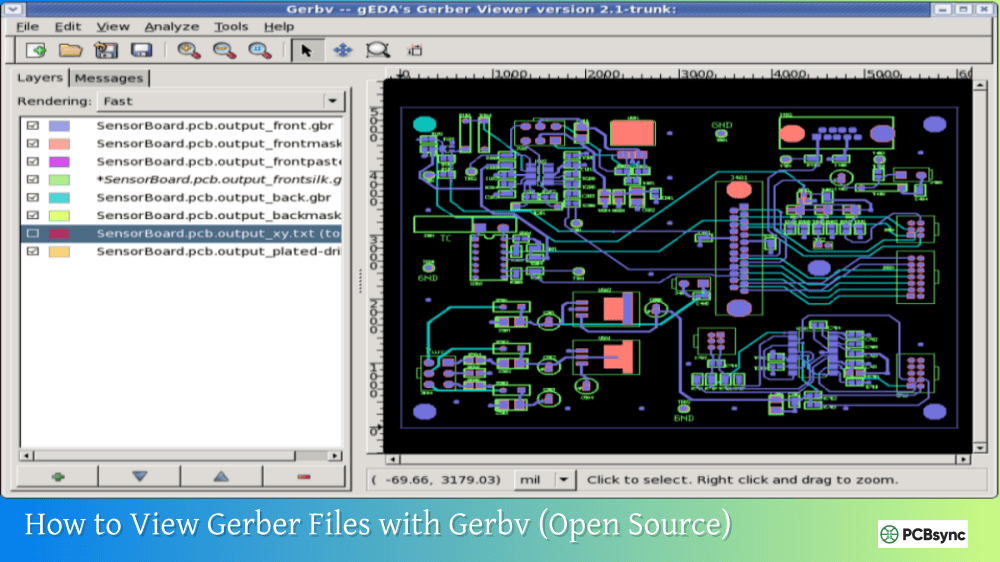
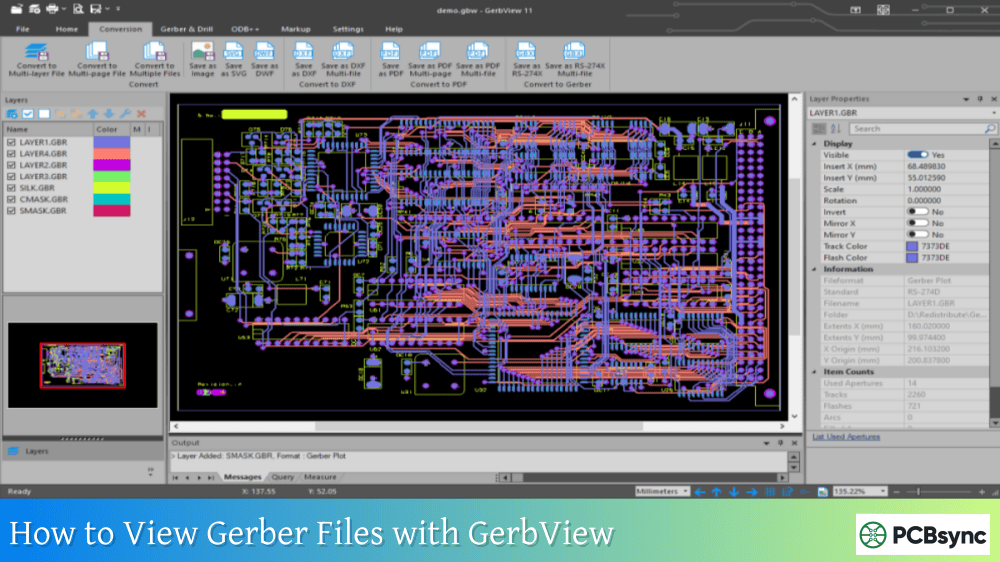
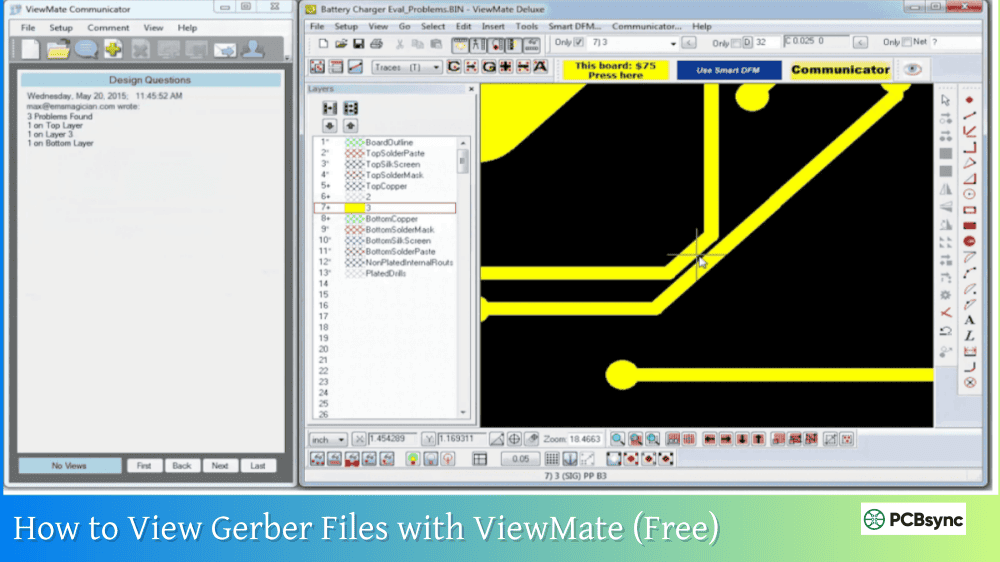
After downloading your files, open them in a Gerber viewer to verify everything looks correct. Check that all layers are present and properly aligned, the board outline is clearly defined, copper features appear as expected, drill holes are correctly positioned over pads, and silkscreen text is readable and not overlapping pads.
Recommended Free Gerber Viewers
Viewer
Platform
Key Features
Gerbv
Windows, Linux
Open-source, lightweight
KiCad GerbView
Cross-platform
Included with KiCad suite
ViewMate
Windows
Feature-rich, industry standard
HQDFM (NextPCB)
Online
DFM analysis included
ZofzPCB
Windows
3D visualization
Many PCB manufacturers also provide online Gerber viewers with built-in DFM (Design for Manufacturability) checks. JLCPCB, for example, automatically analyzes your files when you upload them and flags potential issues.
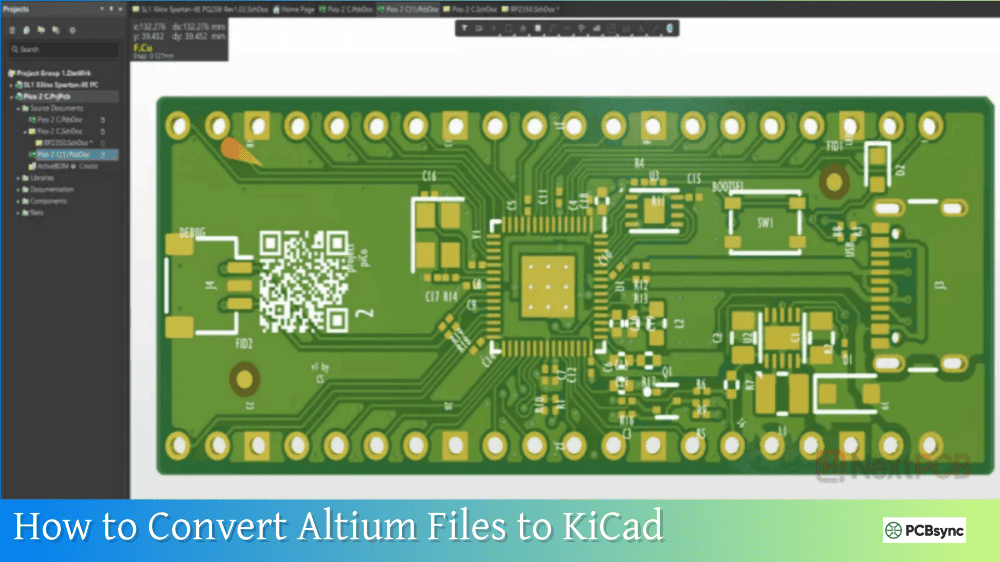
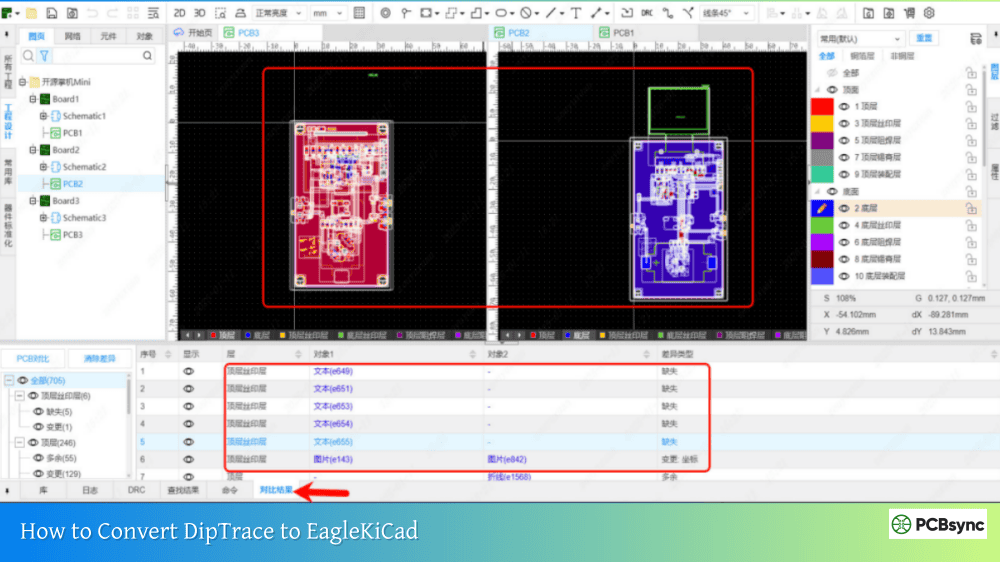
Read more How to convert PCB Files in different Design software:
Common CircuitMaker Gerber Generation Issues and Solutions
Over the years, I’ve encountered several common problems when generating Gerber files from CircuitMaker. Here are the most frequent issues and how to solve them.
Missing Board Outline
If your manufacturer reports a missing outline, verify that you drew your board boundary on the Outline layer (not the Keep-Out layer) and that this layer is included in your Gerber export. The outline should be a closed shape with no gaps.
Drill-to-Gerber Misalignment
When drill holes don’t align with pads in your Gerber files, it’s almost always due to mismatched settings between your Gerber and NC Drill configurations. Go back and ensure both use identical units, format, and coordinate reference settings.
Extra Mechanical Layer Data
Some CircuitMaker footprints include mechanical “courtyard” or “pick and place” data on mechanical layers. If these layers are accidentally included in your Gerber export, they can appear as unwanted copper features. Make sure to uncheck all mechanical layers under “Mechanical Layers to Add to All Gerber Plots.”
Cloud Sync Issues
Since CircuitMaker requires cloud connectivity, you may occasionally encounter sync errors. If the release process fails, try saving and committing your design manually before attempting to generate outputs again.
CircuitMaker Output Formats Beyond Gerber
While Gerber files are the most common output format, CircuitMaker supports several other manufacturing output options.
ODB++ Export
ODB++ is an intelligent format that packages all manufacturing data into a single hierarchical file structure. It includes everything from copper layers to drill data, component placement, and BOM information. Many modern manufacturers prefer ODB++ because it reduces interpretation errors.
To generate ODB++ in CircuitMaker, simply check the ODB++ box in the Generate Output Files dialog alongside or instead of Gerber files.
IPC Test Point Reports
For boards that require electrical testing during manufacturing, CircuitMaker can generate IPC test point reports. These files identify accessible test points on your design for flying probe or bed-of-nails testing.
Best Practices for Manufacturing-Ready Outputs
Based on my experience working with various PCB manufacturers, here are some best practices for ensuring smooth fabrication from CircuitMaker designs.
Always verify before ordering. Use a Gerber viewer to inspect every layer. This five-minute check can save you days of waiting for unusable boards.
Package files correctly. When you download from CircuitMaker, you’ll get separate folders for Gerber and NC Drill files. Most manufacturers accept a ZIP containing both folders, but some prefer all files in a single folder. Check your manufacturer’s requirements.
Include a README if needed. For complex boards with specific requirements (controlled impedance, special materials, etc.), include a text file with fabrication notes.
Match units consistently. If your Gerber files are in millimeters, your drill files should be too. This seems obvious, but it’s a common source of errors.
Don’t include the Keep-Out layer. I’ve mentioned this before, but it bears repeating. Many automated systems misinterpret .GKO files.
Useful Resources for CircuitMaker Users
Here are some resources that can help you get the most out of CircuitMaker and ensure successful PCB manufacturing.
Official Resources
Resource
URL
Description
CircuitMaker Website
circuitmaker.com
Software download and community
CircuitMaker Documentation
documentation.circuitmaker.com
Official user guides
Altium 365
altium365.com
Cloud platform integration
CircuitMaker Community
circuitmaker.com/Projects
Shared designs and forums
Manufacturer Gerber Guides
Manufacturer
Gerber Guide Available
JLCPCB
jlcpcb.com/help
PCBWay
pcbway.com/helpcenter
OSH Park
docs.oshpark.com
Seeed Studio
support.seeedstudio.com
Frequently Asked Questions
Can I generate Gerber files from CircuitMaker without an internet connection?
No, CircuitMaker requires an internet connection for most operations, including generating and downloading output files. The software’s cloud-based architecture means your design data and outputs are stored on Altium’s servers. If you need offline capabilities, you may need to consider alternative PCB design software.
What file format should I use for the board outline in CircuitMaker?
Use the dedicated Outline layer, which generates a .GML file. Avoid using the Keep-Out layer for your board outline, as many manufacturers’ automated systems look for .GKO files and may incorrectly interpret them, causing problems with your order.
How do I generate files for a 4-layer board in CircuitMaker?
The process is the same as for 2-layer boards, but you must remember to include your inner layers (GL2, GL3) in the Layers tab when configuring your Gerber export. Don’t forget to also verify your layer stackup matches what you specified in your design before exporting.
Can CircuitMaker generate ODB++ files instead of Gerber?
Yes, CircuitMaker supports ODB++ output as an alternative to Gerber files. Simply check the ODB++ box in the Generate Output Files dialog. ODB++ is an intelligent format that packages all manufacturing data together and is preferred by some manufacturers.
Why are my drill holes misaligned with the pads in the Gerber viewer?
Drill-to-Gerber misalignment is typically caused by different settings between your Gerber and NC Drill configurations. Ensure both outputs use identical units (inches or millimeters), format (like 2:4), and coordinate reference (absolute origin). Regenerate both files after matching the settings.
Conclusion
Generating Gerber files in CircuitMaker is a straightforward process once you understand the workflow. The key steps are accessing the Generate Outputs dialog, configuring both Gerber and NC Drill settings with matching parameters, selecting the correct layers while avoiding the Keep-Out layer, and releasing your files to download from the cloud.
Remember to always verify your output files in a Gerber viewer before sending them to a manufacturer. This simple quality check can save you significant time and money by catching errors before fabrication begins.
CircuitMaker’s combination of professional-grade features and zero cost makes it an excellent choice for hobbyists, students, and makers. The cloud-based workflow may take some getting used to if you’re coming from traditional desktop software, but the collaborative features and built-in version control offer real benefits for team projects.
With the knowledge from this guide, you’re now equipped to take your CircuitMaker designs from the screen to real, manufacturable circuit boards. Happy designing!
Inquire: Call 0086-755-23203480, or reach out via the form below/your sales contact to discuss our design, manufacturing, and assembly capabilities.
Quote: Email your PCB files to Sales@pcbsync.com (Preferred for large files) or submit online. We will contact you promptly. Please ensure your email is correct.
Notes: For PCB fabrication, we require PCB design file in Gerber RS-274X format (most preferred), *.PCB/DDB (Protel, inform your program version) format or *.BRD (Eagle) format. For PCB assembly, we require PCB design file in above mentioned format, drilling file and BOM. Click to download BOM template To avoid file missing, please include all files into one folder and compress it into .zip or .rar format.