Inquire: Call 0086-755-23203480, or reach out via the form below/your sales contact to discuss our design, manufacturing, and assembly capabilities.
Quote: Email your PCB files to Sales@pcbsync.com (Preferred for large files) or submit online. We will contact you promptly. Please ensure your email is correct.
Notes: For PCB fabrication, we require PCB design file in Gerber RS-274X format (most preferred), *.PCB/DDB (Protel, inform your program version) format or *.BRD (Eagle) format. For PCB assembly, we require PCB design file in above mentioned format, drilling file and BOM. Click to download BOM template To avoid file missing, please include all files into one folder and compress it into .zip or .rar format.
How to Generate Gerber Files from Horizon EDA: Complete Manufacturing Guide
When I first discovered Horizon EDA back in 2020, I was genuinely impressed by its modern approach to PCB design. Created by Lukas K. in 2016, this free and open-source EDA package takes a refreshingly different approach to electronic design automation, with a pool-based library system that actually makes sense for professional workflows. But what really matters when your design is complete is getting those manufacturing files out the door correctly.
Horizon EDA supports a complete design flow from schematic entry to Gerber export, generating industry-standard RS-274X Gerber files and NC-Drill (Excellon) files that any PCB manufacturer will accept. If you’re new to Horizon EDA or just looking to understand the Gerber export process better, this guide walks you through everything you need to know.
Understanding Horizon EDA and Its Design Philosophy
Before we dive into the Gerber generation process, it’s worth understanding what makes Horizon EDA different from other EDA tools. This context matters because it affects how you approach the entire design and export workflow.
Horizon EDA was born out of frustration with existing open-source EDA tools. The creator’s main pain points with KiCad were the library’s lack of orderable parts concept and the schematic editor not understanding nets properly. Rather than trying to fix another tool, he built Horizon from scratch with a modern C++ codebase that’s completely legacy-free.
Key Features That Set Horizon EDA Apart
Feature
Description
Benefit for Manufacturing
Pool-Based Library
Centralized parts management with UUIDs
Consistent footprints across projects
Netlist-Aware Schematic
Editor understands net connections
Fewer DRC errors before export
KiCad’s Interactive Router
Borrowed from KiCad project
Professional routing quality
Rule-Based DRC
Expressive design rule checking
Catch errors before fabrication
3D Preview
Real-time board visualization
Visual verification before export
Panelization Support
Built-in multi-board panels
Ready for production batches
What Are Gerber Files and Why Do They Matter?
Gerber files are the universal language between PCB designers and manufacturers. Named after the Gerber Scientific Instrument Company that developed the format decades ago, these files contain precise 2D vector data describing every layer of your circuit board.
When you generate Gerber files from Horizon EDA, the software produces RS-274X format files (also known as Extended Gerber). This modern format includes all aperture definitions within each file, making them self-contained and eliminating the compatibility issues that plagued older Gerber formats.
Files Generated During Horizon EDA Fabrication Output
A complete manufacturing package from Horizon EDA includes:
File Type
Format
Purpose
Top Copper
RS-274X Gerber
Component side traces and pads
Bottom Copper
RS-274X Gerber
Solder side traces and pads
Inner Copper Layers
RS-274X Gerber
Internal signal/plane layers
Top Solder Mask
RS-274X Gerber
Mask openings on top
Bottom Solder Mask
RS-274X Gerber
Mask openings on bottom
Top Silkscreen
RS-274X Gerber
Component labels and markings
Bottom Silkscreen
RS-274X Gerber
Bottom side markings
Board Outline
RS-274X Gerber
Physical board dimensions
Drill File
Excellon (NC-Drill)
Hole locations and sizes
Top Paste
RS-274X Gerber
Stencil openings (for SMT assembly)
Bottom Paste
RS-274X Gerber
Bottom stencil openings
Preparing Your Horizon EDA Design for Gerber Export
Getting clean Gerber output starts well before you click the export button. The preparation phase is where most manufacturing problems are either created or prevented.
Running Design Rule Checks
Horizon EDA features a powerful rule-based DRC system that should be your first stop before generating any manufacturing files. The DRC checks your design against configurable rules for clearances, trace widths, drill sizes, and more.
To run the DRC, use the spacebar menu in the board editor or the appropriate keyboard shortcut. Horizon EDA will tell you exactly what’s wrong and where, making it easy to fix issues before they become expensive fabrication mistakes.
Key items the DRC verifies:
Rule Category
What It Checks
Copper Clearance
Spacing between copper objects
Track Width
Minimum and maximum trace widths
Via Rules
Via sizes and drill diameters
Hole Sizes
Drill hole constraints
Outline
Board outline validity
Net Ties
Proper net tie connections
Thermal Relief
Plane connections to pads
Verifying Board Outline Requirements
In Horizon EDA, the board outline is defined by drawing polygons on the Outline layer. This is critically important for Gerber export because manufacturers use this layer to determine where to cut your boards.
The board outline must meet specific requirements:
The board must be representable by a single polygon with zero or more holes. This means you can have cutouts, but the overall shape needs to be a valid closed polygon. Do not use arcs or lines directly on the outline layer. Instead, draw complete polygons.
For any additional outline-related information such as V-score indications, use the “Outline Notes” layer. During Gerber export, Horizon EDA automatically merges the “Outline” and “Outline Notes” layers into a single output file.
Using the 3D Preview for Visual Verification
Before exporting, take advantage of Horizon EDA’s built-in 3D viewer. This feature shows you an accurate preview of how your PCB will look after production, including assembled parts where 3D models are available.
The official Horizon EDA libraries already contain 3D models for many standard packages, so these work out of the box without configuration. This visual check can catch issues that might not show up in 2D views, like component clearance problems or incorrect footprint orientations.
Step-by-Step Guide to Generate Gerber Files from Horizon EDA
Now let’s walk through the actual process of generating Gerber files from Horizon EDA. The workflow is straightforward once you understand where everything is.
Step 1: Complete Your PCB Layout
Before generating Gerber files, ensure your board layout is complete. This includes all trace routing, copper pours filled, and all components placed in their final positions. Run the DRC one final time to confirm there are no outstanding errors.
Step 2: Access the Fabrication Output Menu
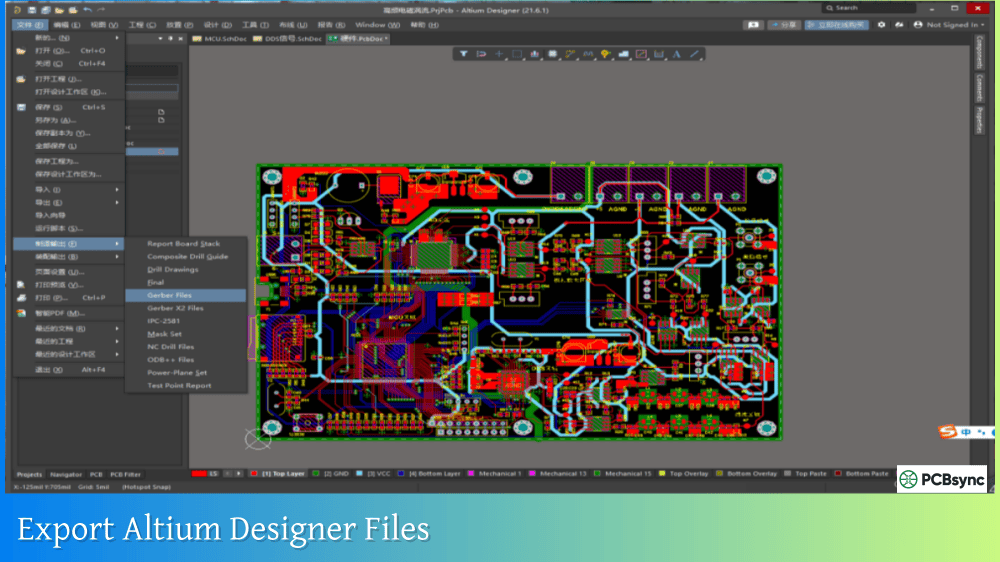
In Horizon EDA, the Gerber export function is called “Fabrication Output.” You can access it through the application menu in the board editor. Unlike some EDA tools that bury this function in submenus, Horizon EDA keeps it readily accessible.
You can also use the spacebar menu to search for the Fabrication Output option. Just press spacebar and start typing “fabrication” to find it quickly.
Step 3: Configure Output Settings
The Fabrication Output dialog presents you with options for configuring your Gerber and drill file generation. Here you can specify:
Output Directory: Choose where Horizon EDA should save your manufacturing files. It’s good practice to create a dedicated folder for each board revision.
Layer Selection: Verify that all necessary layers are selected for export. For a standard two-layer board, you need copper layers, solder mask layers, silkscreen layers, board outline, and drill files. For multilayer boards, ensure all inner copper layers are included.
File Naming: Horizon EDA generates files with descriptive names that most manufacturers can easily identify. The naming convention follows industry standards, making layer identification straightforward.
Step 4: Generate the Gerber Files
Click the generate or export button to create your manufacturing files. Horizon EDA will process your design and output the complete set of RS-274X Gerber files along with Excellon drill files.
The export process is typically fast, even for complex boards. Once complete, you’ll have a folder containing all the files needed for PCB fabrication.
Step 5: Verify Generated Files
After generation, always verify your Gerber files before sending them to a manufacturer. While Horizon EDA produces reliable output, visual verification catches potential issues that automated checks might miss.
Using the Spacebar Menu for Quick Access
One of Horizon EDA’s most distinctive features is its spacebar menu system. This context-sensitive menu appears when you press the spacebar and provides quick access to all available tools and actions.
For Gerber generation and related tasks, the spacebar menu lets you quickly access:
Action
Description
Fabrication Output
Generate Gerber and drill files
Run DRC
Execute design rule checks
3D View
Open 3D preview
Update Planes
Refill all copper planes
Reload Netlist
Sync with schematic changes
The spacebar menu also shows keyboard shortcuts alongside each action. If you find yourself repeatedly accessing the Fabrication Output menu, you can learn the keyboard shortcut for faster workflow.
Verifying Horizon EDA Gerber Files Before Manufacturing
Never send Gerber files to a manufacturer without verification. This step catches errors before they become expensive fabrication problems.
Recommended Gerber Viewers
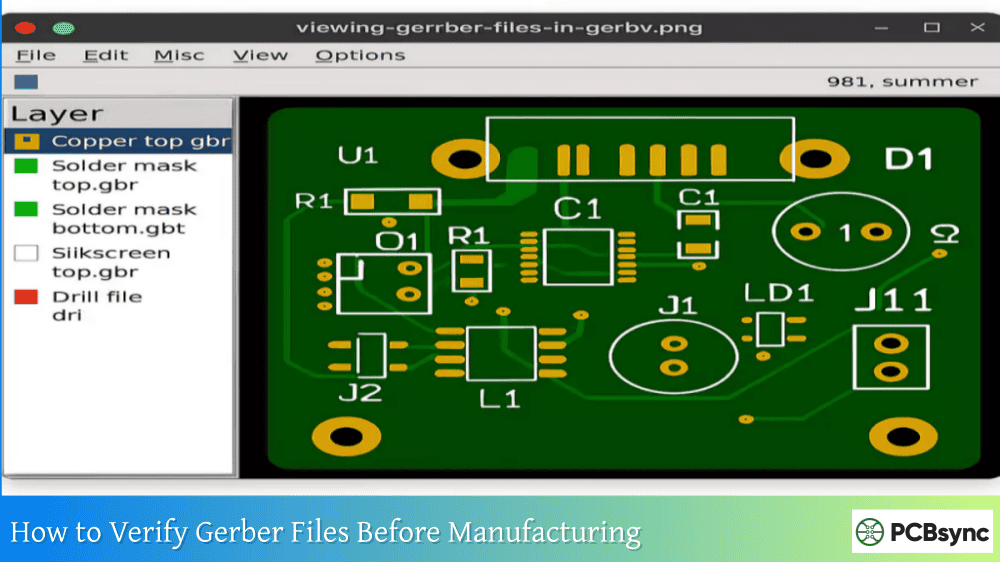
Several excellent Gerber viewers work well with files generated from Horizon EDA:
Viewer
Platform
Key Features
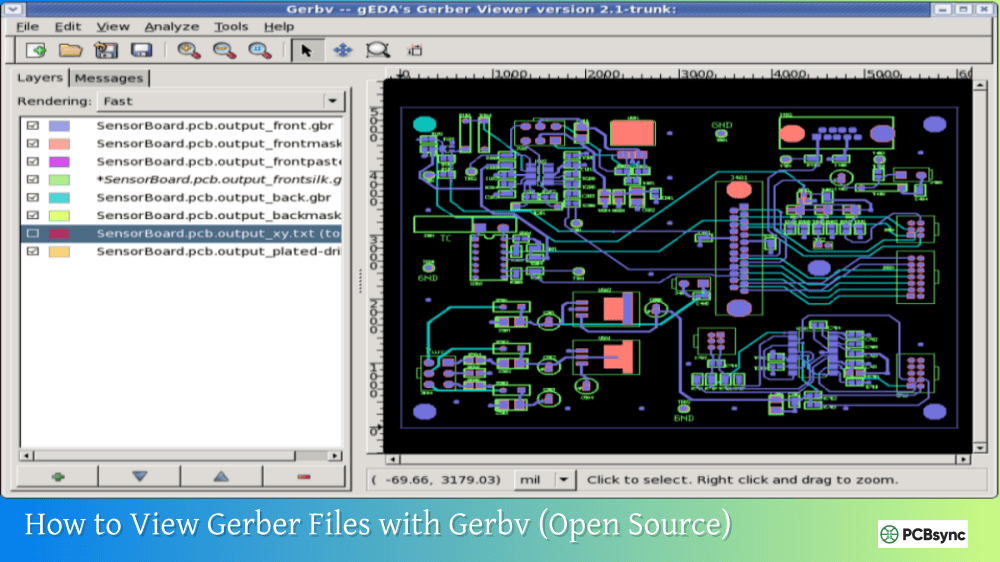
Gerbv
Linux, Windows
Open-source, part of gEDA project
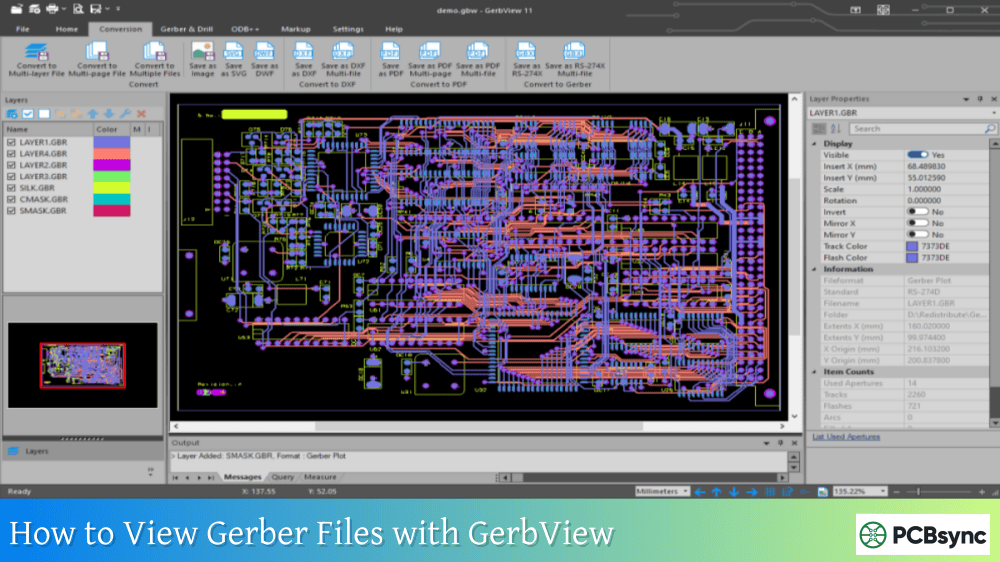
KiCad GerbView
Cross-platform
Part of KiCad suite, reliable
Ucamco Reference Viewer
Online
Official reference viewer
FlatCAM
Cross-platform
Also for CAM preparation
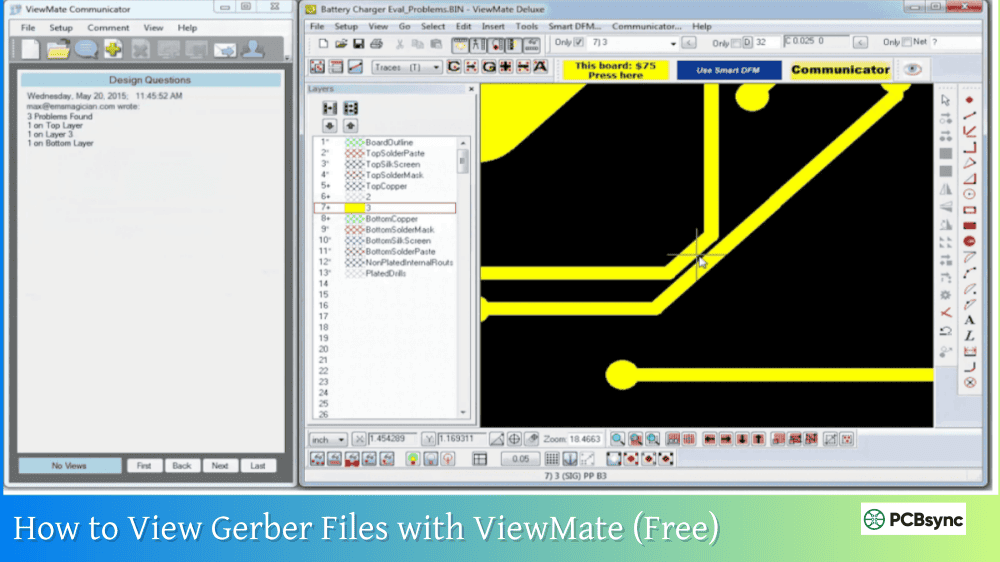
ViewMate
Windows
Industry standard
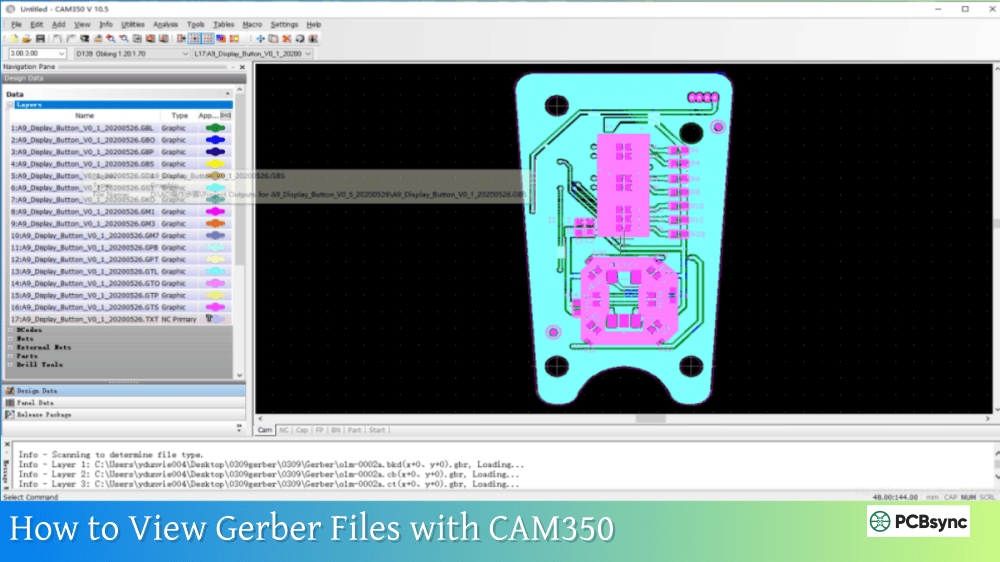
CAM350
Windows
Professional CAM tool
Verification Checklist for Horizon EDA Gerber Files
When reviewing your generated files, verify these items:
Check Item
What to Look For
Layer Count
Correct number of layers present
Layer Alignment
All layers properly registered
Board Outline
Closed polygon, correct dimensions
Drill-to-Pad Alignment
Holes centered on pads
Solder Mask Openings
Correct size and position
Silkscreen
Readable text, no pad overlap
Copper Pours
Properly filled, correct clearances
Inner Layers
Correct planes and routing
Read more How to convert PCB Files in different Design software:
Understanding Horizon EDA’s Pool System and Its Impact on Manufacturing
Horizon EDA’s pool-based library system directly impacts the quality of your manufacturing output. Unlike traditional EDA tools where libraries can become fragmented across projects, the pool system ensures consistency.
How the Pool System Ensures Manufacturing Quality
In the pool, all parts are defined with:
Units: Define pin names and directions separately from symbols Entities: Reference units to define the netlist representation Packages: Contain pads and graphical elements for PCB footprints Parts: Map entities to packages with manufacturer information
This hierarchical structure means that when you use a part in multiple projects, you’re always using the exact same footprint. This eliminates the “slightly different footprint” problem that plagues many designs when moving from prototype to production.
Using the Official Horizon EDA Pool
While you can create your own pool, the Horizon EDA project maintains an official pool at GitHub. This community-maintained pool follows strict conventions for naming, footprints, and part definitions. Using the official pool ensures your designs use industry-standard footprints that manufacturers are familiar with.
To contribute to the pool, the Pool Manager includes built-in GitHub integration that simplifies the submission process. Parts you create can be shared with the community, benefiting everyone.
Handling Multilayer Boards in Horizon EDA
For boards with more than two copper layers, Horizon EDA handles the complexity seamlessly. The layer stack is defined in your board settings, and the Fabrication Output function automatically generates Gerber files for all configured layers.
Inner Layer Considerations
When generating Gerber files for multilayer boards:
Plane layers and signal layers are exported separately. Ensure your layer stack definition matches what your manufacturer expects. Most manufacturers can work with any layer count, but communication about the stack-up is essential for proper fabrication.
The DRC rules in Horizon EDA can be configured for each layer independently, allowing different clearances and widths for inner versus outer layers as your design requires.
Panelization and Gerber Export in Horizon EDA
One of Horizon EDA’s notable features is built-in panelization support. Rather than manually copying and pasting boards (which creates synchronization nightmares), Horizon EDA lets a board reference other boards.
Creating Panels for Production
The panelization workflow involves:
Creating a new empty project for the panel, using the “Manage included boards” tool to load boards for the panel, and placing them using the “Place board panel” tool. Each board on the panel remains linked to its original design, so changes to the original automatically update the panel.
When you generate Gerber files from a panelized design, the output includes all boards in their panel positions. This is exactly what you need when ordering production quantities where panelization reduces per-board costs.
Common Issues and Solutions When Exporting from Horizon EDA
Based on community experience, here are issues that sometimes occur during Gerber generation and their solutions.
Board Outline Problems
If your manufacturer reports outline issues, check that your outline is a proper closed polygon. Horizon EDA’s Outline rule can verify this during DRC. Avoid using disconnected lines or arcs on the Outline layer.
Missing or Incorrect Layers
If layers appear missing in your Gerber output, verify they’re selected in the Fabrication Output dialog. Also confirm that the layers actually contain content. Empty layers may not generate output files.
Drill File Alignment
If drill holes don’t align with pads in your Gerber viewer, first verify the issue is real and not a viewer configuration problem. Try the files in a different viewer. Horizon EDA generates standard Excellon files that should align correctly with the Gerber layers.
Useful Resources for Horizon EDA Users
Here are essential resources for working with Horizon EDA and generating manufacturing files:
Official Horizon EDA Resources
Resource
URL
Description
Official Website
horizon-eda.org
Main project site
Documentation
horizon-eda.readthedocs.io
Complete user manual
GitHub Repository
github.com/horizon-eda/horizon
Source code
Official Pool
github.com/horizon-eda/horizon-pool
Community parts library
Pool Convention
github.com/horizon-eda/horizon-pool-convention
Library standards
IRC Channel
#horizon-eda on libera.chat
Community chat
Installation Options by Platform
Platform
Installation Method
Linux (Flatpak)
Flathub (recommended)
Linux (Debian/Ubuntu)
Selfnet repository packages
Linux (Arch)
AUR package
Linux (FreeBSD)
FreeBSD ports
Windows
Binary download from Selfnet mirror
Free Gerber Viewers
Viewer
Download Location
Gerbv
gerbv.geda-project.org
KiCad GerbView
kicad.org
Reference Viewer
gerber-viewer.ucamco.com
FlatCAM
flatcam.org
Frequently Asked Questions
What Gerber format does Horizon EDA export?
Horizon EDA exports RS-274X format Gerber files, also known as Extended Gerber. This modern format includes all aperture definitions within each file, making them self-contained and universally accepted by PCB manufacturers. For drill files, Horizon EDA generates standard Excellon (NC-Drill) format files.
Can I use Gerber files from Horizon EDA with any PCB manufacturer?
Yes, the RS-274X Gerber files and Excellon drill files generated by Horizon EDA are industry-standard formats accepted by virtually all PCB manufacturers worldwide. Whether you’re using budget services like JLCPCB and PCBWay or premium fabricators, these files will work without conversion.
How do I access the Fabrication Output function in Horizon EDA?
The Fabrication Output function is accessible through the application menu in the board editor. You can also use Horizon EDA’s spacebar menu by pressing spacebar and typing “fabrication” to find it quickly. This function generates both Gerber files and drill files in a single operation.
Does Horizon EDA support multilayer board Gerber export?
Yes, Horizon EDA fully supports multilayer PCB designs. When you generate Gerber files from a multilayer board, the software automatically creates separate files for each copper layer in your stack, including all inner signal and plane layers. The DRC system also supports layer-specific rules for complex multilayer designs.
Why does Horizon EDA use a pool instead of traditional libraries?
Horizon EDA’s pool system was designed to solve the library fragmentation problem common in other EDA tools. Instead of per-project libraries that can diverge over time, the pool provides a single source of truth for all parts. This ensures consistent footprints across projects and makes it easier to maintain and share component definitions. The pool also supports inheritance, so related parts can share common definitions.
Conclusion
Generating Gerber files from Horizon EDA is a straightforward process once you understand the workflow. The key steps involve completing your design, running DRC checks, accessing the Fabrication Output menu, and verifying the generated files before sending them to your manufacturer.
What makes Horizon EDA particularly well-suited for professional PCB work is its pool-based library system and robust DRC capabilities. These features help ensure that the Gerber files you generate accurately represent your design intent and meet manufacturing requirements.
The software continues to evolve with an active development community. While it may have a smaller user base than KiCad or Eagle, Horizon EDA offers a modern, thoughtfully designed alternative for engineers who appreciate its unique approach to electronic design automation.
Remember to always verify your Gerber files in an independent viewer before submitting them for fabrication. This simple step catches problems before they become expensive mistakes. With Horizon EDA’s clean output and your careful verification, you’ll have manufacturing-ready files that any PCB fabricator can work with confidently.
Inquire: Call 0086-755-23203480, or reach out via the form below/your sales contact to discuss our design, manufacturing, and assembly capabilities.
Quote: Email your PCB files to Sales@pcbsync.com (Preferred for large files) or submit online. We will contact you promptly. Please ensure your email is correct.
Notes: For PCB fabrication, we require PCB design file in Gerber RS-274X format (most preferred), *.PCB/DDB (Protel, inform your program version) format or *.BRD (Eagle) format. For PCB assembly, we require PCB design file in above mentioned format, drilling file and BOM. Click to download BOM template To avoid file missing, please include all files into one folder and compress it into .zip or .rar format.