Inquire: Call 0086-755-23203480, or reach out via the form below/your sales contact to discuss our design, manufacturing, and assembly capabilities.
Quote: Email your PCB files to Sales@pcbsync.com (Preferred for large files) or submit online. We will contact you promptly. Please ensure your email is correct.
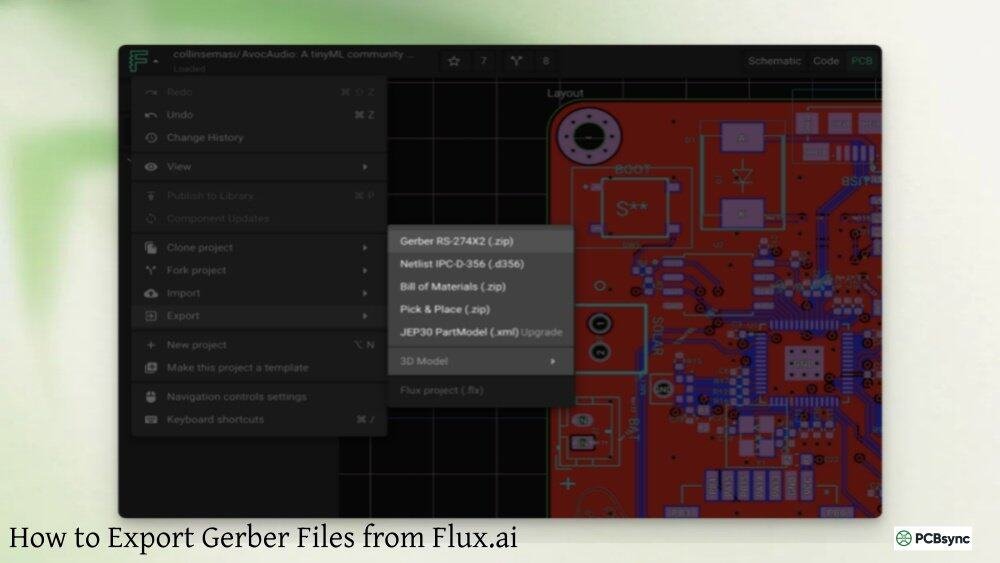
Notes: For PCB fabrication, we require PCB design file in Gerber RS-274X format (most preferred), *.PCB/DDB (Protel, inform your program version) format or *.BRD (Eagle) format. For PCB assembly, we require PCB design file in above mentioned format, drilling file and BOM. Click to download BOM template To avoid file missing, please include all files into one folder and compress it into .zip or .rar format.
How to Generate Gerber and Drill Files in Altium Designer (All Versions)
After spending over a decade working with PCB designs, I can tell you that generating Gerber and drill files correctly is what separates a smooth manufacturing run from weeks of back-and-forth emails with your fabricator. Altium Designer makes this process straightforward once you understand the settings, but getting those settings wrong can lead to misaligned layers, incorrect drill holes, or boards that simply cannot be manufactured.
This guide walks you through everything you need to know about exporting manufacturing-ready files from Altium Designer, whether you are running version 6 or the latest release. The fundamentals remain consistent across versions, though the interface has evolved over the years.
Gerber files are the universal language between PCB designers and manufacturers. They contain 2D vector images of each layer in your board design, including copper layers, solder masks, silkscreen, and board outlines. Think of them as blueprints that tell the fabricator exactly where to place copper, where to apply solder mask, and where to print component labels.
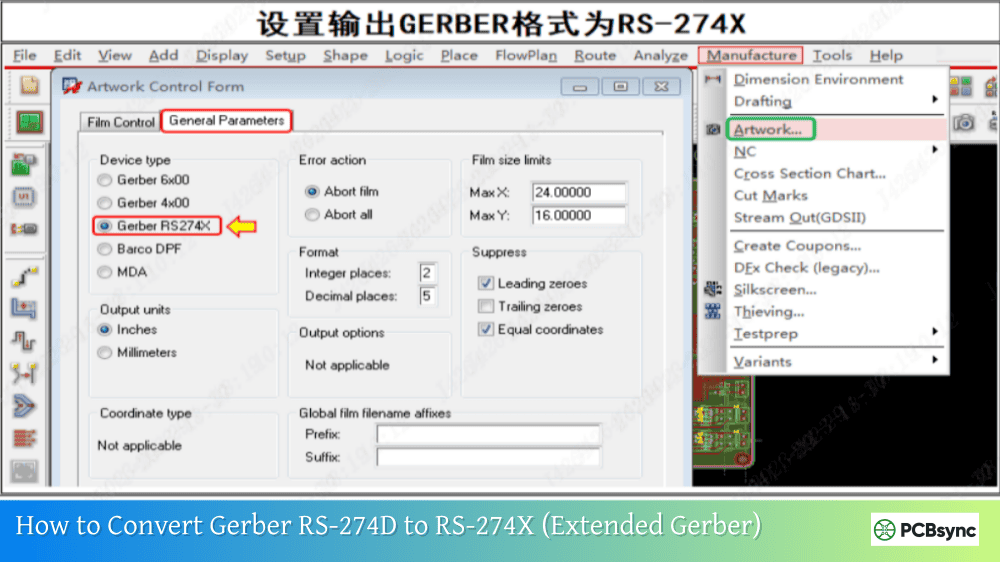
The current industry standard is RS-274X format, which embeds aperture definitions directly into each file. This eliminates the old problem of lost or mismatched aperture files that plagued the earlier RS-274D format. Unless your fabricator specifically requests something different, you should always export in RS-274X.
NC drill files (also called Excellon files) complement your Gerbers by providing coordinate data and tool specifications for every hole on your board. Without accurate drill data, your vias will not align with pads, mounting holes will be in the wrong locations, and your board becomes useless.
Pre-Export Checklist for Altium Designer
Before you even open the Gerber export dialog, take a few minutes to verify your design is ready for manufacturing. I have learned this the hard way after sending out files that passed DRC but had subtle issues that caused fabrication delays.
Verify your board outline is properly defined on a mechanical layer, typically Mechanical 1 or Keep-Out layer. The fabricator needs a clear, closed polygon defining where to cut your board. Open polygons or multiple overlapping shapes cause confusion and potentially incorrect board dimensions.
Set your origin point correctly. The origin acts as the (0,0) coordinate for all output data. Most engineers place this at the bottom-left corner of the board outline. Inconsistent origin settings between Gerber and drill files cause alignment problems that can ruin an entire production run.
Run a Design Rule Check (DRC) one final time. Clear any violations or document them explicitly for your fabricator. Clearance violations, unrouted nets, and minimum width errors can all translate to manufacturing problems.
Check layer assignments for inner planes and signal layers. Multi-layer boards require correct layer pairing, especially if you have blind or buried vias.
Generating Gerber Files in Altium Designer: Step-by-Step Process
Accessing the Gerber Setup Dialog
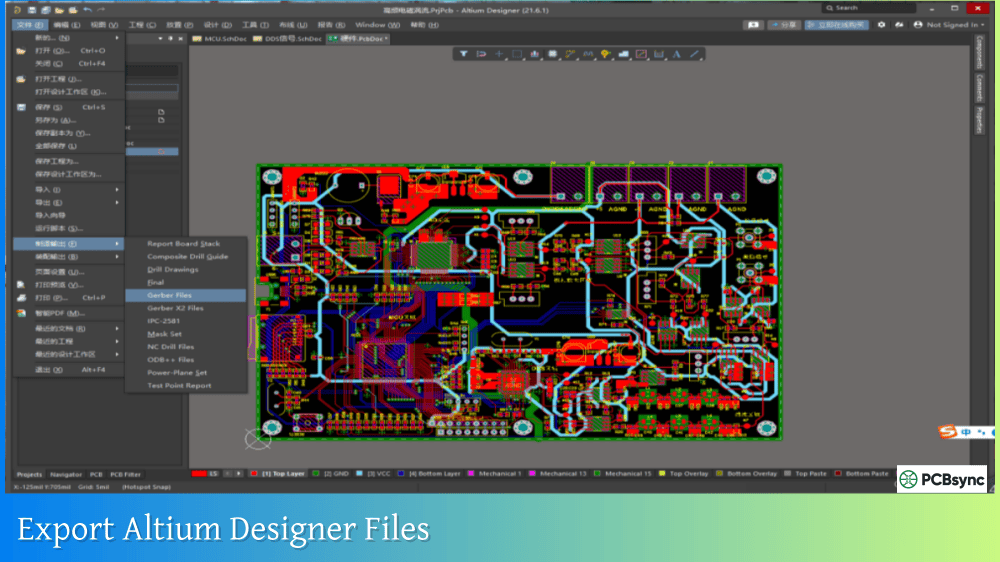
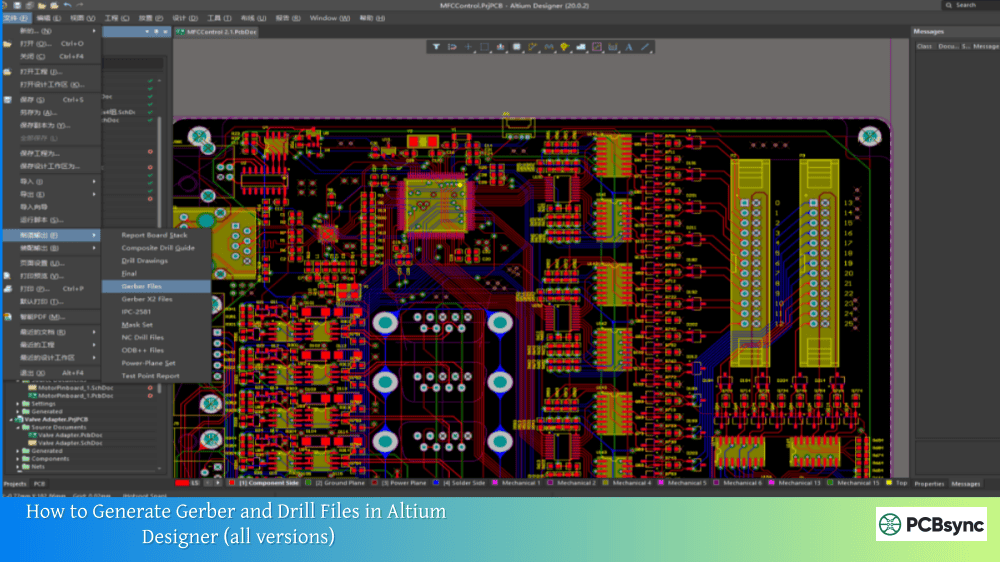
With your PCB document open, navigate to File → Fabrication Outputs → Gerber Files. This opens the Gerber Setup dialog where you configure all export parameters. The dialog contains several tabs, each controlling different aspects of your output files.
Configuring General Settings
The General tab controls your units and numerical precision. These settings must match what you use for drill files later.
Setting
Recommended Value
Notes
Units
Millimeters or Inches
Match your design units
Format (Metric)
4:3
Four digits before decimal, three after
Format (Imperial)
2:4
Two digits before decimal, four after
For most designs, the 2:4 format for imperial or 4:3 for metric provides sufficient precision. High-density designs with features on sub-mil grids may need 2:5 format, but verify your fabricator supports this resolution first.
Selecting Layers for Export in Altium Designer
The Layers tab is where you specify which layers get exported. Click Plot Layers → Used On to automatically select all layers that contain design data. For a standard two-layer board, you should see these files generated:
File Extension
Layer Description
Purpose
.GTL
Top Copper
Signal traces and pads on top side
.GBL
Bottom Copper
Signal traces and pads on bottom side
.GTS
Top Solder Mask
Protective coating on top layer
.GBS
Bottom Solder Mask
Protective coating on bottom layer
.GTO
Top Silkscreen
Component labels on top side
.GBO
Bottom Silkscreen
Component labels on bottom side
.GKO or .GM1
Board Outline
Physical board dimensions
.GTP
Top Paste
Stencil for solder paste (SMT assembly)
.GBP
Bottom Paste
Stencil for solder paste (SMT assembly)
For multi-layer boards, inner copper layers use extensions like .G1, .G2, .G3, and inner planes use .GP1, .GP2, etc.
Configuring Aperture Settings
Navigate to the Apertures tab and ensure Embedded apertures (RS274X) is checked. This setting embeds aperture definitions directly into each Gerber file, creating self-contained files that do not require separate aperture tables. Every modern fabricator supports this format, and it eliminates a common source of manufacturing errors.
Advanced Settings for Gerber Generation
The Advanced tab contains additional options that most designs can leave at defaults. However, pay attention to these settings:
Film Size should match or exceed your board dimensions. The default settings work for most boards under 18 inches.
Coordinate Position on Film should match what you select for NC drill files. Use either Absolute Origin or Relative Origin consistently.
Other Plots can include Pad Master files if your fabricator requests them. These files show all pad locations without traces.
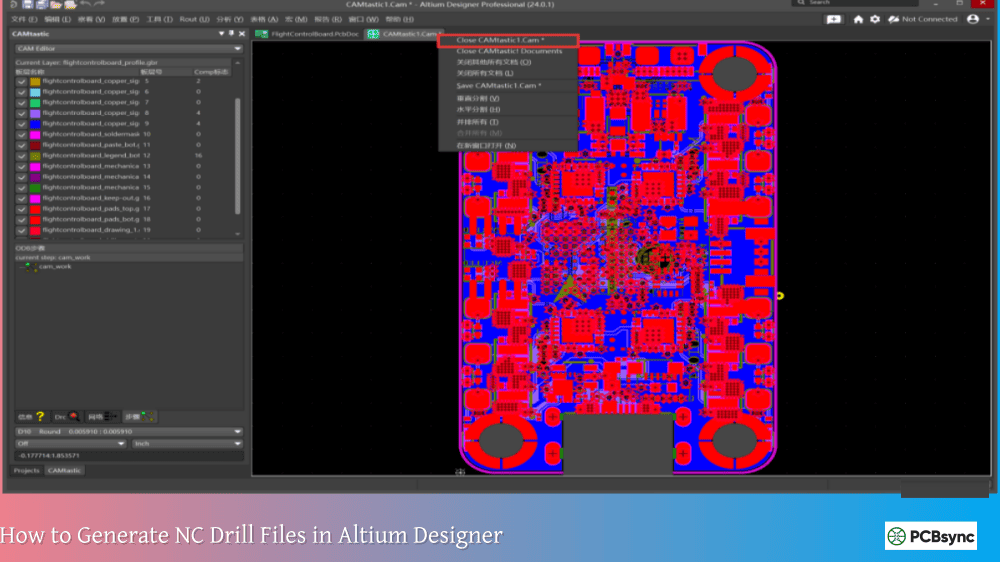
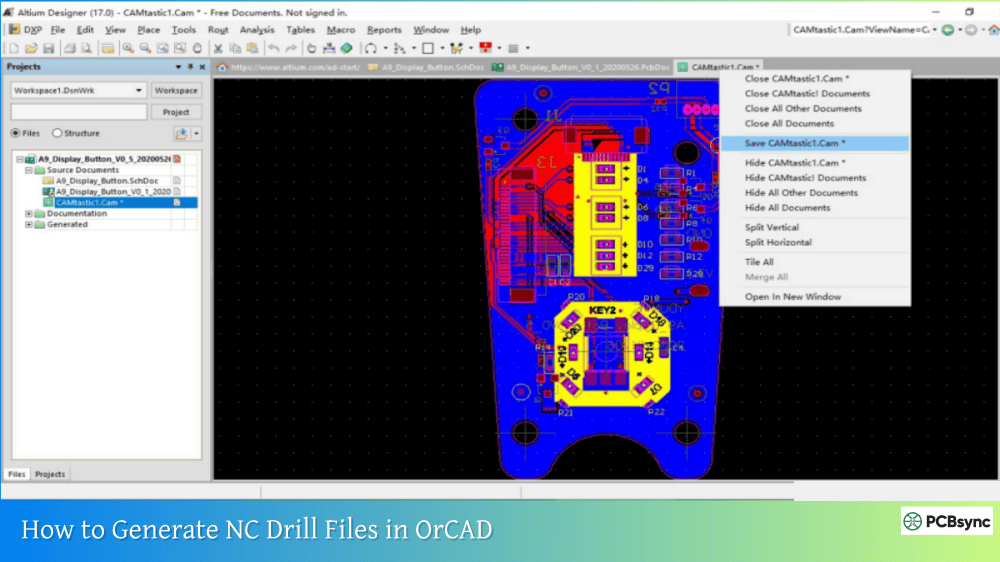
Click OK to generate your Gerber files. Altium creates a CAMtastic preview document showing your exported layers. You can close this preview without saving, as the actual Gerber files have already been written to your project output folder.
Generating NC Drill Files in Altium Designer
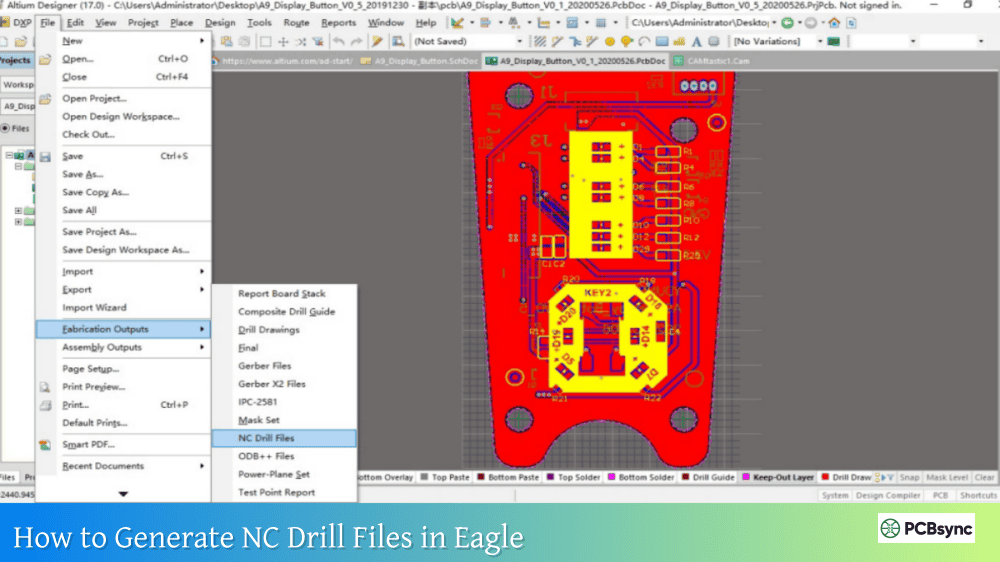
With Gerbers complete, you need to export the corresponding drill data. Navigate to File → Fabrication Outputs → NC Drill Files to open the NC Drill Setup dialog.
NC Drill Format Configuration
The Units and Format settings here must match your Gerber export settings exactly. Mismatched settings cause drill hits to appear offset from pads, resulting in unusable boards.
Setting
Description
Recommendation
Units
Inches or Millimeters
Match Gerber settings
Format
Coordinate precision
Match Gerber format exactly
Leading/Trailing Zeroes
Zero suppression method
Keep leading and trailing zeroes for compatibility
Coordinate Position
Origin reference
Match Gerber coordinate position
Zero Suppression Settings
Zero suppression reduces file size by removing leading or trailing zeroes from coordinates. While this was useful when file size mattered, it now causes more problems than it solves. I recommend selecting Keep leading and trailing zeroes unless your fabricator specifically requests otherwise.
If you experience drill alignment problems, zero suppression settings are often the culprit. Switching from trailing suppression to none or leading suppression frequently resolves mysterious offset issues.
Drill File Options
Generate separate NC Drill files for plated & non-plated holes creates distinct files for through-plated holes and non-plated mounting holes. Most fabricators prefer separate files as they require different manufacturing processes.
Use drilled slot command (G85) enables slot routing for oblong holes. Check this if your design contains slots defined in pads.
Generate Board Edge Rout Paths creates a separate routing file for board outlines. This is useful for complex board shapes but may be redundant if your board outline is already in a Gerber mechanical layer.
Click OK to generate drill files. Altium may present an Import Drill Data dialog for designs with blind/buried vias, confirming drill pair assignments. Accept defaults for standard through-hole designs.
Knowing what each file contains helps you verify your export and communicate with fabricators. Here is a complete reference of Altium Gerber file extensions:
Extension
Layer Type
Description
.GTL
Top Copper
Primary signal layer on component side
.GBL
Bottom Copper
Primary signal layer on solder side
.G1, .G2, .G3
Inner Signal
Internal signal routing layers
.GP1, .GP2
Internal Plane
Power or ground plane layers (negative polarity)
.GTS
Top Solder Mask
Solder mask openings on top
.GBS
Bottom Solder Mask
Solder mask openings on bottom
.GTO
Top Overlay
Silkscreen artwork on top
.GBO
Bottom Overlay
Silkscreen artwork on bottom
.GTP
Top Paste
Solder paste stencil for top
.GBP
Bottom Paste
Solder paste stencil for bottom
.GKO
Keep-Out
Board outline and routing exclusions
.GM1, .GM2
Mechanical
Board outline and mechanical features
.GD1
Drill Drawing
Visual representation of drill locations
.GG1
Drill Guide
Drill guide markers
Drill-related files include:
Extension
Description
.TXT
NC drill file (primary)
.DRL
Binary drill file
.DRR
Drill report with tool sizes
.LDP
Layer drill pair report
Using Output Job Files for Repeatable Gerber Generation
For professional workflows, Output Job files (*.OutJob) provide a better approach than generating outputs directly from the PCB. An OutJob file stores all your export configurations in a reusable template that can be version-controlled and shared across projects.
To create an Output Job file, right-click your project in the Projects panel and select Add New to Project → Output Job File. In the OutJob editor, right-click in the Fabrication Outputs area and add entries for Gerber Files and NC Drill Files. Configure each entry by right-clicking and selecting Configure.
Once configured, click Generate content to export all manufacturing files simultaneously. This ensures consistent settings across all outputs and saves significant time on revision exports.
Read more How to convert PCB Files in different Design software:
Verifying Your Gerber and Drill Files Before Manufacturing
Never send files to a fabricator without verification. Even experienced engineers occasionally export incorrect layers or misconfigure settings.
Use CAMtastic in Altium to preview your exported files. Load each Gerber and overlay the drill file to verify alignment. Check that drill hits fall squarely on pad centers.
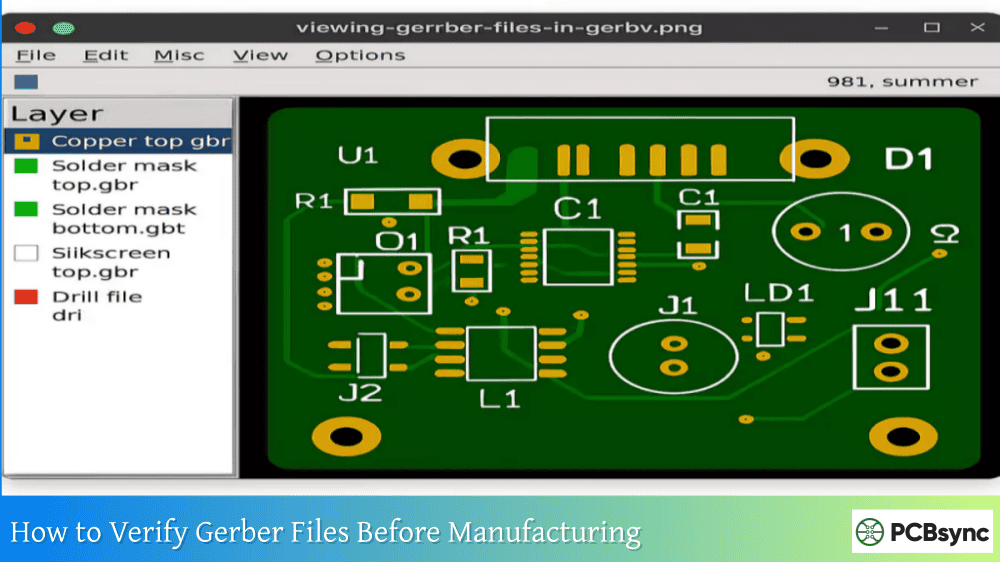
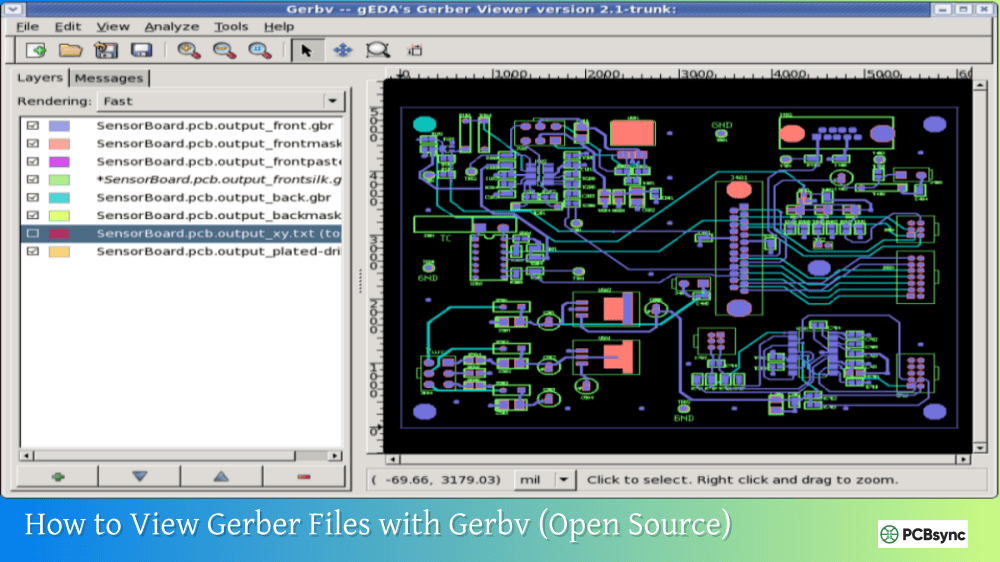
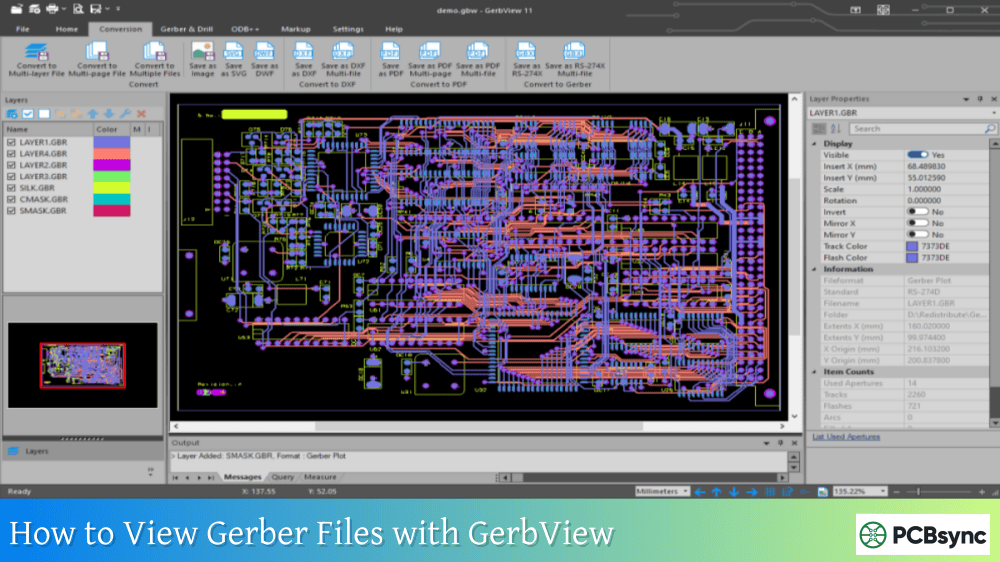
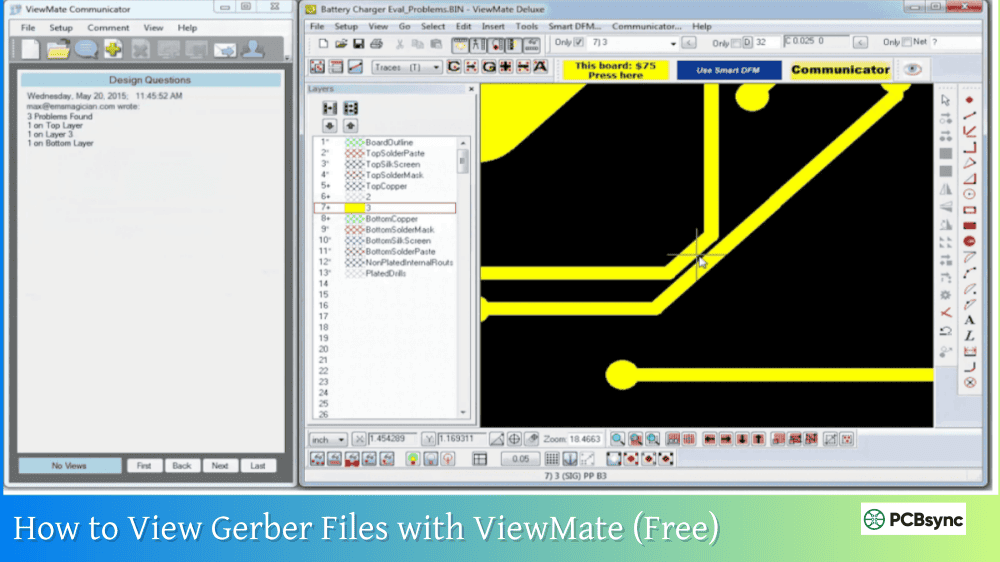
Use a third-party Gerber viewer for additional confidence. Tools like HQDFM, Gerbv, or your fabricator’s online viewer can catch issues that CAMtastic might miss. Many manufacturers offer free DFM (Design for Manufacturing) analysis when you upload files.
Check for these common problems:
Missing layers (compare against expected file count)
Misaligned drill holes (overlay drill on copper)
Incorrect board outline (verify dimensions)
Reversed layers (bottom appearing as top)
Missing paste layers for SMT assembly
Common Gerber and Drill File Errors in Altium Designer
Drill Holes Not Aligning with Pads
This problem almost always stems from mismatched settings between Gerber and drill exports. Verify that Units, Format, Zero Suppression, and Coordinate Position match exactly. Also check that both exports use the same origin reference (absolute or relative).
Missing or Blank Drill File
If your drill file appears empty or missing, check these potential causes:
The origin point is set far from your board, placing drill data outside the viewable area
Binary .DRL file is being read instead of .TXT file
Design contains no through-holes (SMD-only board)
Board Outline Not Appearing
Your board outline must be on a layer that gets exported. Typically this is Keep-Out (.GKO) or Mechanical 1 (.GM1). Verify the outline is a closed polygon. Open shapes or multiple overlapping polygons cause problems.
Gerber File Generation Aborted with Aperture Error
If you see a “missing aperture” error, Altium cannot find or generate an appropriate aperture for some design feature. Ensure Embedded apertures (RS274X) is enabled. If using custom apertures, verify your aperture library contains all required shapes.
Packaging Files for Your PCB Fabricator
Compress all Gerber and drill files into a single .zip or .rar archive before sending to your manufacturer. Include:
All copper layer Gerbers
Solder mask Gerbers (top and bottom)
Silkscreen Gerbers (top and bottom)
Paste mask Gerbers (for assembly)
Board outline Gerber
NC drill file(s)
Drill report (helpful reference)
Any readme or special instructions
Most fabricators accept files directly through their website upload. Online Gerber viewers built into ordering systems provide immediate feedback on your files.
Useful Resources for Gerber File Generation
Here are some tools and references I recommend bookmarking:
What is the difference between RS-274X and Gerber X2 format?
RS-274X is the established standard that embeds aperture definitions into each file. Gerber X2 adds metadata about layer function, stackup order, and component information directly into the files. While X2 provides more context for manufacturers, RS-274X remains the most widely accepted format. Use X2 if your fabricator specifically supports it and you want reduced risk of layer order mistakes.
Why do my drill holes appear offset from pads when I view the Gerbers?
Drill offset typically results from mismatched export settings. Compare your Gerber Setup and NC Drill Setup dialogs to ensure Units, Format, Zero Suppression, and Coordinate Position settings are identical. Also verify both exports use the same origin reference. If you recently changed origin position, regenerate both Gerber and drill files.
Can I send my .PcbDoc file directly to the manufacturer instead of Gerbers?
Some manufacturers accept native Altium files, but this practice is not recommended. Gerber files are a universal standard that any fabricator can process without owning Altium licenses. Native files also expose your complete design database, including intellectual property you may want to protect. Always export and verify Gerber files for manufacturing.
How do I generate Gerber files for a multi-layer board with blind or buried vias?
For boards with blind/buried vias, you need separate drill files for each layer pair. Altium automatically detects these drill pairs when you generate NC drill files. Ensure your layer stackup is correctly defined in the Layer Stack Manager before export. Each unique drill span (e.g., Top to Layer 2, Layer 3 to Bottom) generates its own drill file with a distinct extension like .TX1, .TX2.
What file format should I use for the board outline?
Export your board outline as a Gerber on either the Keep-Out layer (.GKO) or Mechanical 1 layer (.GM1). Ensure the outline forms a closed polygon. Complex boards with internal cutouts should include those cutouts on the same layer. Communicate clearly with your fabricator about which file contains the board outline if you use a non-standard layer assignment.
Final Thoughts on Gerber Generation in Altium Designer
Generating Gerber and drill files correctly is a fundamental skill for any PCB designer. While Altium Designer streamlines the process considerably, understanding what each setting does and why it matters helps you troubleshoot problems and communicate effectively with manufacturers.
Take the time to establish a standardized output configuration and save it as an Output Job file. This investment pays dividends on every subsequent project through consistent, error-free manufacturing files. And always verify your exports in a Gerber viewer before hitting that order button. The few minutes spent checking saves days of waiting for replacement boards.
Inquire: Call 0086-755-23203480, or reach out via the form below/your sales contact to discuss our design, manufacturing, and assembly capabilities.
Quote: Email your PCB files to Sales@pcbsync.com (Preferred for large files) or submit online. We will contact you promptly. Please ensure your email is correct.
Notes: For PCB fabrication, we require PCB design file in Gerber RS-274X format (most preferred), *.PCB/DDB (Protel, inform your program version) format or *.BRD (Eagle) format. For PCB assembly, we require PCB design file in above mentioned format, drilling file and BOM. Click to download BOM template To avoid file missing, please include all files into one folder and compress it into .zip or .rar format.