Inquire: Call 0086-755-23203480, or reach out via the form below/your sales contact to discuss our design, manufacturing, and assembly capabilities.
Quote: Email your PCB files to Sales@pcbsync.com (Preferred for large files) or submit online. We will contact you promptly. Please ensure your email is correct.
Notes: For PCB fabrication, we require PCB design file in Gerber RS-274X format (most preferred), *.PCB/DDB (Protel, inform your program version) format or *.BRD (Eagle) format. For PCB assembly, we require PCB design file in above mentioned format, drilling file and BOM. Click to download BOM template To avoid file missing, please include all files into one folder and compress it into .zip or .rar format.
How to Export ODB++ Files from Altium Designer: Complete Guide
ODB++ export in Altium Designer provides a richer data exchange format than traditional Gerber files, yet many engineers stick with Gerber simply because they have not explored the ODB++ workflow. After switching several complex multilayer projects to ODB++ output, I found that manufacturers using modern CAM systems actually prefer this format because it reduces their pre-production setup time significantly.
This guide walks through the complete process of exporting ODB++ files from Altium Designer, covering both direct export and Output Job configuration methods.
ODB++ (Open Database++) is an intelligent PCB data exchange format originally developed by Valor Computerized Systems. Unlike Gerber files that only contain graphical data, ODB++ includes netlist information, component data, layer stackup definitions, and design rules in a single comprehensive package.
The format uses a standardized directory structure with ASCII text files, making it both machine-readable and human-inspectable when needed.
ODB++ vs Gerber Comparison
Feature
ODB++
Gerber + Drill
Netlist included
Yes
Requires separate IPC-356 file
Component data
Yes
Requires separate files
Layer stackup
Embedded
Must be communicated separately
Design rules
Can include .RUL file
Not included
Drill information
Integrated
Separate Excellon files
File structure
Single directory
Multiple individual files
CAM processing
Faster setup
Manual layer assignment
ODB++ Directory Structure
When Altium generates ODB++ output, it creates a standardized folder structure:
Folder
Contents
fonts
Text font definitions
input
Original input data references
matrix
Layer order and drill pair definitions
misc
Miscellaneous job information
steps
Layer data, netlists, and board steps
symbols
Reusable graphic symbols
user
User-defined data and DRC rules
This structure allows CAM software to import the complete design with proper layer associations already established.
Two Methods for ODB++ Export in Altium Designer
Altium Designer provides two approaches for generating ODB++ output: direct export from the PCB editor and configured export through Output Job files.
Method Comparison
Aspect
Direct Export
Output Job
Access
File → Fabrication Outputs
OutJob configuration file
Settings storage
Project file
OutJob file
Repeatability
Manual each time
Saved configuration
Batch generation
Single output
Multiple outputs together
Best for
Quick one-time export
Production workflow
For occasional exports, direct export works fine. For production environments where you generate outputs repeatedly across project revisions, Output Job files provide consistency and efficiency.
Direct ODB++ Export from PCB Editor
The quickest way to generate ODB++ files is directly from an open PCB document.
Step-by-Step Direct Export Process
Open your PCB design in Altium Designer. Ensure your design passes DRC before generating manufacturing outputs.
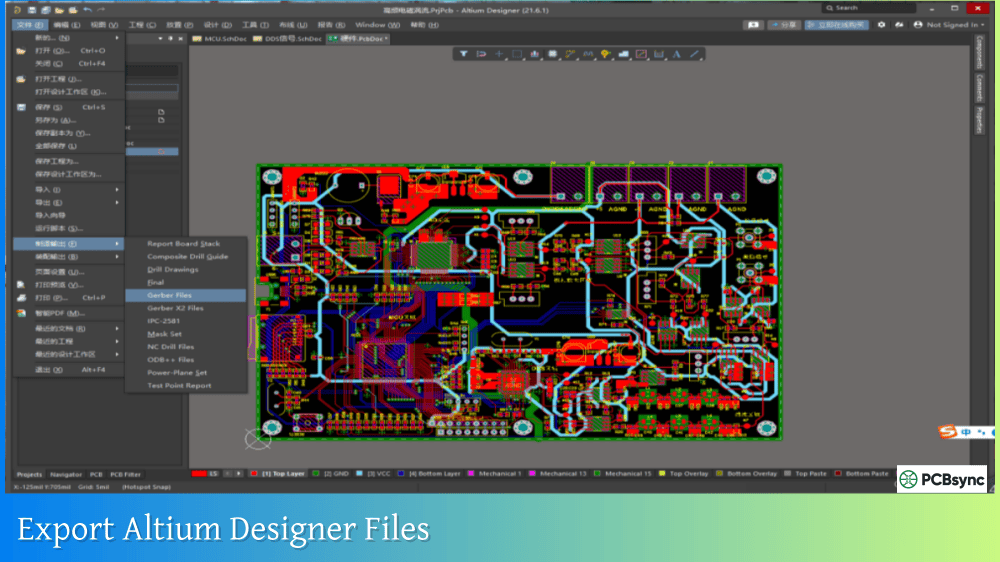
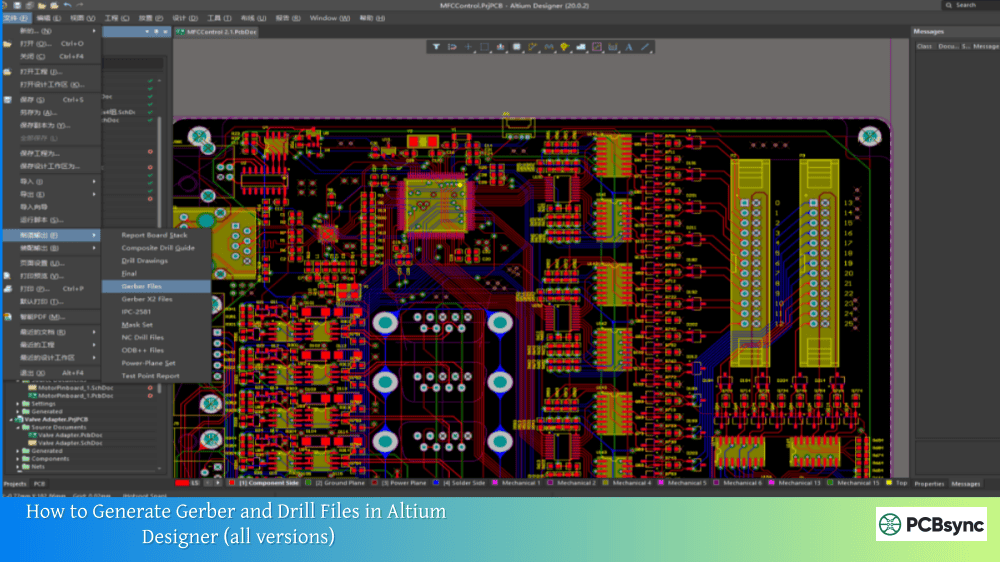
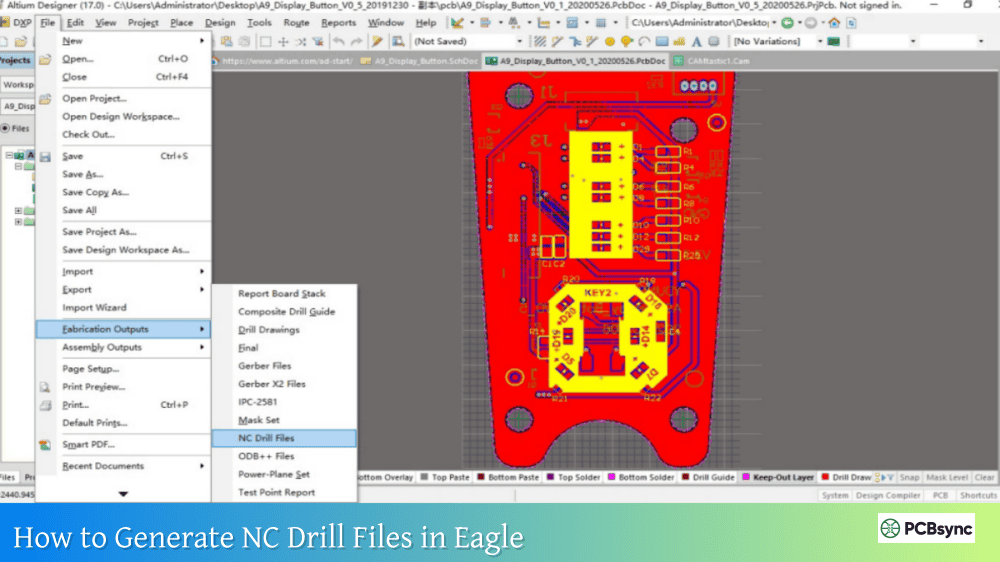
Navigate to File → Fabrication Outputs → ODB++ Files. The ODB++ Setup dialog opens, displaying all configuration options.
Configure the layer selection and export options (detailed in the next section).
Click OK to generate the output. Altium creates the ODB++ directory structure in your project outputs folder.
Default Output Location
By default, Altium stores generated ODB++ files in:
Project Outputs for <ProjectName>\odb\
You can change this location in Project → Project Options on the Options tab.
ODB++ Setup Dialog Configuration
The ODB++ Setup dialog contains all settings that control what gets included in your export.
Layers to Plot Section
Option
Function
Plot checkbox
Enable/disable individual layers
Mirror checkbox
Mirror layer output
All On
Select all layers
All Off
Deselect all layers
Used On
Select only layers containing objects
Use the “Used On” option to automatically select all layers that contain design data, excluding empty layers.
Mechanical Layers Configuration
Select which mechanical layers to include by checking boxes in the “Add to all plots” section. Common mechanical layers to include are:
Layer Type
Typical Use
Board Outline
Defines PCB boundary
Assembly
Component placement reference
Dimensions
Manufacturing dimensions
Fabrication Notes
Special instructions
Critical Export Options
Option
Description
Recommendation
Include unconnected mid-layer pads
Exports orphan pads on inner layers
Enable for complete data
Generate DRC Rules export file
Creates .RUL file with design rules
Enable for DFM
Export only objects inside board outline
Limits export to board area
Enable typically
Merge Net-Tie Nets
Combines connected net-tie nets
Enable if using net ties
Profile Layer Selection
The profile layer defines the board boundary in the ODB++ output. Options include:
Source
When to Use
Board Outline
Standard designs with defined board shape
KeepOut Layer
Designs using keepout for boundary
Mechanical Layer
Custom boundary definitions
For most designs, Board Outline provides the correct boundary definition.
Output File Format Options
Altium offers three compression options for ODB++ output:
Format
Extension
Notes
Uncompressed
folder
Largest size, directly browsable
ZIP
.zip
Standard compression
TGZ
.tgz
Preferred by Frontline Genesis and other CAM tools
TGZ format offers the best compatibility with professional CAM software and smaller file sizes than ZIP.
Using Output Job Files for ODB++ Export
Output Job files provide a more professional workflow for generating manufacturing outputs.
Creating an Output Job File
Right-click your project in the Projects panel and select Add New to Project → Output Job File. A new OutJob editor opens.
Save the OutJob file with a descriptive name like “Fabrication.OutJob” or “Manufacturing.OutJob”.
Adding ODB++ Output to OutJob
In the Fabrication Outputs section of the OutJob editor, click Add New Fabrication Output and select ODB++ Files → [PCB Document].
Double-click the added ODB++ entry to open the ODB++ Setup dialog and configure settings as described above.
Configuring Output Container
Output containers define where generated files are stored. Options include:
Container Type
Output Location
Folder Structure
Specified folder path
PDF
Single PDF document
Video
Video file (not for ODB++)
For ODB++ output, configure a Folder Structure container targeting your desired output directory.
Generating Output from OutJob
With the OutJob configured, generate outputs using one of these methods:
Method
Steps
Single output
Right-click output entry → Run
All outputs
Click “Generate content” button
Selected outputs
Select multiple, right-click → Run
The OutJob approach allows you to generate ODB++, Gerber, NC Drill, and BOM files in a single operation.
Verifying ODB++ Output
Always verify generated ODB++ files before sending to manufacturing.
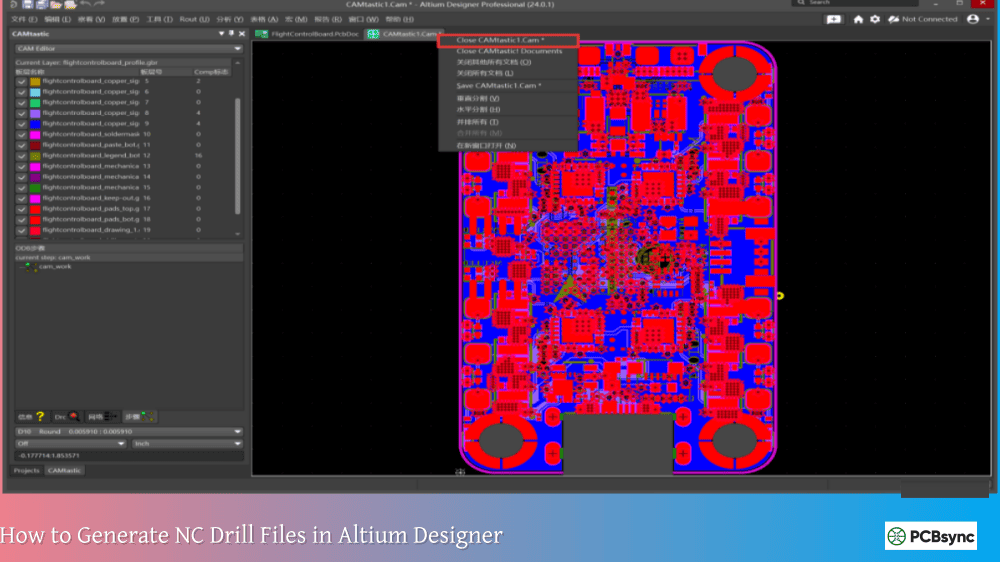
Using CAMtastic for Verification
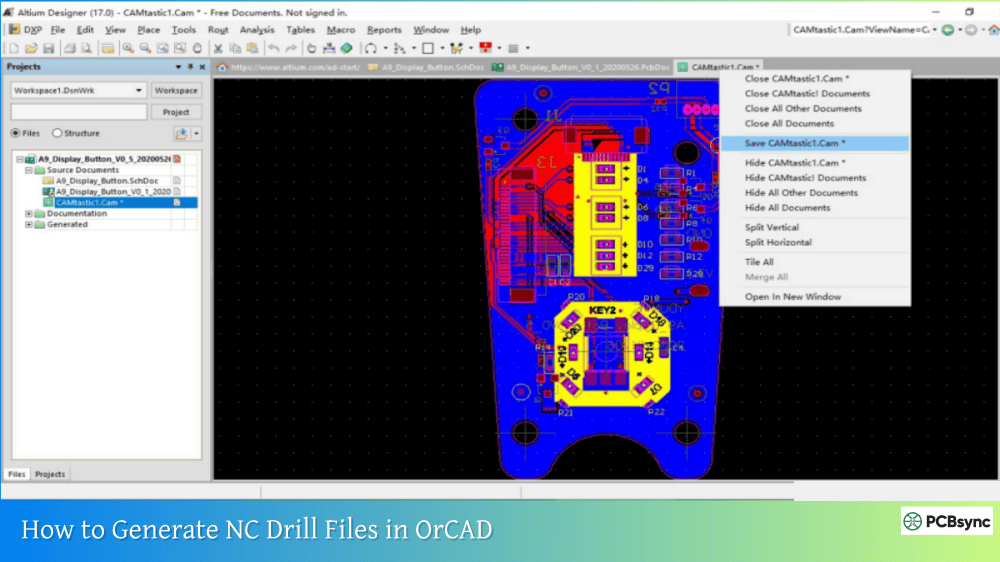
Altium includes CAMtastic, a built-in CAM editor that can import and verify ODB++ files.
To load ODB++ into CAMtastic:
Create new CAM document: File → New → CAM Document
Import ODB++: File → Import → ODB++
Navigate to your generated ODB++ folder
Review imported layers in the CAM panel
Verification Checklist
Check
What to Verify
Layer count
Matches design layer stack
Board outline
Correct shape and dimensions
Drill data
All holes present with correct sizes
Netlist
Net names and connectivity intact
Component data
Designators and positions correct
External Verification Tools
Tool
Platform
Notes
Frontline InCAM
Professional
Industry-standard CAM
Valor NPI
Professional
Comprehensive DFM
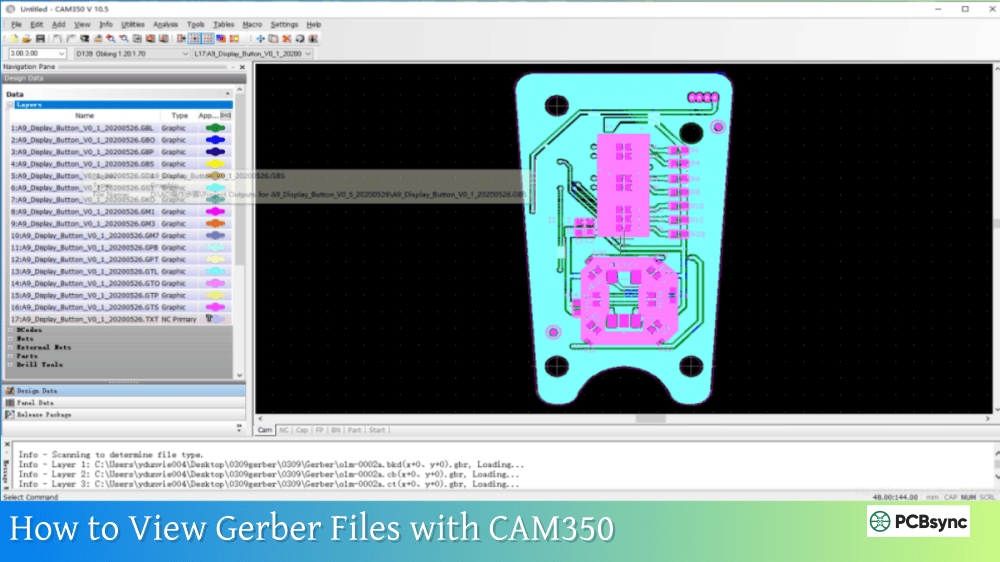
CAM350
Professional
Widely used CAM viewer
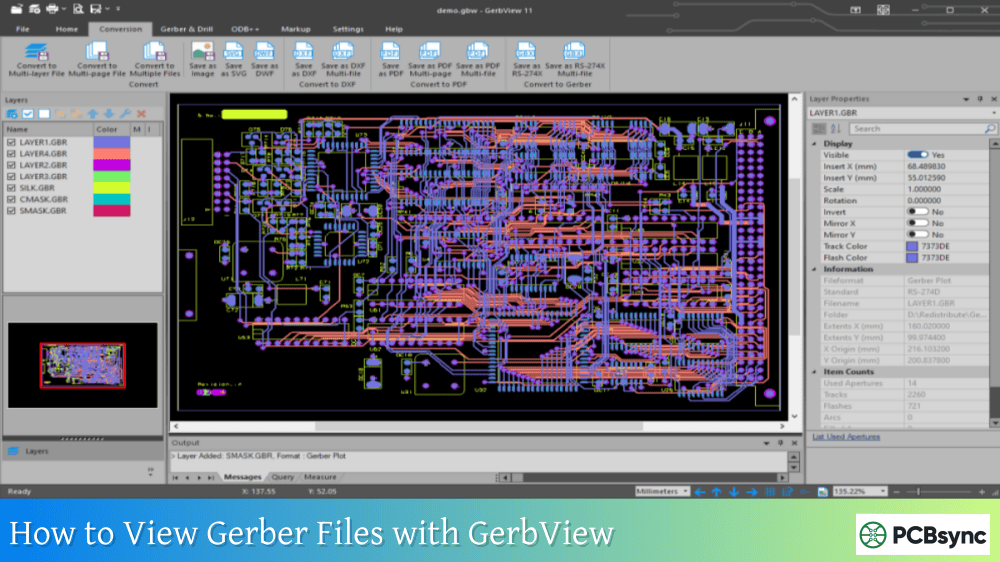
GerbView
Free/Commercial
Basic ODB++ support
Common ODB++ Export Issues and Solutions
Several issues can arise during ODB++ export. Understanding these helps you troubleshoot efficiently.
Missing Layers in Output
Cause
Solution
Layer not selected for plot
Check “Plot” checkbox in ODB++ Setup
Empty layer
Verify layer contains objects
Layer class filtering
Check layer class selection
Board Outline Problems
Issue
Solution
No outline in output
Ensure Board Outline exists or select alternate profile layer
Wrong boundary shape
Verify closed polyline defines board shape
Multiple boundaries
Remove duplicate outline definitions
Netlist Not Included
ODB++ generated from Altium includes netlist data by default. If netlist appears missing:
Check
Action
Design has nets defined
Verify connectivity in PCB
Net-tie handling
Enable “Merge Net-Tie Nets” if applicable
Copper pour connections
Ensure pours are connected to nets
Large File Size
Cause
Solution
Uncompressed format
Select TGZ or ZIP compression
Excessive objects outside board
Enable “Export only objects inside board outline”
Many mechanical layers
Disable unnecessary mechanical layers
Read more How to convert PCB Files in different Design software:
Some manufacturers have specific requirements for ODB++ submissions.
MacroFab Requirements
MacroFab accepts ODB++ directly from Altium:
Requirement
Setting
All layers enabled
Select all used layers
BOM format
Separate XLSX file required (MPN not in ODB++)
Pick and Place
Included in ODB++ component data
General Manufacturer Guidelines
Aspect
Recommendation
File format
TGZ preferred, ZIP acceptable
Layer naming
Use standard Altium layer names
Board outline
Include as profile layer
Documentation
Include fabrication notes layer
Always confirm specific requirements with your manufacturer before submitting ODB++ files.
Useful Resources
Altium Documentation
Resource
URL
ODB++ Setup Reference
altium.com/documentation (search “ODB Setup”)
Output Job Documentation
altium.com/documentation (search “Output Job”)
CAMtastic User Guide
altium.com/documentation (search “CAM Editor”)
ODB++ Format Resources
Resource
Description
ODB++ Solutions Alliance
Official ODB++ specification
Siemens (formerly Mentor)
ODB++ format owner
IPC-2581 Consortium
Alternative intelligent format
Verification Tools
Tool
Source
CAMtastic
Included with Altium Designer
GerbView
gerbview.com
Online viewers
Various manufacturer portals
Frequently Asked Questions
When should I use ODB++ instead of Gerber files?
Use ODB++ when your manufacturer’s CAM system supports it and when your design benefits from the additional data richness. Complex multilayer boards, designs with blind or buried vias, and high-density interconnect designs particularly benefit from ODB++ because the format includes layer stackup and drill span information that must be communicated separately with Gerber files. ODB++ also reduces the chance of layer misassignment errors at the manufacturer since the format embeds layer relationships directly. If your manufacturer primarily uses Valor or Frontline CAM systems, they likely prefer ODB++.
Does ODB++ include drill information or do I need separate NC Drill files?
ODB++ includes integrated drill information within its structure, so you typically do not need separate Excellon NC Drill files when submitting ODB++ to manufacturers. However, note that when Altium Designer generates ODB++ from the PCB Editor, the drill data may need to be imported separately into CAMtastic for verification purposes. Other CAD/CAM packages usually include drill data directly in the ODB++ structure. Check with your manufacturer to confirm they can extract drill data from your ODB++ files.
Why is my ODB++ file so large compared to Gerber output?
ODB++ files are larger because they contain more information: netlist data, component attributes, layer relationships, and potentially design rules. You can reduce file size by selecting TGZ compression instead of uncompressed or ZIP format, enabling “Export only objects inside board outline” to exclude construction geometry outside the board area, and disabling mechanical layers that are not required for manufacturing. TGZ compression typically produces files 30-50% smaller than ZIP for equivalent data.
Can I verify ODB++ files without professional CAM software?
Yes, Altium Designer includes CAMtastic, which can import and display ODB++ files for verification. Create a new CAM document (File → New → CAM Document), then import your ODB++ folder (File → Import → ODB++). CAMtastic displays all layers and allows you to verify alignment, drill positions, and layer content. While not as feature-rich as professional CAM tools, CAMtastic provides adequate verification for most projects.
How do I include design rules in the ODB++ export?
Enable the “Generate DRC Rules export file (.RUL)” option in the ODB++ Setup dialog. This creates a .RUL file containing all design rules defined in your PCB project, stored in the “user” folder of the ODB++ structure. Manufacturers with compatible CAM systems can import these rules for automated DFM checking. Not all manufacturers utilize this feature, but including it provides comprehensive design intent documentation regardless.
Best Practices for ODB++ Export
Following consistent practices ensures reliable ODB++ output.
Before Export
Run DRC to verify design integrity. Ensure board outline is properly defined as a closed shape. Confirm all layers are correctly assigned in the layer stackup.
During Export
Use “Used On” to automatically select relevant layers. Enable TGZ compression for optimal file size and compatibility. Include the DRC rules file for complete documentation.
After Export
Verify output in CAMtastic or equivalent viewer. Confirm layer count and board dimensions match your design. Check that drill data is present and correct.
Advanced ODB++ Export Considerations
Embedded Board Arrays
When your design contains embedded board arrays (panelization), ODB++ export handles this automatically:
Consideration
Behavior
Layer stackup violations
Automatically analyzed during export
Flipped boards
Layer stacks display correctly flipped
Mid-layer differences
Different mid-layers can appear on same panel
Profile generation
Uses array boundary or individual board outlines
Enable “Export only objects inside board outline” to control whether the entire array or individual boards define the export boundary.
Net-Tie Component Handling
Designs using net-tie components require special attention during ODB++ export. The “Merge Net-Tie Nets” option controls how connected nets report in the netlist:
Setting
Result
Enabled
Connected nets appear as single distinguished nets
Disabled
Nets remain separate despite physical connection
Enable this option when your manufacturer’s DFM tools need to understand net-tie relationships for proper connectivity verification.
Working with Design Variants
If your project uses design variants, each variant may require separate ODB++ output:
Activate the desired variant in the PCB editor
Generate ODB++ output for that variant
Name output folders to identify variants clearly
Repeat for additional variants
Output Job files can streamline variant output by configuring separate containers for each variant.
Exporting ODB++ files from Altium Designer provides manufacturers with richer design data than traditional Gerber files, potentially reducing manufacturing setup time and communication overhead. The process becomes routine once you establish your preferred settings in an Output Job file, allowing consistent and repeatable output generation across all your PCB projects.
Inquire: Call 0086-755-23203480, or reach out via the form below/your sales contact to discuss our design, manufacturing, and assembly capabilities.
Quote: Email your PCB files to Sales@pcbsync.com (Preferred for large files) or submit online. We will contact you promptly. Please ensure your email is correct.
Notes: For PCB fabrication, we require PCB design file in Gerber RS-274X format (most preferred), *.PCB/DDB (Protel, inform your program version) format or *.BRD (Eagle) format. For PCB assembly, we require PCB design file in above mentioned format, drilling file and BOM. Click to download BOM template To avoid file missing, please include all files into one folder and compress it into .zip or .rar format.