Inquire: Call 0086-755-23203480, or reach out via the form below/your sales contact to discuss our design, manufacturing, and assembly capabilities.
Quote: Email your PCB files to Sales@pcbsync.com (Preferred for large files) or submit online. We will contact you promptly. Please ensure your email is correct.
Notes: For PCB fabrication, we require PCB design file in Gerber RS-274X format (most preferred), *.PCB/DDB (Protel, inform your program version) format or *.BRD (Eagle) format. For PCB assembly, we require PCB design file in above mentioned format, drilling file and BOM. Click to download BOM template To avoid file missing, please include all files into one folder and compress it into .zip or .rar format.
How to Export IPC-2581 Files from OrCAD: A Complete Guide for PCB Engineers
As a PCB engineer who has spent countless hours dealing with manufacturing handoffs, I can tell you that the transition from traditional Gerber files to IPC-2581 has been a game-changer. If you’re working with OrCAD and looking to streamline your design-to-manufacturing workflow, this guide walks you through everything you need to know about exporting IPC-2581 files from OrCAD.
IPC-2581, also known as IPC-DPMX (Digital Product Model eXchange), is an open, vendor-neutral XML-based standard that consolidates all your PCB manufacturing data into a single file. Unlike traditional methods where you juggle multiple Gerber files, NC drill files, netlists, and BOMs separately, IPC-2581 packages everything your fabricator and assembler need in one comprehensive file.
The standard was developed by the IPC (Institute for Printed Circuits) and is now maintained by the IPC-2581 Consortium, which includes major players like Cadence, Zuken, Sierra Circuits, and many others. The current version is Revision C, released in November 2020, which introduced significant improvements including flex stack-up support and bidirectional DFX capabilities.
Key Benefits of Using IPC-2581 Format
Benefit
Description
Single File Transfer
All manufacturing data consolidated into one XML-based file
Reduced Errors
Eliminates human interpretation errors common with Gerber-based workflows
Complete Stack-up Data
Includes layer materials, thickness, dielectric constants, and tolerances
Intelligent Data
Contains netlist, BOM, component placement, and test point information
Vendor Neutral
Open standard not controlled by any single company
Faster NPI
Manufacturers report significant reduction in New Product Introduction time
Understanding IPC-2581 Versions
Before diving into the export process, it’s worth understanding which version to use. OrCAD supports multiple IPC-2581 revisions, and your choice depends on your manufacturer’s capabilities and your design requirements.
Flex stack-ups, bidirectional DFX, 3D model integration, component mounting configs
Advanced manufacturing requirements
For most PCB projects, Revision B is the recommended choice as it offers excellent compatibility with fabricators while providing comprehensive data. If your design involves rigid-flex boards or you need advanced thermal management data, consider Revision C.
Step-by-Step Guide to Export IPC-2581 from OrCAD PCB Designer
Let me walk you through the actual export process. The steps vary slightly depending on whether you’re using OrCAD PCB Designer or the newer OrCAD X Presto, so I’ll cover both workflows.
Exporting IPC-2581 from OrCAD PCB Designer (Classic Method)
Step 1: Access the IPC-2581 Export Dialog
Navigate to File → Export → IPC2581 (in Allegro) or Manufacturing Deliverables → IPC-2581 from the Design Workflow panel in OrCAD PCB Designer. This launches the IPC2581 Export window.
Step 2: Configure Output Settings
Enter your output file name and destination folder. I recommend creating a dedicated “Manufacturing Output” folder in your project directory to keep things organized.
Step 3: Select Version and Units
Configure these critical parameters:
IPC-2581 Version: Select IPC2581-B (recommended for most applications)
Output Units: Choose Millimeter for international compatibility, or use Inch if your manufacturer prefers imperial units
Functional Mode: Select USERDEF for complete data extraction
Step 4: Configure Layer Mapping
Click Layer Mapping Edit to open the layer mapping table. This is where you assign your design layers to their IPC-2581 layer types:
OrCAD Layer
IPC-2581 Layer Type
TOP, BOTTOM
Outer Copper
Internal signal layers
Inner Copper
SOLDERMASKBOTTOM, SOLDERMASKTOP
SolderMask
PASTEMASKTOP, PASTEMASKBOTTOM
SolderPaste
SILKSCREENTOP, SILKSCREENBOTTOM
Silkscreen
ASSEMBLY, FAB
Documentation
Step 5: Generate Artwork Films (Optional)
If you want to include film data, click Film Creation to access the Artwork Control Form. Select the specific layers you want to include, or click “Select All” to generate films for all layers.
Step 6: Enable Compression
Check the Compress Output File option. This creates a ZIP archive containing your IPC-2581 file, making it easier to transfer and reducing file size.
Step 7: Export
Click Export to generate your IPC-2581 file. An export log will appear showing general board information and any warnings or errors encountered during generation.
Exporting IPC-2581 from OrCAD X Presto
The newer OrCAD X Presto offers a more streamlined export workflow through its Export to Manufacturing feature.
Step 1: Open Export Window
Select Manufacturing → Export to Manufacturing from the menu. This opens the comprehensive Exports window.
Step 2: Configure Export Groups
You’ll see pre-configured export groups. For IPC-2581:
Enable Fabrication_IPC2581 for fabrication data
Set IPC 2581 Version to IPC2581-B
Set Output units to Millimeter
Set Functional Mode to DESIGN
Set Functional Level to 3
Step 3: Add Assembly Data
Scroll down and add IPC2581 Database (Assembly) to include component placement and BOM data. This ensures your assembler has everything they need.
Step 4: Create Archive
Check Create Archive to bundle all exported files into organized ZIP packages.
Step 5: Execute Export
Click Export and wait for the progress bar to complete. Your files will be saved to your designated output location.
Recommended Export Settings for Different Manufacturing Scenarios
Based on my experience working with various fab houses, here are the optimal settings for common scenarios:
Standard Rigid PCB Fabrication
Setting
Recommended Value
Version
IPC2581-B
Units
Millimeter
Functional Mode
USERDEF
Include BOM
Yes
Include Netlist
Yes
Compress Output
Yes
Rigid-Flex PCB Fabrication
Setting
Recommended Value
Version
IPC2581-C
Units
Millimeter
Functional Mode
DESIGN
Include Flex Stack-up
Yes
Include 3D Data
Yes
Compress Output
Yes
Assembly-Only Handoff
Setting
Recommended Value
Version
IPC2581-B
Units
Millimeter
Functional Mode
ASSEMBLY
Include BOM
Yes
Include Pick-and-Place
Yes
Exclude Copper Data
Optional
Troubleshooting Common IPC-2581 Export Issues
Even experienced engineers run into problems occasionally. Here are the most common issues I’ve encountered and how to resolve them.
Warning: No PLACE_BOUND Outline Found
This typically occurs when you have mechanical symbols (like logos) on your silkscreen layer without proper place bounds defined.
Solution: Add a place boundary around the symbol, but set the height to 0mm to prevent unwanted 3D geometry. Alternatively, convert the logo to native geometry rather than a placed symbol.
Export Fails or Produces Empty Files
If your export produces unusable files or crashes:
Solution:
Update to the latest hotfix of OrCAD PCB Designer
Ensure all required layers are properly defined in your cross-section
Verify your board outline is closed and properly defined
Check that all components have valid footprints with place bounds
Layer Mapping Conflicts
Incorrect layer mapping can cause fabricators to misinterpret your data.
Solution: Always verify your layer mapping before export. Pay particular attention to internal layer polarity (signal vs. plane) and ensure documentation layers are correctly classified.
File Size Too Large
IPC-2581 files can become quite large for complex designs.
Solution: Enable compression and consider using USERDEF functional mode to exclude unnecessary data. You can also segment the export if your CAM system supports it.
Read more How to convert PCB Files in different Design software:
Sierra Circuits Knowledge Base: www.protoexpress.com/kb – Practical guides from a manufacturer’s perspective
FlowCAD White Paper: www.flowcad.com – Technical white paper on IPC-2581
Frequently Asked Questions
Can I use IPC-2581 with any PCB manufacturer?
Not all manufacturers support IPC-2581 yet, though adoption is growing rapidly. Major fabricators like Sierra Circuits, Multek, and many others accept IPC-2581 files. Always check with your manufacturer before committing to this format for a project. If they don’t currently support it, your inquiry might encourage them to add support.
Do I still need to generate Gerber files if I’m using IPC-2581?
Ideally, no. IPC-2581 is designed to replace the traditional Gerber-based workflow entirely. However, some manufacturers may request Gerbers as a backup or for verification purposes. OrCAD X Presto allows you to export both formats simultaneously, so you can provide whatever your manufacturer prefers.
What’s the difference between DESIGN, FABRICATION, and ASSEMBLY functional modes?
These modes control what data is included in your export. DESIGN includes everything, FABRICATION focuses on fab-relevant data (copper, drilling, stack-up), and ASSEMBLY focuses on component placement and BOM. For a complete handoff, use DESIGN or USERDEF mode with all relevant options enabled.
How do I handle design variants in IPC-2581?
IPC-2581 natively supports design variants, allowing you to define multiple configurations within a single file. In OrCAD, you can set up variants in your design database, and these will be exported as part of your IPC-2581 file when using appropriate export settings.
Is IPC-2581 better than ODB++?
Both formats offer similar comprehensive data compared to Gerber, but IPC-2581 is an open standard while ODB++ is proprietary (owned by Mentor/Siemens). IPC-2581’s open nature means it’s not controlled by any single vendor, potentially making it a more sustainable long-term choice. However, ODB++ has wider current adoption, so your manufacturer’s preference should guide your decision.
Best Practices for IPC-2581 Export Workflow
Based on years of experience working with IPC-2581 exports, here are proven best practices that will save you time and reduce manufacturing issues.
Prepare Your Design Before Export
Before initiating the IPC-2581 export process, ensure your design is properly prepared:
Verify Cross-Section Definition: Your layer stack-up in OrCAD must accurately reflect your intended board construction. Include material types, thicknesses, and dielectric constants. Manufacturers rely on this data to quote accurately and build your board correctly.
Check Component Footprints: Every component should have properly defined place bounds and accurate pin assignments. Missing or incorrect footprint data will result in incomplete IPC-2581 exports that can cause assembly issues downstream.
Validate Design Rules: Run a full DRC check before export. While IPC-2581 captures your design as-is, discovering errors after manufacturing data has been sent wastes time and potentially money.
Define Manufacturing Notes: Use proper annotation layers for any special instructions. IPC-2581 can include fabrication and assembly notes, but only if they’re properly placed in your design.
Establish Consistent Export Templates
Creating standardized export configurations saves time and ensures consistency across projects:
Set up default layer mappings for your standard board types
Create saved export configurations for fabrication-only, assembly-only, and complete handoffs
Document your standard settings so team members follow the same workflow
Establish naming conventions for output files
Communicate with Your Manufacturer
Before your first IPC-2581 submission to a new manufacturer:
Confirm which IPC-2581 revision they support
Ask about their preferred settings and functional modes
Understand their DFM feedback process
Request their CAM input requirements
This upfront communication prevents rework and establishes a smooth handoff process for future projects.
Future of IPC-2581 in PCB Manufacturing
The electronics industry continues moving toward intelligent, automated manufacturing processes. IPC-2581 is positioned as a key enabler of Industry 4.0 in PCB production. Recent developments include enhanced support for automated DFM feedback, improved machine-readable data structures, and better integration with enterprise PLM systems.
Major OEMs like Amazon, Cisco, and Nvidia have already adopted IPC-2581 for their PCB data exchange. As more design houses and manufacturers embrace the standard, we can expect continued evolution and even greater efficiencies in the design-to-manufacturing pipeline.
Conclusion
Exporting IPC-2581 files from OrCAD is straightforward once you understand the process and settings involved. The key is proper layer mapping, selecting the right version for your needs, and always verifying your export before sending to manufacturing.
The transition from traditional Gerber workflows to IPC-2581 represents a significant improvement in how we communicate design intent to manufacturers. While it requires some initial learning, the reduction in errors and improved efficiency make it well worth the investment.
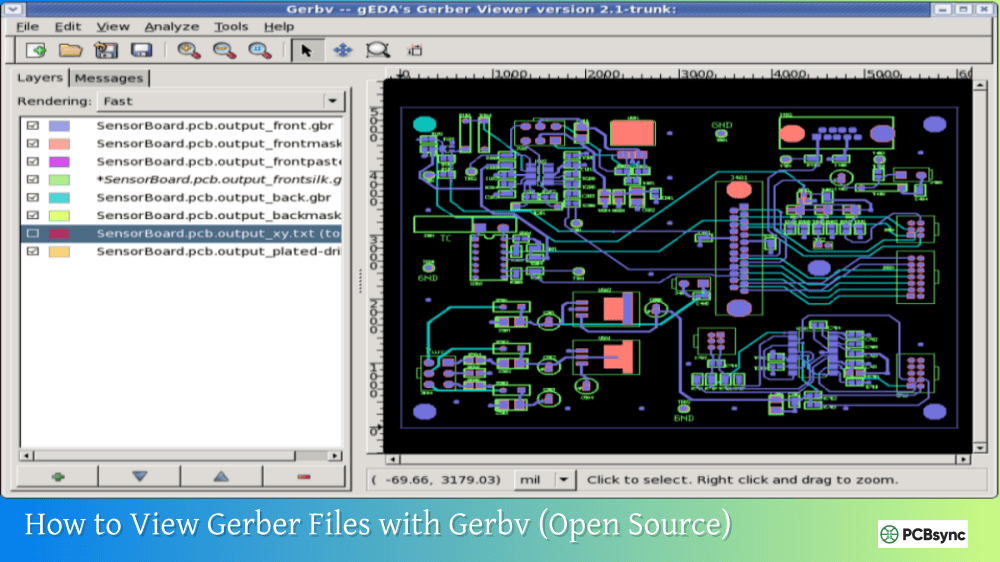
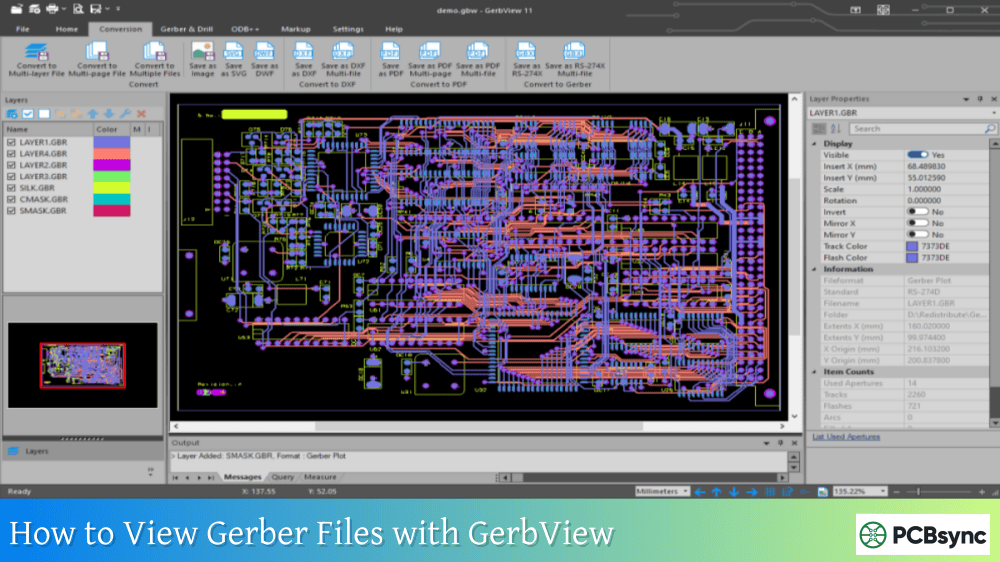
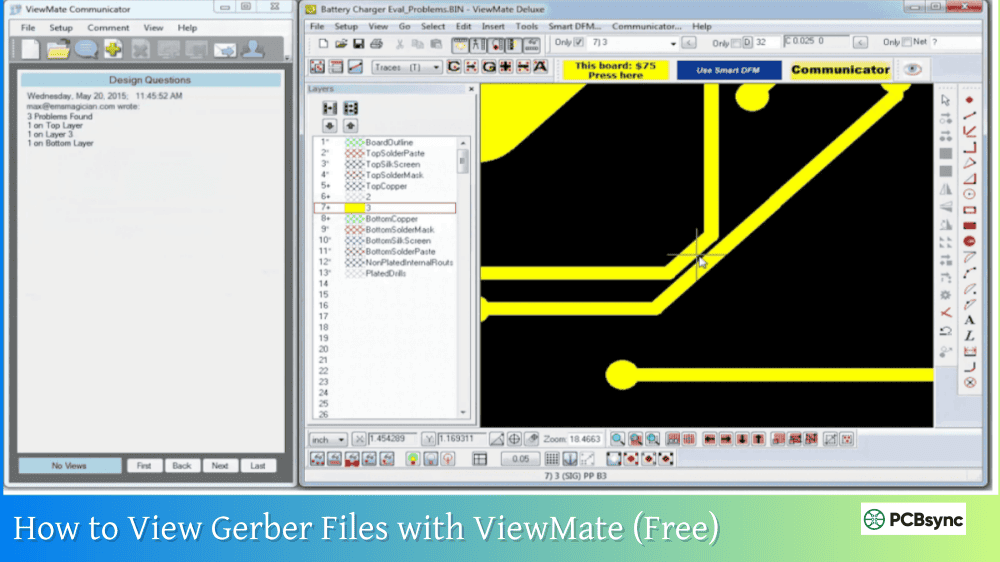
If you haven’t tried IPC-2581 yet, I encourage you to export your next design in this format and use one of the free viewers to explore what’s inside. You might be surprised how much cleaner and more complete the data transfer becomes compared to managing dozens of separate files.
The electronics industry is moving toward smarter, more integrated data exchange. IPC-2581 is at the forefront of this transition, and learning to use it effectively will serve you well as the standard continues to gain adoption across the manufacturing ecosystem.
Inquire: Call 0086-755-23203480, or reach out via the form below/your sales contact to discuss our design, manufacturing, and assembly capabilities.
Quote: Email your PCB files to Sales@pcbsync.com (Preferred for large files) or submit online. We will contact you promptly. Please ensure your email is correct.
Notes: For PCB fabrication, we require PCB design file in Gerber RS-274X format (most preferred), *.PCB/DDB (Protel, inform your program version) format or *.BRD (Eagle) format. For PCB assembly, we require PCB design file in above mentioned format, drilling file and BOM. Click to download BOM template To avoid file missing, please include all files into one folder and compress it into .zip or .rar format.