Inquire: Call 0086-755-23203480, or reach out via the form below/your sales contact to discuss our design, manufacturing, and assembly capabilities.
Quote: Email your PCB files to Sales@pcbsync.com (Preferred for large files) or submit online. We will contact you promptly. Please ensure your email is correct.
Notes: For PCB fabrication, we require PCB design file in Gerber RS-274X format (most preferred), *.PCB/DDB (Protel, inform your program version) format or *.BRD (Eagle) format. For PCB assembly, we require PCB design file in above mentioned format, drilling file and BOM. Click to download BOM template To avoid file missing, please include all files into one folder and compress it into .zip or .rar format.
How to Export IPC-2581 Files from Altium Designer: Complete Guide
Altium Designer provides native IPC-2581 export capability through a software extension that comes pre-installed with most installations. The IPC-2581 format consolidates all your PCB fabrication and assembly data into a single XML-based file, eliminating the traditional approach of sending dozens of separate Gerber, drill, and BOM files to your manufacturer.
Having transitioned several product lines from Gerber to IPC-2581 exports, the reduction in manufacturing delays and data interpretation errors makes the format worth considering for any PCB designer still relying solely on traditional file sets. This guide walks through the complete process of exporting IPC-2581 files from Altium Designer, including configuration options, Output Job integration, and verification procedures.
Altium Designer has supported IPC-2581 export since version 15.1, with the functionality provided through the IPC2581 software extension. The extension is typically installed by default but may need to be reinstalled if accidentally removed.
IPC-2581 Version Support
IPC-2581 Version
Altium Support
Release Year
Key Features
IPC-2581A
Yes
2012
Initial revision with core data
IPC-2581B
Yes
2013
Enhanced assembly data
IPC-2581C
Partial
2020
Bidirectional DFX exchange
Altium Designer supports both Revision A and Revision B of the IPC-2581 standard. Version B is generally recommended as it includes enhanced assembly information that manufacturers need for pick-and-place operations.
What IPC-2581 Contains
Data Category
Description
Copper artwork
Layer images for etching
Layer stackup
Physical layer order and materials
Drill data
Hole sizes, locations, and types
Netlist
Electrical connectivity information
Component placement
X/Y coordinates and rotation
Bill of Materials
Component references and values
Fabrication notes
Manufacturing instructions
The single-file approach eliminates common problems with traditional file sets, where missing drill files or mismatched layer naming can delay production.
Checking the IPC2581 Extension
Before exporting, verify that the IPC2581 extension is installed in your Altium Designer installation.
Verifying Extension Installation
Navigate to the Extensions and Updates page by clicking the user icon at the top-right of the workspace, then selecting Extensions and Updates from the menu.
Tab
Location to Check
Installed
Check if IPC2581 appears in list
Purchased
Extension available for reinstall
If the extension is missing from the Installed tab, locate it on the Purchased tab and click to install. Restart Altium Designer after installation completes.
Extension Status Indicators
Status
Meaning
Action Required
Installed
Extension active
None
Available
Not currently installed
Install from Purchased tab
Update Available
Newer version exists
Update recommended
Exporting IPC-2581 from the PCB Editor
The most direct method to generate an IPC-2581 file is through the PCB Editor’s Fabrication Outputs menu.
Step-by-Step Export Process
Open your completed PCB design in Altium Designer’s PCB Editor. Ensure your design passes DRC before generating manufacturing outputs.
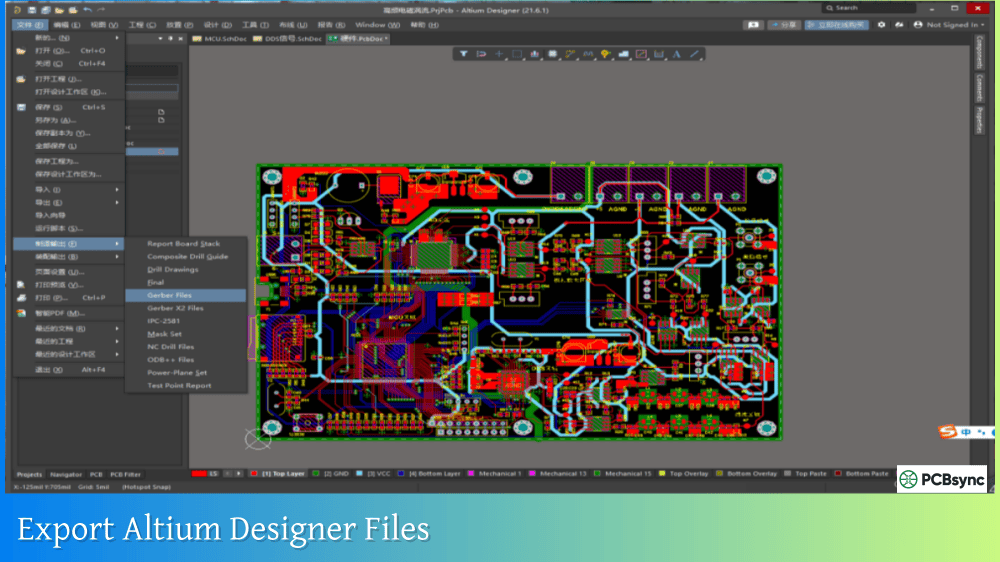
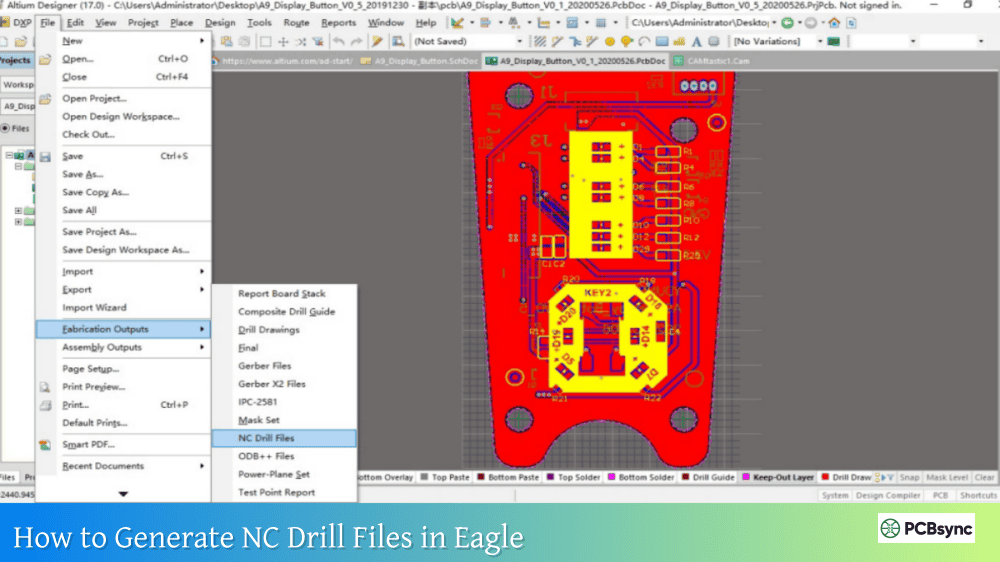
Navigate to File → Fabrication Outputs → IPC-2581. This opens the IPC-2581 Configuration dialog.
IPC-2581 Configuration Dialog Options
Option
Settings
Recommendation
IPC2581 Version
A or B
Select B for assembly data
Measurement System
Metric or Imperial
Match manufacturer preference
Floating Point Precision
1-6 decimal places
6 for high precision
Merge Net-Tie Nets
Enabled/Disabled
Enable for net-tie components
Version Selection Guidelines
Version
Use Case
IPC-2581A
Basic fabrication only
IPC-2581B
Fabrication plus assembly
Version B includes enhanced component and assembly information that turnkey manufacturers require. Select Version A only if your manufacturer specifically requests it.
Precision Settings Explained
Precision Value
Resolution
File Size Impact
2
0.01 mm
Smallest file size
4
0.0001 mm
Moderate file size
6
0.000001 mm
Largest file size
Higher precision values increase file size but provide better accuracy for fine-pitch designs. For most PCBs, precision 6 is recommended to ensure no data loss during coordinate conversion.
Completing the Export
Click OK to generate the IPC-2581 file. Altium displays progress in the status bar at the bottom of the window.
The exported file uses the naming format <PCBDocumentName>.cvg and is saved to the location specified in Project → Project Options → Options tab → Output Path field.
The generated file appears in the Projects panel under Generated → Text Documents.
Using Output Job Files for IPC-2581
Output Job files provide a more structured approach for production environments, allowing you to generate IPC-2581 along with other outputs in a single operation.
Creating an Output Job with IPC-2581
Create a new Output Job file by right-clicking on the project in the Projects panel and selecting Add New to Project → Output Job File.
In the Output Job editor, locate the Fabrication Outputs section.
Adding IPC-2581 to the Output Job
Step
Action
1
Click [Add New Fabrication Output] in the Fabrication Outputs section
2
Select IPC-2581 from the menu
3
Choose the PCB document from the submenu
4
Double-click the new entry to configure settings
Configuring the Output Container
Container Type
Description
Use Case
Folder Structure
Outputs to project subfolder
Standard releases
PDF
Not applicable to IPC-2581
N/A
Video
Not applicable to IPC-2581
N/A
Configure the output container to specify where the IPC-2581 file will be generated during the release process.
Running the Output Job
Method
Action
Manual
Right-click output and select Generate
Release
Run as part of project release process
Batch
Generate all outputs simultaneously
Output Job files ensure consistent output generation across design revisions and can be shared across multiple projects.
IPC-2581 Export Settings in Detail
Understanding each configuration option helps you generate optimal output for your manufacturer’s requirements.
Measurement System Options
Setting
Format
When to Use
Metric
mm values in XML
International manufacturers
Imperial
inch values in XML
Some US manufacturers
Most modern CAM systems handle either unit system correctly, but matching your manufacturer’s preference can avoid any potential conversion issues.
Floating Point Precision Impact
The precision setting affects how coordinates and dimensions are expressed in the XML file.
Precision 2 Example
Precision 6 Example
x=”25.40″
x=”25.400000″
y=”12.70″
y=”12.700000″
Lower precision can introduce rounding errors in fine-pitch designs. For BGA packages with 0.4mm pitch or finer, always use precision 6.
Net-Tie Handling
Setting
Behavior
Merge Net-Tie Nets Enabled
Connects nets through net-tie components
Merge Net-Tie Nets Disabled
Treats net-tie pins as separate nets
Enable this option if your design includes net-tie components for star-point grounding or other specialized routing requirements.
Verifying IPC-2581 Output
Always verify exported IPC-2581 files before sending to manufacturing.
Free IPC-2581 Viewers
Viewer
Source
Key Features
Vu2581
DownStream Technologies
Measurements, layer visibility, drill display
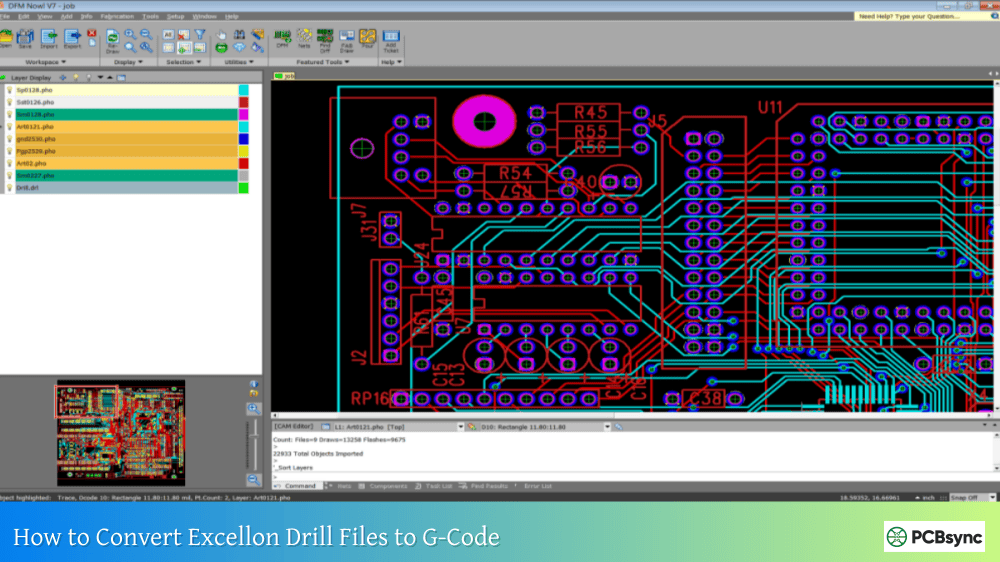
DFM Now!
Numerical Innovations
DFM checks, markup, realistic preview
ZofzPCB
zofzpcb.com
3D visualization
WISE 2581 Viewer
IPC Consortium
ODB++ and IPC-2581 viewing
PCB-Investigator
easylogix
Process integration
Vu2581 from DownStream Technologies is the most widely used free viewer and provides comprehensive verification capabilities.
Using Vu2581 for Verification
Download Vu2581 from the IPC-2581 Consortium website or DownStream Technologies. Open the application and click the Open icon to load your .CVG file.
Verification Checklist
Item
What to Check
Layer count
Matches design stackup
Board outline
Correct dimensions and shape
Drill sizes
All holes present with correct diameters
Net names
Connectivity data intact
Component count
All parts included
Placement data
Correct positions and rotations
BOM
Complete component list
Checking the Status Report
Altium generates a Status Report.txt file alongside the .CVG output. Review this file for any warnings or errors that occurred during export.
Report Entry
Meaning
Success
Clean export
Warning
Non-critical issue, review recommended
Error
Problem that may affect manufacturing
Address any errors before sending files to your manufacturer.
Read more How to convert PCB Files in different Design software:
Understanding how IPC-2581 compares to traditional formats helps you make informed decisions about your manufacturing workflow.
Format Comparison
Aspect
Gerber + Drill
ODB++
IPC-2581
File count
15-30+ files
1 archive (many internal files)
1 XML file
Layer stackup
Separate documentation
Embedded
Embedded
Netlist
Separate IPC-356 file
Embedded
Embedded
BOM
Separate file
Embedded
Embedded
Placement
Separate file
Embedded
Embedded
Governance
Ucamco (open)
Siemens (proprietary)
IPC (open standard)
Industry adoption
Universal
Wide
Growing
When to Use Each Format
Scenario
Recommended Format
Manufacturer only accepts Gerber
Gerber + Drill files
Manufacturer requests intelligent format
IPC-2581 or ODB++
Open standard requirement
IPC-2581
Legacy CAM system
Gerber or ODB++
Turnkey assembly service
IPC-2581B with full assembly data
Advantages of IPC-2581
Benefit
Description
Single file
All data in one XML file
Open standard
Not controlled by single vendor
Machine readable
XML structure easy to parse
Error reduction
No missing or mismatched files
Faster CAM setup
Automatic layer assignment
IP protection
Difficult to reverse engineer
Troubleshooting Common Issues
Several issues can arise during IPC-2581 export from Altium Designer.
Export Menu Not Available
Cause
Solution
IPC2581 extension not installed
Install from Extensions and Updates
Extension needs update
Update to latest version
Altium needs restart
Restart after extension changes
Missing Data in Export
Issue
Cause
Solution
No component data
Version A selected
Use Version B
Missing layers
Layer not enabled
Check layer visibility
Empty BOM
No components placed
Verify design contains parts
File Generation Errors
Error
Cause
Solution
Output path invalid
Directory does not exist
Create output folder
Permission denied
Write access restricted
Check folder permissions
File in use
Previous file open
Close viewer and retry
Useful Resources
Altium Documentation
Resource
URL
IPC-2581 Support
altium.com/documentation
Output Job Configuration
altium.com/documentation
Extensions and Updates
altium.com/documentation
IPC-2581 Resources
Resource
Description
IPC-2581 Consortium
ipc2581.com
Free Viewers
ipc2581.com/free-viewer
Specification Documents
IPC website
Viewer Downloads
Viewer
Source
Vu2581
downstreamtech.com
DFM Now!
numericalinnovations.com
ZofzPCB
zofzpcb.com
Frequently Asked Questions
Where is the IPC-2581 export option in Altium Designer?
The IPC-2581 export is located under File → Fabrication Outputs → IPC-2581 in the PCB Editor. If this menu option does not appear, the IPC2581 extension may not be installed. Navigate to Extensions and Updates by clicking the user icon at the top-right of the workspace. Look for the IPC2581 extension on the Purchased tab and install it. After installation, restart Altium Designer for the menu option to become available.
What is the difference between IPC-2581 Version A and Version B?
IPC-2581 Version A contains core fabrication data including copper artwork, layer stackup, drill information, and netlist. Version B adds enhanced assembly information including detailed component placement data, bill of materials, and assembly notes required for pick-and-place operations. For turnkey manufacturing where your fabricator also handles assembly, always select Version B. Use Version A only if your manufacturer specifically requests it or if you are sending fabrication-only data.
What floating point precision should I use for IPC-2581 export?
For most designs, use precision 6 (six decimal places) to ensure maximum accuracy in coordinate data. Lower precision values can introduce rounding errors that may affect fine-pitch components like BGAs with 0.4mm pitch or smaller. While higher precision creates slightly larger files, the difference is negligible compared to the potential problems from coordinate rounding. The precision setting affects how positions and dimensions are expressed in the XML structure of the exported file.
Can I include IPC-2581 in an Output Job file?
Yes, IPC-2581 output can be added to Output Job files for automated generation alongside other fabrication outputs. In the Output Job editor, click [Add New Fabrication Output] under the Fabrication Outputs section, select IPC-2581, and choose your PCB document. Double-click the entry to configure version, units, and precision settings. This approach ensures consistent output generation across design revisions and is particularly useful for production release workflows.
Do all PCB manufacturers accept IPC-2581 files?
While IPC-2581 adoption is growing, not all manufacturers accept this format yet. Many still primarily work with Gerber files due to established workflows and legacy CAM systems. Before submitting IPC-2581 files, confirm with your manufacturer that they can process this format. Consider providing both IPC-2581 and traditional Gerber files for your first submission to ensure compatibility. Manufacturers in North America and Europe are increasingly supporting IPC-2581, and turnkey assembly houses particularly appreciate the embedded BOM and placement data.
Best Practices for IPC-2581 Export
Following consistent practices ensures reliable output for manufacturing.
Before Export
Run DRC to verify design integrity. Ensure all component footprints have correct attributes. Verify layer stackup is completely defined in the Layer Stack Manager. Confirm all nets have proper naming for clarity in the netlist.
During Export
Select IPC-2581B unless manufacturer specifically requests Version A. Use precision 6 for maximum coordinate accuracy. Choose metric units unless manufacturer requires imperial. Enable Merge Net-Tie Nets if your design uses net-tie components.
After Export
Verify output using Vu2581 or another free viewer. Review the Status Report.txt for any warnings. Compare layer count against your design stackup. Check that BOM contains all expected components. Confirm placement data shows correct positions and rotations.
IPC-2581 export from Altium Designer provides a streamlined path to manufacturing that eliminates many of the file management headaches associated with traditional Gerber-based workflows. As more manufacturers adopt intelligent formats, the single-file approach becomes increasingly attractive for reducing errors and accelerating time to production.
Inquire: Call 0086-755-23203480, or reach out via the form below/your sales contact to discuss our design, manufacturing, and assembly capabilities.
Quote: Email your PCB files to Sales@pcbsync.com (Preferred for large files) or submit online. We will contact you promptly. Please ensure your email is correct.
Notes: For PCB fabrication, we require PCB design file in Gerber RS-274X format (most preferred), *.PCB/DDB (Protel, inform your program version) format or *.BRD (Eagle) format. For PCB assembly, we require PCB design file in above mentioned format, drilling file and BOM. Click to download BOM template To avoid file missing, please include all files into one folder and compress it into .zip or .rar format.