Inquire: Call 0086-755-23203480, or reach out via the form below/your sales contact to discuss our design, manufacturing, and assembly capabilities.
Quote: Email your PCB files to Sales@pcbsync.com (Preferred for large files) or submit online. We will contact you promptly. Please ensure your email is correct.
Notes: For PCB fabrication, we require PCB design file in Gerber RS-274X format (most preferred), *.PCB/DDB (Protel, inform your program version) format or *.BRD (Eagle) format. For PCB assembly, we require PCB design file in above mentioned format, drilling file and BOM. Click to download BOM template To avoid file missing, please include all files into one folder and compress it into .zip or .rar format.
How to Convert PNG/JPG Image to Gerber for PCB Silkscreen and Logos
Adding a logo or custom graphic to your PCB sounds simple enough. You have a PNG file, you want it on the silkscreen. How hard can it be?
As it turns out, quite hard. PCB manufacturing uses Gerber files, which are vector-based manufacturing instructions. PNG and JPG are raster images made of pixels. Bridging these two worlds requires conversion tools that transform your pixel-based artwork into something a photoplotter can understand.
I’ve placed hundreds of logos on PCBs over the years, and I’ve learned what works, what doesn’t, and how to avoid the common pitfalls that result in blurry, missing, or completely wrong graphics on manufactured boards. This guide covers every method for converting PNG and JPG images to Gerber format for silkscreen, logos, and custom PCB artwork.
Understanding Why Image to Gerber Conversion is Necessary
Before diving into methods, understanding why this conversion matters helps you make better decisions about image preparation.
What are PNG and JPG Files?
PNG (Portable Network Graphics) and JPG (Joint Photographic Experts Group) are raster image formats. They store visual information as a grid of pixels, where each pixel has a specific color value. These formats work great for photographs and web graphics but present challenges for manufacturing.
Key characteristics:
Resolution-dependent (quality degrades when scaled up)
No inherent physical dimensions (pixels don’t equal millimeters)
Can contain millions of colors
Not directly usable by PCB manufacturing equipment
What Makes Gerber Files Different
Gerber format stores manufacturing instructions as vectors and coordinates. Instead of describing what something looks like, Gerber files tell a photoplotter exactly where to expose photoresist and with what aperture shape.
Key characteristics:
Resolution-independent (scales without quality loss)
Absolute physical coordinates
Single color per layer (dark or clear)
Industry standard for PCB fabrication
The Conversion Challenge
Converting PNG/JPG to Gerber requires translating pixel data into vector commands. This process, called vectorization, approximates the shapes in your image using paths and filled regions that Gerber format can represent. The quality of this conversion depends on your source image resolution, the conversion tool used, and how well you prepared the image beforehand.
Preparing Your Image for Gerber Conversion
The most common reason for poor logo quality on manufactured PCBs isn’t the conversion tool. It’s the source image. Spending time on image preparation dramatically improves your results.
Choose the Right Resolution
Higher resolution source images produce cleaner conversions. The conversion process essentially traces your image, and more pixels mean more detail to trace.
Target Logo Size
Minimum Image Resolution
Recommended Resolution
5mm
200 x 200 pixels
500 x 500 pixels
10mm
400 x 400 pixels
1000 x 1000 pixels
20mm
800 x 800 pixels
2000 x 2000 pixels
50mm
2000 x 2000 pixels
4000+ pixels
Pro tip: It’s always better to start with a large image and scale down. Scaling up a small image introduces blur that the conversion process will faithfully reproduce as fuzzy edges.
Convert to Black and White
Silkscreen printing is binary: ink is either present or absent. Your image needs to reflect this reality before conversion.
Steps for proper conversion:
Open your image in any graphics editor (GIMP, Photoshop, Paint.NET)
Convert to grayscale first
Adjust contrast to maximize black/white separation
Convert to pure black and white (1-bit) or threshold at 50%
Review edges for clarity
Colors don’t translate to silkscreen. That vibrant blue logo will become either solid white or transparent on the board, depending on how your conversion tool interprets it.
Add Proper Margins
Most conversion tools have quirks with image edges. Adding a white border (at least 10 pixels) around your artwork prevents edge artifacts and makes positioning easier after conversion.
Simplify Complex Artwork
Fine details below your manufacturer’s minimum feature size won’t reproduce correctly. Before conversion:
Remove thin lines under 0.15mm (6 mils) for silkscreen
Eliminate small gaps that may fill in during printing
Thicken text to ensure readability
Consider simplifying complex gradients or textures
PNG/JPG to Gerber Conversion Methods
There are several approaches to convert images to Gerber format, ranging from built-in PCB software tools to dedicated conversion applications.
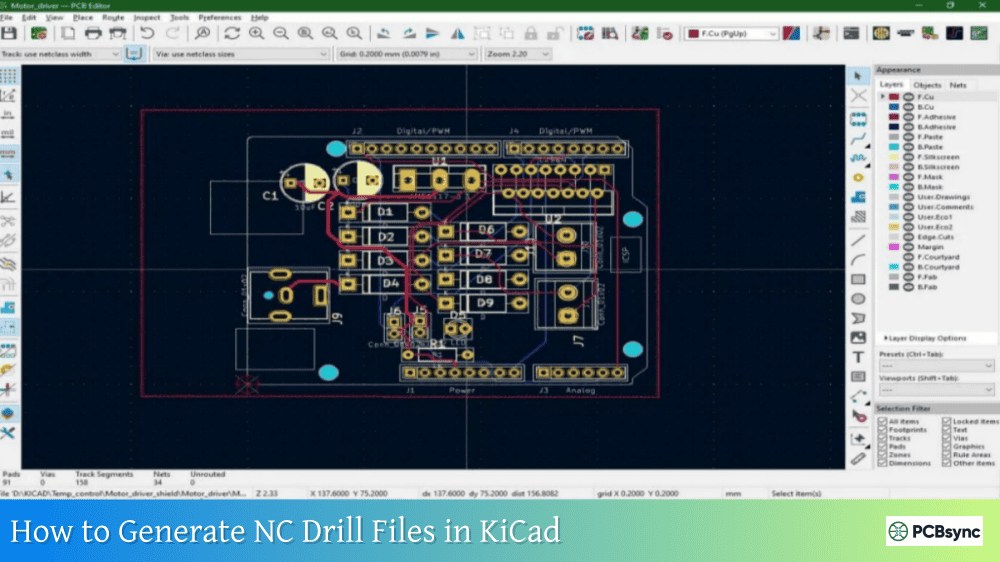
KiCad includes a built-in image converter that transforms bitmap images into footprints suitable for placement on any PCB layer. This is the most popular free option.
Step-by-step process:
Launch the Image Converter
Open KiCad
Click on Image Converter (or Bitmap2Component in older versions)
Load Your Image
Click “Load Bitmap”
Select your PNG or JPG file
The preview shows how KiCad interprets your image
Configure Settings
Set Output Format to “Footprint”
Adjust Black/White Threshold (default 50 is usually good)
Select target layer: Front Silkscreen for most logos
Check “Negative” if your artwork is inverted
Set Size
Adjust resolution to achieve desired physical dimensions
Watch the “Output Size” display as you change resolution
Both X and Y resolution should match for proper aspect ratio
Export
Click “Export to Clipboard” for quick placement
Or “Export to File” to save as .kicad_mod for reuse
Place in PCB
In PCB Editor, press Ctrl+V to paste
Or add the exported file to a footprint library and place normally
Important notes:
KiCad assumes 300 PPI default resolution
Use “Negative” option when your artwork shows black where you want silkscreen ink
Large images may slow down KiCad significantly
Method 2: Altium Designer Import Bitmap
Altium Designer offers multiple methods for importing images, with direct copy/paste being the most reliable.
Preferred method (Copy/Paste):
Open your image in Microsoft Paint
Save as monochrome BMP format
Select all (Ctrl+A) and copy (Ctrl+C)
In Altium PCB Editor, select target layer
Paste (Ctrl+V)
Resize using Unions → Resize Union if needed
Alternative method (Import Bitmap):
Tools → Convert → Import Bitmap
Select your image file
Choose target layer (Top Overlay for silkscreen)
Adjust scaling and resolution
Click OK to place
Altium-specific tips:
Monochrome BMP works most reliably
Color images may import unpredictably
Very high DPI images can cause issues with some fabs
Method 3: Eagle import-bmp.ulp Script
Eagle uses a ULP (User Language Program) script to import bitmap images.
Process:
Prepare image as monochrome BMP
Note image dimensions in pixels
In Eagle, run File → Run ULP
Select import-bmp.ulp
Choose your BMP file
Set scale factor: divide desired size by pixel count
Select target layer (usually tPlace for top silkscreen)
Run the generated script
Critical Eagle considerations:
DPI under 400 is recommended for reliable fab output
OSH Park recommends under 500 DPI (2 mil minimum pixels)
High-DPI imports can cause files to fail silently at fabs
Method 4: Gerbolyze Direct Image to Gerber
Gerbolyze is a specialized tool that converts PNG and JPG images directly into Gerber files, bypassing PCB design software entirely.
Eagle import-bmp: OSH Park docs (docs.oshpark.com)
Best Practices for Logo and Silkscreen Artwork
After placing countless logos on PCBs, these practices consistently produce the best results:
Start with vector artwork when possible. If your logo exists as SVG or AI, convert it to high-resolution PNG rather than using a low-res file from a website. Vector-to-raster gives you control over the final resolution.
Test at actual size before conversion. Print your image at 1:1 scale on paper. If it looks good printed, it’ll probably look good on the board. If text is unreadable on paper, it won’t be readable on silkscreen.
Add more margin than you think you need. Component placement, soldermask alignment, and silkscreen registration all have tolerances. Keep logos away from board edges and other features.
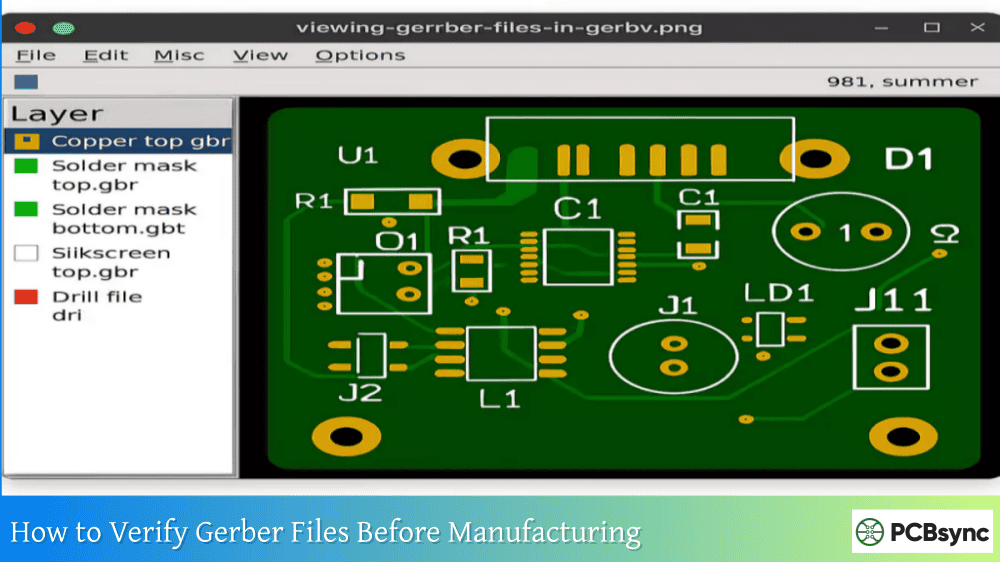
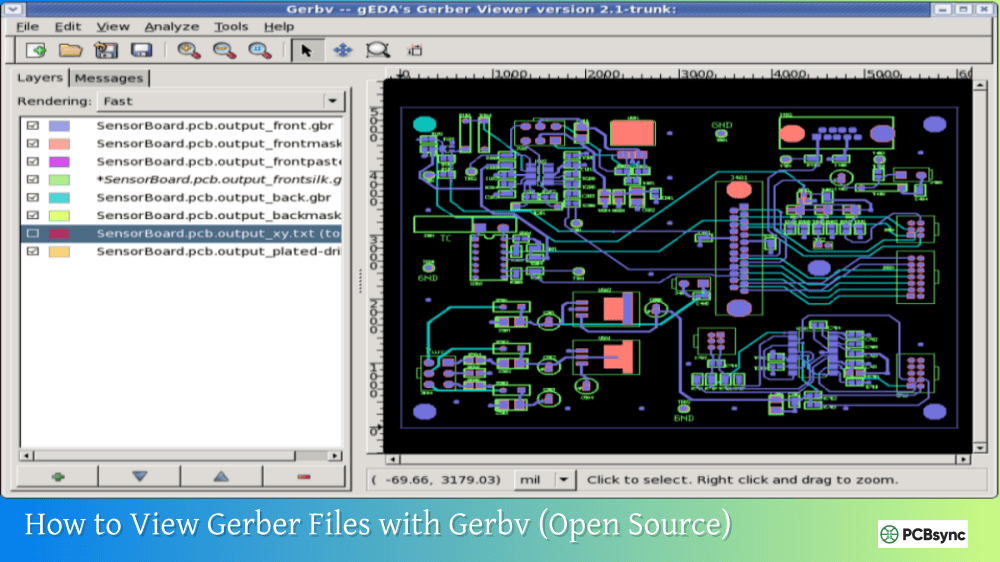
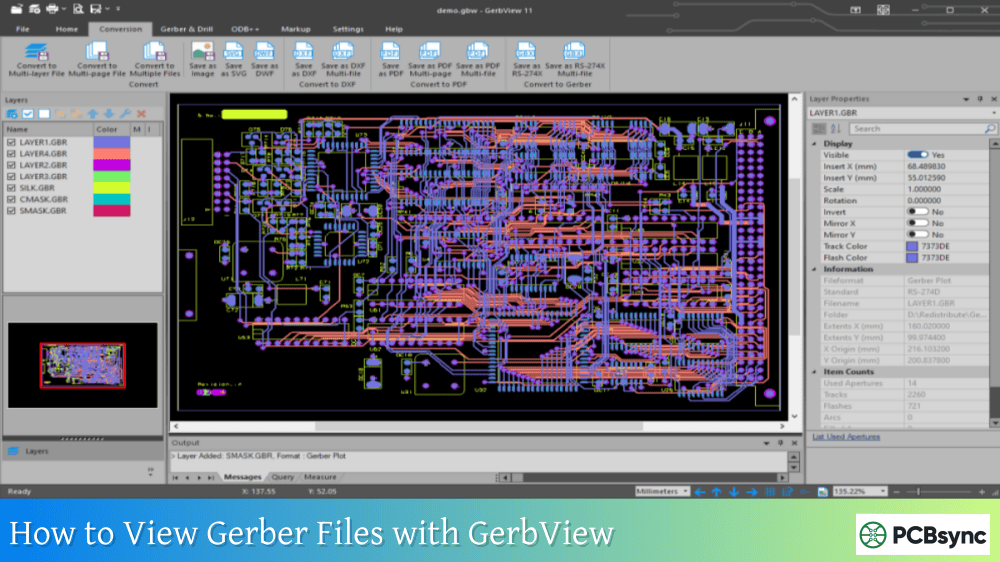
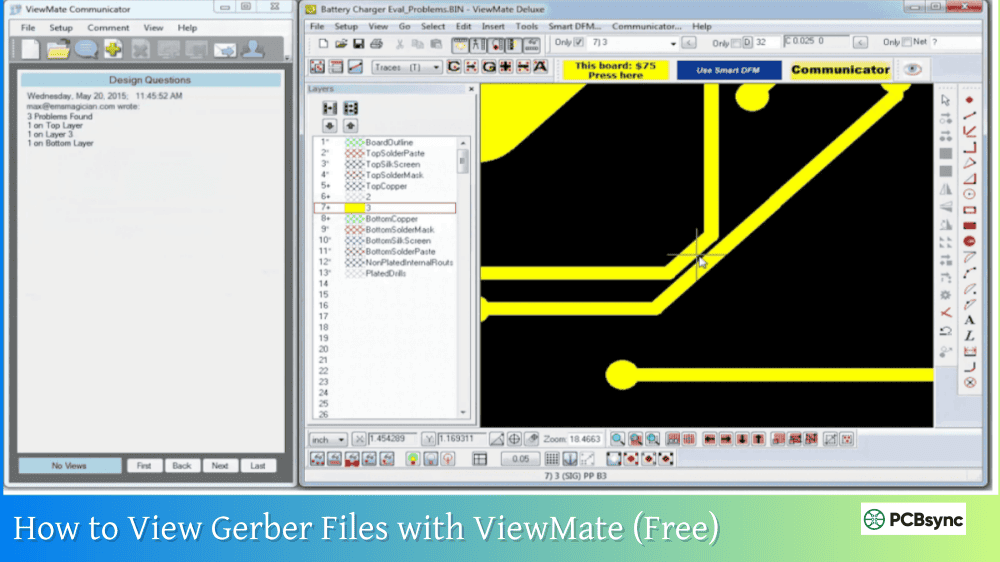
Verify in a Gerber viewer. Every single time. Open your exported Gerbers and zoom in on the logo. Catching problems before manufacturing saves time, money, and embarrassment.
Keep manufacturer limits in mind. Standard silkscreen can’t reproduce details under 6 mils (0.15mm). If your manufacturer has specific limits, design within them.
Create reusable library components. Once you’ve converted a logo successfully, save it as a footprint in your library. Future projects can reuse it without reconverting.
Frequently Asked Questions About Image to Gerber Conversion
What Resolution Should My PNG/JPG Be for Good Silkscreen Quality?
For clean silkscreen results, your source image should be at least 300 DPI at the target printed size. For a 10mm logo, that means roughly 120 x 120 pixels minimum, though 300 x 300 or higher produces noticeably better results. Remember that silkscreen printing has physical limits around 6 mils (0.15mm), so extreme resolution won’t improve output beyond the manufacturing capability.
Can I Put a Colored Image on My PCB Silkscreen?
No, silkscreen is a single-color process. Your image will be converted to black and white during the conversion process. The silkscreen color (usually white, sometimes black or yellow) is determined by the solder mask color and what the manufacturer offers. If you want multiple colors, you’d need multiple board orders with different solder mask and silkscreen combinations, then assemble the final product from different PCBs.
Why Does My Logo Look Different on the Manufactured Board Than in My Design Software?
Several factors cause this discrepancy. Silkscreen printing has lower resolution than your screen, so fine details blur or disappear. Registration between silkscreen and solder mask isn’t perfect, causing slight misalignment. The conversion from pixels to vectors introduces approximations. Finally, silkscreen ink spreads slightly during printing, making features appear thicker than designed. Always design with slightly thinner lines than desired.
Can I Convert a Photograph to Gerber for PCB Artwork?
Yes, but with significant limitations. Photographs contain continuous tones (shading), while Gerber format only supports binary on/off states. Gerbolyze can convert photographs using dithering techniques that simulate grayscale with patterns of dots, similar to newspaper printing. The result works best on copper layers with high-resolution capability. Standard silkscreen is too coarse for detailed photographic reproduction.
What’s the Difference Between Placing an Image on Silkscreen vs Copper Layer?
Silkscreen is printed ink on top of the solder mask, typically white. It’s the standard choice for logos and offers good contrast but limited resolution (6-8 mil minimum features). Copper layer logos are actual metal, visible where the solder mask is removed to expose bare copper (or gold with ENIG finish). Copper offers higher resolution and a distinctive metallic appearance but requires coordinating two layers (copper and mask) and must not interfere with electrical traces.
Conclusion
Converting PNG and JPG images to Gerber format for PCB silkscreen and logos involves understanding both the limitations of manufacturing processes and the capabilities of conversion tools. The key to success is proper image preparation: start with high-resolution source files, convert to clean black and white, and verify the output in a Gerber viewer before manufacturing.
For most users, KiCad’s built-in Image Converter provides a straightforward path to placing logos on silkscreen layers. For more complex artwork or integration with existing Gerber files, Gerbolyze offers powerful options including grayscale dithering for photographic images.
Whatever method you choose, remember that the manufacturing process has physical limits. Design your artwork with these constraints in mind, test at actual size, and always verify your Gerber output before sending boards to production. A few minutes of preparation and verification saves days of waiting for incorrectly manufactured boards.
Inquire: Call 0086-755-23203480, or reach out via the form below/your sales contact to discuss our design, manufacturing, and assembly capabilities.
Quote: Email your PCB files to Sales@pcbsync.com (Preferred for large files) or submit online. We will contact you promptly. Please ensure your email is correct.
Notes: For PCB fabrication, we require PCB design file in Gerber RS-274X format (most preferred), *.PCB/DDB (Protel, inform your program version) format or *.BRD (Eagle) format. For PCB assembly, we require PCB design file in above mentioned format, drilling file and BOM. Click to download BOM template To avoid file missing, please include all files into one folder and compress it into .zip or .rar format.