Inquire: Call 0086-755-23203480, or reach out via the form below/your sales contact to discuss our design, manufacturing, and assembly capabilities.
Quote: Email your PCB files to Sales@pcbsync.com (Preferred for large files) or submit online. We will contact you promptly. Please ensure your email is correct.
Notes: For PCB fabrication, we require PCB design file in Gerber RS-274X format (most preferred), *.PCB/DDB (Protel, inform your program version) format or *.BRD (Eagle) format. For PCB assembly, we require PCB design file in above mentioned format, drilling file and BOM. Click to download BOM template To avoid file missing, please include all files into one folder and compress it into .zip or .rar format.
How to Convert ODB++ to Gerber Files for PCB Manufacturing
You’ve received an ODB++ archive from a customer or inherited a legacy project, but your manufacturer only accepts Gerber files. Or maybe your CAM system doesn’t support ODB++, and you need those individual layer files to run your standard workflow. Whatever the reason, converting ODB++ to Gerber is a task that comes up more often than you’d expect.
Having worked with both formats extensively over the years, I can tell you that the conversion itself is straightforward with the right tools. The challenge lies in understanding what you’re converting, verifying the output, and handling the edge cases that can trip you up. This guide covers everything you need to know about converting ODB++ to Gerber files successfully.
Before converting between formats, understanding what makes them different helps you anticipate potential issues and verify your conversion results.
What is ODB++ Format?
ODB++ (Open Database++) is a comprehensive PCB data exchange format originally developed by Valor Computerized Systems in 1995, now owned by Siemens through their acquisition of Mentor Graphics. Unlike Gerber, which stores only graphical layer data, ODB++ is a complete database containing everything needed to manufacture and assemble a PCB.
ODB++ contains:
Layer images (copper, mask, silkscreen)
Drill and routing data
Layer stackup definitions
Component placement information
Bill of materials data
Net connectivity information
Design rules and attributes
The format stores this information in a hierarchical folder structure, typically compressed as a .tgz, .zip, or .tar archive for transmission.
What is Gerber Format?
Gerber (RS-274X, also called Extended Gerber) is the industry-standard format for PCB layer images. Each Gerber file represents a single layer as vector graphics, describing copper traces, pads, and other features using aperture definitions and coordinate commands.
Gerber characteristics:
One file per layer
Vector-based graphics data only
No inherent layer relationship information
Requires separate drill files (Excellon format)
Simple ASCII format, human-readable
Key Differences Between ODB++ and Gerber
Aspect
ODB++
Gerber (RS-274X)
Data structure
Hierarchical database
Individual layer files
Layer stackup
Defined in matrix file
Not included
Drill data
Integrated
Separate Excellon files
Component data
Included
Not included
Net information
Included
Not included (X3 adds some)
File organization
Single archive
Multiple separate files
Manufacturing info
Comprehensive
Graphics only
Why Convert ODB++ to Gerber Files?
Several practical situations require ODB++ to Gerber conversion:
Legacy System Compatibility
Many older CAM systems, photoplotters, and manufacturing equipment were designed around Gerber files. While modern systems increasingly support ODB++, some facilities still run equipment that only reads Gerber format.
Manufacturer Requirements
Despite ODB++ advantages, approximately 90% of PCB manufacturing still uses Gerber files according to industry estimates. Many smaller fabricators, especially quick-turn prototype shops, request Gerber submissions because their workflows are optimized for that format.
Selective Layer Sharing
Sometimes you need to share specific layers without exposing the complete design database. Converting to Gerber lets you extract and distribute only the layers necessary for a particular manufacturing step or quote request.
Archive and Documentation
Gerber files are simpler to archive and document individually. Some organizations maintain Gerber archives alongside ODB++ for long-term storage, ensuring accessibility even if ODB++ tooling changes over time.
Design Verification
Converting ODB++ to Gerber and viewing in a standard Gerber viewer provides an independent verification step, confirming that the ODB++ data produces the expected layer images.
ODB++ File Structure Overview
Understanding ODB++ structure helps you navigate the database during conversion and troubleshoot issues when layers don’t convert as expected.
The Matrix File
The matrix file is the heart of an ODB++ database. It defines the relationship between steps (design variants or panels) and layers, specifying layer order, types, and polarities.
Matrix information includes:
Layer names and types (signal, plane, mask, silk, drill)
Several software tools handle ODB++ to Gerber conversion, ranging from dedicated viewers to full CAM systems.
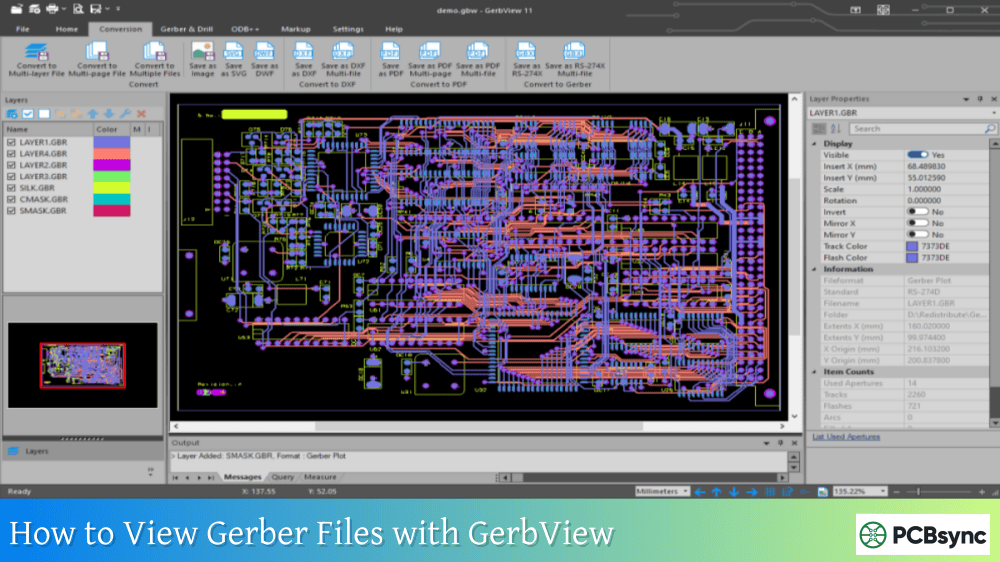
Method 1: GerbView Conversion
GerbView from Software Companions is a popular option for ODB++ to Gerber conversion with a straightforward workflow.
Step-by-step process:
Load the ODB++ File
File → Open Project or Add Layer
Navigate to your ODB++ archive (.tgz, .zip)
If multiple steps exist, select the step to convert
Verify Layer Loading
All layers from the selected step should appear in the layer list
Check that layer count matches your expectation
Review layer names for correct identification
Export to Gerber
Go to Conversion tab
Click “Save as RS-274X”
Select “Save to Multiple Gerber Files” for individual layers
Choose output folder
Select layers to export
Verify Output
Open exported Gerber files
Compare against original ODB++ display
Check layer alignment and completeness
Method 2: FAB 3000 Conversion
FAB 3000 from Numerical Innovations provides professional-grade conversion with additional export options.
Process:
Import ODB++ via File → Import → ODB++
Verify layer assignments and types
Export via File → Export → PCB (Gerber/NC)
Select output format options
Choose destination folder
FAB 3000 advantages:
Handles complex ODB++ surfaces
Exports drill files automatically
Can also export to IPC-2581, DXF, and other formats
Includes DFM verification tools
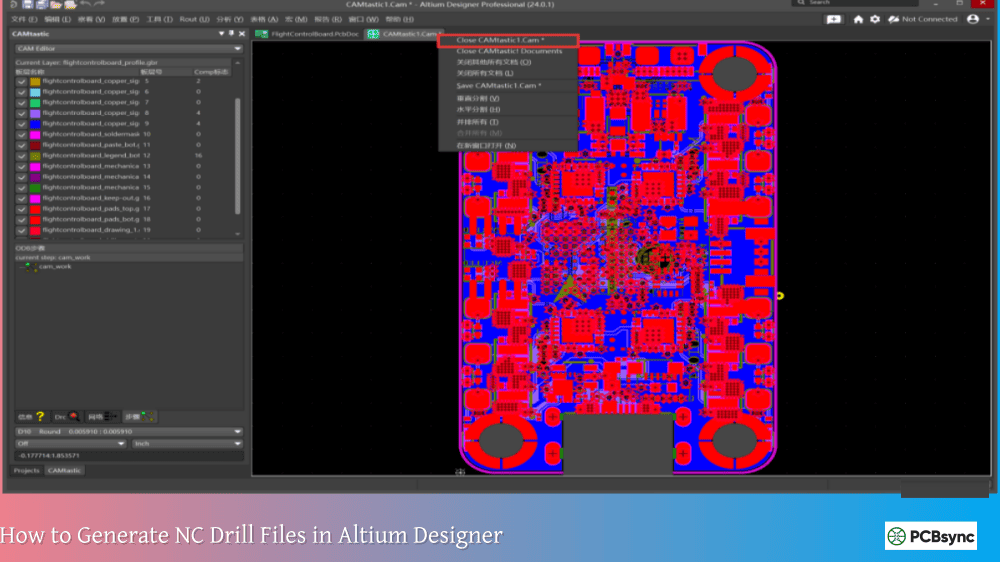
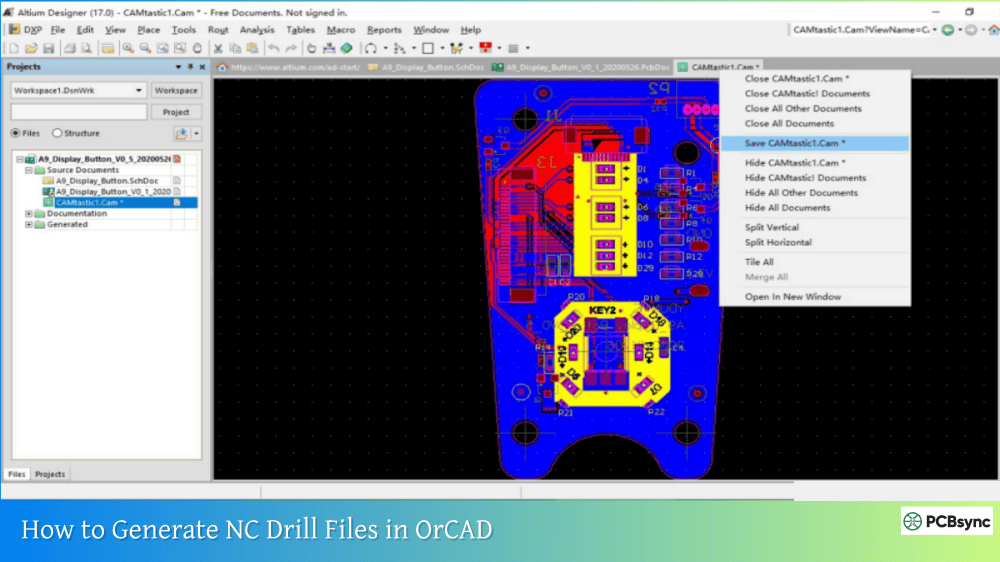
Method 3: Altium CAMtastic
Altium Designer includes CAMtastic, which can import ODB++ and export to various formats including Gerber.
Process:
File → New → CAM Document
File → Import → ODB++
Configure layer order in Tables → Layers Order
Set up drill pairs in Tables → Layers Sets
File → Export → Gerber
Method 4: Artwork ODB2GBR Translator
For OEM applications or batch processing, Artwork Conversion Software offers a dedicated ODB++ to Gerber translator available as both an executable and library.
Features:
Command-line operation for automation
API for integration into other software
Handles all standard ODB++ layer types
Suitable for production environments
Method 5: PCB-Investigator
PCB-Investigator provides programmatic conversion capabilities, useful for automated workflows.
Code example approach:
1. Load ODB++ job into PCB-Investigator2. Iterate through layer names3. Save each layer as Gerber274x4. Output to designated directory
Software Comparison for ODB++ to Gerber Conversion
Software
Type
Cost
Best For
GerbView
Viewer/Converter
Commercial ($195+)
General conversion, verification
FAB 3000
CAM Software
Commercial (subscription)
Professional CAM workflows
Altium CAMtastic
Integrated CAM
Included with Altium
Altium users
ODB2GBR
OEM Translator
Commercial
Automation, integration
interCAD Reader
Viewer
Free
Viewing only (no conversion)
PCB-Investigator
CAM Software
Commercial
Programmable workflows
Handling ODB++ Surfaces During Conversion
One technical challenge in ODB++ to Gerber conversion involves ODB++ surfaces. These are filled polygon regions that have no direct equivalent in Gerber format.
How Conversion Tools Handle Surfaces
Most converters transform ODB++ surfaces into Gerber polygons using G36/G37 commands. The conversion process may create:
Simple polygons for basic shapes
Composite polygons with cutouts for complex regions
Multiple paint/scratch levels for overlapping areas
Potential Issues with Surface Conversion
Large file sizes: Complex surfaces can generate Gerber files with thousands of polygon commands, resulting in much larger files than expected.
Composite level compatibility: Some older EDA tools cannot handle Gerber files with multiple composite levels. If your downstream software has issues, look for conversion options that use “cutlines” to eliminate composite levels.
FAB 3000 option: Enable “Convert Surfaces to Polygons (with cutlines)” during ODB++ import to create simpler polygon structures compatible with legacy software.
Step-by-Step ODB++ to Gerber Conversion Workflow
Here’s a complete workflow for reliable ODB++ to Gerber conversion:
Step 1: Examine the ODB++ Archive
Before conversion, understand what you’re working with:
Extract the archive to examine folder structure
Open the matrix file to identify layer count and types
Note any unusual layer configurations
Step 2: Load and Verify in Conversion Tool
Import the ODB++ into your chosen software:
Confirm all expected layers appear
Verify layer types are correctly identified
Check that the step selection matches your needs
Step 3: Configure Layer Mapping
Ensure layer types are properly assigned:
Signal layers → Copper Gerbers
Solder mask layers → Mask Gerbers
Silkscreen layers → Silk Gerbers
Drill layers → Excellon files
Step 4: Set Export Options
Configure the Gerber output:
Format: RS-274X (Extended Gerber)
Units: Match original design (mm or inches)
Precision: Typically 2.5 or 2.6 format
Zero suppression: Leading or trailing (match your fab’s preference)
Step 5: Export All Layers
Generate the Gerber files:
Export each layer to a separate file
Use meaningful file names that indicate layer purpose
Export drill data as Excellon format
Step 6: Generate Drill Files
ODB++ drill data converts to Excellon format:
Through-hole drill file
Blind/buried via files if applicable
Routing/outline file if needed
Step 7: Verify the Output
Critical verification steps:
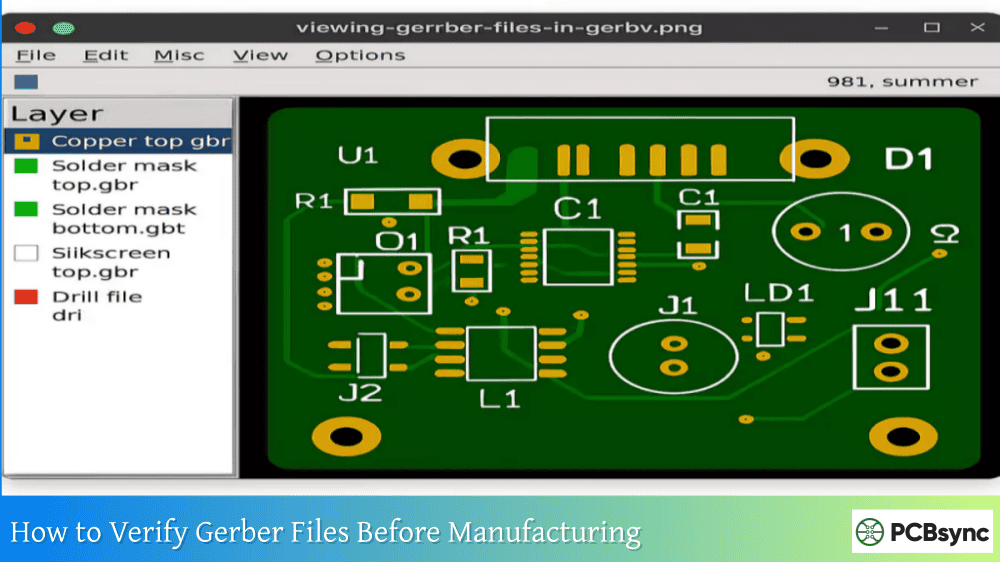
Open each Gerber in a viewer
Compare layer-by-layer against ODB++ original
Check alignment between layers
Verify drill locations match pad locations
Confirm board outline accuracy
Read more How to convert PCB Files in different Design software:
Manually specify layer types if auto-detection fails
Problem: Layer Polarity Inverted
Causes:
Negative layer polarity in ODB++ not handled correctly
Plane layers require polarity inversion
Solutions:
Check polarity settings in converter
Use viewer’s invert function to verify correct polarity
Re-export with polarity option toggled
Problem: Large Output File Sizes
Causes:
Complex ODB++ surfaces creating many polygons
High-resolution conversion settings
Excessive composite levels
Solutions:
Use cutline option for surface conversion
Adjust polygon simplification settings
Accept larger files if accuracy is critical
Problem: Drill Data Missing or Incorrect
Causes:
Drill layers not properly identified
Layer sets (drill spans) not configured
Separate export step required for drill files
Solutions:
Verify drill layer type assignments
Configure blind/buried via layer pairs
Export drill files separately if needed
Problem: Fonts and Text Not Rendering
Causes:
Non-standard fonts in ODB++ not available
Text not converted to geometry
Solutions:
Ensure fonts folder is included in ODB++ archive
Use converter option to stroke text to outlines
Best Practices for ODB++ to Gerber Conversion
Based on years of handling both formats, these practices minimize problems:
Always verify layer count. Compare the number of Gerber files generated against the layers listed in the ODB++ matrix. Missing layers indicate conversion issues.
Check the board outline. The profile layer should convert to a complete, closed outline. Gaps or missing segments cause problems in manufacturing.
Verify drill registration. Overlay drill files on copper layers to confirm hole positions align with pads. Misregistration is a common conversion artifact.
Maintain original precision. Don’t reduce coordinate precision during conversion. Loss of precision causes alignment issues, especially on fine-pitch designs.
Document the conversion. Record which software and settings you used. If questions arise during manufacturing, you can reproduce or adjust the conversion.
Keep the original ODB++. Gerber files contain less information than ODB++. Maintain the original archive for reference and potential re-conversion.
Useful Resources for ODB++ to Gerber Conversion
Software Downloads
Tool
Website
Notes
GerbView
gerbview.com
30-day evaluation available
FAB 3000
numericalinnovations.com
Demo version available
interCAD Reader
intercad.com
Free viewer (no conversion)
ODB++ Viewer
odbplusplus.com
Free official viewer
Technical Documentation
Resource
URL
Description
ODB++ Specification
odbplusplus.com
Official format documentation
Gerber Format Spec
ucamco.com
RS-274X specification
Artwork ODB++ Info
artwork.com/odb++
Technical articles and tools
Gerber Viewers for Verification
Viewer
Platform
Cost
GerbV
Cross-platform
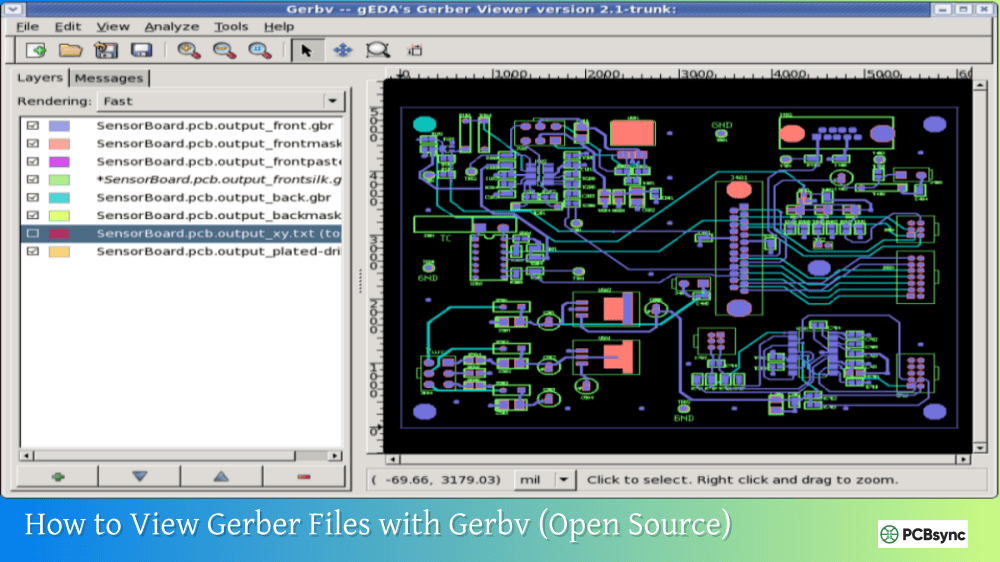
Free
KiCad GerbView
Cross-platform
Free
ZofzPCB
Windows
Free
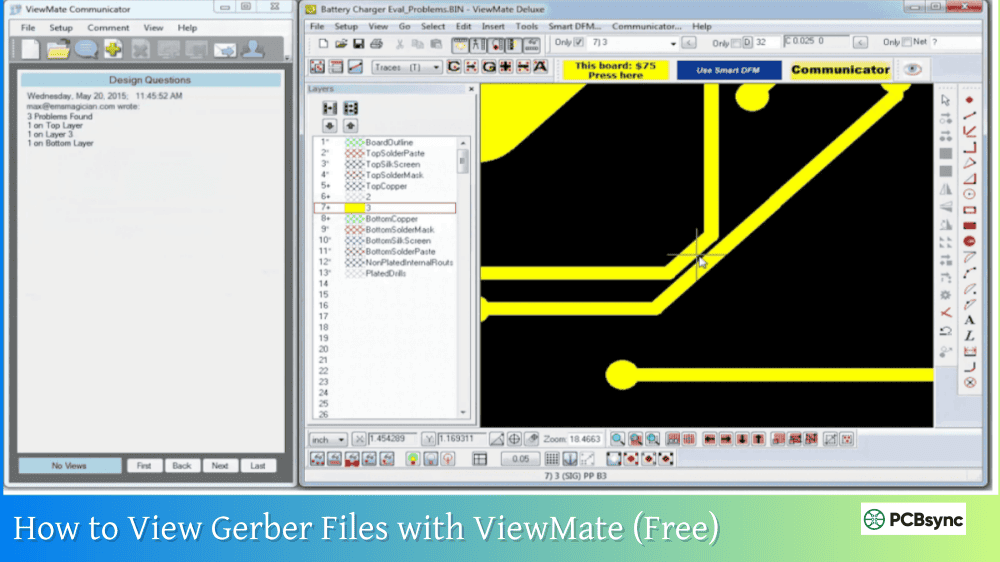
ViewMate
Windows
Free
Reference Gerber Viewer
Online
Free
Frequently Asked Questions About ODB++ to Gerber Conversion
Can I Convert ODB++ to Gerber Without Losing Data?
The graphical layer data converts completely, but you will lose the intelligent metadata that makes ODB++ valuable. Information like net connectivity, component placement data, bill of materials, and design attributes do not transfer to Gerber format. If you need this information preserved, export additional files (IPC netlist, centroid file, BOM) alongside your Gerbers, or consider whether Gerber conversion is actually necessary for your use case.
What is the Best Free ODB++ to Gerber Converter?
There isn’t a fully-featured free converter available. The free interCAD Reader can view ODB++ files but doesn’t include conversion capability. GerbView offers a 30-day evaluation that includes full conversion functionality, which works well for occasional conversion needs. For ongoing professional use, the commercial tools pay for themselves quickly in time saved and reliability gained compared to workaround approaches.
Why Do Some Manufacturers Still Require Gerber Instead of ODB++?
Several factors contribute to Gerber’s continued dominance. Many fabricators have decades of investment in Gerber-based CAM workflows and see no compelling reason to change what works. Gerber’s simplicity means fewer things can go wrong during interpretation. Additionally, some shops specialize in quick-turn prototypes where the overhead of ODB++ processing doesn’t provide proportional benefits for simple 2-4 layer boards. The situation is changing gradually as more manufacturers modernize their tooling.
How Do I Handle Multi-Step ODB++ Files During Conversion?
Multi-step ODB++ files contain multiple design variants or panelization information. When converting, you’ll typically select one step at a time for export. For panelized designs, you might convert the panel step to get manufacturing-ready Gerbers, or convert individual unit steps for documentation purposes. Most conversion tools prompt you to select a step during import if multiple steps exist in the database.
Can I Convert Gerber Files Back to ODB++ Format?
Yes, but with significant limitations. Tools like FAB 3000 can import Gerber files and export ODB++, but the resulting ODB++ lacks the intelligent data (nets, components, design intent) that was never present in the Gerber source. The converted ODB++ contains only layer images, essentially serving as a different container for the same graphical data. To create truly intelligent ODB++ with full metadata, you need the original CAD design files, not Gerber exports.
Conclusion
Converting ODB++ to Gerber files is a routine task with the right tools, but understanding both formats helps you avoid common pitfalls and verify your results. The conversion process transforms ODB++’s comprehensive database into simpler layer-by-layer graphics files, sacrificing the intelligent metadata for universal compatibility.
For occasional conversions, GerbView or FAB 3000’s evaluation version handles the task efficiently. For production environments or automated workflows, dedicated translators like Artwork’s ODB2GBR provide the reliability and integration capabilities needed for high-volume processing.
Remember that conversion is lossy in terms of metadata. The graphical accuracy is excellent, but you’re trading ODB++’s rich manufacturing information for Gerber’s simplicity and compatibility. When possible, maintaining both formats gives you flexibility for different manufacturing partners and long-term archive accessibility.
Whatever your conversion scenario, always verify the output against the original ODB++ display. Layer-by-layer comparison catches problems before they become manufacturing issues, and taking a few extra minutes for verification saves days of delay when something doesn’t match expectations at the fab house.
Inquire: Call 0086-755-23203480, or reach out via the form below/your sales contact to discuss our design, manufacturing, and assembly capabilities.
Quote: Email your PCB files to Sales@pcbsync.com (Preferred for large files) or submit online. We will contact you promptly. Please ensure your email is correct.
Notes: For PCB fabrication, we require PCB design file in Gerber RS-274X format (most preferred), *.PCB/DDB (Protel, inform your program version) format or *.BRD (Eagle) format. For PCB assembly, we require PCB design file in above mentioned format, drilling file and BOM. Click to download BOM template To avoid file missing, please include all files into one folder and compress it into .zip or .rar format.