Inquire: Call 0086-755-23203480, or reach out via the form below/your sales contact to discuss our design, manufacturing, and assembly capabilities.
Quote: Email your PCB files to Sales@pcbsync.com (Preferred for large files) or submit online. We will contact you promptly. Please ensure your email is correct.
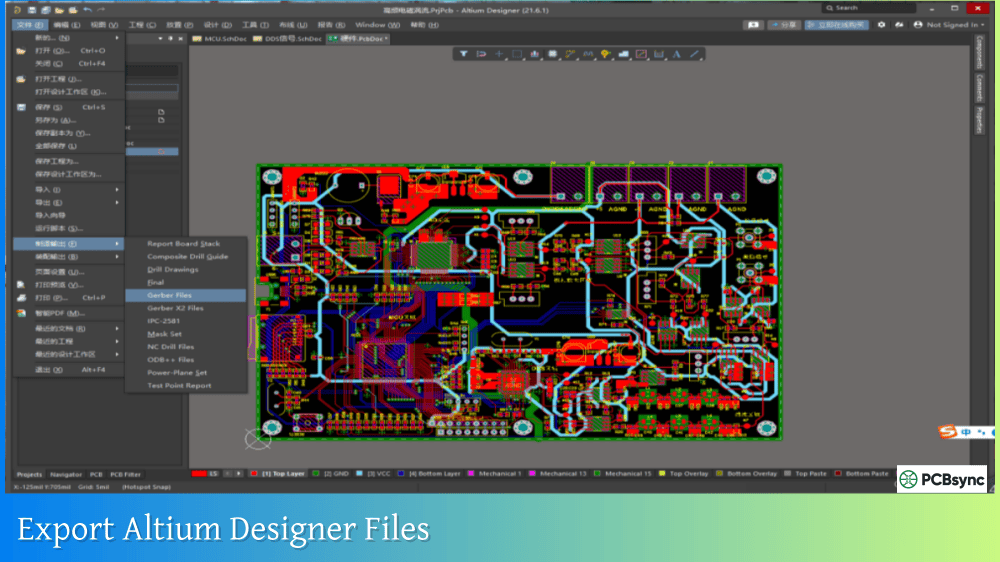
Notes: For PCB fabrication, we require PCB design file in Gerber RS-274X format (most preferred), *.PCB/DDB (Protel, inform your program version) format or *.BRD (Eagle) format. For PCB assembly, we require PCB design file in above mentioned format, drilling file and BOM. Click to download BOM template To avoid file missing, please include all files into one folder and compress it into .zip or .rar format.
How to Convert DXF to Gerber Files: A Complete Guide for PCB Engineers
Complete DXF to Gerber conversion guide for PCB engineers. Step-by-step process, free and paid software options, troubleshooting tips, and best practices.
If you’ve ever tried converting a DXF file to Gerber and ended up with something that looks nothing like your original design, you’re not alone. I’ve spent countless hours troubleshooting conversions that went sideways, and I’ve learned that the “simple” task of DXF to Gerber conversion is anything but straightforward.
This guide walks you through everything you need to know about converting DXF files to Gerber format, including the tools that actually work, the mistakes that trip up most designers, and the best practices that will save you from manufacturing headaches.
Before diving into conversion methods, let’s establish what we’re actually working with. These two formats serve fundamentally different purposes, and understanding their differences explains why conversion can be tricky.
What is a DXF File?
DXF (Drawing Exchange Format) was developed by Autodesk in the early 1980s as a universal format for transferring CAD drawings between different software packages. It’s essentially a tagged data representation containing all the geometric information from an AutoCAD drawing, including lines, arcs, circles, text, and more complex entities like splines and hatches.
The format sees heavy use in mechanical engineering, architecture, and RF/microwave circuit design where designers prefer AutoCAD’s powerful drafting capabilities over traditional EDA tools. About 10-15% of PCB and RF layouts are still designed using mechanical CAD software like AutoCAD, SolidWorks, or ProE.
What is a Gerber File?
Gerber is the industry-standard format for PCB manufacturing, developed over 35 years ago. Unlike DXF’s complex entity types, Gerber is remarkably simple: it’s an ASCII text file containing X,Y coordinates and shapes (apertures/dcodes). Each Gerber file represents a single layer of your PCB design, whether that’s copper, solder mask, silkscreen, or the board outline.
Modern PCB fabricators require Gerber files because they provide unambiguous manufacturing instructions. There’s no interpretation needed; the file describes exactly what the photoplotter should image.
Key Differences Between DXF and Gerber Formats
Feature
DXF Format
Gerber Format
Primary Use
General CAD design, mechanical engineering
PCB manufacturing only
Data Structure
Hundreds of entity types (hatches, splines, 3D objects)
Simple X,Y coordinates with aperture definitions
Layer Handling
Flexible, user-defined layers
Strict layer types (copper, mask, silk)
Manufacturing Ready
No
Yes
File Complexity
High (supports 3D, text styles, blocks)
Low (2D only, minimal formatting)
Industry Adoption
Architecture, mechanical, electronics design
PCB fabrication worldwide
Why Convert DXF to Gerber Files?
PCB manufacturers won’t accept DXF files for production, and here’s why that makes sense from a manufacturing standpoint.
Manufacturing Requirements
When you send files to a fab house, they need precise, unambiguous data. DXF files require interpretation because the same visual result can be achieved using different entity types. A filled rectangle might be created with a hatch pattern, a closed polyline, or a region entity. Each requires different handling during conversion.
Gerber files eliminate this ambiguity. What you see is exactly what gets manufactured. There’s no guessing about fill patterns, line weights, or entity interpretations.
Design Verification and DFM Analysis
CAM tools can only perform Design for Manufacturing (DFM) checks on Gerber data. If you want to verify trace widths, check clearances, or analyze copper pour distribution, you need Gerber files. Running DFM checks before conversion means you’re validating something that doesn’t represent what will actually be manufactured.
Faster Production and Fewer Errors
Fab houses that accept DXF files typically charge extra for the interpretation time and increase lead times. Converting to Gerber yourself means faster quotes, quicker turnaround, and eliminates the risk of misinterpretation by someone who doesn’t understand your design intent.
Preparing Your DXF Files for Successful Conversion
Here’s where most conversion problems actually start. The way you create your DXF file determines whether conversion will be smooth or disastrous.
The Five Fundamental DXF Entities for Gerber Conversion
After years of conversion headaches, the industry has settled on five DXF entity types that convert reliably to Gerber data:
1. Polylines (or LW Polylines) These are the workhorses of DXF to Gerber conversion, used in approximately 80% of layouts. Polylines consist of connected lines and arcs with variable widths, making them perfect for traces, filled areas, and pad construction.
2. Circles Use circles for round pads, vias, and circular features. These translate directly to circular apertures in Gerber format.
3. Text Stick fonts (AutoCAD SHX fonts) convert best because they output as trace segments. Avoid TrueType fonts, which create complex filled shapes that may not convert correctly.
4. Blocks Blocks allow you to create reusable components like standard pad shapes or via structures. They convert cleanly when their internal entities follow the other four fundamental types.
5. Inserts Inserts are instances of blocks placed in your drawing. Use them for repetitive elements like connector footprints.
DXF Entities to Avoid
Entity Type
Why It Causes Problems
Hatches
Complex fill algorithms don’t translate to Gerber’s simple fills
Splines
Gerber only supports lines and arcs, requiring approximation
3D Objects
Gerber is strictly 2D
TrueType Fonts
Create complex filled shapes instead of trace segments
Regions
Require complex boolean operations to convert
Tapered Polylines
Width variations may not transfer correctly
Setting Up Your DXF for Clean Conversion
Before exporting your DXF file, verify these critical settings:
Origin Placement: Keep your design close to the origin. A design starting at X=1750mm will cause problems during conversion.
Units Consistency: Ensure your drawing units match what you’ll specify during import. Mixing metric and imperial units is a common source of scaling errors.
Layer Organization: Separate your design elements onto distinct layers that correspond to PCB layers. A top copper layer should only contain top copper elements.
Clean Geometry: Remove construction lines, reference geometry, and any entities not intended for manufacturing.
DXF to Gerber Conversion Software Options
The right tool depends on your budget, complexity of designs, and how often you need to perform conversions.
Multi-format support, PDF creation, batch conversion
Viewing and converting multiple formats
Commercial
Altium Designer
Full EDA suite with DXF import
Integrated PCB design workflow
Commercial
Free and Open Source Options
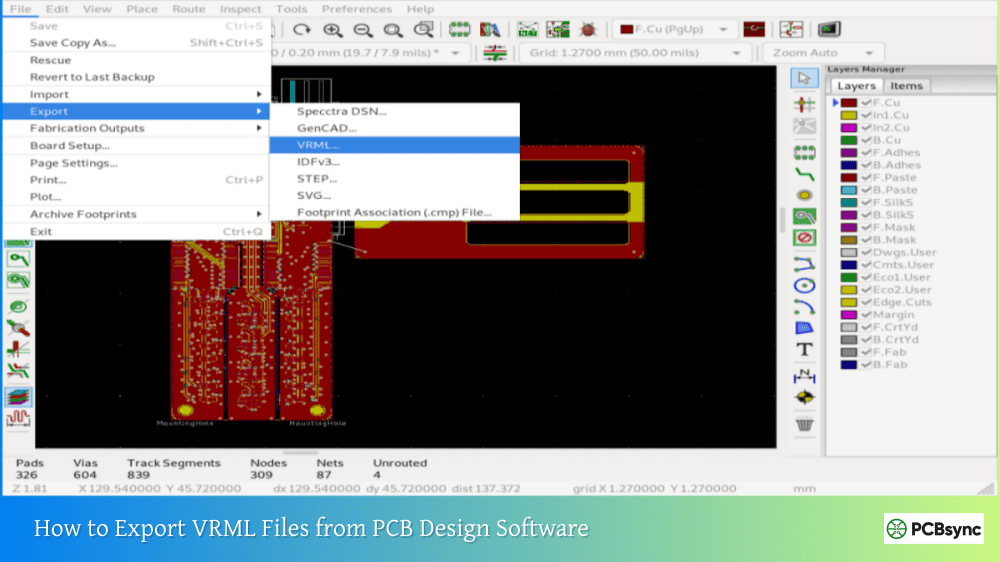
KiCad While not primarily a converter, KiCad can import DXF files and export Gerbers. Import your DXF to the Edge.Cuts or other appropriate layer, then use File → Plot to generate Gerber output.
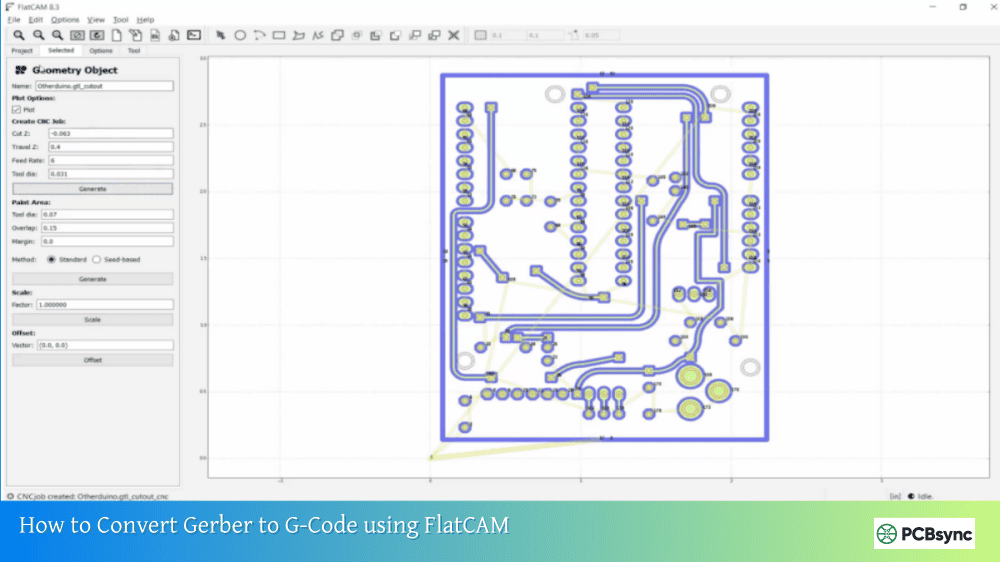
FlatCAM This open-source tool specializes in PCB prototyping workflows. It can import various formats and generate manufacturing data, though it’s better suited for Gerber to DXF conversion.
dxf2gbr A free command-line converter available on SourceForge. It handles basic DXF to Gerber conversion but has limited entity support.
Online Converters
Online tools exist for quick, one-off conversions, but they come with significant limitations:
Limited control over conversion parameters
File size restrictions
Potential confidentiality concerns for proprietary designs
Less reliable results for complex geometries
For production work, desktop software remains the safer choice.
Step-by-Step DXF to Gerber Conversion Process
Here’s the workflow I follow for reliable conversions:
Step 1: Prepare Your Source File
Open your DXF in AutoCAD or your preferred CAD software and verify:
All geometry uses supported entity types
Layers are properly organized
Units are correctly set
Design is positioned near the origin
Step 2: Import into Conversion Software
Using FAB 3000 as an example:
Launch the software and create a new project
Select File → Import → DXF/DWG
Set import units to match your source file
Choose layer mapping options
Step 3: Verify Import Accuracy
This step catches most conversion problems before they become manufacturing issues:
Use measurement tools to verify critical dimensions
Check that all elements imported correctly
Verify layer assignments match your intent
Look for any missing or distorted geometry
Step 4: Configure Layer Mapping
Assign each imported layer to the appropriate Gerber layer type:
DXF Layer
Gerber Assignment
TOP_COPPER
Top Copper (GTL)
BOT_COPPER
Bottom Copper (GBL)
TOP_MASK
Top Solder Mask (GTS)
BOT_MASK
Bottom Solder Mask (GBS)
SILKSCREEN
Top Silk (GTO)
OUTLINE
Board Outline (GKO)
Step 5: Generate Gerber Output
Configure export settings:
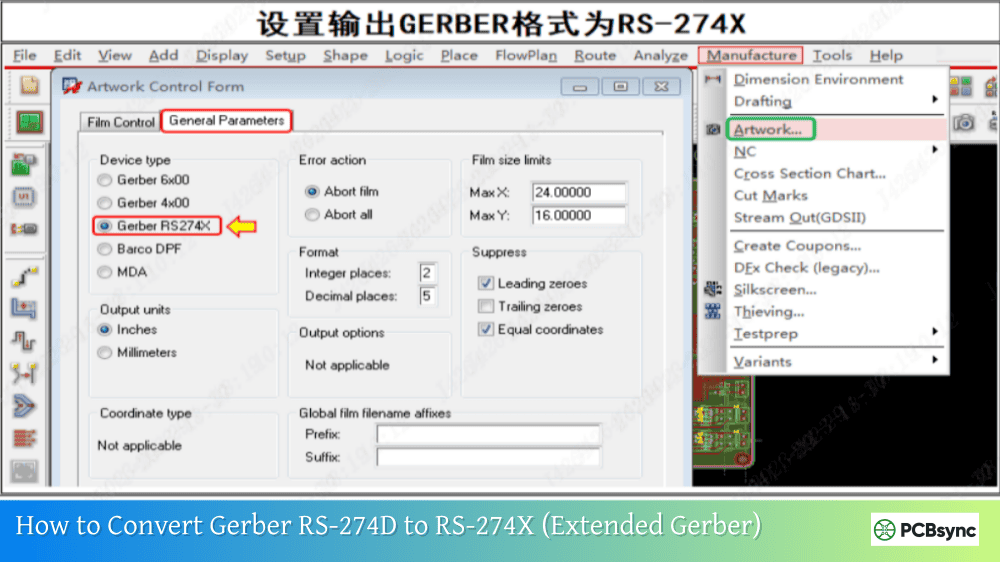
Format: RS-274X (Extended Gerber)
Precision: 2:5 or 2:6 for inches
Units: Match your design units
Zero suppression: Consistent across all files
Step 6: Validate Output Files
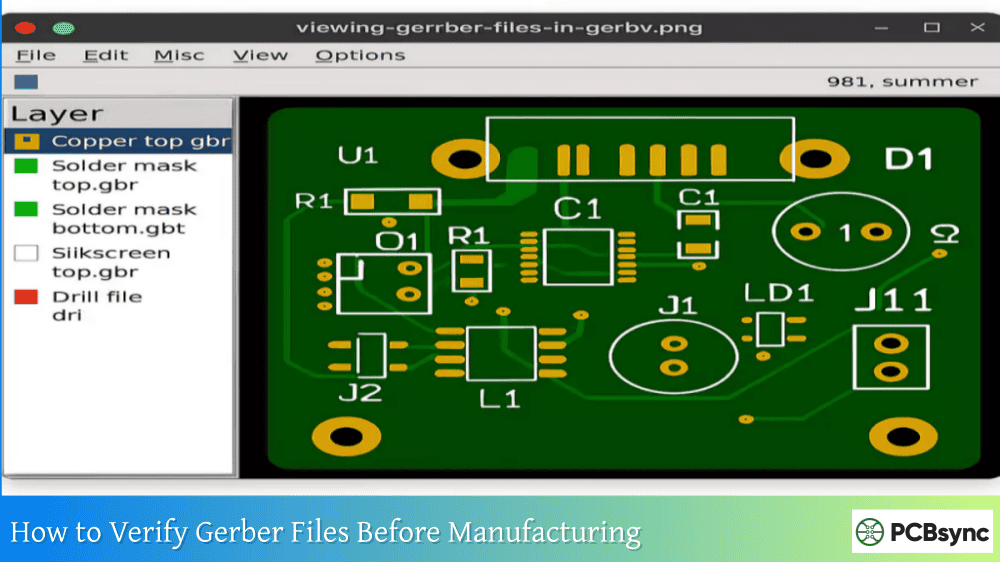
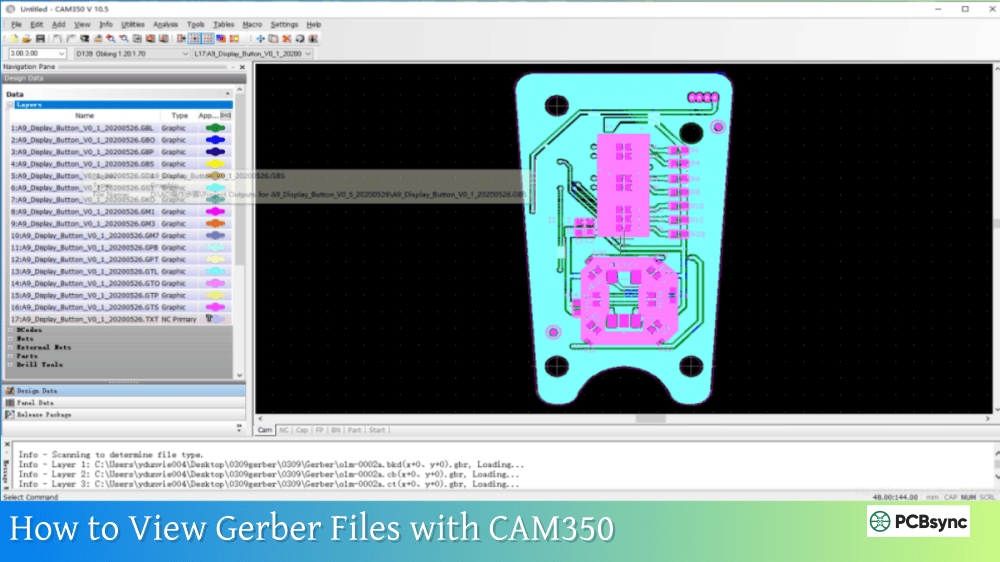
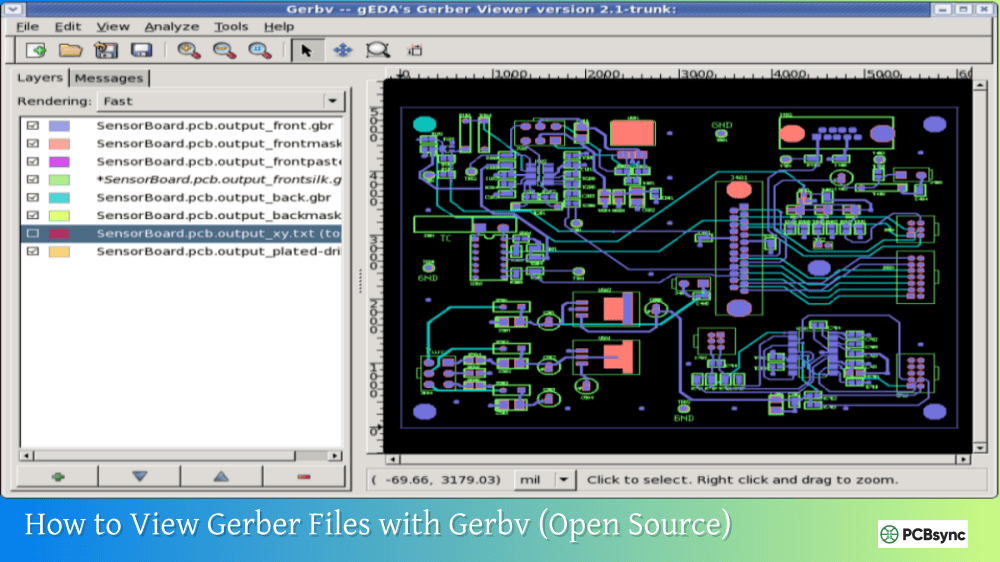
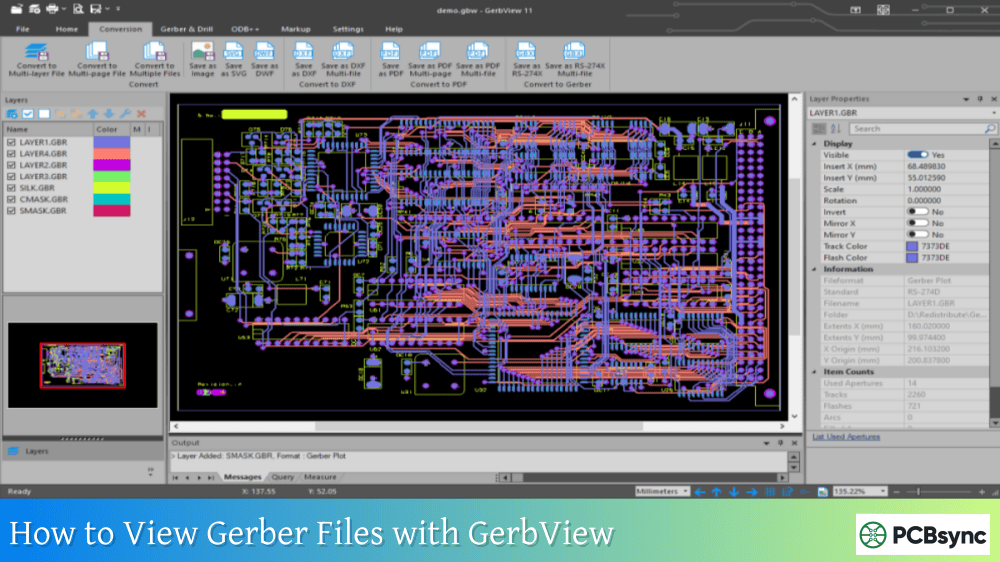
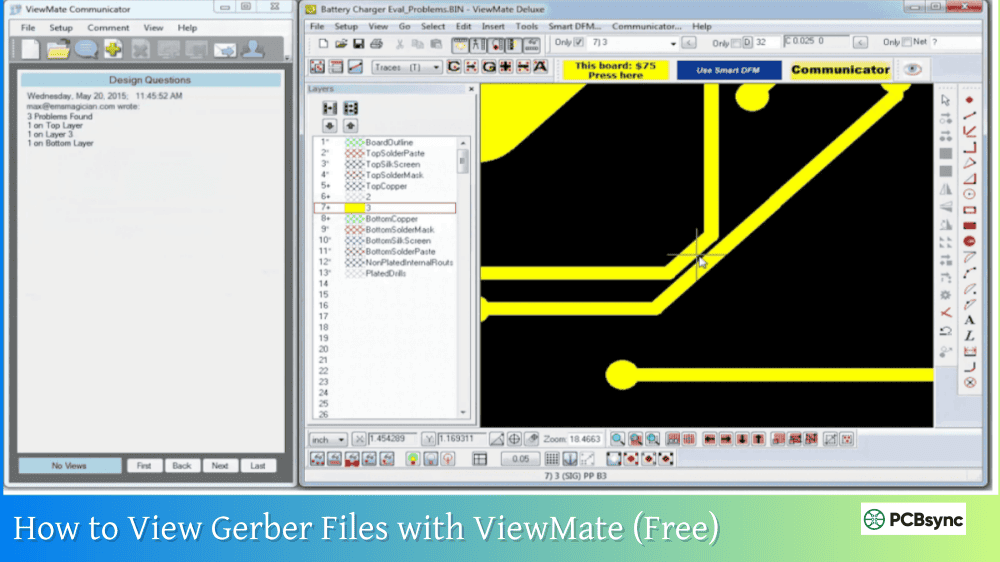
Load the generated Gerbers into a viewer and verify:
All layers are present
Geometry matches the original design
No artifacts or conversion errors exist
Board outline is correct
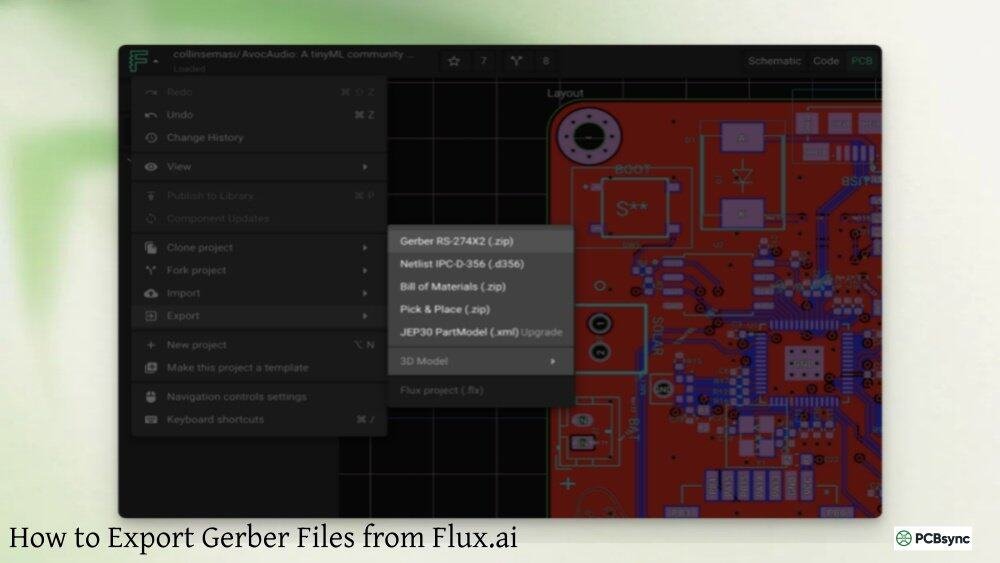
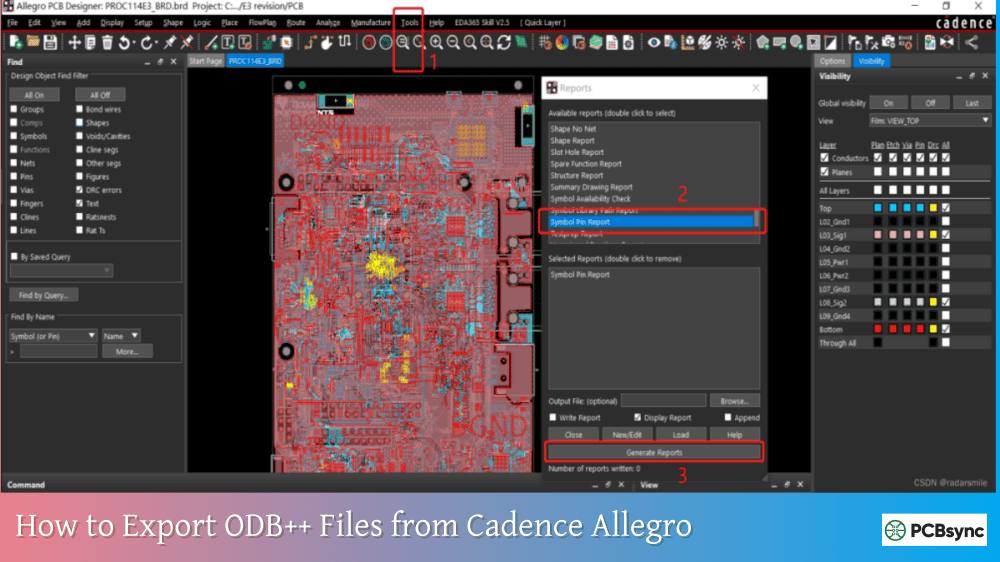
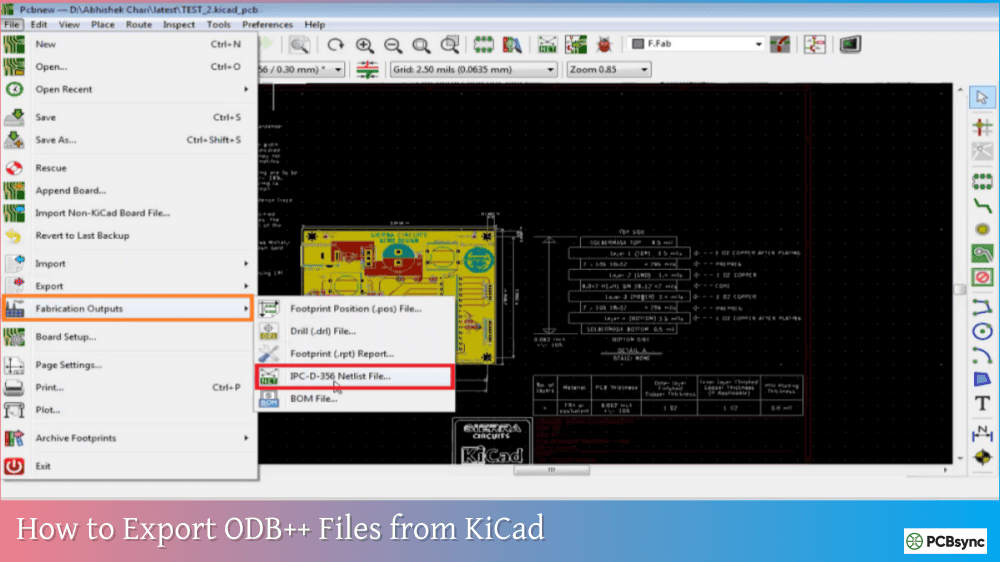
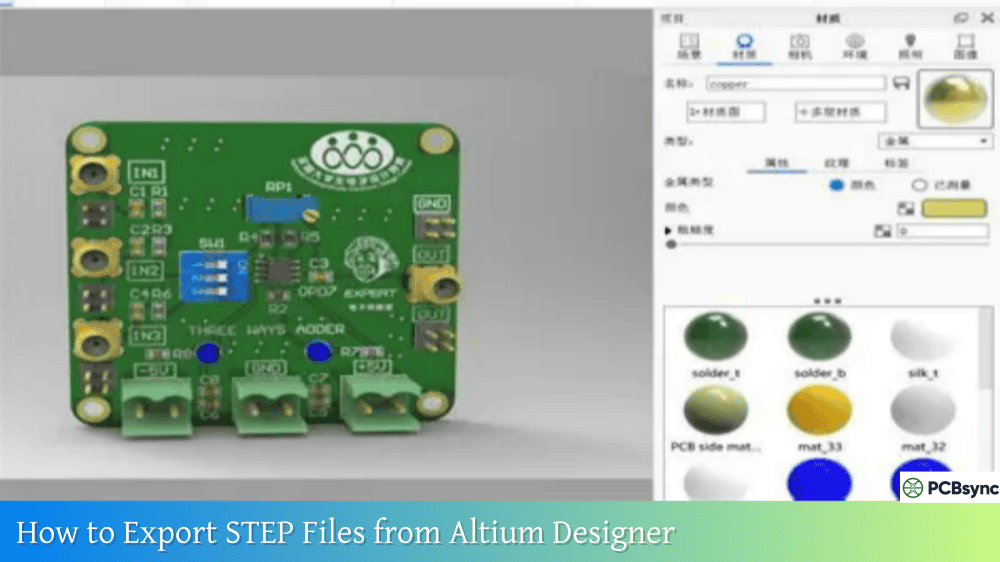
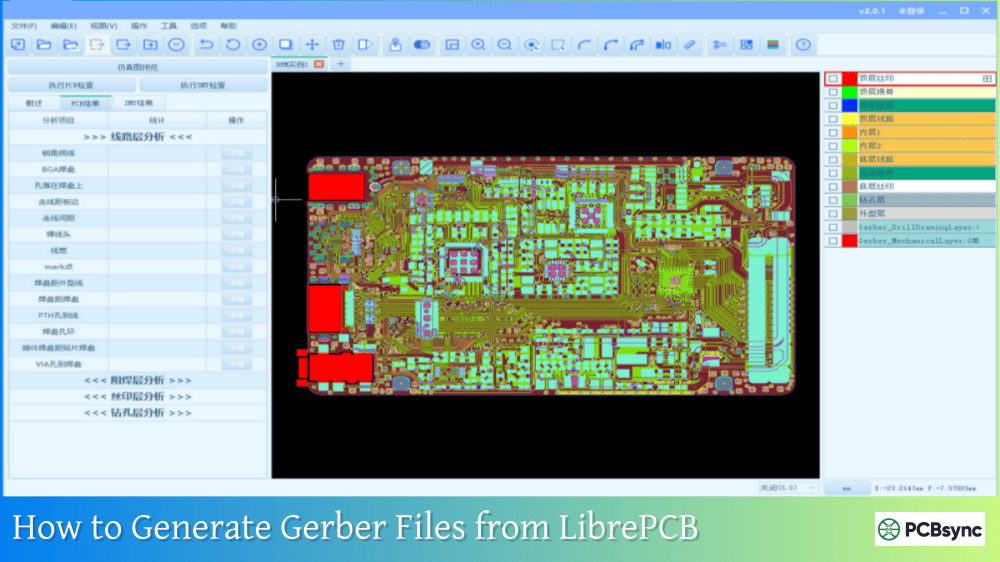
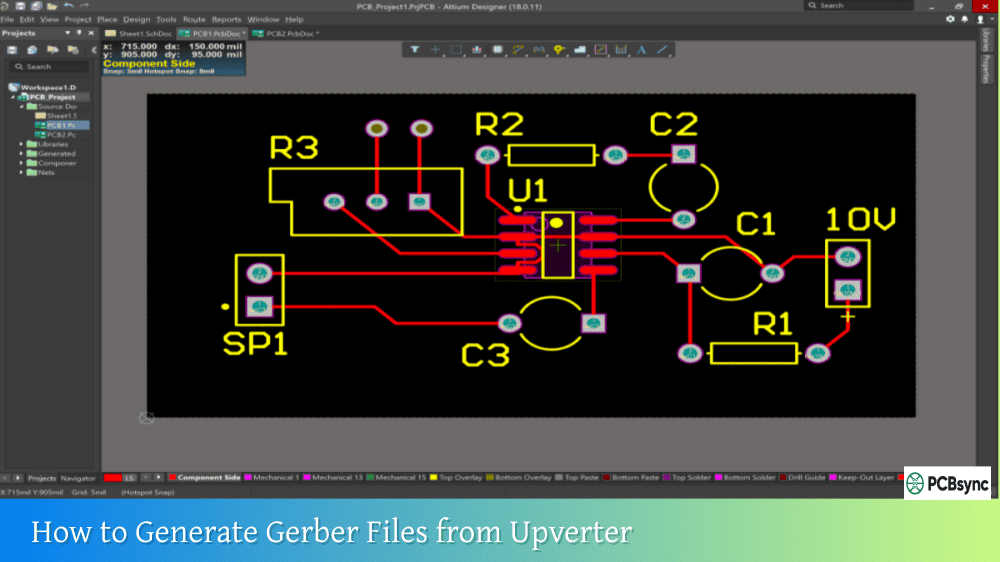
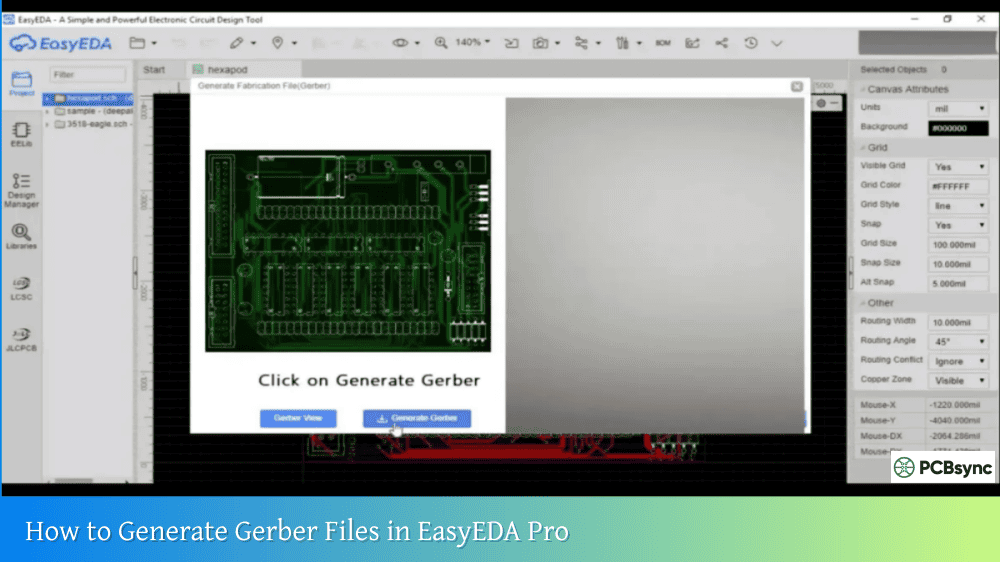
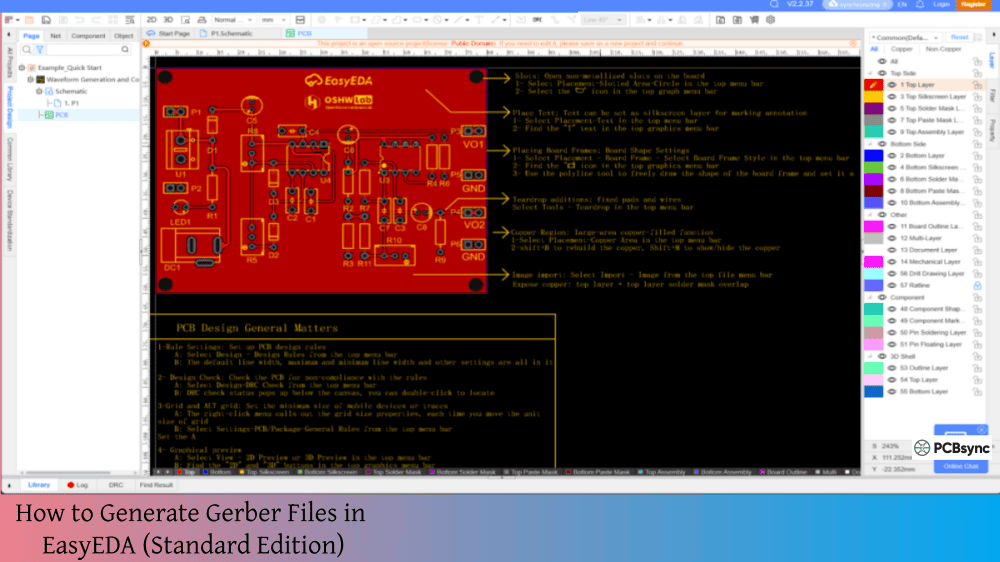
Read more How to convert PCB Files in different Design software:
Troubleshooting Common DXF to Gerber Conversion Issues
Problem: Converted Design Has Wrong Scale
Cause: Unit mismatch between source and destination Solution: Verify units in both your CAD software and conversion tool. Use reference measurements to confirm scale accuracy.
Problem: Filled Areas Appear as Outlines Only
Cause: Closed polylines without fill settings, or hatches that don’t convert Solution: Create filled areas using closed zero-width polylines with properly defined fill boundaries. Avoid hatches.
Problem: Text Appears Garbled or Missing
Cause: TrueType fonts or unsupported text styles Solution: Convert text to SHX (stick) fonts before export, or explode text to polylines if necessary.
Problem: Drill Holes Not Appearing
Cause: Circles not on a designated drill layer, or drill file not generated separately Solution: Ensure circles intended as drill hits are on a dedicated layer. Generate Excellon drill files separately from Gerber files.
Problem: Complex Geometry Missing
Cause: Unsupported entity types filtered out during import Solution: Simplify geometry to the five fundamental entities before export.
After handling hundreds of conversions, these practices consistently produce good results:
1. Simplify Before Converting Remove anything that isn’t essential for manufacturing. Construction geometry, reference dimensions, and notes should be on non-exported layers or deleted entirely.
2. Validate at Every Step Check your source file, verify the import, and validate the output. Finding problems early saves manufacturing delays later.
3. Maintain Unit Consistency Decide on metric or imperial units at the start and stick with them throughout the process.
4. Document Your Layer Mapping Keep a record of which DXF layers map to which Gerber files. This makes revisions easier and reduces errors on future projects.
5. Archive Both Formats Save your original DXF alongside the generated Gerbers. If you need to make changes, working from the source file is always better than editing Gerbers.
Frequently Asked Questions About DXF to Gerber Conversion
Can I Convert DXF Files to Gerber Online for Free?
Yes, several online tools offer free DXF to Gerber conversion, but they typically have limitations on file size, complexity, and conversion options. For professional work or complex designs, desktop software provides better control and more reliable results. Online converters work best for simple, one-off conversions where precision isn’t critical.
What is the Best Free DXF to Gerber Converter?
KiCad offers the most capable free solution for DXF to Gerber conversion. While it’s primarily a PCB design suite, you can import DXF files to specific layers and generate Gerbers using the Plot function. FlatCAM and dxf2gbr are alternatives, though they have more limited entity support.
Why Does My PCB Manufacturer Require Gerber Files Instead of DXF?
PCB manufacturers require Gerber files because they provide unambiguous manufacturing instructions. DXF files can represent the same geometry using many different entity types, each requiring interpretation. Gerbers eliminate this ambiguity, which means faster production, fewer errors, and consistent results across different manufacturers.
How Do I Handle Board Outlines in DXF to Gerber Conversion?
Board outlines should be created using a single, continuous closed polyline with zero width. Place this on a dedicated layer that maps to the Gerber mechanical layer or board outline. Avoid using multiple line segments or arcs, as gaps between segments can cause manufacturing issues.
Can I Convert Multiple DXF Layers to Separate Gerber Files in One Operation?
Most professional conversion tools support batch conversion of multiple layers. Configure your layer mapping to assign each DXF layer to the appropriate Gerber layer type, then export all layers simultaneously. This ensures consistent settings across all output files and maintains layer registration.
Working with Different CAD Software for DXF Export
Different CAD packages have their own quirks when exporting DXF files. Here’s what to watch for with common tools:
AutoCAD and AutoCAD LT
AutoCAD produces the most compatible DXF files since it created the format. Before exporting:
Run AUDIT to check for drawing errors
Use PURGE to remove unused elements
Set LTSCALE appropriately for line types
Export from Model Space, not Paper Space
SolidWorks
When exporting from SolidWorks, select the appropriate sketch or face to export. The DXF export options allow you to choose between 2D and 3D output. For PCB work, always select 2D and verify that spline geometry converts to polylines.
Fusion 360
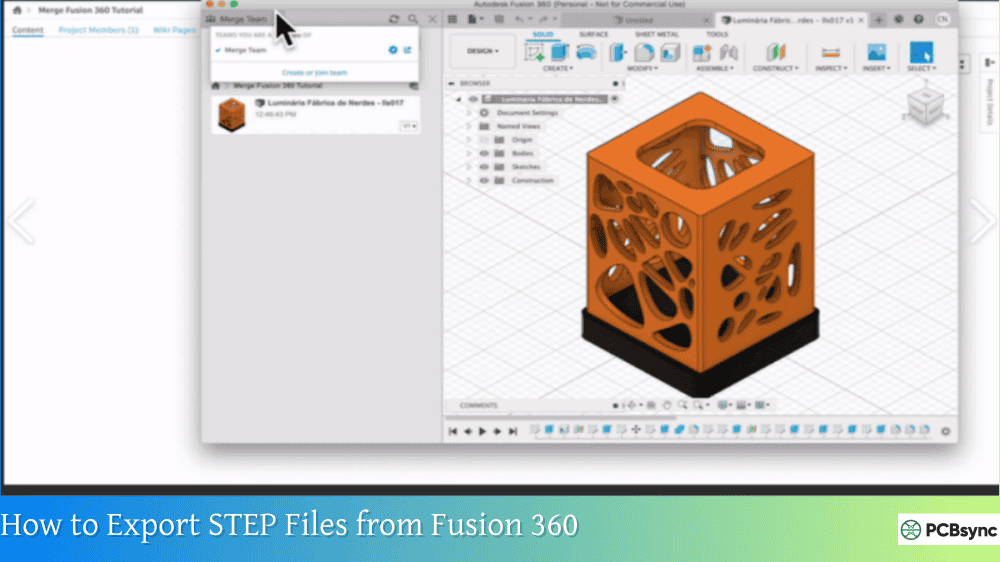
Fusion 360’s DXF export requires sketches to be projected to a plane. Complex 3D geometry must be converted to 2D sketches before export. Use the Export sketch function rather than full assembly export.
Conclusion
Converting DXF files to Gerber format doesn’t have to be complicated, but it does require understanding what each format expects. By sticking to the five fundamental entity types, using proper layer organization, and validating your results at each step, you can achieve clean conversions consistently.
The key takeaway is this: preparation matters more than the conversion tool you choose. A well-organized DXF file will convert cleanly in almost any software, while a complex file filled with hatches, splines, and 3D objects will cause problems regardless of how sophisticated your converter is.
Take the time to set up your source files correctly, and the conversion process becomes almost trivial. Skip the preparation, and you’ll spend far more time troubleshooting than you would have spent doing it right from the start.
Inquire: Call 0086-755-23203480, or reach out via the form below/your sales contact to discuss our design, manufacturing, and assembly capabilities.
Quote: Email your PCB files to Sales@pcbsync.com (Preferred for large files) or submit online. We will contact you promptly. Please ensure your email is correct.
Notes: For PCB fabrication, we require PCB design file in Gerber RS-274X format (most preferred), *.PCB/DDB (Protel, inform your program version) format or *.BRD (Eagle) format. For PCB assembly, we require PCB design file in above mentioned format, drilling file and BOM. Click to download BOM template To avoid file missing, please include all files into one folder and compress it into .zip or .rar format.